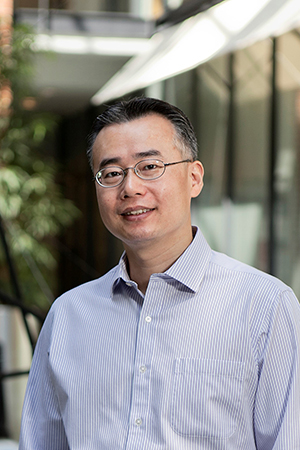
Ali Mani is an Associate Professor of Mechanical Engineering at Stanford University and a faculty affiliate at the Institute for Computational and Mathematical Engineering. He earned his PhD in Mechanical Engineering from Stanford in 2009, following an M.S. (2004) and B.S. (2002) from Stanford and Sharif University of Technology, respectively. His research focuses on fluid mechanics, turbulence, and numerical simulations, with applications in multiphase flows, electrokinetic systems, and applied mathematics. His group develops high-fidelity simulation tools and reduced-order models to understand transport processes in turbulent and chaotic systems. Research interests include turbulence modeling, two-phase flow dynamics, and electrochemical transport. Recent work explores eddy viscosity operators, nonlocal transport phenomena, and computational methods for multiphase systems. The group's studies often bridge experimental validation and numerical analysis to improve predictive engineering models. Key contributions span electrokinetic transport in porous media, superhydrophobic surface slip effects, and phase field modeling. His lab’s work is supported by grants focusing on fluid dynamics, renewable energy systems, and advanced simulation frameworks.
Dr. Robert O’Connor is an Assistant Professor at the School of Physical Sciences, Dublin City University (DCU) , specializing in interface chemistry and thin film characterization. His work bridges semiconductor physics and energy harvesting technologies , with a focus on materials like high-κ dielectrics and III-V substrates. BSc in Applied Physics (2001), DCU PhD in Semiconductor Physics (2005), DCU His research employs X-ray photoelectron spectroscopy (XPS) and atomic layer deposition (ALD) to study material interfaces in devices such as MOSFETs and photoelectrochemical systems . He leads a 4-year SFI-funded project on solar water splitting for hydrogen fuel and collaborates with Trinity College Dublin (SPOKE project) and IMEC, Belgium on area-selective deposition techniques. His lab utilizes a state-of-the-art integrated ALD-XPS tool . His scientific awards include the Marie Curie Intra-European Fellowship , Irish Research Council EMBARK Fellowship , and SFI TIDA Award . Publications span high-κ dielectrics , self-assembled monolayers , and block copolymer lithography , with recent work on graphene oxide heterostructures and recyclability in additive manufacturing . He supervises 5 postgraduate students and teaches modules like Final Year Project (PS451) and Solid State Physics I (PS204) . Collaborations include institutions such as IMEC and Trinity College Dublin , with tools like the integrated ALD-XPS system at DCU.
Prof. Dr. Stefan Luther is a Max Planck Research Group leader (W2, tenured since 2013) at the Max Planck Institute for Dynamics and Self-Organization, Göttingen, and an Honorarprofessor at the Faculty of Physics, University of Göttingen. He holds adjunct roles as Adjunct Associate Professor at Cornell University (2009–2012) and Northeastern University (2016–2018), and serves as DZHK-Professor at the Institute of Pharmacology and Toxicology, University Medical Center Göttingen. His research focuses on nonlinear spatiotemporal dynamics in excitable biological media, particularly cardiac arrhythmias. He pioneered 4D imaging of heart function and developed algorithms for optogenetic and electrical control of arrhythmias. Translational efforts span basic research to preclinical and clinical studies. Education includes a Diplom in Physics (1997) and PhD (2000) from Georg-August-University, Göttingen. Postdoctoral training followed at the University of Twente (2001–2004) and Cornell University’s LASSP (2004–2006). His lab, the Biomedical Physics group, explores electromechanical coupling in cardiac systems and develops novel therapeutic approaches. Collaborations include work on computational modeling, uncertainty quantification in dynamical systems, and fluid dynamics of multiphase flows.
Yueh-Lin (Lynn) Loo is the Theodora D. '78 and William H. Walton III '74 Professor in Engineering and Professor of Chemical and Biological Engineering at Princeton University. She holds affiliated roles in the Andlinger Center for Energy and the Environment, Department of Chemistry, Department of Electrical Engineering, Princeton Environmental Institute, and Princeton Materials Institute. Her research focuses on organic and polymer electronics, with emphasis on solution-processable materials, soft lithography, and interfacial engineering in solar cells. She has pioneered innovations in organic electronics fabrication and scalable energy technologies. Education: Ph.D. in Chemical Engineering from Princeton University (2001); BSE in Materials Science and Engineering and Chemical Engineering from the University of Pennsylvania (1996). Research Interests: - Solution-processable organic conductors for thin-film electronics - Soft lithography techniques for patterning plastic electronics - Self-assembled monolayers for optimizing organic solar cell interfaces - Development of cost-effective, large-area electronic device fabrication methods Her articles span organic semiconductor material design, device fabrication techniques, and energy applications. Awards include Fellowships from the National Academy of Engineering, American Institute of Chemical Engineers, and multiple industry recognitions for innovation in materials science and clean energy. Advises graduate students in chemical engineering and materials science. Leads the Organic and Polymer Electronics Laboratory, advancing research in decarbonization technologies and maritime energy solutions. Current projects include smart solar spectrum management systems and recyclable plastic electronics.
Amy Childress is Dean's Professor of Civil and Environmental Engineering at the University of Southern California's Viterbi School of Engineering. She serves as director of the Civil and Environmental Engineering Department's environmental engineering program and leads the Center for Water Reuse (ReWater). Dr. Childress has been with USC since summer 2013 and previously served as professor and chair of the Civil and Environmental Engineering Department at the University of Nevada, Reno. Dr. Childress earned her educational degrees from the following institutions: Bachelor's Degree in Civil Engineering from the University of Maryland College Park Master's Degree in Civil Engineering from the University of California - Los Angeles Doctoral Degree in Civil Engineering from the University of California - Los Angeles For over 20 years, Professor Childress' research has focused on membrane processes for addressing global water scarcity challenges. Her current research interests include membrane contactor processes for innovative solutions to contaminant and energy challenges; pressure-driven membrane processes as industry standards for desalination and water reuse; membrane bioreactor technology; and colloidal and interfacial aspects of membrane processes. She emphasizes process sustainability through reduction of discharge by-products, limiting chemical and material consumption, and minimizing energy, carbon, and infrastructure footprints of treatment systems. Her work explores the water-energy nexus to develop holistic solutions for finite water and energy resources. Professor Childress' recent publications demonstrate a consistent focus on advancing membrane technologies for water treatment and desalination. Her research spans fundamental studies of membrane properties and performance to applied research on system integration and optimization. Key themes include improving membrane wetting resistance, developing mathematical models for water blending, understanding morphological changes in membranes, exploring power density limitations in osmotic processes, and investigating long-term operational effects on membrane performance. Her work consistently addresses the technical challenges of water scarcity while considering sustainability and energy efficiency. Her scientific achievements have been recognized with numerous awards and honors: National Science Foundation CAREER Award (2001) NAE Frontiers of Engineering Invited speaker (2007) AEESP President (2008) Multiple fellowships and scholarships from UCLA, AWRA, ACS, and water districts UNR Student Chapter of AWRA Excellence in Teaching Honorable Mention Award (2001) Clair A. Hill Scholarship (1995) Larson Aquatic Research Support (LARS) Scholarship (1996) Professor Childress has directed research projects funded by numerous prestigious organizations including the U.S. Bureau of Reclamation, NSF, NASA, Office of Naval Research, U.S. Department of Energy, California Energy Commission, California Department of Water Resources, the U.S. EPA, and SERDP, as well as local and private agencies. She leads a productive research group that has generated numerous peer-reviewed publications, proceeding papers, and patents. Her leadership extends to service on the AEESP Foundation Board of Directors and previously as AEESP President. She also serves on the Advisory Board of Desalination journal. Dr. Childress leads the Childress Research Group at USC, which focuses on fundamental and applied aspects of membrane processes for water treatment and desalination. The group maintains laboratory facilities in Biegler Hall (BHE) at USC and conducts both experimental and modeling research to advance water treatment technologies. Their work addresses critical challenges in southern California and around the world related to wastewater reclamation and seawater desalination.
Sean Lubner is Core Faculty at the Boston University Institute for Global Sustainability (IGS) and Assistant Professor in Mechanical Engineering within the College of Engineering. He holds a PhD from UC Berkeley and BS degrees in Mechanical Engineering and Applied Physics from Carnegie Mellon University. His research focuses on energy transport and storage systems, including thermal energy storage, battery diagnostics, and CO₂ capture technologies. Education: PhD in Mechanical Engineering, UC Berkeley (NSF Fellow) BS in Mechanical Engineering & Applied Physics, Carnegie Mellon University Research Interests: Lubner specializes in grid-scale thermal energy storage, non-invasive sensors for harsh environments, and decarbonization strategies. His work integrates machine learning with materials science to develop advanced energy systems. He collaborates with industry on patents involving battery safety, photonic surfaces, and phase change materials. Article Trends: Recent publications emphasize high-temperature materials, battery failure prediction via thermal signatures, and femtosecond laser processing for photonic surfaces. His work bridges nanoscale phenomena with macro-scale energy systems, leveraging interdisciplinary methods. Awards: Lubner was an NSF Graduate Research Fellow during his PhD. Advising & Grants: While no advisees are listed, his research is supported by industry partnerships and grants focusing on energy storage innovation. He leads the Lubner Group, which develops novel sensing and storage technologies. Labs/Teams: The Lubner Group at BU focuses on sustainable energy solutions, combining experimental and computational approaches to address climate challenges.
Marc Hodes is Professor in Mechanical Engineering and Mathematics at Tufts University. With a PhD from MIT, his research focuses on heat transfer phenomena with applications in electronics cooling, supercritical fluids, and thermoelectric systems. He directs the graduate program in Mechanical Engineering. Education: BS, University of Pittsburgh (1990) MS, University of Minnesota (1994) PhD, Massachusetts Institute of Technology (1998) Research Areas: Thermal management of electronics through microchannel cooling and liquid metal technologies; Apparent slip phenomena in microstructured surfaces; Mass transfer in supercritical CO 2 systems for aerogel processing; Thermoelectric module optimization for precision temperature control. Awards & Honors: NSF REU Fellowship (1989) E.T.S. Walton Visitorship Award Best Associate Editor, ASME Journal of Heat Transfer (2023) Research Leadership: Principal investigator on multiple NSF grants including projects on aerogel manufacturing, dropwise condensation, and analysis of convection in slip flows. Industry collaborations include Google, DARPA, and Bell Labs.
Caterina Ducati is a Professor of Nanomaterials at the Department of Materials Science & Metallurgy, University of Cambridge. Her research focuses on nanomaterials, their structure-property relationships, and applications in energy technologies, particularly photovoltaics, photocatalysis, and optoelectronics. Research Interests: In situ electron microscopy of nanomaterials under external stimuli (electrical, thermal, photonic), growth mechanisms of nanostructures (carbon nanotubes, semiconductor nanowires), and degradation processes in energy devices. Methodologies: Advanced characterization via HAADF STEM, TEM, and development of tools for real-time nanoscale observation. Recent publications highlight her work on perovskite solar cells, battery materials (Li, Zn, Na-ion), and ferroelectric thin films. She actively investigates degradation mechanisms in energy devices and develops novel fabrication techniques for nanocomposites. Scientific Recognition: A&B Post-doctoral Fellowship winners (institutional award) She supervises research groups utilizing the Wolfson Electron Microscopy Suite and contributes to interdisciplinary collaborations in materials for sustainability and healthcare applications.
Wan Shou is an Assistant Professor in the Department of Mechanical Engineering at the University of Arkansas. His research focuses on multiscale manufacturing, advanced materials, and functional devices, with applications in wearables, robotics, and sustainable technologies. Ph.D., Mechanical Engineering, Missouri University of Science and Technology M.S., Mechanical Engineering, University of Louisiana at Lafayette B.E., Textile Engineering, Tianjin Polytechnic University, China Dr. Shou’s research spans laser-based manufacturing , nanomanufacturing , machine learning-assisted processes , and bioresorbable electronics . He explores 3D printing of polymer and metal composites, energy materials , and functional textiles for wearable sensors and environmental applications. Recent publications highlight his work in additive manufacturing , computational design of composites, and self-powered sensing systems . His team integrates machine learning with materials discovery to optimize performance. Editor’s pick of Science Magazine US Patent 11,752,700: Data-driven material formulation US Patent 11,993,850: Laser-assisted nanoparticle printing Dr. Shou’s patents and publications reflect a commitment to innovative manufacturing and environmentally conscious design . His work bridges materials science , robotics , and smart systems , advancing energy and water technologies.
Professor Bing-Jie (Bruce) Ni is an Adjunct Professor at the University of Technology Sydney (UTS) within the School of Civil and Environmental Engineering and a full Professor at UNSW Sydney. He is an internationally recognised leader in environmental engineering, wastewater treatment, greenhouse-gas mitigation, microplastics fate, electrocatalysis and sustainable energy systems. Education PhD in Environmental Engineering, University of Science and Technology of China, Hefei (2005–2009) Research Interests Professor Ni’s research integrates process engineering, microbial biotechnology, materials science and mathematical modelling to develop sustainable technologies for high-efficiency pollutant removal, minimal carbon footprint and maximal energy recovery from wastewater. He is a global pioneer in: Modelling and control of nitrous oxide (N₂O) and methane (CH₄) emissions from wastewater systems, Micro- and nano-plastics ecotoxicity and mitigation in anaerobic digestion, Transforming sewage sludge into high-value liquid bio-energy (medium-chain fatty acids and long-chain alcohols), Designing cost-effective electrocatalysts from natural minerals for green hydrogen production and wastewater electrolysis. Research Output & Impact Over the last decade he has published 2 research books, 30 book chapters and >400 refereed journal papers , including 35 in Environmental Science & Technology and 85 in Water Research . His work has influenced global policy: the IPCC adopted his nitrous-oxide-emission model in 2019 to revise national greenhouse-gas inventories for the first time in 13 years. Awards & Recognition ARC Future Fellowship & ARC DECRA Fellowship Clarivate Analytics Highly Cited Researcher (Web of Science) Royal Society of Chemistry Highly Cited Researcher (2020–present) Mendeley Data Top 2 % Cited Researchers worldwide Listed among “Australia’s Most Innovative Engineers” (Engineers Australia, 2018) 50+ additional awards including Scopus Young Researcher Award, South Australian Water Awards, UQ Research Excellence Awards, and Outstanding Doctoral Dissertation Awards. Research Funding & Leadership He has secured ≈ AUD $10 million in competitive funding (six major ARC grants plus >20 government, university and industry projects). He serves as: Lead Guest Editor, Water Research Editorial Advisory Board, Environmental Science & Technology Associate Editor for Journal of Cleaner Production , Environmental Chemistry Letters , Environmental Research , Journal of Environmental Management Editorial Board member for five additional high-impact journals. Teaching & Supervision At UTS he teaches Renewable Energy Technologies , Environmental and Sanitation Engineering , Process Dynamics and Control , and Water and Wastewater Treatment . He is available to supervise Masters and PhD students in environmental biotechnology, process modelling and sustainable energy systems. Laboratory & Commercial Translation He heads active research teams at both UNSW and UTS and is the inventor of >10 granted patents , some of which are currently being commercialised to deliver real-world impacts in greenhouse-gas-neutral wastewater treatment and renewable energy production.
Cheuk Wai Tai is a Senior Staff Researcher at Stockholm University's Department of Environmental and Materials Chemistry since 2009. He manages the transmission electron microscopes and sample preparation equipment at the Electron Microscopy Center and serves as Section Editor for the Journal of Electronic Materials. His work focuses on quantitative structure characterization in functional materials research, particularly within nanoscience and nanotechnology contexts. Education: Ph.D. in Applied Physics, The Hong Kong Polytechnic University, 2004 M.Phil. in Applied Physics, The Hong Kong Polytechnic University, 2001 M.Sc. in Physics, The Chinese University of Hong Kong, 1998 B.Sc. (Hons) in Engineering Physics, The Hong Kong Polytechnic University, 1997 Dip. in Mechanical Engineering (Computer Aided Engineering), Institute of Vocational Education (formerly Haking Wong Technical Institute), Hong Kong, 1992 His research centers on structure-property relationships in functional materials through advanced electron microscopy techniques. Current specializations include Pair Distribution Function (ePDF) & Diffuse Scattering, Energy Materials characterization, and EM sample preparation methodology development. The group maintains strong focus on translating structural data into functional performance metrics for nanomaterials. Recent publications (2013-2019) demonstrate consistent emphasis on electron microscopy applications for energy storage materials (batteries, photocatalysts) and functional ceramics. Key trends include structural disorder analysis in piezoelectrics, development of quantitative TEM methods like SUePDF, and nanoscale characterization of electrocatalyst surface phases. His work bridges materials chemistry with advanced imaging techniques. Scientific recognition includes: Fellow of The Royal Microscopical Society (U.K.) Senior Member of IEEE Marie Curie Fellowship (2007-2009) from European Commission Sir Edward Youde Memorial Fellowship (2003/2004) from Hong Kong S.A.R. Government He teaches Solid State Chemistry (KZ7003) and leads Introduction to Analytical Electron Microscopy (KZ8009), having previously taught Advanced Transmission Electron Microscopy (KZ8010) before 2011. Major grants supporting his work include: "Quantitative structural characterisation using 3D electron-based pair distribution function" (Swedish Research Council) "A Multidimensional Toolkit for Modern Electron Microscopy" (Swedish Foundation for Strategic Research) "Mitigating Ni-rich Li-ion cathode side-reactions" (Swedish Energy Agency, Co-applicant) He leads the Cheuk-Wai Tai group within Stockholm University's chemistry department and oversees operations at the Electron Microscopy Center, where his team develops and applies advanced characterization techniques for functional materials research.
Raisul Islam is an Assistant Professor of Materials Engineering at Purdue University, with a courtesy appointment in Electrical and Computer Engineering. His research focuses on advanced materials for energy technologies, semiconductor devices, and nanoscale memory systems. He holds affiliations with the College of Engineering and is actively involved in interdisciplinary collaborations. His work emphasizes the development of novel materials and device architectures for applications in solar energy, resistive memory, and neuromorphic computing. Key areas include photovoltaic cell optimization, phase-change memory innovation, and the integration of nanotechnology with electronics. Notable research trends from his publications (2020–2023) highlight advancements in tandem solar cell efficiency, thermal management in resistive memory, and multilevel switching mechanisms in ferroelectric tunnel junctions. His work bridges fundamental materials science with practical device engineering, addressing both performance and scalability challenges. Dr. Islam’s lab focuses on experimental and computational materials characterization, with a focus on thin films, nanoscale interfaces, and energy-efficient electronics. His contributions span academic journals and industry collaborations, targeting next-generation energy and computing technologies.
Quan Zhou is a Professor leading the Robotic Instruments Group at the Department of Electrical Engineering and Automation, School of Electrical Engineering, Aalto University, Finland. He holds an M.Sc. in Control Engineering and a Dr.Tech. in Automation Technology from Tampere University of Technology. His research focuses on miniaturized robotics, robotic manipulation using contact, acoustic, magnetic, interfacial, and fluidic methods, integrating physics, mechatronics, and machine learning to address challenges in dexterous manipulation with applications in biomedicine, materials science, and industrial technologies. He directs the Master’s Programme in Automation and Electrical Engineering (AEE) at Aalto and coordinates the European Robotics Association’s Topic Group on Miniaturized Robotics. He has led the EU FP7 project FAB2ASM and chaired international conferences like MARSS 2019. Notably, he received the 2018 Anton Paar Research Award for Instrumental Analytics and Characterization. His research spans fundamental methodologies and practical applications, emphasizing interdisciplinary innovation. Recent work includes advancements in fluid-driven manipulation, biomimetic robotics, and acoustic particle control. His contributions bridge theoretical frameworks and real-world automation solutions, with publications in journals like Advanced Intelligent Systems , Nature , and Physical Review E . Prof. Zhou’s leadership roles include coordinating the EIT Digital Master's Programme in Autonomous Systems and chairing IEEE Finland robotics chapters. His work has been recognized through grants and awards, reflecting his impact on robotics and automation research and education.
Dr. Joshua Brinkerhoff is an Associate Professor in Mechanical Engineering at the University of British Columbia Okanagan Campus. He serves as the Associate Director for Research & Industrial Partnerships in the School of Engineering and leads the UBC-Okanagan Computational Fluid Dynamics Laboratory. His research spans computational fluid dynamics, turbomachinery, multiphase flows, hydrogen safety, wind energy, and biofluid mechanics. He teaches courses in mechanics of materials, alternative energy systems, turbulence, computational fluid dynamics, and aircraft design. PhD, Aerospace Engineering (Carleton University, Ottawa, ON) BEng, Aerospace Engineering (Carleton University) Dr. Brinkerhoff’s research interests include: Computational Fluid Dynamics (CFD) for laminar-to-turbulent transition and instability analysis Wind energy systems and turbine aerodynamics Hydrogen storage and safety protocols for transportation Biofluid mechanics for respiratory diseases and aneurysm modeling Multiphase flows in industrial and environmental contexts His publications focus on CFD simulations for: Aerosol dispersion and mitigation in indoor environments Wind farm interactions and atmospheric gravity waves Cavitation and phase transitions in cryogenic and LNG systems Heat transfer optimization in industrial and thermal systems Instability dynamics in buoyancy-driven and swept flows Turbulent structures in fluidized beds and reactors Dr. Brinkerhoff has no listed scientific awards in the provided data but has extensive contributions to renewable energy, hydrogen safety, and medical fluid dynamics. His laboratory develops open-source tools like TOSCA for large-eddy simulations and investigates practical applications in urban air quality, dental aerosol control, and turbine wake modeling.
Umut Altuntas is a Doctoral Assistant at the Engineering Mechanics of Soft Interfaces (EMSI) laboratory within the School of Engineering at École Polytechnique Fédérale de Lausanne (EPFL). His work focuses on experimental fracture mechanics and additive manufacturing of heterogeneous materials. Research Areas: Fracture mechanics of bioinspired interfaces, fatigue analysis, interlaminar shear strength optimization, and multi-material additive manufacturing. Technical Focus: Essential work of fracture analysis, fused filament fabrication, suture morphology engineering, and structural battery composite design. Publications highlight innovative approaches to enhancing interfacial toughness in 3D-printed polymer composites through bioinspired design and advanced manufacturing techniques. Keywords include Mechanical Engineering, Materials Science, and Additive Manufacturing. Sub-fields emphasize bioinspired interfaces, multifunctional composites, and fracture resistance mechanisms.