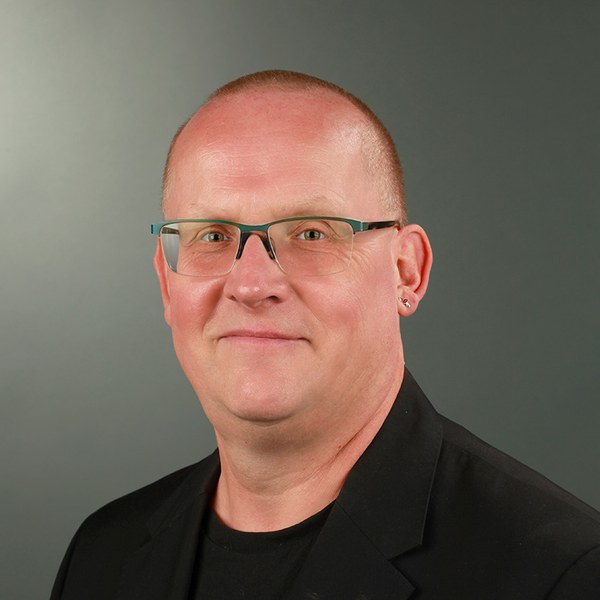
Petter Falkman is a researcher at Chalmers University of Technology, specializing in robotics, industrial automation, and control systems. His work bridges theoretical advancements with practical applications in manufacturing, leveraging technologies like digital twins, eye tracking, and virtual reality. Key Research Areas: Robotics, Industrial Automation, Control Systems, Digital Twins, Human-Computer Interaction, Machine Learning. Collaborations: Frequently works with Bengt Lennartson, Kristofer Bengtsson, Martin Dahl, and colleagues across institutions. Publication Trends: Recent articles focus on gaze-based human intention prediction, ROS2 control architectures, and compositional automated planning. His work integrates machine learning with industrial control systems, emphasizing event-driven design and virtual commissioning. Methodologies: Develops frameworks like EPypes for data pipelines, contributes to STEP AP214 model generation, and explores energy optimization in multi-robot systems.
Prof. Dr. Carsten Lucke is a faculty member at the Technische Hochschule Mittelhessen within the Department of Mathematics, Natural Sciences and Data Processing (MND), specifically affiliated with the Department of Business Informatics . He serves as Head of the M.Sc. Business Informatics program, Chair of the Master's program committee, and Chair of the admissions committee. His primary research focuses on software engineering , enterprise architecture (with emphasis on TOGAF, NAF, ADMBw), and IT security . Research Interests: Software Architecture, Architectural Modeling, Knowledge Management in Software Projects, Enterprise Architecture Frameworks Expertise: Stakeholder-Oriented Enterprise Modeling, ERP System Integration, PHP-based Software Development His publications reflect systematic approaches to integrating security management with enterprise architecture and addressing architectural complexity in large-scale systems. While no scientific awards are documented in the provided texts, his contributions span multiple empirical studies, conceptual frameworks, and practical implementations in software engineering.
Univ.-Prof. Dr.-Ing. Lutz Eckstein is the Head of the Institute of Automotive Engineering (ika) at RWTH Aachen University and a leading expert in automotive engineering. He concurrently serves as President of the VDI Association of German Engineers, President of the VDI Scientific Advisory Board for the Federal Ministry of Digital and Transport (BMDV), and Scientific Director of the NRW Competence Network for Automated and Connected Mobility. His professional background includes senior roles at BMW and DaimlerChrysler, focusing on vehicle safety, driver assistance systems, and ergonomics. Eckstein holds a Doctorate from the University of Stuttgart (2000) and received the Artur Fischer Prize (1995) for academic excellence. His research interests span automated driving systems, human-machine interfaces, scenario-based testing, and mobility infrastructure. He leads high-profile projects like UNICARagil and coordinates the Mobility and Transport profile at RWTH Aachen. Over 80 patents and publications reflect his contributions to automotive innovation, including advancements in sensor fusion, digital twins, and cooperative intelligent transport systems (C-ITS). His recent work emphasizes safety assurance for automated vehicles, scenario databases, and scalable simulation frameworks. Eckstein's interdisciplinary approach bridges academia and industry, driving transformative solutions for future mobility challenges.
Thomas Lemberger is a researcher in the Department of Computer Science at Ludwig-Maximilians-Universität München (LMU Munich), contributing to the Software and Computational Systems Lab. He specializes in software verification, formal methods, and automated testing, with a focus on improving tool efficiency and scalability. His work includes extensions to CPAchecker, such as distributed summary synthesis and cooperative verification approaches, as well as developing user-friendly tools like CoVeriTeam GUI. His research interests involve integrating verification into build systems and IDEs, optimizing verification workflows, and exploring hybrid techniques that combine testing and formal methods. He has actively participated in competitions like SV-COMP and Test-Comp, contributing tools like PRTest and Nacpa. His projects aim to reduce tool restarts, enhance fault localization, and streamline verification processes through parallel portfolio analyses. Thomas mentors students on topics related to verification tool development, test-case generation, and open-source software. His contributions are supported by grants from the DFG (CONVEY, COOP, IDEFIX), emphasizing cooperative verification and scalable analysis. Recent work focuses on enabling developers to use verification tools seamlessly within their existing workflows.
Björn Annighöfer is a Professor at the Institute of Aviation Systems (ILS) at the University of Stuttgart, where he serves as Managing Director. His work focuses on complex, digital, and safety-critical avionics systems, including self-adaptive platforms, cybersecurity, and AI-supported aerospace systems. Research interests include: Self-adaptive avionics platforms Model-based cybersecurity frameworks Integrated Modular Avionics (IMA) development Virtualization and middleware for safety-critical systems AI applications in aerospace Automated development and certification processes Recent publications highlight advancements in PLUG-AND-FLY avionics, security assessment using large language models, and domain-specific modeling tools. He leads a team of ~25 scientists at ILS, which operates modern labs, flight simulators, and research aircraft for testing.
Dr. Guoqiang Li is an Associate Professor in the School of Computer Science at Shanghai Jiao Tong University, where he conducts research at the intersection of formal methods, programming languages, and security. His academic journey includes prior positions as Assistant Professor (2009-2013) and subsequent promotion to Associate Professor (2014-present) at the same institution. He has held international appointments including a postdoctoral fellowship at Nagoya University (2008-2009), an academic visit at the University of Oxford (2015-2016), and a Guest Associate Professorship at Kyushu University's Research and Development Center for Smart Mobility (2016-2020). Dr. Li earned his B.S. from Taiyuan University of Technology (2001), M.S. from Shanghai Jiao Tong University (2005), and Ph.D. from Japan Advanced Institute of Science and Technology (2008). His educational background reflects a strong foundation in both Chinese and Japanese academic traditions. His research focuses on formal verification, programming language theory, zero-knowledge proofs, knowledge reasoning, and intelligent system verification and security. Over the past decade, his work has evolved from traditional formal methods applied to timed automata and process calculi to contemporary topics including neural network verification, zero-knowledge proof systems, and the application of large language models to program analysis. His publication record demonstrates a clear progression toward addressing verification challenges in increasingly complex modern systems. Dr. Li's recent publications reveal a strategic research trajectory: early work centered on timed automata and formal verification of concurrent systems, while current research addresses the verification of AI systems, zero-knowledge cryptographic protocols, and LLM-enhanced program analysis. This evolution reflects his commitment to applying rigorous formal methods to emerging computational challenges. Distinguished Paper Award at ICSE 2020 for 'Unblind Your Apps: Predicting Natural-Language Labels for Mobile GUI Components by Deep Learning' Consistent publication in top-tier venues including ASE, ICSE, FSE, and OOPSLA Recognition through multiple National Natural Science Foundation of China (NSFC) grants as Principal Investigator Dr. Li actively contributes to the academic community as a Senior Member of the China Computer Federation, Deputy Director of Theoretical Computer Science for the Shanghai Computer Society, and committee member for multiple technical organizations. He serves as Organization Chair for SEKM'20-22 and FMAC'17, Publicity Chair for TASE'21-23, and has participated in program committees for numerous international conferences. His teaching portfolio includes undergraduate and graduate courses in algorithm design, mathematical foundations, and scientific writing, demonstrating his commitment to both theoretical computer science education and practical application.
Anders Møller is a Professor at the Department of Computer Science , Aarhus University , Denmark. His career spans roles as an author , committee member , and session chair in conferences like SPLASH, OOPSLA, ECOOP, ISSTA, ICSE, and PLDI. Affiliation: Aarhus University Co-founder: Coana Research Focus : Specializing in static and dynamic program analysis for JavaScript, TypeScript, Java, and Node.js applications, his work addresses: Pointer analysis precision in Java Race condition detection in Node.js Library evolution and semantic patching Soundness improvements in static analyzers Type safety in modern languages Concolic execution for web testing Publication Trends : Recent work (2021–2024) emphasizes security-critical static analysis (taint specifications, Node.js security), soundness optimization (approximate interpretation), and program verification (channel-based communication). Earlier work (2013–2018) includes foundational contributions to JavaScript refactoring , Dart type safety , and AJAX race detection . Scientific Recognition : ISSTA 2019 Distinguished Paper Award Leadership Roles : Active in steering committees for SPLASH, ECOOP, and SIGPLAN, with chairs in OOPSLA, ECOOP, and PLDI program committees.
Prof. Manfred Reichert is a full professor at the University of Ulm, serving as Director of the Institute of Databases and Information Systems and Dean of Studies at the Faculty of Engineering and Computer Science. He holds dual expertise in Computer Science and Mathematics, with academic leadership roles including chairing examination boards and strategic research initiatives. His interdisciplinary affiliations include co-opted membership in the Faculty of Mathematics and Economic Sciences. Reichert's research focuses on Business Process Management (BPM), IoT-driven processes, service-oriented architectures, and e-health applications. Notable contributions include co-developing the ADEPT process management system and pioneering object-centric process modeling. He has led over 20 international research projects (EU FP7, DFG, Industry) and authored >200 peer-reviewed papers, earning an h-index of 60+ and prestigious awards like the Merckle Forschungspreis. Education: PhD in Computer Science & Mathematics Diploma Leadership: Former associate professor at University of Twente, former director of CTIT research center Service: Conference chair for BPM, CoopIS, EDOC; steering committee member for GI SIG Databases Recent work explores IoT integration in BPM, generative AI for process models, and neuroscience-informed usability studies. His research bridges technical innovation with human-centric design, addressing challenges in process lifecycle management, federated learning, and mobile health interventions. Awards: IFIP TC2 Manfred Paul Award, doIT Software Award Key Projects: BPMN extensions for IoT, data-driven healthcare solutions
Bernd Flemisch is an Adjunct Professor at the University of Stuttgart, affiliated with the Department of Hydromechanics and Modelling of Hydrosystems within the Institute for Modelling Hydraulic and Environmental Systems. He holds a Dr. rer. nat. habil. (2013) and has been active in academic research since 2001. Education: 2001: M.Sc. in Mathematics, Iowa State University 2006: Doctoral Degree (Dr. rer. nat.), University of Stuttgart 2013: Habilitation (Dr. rer. nat. habil.), University of Stuttgart Research Interests: Flemisch specializes in discretization methods, solvers, and research software development for porous media flow. His work focuses on numerical simulation of multiphase systems, coupled flow processes, and adaptive multi-scale modeling. Key areas include computational geosciences, fluid mechanics, and energy storage solutions such as hydrogen and CO₂ sequestration. Professional Activities: Since 2024: Project leader in CRC 1667 and Base4NFDI/Jupyter4NFDI Since 2023: Dean of Studies for Civil Engineering at University of Stuttgart Leadership roles in NFDI4Ing (National Research Data Infrastructure for Engineering) Co-developer of open-source simulators like DuMuX and Frackit Lab & Teams: Engages in collaborative projects such as the FluidFlower CO₂ storage experiment and the Stuttgart Center for Simulation Science (SC SimTech). His work emphasizes reproducible research and sustainable software practices.
Prof. Dr. Gunnar Teege is a faculty member at the Institute for Computer Engineering within the Faculty of Computer Science at Bundeswehr University Munich. His career spans over two decades, focusing on distributed systems, virtualization, and formal verification of operating system components. He has led numerous research projects, including collaborations with institutions like the Runder Tisch GIS eV and the Bavarian State Office for Surveying and Geoinformation. Education: Diploma in Computer Science from Technical University of Munich (1985), Doctorate in Computer Science from TUM (1991) Affiliations: Member of GI (Gesellschaft für Informatik) and ACM (Association for Computing Machinery) Research interests include formal verification of software components for secure systems, virtualization frameworks, distributed systems, military communications, geospatial data interoperability via OpenGIS standards, computer-supported cooperative work (CSCW), and E-Learning platforms. His work often bridges theoretical and applied domains, particularly in defense IT systems and education technology. He has contributed to projects like Targeteam (XML-based adaptable teaching materials), HoBIT (high-security embedded systems), and MiKscHA (microkernel applications for high-security environments). His publications emphasize modularity, tailorability, and security in software design. Teaching activities at Bundeswehr University Munich include courses on operating systems, distributed systems, virtualization, and cybersecurity. Previously, he taught problem-based learning in computer science at TU Munich and developed virtual lectures for the Virtual University of Bavaria (vhb) from 2001–2005.
Amal Ahmed is a Professor at Khoury College of Computer Sciences, Northeastern University, where she leads the SILC (Secure Interoperability, Languages, and Compilers) research group. She holds a Ph.D. in Computer Science from Princeton University. Her research focuses on programming languages, compilers, and software security, with emphasis on compiler verification, language interoperability, type systems, gradual typing, and secure compilation. She teaches courses including CS7470 (Seminar in PL: Logical Relations) and CS7400 (Intensive Principles of Programming Languages). Research Focus Dr. Ahmed's work bridges theoretical foundations and practical implementation, exploring: semantics and type systems for imperative/probabilistic languages; safe multi-language interoperability; compiler correctness; gradual typing; and provenance. Her recent publications demonstrate strong emphasis on secure compilation techniques, WebAssembly interoperability, and formal verification of compiler transformations. Professional Recognition NSF CAREER Award recipient Keynote speaker at major conferences including OOPSLA 2023, LICS 2022, and ESOP 2018 Program chair for POPL 2023 and OOPSLA 2022 Editorial board member for Journal of Functional Programming and Mathematical Structures in Computer Science Research Team & Students Dr. Ahmed leads an active research group with 7 PhD students and 1 postdoc. She has graduated 4 PhD students who now hold academic positions at University of Michigan, UBC, and Northeastern. Her mentorship extends to numerous MS students and undergraduates, with several receiving NSF GRFP awards.
Prof. Stefan van Waasen serves as Director of the Peter Grünberg Institute's Integrated Computing Architectures division (PGI-4) and holds a Full Professorship in Communication Systems at the University of Duisburg-Essen. His work bridges quantum computing, neuromorphic systems, and cryogenic electronics development. Director, Integrated Computing Architectures (PGI-4) Full Professor, Communication Systems, University of Duisburg-Essen Research Focus: Electronic Systems for Quantum & Neuromorphic Computing Research Interests center on quantum dot electronics, memristor-based architectures, and cryogenic CMOS technology. His group develops scalable control systems for qubits and neuromorphic networks, with particular emphasis on power management and signal integrity at ultra-low temperatures. Publication Trends reveal a technical focus on quantum computing interfaces, neuromorphic hardware, and particle detector systems. His recent work includes co-simulation tools for cryogenic electronics optimization and novel architectures for memristor arrays in machine learning applications. Laboratory Involvement includes leadership at Forschungszentrum Jülich's Peter Grünberg Institute (PGI-4), where his team works on integrated circuits for quantum and neuromorphic computing platforms.
Prof. Jörg F. Wollert serves as Professor at Aachen University of Applied Sciences (FH Aachen), Germany, where he leads research within the MASKOR institute focusing on next-generation manufacturing systems. His academic career spans over two decades with continuous contributions to industrial automation, evolving from early wireless communication research to current Industry 4.0 leadership. Research focuses on semantic interoperability frameworks for field-level device integration, human-centered gamification in manufacturing workflows, and resilient multi-agent control systems for smart factories. His work bridges theoretical ontologies with practical implementations, emphasizing worker experience through VR training systems and digital assistance. Recent publications demonstrate growing emphasis on context-aware capability inference and adaptive production environments . Analysis of his 2022-2025 publications reveals three dominant trajectories: (1) Semantic architectures for field device interoperability (40% of recent work), (2) Gamification mechanisms enhancing human performance (35%), and (3) Multi-agent systems for production resilience (25%). His research consistently addresses the human-technology interface, with 70% of recent articles incorporating human factors considerations. As founder of the Wireless-Technologies-Kongress series (2006-2008), Prof. Wollert established early frameworks for industrial wireless communication now foundational to Industry 4.0. His MASKOR institute team develops practical implementations including the Digital Twin Academy initiative and IO-Link integration frameworks currently deployed in German manufacturing SMEs.
Prof. Dr.-Ing. Annika Raatz serves as the Dean of the Faculty of Mechanical Engineering at Leibniz University Hannover and Executive Director of the Institute for Assembly Technology and Robotics. She leads task groups in advanced manufacturing and contributes to collaborative research centers CRC 1368 Oxygen-free Production CRC 871 Regeneration of Complex Capital Goods Her work bridges academia and industry through roles in the Leibniz School of Optics and Photonics , PhoenixD Cluster , and the German Research Foundation .
Bernhard Saske serves as a Research Associate at the Chair of Virtual Product Development within Dresden University of Technology, where he has been affiliated since completing his mechanical engineering studies in 2002. Holding a doctorate (Dr.-Ing.) earned in 2008 for research on 'Augmented Reality in Maintenance,' he specializes in virtual and augmented reality applications integrated with product lifecycle management systems. His academic credentials include: Master's degree in Mechanical Engineering from Dresden University of Technology (2002) Doctorate (Dr.-Ing.) from Dresden University of Technology (2008) focusing on Augmented Reality in Maintenance Saske's research centers on digital transformation in engineering workflows, with core expertise in virtual/augmented reality implementation, product lifecycle management (PLM), and model-based systems engineering (MBSE). Recent investigations address generative AI applications in CAD processes, sustainable product development frameworks, and component reuse optimization in industrial plant design. His work consistently bridges theoretical methodologies with practical industry implementation challenges. Analysis of his 2023-2025 publications reveals a strategic shift toward artificial intelligence integration in engineering design, particularly generative models for CAD and computer vision systems. Concurrently, his research maintains strong emphasis on sustainability-driven PLM strategies and MBSE adaptation for circular economy principles, reflecting evolving industry priorities in resource efficiency and digitalization. Scientific Awards: No documented awards, fellowships, or major honors were identified in the source materials. Dr. Saske actively contributes to collaborative research projects within the Chair of Virtual Product Development, frequently co-authoring with Prof. Paetzold-Byhain and interdisciplinary teams. While specific student supervision is unrecorded, his publications indicate mentorship roles in conference papers and journal articles. Project funding appears aligned with German academic-industry partnerships focused on digital engineering solutions, though grant details remain unspecified. As a core member of the Chair of Virtual Product Development, Saske operates within a research ecosystem dedicated to advancing virtual prototyping, digital twin technologies, and immersive maintenance solutions. The chair maintains active industry collaborations to implement VR/AR methodologies in real-world manufacturing and product development contexts across European industrial partners.