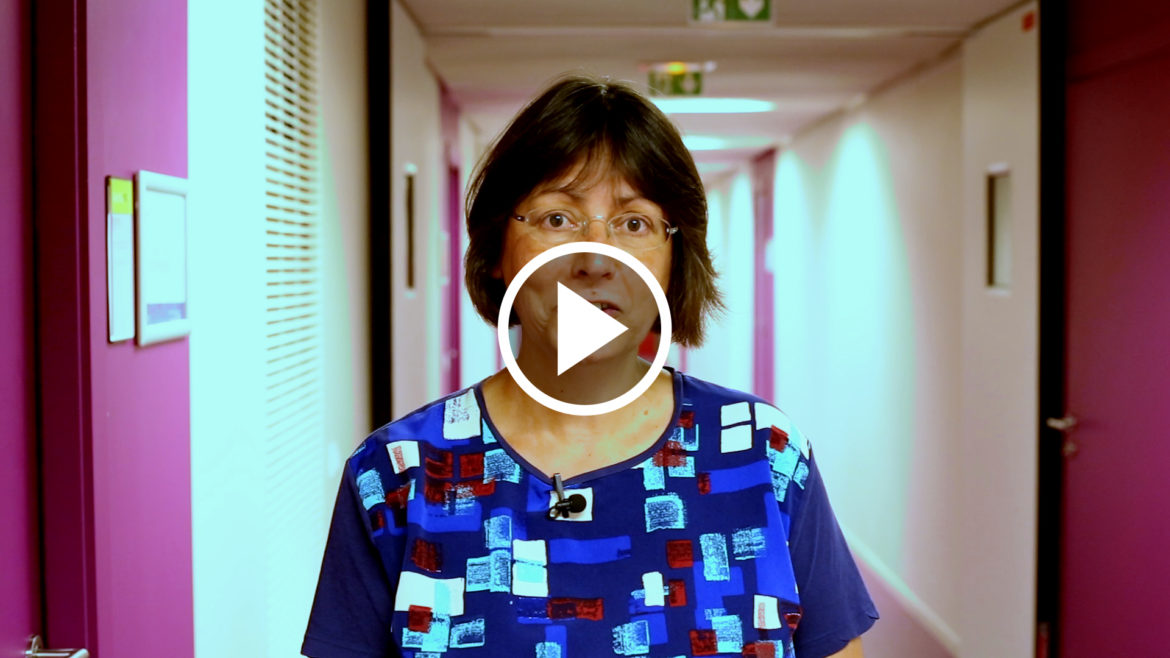
Anna Vilanova is a Full Professor in Visual Analytics at the Department of Mathematics and Computer Science, Eindhoven University of Technology (TU/e), and is associated with the Electrical Engineering department's Signal Processing Systems. Previously, she served as Associate Professor at TU Delft (2013-2019) and Assistant Professor at TU/e (2002-2013). Her research focuses on Visual Analytics for high-dimensional data , explainable AI , and biomedical applications including Diffusion Weighted Imaging, 4D Flow, and Pangenomics. Education: Doctorate in Computer Graphics & Visualization (2001) Master in Computer Science (1997), Universitat Politècnica de Catalunya Research Highlights: Vilanova leads work on Visual Analytics systems for biomedical data, with recent publications in Diffusion MRI modeling , Tractography visualization , Explainable AI frameworks , and Pangenomic variant analysis . Her work bridges dimensionality reduction , uncertainty visualization , and medical imaging applications. Scientific Contributions: NWO-Veni grant (2005): "Visualization of global tensor information for diffusion tensor imaging" NWO-Aspasia grant (2013) Best Poster Award EuroVis (2025) Best Demo/Poster Awards (2022) Leadership & Service: Vilanova serves on the IEEE VIS Steering Committee , was EUROGRAPHICS President (2019-2022), and contributes to conferences like IEEE Visualization and EG-EuroVis . She co-founded the EAISI Health research initiative at TU/e.
Yvonne Rogers is a Professor of Interaction Design and serves as director of UCLIC (University College London Interaction Centre) at University College London. She is a prominent figure in human-computer interaction research with significant contributions to understanding how technology can empower rather than replace human capabilities. Her research spans several interconnected domains: Ubiquitous Computing - examining seamless integration of technology into everyday environments Interaction Design - creating intuitive human-technology interfaces Human-Centered AI - developing systems that create synergies between humans and machines Learning Technologies - transforming educational experiences through technology Professor Rogers advocates for shifting focus from what humans versus machines can do individually to what they can accomplish together. Her work emphasizes societal-level impacts of technology, particularly how AI can enhance complex decision-making processes in political and social contexts. She has been actively involved with the Humane AI Network, contributing to European discussions about responsible AI development that incorporates philosophical and ethical considerations alongside technical capabilities. At UCLIC, she leads research initiatives exploring contextual learning environments that bridge online and offline experiences. Her 2013 lecture on learning technologies contrasted 'inside thinking' (traditional classroom learning) with 'outside thinking' (contextual, real-world learning), advocating for more engaging, playful educational approaches that connect digital and physical spaces.
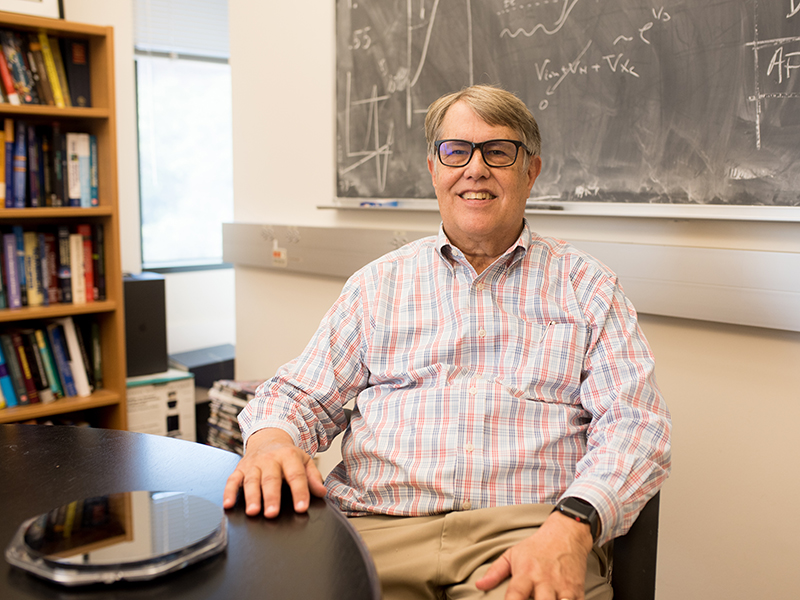
James Chelikowsky is Professor and W. A. "Tex" Moncrief, Jr. Chair in Computational Materials at The University of Texas at Austin's Oden Institute for Computational Engineering and Sciences (ICES). His research pioneers quantum mechanical simulations for materials design and discovery across multiple domains. His educational background includes: B.S. in Physics from Kansas State University (1970) Ph.D. in Physics from University of California at Berkeley (1975) Chelikowsky's research spans computational materials science with focus on quantum models for functionalized nanostructures, simulations of liquids and crystal growth, "green magnetism" in dilute magnetic semiconductors, oxide defects, materials informatics, and high-performance electronic structure algorithms. His work bridges theoretical physics with practical materials engineering to solve complex problems in energy and electronics. Analysis of his 2012-2022 publications reveals evolving focus from fundamental quantum simulations toward machine learning integration for magnetic materials discovery, while maintaining strong contributions to two-dimensional materials and interfacial phenomena. Key trends include increased computational complexity and interdisciplinary collaboration with experimental groups. His distinguished honors include: Feynman Prize for Theory (2022) FMD John Bardeen Award (2021) Aneesur Rahman Prize (2013) Multiple society fellowships (MRS, AAAS, APS) Guggenheim Fellowship (1996) As leader of an active research group, Chelikowsky mentors graduate students in computational methods development. While specific grant details aren't provided, his sustained publication record and named chair position indicate substantial ongoing research funding. His group maintains strong industry and national laboratory collaborations evident in co-authorship patterns. The Computational Materials Group operates through ICES with research facilities supporting high-performance computing for materials simulations. Current projects focus on machine learning-guided materials discovery and quantum mechanical modeling of novel electronic materials.
Timothy G. Strein is a Professor of Analytical Chemistry at Bucknell University, where he also held a Presidential Professorship from 2014-2017. He earned his B.S. from North Carolina State University in 1988 and his Ph.D. from Penn State University in 1992, working on electrochemistry at microvoltammetric electrodes with Dr. Andrew G. Ewing. Following a Camille and Henry Dreyfus Postdoctoral Fellowship at Bucknell (1992-1994), he joined the chemistry faculty where he has served as Department Chair (2010-2014), Acting Chair (2006-2007), and Graduate Coordinator (1998-2006, 2015-). His educational background includes: B.S. in Chemistry from North Carolina State University (1988) Ph.D. in Chemistry from Penn State University (1992) Camille and Henry Dreyfus Postdoctoral Fellowship at Bucknell University (1992-1994) Professor Strein's research focuses on bioanalytical chemistry, with particular expertise in capillary electrophoresis (CE), bile salt micelle structure, chiral separations, aqueous NMR spectroscopy, and isothermal titration calorimetry (ITC). His current work (2025) centers on developing rapid, inexpensive methods for chiral separations using CE, investigating the mechanisms that give rise to chiral separations with bile salt micelles by MEKC-CE, and the underlying thermodynamics driving chiral selection. He also conducts collaborative research using NMR to study bile micelle structure and ICP-MS to determine lithium ion concentrations in human blood, correlating endogenous Li levels with neurological health issues. Analysis of his recent publications (2005-2023) reveals a strong focus on chiral separations using bile salt micelles, with particular emphasis on understanding the molecular mechanisms of chiral recognition. His work spans analytical methodology development, fundamental studies of micellar structure, and applications in bioanalysis. The interdisciplinary nature of his research is evident in publications spanning chemistry, biochemistry, materials science, and medical applications. His scientific recognition includes the Henry Dreyfus Teacher/Scholar Award (TH-98-025). His external funding portfolio demonstrates sustained research support: George I. Alden Trust (2025-2030): $150,000 for HPLC instrumentation Bucknell-Geisinger Research Initiative (2024-2025): $20,000 for lithium concentration studies NSF-ROA Supplement (2021-2022): $29,600 for CE-MS interface development NSF-RUI Grant (2018-2021): $211,552 for chiral separation mechanisms Multiple previous NSF, NIH, and private foundation grants totaling over $1.5 million Professor Strein has mentored numerous undergraduate and MS students, many of whom have gone on to successful careers in academia, industry, medicine, and government. His teaching encompasses analytical chemistry, chemical equilibria, instrumental analysis, forensic chemistry, and general chemistry. He has served the department in various leadership roles and promotes undergraduate research as a central component of his scholarly activities.
Professor Phil King leads a research group within the School of Physics and Astronomy at the University of St Andrews, where he is part of the Centre for Designer Quantum Materials. His research focuses on the electronic structure and many-body interactions of quantum materials using electron spectroscopy, particularly angle-resolved photoemission (ARPES), and creating new designer quantum materials through atomic layer-by-layer growth. King's research interests center on quantum materials, with particular emphasis on topological matter, transition-metal oxides, and 2D quantum materials. His group investigates strain and pressure tuning of quantum materials, photoemission spectroscopy of correlated systems, and engineering band structures in 2D conductors. They develop methods to exploit strong electronic interactions in 2D systems to create new functional materials with tunable properties. Their approach combines experimental screening of candidate materials, bottom-up atomic assembly of custom heterostructures, and advanced spectroscopic feedback. Analysis of King's recent publications reveals a strong focus on the electronic structure of quantum materials, particularly transition metal dichalcogenides, delafossite metals, and topological systems. His work frequently examines charge density waves, spin-orbit coupling effects, Van Hove singularities, and quantum phase transitions. A notable trend is the integration of materials synthesis with advanced spectroscopic characterization, enabling precise control over electronic properties through strain engineering, doping, and heterostructure formation. King actively supervises PhD students on projects related to quantum materials, including probing elastic coupling in exotic magnets, angle-resolved photoemission from tailored mesostructures, thermodynamics and spectroscopy, oxide metals, and gate tuning of 2D quantum materials. His research is supported by major funding sources that enable access to cutting-edge equipment and international facilities. The King Group operates advanced experimental facilities including a high-resolution lab-based ARPES system with multiple light sources, and two DCA R450 molecular-beam epitaxy systems optimized for transition-metal oxides and chalcogenides. They are developing the UK's first spin-resolved ARPES capability. The group regularly utilizes major international facilities including Diamond Light Source, Elettra, SOLEIL, and HiSOR synchrotrons, as well as the ARTEMIS facility for time-resolved studies.
Prof. Dr. Andrzej M Oleś serves as a Professor at the Institute of Theoretical Physics within the Faculty of Physics, Astronomy and Applied Computer Science at Jagiellonian University in Kraków, Poland. His research centers on condensed matter theory with emphasis on quantum materials and electronic structure phenomena. His primary research interests include spin-orbital coupling in transition metal compounds, electron correlation effects, doping mechanisms in metal oxides, and magnetic phenomena in antiferromagnetic/ferromagnetic systems. He employs advanced theoretical frameworks including model Hamiltonians and density functional theory to investigate quantum phases, lattice dynamics, and topological states in complex materials. Recent publications reveal a strong focus on kagome lattice systems (FeGe, RhPb), infinite-layer nickelates, and quantum computation optimization. His work demonstrates consistent exploration of charge density waves, topological surface states, and nonadiabatic quantum control across high-impact journals including Physical Review series and Condensed Matter. Oleś maintains an extensive international collaboration network with researchers from Italy, the United States, and other European institutions, as evidenced by co-authorship patterns across his publication record. His theoretical contributions address fundamental challenges in strongly correlated electron systems and quantum material design.
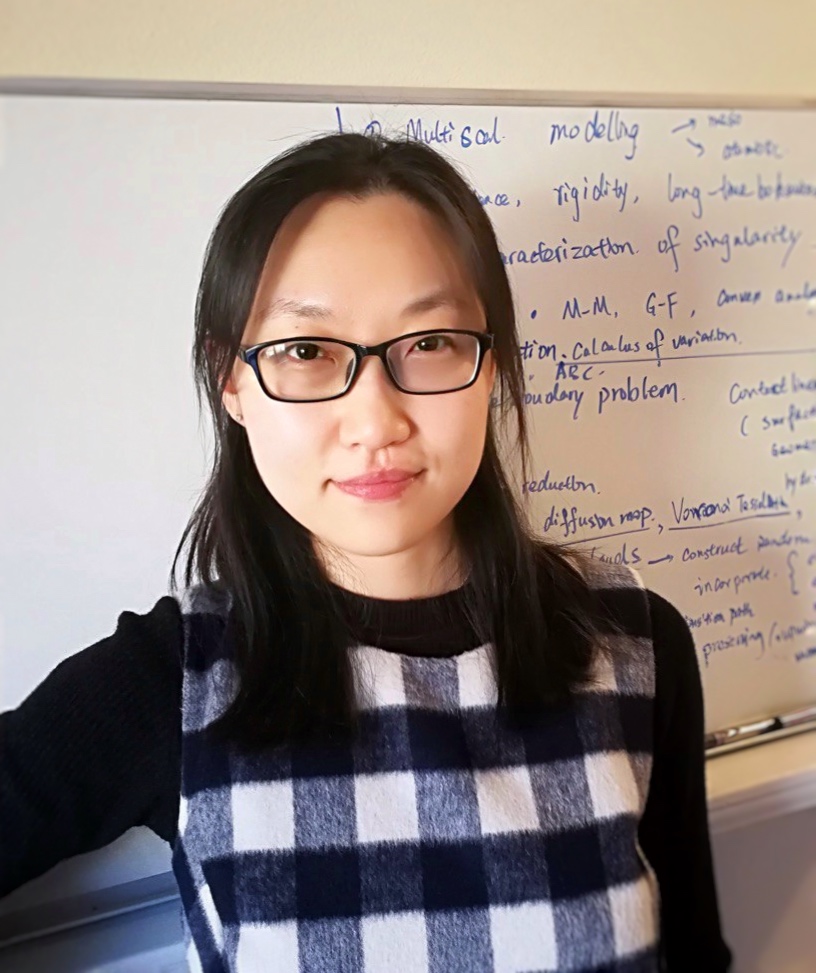
Yuan Gao is an Assistant Professor of Mathematics at Purdue University's Department of Mathematics (College of Science). His research focuses on analysis and computations of PDEs in materials science, biology, and microfluidics, with recent emphasis on optimal control, Hamilton-Jacobi equations, and non-equilibrium chemical reactions. His work is supported by NSF awards DMS-2204288 and DMS-2440651. Previously, he held the William W. Elliott Assistant Research Professor position at Duke University (2019-2021). Research interests include PDE analysis in materials science (crystal growth, dislocation dynamics), numerical methods for interface dynamics, applied stochastic analysis (Langevin dynamics, transition path theory), and mean-field games for fluid systems. He organizes the PSU-Purdue-UMD Joint Seminar on Mathematical Data Science. Key publications span topics like dislocation evolution, Wasserstein gradient flows, and stochastic algorithms for rare events. Awards include NSF CAREER funding recognizing his contributions to mathematical analysis of non-equilibrium systems.
Andrea Pickel is an Assistant Professor at the University of Rochester, holding joint appointments in the Department of Mechanical Engineering, Materials Science, and the Institute of Optics, while also serving as a Scientist at the Laboratory for Laser Energetics (LLE). She received her PhD in Mechanical Engineering from UC Berkeley (2019) and a BS from Carnegie Mellon University (2014). Her research focuses on nanoscale heat transfer, leveraging luminescent materials and super-resolution imaging to address challenges in thermal management, catalysis, and energy systems. Education: PhD, Mechanical Engineering, UC Berkeley, 2019 BS, Mechanical Engineering, Carnegie Mellon University, 2014 Research interests include luminescence nanothermometry, single-nanoparticle imaging, and high-temperature thermal metrology. Her work integrates experimental methods like stimulated emission depletion (STED) imaging and operando spectroscopy to advance understanding of energy transport at the nanoscale. Notable awards include the NSF CAREER Award (2022), ACS PRF Doctoral New Investigator Award (2020), and Furth Fund Award (2021). She was also named a Scialog Fellow in 2024. Advancing thermal measurement techniques, her group collaborates across disciplines to tackle applications in carbon capture, battery technology, and plasmonic photocatalysis. Current projects emphasize developing dual-mode sensing tools for real-time thermal and chemical monitoring. Labs/Teams: Active at the Laboratory for Laser Energetics (LLE) and leads the Pickel Research Group in the Department of Mechanical Engineering.
Professor Nikhil Medhekar is a faculty member in the Department of Materials Science and Engineering at Monash University, Australia. He holds a PhD from Brown University and has extensive expertise in computational materials science, focusing on energy storage, nanotechnology, and sustainable engineering. His research employs advanced simulations to design novel materials for next-generation technologies, including batteries and optoelectronics. He is an active member of the ARC Centre of Excellence in Future Low Energy Technologies (FLEET) and the ARC Industrial Transformation Research Hub on Advanced Manufacturing of Two-Dimensional Materials (AM2D). Education: PhD in Engineering, Brown University, USA Sc. M. in Applied Mathematics, Brown University, USA M.Tech in Mechanical Engineering, IIT Bombay, India B.Eng in Mechanical Engineering, University of Pune, India Research Interests: Computational mechanics, nanoscale materials, quantum dots, nanowires, graphene, and energy applications. His work integrates quantum mechanical simulations, molecular dynamics, and phase-field modeling. Grants & Collaborations: Current projects include investigations into magnesium batteries, solid-state precipitates in aluminum alloys, and 2D materials manufacturing. He leads or co-leads six major research projects funded by the Australian Research Council and industry partners. Awards: 2014 Young Tall Poppy Award, 2008 Materials Research Society Silver Award, and 2008 William N. Findley Award. Labs & Teams: Leads the Computational Materials Lab at Monash, focusing on atomistic simulations and materials design. Collaborates with global institutions like MIT, Tsinghua University, and the Max Planck Society.
Prof. Jay A. Gupta is a Professor and Vice Chair for Graduate Studies and Postdoctoral Affairs in the Department of Physics at The Ohio State University. His research focuses on atomic-scale studies of novel materials using scanning tunneling microscopy (STM) to address challenges in energy conversion and advanced computing. Key areas include magnetic skyrmions in chiral systems, semiconductor defects, 2D materials, and spintronics. He leads a laboratory equipped with four advanced STM systems and collaborates on NSF NeXUS, an ultrafast science facility. Education: B.S. Chemistry/Physics (UIUC), Ph.D. Physics (UCSB) Lab Locations: Physics Research Building (labs 0101/0105/0178) Key Projects: Spin-polarized STM of MnGe, defect-mediated surface chemistry in semiconductors, ultrafast laser-material interactions His group has trained over 30 graduate/undergraduate students and postdocs, many now in academia and industry. Research is supported by NSF, Department of Energy, and industrial partnerships.
Dr. Emmanuel C. Omondi is an Assistant Professor in the Department of Agricultural Sciences and Engineering at Tennessee State University's College of Agriculture. His research focuses on industrial hemp agronomy, sustainable agriculture, and conservation practices. He holds a Ph.D. and M.Sc. in Agronomy from the University of Wyoming and a B.Sc. in General Agriculture from the University of Nairobi. His research explores industrial hemp’s role in crop rotations, reduced tillage systems, and economic viability in Tennessee. Key projects include USDA-funded studies on organic farming impacts, soil health, and hemp production economics. He has led over $6.8 million in grants, including a USDA NIFA project on organic hemp assessment and a William Penn Foundation initiative on soil health and water quality. Awarded the Gamma Sigma Delta Honor Society and multiple fellowships, Dr. Omondi’s work spans international development, including conservation agriculture projects in Kenya and Uganda. He has authored 20+ peer-reviewed articles on topics like soil carbon dynamics, organic farming profitability, and phytoremediation potential of hemp. Education: Ph.D. (Agronomy, University of Wyoming), M.Sc. (Agronomy, University of Wyoming), B.Sc. (General Agriculture, University of Nairobi) Grants: Over $6.8 million in funding for projects on hemp agronomy, soil health, and sustainable farming systems. His honors include the A.K. Dobrenz Student Paper Competition First Prize (2011) and recognition for international academic excellence. Current initiatives focus on bridging agricultural innovation with environmental stewardship through collaborative research.
Yang Liu is an incoming Assistant Professor at Florida State University (Fall 2025) and currently a Senior Research Associate and Affiliated Lecturer in the Department of Computer Science and Technology at the University of Cambridge. She holds a B.E. in Software Engineering from Xi’an Jiaotong University (2016) and a Ph.D. in Computer Science from City University of Hong Kong (2020), advised by Prof. Zhenjiang Li. Her research focuses on intelligent mobile/wearable sensing technologies, combining AI and signal processing to advance applications in human-computer interaction (HCI), smart health, and IoT. She has received notable awards such as the 2024 N2Women Rising Star Award and the 2021 ACM SIGBED Doctoral Thesis Award. Research interests span mobile systems, AI-driven wearable sensing, privacy in human interactions, and healthcare monitoring. Key projects include RespEar (earable-based respiratory monitoring), SmarTeeth (toothbrushing tracking), and WearIoT (privacy-aware wearable systems). She mentors students in areas like biomedical signal processing and secure wearable systems. Teaching includes Mobile/Wearable Systems courses at Cambridge and previously at City University of Hong Kong. Education: B.E. Software Engineering, Xi’an Jiaotong University (2016) Ph.D. Computer Science, City University of Hong Kong (2020) Grants & Services: Organizing roles in ACM SIGCOMM, IEEE ICPADS, and multiple conference TPCs. Invited talks at Columbia University, Purdue University, and others. Her work bridges mobile computing with health applications, addressing both technological innovation and societal impacts through over 30 peer-reviewed publications and industry collaborations.
Mark D. Smucker is a Professor in the Department of Management Science and Engineering at the University of Waterloo, cross-appointed with the David R. Cheriton School of Computer Science (Faculty of Mathematics). His research focuses on interactive information retrieval systems, including search engines and recommendation systems, aiming to enhance evaluation methods for better prediction of human search performance. He co-organized the TREC Health Misinformation Track (2019–2022) and currently co-leads the TREC DRAGUN Track, addressing health misinformation and trustworthiness assessment in news. Education: PhD (Computer Science, UMass Amherst, 2008), MSc (Computer Science, UW-Madison, 1996), BSc (Physics & Computer Science, Iowa State, 1994). Research interests include design/analysis of interactive IR systems, evaluation frameworks, and human-computer interaction. He has been recognized with the ACM SIGIR 2012 Best Paper Award and teaching excellence awards from the University of Waterloo. Teaching includes courses like Search Engines (MSCI/MSE 541/720) and Databases/Software Design (MSCI 245). Active in organizing TREC tracks and publishing over 50 peer-reviewed articles.
Craig Fennie is Associate Professor of Physics at Cornell University's College of Arts and Sciences. His research focuses on computational materials design, exploring relationships between atomic structure and macroscopic properties in complex materials. Key research areas: Materials-by-design strategies Multiferroic and magnetoelectric materials Quantum material interfaces Defect engineering in functional materials His honors include a MacArthur Fellowship (2013), PECASE Award (2013), and APS Fellowship (2015). Recent publications appear in Nature and Physical Review Letters.
Jef Poortmans is a Visiting Professor at KU Leuven, Belgium, specializing in photovoltaic technologies and solar energy systems. His research spans multiple applications including conventional solar installations, agrivoltaics, vehicle-integrated photovoltaics, and tandem solar cell configurations. Affiliated with the Electa department at KU Leuven, he maintains an active research profile with numerous publications extending into 2025. His research interests focus on advancing photovoltaic technology across multiple dimensions. Poortmans investigates thermal modeling to improve energy yield predictions, develops lightweight PV modules for vehicle integration, explores agrivoltaic systems that combine agriculture with solar energy production, and works on next-generation perovskite and tandem solar cell technologies. His work often addresses practical implementation challenges including reliability under various environmental conditions, mechanical integration requirements, and performance optimization for specific applications. Analysis of his recent publications reveals a strong emphasis on practical implementation challenges of photovoltaic systems. His work spans fundamental materials science (particularly for perovskite and thin-film technologies), system integration challenges (especially for vehicle applications), and innovative approaches to land use optimization through agrivoltaics. A recurring theme is addressing reliability and performance issues under real-world operating conditions rather than ideal laboratory settings. Poortmans frequently collaborates with researchers across multiple institutions, indicating strong industry and academic connections within the photovoltaics community. His work appears in high-impact journals including Solar Energy Materials and Solar Cells, Scientific Reports, and Advanced Functional Materials, demonstrating recognition within the field. While specific grant information isn't detailed in the provided materials, his extensive publication record across diverse photovoltaic applications suggests successful funding acquisition for multiple research projects. His involvement in PhD theses supervision indicates active mentorship of next-generation researchers in the photovoltaics field. His research group appears to focus on bridging fundamental photovoltaic science with practical engineering applications, particularly addressing the reliability and integration challenges that prevent wider adoption of solar technologies in non-traditional applications like vehicles and agricultural settings.