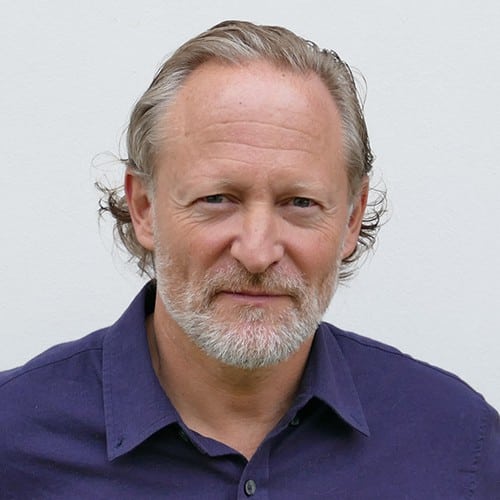
Jesper Rangvid is a Professor of Finance and Director of the Pension Research Centre (PeRCent) at Copenhagen Business School (CBS), where he also serves as Associate Dean of the Executive MBA program . His research focuses on financial markets, macroeconomics, financial crises, household finance, and mutual funds. He has authored influential works such as How Low Interest Rates Change the World (Oxford University Press, 2025) and From Main Street to Wall Street (Oxford University Press, 2021), exploring topics like interest rate trends, economic growth, and policy impacts. He chairs the Council for Return Expectations and holds board positions at Formuepleje, Advantage Investment Partners, and Finansiel Stabilitet, among others. His advisory roles include Levring & Levring and projects for Danish institutions like Forenet Kredit and BankInvest. Recent research highlights include analyzing Denmark’s pension system reforms, fiscal-monetary policy interactions, and the implications of low interest rates on global economies. Rangvid’s publications combine rigorous academic analysis with policy relevance, addressing topics like dividend predictability, economic growth’s impact on asset returns, and the behavior of professional investors. His work often bridges theoretical frameworks with empirical data, offering insights into macro-financial linkages and policy design.
Claudia Wagner is a full professor for Applied Computational Social Sciences at RWTH Aachen University and the Scientific Director of the Computational Social Science department at GESIS—Leibniz Institute for the Social Sciences. She is also an External Faculty member at the Complexity Science Hub Vienna. Her work bridges computer science and the social sciences to study algorithmic systems and their societal impacts. Her research focuses on socio-technical phenomena such as inequality, sexism, and perception bias in algorithmically infused societies. She investigates methodological challenges in using digital behavioral data to study human behavior, attitudes, and group dynamics. Her interests span computational social science, algorithmic fairness, network science, and AI ethics. The analysis of her recent publications reveals a strong emphasis on bias, fairness, and methodological rigor in digital data analysis. Her work spans AI psychometrics, gender inequality in online platforms, and validation frameworks for digital traces. She frequently publishes in top-tier venues such as Nature , Science , and AAAI conferences. DOC-fFORTE fellowship from the Austrian Academy of Sciences Four best paper awards at international conferences (ICWSM, CSCW, WWW, AAAI) Associate Editor, EPJ Data Science Steering Committee Member, International AAAI Conference on Web and Social Media Board Member, International Society for Computational Social Science Claudia Wagner has led and co-led substantial research projects funded by national and international agencies. She mentors a diverse group of PhD students working on topics like algorithmic bias, data quality, and dehumanization. She has organized training events such as the CSS Methods Summer School and delivered keynotes globally on inequality and computational social science. She leads the Computational Social Science department at GESIS and collaborates with interdisciplinary teams at RWTH Aachen and the Complexity Science Hub. Her group develops tools for measuring algorithmic impacts and visualizing disparities in socio-technical systems, such as the 'Planets of Disparity' dashboard.
Professor Peter Feldhütter is a faculty member at the Department of Finance, Copenhagen Business School (CBS), where he has held the position since 2017. He earned his PhD from CBS and previously worked at the London Business School. His research focuses on fixed income markets, particularly examining how prices are influenced by illiquidity, credit risk, and supply-demand imbalances. Notable contributions include studies on U.S. corporate bond market liquidity and credit spread dynamics. Key research areas include empirical asset pricing, credit risk, fixed income analysis, and liquidity risk. He has authored influential papers such as The Myth of the Credit Spread Puzzle and Corporate Bond Liquidity Before and After the Subprime Crisis . Received awards: Jack Treynor Prize, Wharton’s Outstanding Paper Award, and Nykredit’s Talented Researcher Award. External advisory roles: Legal advice for NTC Parent, Shell, and FourWorld Capital Management; academic advising for Copenhagen Economics. Teaching: External faculty at London Business School and University College London. His recent work explores ESG investing’s impact on capital structure and pricing of sustainability-linked bonds. Ongoing projects include studies on financial market liquidity and corporate bond valuation frameworks.
Kristian Miltersen is a Professor at the Department of Finance and Center for Financial Frictions (FRIC) at Copenhagen Business School (CBS). He holds expertise in capital structure optimization, real options valuation, commodity derivatives, and structured financial products. His research bridges theoretical finance with practical applications in corporate finance and asset pricing. After earning his PhD in 1992 on continuous-time interest rate models, Miltersen has expanded into dynamic capital structure modeling and real options. His landmark 1997 Journal of Finance paper on LIBOR Market models critiques the Black-76 formula's limitations for fixed income derivatives. His work spans commodity derivatives, foreign exchange instruments, and R&D investment dynamics, all rooted in theoretical frameworks. Recent research focuses on dynamic debt policies, second mortgages' valuation, tax-driven corporate cash holdings, and state-contingent capital budgeting. He co-authored influential papers on callable debt renegotiations and the interaction between financing and investment decisions under varying industry structures. Teaching includes elite courses on asset pricing, energy markets, and capital structure. As program director for CBS' Advanced Economics and Finance MSc, he shapes advanced academic programs. Outside academia, he serves as an expert witness and consultant for Analysis Group, advising on financial litigation and complex economic issues. His over 40 publications since 1989 reflect deep engagement with financial modeling, spanning interest rate guarantees, commodity price dynamics, and corporate debt optimization. Current research continues exploring financial frictions' impact on corporate policy and market structures.
Linda Sandris Larsen is an Associate Professor of Finance at the Copenhagen Business School's Department of Finance. She previously held academic positions at the University of Southern Denmark (Assistant Professor 2009–2012 and Associate Professor 2012–2016). Her primary affiliations include the Pension Research Center (PerCent) at CBS and board membership at Sydinvest (Danish mutual fund). Education: PhD in Finance (2009), MSc in Mathematics-Economics (2003), both from University of Southern Denmark Her research focuses on dynamic asset allocation, household financial decision-making (particularly mortgage choices), and the impact of model/parameter uncertainty on investment strategies. Current projects explore: Life-cycle consumption-saving interactions with interest-only mortgages Design efficacy of mandatory pension plans Gender disparities in pension product selection Recent publications emphasize practical policy implications, such as recession hedging strategies and pension system welfare analysis. She actively contributes to public policy through roles like the Ministry of Business and Growth's working group on banking/mortgage competition. Her work bridges theoretical finance with real-world applications, often combining stochastic models with empirical analysis of household financial behaviors.
David Krakauer is President and William H. Miller Professor of Complex Systems at the Santa Fe Institute (SFI), a leading center for interdisciplinary research in complex adaptive systems. He leads SFI’s scientific vision and contributes actively to research on the evolution of intelligence, information processing, and problem-solving matter across biological and cultural domains. Research Interests: David’s work explores how life and intelligence emerge and evolve, focusing on the mechanisms of memory, communication, and computation in genetic, neural, social, and cultural systems. His research integrates mathematical modeling, computational frameworks, and empirical data to understand collective intelligence, niche construction, and the thermodynamic and evolutionary foundations of cognition. He investigates deep questions about the relationship between physical laws and information processing in living systems. Recent Research Trends: His recent publications analyze optimal learning rates in ecological niches, the outsourcing of memory through environmental modification, and theoretical visions for the future of complexity science. These works collectively emphasize the role of information efficiency, metabolic constraints, and collective computation in adaptive systems. Scientific Awards: Wired Magazine Smart List 2012 - One of 50 people who will change the world Entrepreneur Magazine Visionary Leader 2016 - Advancing global research and business Advising and Grants: While specific students are not listed, Krakauer has mentored numerous researchers through SFI programs, workshops, and collaborative projects. He has led major interdisciplinary initiatives, including those on the origins of life, AI and cognition, and complexity in law and regulation. His leadership in founding the Wisconsin Institute for Discovery and directing collective computation research indicates substantial grant acquisition and team leadership. Labs and Teams: He co-directed the Center for Complexity and Collective Computation at the University of Wisconsin–Madison and founded the Wisconsin Institute for Discovery. At SFI, he leads the Science Steering Committee and Science Board, shaping the institute’s research agenda through collaborative working groups and long-term projects in complexity science.
Klaus Mosthaf is an Associate Professor in the Department of Environmental and Resource Engineering at the Technical University of Denmark (DTU), where he conducts research on contaminant transport and numerical modeling in porous and fractured media. His work focuses on protecting groundwater resources through advanced modeling of contamination from substances like PFAS, chlorinated solvents, and pesticides. He is actively involved in teaching and academic leadership, coordinating the Nordic Masters program Enviro5Tech and the Sino-Danish Center module on Pollutants and Pollution Control. Research Interests: Transport processes in porous media Groundwater contamination and remediation Numerical modeling of reactive transport Aquifer Thermal Energy Storage (ATES) Fractured and variably saturated geologies Coupled porous-medium and free-flow systems His recent publications reveal a strong focus on PFAS fate, bioremediation in ATES systems, and tracer-based characterization of glacial tills. He employs tools like COMSOL Multiphysics, Python, and FEFlow to develop predictive models grounded in laboratory and field data. Scientific Contributions: Active contributor to over 60 publications in hydrogeology and environmental engineering Key developer of models for coupled processes in subsurface systems Organizer and speaker at international conferences on multiphase flow and contaminant transport Advising and Grants: Klaus Mosthaf supervises multiple PhD students and has coordinated significant research projects, including those on PFAS transport and bioremediation. He is the main supervisor of two active PhD projects and has previously co-supervised two others. His leadership extends to board membership in the Danish Academy of Technical Sciences on Soil and Groundwater (ATV Jord og Grundvand), where he fosters collaboration among academia, consultants, and public authorities. Laboratories and Research Groups: His work is conducted within DTU Sustain, a leading research environment in environmental engineering, where he collaborates with experts in hydrogeology, bioremediation, and sustainable technologies. He is deeply integrated into a network of national and international collaborators focused on groundwater protection and sustainable subsurface utilization.
Marie Dam Lauridsen is a Clinical Instructor at North Denmark Regional Hospital, affiliated with Aalborg University's Faculty of Medicine, Department of Clinical Medicine. Her research focuses on chronic obstructive pulmonary disease (COPD), cardiogenic shock, and patient outcomes in respiratory medicine. She leads the 2025 project 'SEXA-PRO' investigating gender differences in COPD prognosis. Her work integrates telemedicine innovations and cohort analysis to improve diagnostic accuracy and treatment efficacy. Education : Not explicitly stated in provided text. Key research interests include COPD severity stratification, biomarker identification, and healthcare system optimization through telemedicine. Recent studies examine diuretic use impacts, patient mortality patterns, and treatment intensity as prognostic tools. Her 2024 publications highlight telehealth solutions for COPD and epidemiological cohort studies on blood eosinophil levels. Collaborative projects emphasize clinical trial design, healthcare equity, and multidisciplinary care approaches. She has supervised research projects and contributed to national cohort analyses, with findings published in Respiratory Medicine and European Respiratory Journal . Awards : None explicitly listed in text. Advising and grants involvement includes supervision in the 2025 project and contributions to grant-funded COPD research initiatives. Active in lab teams focusing on respiratory disease mechanisms and clinical decision-making tools. Labs/teams: Engaged in Aalborg University's clinical medicine research groups, particularly those addressing COPD heterogeneity and telehealth integration.
Irena Vodenska is Professor of Finance and Director of Finance Programs at Boston University’s Metropolitan College, Department of Administrative Sciences. She holds a PhD in statistical finance and an MA in economics from Boston University, an MBA from Vanderbilt University, and a BS in computer information systems from the University of Belgrade. She is also a Chartered Financial Analyst (CFA) charter holder. Her research is at the intersection of finance, complexity science, and artificial intelligence, focusing on systemic risk modeling, ESG investments, and financial network dynamics. She has led major interdisciplinary research projects funded by the National Science Foundation, the European Commission, and the U.S. Army Research Office. PhD, Statistical Finance – Boston University MA, Economics – Boston University MBA – Owen Graduate School of Management, Vanderbilt University BS, Computer Information Systems – University of Belgrade Dr. Vodenska’s research interests include network theory in finance, systemic risk propagation, AI-powered ESG analysis, cryptocurrency price forecasting, and financial regulation. She employs big data, machine learning, and natural language processing to analyze financial news, market dynamics, and corporate sustainability. Her work investigates how climate disinformation spreads via social networks and influences public policy and governance. The recent articles highlight a consistent focus on modeling financial and economic systems using network science and AI. Trends include systemic stress testing, sentiment analysis in financial markets, cascading failures, and the interplay between macroeconomic indicators and financial networks. Her work spans econophysics, behavioral finance, public health economics, and ethical AI in fintech. National Science Foundation (NSF) research grant (2023) NSF EAGER Award (2014–2015) European Commission FET Open Grant (2012–2014) U.S. Army Research Office (ARO) Grant (2020–2021) MEXT Post-K Computer Grant, Japan (2016–2019) Alexander Hamilton Fulbright Fellowship (1994) Owen Graduate School Fellowship (1995–1996) Dr. Vodenska teaches core finance courses such as Investment Analysis and Portfolio Management, Derivatives Securities, and Financial Regulation and Ethics. She co-developed the MET AD 678 course with Professor Tamar Frankel from BU Law, emphasizing real-world case studies and ethical decision-making. Her research grants have supported innovative work in systemic risk modeling, AI for ESG, and financial network stability. She is actively involved in mentoring, conference organization, and editorial roles in leading journals. She is a key organizer of the International School and Conference on Network Science (NetSci) and the Big Data in Economics, Science, and Technology (BEST) Conference. Her lab and research team focus on complexity in financial systems, bringing together economists, physicists, computer scientists, and data analysts to study global financial stability and sustainability.
Stefan Pichler is a Professor of Finance and Banking and serves as Vice-Rector for Research at the Vienna University of Economics and Business (WU). He is also the Head of the Institute for Finance, Banking and Insurance and affiliated with the Vienna Graduate School of Finance. His academic leadership includes directing master’s programs in Quantitative Finance and Finance and Accounting. Research Interests: His research focuses on core areas in finance, including Bank and Financial Management, Credit Derivatives, Risk Management, Credit Rating Systems, and Sovereign Debt. He has made significant contributions to understanding EMU government bond markets, Value-at-Risk models, and the term structure of interest rates. His work often involves econometric modeling and financial market analysis. Publication Trends: His recent and ongoing research (2020–2025) emphasizes credit risk modeling, non-performing loans, regulatory impacts, and benchmark transitions like CHF-LIBOR. Earlier work (2003–2014) centered on credit ratings, yield spreads, and risk measurement in European markets. His publications appear in journals such as the Journal of Banking and Finance , Journal of Credit Risk , and Review of Finance . Scientific Awards: 4 awards (specific names not listed in text) Advising and Grants: While specific advisees are not listed, he has led multiple research projects, particularly in public financial management and capital market research. He has collaborated extensively with researchers like Jankowitsch, Hornik, and Geyer. He has held advisory roles such as Head of the Expert Panel on Public Financial Management in Austria and Head of the Financial Advisory Board for Salzburg. Labs and Teams: He leads the Institute for Finance, Banking and Insurance at WU and is involved in strategic capital market research and cryptoeconomics initiatives. He has been a voting member of the ATX Index Committee since 1991 and is a regular speaker at the Alpach Financial Market Symposium.
Carsten Sørensen is the Head of Department at the Department of Finance, Copenhagen Business School (CBS), and holds a Cand.Scient.Oecon and Ph.D. His research focuses on dynamic asset allocation, portfolio theory, term structure of interest rates, derivatives, and commodity derivatives. He has contributed extensively to understanding strategic investment decisions under uncertainty, particularly in volatile financial markets. He has authored or co-authored over 29 publications, including seminal works on stochastic income modeling, interest rate dynamics, and commodity futures analysis. His work frequently explores the intersection of theoretical finance and practical investment strategies, emphasizing real-world applications of academic insights. Current Roles: Head of Department (Department of Finance), Director of Danish Finance Institute (2019–present) Outside Activities: Academic Committee Member for Danish FSA (2011–present), Teacher at Danish Society of Actuaries (2019) Key Contributions: Pioneered research on mean-reverting returns and inflation uncertainty in asset allocation models His research trends emphasize quantitative methods to address market complexities, with a focus on stochastic processes and dynamic optimization. He has consistently challenged conventional investment recommendations through rigorous empirical analysis. Awards: None explicitly listed Grants: No specific grants mentioned He is actively involved in academic leadership, directing interdisciplinary research initiatives at CBS and advising regulatory bodies on financial education standards.
Mogens Bladt is a Professor of Applied Probability and Insurance Mathematics at the Department of Mathematical Sciences, University of Copenhagen. He has held positions since 2018 after 24 years as Principal Researcher at the National University of Mexico (1994-2018), with visiting professorships at Technical University of Denmark and University of Copenhagen since 2001. Research: Focuses on time-inhomogeneous phase-type distributions, matrix-oriented life insurance models, heavy-tailed distributions, and diffusion bridge simulation Teaching: Offers graduate/undergraduate courses in Applied Probability, Stochastic Processes, Risk Theory, and Numerical Analysis Scientific Contributions: Developed R packages for Markov jump processes, phase-type distributions, and diffusion bridges. Holds grants from Mexico and Denmark, including Danish Research Council funding (2007–2008). Supervised 5 PhD, 8 Master’s, and 13 Bachelor’s theses Organized academic workshops and served as Associate Editor for Stochastic Models since 1997
Thibault Laurentjoye is an Assistant Professor at Aalborg University Business School, Faculty of Social Sciences and Humanities, specializing in macroeconomic methodology, theory, and economic policy (MaMTEP). His work focuses on empirical stock-flow consistent models, monetary policy, income distribution, and international economic dynamics. Research Interests Laurentjoye’s research bridges macroeconomics, econometrics, and post-Keynesian economics. Key areas include currency options for political entities (e.g., Wales/Scotland), inflation dynamics, and structural economic modeling for Denmark. His work often addresses real-world policy challenges like unemployment insurance, current account imbalances, and exchange rate mechanisms. Selected Publications His recent publications (2024–2025) emphasize stock-flow consistent models, inflation hierarchies, and currency policy debates. Notably, he has contributed to the Journal of Post Keynesian Economics and edited volumes on sustainability and economic methodology. Academic Activities Active in professional engagements, Laurentjoye has participated in Nordic Post-Keynesian conferences, collaborated with international institutions (e.g., Université de Picardie Jules Verne), and contributed to media discussions on Scottish currency independence since 2022. Labs/Teams He is affiliated with MaMTEP, a research unit dedicated to macroeconomic methodology and policy at Aalborg University Business School.
Mohammad Naser Sabet Jahromi is an Assistant Professor at the Department of Architecture, Design and Media Technology, Aalborg University, Denmark. He is affiliated with the Visual Analysis and Perception Centre for AI Ethics, Law and Policy. His research focuses on explainable AI (XAI), biometrics, machine learning, and ethical AI applications in legal and medical domains. He actively participates in interdisciplinary projects like REPAI: Responsible AI for Value Creation (2023-2027), which explores AI ethics, computational discourse analysis, and value-driven AI systems. His educational background is not explicitly detailed in the provided text, but his research trajectory indicates strong expertise in computer science and AI systems. Key research interests include interpretable machine learning models, privacy-preserving biometric systems, and AI applications in asylum adjudication and educational assessment. Recent work emphasizes developing XAI frameworks like SIDU-TXT for NLP, verifying machine unlearning mechanisms, and automating large-classroom assessments. His projects bridge technical AI advancements with societal implications through collaborations with legal and ethical scholars. Notable contributions include datasets evaluating XAI methods in medicine and methodologies for transparent AI decision-making. He has participated in conferences such as ICPR 2024 and JURISIN 2023, showcasing interdisciplinary research impact.
Dan Stieper Karbing is an Associate Professor in the Department of Health Science and Technology at the Faculty of Medicine, Aalborg University, Denmark. His research focuses on respiratory and critical care, with a strong emphasis on AI-driven decision support systems for mechanical ventilation. Ph.D. in Biomedical Science and Engineering (2009) M.Sc. in Biomedical Engineering, specializing in Biomedical Signals and Systems (2006) His research interests include biomedical engineering, mechanical ventilation, gas exchange modeling, decision support systems, AI in healthcare, and cardiorespiratory monitoring . He applies engineering principles to solve clinical challenges in intensive care, particularly in optimizing ventilator therapy and patient monitoring. The recent trend in his publications centers on AI-enabled clinical decision tools, non-invasive monitoring using wearable sensors, respiratory rate estimation, cardiorespiratory fitness assessment, and rehabilitation in critically ill patients . His work bridges engineering and medicine, aiming to improve patient outcomes through data-driven, personalized care. He is actively involved in research projects such as The Beacon Caresystem and CoRESCUE AAU Pandemic Ventilator, and his work has been featured in media outlets discussing AI in hospitals, customized ventilator treatment, and pandemic preparedness. He supervises PhD students and collaborates internationally on clinical and engineering research. He also serves on the board of Aw Technologies ApS, linking academia with industry innovation.