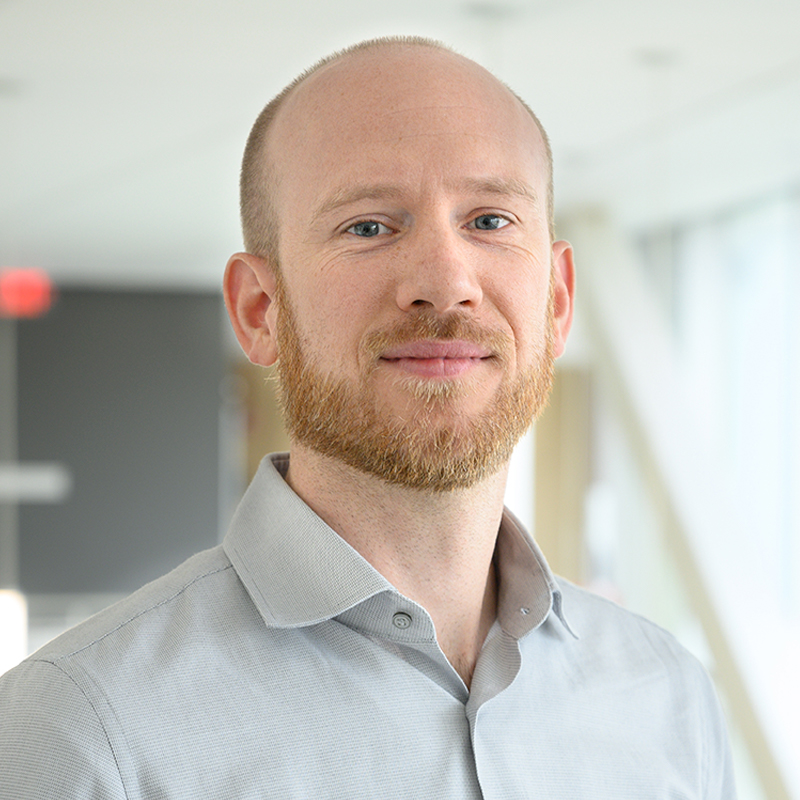
Renjie Feng is a Research Fellow in Mathematics and AI at the School of Mathematics and Statistics and the Sydney Mathematical Research Institute , University of Sydney. His work bridges probability theory, statistics, and applications in machine learning, deep learning, and artificial intelligence. His research interests focus on probability theory and its applications to machine learning , random matrix theory , and statistical physics . He investigates extreme value problems, spectral properties of random matrices, and topological features of random fields over Riemannian manifolds. Recent publications highlight trends in random matrix theory (GUE, GOE, GSE), extreme gap problems , determinantal point processes , and Wiener chaos . Collaborative works with F. Götze, D. Yao, and R. Adler emphasize U-statistics , multivariate linear statistics , and random topology inspired by Poisson point process studies.
Athanasios TRIANTAFYLLOU is an Associate Professor of Finance at IÉSEG School of Management in France. He holds a Ph.D. in Economics from the University of Athens (2017) and has held academic positions including Visiting Professor at Cornell University (2019), Lecturer at the University of Essex (2017–2022), and General Equilibrium Modeler at the National Technical University of Athens (2015). His research focuses on commodity markets, volatility forecasting, risk management, and monetary economics. Key contributions include analyzing commodity price uncertainty's impact on economic activity and financial markets. He has published extensively in journals like Journal of Futures Markets , Economics Letters , and International Journal of Finance and Economics . Education includes a BSc in Mathematics (2008), MSc in Accounting and Finance (2010), and M.Phil. in Economics (2013), all from Greek institutions. Professional experience includes risk management consulting at Ernst & Young (2016–2017). His teaching covers financial derivatives, multinational finance, and commodity markets. Research highlights include exploring the role of commodity price uncertainty in global economic dynamics and the predictive power of market information in corporate defaults. His work often bridges theoretical econometrics with practical policy implications, addressing issues like inflation dynamics driven by oil market risks and the tourism-led growth hypothesis in the Eurozone. TRIANTAFYLLOU’s publications emphasize volatility modeling, commodity market linkages, and the interplay between economic uncertainty and financial stability.
Mungo Wilson is a Professor of Finance at the Saïd Business School , University of Oxford, and an associate member of the Oxford-Man Institute of Quantitative Finance. He holds a PPE degree from Oxford, an MSc in Economics from LSE, and a PhD in Economics from Harvard. His research focuses on asset pricing, credit risk, mutual funds, and macroeconomic influences on financial markets. He has published extensively in top journals and engages actively with industry through board roles and advisory work. Education : Bachelor's in Philosophy, Politics & Economics (PPE), University of Oxford MSc Economics, London School of Economics PhD in Economics, Harvard University Research Interests : Assesses how macroeconomic conditions and credit risk shape asset prices Analyzes mutual fund behavior and market information transmission mechanisms Explores political dynamics' impact on financial markets His professional engagements include board memberships with funds like EA Asia Absolute Return Master Fund and advisory roles at Broadwell Capital. Teaching focuses on microeconomics for MBA programs, covering game theory, market structures, and price discrimination. Advisory & Grants : Supervises doctoral students at Saïd Business School and serves on programme committees for major finance conferences (e.g., European Finance Association, CEPR Annual Spring Symposium). Awards : While no specific prizes are listed, his impactful research has been widely cited and presented globally.
Zhi Da is the Howard J. and Geraldine F. Korth Chair in Finance and Professor of Finance at the University of Notre Dame , Mendoza College of Business, Department of Finance. He completed his Ph.D. in Finance at Northwestern University’s Kellogg School of Management (2006), preceded by an M.Sc. in Financial Engineering from the National University of Singapore (2001) and a B.B.A. with First-Class Honors (1999) from the same institution. Holding editorial roles at Journal of Finance , Management Science , Review of Financial Studies and several other top journals, he is a leading voice in empirical finance research. Education Ph.D. in Finance, 2006 – Kellogg School of Management, Northwestern University M.Sc. in Financial Engineering, 2001 – National University of Singapore B.B.A. (1st Class Honors), 1999 – National University of Singapore Research Interests Zhi Da’s scholarship sits at the intersection of asset pricing , behavioral finance , and market microstructure . He investigates how investor attention, institutional trading, liquidity frictions, and information flows jointly determine the cross-section of expected returns. His work delves into retail margin trading, the role of pension-fund flows in exchange-rate dynamics, the informational content of SEC filings, and the efficiency of short-selling mechanisms. By combining large-scale data analytics, textual analysis, and structural modeling, he uncovers novel predictors of returns ranging from presidential approval ratings to real-time attention measures. Recent projects explore fractional trading ’s impact on price efficiency, hedging demand as a driver of intraday momentum, and the hidden effort problem in delegated portfolio management. These themes collectively advance our understanding of limits to arbitrage and the formation of extrapolative beliefs. Publication Landscape Spanning 2025 back to 2009, his 15 most recent articles in Journal of Finance , Review of Financial Studies , Management Science , Journal of Financial Economics , and Journal of Financial and Quantitative Analysis converge on three broad motifs: (1) micro-level trading frictions—liquidity costs, margin requirements, and short-selling constraints; (2) macro-finance linkages—exchange rates, fiscal policy, and global capital flows; and (3) information economics—attention allocation, media analytics, and regulatory disclosures. The collective evidence demonstrates that seemingly small trading or informational frictions aggregate into large, persistent cross-sectional return predictability. Honors and Awards 2017 William F. Sharpe Award for Best Paper, Journal of Financial and Quantitative Analysis Lead-article distinctions in Journal of Finance , Review of Financial Studies , and Management Science Featured coverage in SmartMoney and CNBC Teaching & Mentorship At Notre Dame’s Mendoza College, Professor Da teaches Investments (undergraduate and MBA) and Fixed Income Securities , integrating cutting-edge research insights into the curriculum. While specific advisees are not listed, his extensive co-author network (22+ recurring collaborators) attests to a vibrant mentoring environment. Laboratory & Data Resources He publicly distributes the NAT (Net Arbitrage Trading) dataset, a stock-quarter panel of arbitrage positions used in Chen, Da & Huang (2019). This resource has become a standard tool for researchers studying arbitrage capital movements.
Dr. Shan Lu is a Lecturer in Finance at the Department of Accounting and Finance, Kent Business School, University of Kent, since August 2021. He previously held positions at the University of Aberdeen and the University of Bradford and earned his PhD from the University of Aberdeen. Research interests: Financial derivatives, option pricing, and quantitative finance. His work focuses on volatility modeling, risk-neutral density estimation, and computational finance, with publications in journals such as the European Journal of Finance, Journal of Futures Markets, and Economics Letters. Teaching: Covers financial markets, derivatives, econometrics, and quantitative methods at undergraduate and postgraduate levels. Scientific awards: Fellow (FHEA) of Higher Education Academy Advising: Offers PhD supervision in topics aligned with his research interests, including financial derivatives and quantitative finance. He emphasizes collaboration on research ideas directly related to his expertise. Publications: Recent work explores volatility dynamics in VIX/VXX options, risk-neutral density extraction, and implied volatility forecasting, leveraging computational methods and empirical finance techniques.
Dr. Livia Pancotto is a Senior Lecturer in Banking at the Department of Accounting and Finance, University of Strathclyde. She serves as Director of the MSc in International Banking and Finance and Deputy Director of the Responsible Business Institute (ReBI). She holds a PhD and MSc from Bangor University and degrees from Sapienza University of Rome. Her research focuses on European banking regulation, financial stability, and gender diversity's impact on climate finance. She chairs the International Accounting & Finance Doctoral Symposium and edits The European Journal of Finance. Awards include the 2014 Best Banking and Finance Master’s dissertation. She leads research on negative interest rates, non-performing loans, and green lending through EU-funded projects. Education: PhD Banking & Finance (Bangor), MSc (Sapienza), BSc (Sapienza) Research explores empirical banking dynamics, regulatory frameworks, and sustainable finance. Key topics include EU banking union evolution, climate change mitigation via gender-diverse bank boards, and market reactions to policy shocks. Recent work analyzes negative interest rate impacts on bank efficiency and Italy's NPL crisis. She has secured £153k in research funding (2023-2025). Grants: Research Excellence Awards (Strathclyde SRSS) Led workshops on Responsible Business and AI, presented at FSB Financial Innovation Network, and peer-reviewed for top journals. Supervises doctoral candidates through IAFDS. Active in editorial and advisory roles enhancing academic rigor in finance disciplines.
John Cotter is a Full Professor of Finance and Chair in Quantitative Finance at University College Dublin's Smurfit School of Business. He holds a PhD from Queen's University Belfast and prior academic roles include Associate Professor (2006-2012) and Senior Lecturer (2004-2006). His research focuses on volatility modeling, risk management, and asset pricing with applications in equity, real estate, and derivative markets. Cotter directs the Centre for Financial Markets and the Financial Mathematics Computation Cluster (FMC2), a multi-university research initiative funded by Science Foundation Ireland. Education: BComm and MEconSc from University College Cork, PhD in Finance from Queen's University Belfast. Research interests span asset pricing, volatility modeling, risk management, and financial market integration. His work has been published in top journals like Journal of Banking and Finance and Journal of International Money and Finance . He has secured grants including the ADAPT Phase 2 project (2021-2026). Cotter advises the European Securities Markets Authority (ESMA) and has consulted for numerous organizations globally. Notable awards include the UCD Outstanding Educator Teaching Award and UCD School of Business Research Contribution Award. He serves as Associate Editor for three journals and has supervised numerous PhD students through FMC2.
Professor Ben Goldys is a distinguished academic at The University of Sydney's School of Mathematics and Statistics, where he conducts research at the intersection of pure mathematics and applied sciences. His work spans multiple disciplines including stochastic analysis, partial differential equations, and financial mathematics, with significant contributions to both theoretical frameworks and practical applications in science and finance. Goldys' research interests center on stochastic (ordinary and partial) differential equations and their applications. His specific focus areas include stochastic partial differential equations, stochastic geometric PDEs, stochastic boundary value problems, stochastic fluid dynamics, ergodic theory of infinite-dimensional diffusions, and applications in financial mathematics such as interest rate derivatives, credit risk, and stochastic volatility. His work bridges pure mathematical theory (Functional Analysis, PDEs, Ergodic Theory) with complex real-world problems across multiple domains. His research aligns with the University of Sydney Faculty of Science Research Strengths including Understanding the Universe, Fundamental Laws of Nature, Complex Systems, and Next Generation Materials. Professor Goldys has secured multiple significant research grants from the Australian Research Council, including recent projects such as 'Mathematics for future magnetic devices' (2024), 'Mathematics for breaking limits of speed and density in magnetic memories' (2019), and 'Novel Approaches for Problems with Uncertainties' (2015). His current research projects focus on geometric stochastic partial differential equations and applications in micromagnetism, mean field games in finance, stochastic boundary value problems, and stochastic Navier-Stokes equations on the rotating sphere. He maintains extensive international collaborations with institutions in Germany (University of Tuebingen), Italy (LUISS University), Poland (Institute of Mathematics Polish Academy of Sciences), and the United Kingdom (University of York), working on projects involving optimal control, stochastic systems with memory, and geometric stochastic PDEs. Goldys is an active member of the Applied Mathematics Research Group and The University of Sydney Nano Institute, contributing to interdisciplinary research initiatives that connect mathematical theory with cutting-edge technological applications.
Quoc Thong Le Gia is an Associate Professor in the School of Mathematics & Statistics at the University of New South Wales (UNSW), Sydney. He holds a PhD in Mathematics from Texas A&M University (2003), an MS in Mathematics from Texas A&M University (2000), and a BSc in Mathematics and Computer Science from UNSW (1998). His research focuses on Numerical Analysis , Approximation Theory , Partial Differential Equations , and Stochastic Processes , with particular expertise in problems on spherical domains. His work bridges theoretical mathematics with practical applications in computational science, data science, and machine learning. Le Gia's recent publications demonstrate a strong focus on numerical methods for PDEs on spheres, stochastic analysis, and machine learning applications. His work shows consistent progression from theoretical foundations to practical implementations, with increasing interdisciplinary applications in recent years. L. F. Guseman Prize in Mathematics, Texas A&M University (2003) As a dedicated academic mentor, Le Gia has supervised numerous PhD, Master's, and Honours students across computational mathematics and data science topics. He has secured significant research funding through ARC Discovery Projects including DP220101811 (2022-2024) and DP180100506 (2018-2020). Professionally, he serves as External Associate Editor for Frontiers in Applied Mathematics and Statistics , Secretary for ANZIAM's Computational Mathematics Group, and Co-chair of Mathematics of Computation and Optimisation (AustMS Special Interest Group).
Dr. Amir Hakami is a Professor in the Department of Civil & Environmental Engineering at Carleton University , where he leads the Carleton Atmospheric Modelling Group . His research focuses on advanced air quality modeling techniques to inform environmental policy. Degrees: B.Sc. (Polytechnic of Tehran), M.Sc., Ph.D. (Georgia Tech), Postdoc (Caltech) Contact: Office 3454 Mackenzie Building, Phone: 613-520-2600 ext. 8609, Email: amir.hakami@carleton.ca Research Interests: Air quality modeling at multiple spatial scales Adjoint sensitivity analysis for atmospheric response Inverse modeling and data assimilation techniques Uncertainty quantification in environmental systems Interdisciplinary applications in policy, public health, and economics Teaching: Courses include Environmental Engineering Systems Modeling , Contaminant Transport , and Air Pollution & Emissions Control at undergraduate and graduate levels. Research Group: The group includes Ph.D. candidates, postdoctoral fellows, and alumni working on topics ranging from atmospheric chemistry to sustainable energy systems. Members come from diverse backgrounds in engineering, science, and policy disciplines.
Anna Battauz is an Associate Professor at Bocconi University, teaching undergraduate, graduate, and Ph.D. courses in Calculus, Quantitative Finance, Derivatives Pricing, Numerical Methods for Finance, and Continuous-Time Finance. She serves as Director of the MSc in Finance since 2022 and is a research fellow at IGIER (Innocenzo Gasparini Institute for Economic Research) and Baffi Carefin. Education: Ph.D. in Financial Mathematics from Scuola Normale Superiore in Pisa; Degree in Mathematics from the University of Udine. Research Interests: Anna specializes in Quantitative Finance, with a focus on asset/derivatives pricing, asset allocation, and optimal stopping. Her work bridges theoretical finance with practical applications in financial markets. Publications & Research Trends: Her recent articles explore American options, stochastic interest rates, quanto derivatives, and earnouts in M&A. Topics span mathematical finance, computational methods, and strategic corporate finance, emphasizing pricing models, optimization, and empirical analysis. Scientific Awards: Teaching Excellence Award, Bocconi University (2018) Research Excellence Award, Bocconi University (2014) Research Excellence Award, Bocconi University (2004) Refereeing & Affiliations: Anna acts as a referee for academic publications and contributes to research initiatives at IGIER and Baffi Carefin. Her expertise supports advanced financial modeling and policy development in dynamic market environments.
Francisco Barillas Bedoya is an Associate Professor at the School of Banking and Finance within the UNSW Business School, University of New South Wales. His research focuses on theoretical and empirical asset pricing, particularly portfolio choice, asset pricing tests, macrofinance, and term structure of interest rates. He has published extensively in top-tier journals like the Journal of Finance and Management Science. PhD from New York University MA from University of British Columbia BSc from Trent University His recent publications analyze Sharpe ratios for model comparison, speculative behavior in bond markets, and risk premia in fixed income markets. While no formal awards are listed, his work intersects financial economics, econometrics, and computational methods. Office: Level 3, Room 333C, Ref E12 Email: f.barillas@unsw.edu.au
Martin Larsson is a Professor in the Department of Mathematical Sciences at Carnegie Mellon University (CMU), affiliated with the Mellon College of Science. He holds a Ph.D. from Cornell University and completed a postdoctoral appointment at the Swiss Finance Institute at EPFL, Lausanne, Switzerland. His research focuses on Mathematical Finance, stochastic analysis, probability, and statistics, with emphasis on affine and polynomial processes, stochastic portfolio theory, and sequential statistics. Key research domains include modeling interest rate term structures, large-scale equity market dynamics, and statistical testing in online settings. He serves as the Departmental representative for the Master of Science in Computational Finance (MSCF) program at CMU. Larsson has received the Bruti-Liberati Visiting Fellowship from the University of Technology Sydney. His work bridges theoretical probability with applications in finance, including contributions to stochastic volatility modeling, optimal contracts in trading, and robust portfolio optimization under uncertainty. Publications span topics such as martingale exit times, Wasserstein distance convergence, and ergodic control in stochastic systems, reflecting his interdisciplinary approach to mathematical finance and probability theory. His research often combines analytical techniques with stochastic control and geometric flows.
Alexi Savov is the Marcus Nadler Professor of Finance and Economics at the New York University Stern School of Business and a Research Associate in Asset Pricing at the National Bureau of Economic Research. His research investigates the interplay between monetary policy, financial institutions, and asset markets, with a focus on banking stability and macroeconomic transmission mechanisms. Education: Ph.D. in Finance, University of Chicago Booth School of Business M.B.A., University of Chicago Booth School of Business B.A. in Mathematics and Economics (summa cum laude), Washington University in St. Louis Research Focus: Professor Savov's work centers on macro-finance, monetary policy transmission, and financial intermediation. He examines how central banking actions influence credit markets, asset prices, and banking stability, with empirical emphasis on deposit dynamics, housing markets, and risk premiums. Publications: His articles in top-tier journals explore themes including monetary policy's impact on housing, deposit-driven banking models, and shadow banking. Research often integrates theoretical frameworks with granular data to address systemic risks and regulatory implications. Awards and Honors: 2022 Journal of Finance Brattle Group Prize (Distinguished Paper) 2018 Journal of Finance Amundi Pioneer Prize (Distinguished Paper) 2011 Journal of Finance Smith-Breeden Prize (Distinguished Paper) WFA Best Paper Award in Financial Intermediations Yuki Arai Faculty Research Prize in Finance, NYU Stern
Mark Martinez-Klimov is a researcher in the Department of Chemical Engineering at Åbo Akademi University, Faculty of Science and Engineering. His work focuses on catalysis for sustainable energy and renewable fuel production, with an emphasis on heterogeneous catalysis, biomass conversion, and CO2 utilization. He is actively involved in experimental and kinetic studies of catalytic processes. Research Interests: His primary research areas include hydrodeoxygenation, dry methane reforming, combustion synthesis, and catalytic upgrading of bio-oil and biomass derivatives. He investigates catalyst design, deactivation mechanisms, and process optimization using advanced characterization techniques such as X-ray diffraction, scanning electron microscopy, and thermogravimetric analysis. His work supports the development of cleaner energy technologies and circular chemical processes. The analysis of his recent publications (2021–2025) reveals a consistent focus on sustainable catalytic processes, particularly in renewable jet fuel production, hydrogenation of sugars, and CO2 valorization. His research spans both fundamental catalyst development and applied reaction engineering, often in continuous flow systems such as trickle bed reactors. The work integrates material science with chemical engineering principles to address challenges in energy transition. Scientific Awards: No awards explicitly mentioned in the provided text. Advising and Grants: While specific students or grants are not listed, his collaborative publication pattern with senior researchers like Dmitry Murzin and Pavel Mäki-Arvela suggests involvement in major research projects, likely funded by national or EU-level grants. He appears to contribute to team-based research in catalysis and sustainable technologies, potentially mentoring junior researchers and PhD students within the group. Labs and Teams: Mark is part of a prominent catalysis research group at Åbo Akademi University, specializing in sustainable chemical processes. The team leverages advanced synthesis methods (e.g., solution combustion, impregnation) and characterization tools to develop novel catalysts for energy and environmental applications. Their work is highly collaborative, involving both national and international partners in the field of green chemistry and renewable fuels.