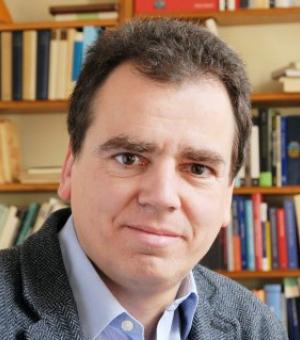
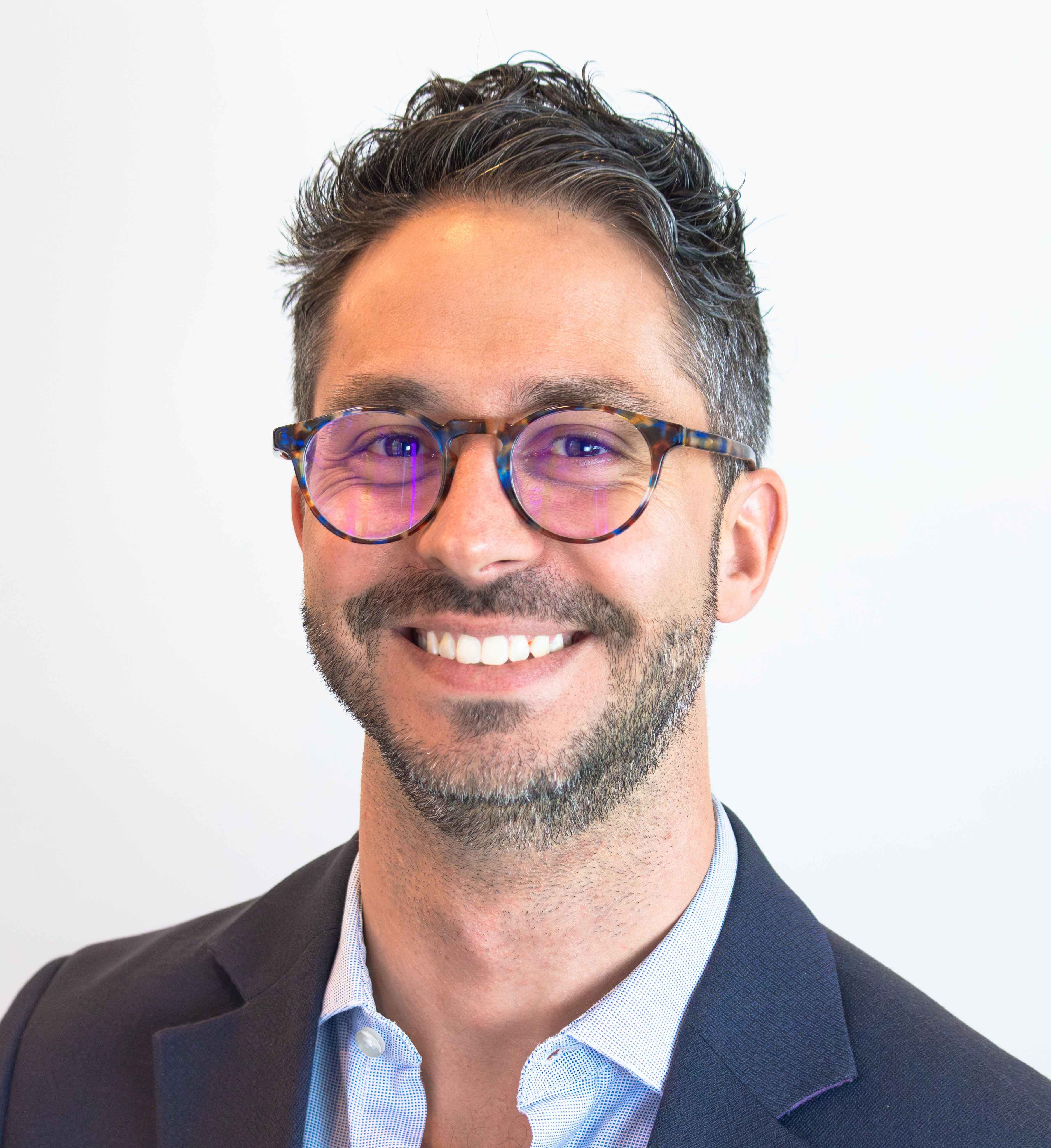
Professor Johannes Zachhuber holds a professorship in Historical and Systematic Theology at the University of Oxford's Faculty of Theology and Religion. His research focuses on modern and postmodern theology, the Continental tradition of philosophy of religion (Kant, Schleiermacher, Hegel), theology of late antiquity, 19th-century theology, religion and politics, and theories of secularization. He examines theological institutions' role in shaping modern discourse while addressing contemporary debates on secularity. His scholarly work bridges historical theology with systematic inquiry, analyzing figures like Schleiermacher, Gregory of Nyssa, and Baur. Recent publications include studies on early Christian cosmology, Schleiermacher’s theology, and Baur’s historicist approach. He critiques secularization narratives and explores patristic thought’s philosophical dimensions. Publications span monographs, edited volumes, and reviews, reflecting his interdisciplinary engagement with theology’s historical and philosophical foundations. He contributes to debates on theology’s role in modern academia and society, emphasizing the interplay between historical context and theological reflection.
Neil Pembroke is a Lecturer in Studies in Religion at the University of Queensland , affiliated with the School of Historical and Philosophical Inquiry . His academic work bridges theology, philosophy, and pastoral care, with a focus on spiritual formation, healthcare ethics, and the intersection of psychology and religion. Education : B.Eng (Agric.), B.Th (B.C.T.), BA (Hons), PhD (Edin) Teaching interests : Jung and Human Spirituality, Religion and Health, Mysticism, Psychology of Religion, Religion and Psychotherapies His research explores therapeutic preaching, spiritual maturity, and the role of empathy in Christian and interfaith contexts. He has contributed to organizational spirituality, particularly in church-sponsored healthcare, and examined compassion fatigue through Christian and Buddhist perspectives. Publications include books like Divine Therapeia and the Sermon and Renewing Pastoral Practice , with over 50 journal articles and 10 book chapters. Collaborative projects span international studies on pastoral care models and interdisciplinary dialogues on ethics. Neil Pembroke's work emphasizes the integration of theological and psychological insights into personal and communal spiritual growth, with a particular focus on shame, identity, and the relational Trinity as frameworks for pastoral practice.
Professor Rachel Muers is the Chair of Divinity at the University of Edinburgh’s School of Divinity, a historic position she became the first woman to hold. Her work bridges disciplinary, confessional, and institutional boundaries, focusing on 20th-century Christian theology and contemporary theological responses to urgent societal questions. She holds a PhD from the University of Cambridge (2002), where she also served as Margaret Smith Research Fellow. Previously, she held academic roles at the University of Exeter and the University of Leeds, achieving a personal chair in 2018. Her research explores intersections between theology, ethics, and social practice, with notable focus on Quaker theology, environmental stewardship, and ecumenical dialogue. She serves on the World Council of Churches Faith and Order Commission and is affiliated with organizations like the Society for the Study of Christian Ethics. Her teaching emphasizes practical theology and ethical discernment. Key themes in her scholarship include liturgical practices, pacifism, and the relevance of theology to modern challenges. She advocates for interdisciplinary approaches, integrating anthropology and the social sciences into theological inquiry. Her publications reflect a commitment to actionable theology, addressing issues from climate change to interfaith relations.
Charles M. Stang is Professor of Early Christian Thought at Harvard Divinity School and Director of the Center for the Study of World Religions, positions he has held since joining the faculty in 2008 and becoming director in 2017 respectively. His academic home is firmly within Harvard University's religious studies ecosystem, where he has established himself as a leading scholar in ancient Christian thought and Mediterranean religious history. His educational background includes an AB from Harvard College, an MDiv from the University of Chicago, and a ThD from Harvard Divinity School. This rigorous training across prestigious institutions has equipped him with interdisciplinary perspectives that inform his boundary-crossing scholarship. Stang's research interrogates the intersections of early Christian thought with broader Mediterranean philosophical traditions, with particular emphasis on apophatic theology, Gnosticism, and Syriac Christianity. His work consistently challenges reductionist approaches to religious studies, advocating instead for what he terms an 'expansive anthropology, ontology and epistemology' that recognizes religion's capacity to transcend mundane frameworks. He has developed a distinctive theoretical framework around 'transcendence and transformation'—concepts he argues should form the core of religious studies in the contemporary academy. His publications reveal a trajectory from focused historical studies of early Christian texts toward more expansive theoretical interventions in religious studies methodology. While his early work centered on figures like Dionysius the Areopagite and Evagrius Ponticus, his recent scholarship increasingly engages with contemporary questions about religion's role in the humanities and the urgent need for what he calls 'superhumanities' that acknowledge dimensions of reality beyond conventional academic frameworks. Manfred Lautenschläger Award for Theological Promise (2013) for Apophasis and Pseudonymity in Dionysius the Areopagite As Director of the Center for the Study of World Religions, Stang has launched the 'Transcendence and Transformation' initiative, positioning the center as both a scholarly hub and a conceptual beacon for reimagining religious studies. His vision frames religious studies not as a marginal discipline but as essential to revitalizing the humanities through its unique capacity to engage with dimensions of reality that conventional academic frameworks often overlook. The Center functions as what Stang describes as 'a beacon, a harbour, and a record' for this reconceptualization of religious inquiry.
Ernest Julius Mitchell serves as Assistant Professor of English and Humanities at Yale University, where he contributes to the Department of English within the Faculty of Arts and Sciences. His interdisciplinary work bridges literature, philosophy, and religion with methodological grounding in Black studies. Education: Ph.D., Harvard University, 2019 M.T.S., Harvard Divinity School, 2009 A.B., Princeton University, 2006 Professor Mitchell's research centers on the intersections of literature, philosophy, and religion, with particular focus on the Harlem Renaissance viewed expansively as integral to transatlantic modernism. His work spans aesthetics and phenomenology in German thinkers from Kant to Benjamin, and religious traditions from the ancient Mediterranean to the contemporary Caribbean. He is currently completing three major book projects: a biography of Jamaican writer Claude McKay for Yale University Press, a new edition of Jean Toomer's Cane for the Norton Library, and a study of theological elements in Zora Neale Hurston's work, all reflecting his interest in questions of literary style—charm, revision, and grace. His scholarly publications demonstrate consistent engagement with African American literary traditions, particularly examining figures from the Harlem Renaissance era. Mitchell's work shows strong interdisciplinary connections between literary analysis, philosophical inquiry, and religious studies, with particular attention to how these fields shape modern consciousness and identity formation within Black literary production. Current Teaching: ENGL 351: Fictions of the Harlem Vogue (HUMS 370 / AFAM 354) ENGL 127: Readings in American Literature HUMS 223: Claude McKay: Interpretations (ENGL 242) DRST 002: Directed Studies: Literature
Scott MacDonald is the Norma K. Regan Professor in Christian Studies at Cornell University , with a joint appointment in the Department of Philosophy and affiliated roles in the Medieval Studies Program and Religious Studies Program within the College of Arts and Sciences . He holds advanced degrees from the University of St. Andrews (BD, 1981) and Cornell University (BA, 1978; PhD, 1986).
Aana Marie Vigen is an Associate Professor of Christian Social Ethics at Loyola University Chicago, specializing in interdisciplinary approaches to healthcare and medical ethics. Her work bridges sociology, anthropology, ethnography, and theology, with a focus on racial-ethnic and socio-economic disparities in health and healthcare. She actively engages in teaching at both undergraduate and graduate levels and contributes to academic discourse through publications and collaborations. Bachelor of Arts in Spanish, Religion, and Hispanic Studies from St. Olaf College Masters in Theology and Ethics from the Graduate Theological Union and Pacific Lutheran Theological Seminary Doctorate in Social and Theological Ethics from Union Theological Seminary, New York City Dr. Vigen’s research explores the intersection of human and ecological health, particularly in the context of climate change, as well as feminist ethics, white anti-racism, and theological anthropology. Her recent publications address prenatal genetic testing, reproductive justice, and the role of Christian ethics in confronting systemic health inequities. She employs ethnographic methods to engage with marginalized voices and contemporary bioethical challenges. Dr. Vigen co-edited Ethnography as Christian Theology and Ethics (2011) and contributed to interdisciplinary anthologies on bioethics, gender, and religious authority. Her work emphasizes the integration of theological reflection with empirical research to address issues like racial disparities in healthcare and ethical implications of genetic counseling. She is a member of the Society of Christian Ethics (SCE) and the American Academy of Religion (AAR) and served on the national ELCA Genetics Taskforce from 2008–2011.
Dcn. Stephen Frezza is a Professor of Software Engineering and current Director of the Software Engineering Program at Franiscan University of Steubenville . Prior to this, he served as a professor and three-time chair of the Computer and Information Science Department at Gannon University for 26 years. His expertise spans requirements engineering, project management, software testing, and embedded systems . Ph.D., M.S., and B.S. in Electrical Engineering from the University of Pittsburgh Professional Software Engineering Master (PSEM) Active in industry-university partnerships His research bridges engineering with theology , focusing on philosophy of engineering, affective-domain assessment, competency modeling, and software engineering education . He has authored numerous scholarly works on virtue formation, educational frameworks, and the philosophical foundations of computing. Recent publications highlight his contributions to computing curricula (CC2020), virtue-based educational models , and Lonergan’s epistemology applied to engineering . His work integrates faith and reason in pedagogical contexts, emphasizing the ethical dimensions of engineering education . Senior Member of the IEEE Computer Society Volunteer for IEEE-CS Special Technical Committee on Education Professional member of the American Society for Engineering Education (ASEE) Dcn. Frezza’s leadership in curriculum design and industry collaboration has shaped software engineering programs globally. His teaching and research underscore the interplay between technical rigor and moral development , advocating for holistic engineering education.
Dr. Eduardo Federico Gutiérrez González is an Assistant Professor at the Centre of Theological Formation, Pontificia Universidad Javeriana in Bogotá, Colombia. He concurrently holds a Junior Research Fellowship in Humanities and Social Sciences at Blackfriars Hall, University of Oxford, and serves as a Research Fellow at Georgetown University's Berkley Center for Religion, Peace and World Affairs. His interdisciplinary work bridges academic research, teaching, and international consultancy focused on religion and peacebuilding. Education: DPhil in Theology and Religion, University of Oxford (Expected 2025) Thesis: Vanquishing the Wars Within. Religious Imagination & the Pursuit of Human Consilience (Funded by Porticus Foundation) MSt in Science and Religion, University of Oxford (2020) Thesis: J.R.R. Tolkien’s Concept of Sub-Creation and the Quest for the Religious Imagination MA in Philosophy, Pontificia Universidad Javeriana (2019) Thesis: El escéptico piadoso. Leyendo la experiencia religiosa desde una antropología de la contingencia BA in Philosophy, Universidad de la Sabana (2015) Thesis: La analogía como puente entre fe y razón. Una mirada al Scriptum super sententiis de Sto. Tomás de Aquino Research Focus: His scholarship centers on the transformative potential of religious imagination in conflict resolution, with emphasis on dialogical and analogical reasoning as tools for peacebuilding. Additional domains include spirituality in artistic world-building, theological epistemology, and interdisciplinary approaches bridging philosophy, social sciences, and theology. His methodological framework prioritizes context-sensitive analysis of religious narratives in post-conflict societies. Publication Trends: Recent articles (2022-2023) examine imagination's role in Catholic peacebuilding and Einstein's epistemological frameworks. Earlier works (2017-2018) address transitional justice implementation in Colombia and philosophical analogies connecting social sciences with religious thought. Thematically, publications converge on epistemological intersections between theology, scientific inquiry, and conflict transformation. Projects & Funding: Co-investigator for completed project (2017): Desarrollo e implementación de un modelo de gestión de conflictos socioambientales... addressing territorial conflict resolution in Colombia Principal Investigator for forthcoming project: Seeking the God of Peace. Religious Imaginaries & the Challenge of Peace in Colombia Doctoral research fully funded by Porticus Foundation
Andrew Torrance is Professor of Theology at the School of Divinity, University of St Andrews, and Co-Director of the Logos Institute for Analytic and Exegetical Theology alongside Oliver Crisp. He received his doctorate from the University of Otago in 2013, focusing on Søren Kierkegaard's and Karl Barth's theology of conversion. His educational background includes a doctorate from the University of Otago (2013), with a focus on Kierkegaard and Barth's theology of conversion. Prior to his permanent appointment at St Andrews, he launched and led the programme 'Scientists in Congregations Scotland,' exploring constructive conversations about science and faith within church contexts. Professor Torrance's research spans systematic theology (analytic, exegetical, and philosophical approaches), Christian doctrine (creation, Christology, theological anthropology, revelation, pneumatology), 19th-20th century Christian thought (Kierkegaard, Bonhoeffer, Barth), philosophy of religion, and science-theology dialogue. His work consistently bridges theological inquiry with philosophical and scientific frameworks. His recent publications demonstrate a sustained focus on accountability, theological anthropology, and science-theology intersections. A significant trend emerges in how he develops theological concepts that engage contemporary philosophical and psychological frameworks, particularly regarding human flourishing, accountability as a relational virtue, and the nature of religious belief within scientific contexts. $329,372 (NZD) from John Templeton Foundation (2020-2023) for 'Theological Anthropology, Fundamental Need, and Human Flourishing' $134,966 (USD) from Templeton Religion Trust (2018-2021) for 'Accountability as a Relational Virtue' $100,000 (USD) from Blankemeyer Foundation (2018-2021) for James Gregory lectures £1,584,754 from Templeton Religion Trust (2016-2020) for Logos Institute $50,000 (USD) from John Templeton Foundation (2016-2018) for James Gregory lectures $3,500 (USD) for project on Christian conversion (2016-2017) £509,389 from John Templeton Foundation (2013-2016) for 'Scientists in Congregations, Scotland' Professor Torrance supervises postgraduate research students, with 14 students listed in his supervised work. He teaches courses including Theology: Issues and History, The Theology of Søren Kierkegaard, Theological Anthropology, Analytic Theology: God, History, and Revelation, Reconciliation: Divine and Human, Persons: Divine and Human, and Pauline Theology. He serves as theological advisor for Learn, member of the Theological Forum for Church of Scotland, and member of the Advisory Council for the Grasping the Nettle initiative in Scotland.
Paul Franks is the Robert F. and Patricia Weis Professor of Philosophy and Judaic Studies, and holds a concurrent appointment as Professor of Religious Studies at Yale University. As Department Chair, he oversees the Philosophy Department's academic programs and initiatives. His research spans German Idealism, Jewish Philosophy, and the intersections between analytic and continental traditions. His scholarly work focuses on Kant, post-Kantian philosophy, neo-Kantianism, phenomenology, and the philosophy of the human sciences. Key contributions include analyses of Fichte, Hegel, and Schelling, alongside studies of Jewish thinkers like Franz Rosenzweig and Salomon Maimon. Franks' publications address skepticism in German Idealism, the legacy of Kabbalistic thought in modern philosophy, and the philosophical implications of Jewish textual traditions. Franks' recent articles explore topics such as analytic approaches to Hasidic thought, the relationship between German Idealism and Judaism, and the methodology of transcendental arguments. He has edited volumes like International Yearbook of German Idealism and authored influential works such as All or Nothing: Systematicity, Transcendental Arguments, and Skepticism in German Idealism . His work bridges historical and contemporary philosophical debates, emphasizing the interplay between systematic philosophy, religious thought, and epistemological inquiry. Franks is affiliated with Yale's Judaic Studies Program and Religious Studies Department, contributing to interdisciplinary dialogues in humanities and philosophy.
Dr. Aaron Ghiloni serves as an Honorary Senior Research Fellow in Religious Studies at the School of Historical and Philosophical Inquiry, Faculty of Humanities, Arts and Social Sciences, at The University of Queensland. He is the author of Islam as Education: Pedagogies of Pilgrimage, Prophecy, and Jihad (2019) and John Dewey among the Theologians (2012), and editor of World Religions and their Missions (2015, 2nd ed. 2022). He also serves as Associate Editor for the journal Religious Education . Dr. Ghiloni earned his Doctor of Philosophy from The University of Queensland. His educational background forms the foundation for his interdisciplinary approach that bridges philosophy, theology, and educational theory. Dr. Ghiloni's research focuses on the intersection of religion and education, with particular expertise in Islam, Christianity, and interreligious studies. His work explores how John Dewey's pragmatist philosophy can inform religious education and interfaith dialogue. He examines educational approaches to supernaturalism, religious formation, and the role of religion in democratic societies. His scholarship addresses critical questions about how religious traditions can be taught respectfully in pluralistic contexts while maintaining academic rigor. Dr. Ghiloni's scholarly output demonstrates a consistent focus on religious education from multiple perspectives. His work bridges theological inquiry with educational theory, particularly through the lens of John Dewey's pragmatism. Recent publications emphasize interfaith education, comparative approaches to religious missions, and the challenges of teaching religion in pluralistic societies. His research shows an evolving trajectory from examining specific religious traditions to broader questions about religious education methodology and philosophy. Dr. Ghiloni actively supervises doctoral students working in religion and culture. He has served as Associate Advisor for at least one completed PhD dissertation on Wide-Awake In God's World: Bible Engagement For Teenage Spiritual Formation In A Culture Of Expressive Individualism (2018). His teaching portfolio at UQ includes subjects such as History of the Supernatural , Belief and Unbelief , World Religions , Spirituality in the Everyday , and Western Religious Thought from the Middle Ages to the Present .
Arvind-Pal S. Mandair is a Professor in the Department of Asian Languages and Cultures at the University of Michigan. He holds the Tara Singh and Balwant Kaur Chattha, Gurbax Singh and Kirpal Kaur Brar Professor of Sikh Studies and serves as Associate Faculty in Asian/Pacific Islander American (A/PIA) Studies. His academic work bridges Global Philosophies, Postcolonial Theory, and Religious Studies, with a focus on Sikh and South Asian traditions. Education: Ph.D. and MA in Philosophy/Religion (University of Warwick, UK, 1999); Ph.D. and B.Sc. in Chemistry (University of Aston, CNAA, 1989) Key research areas include cross-cultural philosophy, decolonial theory, consciousness studies, and the intersections of religion and politics. He founded the journal Sikh Formations: Religion, Culture and Theory and co-edits book series on Critical Sikh Studies and Translation and Religion. His recent publications explore themes such as the Śabad in Sikh philosophy, diasporic identities, and sociopolitical dimensions of Sikh thought. He has also authored influential works like Violence and the Sikhs (2022) and Sikh Philosophy (2022), which interrogate colonial legacies and modern theological frameworks. Mandair’s teaching integrates neuroscience, spirituality, and political theory, particularly in courses like Race, Religion and Caste in India and the USA and Exploring Consciousness . He co-founded the Geophilosophies project, which pluralizes philosophical inquiry beyond Eurocentric paradigms.
Hermanni Friedrich is a Professor of Systematic Theology at the Eberhard Karls University of Tübingen , affiliated with the Evangelical Theological Faculty . He co-opts with the Faculty of Philosophy and History since 2007 and works on German Idealism, particularly Schelling and Hegel, blending theology and philosophy. Education : Double degree in Protestant theology and philosophy (Wuppertal, Tübingen, Munich, Bochum); Doctorate (1993, summa cum laude); Habilitation in Systematic Theology (2001). Research Interests include theodicy, the nature of evil, metaphysics, mind-body dualism, and religious pluralism. He explores intersections between theological doctrines and philosophical frameworks, especially in German Idealism. Publication Trends : His works focus on Schelling's philosophy, theodicy, and interdisciplinary dialogues between theology, ethics, and metaphysics. Topics range from divine attributes and freedom to the philosophical implications of religious truth claims. Projects & Collaborations : Leads the Interuniversity Research Association for Metaphysics and Philosophy of Religion , investigating Schelling's late philosophy and truth claims of world religions with colleagues like Friedrike Schick and Christian Steiner.
Judith Wolfe is a Research Fellow at the Institute for Religion and Critical Inquiry, part of the Faculty of Theology and Philosophy. Her work bridges theology, philosophy, and cognitive science, focusing on religious imagination, narrative theory, and the intersection of art and meaning. She explores how biblical narratives shape theological understanding and investigates the cognitive effects of engaging with art and fiction. Her interdisciplinary approach addresses questions of perception, emotion, and the role of faith in contemporary contexts. Her research interests include the philosophical underpinnings of religious attitudes, the role of narrative in transmitting knowledge, and the empirical study of religious experience. Notable contributions address topics like the buffering effect of fiction on negative emotions, cross-modal associations in art, and the renewal of perception through religious faith. Wolfe has collaborated extensively with scholars such as Marina Iosifyan on studies of art perception and narrative engagement. Her publications span journal articles and edited volumes, reflecting her commitment to advancing interdisciplinary dialogue between theology, philosophy, and empirical research.