Dr. Simon Norton is a Senior Lecturer in Accounting at Cardiff Business School , Cardiff University. His work bridges interdisciplinary domains including Business Ethics Banking Regulation Corporate Governance Islamic Finance Environmental Accounting Public Sector Administration With a legal and maritime studies background, he specializes in financial crime prevention and institutional reform.
Katy Birch is a Lecturer in Nineteenth-Century Literature at the Department of English & Creative Writing, Aberystwyth University. Her research specializes in Victorian women's writing, particularly poetry, and editorial practices in periodicals like Punch magazine. PhD thesis examined feminist poets' use of Darwinian evolutionary imagery Currently developing a monograph on female contributors to Punch magazine Teaches undergraduate modules on Romantic and Victorian literature including The Mark of the Beast , Nineteenth-Century Literature , and Creative Practice Research Focus: Victorian women's writing, feminist poetry, Punch magazine contributions, and evolutionary theory intersections with literature. Her work contributes to understanding gender representation in historical periodicals and stereotype subversion. Publications: Recent works analyze New Woman writers' strategies in Punch , interspecies hierarchies in May Kendall's poetry, and deconstruct 'ugly suffragette' stereotypes. All publications demonstrate her expertise in combining literary analysis with feminist theory. Academic Engagement: Active in organizing periodical studies events and serving on the Research Society for Victorian Periodicals' digital committee.
Assoc. Prof. Umut Dagistan is a faculty member at Akdeniz University , affiliated with the Vocational School of Social Sciences and the Department of Management and Organization . Holding a Doctorate in Business Administration (2017) and a postgraduate degree in the same field (2013), he has been an Assistant Professor (2022–2024) and now serves as an Associate Professor (2024–present). His research spans organizational culture , dark leadership , and management theory , often integrating literary analysis and cultural studies into business history and organizational behavior. He has published extensively in SSCI and peer-reviewed journals , with recent works examining concepts like quiet quitting and socio-cultural influences on entrepreneurship. Key Research Themes: Historical transformation of Turkish business systems Intersection of art and social science methodology Work satisfaction and organizational commitment Bureaucracy and domination in Kafka's works Notable Contributions: Analysis of Weberian bureaucracy through literary critique Examination of dark leadership phenomena Application of Karl Popper's falsification principle to management studies Currently serving as Head of Department (2023–present), he has participated in international conferences and authored books on organizational theories and managerial ethics.
Robin Adams is Professor of Engineering Education and Director of Engineering Education Undergraduate Degree Programs at Purdue University. She leads research on design education and interdisciplinary collaboration within the College of Engineering. Research focuses on developing innovative approaches to engineering education, including design thinking pedagogy, cross-disciplinary teamwork, and mentorship models. Her work examines how students develop design expertise through reflective practice and how educators can facilitate effective learning partnerships. Recent publications explore trade-off decision protocols, uncertainty management in design tasks, and frameworks for implementing NGSS engineering practices. She serves on the Undergraduate Advisory Council (UGAC), shaping curriculum development initiatives. Her blog 'xdisciplinary-thinking-practice' documents ongoing work in transforming engineering education through situated learning approaches and evidence-based pedagogical innovations.
James Davis is an Assistant Professor in the Elmore Family School of Electrical and Computer Engineering at Purdue University. His research focuses on engineering robust computing systems through socio-technical approaches, emphasizing software correctness, security, and usability. He applies empirical methodologies to evaluate the practical impact of technical solutions. Research interests include software supply chain security, deep learning reproducibility, regular expression optimization, IoT cybersecurity, and the socio-technical challenges in system design. His work bridges theoretical foundations with real-world applications, addressing issues like regex denial-of-service (ReDoS), model reuse in AI, and developer practices for safety-critical systems. Recent publications span topics such as actor reputation metrics in software supply chains, AI safety for downstream developers, and edge-computing optimizations for vision transformers. His interdisciplinary approach integrates empirical studies, formal verification, and human-centered design principles. No scientific awards are explicitly mentioned in the provided materials. His advising record is currently unspecified, though his research group likely engages in collaborative projects with industry and academia. He contributes to initiatives like the Sigstore ecosystem and open-source security tooling, reflecting his commitment to practical impact.
Morag Morrison-Helme is an Associate Professor in Arts Education at the University of Cambridge, Faculty of Education. She serves as a Fellow and Director of Studies at St John's College and is a Tutor there. Morag also acts as a Trustee for the Eastern Learning Alliance in the UK. Her research focuses on experiential and embodied learning, applied theatre, conflict management, and transformative practices in education. She has conducted studies in England, Kazakhstan, Sweden, and China, emphasizing drama pedagogy's role in second language acquisition, peer teaching, and democratic education. Education: B.A. (Griffith University, Australia), Grad Dip Teach (Mt Gravatt CAE, Australia), M.A. (University of Sussex, UK), PhD (Griffith University, Australia) Morag’s publications and projects span drama education, healthcare training, and cross-cultural pedagogy, including leadership in the DRACON international research initiative. Her work bridges arts, teacher development, and social justice, with a focus on disaffected learners and gender equity. She has supervised doctoral students in topics ranging from moral education in China to ethical challenges in Alabaman schools and radiography training in Sweden. Her teaching includes courses on drama and creativity, PGCE Secondary, and MEd/PhD programs. Scientific Awards: Award from Sigma Theta Tau (2012) for contributions to Nursing Education in Sweden
Dr. Ruth Peters is an Assistant Professor in Global Health at the Athena Institute, Faculty of Science, Vrije Universiteit Amsterdam. Her research focuses on health-related stigma, transdisciplinary methodologies, and participatory approaches in global health. She leads projects in multiple countries, collaborating with institutions like WarChild and Harvard Medical School. Her work addresses stigma reduction for conditions like leprosy, HIV/AIDS, and ADHD, emphasizing cultural sensitivity and inclusive practices. Peters has published over 30 peer-reviewed papers, co-edits the journal Leprosy Review , and coordinates the International Public Health specialization in the Master of Health Sciences program. She has supervised over 75 master’s students and multiple PhD candidates. Education: MSc Public Health Research and MA Development Studies from Vrije Universiteit Amsterdam and Institute of Development Studies (Sussex University). PhD (cum laude, 2015) on leprosy-related stigma in Indonesia. Visiting Research Fellowships at Harvard Medical School (2018-2019). Research Interests: Global Health equity, stigma reduction strategies, participatory research, mixed methods, and cultural validation of health tools. Current projects explore stigma in ADHD and leprosy reactions in Indonesia/India. Awards: Rubicon Grant (NWO), Huygens Scholarship, VSB Fonds, Leprosy Research Initiative support. Teaching & Leadership: Courses include 'Disability and Development', 'Epidemiology', and 'Global Health Strategies'. Chair of the Royal Tropical Institute’s Exam Board and member of the Faculty of Science Assessment Committee. Labs/Teams: Co-leads the Athena Institute’s Global Health research group, collaborating with networks like the Network Institute and APH-Global Health unit.
Dr. Kelly Fitzgerald is a Lecturer/Assistant Professor and Head of the School of Irish, Celtic Studies and Folklore at University College Dublin (UCD). She also served as Vice-Principal (International) at UCD from September 2020 to August 2023. Fitzgerald holds a BA and PhD from UCD, focusing on folklore and early Irish studies. Her research emphasizes the intellectual history of Irish folkloristics, archives, and oral history, with notable contributions to journals like Béaloideas . She chairs ANU Productions and directs oral history initiatives, including projects for Dublin’s Tenement Museum and social housing communities. Her teaching spans modules such as Folklore and Folkloristics , Healers and Healing , and Oral Text Interpretation . Fitzgerald has held leadership roles, including Head of Irish Folklore & Ethnology (2019) and Head of School (2021). She contributes to professional activities like committee memberships (e.g., The Royal Society of Antiquaries) and public engagements, including talks on Irish cultural traditions and folklore. Her research outputs include analyses of aging discourse, cultural heritage preservation, and interdisciplinary studies. Fitzgerald’s work bridges academic and public spheres, advocating for inclusive cultural narratives and policy-informed research on aging.
Cydney Alexis is Associate Professor in the Department of English at Kansas State University, holding graduate faculty status. Her research examines writing through interdisciplinary frameworks bridging material culture, media studies, and composition theory. Research Interests: Explores writing as material practice across domains including consumer culture theory, digital rhetoric, writing habits/identity, and media representations. Current projects investigate writing tools (e.g., Moleskine notebooks), spatial writing environments, and cinematic portrayals of writers. Publication Focus: Her scholarship demonstrates consistent focus on material dimensions of writing across historical and contemporary contexts. Recent works analyze writing artifacts, place-based composition, and cultural narratives about writing processes. Research methodologies combine textual analysis, cultural criticism, and practice-based inquiry. Teaching: Specializes in writing studies, rhetoric, and material culture approaches to composition. Course development emphasizes connections between writing practices, tools, and identity formation.
Dirk De Clercq is a Distinguished Professor of Management at the Goodman School of Business, Brock University. His research focuses on organizational behavior, workplace psychology, leadership, and employee well-being. He explores topics such as employee turnover, resilience, workplace conflict, and the interplay between work and family life. His recent work examines how organizational dynamics like bullying, procedural injustice, and leadership styles affect employee behavior and performance. Research interests include understanding how employees navigate challenges such as role ambiguity, workplace incivility, and political climates. He investigates mechanisms like resilience, forgiveness, and innovation propensity as buffers against negative outcomes. His studies often emphasize practical implications for fostering healthier organizational cultures and improving employee engagement. Publications highlight trends in organizational change, ethical behavior, and the psychological impact of crises. He has analyzed the role of religiosity, self-control, and adaptive humor in mitigating workplace stress. Dirk’s work bridges theoretical insights with real-world management practices, contributing to fields like entrepreneurship and human resource management. No awards or grants are explicitly listed in the provided text. His research is supported through institutional affiliations at Brock University, with a focus on collaborative studies across international contexts. Labs/Teams: No specific lab or team affiliations are mentioned, though his collaborative articles suggest involvement in interdisciplinary research networks.
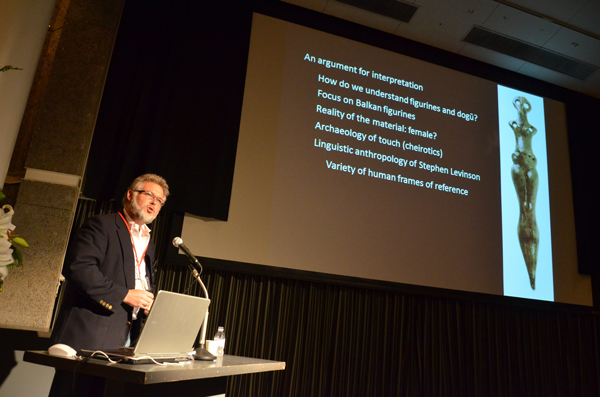
Doug Bailey is a Professor in the Department of Anthropology at San Francisco State University (SFSU) since 2008, previously holding a Professorship at Cardiff University (1993–2007). His work bridges archaeology and visual culture, focusing on prehistoric art, Neolithic architecture, and radical interdisciplinary practices. He holds a Ph.D. from Cambridge University (1991), an M.Phil. (1986), and an A.B. from Dartmouth College (1985). Research interests include the archaeology of art, visual anthropology, and the ethics of archives. Notable projects involve the 'Art/Archaeology' movement challenging traditional disciplinary boundaries, exhibitions like 'Creative (un)makings' (2020), and studies of Neolithic figurines (e.g., 'Breaking the Surface', 2018). He has led excavations in Romania and explores themes like sedentism, mobility, and material culture representation. Publications include six authored/edited books and numerous articles. His work critiques conventional archaeological interpretation and advocates for provocative artistic collaborations. Current projects address the ethics of archives and the interplay of past/present through visual media.
Associate Professor Lisa McGrath specializes in academic writing and English for Research and Publication Purposes (ERPP) at Sheffield Hallam University. She holds a PhD from Stockholm University and leads initiatives such as the SIoE 'Writing (better) for international publication' course and doctoral writing workshops. Her research focuses on genre pedagogy, L2 writing task design, and metacognition in academic contexts. She collaborates with institutions like Chalmers University and serves on editorial boards for journals including Journal of English for Academic Purposes . McGrath is Deputy Director of the White Rose Doctoral Training Partnership and editor of the Sheffield Institute of Education blog. Education: PhD in Education from Stockholm University Her teaching spans MA Education, MA TESOL, and EdD programs, covering topics like research project design and English for Specific Purposes. Current research projects include multi-genre pedagogy and disciplinary grading criteria analysis with Prof. Raffaella Negretti and Dr. Helen Donaghue. McGrath also supervises doctoral students in areas such as disability studies, BAME belonging, and TESOL. Recent publications emphasize embedding writing development in early-career lecturers' practices and innovating L2 writing task design. She actively engages in professional networks like BALEAP and delivers international training on academic writing for publication.
Dr. Bill Baker is a Senior Lecturer in Drama, Visual Arts & Music Education at the University of Tasmania's School of Education, College of Arts, Law and Education (CALE). With a career spanning 35 years, he specializes in arts education, technology-enhanced learning (TELT), and the scholarship of teaching and learning (SoTL). His research focuses on youth resilience through arts participation, particularly in community youth orchestras, and the preparation of pre-service teachers in arts pedagogy. Dr. Baker holds a Doctor of Education (RMIT, 2002), a Master of Education (Arts Administration, RMIT, 1997), and a Bachelor of Music Education (University of Melbourne, 1988). He has received multiple awards, including Senior Fellow of the Higher Education Academy (2019) and Honorary Life Member of the Australian Society for Music Education (2021). His funded projects include the Tasmanian Community Fund Grant and Australia-ASEAN Council grants for youth orchestra research. His peer-reviewed publications (over 40) address arts education, online teaching methodologies, and the social impacts of music participation. Current research collaborations include partnerships with the Tasmanian Youth Orchestra and institutions like University of Southern Queensland and The University of Melbourne. Dr. Baker supervises HDR students in arts participation, leadership, and teacher education reforms. Scientific Awards: Vice Chancellor's Teaching Excellence Award Vice Chancellor’s Citation for Outstanding Contribution to Student Learning CALE Teaching Excellence Award Senior Fellow, Higher Education Academy (UK) Honorary Life Member, Australian Society for Music Education Supervision & Teaching: Dr. Baker has supervised numerous HDR students, including completed PhDs on contemporary music pedagogy and Masters theses on visual arts education. He coordinates units in the Master of Teaching and Bachelor of Education degrees, emphasizing technology integration and reflective practice.
Professor Barley Norton is a distinguished ethnomusicologist and filmmaker at Goldsmiths, University of London, where he serves as Director of the Asian Music Unit (AsMU), convenor of the MA in Music (Ethnomusicology), and leader of the Goldsmiths Gamelan Group. His academic career focuses on the music and culture of Southeast Asia, particularly Vietnam, where he has conducted extensive field research. His research interests span ethnomusicological filmmaking and theory, the cultural politics of musical practice, discourse on cultural heritage and music revival, music and religious experience, music and emotion, music and gender theory, music censorship, improvisation, and performance and modal theory. Norton's academic work is deeply informed by his practical musical engagement; during his field research in Vietnam, he learned to play the dan day and dan nguyet lutes, and he also performs Sundanese music from Indonesia on the kacapi zither and in the gamelan degung orchestra. Norton's scholarly output reveals significant trends in Southeast Asian music studies, particularly focusing on the intersection of traditional musical practices with contemporary political and social contexts. His work consistently examines how musical traditions navigate processes of canonization, heritage safeguarding, and creative innovation within rapidly changing cultural landscapes. A notable thread throughout his research is the relationship between music, ritual, and identity in Vietnamese cultural contexts, with increasing attention to environmental concerns and climate change impacts on musical heritage in his most recent work. American Musicology Society's 2014 Ruth A. Solie Award for 'Music and Protest in 1968' Commendation - Intangible Culture Film Prize at the Royal Anthropological Institute's 12th International Festival of Ethnographic Film for 'Hanoi Eclipse: The Music of Dai Lam Linh' Professor Norton has supervised numerous doctoral students including Christopher Hanby (Applied Ethnomusicology and Jèrriais language revitalization), Lin Lin (Creative Realization in the Compositional Process), Clare Salaman (Reimagining the trumpet marine), and Jasmine Hornabrook (Transnational networks in London's Tamil diaspora). His research has been generously funded by the Getty Foundation, Arts and Humanities Research Council, British Academy, and ASEASUK, supporting projects on Vietnamese music revival and audiovisual archiving. He has also undertaken consultancy work with UNESCO, the British Council, and Vietnamese cultural institutions on music heritage projects. As a key figure in the field, Norton directs Goldsmiths' Asian Music Unit, which serves as a hub for research, performance, and teaching focused on Asian musical traditions. The unit facilitates cross-cultural musical dialogue and supports field research in Asia, while the Goldsmiths Gamelan Group provides hands-on experience with Indonesian musical traditions. His leadership extends to international scholarly organizations, having served as Chair of the British Forum for Ethnomusicology (2015-2018) and as a member of the Society for Ethnomusicology Council (2017-2020).
Antonella Coppi is a Researcher (Juniorprofessur) in Music Pedagogy and Community Music at the Faculty of Education, Free University of Bozen-Bolzano. She holds a PhD and has been conducting the University Choir and Orchestra of Modena and Reggio Emilia since 2001. Her research focuses on Community Music, Intergenerational Choral Activities, and the Reggio Emilia approach to early childhood education. She previously served as Adjunct Professor of Music Pedagogy at the University of Perugia (2002–2006) and is currently the national coordinator for the Coordinamento Nazionale Cori ed Orchestre Universitarie (Italian University Choirs and Orchestras Network). Dr. Coppi’s work emphasizes music as a tool for social inclusion, with contributions to El Sistema-inspired initiatives and interdisciplinary education. She has authored books like Community Music: Nuovi orientamenti pedagogici (2017) and serves on international scientific committees for music education conferences. Her academic activities span musicology, pedagogical innovation, and the intersection of arts and education. Her professional roles include being Rector Deputy for Music at the University of Modena and Reggio Emilia, and she actively contributes to music education policy and internationalization efforts. Her research highlights the transformative potential of music in both formal and informal learning environments.