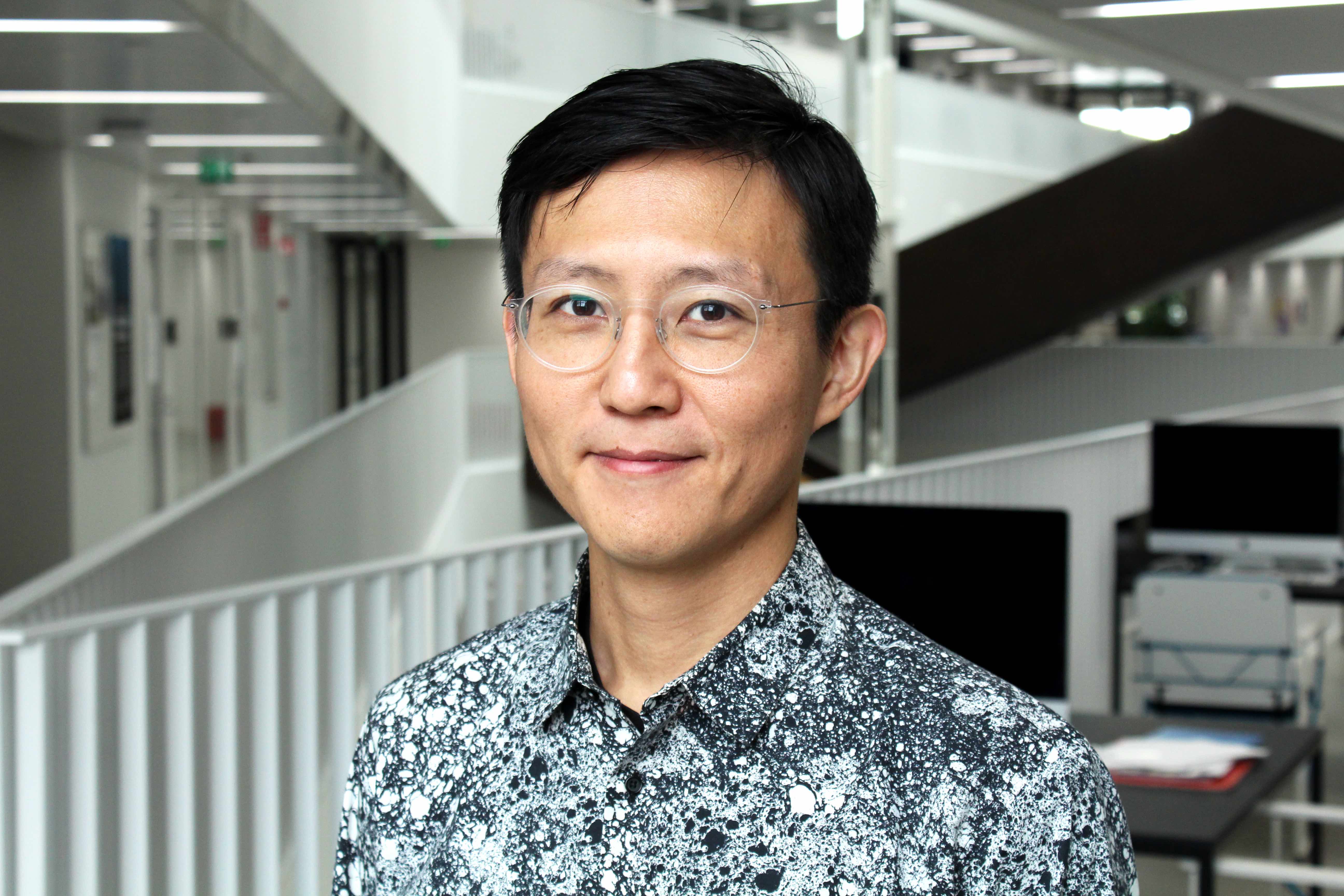
Masood Masoodian is an Associate Professor in the Department of Art and Media at Aalto University, Finland. He leads the Visual Communication Design research group, focusing on interactive visualization for health, energy, and sustainability contexts. Previously, he held roles at the University of Waikato (2000-2016), University of Southern Denmark, and Massey University. Education: Doctoral degree in Other disciplines from the University of Waikato (1999) Research interests include design thinking, visualization of complex data, and creative aging interventions. Notable projects include the EU-funded INT-ACT initiative (2024-2026) addressing intangible cultural heritage. He has received an award for collaborative work on video game ludonarrative analysis (2019). Recent activities include organizing workshops on map-based interfaces, co-creating cultural heritage methods, and delivering public talks on digital design. Supervised two theses and contributed to 131 peer-reviewed outputs, emphasizing human-centered design and sustainability. Grants: Principal investigator for multiple EU projects totaling over 3 years of active funding. Awards: Prize for 'Comedy in the Ludonarrative of Video Games' (2019). Labs/Teams: Visual Communication Design group, collaborating internationally on projects like INT-ACT's cultural heritage mapping.
Toni Kotnik is an Associate Professor in the Department of Architecture at Aalto University, Finland. He holds dual expertise in mathematics and architecture, with a Ph.D. from the University of Zurich and a second degree in architecture. His roles include principal of d’HKL , a Zurich-based experimental architecture firm, and adjunct lecturer at institutions like Harvard University and the Bartlett School of Architecture. His research focuses on integrating science, engineering, and computation into architectural design, emphasizing structural innovation and sustainability. Education: Ph.D. in Mathematics (Dr. sc. Nat.), University of Zurich, 1999 Second degree in Architecture Research Interests: Computational design and generative systems Structural aesthetics and neuroaesthetics Sustainable urban and architectural solutions Parametric modeling and material systems Key Contributions: Advances in graphic statics and form-finding Design strategies for high-density urban environments Integration of AI and generative tools in architectural practice Recent Work Trends: Recent articles emphasize computational methods for industrial layout optimization, AI’s role in architecture, and embodied perception in structural design. His work bridges theoretical research with practical applications, such as the Singapore Hawker Centre redesign and experimental structures like hypar-combined shells. Awards: Aalto University Doctoral Thesis Awards (2022) Best Presentation Award (2019) Oscari-Vilamo Award (2023) Advising & Grants: Supervised 4 theses, including recipients of awards like the Metex Award shortlist. Active in international academic networks, serving on conference committees (e.g., International Association for Shell and Spatial Structures) and editorial roles (e.g., Automation in Construction journal). Labs & Teams: Leads the d’HKL studio, collaborating globally on projects like the AA/ETH Pavilion and the Hypercube for Gardens by the Bay. Research focuses on experimental design and material systems.
Suvi Saarikallio is a Professor of Music Education at the University of Jyväskylä, Finland , affiliated with the Faculty of Humanities and Social Sciences and the Department of Music, Art and Culture Studies . She leads interdisciplinary research bridging music psychology, education, and therapy, with a focus on youth development, emotion regulation, and well-being. Research Groups: Centre of Excellence in Music, Mind, Body and Brain (2022-2029), Musiconnect (2022-2027) Key Projects: Music and You, Stress & music listening, MPACT (Music and Sports), Music and Cross-modal Associations, SOSUS (Social Sustainability for Children) Research Trends: Her recent publications explore music's role in emotional regulation, cross-modal perception, health outcomes, and educational applications. Themes include AI's impact on music evaluation, rhythm's connection to cognitive skills, and music's influence on stress and social-emotional development. Contact: suvi.saarikallio@jyu.fi
Paula Hohti is a Professor of Art and Culture History at Aalto University's School of Arts, Design and Architecture, Department of Art and Media. She holds a Docent position in History of Art at the University of Helsinki. Her research focuses on Italian Renaissance dress and material culture, particularly among artisans and shopkeepers. She earned her PhD from the University of Sussex (2006) and has held research roles at institutions including Helsinki Collegium for Advanced Studies and the European University Institute (EUI) in Florence. She led major projects like RE-FASHIONING (ERC grant, €2M in 2016) and co-founded the Fashion History Lab. Her work contributes to UN SDGs related to sustainable development through historical material studies. Education: PhD in Art History, University of Sussex (2006). Research Interests: Italian Renaissance textiles, Early Modern material culture, artisan craftsmanship, textile reconstruction methods, and social history of dress. Recent work emphasizes interdisciplinary approaches to reconstructing historical clothing and its cultural significance. Key Publications (2025): Refashioning the Renaissance: Everyday Dress in Europe (book), studies on color imitation in textiles, and knitted stockings experimentation. Articles explore cross-disciplinary methodologies and material authenticity. Awards: ERC Consolidator Grant (2016), Academy of Finland Fellowships, and the Roland H. Bainton Book Prize (2021). Advising & Grants: Principal investigator in multiple international projects. Supervised eight post-doctoral researchers. Co-developed the Refashioning the Renaissance Database (Aalto University, 2022). Labs/Teams: Leads the Fashion History Lab (2022–2023) and collaborates globally on textile and material culture studies.
Eetu Mäkelä is a Professor of Digital Humanities at the University of Helsinki, leading the research group at the Helsinki Centre for Digital Humanities. He focuses on computational methods in humanities and social sciences, including datafication and interdisciplinary collaboration. He serves as Technical Director of DARIAH-FI and a Research Programme Director at the Helsinki Institute for Social Sciences and Humanities. Currently, he heads the preparatory group for the Helsinki Liberal Arts and Sciences Bachelor’s Programme. His research emphasizes technological and theoretical foundations of computational research, with notable contributions to linked open data, sociolinguistic analysis, and historical text mining. He has developed widely used tools like Recon, Palladio, and Octavo, which are employed in academic and public sectors. His work has garnered over 20 awards, including best paper and open science recognitions. Key areas of expertise include digital humanities methodologies, data integration, and open science practices. He actively contributes to teaching, designing courses such as 'Methods for Digital Humanities' and demonstrating innovative pedagogical approaches. His recent projects involve analyzing 18th-century philosophical texts and sociolinguistic change using computational methods. Awards: Multiple best paper awards, open data awards, and open science awards. Grants/Advising: Leads research initiatives funded by the Academy of Finland and other bodies. Mentors interdisciplinary research teams but no specific student names listed. He maintains active roles in academic infrastructure, including the DARIAH-FI initiative and the Helsinki Institute’s datafication program. His work bridges technical innovation with humanities scholarship, emphasizing practical, enduring systems for academic and public use.
Hannu Toivonen is a Full Professor of Computer Science at the University of Helsinki, affiliated with the Faculty of Science and the Department of Computer Science. He leads the Discovery Research Group and is part of the Helsinki Institute for Information Technology (HIIT) and the Finnish Center for Artificial Intelligence (FCAI). He obtained his PhD in Computer Science from the University of Helsinki in 1996 and has held his professorship since 2002. His research spans Artificial Intelligence , Data Science , Computational Creativity , and Data Mining , with applications in generative art, automated journalism, and bioinformatics. His research focuses on: Developing AI systems for creative tasks (e.g., poetry, music, and art generation) Cross-lingual natural language processing and unsupervised learning Ethical and societal implications of AI in media and labor Analysis of his 15 most recent publications (2021–2025) reveals a strong emphasis on computational creativity and AI-driven content generation , with interdisciplinary applications in digital humanities, journalism, and biology. Trends include ethical AI frameworks, human-AI collaboration, and innovative evaluation methods for generative systems. Scientific Awards & Honors: Knight, First Class, Order of the White Rose of Finland (2019) Best Applied Research Award, IEEE ICDM (1998) Honorary Member of TKO-äly (2010) Member of Finnish Academy of Science and Letters He has supervised over 20 doctoral theses and secured ~7 MEUR in grants (e.g., EU projects: Embeddia , Newseye ). He leads the Discovery Research Group and collaborates with institutions like VUB (Belgium) as a Francqui International Professor (2025).
Turkka Keinonen is a Professor of Industrial Design at Aalto University School of Arts, Design and Architecture, serving as Vice Dean of Research and Head of Doctoral Education. His career spans academic leadership, industry roles in Finnish technology sectors (shipbuilding, medical equipment), and a visiting associate professorship at National University of Singapore. He specializes in human-centered design, product concept design, and ethical considerations in design. Keinonen’s research emphasizes public sector innovation, digital service development, and the intersection of technology with societal needs. His work bridges theory and practice, focusing on how design can foster equity, civic engagement, and sustainability. Recent projects explore libraries as digital innovation hubs, smart home technologies’ ethical implications, and volunteer-based IT services. He has authored influential books including Mobile Usability (2003), Product Concept Design (2006), and Designers, Users and Justice (2017), alongside over 100 publications. Keinonen’s research trends reflect a shift toward relational design in public sectors, emphasizing stakeholder collaboration and systemic change. His articles analyze digital literacy initiatives, quasi-public service models, and design’s role in mediating technological control. He advocates for ethical frameworks that prioritize user autonomy and societal justice in design processes. Labs/Teams: Active in Aalto’s design innovation networks, particularly in public service design and human-centered design methodologies. Collaborates with industry partners (e.g., Nokia Research Center) and Nordic institutions on applied design research.
Lappeenranta-Lahti University of Technology LUTFinland
Sami Sykkö serves as a Professor of Practice at LUT University's School of Economics, where his working life professorship (1.9.2022–31.12.2025) focuses on bridging academic theory with practical business applications. Funded by OP cooperative banks with 140,000 euros, his position emphasizes responsible business practices and evolving consumer behavior trends. Sykkö holds a Master's in International Marketing from the University of Vaasa (1996) with additional studies at Parsons School of Design in New York. His educational background combines economics with design sensibility, creating a unique interdisciplinary perspective. As he states: 'Clothing is more responsible the longer and more often it is used' , reflecting his philosophy on sustainable consumption. His research centers on what he calls 'a megatrend that's hard to imagine being more interesting' - responsibility in business and consumption. Sykkö examines how consumer patterns are shifting, where customer flows are heading next, and how needs, habits, and desires are changing. He emphasizes that 'not only trade but also the life of all humanity is at stake' in these discussions. Through his Taloustango podcast series, Sykkö analyzes economic trends by bringing together university experts and business representatives to discuss greenwashing, sustainable consumption, and design's future. His approach favors real-world examples over theoretical lessons, drawing from his extensive professional network. Professional Recognition Nominated for Presenter of the Year (2018) Widely praised for hosting skills: 'The highest quality hosting I've ever experienced,' 'A master of situational awareness' Academic Engagement Sykkö plans to host 'Professor Sykkö's Question Hour' with Finnish business leaders and aims to become 'Finland's first TikTok professor' to reach younger audiences. His co-hosted 'Sami & Jorma' podcast (42,497 followers) demonstrates his ability to connect academic concepts with cultural discussions on fashion, design, and travel. Professional Activities Beyond academia, Sykkö has interviewed three Finnish presidents, Karl Lagerfeld, and Jane Fonda. He has reported on major global events including the London terrorist attack and Paris Fashion Week. His editorial work includes revamping Gloria magazine and editing publications for the Didrichsen Art Museum.
Felix A. Epp is a Postdoctoral Researcher at Aalto University's Department of Design, with an external position at the University of Helsinki (2024-2026). His work sits at the intersection of human-computer interaction, wearable technology, and design research, focusing on how interactive technologies shape human practices and future societies. Education: Doctor of Science in Technology, Aalto University (2023) Master's degree in Arts and Design, Hochschule Darmstadt (2014) Bachelor's degree in Arts and Design, Hochschule Darmstadt (2011) Epp's research explores embodied technological experiences and technology-mediated social practices, with a particular focus on wearable technologies and their impact on social-cultural practices. His doctoral work investigated how wearables shape clothing practices, and his recent work integrates critical futures studies with practice-based research to incorporate anticipation in technology innovation. He employs generative design research and qualitative fieldwork methods, including research through design in everyday contexts and participatory design approaches. His fingerprint reveals strong engagement with Wearable Technology (100%), Human-Computer Interaction (62%), and Design Research (56%). His publication record shows a clear trajectory toward anticipatory design and futures thinking in HCI, with increasing focus on how technologies can help us engage with uncertain futures. His recent work bridges design research with critical futures studies, creating methods like the Future Ripples Method to activate anticipatory capacities in innovation teams. This evolution reflects a growing recognition of the need for designers to anticipate multiple possible futures rather than designing for a single predetermined outcome. Scientific Awards: CHI 2025 Honorable Mention Award MUM 2020 Honourable Mention Award Epp has been actively involved in significant research projects including 'FutureMethods: Methodology for HCI evaluations of possible futures' (2020-2024) and 'Digital Aura: Crafting a Digital Representation of Self in the Physical World' (2017-2021). His collaborative work spans multiple institutions and disciplines, reflecting the interdisciplinary nature of his research. He serves on program committees for major conferences including ACM DIS and CHI, demonstrating leadership in the HCI community. His research contributes to Sustainable Development Goals related to technology and society, with particular relevance to responsible consumption and production through his work on smart clothing in circular economies.
Juha Ojala is a Professor of Music Performance Research at the DocMus Doctoral School within the Sibelius Academy of the University of the Arts Helsinki, Finland. His research focuses on music performance practices, compositional processes, pedagogical approaches in music education, and the cognitive dimensions of musical perception and signification. He holds a central role in advancing interdisciplinary studies at the intersection of musicology, performance studies, and educational theory. Current research emphasizes how performers interpret and communicate musical meaning through embodied practices and how listeners cognitively process these artistic expressions. No specific grants, awards, or student advisement details are documented in the provided text. The DocMus affiliation indicates involvement in training doctoral candidates in music-related research disciplines.
Minna Valjakka is a Senior Researcher at the University of Helsinki , affiliated with the Department of Cultures and the Helsinki Institute of Urban and Regional Studies (Urbaria) . She also holds a Professor position at Leiden University (2022–2023) and has served as a Docent in East Asian Studies at the University of Turku and in Art History/Asian Studies at the University of Helsinki. Education: PhD in Art History, University of Helsinki (2011) MA in East Asian Studies, University of Helsinki (2005) Docent (Habilitation) titles in East Asian Studies and Art History Teaching: Designed courses on interculturality, urban creativity, and environmental art at Leiden University Promotes critical pedagogy, sociocultural learning, and decolonial frameworks Research Focus: Explores urban creativity , environmental art , and civil society in East and Southeast Asia. Highlights include analyzing art-science collaborations for sustainability, gendered dimensions of urban art, and transcultural dynamics in public space. Publications: Her work spans topics like ecological citizenship , urban resilience , and artistic responses to censorship , with a strong emphasis on decolonial and interdisciplinary frameworks. Scientific Recognition: Awarded the Kanava Award (2016) for her contributions to art and gender studies. Supervision: Mentored 13+ MA theses and served as a co-supervisor for PhD candidates at Leiden and Helsinki universities. Projects: Leads EcoConjunctions (2024–2028), examining art-science collaborations for civil society, and Shades of Green (2020–2022) on environmental art in Asia.
Namkyu Chun is a Lecturer at Aalto University's Department of Design, specializing in fashion and textile futures. With a focus on sustainability, interdisciplinary collaboration, and redefining design practices, Chun's work bridges fashion theory, material culture, and transformative futures. Their research explores the intersection of human/non-human relationships in design, climate-responsive practices, and ethical material engagement. Key research areas: Fashion Design, Sustainable Practices, Design Futures, Interdisciplinary Collaboration Awards: 2024 Ziman Award (CreaTures Project), 2017 Finnish-Danish Cultural Foundation Scholarship, 2017 Helsinki Urban Facts Grant, 2015 Subtle Visibility Award Recent publications examine topics such as '1.5 Degree Lifestyles,' 'Pluriverse' frameworks, and revival of dressmaking traditions. Chun collaborates with institutions like University of Sussex, RMIT, and Superflux, integrating artistic inquiry with systemic change. Their work appears in journals including Fashion Theory , The Design Journal , and Fashion Practice .
Ossi Naukkarinen is a Professor in the Department of Art and Media at Aalto University . Holding a doctoral degree in Humanities from the University of Helsinki , his career spans academic leadership, artistic research, and interdisciplinary inquiry. As Senior Fellow at the University of Münster , he maintains international collaborations. Research Focus: Specializing in everyday aesthetics and environmental aesthetics , Naukkarinen explores the intersection of art, technology, and sustainability. His work bridges traditional aesthetic theory with digital humanities , examining topics like artification and aesthetic footprints . Recent projects include Finnish Quantum Flagship and EDUCA (Future Education for Wellbeing). Publications & Impact: With 75+ research outputs and 73 active projects, his scholarship spans 1992-2025. Notable works include AI-aesthetics intersections ( Contemporary Aesthetics , 2025) and analyses of mass culture ( Popular Inquiry , 2022). His research contributes to UN Sustainable Development Goals, particularly Education and Environmental Sustainability . Awards & Leadership: Recognized as Academic Author of the Year 2012 , he serves on editorial boards and doctoral committees. Current projects include Aalto Lab Mexico and Academy of Finland -funded initiatives.
Prof. Pia Fricker is an Associate Professor and Vice Head of the Department of Architecture at Aalto University's School of Arts, Design and Architecture in Finland. She holds the Professorship of Computational Methodologies in Landscape Architecture and Urbanism, directing the Urban Studies and Planning Programme. Her research integrates urban design, landscape architecture, and digital design culture, focusing on data-driven methods, immersive environments, and adaptive urban development. Collaborations include ETH Zurich, Singapore University of Technology and Design, and Hafencity University Hamburg. Key projects include the Metaversity and Future Smart Cities initiatives. Fricker has led over 80 publications and exhibitions globally, including at the Venice Biennale and National Design Centre Singapore. She is an editorial board member for the Journal of Digital Landscape Architecture and peer reviewer for multiple journals. Awards include the Digital Landscape Architecture Award (2018) and DLA Scientific Merit Award (2021). Her teaching emphasizes computational pedagogy and digital innovation in design education. Education: PhD in Architecture (ETH Zurich, 2021) Postgraduate in Didactics (ETH Zurich, 2011) MAS in Computer Aided Architectural Design (ETH Zurich, 2003) MSc Arch in Urban Design & Landscape Architecture (Technical University of Karlsruhe, 2001) Research Interests: Computational design, parametric modeling, mixed reality, climate-adaptive ecosystems, generative AI, and sustainable urban development. Her work bridges emerging technologies with ecological and urban challenges, emphasizing interdisciplinary collaboration. Grants & Projects: Metaversity (2023–2025, Principal Investigator) Future Smart Cities Sasakawa (2023–2024, Principal Investigator) ABRA (2020–2023, Project Member) Awards: DLA Awards (2018, 2021) DLA Review Committee Awards (2020–2022) Exhibition Recognitions (Venice Biennale, National Design Centre Singapore) Labs/Teams: Leads the Urban Studies and Planning Programme and collaborates with interdisciplinary teams on projects like the RAILCORRIDOR Singapore initiative. Active in digital twin development and AI-driven design tools.
Svante Lindberg is a Senior Lecturer and Associate Professor in the Department of Languages at Åbo Akademi University’s Faculty of Humanities, Psychology and Theology. He holds a Doctor of Philosophy and Licentiate of Philosophy from Stockholm University, a Master of Philosophy from Uppsala University, and a Diplôme d'études approfondies from Université de Nice. His academic work spans multiple institutions, including substitute roles at Stockholm University and guest lectures at the University of Groningen. Doctor of Philosophy, Stockholm University Licentiate of Philosophy, Stockholm University Master of Philosophy (Linguistics), Uppsala University Bachelor of Philosophy, Stockholm University Diplôme d'études approfondies, Université de Nice His research focuses on contemporary French-language literature, particularly from Quebec, migration literature, world literature, and the works of Michel del Castillo. He also investigates 18th-century French cosmopolitan networks and literary didactics. His doctoral thesis analyzed narrative identity in Quebecois novels, and he edited a significant anthology on migrant literature in Quebec and Scandinavia. He publishes regularly in French, Swedish, and English, contributing to journals and academic volumes on literary theory, translingualism, and cultural identity. The trend in his recent publications shows a strong engagement with narrative identity, translingualism, and the cultural representation of the 'South' in literature. His work bridges French, Scandinavian, and global literary contexts, with a methodological focus on comparative and transcultural analysis. He frequently explores themes of migration, trauma, and religious identity across historical and contemporary texts. His scientific awards include: Guldkanten (2018) Harry Elvings legat (2018, twice) Åbo Akademi Jubileumsfond 1968 (2012) Åbo Akademis mobilitetsstipendium (2010) Lindberg supervises bachelor's, master's, and doctoral theses and has served as an examiner and academic advisor. He is actively involved in academic service, including organizing conferences, peer reviewing, and participating in recruitment committees. He has contributed to the cultural impact of his research through studies on French imagery in Scandinavian literature and has engaged in international academic collaboration, particularly with institutions in the Netherlands and Norway. His work aligns with UN Sustainable Development Goals related to education and cultural understanding. He is a member of academic networks and has hosted visiting scholars, participated in numerous conferences, and contributed to editorial boards. His recent activities include presentations on Michel del Castillo and participation in the NIC Conference 2023 on intercultural communication.