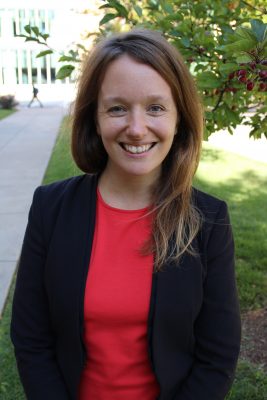
Benjamin C. Pierce is the Henry Salvatori Professor of Computer and Information Science in the School of Engineering and Applied Science at the University of Pennsylvania. As a Fellow of the ACM, he has made significant contributions to programming language theory and formal methods. His academic leadership includes previous editorial roles as co-Editor in Chief of the Journal of Functional Programming and Managing Editor for Logical Methods in Computer Science. His research spans multiple interconnected domains in programming language theory, with particular emphasis on type systems and their applications to security and verification. Pierce's work bridges theoretical foundations with practical implementations, most notably through his development of the Unison file synchronization tool and contributions to the Clowdr virtual conference platform. His research interests form a cohesive trajectory from foundational type theory to applied security and verification techniques. Pierce's scholarly output shows consistent focus on property-based testing, type systems, and formal verification methods. His recent publications demonstrate evolving interests in differential privacy verification, synchronization technologies, and the practical challenges of implementing formal methods in real-world systems. The progression of his work reflects both theoretical depth and practical relevance to software development challenges. Fellow of the ACM Author of influential textbooks Types and Programming Languages and Software Foundations Lead designer of the Unison file synchronizer Co-developer of the Clowdr virtual conference platform Former editorial leadership for multiple prominent programming languages journals As an educator and mentor, Pierce has contributed to the Programming Languages Mentoring Workshop (PLMW) and has served on numerous conference program committees. His academic service extends to SIGPLAN leadership roles including SIGPLAN Vice Chair and Steering Committee membership. His textbook Software Foundations has become a standard resource for teaching formal methods and proof assistants.