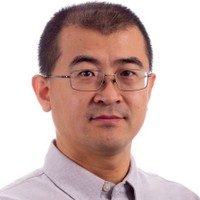
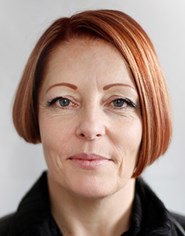
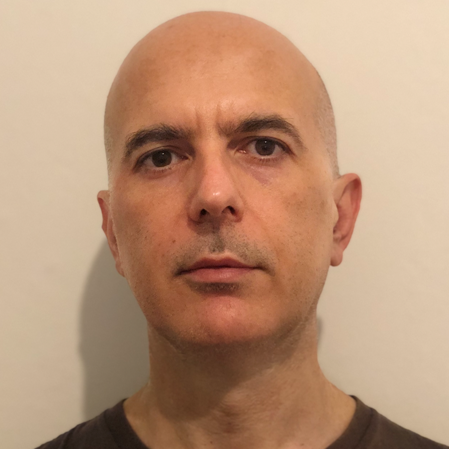
Jens Edlund is a Professor at KTH Royal Institute of Technology's Division of Speech, Music and Hearing. His research focuses on speech technology, dialogue systems, prosody, and evolutionary phonetics. He has contributed to foundational work on speech synthesis, conversational interaction, and multimodal corpora like the D64 corpus. Key projects include the MonAMI Reminder system and analysis of primate vocalizations to understand speech evolution. Edlund has collaborated extensively with global researchers, producing over 150 peer-reviewed works. His work integrates computational methods with linguistic and biological insights, emphasizing human-like dialogue systems and cross-species vocal analysis. Education: Ph.D. in Speech Technology (2011, KTH) Grants: Multiple EU and Swedish Research Council grants for speech technology and interdisciplinary studies Research labs include the KTH Speech, Music and Hearing Lab and collaborations with institutions like Max Planck Institute for Evolutionary Anthropology. Current work explores evolutionary origins of speech biomechanics and AI-driven speech synthesis evaluation.
Danica Kragic is a Professor of Computer Science at the School of Electrical Engineering and Computer Science at the Royal Institute of Technology (KTH) in Stockholm, Sweden. She serves as the Director of the Centre for Autonomous Systems and leads the Robotics, Perception and Learning Lab at KTH. Her research focuses on advancing robotics capabilities through computer vision and machine learning approaches. MSc in Mechanical Engineering from the Technical University of Rijeka, Croatia (1995) PhD in Computer Science from KTH (2001) Professor Kragic's research primarily centers on robotics, computer vision, and machine learning, with particular emphasis on robotic manipulation, grasp planning, and human-robot interaction. Her work bridges theoretical foundations with practical applications, exploring how robots can understand and interact with objects in complex environments. She investigates how visual and tactile sensing can be integrated to improve robotic perception and manipulation capabilities, with applications ranging from industrial automation to assistive robotics. Her recent publications demonstrate a strong focus on advanced grasp planning techniques, tactile sensing for manipulation, and mathematical representations for robotic control. Kragic's research shows increasing integration of machine learning approaches with traditional robotics frameworks, particularly in the areas of grasp synthesis, object recognition, and human-robot collaboration. Her work spans theoretical contributions in mathematical representations of grasps to practical implementations of robotic systems capable of adapting to novel objects and situations. 2007 IEEE Robotics and Automation Society Early Academic Career Award IEEE Fellow ERC Starting Grant (2012) Member of The Royal Swedish Academy of Sciences Member of The Royal Swedish Academy of Engineering Sciences Honorary Doctorate from Lappeenranta University of Technology Professor Kragic's research has been supported by major funding bodies including the EU, Knut and Alice Wallenberg Foundation, Swedish Foundation for Strategic Research, and Swedish Research Council. While specific student names aren't listed in the provided information, her publication record suggests extensive mentorship of PhD students and postdoctoral researchers in robotics and computer vision. Her lab, the Robotics, Perception and Learning Lab, serves as a hub for interdisciplinary research connecting computer science, engineering, and cognitive science perspectives on robotic systems. As Director of the Centre for Autonomous Systems at KTH, Kragic oversees a major research initiative focused on advancing autonomous technologies. Her Robotics, Perception and Learning Lab brings together researchers working on visual perception, machine learning, and robotic manipulation, with particular emphasis on developing systems that can understand and interact with objects in unstructured environments. The lab's work spans theoretical foundations of robotic manipulation to practical implementations of systems capable of learning from experience.
Adam Wickberg is a researcher in the Division of History of Science, Technology and Environment at KTH Royal Institute of Technology in Stockholm. He serves as co-director of the VR Excellence Centre for Anthropocene History and deputy director of the KTH Environmental Humanities Lab . His work critically examines the intersections of digitalization, sustainability , and the Anthropocene , focusing on their social, political, and historical dimensions. He leads the research project The Mediated Planet: Claiming data for environmental SDGs and has held visiting positions at the Max Planck Institute for the History of Science in Berlin. Education : Not explicitly stated His research spans media studies, environmental history, critical data studies , and postcolonial science and technology studies . Key themes include: Digital twins and marine futures AI ethics for climate justice Colonial histories of environmental data Temporal dimensions of Anthropocene governance Environing media as epistemological tools Planetary datafication systems Recent publications explore how data infrastructures shape environmental governance and how historical media practices inform contemporary sustainability challenges. He has contributed to journals like New Media and Society , Nature , and Critical Inquiry , while engaging in public debates through op-eds in Dagens Nyheter and Aftonbladet . Teaching : Courses include Artificial Intelligence and Sustainable Development (AK122V), Environmental History (AK2210), and The Anthropocene (AK126V). Labs/Teams : Leads the Environmental Humanities Lab and collaborates with the WASP-HS Community .
Zhibo Pang is an Adjunct Professor at KTH Royal Institute of Technology's Department of Intelligent Systems (EECS) and Senior Principal Scientist at ABB Corporate Research Sweden. His work focuses on digital transformation in industry and healthcare, spanning robotics, AI, control systems, and wireless communication. He leads projects in embodied intelligence, Industry 4.0, and Healthcare 4.0, with 23 granted patents and over 120 journal papers. Education: PhD in Electronic and Computer Systems (KTH, 2013), MBA in Innovation & Growth (University of Turku, 2012). Key Roles: IEEE Technical Committee Chair, Editor of 6 IEEE journals, ABB Inventor of the Year (2016, 2018, 2021). Research Interests: Robotics safety, wireless automation, federated learning, digital twins, and IoT security. Recent Projects: Cloud-fog automation frameworks, robot skin systems for healthcare, and latency-aware industrial control. His work bridges academia and industry through cross-functional collaborations.
Matteo Magnani is a Professor in the Division of Computing Science at the Department of Information Technology, Uppsala University. He leads the Uppsala University Information Laboratory and is a founding member of the Uppsala University Computational Social Science Lab. His research spans network science, artificial intelligence, data science, and computational social science, with a focus on social data mining and multilayer networks. PhD in Computer Science, University of Bologna, 2006 Graduated with honours in Information Sciences, University of Bologna, 2002 Studies in Computer Science at University of Marne la Vallée and Imperial College London Matteo Magnani's research interests include social network analysis, multilayer and probabilistic networks, community detection, visual analytics, and the application of AI to digital media and climate communication. His work bridges computer science and social sciences, particularly in analyzing online discourse and digital intermediaries. He has contributed significantly to the understanding of network structures, uncertainty in networks, and the ethical dimensions of algorithmic analysis. His recent publications highlight trends in fairness in community detection, visual saliency in network layouts, emotional reactions to climate visuals online, and deep learning applications in social media. Topics frequently involve YouTube, Twitter, and online public debates, using advanced network and machine learning methods. Rotary Prize for best student of the Science Faculty Best Paper Award Funniest Presentation Award Best Poster Award Pedagogical Prize from UTN Distinguished University Teacher (Sweden) Docent title (Sweden) Magnani has supervised numerous students and collaborated widely, particularly with Luca Rossi, Alexandra Segerberg, and Davide Vega. He has secured funding from major sources including VR, H2020, STINT, and MIUR. He leads active research labs focused on information systems and computational social science, fostering interdisciplinary collaboration and innovation in network-based research.
Majed Elwardy is a Lecturer at the Department of Computer Science , Blekinge Institute of Technology , focusing on Computer Science , Virtual Reality , and Quality Assessment . He works at the Human-Centered Intelligent Realities Laboratory in Karlskrona, Sweden. Email: majed.elwardy@bth.se Phone: 0455-385801 His research investigates 360° video quality assessment in immersive environments using head-mounted displays (HMDs) , analyzing user behavior , quality perception , and subjective testing methodologies . He explores differences in standing vs. seated viewing and consistency of user feedback over time. Majed contributes to the HINTS project (Human-Centered Intelligent Realities) and has published datasets like RQA360 to advance immersive media research. His work includes studies on simulator sickness , VR experience levels , and scene exploration patterns in 360° video evaluation.
Brinton Seashore-Ludlow is an Associate Professor at the Department of Oncology-Pathology, Karolinska Institute (KI), where he serves as team leader in Olli Kallioniemi's research group and group leader of the biology team at Chemical Biology Consortium Sweden (CBCS), SciLifeLab's national infrastructure. PhD in Biochemistry, KTH Royal Institute of Technology (2012) MSc in Chemical Biology, California Institute of Technology (2007) BA in Biochemistry, Macalester College (2001) His research bridges precision medicine and cancer biology through: Developing ex vivo patient-derived models for drug response prediction Molecular determinants of therapeutic efficacy Integration of high-content imaging with translational studies Focus on ovarian, breast, and pediatric cancers AI-driven analysis of drug sensitivity data Recent articles demonstrate: 3D tumor spheroid platforms for drug testing Epigenetic regulators in neuroblastoma Microfluidics for high-throughput assays Cancer-stroma interactions in treatment resistance Clinical validation of precision diagnostics He co-organizes the Overview Course in Cancer Drug Discovery at KI and leads projects funded by the Swedish Childhood Cancer Foundation.
Dag Hanstorp is a Professor at the Department of Physics, University of Gothenburg. His office is located at Fysikgränd 3, Göteborg (Room F8032), and he can be contacted via email or telephone. His research focuses on experimental atomic/molecular physics and laser applications, including: Quantum phenomena in levitated droplets Ultraprecise spectroscopy of radioactive molecules (e.g., radium monofluoride) Laser-induced dynamics in fuels and aerosols Electron affinity measurements of alkali metals Vacuum laser particle acceleration techniques Spin Hall nano-oscillator characterization Recent publications (2023-2025) demonstrate interdisciplinary work combining atomic physics, fluid dynamics, quantum optics, and nanotechnology. Common themes include advanced laser spectroscopy, quantum system control, and novel imaging techniques applied to fundamental physical processes.
Ulrich Vogt is a Professor in Applied Physics at Kungliga Tekniska Högskolan (KTH) and leads the X-ray Optics and Nanoimaging group within the Bio-Opto-Nano unit. He serves as Vice-head of the Applied Physics department for undergraduate education. His research focuses on developing advanced X-ray microscopy techniques, particularly at synchrotron facilities like MAX IV’s NanoMAX beamline. He specializes in X-ray optics, nanoimaging, and diffractive optical elements for applications in materials science, biology, and medicine. Key contributions include the design of the NanoMAX beamline, optimization of X-ray zone plates via metal-assisted chemical etching, and advancements in multi-beam ptychography. Vogt has pioneered compact X-ray microscopy systems using laser-plasma sources and liquid-jet targets. His work integrates nanofabrication, computational imaging, and synchrotron instrumentation to achieve sub-100 nm resolution in hard and soft X-ray regimes. Teaching responsibilities include courses on experimental physics, photonics, and X-ray applications. His lab collaborates internationally on projects like the European XFEL, emphasizing high-brightness sources and radiation-resistant optics. Recent innovations include adaptive multi-beam ptychography and stereo X-ray imaging for 3D nanoscale visualization. Research highlights span over 100 peer-reviewed articles, with a focus on coherence characterization, beamline instrumentation, and nanostructured materials. Vogt’s grants include a Röntgen-Ångström Cluster award supporting multi-beam ptychography and cryo-microscopy advancements.
Mario Romero is an Associate Professor in Visualization at the Department of Computational Science and Technology (CST), KTH Royal Institute of Technology. He leads the InfraVis national research infrastructure for data visualization and is a Digital Futures Faculty member. His roles include national technical manager of InfraVis, member of the Executive Committee of Digital Futures, and Associate Director for Seminars & Workshops. Education: PhD in Computer Science (Georgia Tech, 2009), MSc in Computer Science (UIUC, 2001), and dual BSc degrees in Industrial Engineering and Construction Engineering (Universidad San Francisco de Quito, 1996). He is a Fulbright Scholar from Ecuador and holds postdoctoral experience at Uppsala University. Research focuses on Human-Computer Interaction, Visualization, and Ubiquitous Computing. Key projects include: TENT: Technology-Enhanced Neurosurgical Training VisBac: Visualizing airborne bacteria in ORs PSP: Platform for Smart People (autism support) SMART: Predictive maintenance in pharmaceuticals Homo Colossus: Energy footprint visualization Awards: Selected for IVA's 100 research2business projects (2021). Co-founded BrailleTouch (blind-friendly keyboard) and Anymaker (3D sketching app). Supervised students in C-Awards-winning projects (e.g., Yue Liu's thesis defense in 2024). Teaching: Responsible for courses like Information Visualization (DH2321) and Advanced Graphics & Interaction (DH2413). Active in organizing conferences (e.g., Eurographics 2020 Education Track Chair).
Danielle Wilde is a Professor at the Umeå Institute of Design (UMU), where she explores the intersections of design, sustainability, and participatory methodologies . She also holds a professorship at the University of Southern Denmark . Her work spans scales from the microbial to the planetary , focusing on how food practices and Indigenous knowledges can foster Environmental Citizenship and systemic change. Head, Sympoietic Research Collaboratory Arctic Six Chair of Arctic Food Citizenship Research interests include more-than-human design , embodied methodologies , and co-creative practices . She challenges conventional design paradigms by positioning designers as facilitators of relationships rather than product creators. Her methodological development emphasizes participatory research through design , particularly in Arctic contexts and with microbiomes. Current projects include: FlavourFerm (2024-2028): Fermentation-based food innovation Px7 (2024-2027): Experimental design for societal transitions Remaking Gut Relations (2024): Human-microbiome engagement Digesting Data : Data physicalization for environmental awareness Her publications highlight food as a methodological tool , multisensory design , and decolonial approaches to sustainability. She collaborates with interdisciplinary teams across Europe, bridging design, ecology, and policy.
Magnus Bång is a Senior Associate Professor at the Department of Computer and Information Science (IDA) at Linköping University, affiliated with the Artificial Intelligence and Integrated Computer Systems (AIICS) division. His research focuses on advancing human-AI collaboration, automation systems, and AI applications in domains like cyberphysical production, air traffic management, and process industries. He has contributed to interdisciplinary projects involving real-time human-automation interfaces, explainable AI dashboards for industrial processes, and safety-critical systems integration. His work bridges theoretical AI advancements with practical implementations in sectors such as aviation and maritime logistics. Notable collaborations include research with the Swedish Maritime Administration to enhance shipping efficiency through AI and interactive visualization. He actively participates in EU-funded initiatives like the Horizon 2020 projects targeting autonomous systems and air traffic control. Research interests span MLOps for industrial systems, glyph-based communication design for human-automation teams, and operator modeling across traffic management domains. His publications emphasize cross-disciplinary solutions to challenges in automation and human-centric AI design.
Stefano Markidis is a Professor of Computer Science at KTH Royal Institute of Technology, affiliated with the School of Electrical Engineering and Computer Science and the Digital Futures Faculty. He holds a Ph.D. from the University of Illinois at Urbana-Champaign and an MS from Politecnico di Torino. His research focuses on high-performance computing systems, including supercomputers and quantum computers, with expertise in plasma simulations, quantum algorithms, and scalable computational frameworks. Markidis leads the development of the Neko framework for high-fidelity computational fluid dynamics and the iPIC3D particle-in-cell code for plasma physics. He teaches courses such as Quantum Computing for Computer Scientists, High-Performance Computing, and Applied GPU Programming. His work addresses exascale computing challenges, including optimizing algorithms for GPUs, quantum systems, and distributed architectures. Key research interests include: Parallel Programming Models and HPC Frameworks Quantum Computing Applications in Scientific Simulations Physics-Informed Machine Learning Exascale System Optimization Turbulence Modeling and Plasma Dynamics His publications span over 100 articles in journals like Journal of Computational Physics and Scientific Reports , focusing on topics such as scalable CFD, quantum neural networks, and plasma simulation techniques. He has advised numerous students in these areas. Markidis collaborates with institutions like Los Alamos National Laboratory and RISE Research Institutes of Sweden through the Digital Futures initiative, aiming to solve societal challenges via digital technologies.
Daniel Pettersson is a Professor at University of Gävle specializing in educational science with a particular focus on international knowledge measurements, comparative education, and curriculum studies. His work critically examines the hegemony of comparisons in education, particularly through large-scale assessments like PISA, and explores how these influence educational policy and practice. Professor Pettersson's research spans several interconnected domains within educational science. He investigates how international comparisons shape educational discourse and policy, examining the historical development of assessment practices and their impact on national education systems. His work frequently analyzes the production of educational knowledge through data visualization and quantification, revealing how numbers become authoritative in educational decision-making. A significant portion of his research focuses on Swedish education within international contexts, exploring how global educational trends are adopted, adapted, and contested in national settings. His extensive publication record reveals several key trends in his scholarly work. Over the past two decades, Pettersson has traced the evolution of international large-scale assessments from marginal research tools to central policy instruments. His recent work increasingly examines data visualization techniques in educational research and the historical construction of educational knowledge through quantification. He also explores the intersection of teacher education with international assessment frameworks, revealing tensions between global educational discourses and local teaching practices. Professor Pettersson has made significant contributions to understanding how educational policy is shaped by international comparisons. His research demonstrates how assessment data becomes transformed into policy narratives that influence educational reform. He has documented the historical trajectory of international assessment research, showing how it evolved from marginal academic interest to central policy instrument. His collaborative work with scholars like Sverker Lindblad, Thomas Popkewitz, and Tatiana Mikhaylova has been particularly influential in critically examining the political dimensions of educational measurement. His research activities include extensive work with international research teams, participation in major conferences including the Nordic Education Research Association (NERA) and the International Standing Conference for the History of Education (ISCHE), and contributions to systematic reviews of international comparative research. Professor Pettersson's work bridges historical analysis, policy studies, and critical examination of educational measurement practices, providing valuable insights into how global educational knowledge is produced and circulated.
Mikael Johansson is a Professor at Kungliga Tekniska Högskolan (KTH), specializing in Control Technology . He teaches and coordinates courses such as Distributed Optimization (FEL3311) and various advanced-level degree projects in computer science, electrical engineering, and systems engineering. His research spans Control Systems , Machine Learning , and Optimization , with a focus on asynchronous algorithms, federated learning, and applications in energy systems and construction. His work includes 15 recent publications on topics like neural networks, distributed optimization, and battery technology. Notable areas of contribution are in asynchronous learning, federated learning with privacy constraints, and quasi-Newton methods for optimization. His research bridges theoretical advancements with practical applications in urban design, healthcare, and autonomous systems.