
Kazuhiko Sakaguchi is a Researcher affiliated with CNRS (French National Centre for Scientific Research), École Normale Supérieure de Lyon (ENS Lyon) , and Université Claude Bernard Lyon 1 , working at the Laboratoire de l'Informatique du Parallélisme (LIP, UMR 5668) . His primary research focuses on foundational aspects of programming languages and formal verification. Research Interests: Sakaguchi specializes in interactive theorem proving (particularly using Coq), formalization of mathematics , and proof by reflection . His work bridges theoretical computer science and practical tool development, with applications in algorithm verification, algebraic hierarchies, and dependent type systems. Publication Trends: His recent articles emphasize formal verification of algorithms (e.g., mergesort correctness), design patterns for mathematical structures in proof assistants, and program extraction techniques. A consistent theme is enhancing productivity in theorem proving through reusable abstractions and automated tactics.
جستوجوی استاد و پژوهشگر
استاد راهنما، استاد دانشگاه یا پژوهشگر مناسب برای مسیر پژوهشیتان را پیدا کنید و با او ارتباط بگیرید.
نمایش ۴۲۱-۴۳۵ از ۴۶۴ استاد راهنما
اطلاعات این پروفایلها از صفحات عمومی دانشگاهها جمعآوری شده و ممکن است بهروز نباشد.

Gerwin Klein is a Professor at UNSW Sydney (University of New South Wales) and affiliated with Proofcraft, based in Australia. His research focuses on Interactive Theorem Proving , Software Verification , and Semantics of Programming Languages .
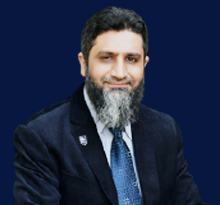
Professor Dr. Osman Hasan is a faculty member at the School of Electrical Engineering & Computer Science (SEECS) , National University of Sciences & Technology (NUST) , Islamabad, where he currently serves as Pro-Rector (Academics). His research primarily lies in formal methods, hardware verification, reliability analysis, and embedded systems, with applications in smart grids, robotics, and cybersecurity. His research interests include: Formal Methods and Theorem Proving Hardware and Software Verification Reliability and Safety Analysis of Critical Systems Smart Grids and Power Systems Approximate Computing and Energy-Efficient Design Robotics and Biomedical Systems His recent publications show a strong trend toward formal verification of hardware and cyber-physical systems, integration of machine learning with formal methods, and applications in power systems and robotics. He frequently employs higher-order logic theorem proving (e.g., HOL, ACL2) and model checking to ensure correctness and reliability. He has been actively involved in numerous international conferences such as FMCAD, FSEN, CICM, and ICTAC, serving on program committees and organizing workshops. His leadership as Pro-Rector highlights his commitment to enhancing academic quality and research excellence at NUST. He has supervised numerous students who have co-authored papers with him, indicating an active research group. His work bridges theoretical formal methods with practical engineering applications, particularly in safety-critical domains.

Sean Holden is a Professor in the Department of Computer Science and Technology at the University of Cambridge, affiliated with The Computer Laboratory. He holds positions at both the University and Trinity College. His research focuses on automated theorem proving, machine learning, and their intersections with formal methods and AI. He leads the development of the Connect++ theorem prover, which won the Best Newcomer award at CASC 2024. His work spans areas including connection calculus, graph neural networks, and reinforcement learning in games like Mahjong. Holden's academic contributions include over 50 publications in top venues such as IJCNN, ICPRAM, and Journal of Automated Reasoning. Notable works include foundational research on Bayesian methods in theorem proving and machine learning applications in bioinformatics and medical imaging. He serves as an Associate Editor for IEEE Transactions on Artificial Intelligence since 2023. His research group explores topics like protein graph embeddings, medical AI (e.g., breast cancer classification via MUGI-MRI), and the integration of machine learning with automated reasoning systems. Collaborations span institutions including Trinity College and international partners in computational biology and AI.
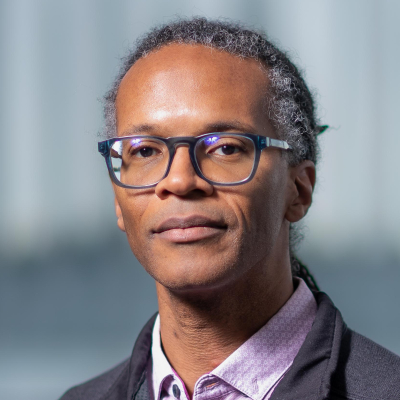
Ronald Garciaمشاهده پروفایل
دانشیار
- Programming Languages
- Gradual Typing
- Type Systems
- +۶ مورد دیگر
Ronald Garcia is an Associate Professor in the Department of Computer Science at the University of British Columbia, affiliated with the Faculty of Science and the Software Practices Lab. His research focuses on programming language theory, emphasizing gradual typing, type systems, and end-user programming. He teaches courses such as Programming Language Principles (CPSC 509) and Compiler Construction (CPSC 411). Education details are not explicitly stated in the provided texts, but his extensive academic contributions span over two decades. Research interests include formal semantics of programming languages, typestate systems, dependent types, and improving software practices for end-users. He has advised numerous Ph.D. and Master's students, contributing to over 30 academic publications. Recent work explores hybrid programming environments for end-users, runtime type slicing for debugging, and foundational frameworks for gradual dependent types. Garcia actively participates in academic conferences as a PC member and keynote speaker, notably in PLDI, POPL, and ICFP. His lab and collaborations focus on advancing theoretical foundations while addressing practical challenges in software development and education.
Mark Uttingمشاهده پروفایل
دانشیار
Associate Professor Mark Utting is affiliated with the University of Queensland (UQ), specifically within the School of Electrical Engineering and Computer Science. He holds the rank of Associate Professor and focuses on software verification, model-based testing, and programming language design. His academic journey includes roles at multiple Queensland universities, Waikato University (NZ), and the University of Franche-Comte (France). He earned his PhD from UNSW on object-oriented language semantics. Utting has authored over 80 publications and the book 'Practical Model-Based Testing: A Tools Approach.' His current research emphasizes verifying compilers, blockchain smart contracts, ARM64 binaries, and AI-generated code. Key projects include the Algorand Centre for Sustainability Informatics and the BASIL project on secure information-flow logics. His research spans formal methods, theorem proving, and software engineering. Utting leads supervision in areas like compiler verification and smart contract analysis, with active involvement in grants such as the 'Directed and Incremental Analysis for DevSecOps' project. Utting collaborates on interdisciplinary projects, including energy grid simulations and cybersecurity strategies. His work bridges academia and industry, with past experience in genomics and manufacturing software development.
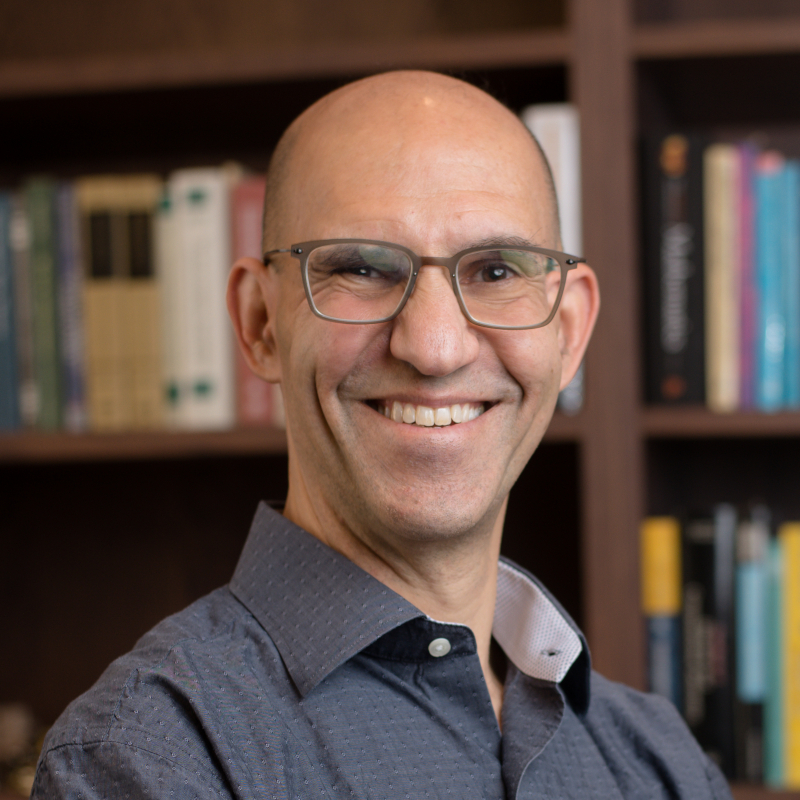
Jeremy Avigad is a Professor in the Department of Philosophy and the Department of Mathematical Sciences at Carnegie Mellon University, where he serves as Director of the Hoskinson Center for Formal Mathematics and holds a Dean's Chair in Logic and Philosophy of Mathematics. His primary research interests include Formal Methods and AI for mathematics, mathematical logic, and the history and philosophy of mathematics. His work bridges deep theoretical inquiry with practical applications, particularly in formal verification and automated reasoning. His recent publications reflect a strong focus on the formalization of mathematics, automated reasoning, and the integration of AI techniques into theorem proving. Key themes include the development and application of the Lean theorem prover, premise selection, proof optimization, and the formal verification of computational claims, especially in the context of blockchain technology. CADE-25 Skolem Award Avigad advises PhD students, such as Chase Norman, and is involved in significant research grants and collaborations, including work with StarkWare. He is an active organizer of major academic events like Big Proof and the Formalization of Mathematics workshops. He leads the Hoskinson Center for Formal Mathematics, a research hub dedicated to advancing the field of formal mathematics.
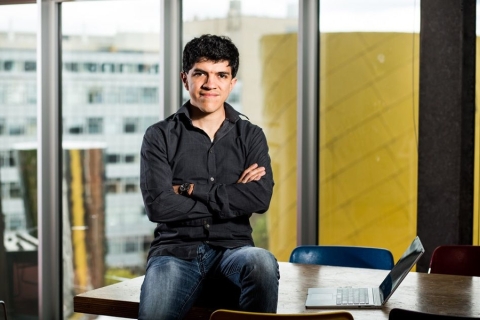
Armando Solar-Lezama is a Professor at the MIT Schwarzman College of Computing , Associate Director and COO of MIT CSAIL, and leads the Computer-Aided Programming Group . He earned his BS in Computer Science and Mathematics from Texas A&M University and PhD (2008) from UC Berkeley under Rastislav Bodik. His research focuses on program synthesis at the intersection of Programming Systems and Artificial Intelligence, with recent work on neurosymbolic programming. Education: BS (Texas A&M), PhD (UC Berkeley) Labs: CSAIL, Center for Deployable Machine Learning His research explores automated reasoning and learning to reduce programming effort, including the development of the Sketch programming language. Current neurosymbolic work combines deep learning with logical reasoning for applications in multi-agent systems, RNA splicing, and interpretable policy generation. Recent projects include VLMaterial for procedural asset generation and CRUXEval for code evaluation benchmarks. Scientific awards include: Robin Milner Young Researcher Award (2024) Best Paper (PLDI 2005, PPoPP 2016) Outstanding Paper (EMNLP 2023) He advises graduate students through MIT's EECS PhD program and has developed courses like 6.820 Foundations of Program Analysis and Program Synthesis . His work impacts software synthesis automation, programming language design, and deployable machine learning.
Monika Seisenberger is an Associate Professor at the Department of Computer Science , Swansea University, within the Faculty of Science and Engineering . Her academic role is centered on Formal Methods , Interactive Theorem Proving , and Specification & Verification , with significant contributions to logic, proof theory, and well-quasiorders. Research Interests : Her work bridges Computer Science and Mathematics , focusing on Program extraction from proofs Formal verification of safety-critical systems Applications of AI in medical and railway domains Computational content of choice principles Development of concurrent algorithms and toolchains Article Trends : Her publications over the past decade highlight a consistent focus on formal methods applied to railway logistics , AI explainability in healthcare, and constructive mathematics . Notable themes include Counterfactual explanation generation Multi-agent optimization in transportation Temporal model analysis via gradients Railway system safety verification Verification of geographic data Computational logic foundations Supervision & Collaboration : She actively supervises postgraduate research in areas like formal software verification , AI-driven railway technologies , and SHAP refinement , often collaborating with experts in Markus Roggenbach , Anton Setzer , and Fabio Caraffini . Labs & Teams : Based at the Computational Foundry (Bay Campus), she contributes to Swansea University's Formal Methods research group, advancing tools for proof theory and program synthesis .

Jo Laneمشاهده پروفایل
پژوهشگر
Dr. Jo Lane is affiliated with the Australian National University as a member of the John Curtin School of Medical Research . She collaborates with the Maddess Group , focusing on diagnostics for eye diseases, though her research spans multidisciplinary areas including mathematical logic, artificial intelligence, and automated reasoning. Academic Rank : Researcher Research Themes : Logic, theorem proving, constraint modelling, and AI Her recent work explores paraconsistent mathematics, relevant arithmetic, conflict-resolution algorithms for SAT solvers, and optimization techniques. She contributes to tools like Scavenger and Logic for Fun, bridging logic with problem-solving frameworks. Key article trends include advancements in automated reasoning (e.g., conflict-driven clause learning), applications of logic to AI planning (non-Markovian rewards), and interdisciplinary efforts connecting mathematical theory to computational methods. Dr. Lane’s collaborations and publications highlight expertise in logic, computational complexity, and medical diagnostics, though no explicit awards or student advising details are provided in the text.
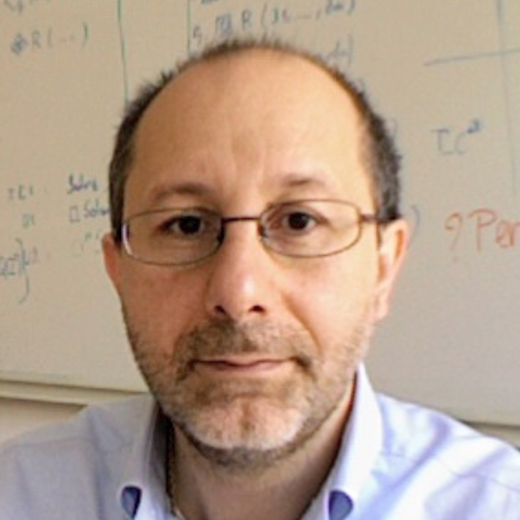
Alessandro Artale is an Associate Professor in the Faculty of Computer Science at the Free University of Bozen-Bolzano, where he is affiliated with the KRDB Research Centre. His research spans theoretical and applied aspects of knowledge representation, ontologies, and temporal reasoning. He earned his PhD in Computer Science from the University of Florence in 1994 and has held research and academic positions at CNR-LADSEB, IRST (now FBK), and UMIST (University of Manchester). PhD in Computer Science, University of Florence, 1994 His research interests include: Description Logics Ontologies and Conceptual Modelling Temporal and Computational Logics Knowledge Representation and Databases Artificial Intelligence and Natural Language Semantics His recent scholarly activities are reflected in his participation in leading international conferences such as AAAI, IJCAI, ECAI, KR, DL, TIME, and FoIKS. These publications and committee roles highlight a consistent focus on formal methods in AI, particularly in the areas of description logics, temporal reasoning, and ontology-based systems. The research demonstrates a strong theoretical foundation with applications in semantic web technologies and knowledge-driven systems. Notable scientific contributions include: Principal Investigator of the EPSRC project on Temporal Databases using Description Logics (2001–2004) Member of the KnowledgeWeb Network of Excellence Member of the InterOp Network of Excellence Member of the ESPRIT DWQ project on Data Warehouse Quality Artale has advised numerous Master's and PhD students through project supervision and has organized academic events such as the TIME and DL workshops. He has served on the program committees of over 50 international conferences and workshops, demonstrating extensive engagement with the research community. His teaching includes core computer science courses in algorithms, formal languages, compilers, and discrete mathematics. He is actively involved in research labs and teams including: KRDB Research Centre, Free University of Bozen-Bolzano Collaborations with European research networks (KnowledgeWeb, InterOp)
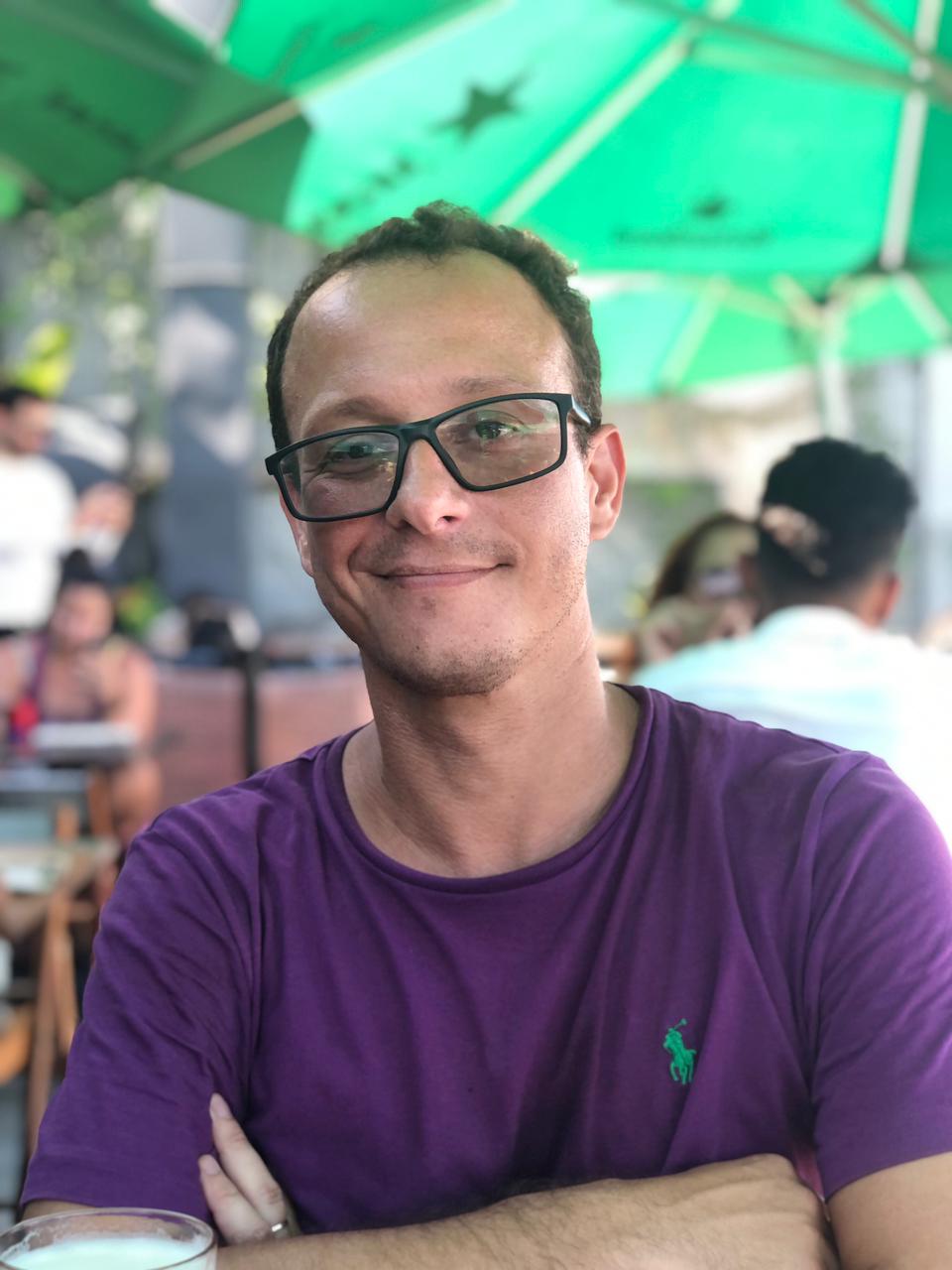
Bruno Lopes is a Professor at Universidade Federal Fluminense (UFF) and a researcher at the FR∀M∃ Lab. He holds a D.Sc. in Informatics (Theory of Computation) from PUC-Rio and has conducted postdoctoral work at INRIA (France). His academic roles include serving on the Brazilian Logic Society's directive committee (SBL) from 2017-2019, 2019-2021, and 2023-2025, and as 2nd Vice-President of SBL. He also coordinated the Logic Interest Group at the Brazilian Computer Society (SBC, 2020-2024). Research focuses on formal methods, logic systems, and theorem proving. Notable areas include proof theory, modal logics, concurrent systems, and multi-agent systems formalization. His work intersects theoretical foundations with applied domains like extensible theorem provers and ontology development. Education: D.Sc. in Informatics (PUC-Rio), M.Sc. in Geostatistics (UFAL), B.Sc. in Computer Science (UFAL). Teaches courses such as Logic and Formal Methods (TCC00305), Logic Programming (TCC00304), and Programming I (TCC00308). Active in international collaborations with INRIA and Université Lyon 3. Advances formal methods through projects like the TecMF/PUC-Rio initiative. His research emphasizes logical frameworks for concurrent systems and extensible theorem proving tools.
Alcino Cunhaمشاهده پروفایل
دانشیار
Alcino Cunha is an Associate Professor with habilitation at the Department of Informatics of the University of Minho. He is a member and co-coordinator of the High-Assurance Software Laboratory, part of the University of Minho and INESC TEC. His research focuses on making formal software design accessible, particularly through advancements in the Alloy framework, including Alloy4Fun and Alloy Version 6. He has contributed to tools like HAROS for robotic software verification and Echo for model repair. Teaching roles include Formal Methods in Software Engineering (MSc), Formal Verification (MSc), and Algorithmic Problem Solving Lab (BSc). He has led projects such as SAFER (robotic safety verification), TRUST (Alloy-based design), and DigiLightRail (railway network verification). His service includes PC roles at SEFM 2025, ABZ 2025, and QRARSAC conferences. Research highlights include formal specification education, temporal relational modeling (Pardinus), and verification of distributed systems. Collaborations with ONERA and INESC TEC have produced influential frameworks like Alloy4Fun and Electrum. His work bridges academia and industry, notably through consultancy with EFACEC and contributions to national CRIS ecosystems (PTCRISync).
Arvind Bordeمشاهده پروفایل
عضو هیئت علمی
- Relativity & Cosmology
- Topology
- Mathematical Physics
- +۱۰ مورد دیگر
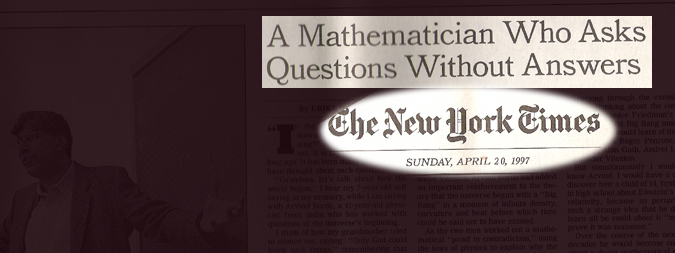
Arvind Borde is a Senior Professor of Mathematics and Physics at Long Island University, Post campus, where he also serves as Graduate Co-Director in the Department of Mathematics. He is affiliated with the College of Liberal Arts and Sciences and has made significant contributions to mathematical physics, particularly in relativity, cosmology, and topology. His work has had international recognition, including citations at Stephen Hawking's 60th birthday symposium and features in Nature . B.S., Bombay University M.A., Ph.D., Stony Brook University His research focuses on foundational questions in theoretical physics: whether the universe had a beginning, its global shape, and the nature of energy in spacetime. He is best known for the BGV theorem (with Guth and Vilenkin), which proves that inflationary models cannot be past-complete, suggesting a cosmic beginning. His work uses abstract mathematical methods pioneered by Penrose, Hawking, and Geroch to derive general results about spacetime structure. In addition to physics, Borde has deep expertise in computer science, especially in the TeX typesetting system, having authored multiple books and software tools. More recently, he has explored design and food history, co-authoring a biography of ceramic artist Eva Zeisel. The 15 most recent publications reflect a sustained engagement with cosmology, general relativity, and mathematical physics, with key themes including initial singularities, energy conditions, topology change, and baby universes. Later works also highlight his contributions to computing and digital document design, showing a unique interdisciplinary trajectory. Notable scientific awards include: Trustees Award for Scholarly Achievement (1995/96, single work) Trustees Award for Scholarly Achievement (2005, lifetime achievement) KITP Scholar, Kavli Institute for Theoretical Physics, UC Santa Barbara (2007–2009) He has advised graduate students in physics and mathematics and secured grants supporting advanced computing infrastructure, including founding the Southampton College Technology Center. He has held visiting positions at MIT, Tufts University, Brookhaven National Lab, and UC Santa Barbara. His outreach includes establishing a computer museum at LIU Post and contributing to public discourse through media features in The New York Times , Newsday , and the Boston Globe . Borde leads interdisciplinary research initiatives combining physics, computing, and design. He founded the advanced computing facility at Southampton College and maintains an active research group exploring quantum gravity, cosmology, and digital publishing technologies.
Josh Sunshineمشاهده پروفایل
دانشیار
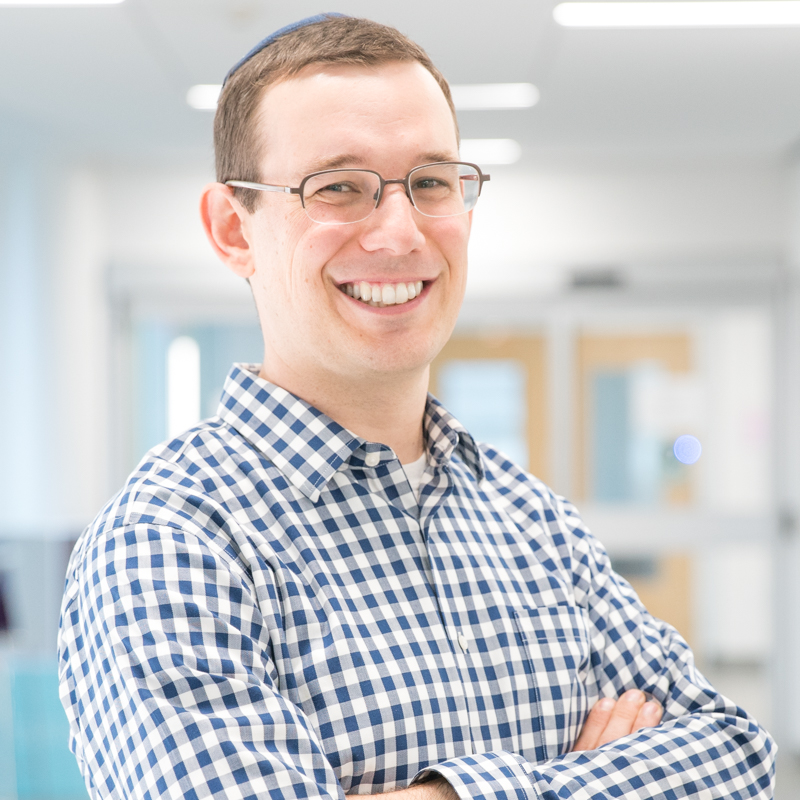
Josh Sunshine is an Associate Professor in the Software and Societal Systems Department (S3D) at Carnegie Mellon University's School of Computer Science, with a courtesy appointment in the Human-Computer Interaction Institute. He directs the NSF-funded REUSE program (Research Experiences for Undergraduates in interdisciplinary Software Engineering), providing summer research opportunities for diverse undergraduates across computer science domains including human-computer interaction, programming languages, and software security. His educational background includes a PhD in Software Engineering from Carnegie Mellon University (2013) under Jonathan Aldrich, and a BS from Brandeis University (2004) followed by four years as a software engineer. Prior academic training informs his industry-relevant research approach. Professor Sunshine's research spans programming languages, software engineering, and human-computer interaction with concentrated focus on usability of reusable software components. He investigates how developers interact with libraries, APIs, and testing tools, seeking to bridge formal methods with practical usability through human-centered design. Recent work develops tools that make verification and testing more accessible without sacrificing rigor. Analysis of his 15 most recent publications reveals strong emphasis on human-in-the-loop systems: 60% address software testing/tooling (e.g., TerzoN, Nanofuzz), 25% focus on visualization/education (e.g., Edgeworth), and 15% explore programming language safety (e.g., Rust studies). The work consistently combines empirical user studies with technical innovation, targeting real-world developer pain points. Scientific recognition includes: NSF CAREER Award (2024) for "Scientist-in-the-loop software testing" Best Paper Nominee at ACM Conference on Learning @ Scale (2024) for Edgeworth research Through the REUSE program, Professor Sunshine mentors 15-20 undergraduates annually in collaborative research with faculty including Charlie Garrod and Claire Le Goues. His grant portfolio centers on two major NSF awards: the REUSE site ($1.2M) and CAREER grant ($500k), supporting both research and educational outreach. Current projects integrate testing automation with human judgment and develop scalable tools for visual thinking in STEM education. As a core S3D faculty member, he contributes to CMU's interdisciplinary mission through the Human-Computer Interaction Institute collaboration. His REUSE program specifically builds inclusive research pathways, with 40% participation from underrepresented groups in computing. Future work focuses on expanding the "scientist-in-the-loop" paradigm across software engineering tasks.