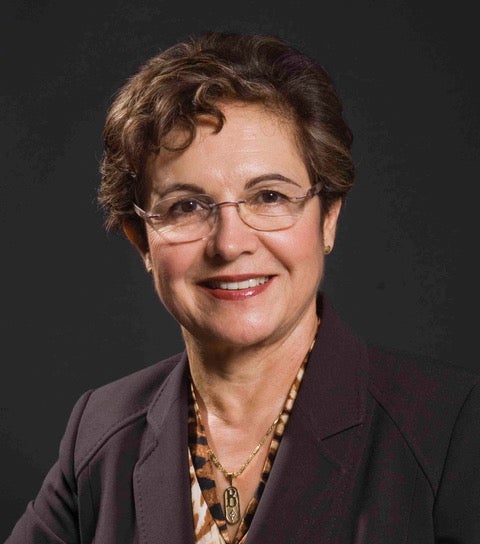
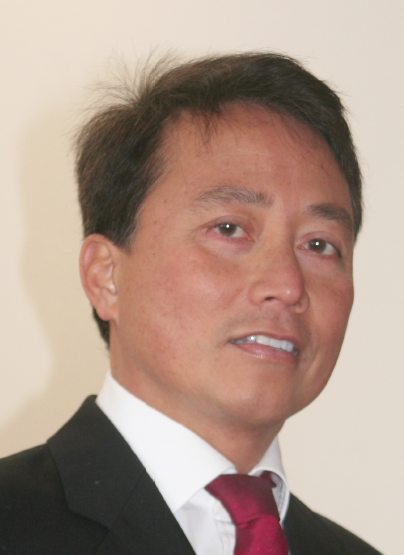
Dragan Huterer is a Professor of Physics and Associate Chair for the Graduate Program at the University of Michigan. His research focuses on cosmology, particularly dark energy and large-scale structure, utilizing data from the Dark Energy Survey (DES) and the Dark Energy Spectroscopic Instrument (DESI) collaborations. He earned his Ph.D. from the University of Chicago (2001) and B.S. from MIT (1996). His work explores the nature of dark energy through cosmological probes like Type Ia supernovae, galaxy clustering, and cosmic microwave background anisotropies. Key contributions include co-leading DESI's first-year cosmological analysis, revealing unprecedented constraints on dark energy and neutrino masses. He also investigates the statistical isotropy of the universe and authored the textbook A Course in Cosmology: From Theory to Practice . Awards include the Friedrich Wilhelm Bessel Research Award (2019) and the Chambliss Astronomical Writing Award (2025). He has advised numerous graduate and undergraduate students, and his funding includes DOE, NSF, and NASA grants. Current projects include the Michigan Cosmology Summer School and leadership in the DESI Collaboration.
Mark Crowley is an Associate Professor in the Department of Electrical and Computer Engineering at the University of Waterloo, with a cross-appointment in the Cheriton School of Computer Science. He is a member of the Waterloo Artificial Intelligence Institute (WAII) and the Waterloo Institute for Complexity and Innovation (WICI), and serves as National Secretary of the Canadian Artificial Intelligence Association (CAIAC). His educational background includes a Ph.D. and M.Sc. in Computer Science from the University of British Columbia, where he worked in the Laboratory for Computational Intelligence, and a B.A. in Computer Science from York University. He completed a postdoctoral fellowship at Oregon State University working with Tom Dietterich's machine learning group. Crowley's research focuses on developing dependable and transparent algorithms to augment human decision-making in complex domains with multiple agents, spatial structure, or uncertainty. His work spans Reinforcement Learning , Deep Learning , Ensemble Methods , and Manifold Learning . He frequently collaborates with researchers in applied fields including Computational Sustainability, Sustainable Forest Management, Autonomous Driving, Medical Imaging, and Material Design. His research is motivated by both theoretical opportunities and real-world challenges such as forest fire management, automotive applications, and medical imaging. His recent publications demonstrate a strong focus on addressing challenges in reinforcement learning, particularly around observation costs, multi-agent systems, and causal representation learning. His work on ChemGymRL provides a significant contribution to digital chemistry and material design through reinforcement learning frameworks. The textbook Elements of Dimensionality Reduction and Manifold Learning represents a major contribution to the theoretical foundations of machine learning. Crowley actively supervises graduate students, with recent thesis completions including Shayan Shirahmadi Gale Bagi (PhD, Feb 2025) and Oleksandra Nahorna (MASc, Dec 2024). His lab, UWECEML (Waterloo ECE Machine Learning Lab), focuses on developing new algorithms at the intersection of Machine Learning, Optimization, and Probabilistic Modeling. He teaches courses including ECE 457C (Reinforcement Learning), ECE 657A (Data & Knowledge Modelling & Analysis), and ECE 457B (Fundamentals of Computational Intelligence). His blog Computationally Thinking explores AI, machine learning, and the societal impact of these technologies.
Peter A. Flach is Professor of Artificial Intelligence at the Intelligent Systems Laboratory, School of Computer Science, University of Bristol, where he has been faculty since 1997 and was promoted to Professor in 2003. He currently directs the UKRI AI Centre for Doctoral Training in Practice-Oriented Artificial Intelligence and serves as Vice-President of the European Association for Data Science (EuADS), having previously served as its President. His research centers on rigorous evaluation and improvement of machine learning systems, with seminal contributions to classifier calibration (including Beta Calibration and Precision-Recall-Gain curves), explainable AI frameworks, and data science methodology. He pioneered the extension of CRISP-DM to data science trajectories and developed Explainability Fact Sheets for systematic assessment of XAI approaches. His work bridges theoretical foundations with practical deployment in real-world systems. Analysis of his recent publications reveals a dominant focus on interpretable and reliable machine learning, with strong emphasis on performance evaluation metrics, model calibration techniques, and human-centered explainability. His research increasingly addresses healthcare applications through projects like SPHERE and clinical decision support systems, while maintaining core contributions to fundamental ML theory. His scientific recognition includes prestigious fellowships: Fellow of the European Lab for Learning and Intelligent Systems (ELLIS) Fellow of the European Association for Artificial Intelligence (EurAI) Professor Flach has secured major research funding including UKRI Centre for Doctoral Training grants and EU network funding (TAILOR). He leads extensive collaborations across Engineering, Population Health Science, and international institutions (Monash University, Polytechnic University of Valencia), plus over 20 industry partners in the Practice-Oriented AI CDT including LV= and QinetiQ. His work with the SPHERE project demonstrates successful translation of AI research into residential healthcare settings. He leads the Intelligent Systems Laboratory at Bristol, which develops influential open-source tools including the FAT Forensics Python toolbox for algorithmic fairness and the Explainability Fact Sheets framework. His lab maintains strong connections with the European AI community through ELLIS and EurAI, positioning Bristol as a hub for human-centered and methodologically rigorous AI research.
Vicente Talanquer is a University Distinguished Professor in the Department of Chemistry and Biochemistry at the University of Arizona, College of Science. His academic journey includes a B.S., M.A., and Ph.D. in Chemistry from the Universidad Nacional Autónoma de México (UNAM), followed by postdoctoral research at the University of Chicago's James Frank Institute. He has held various academic roles, including Professor and Associate Professor at UNAM before joining the University of Arizona in 2000. His research focuses on chemistry education, particularly student reasoning, assessment, and the development of chemical thinking. Key areas include understanding how students conceptualize chemical reactions, design learning progressions, and improve formative assessment strategies. He has led initiatives such as the Instructional-Teams Model to enhance teaching practices in STEM courses. Dr. Talanquer has received numerous awards, including the ACS Award for Achievement in Research (2021) and Arizona Professor of the Year (2015). He actively contributes to national and international educational committees, editorial boards, and professional societies such as the American Chemical Society and NARST. His work emphasizes curriculum innovation, teacher preparation, and fostering equity in science education. His research is supported by grants from the National Science Foundation and the UA Provost Investment Fund, focusing on active learning, large-enrollment course redesign, and systems thinking approaches. Talanquer's publications span over 200 peer-reviewed articles, textbooks, and educational resources in chemistry education, reflecting his commitment to advancing both research and practice in the field.
Joseph Bentsman is a Professor in the Department of Mechanical Science and Engineering at the University of Illinois at Urbana-Champaign's Grainger College of Engineering. He also holds affiliate appointments in the Department of Aerospace Engineering (since 2015) and the Department of Electrical and Computer Engineering (since 2018). His academic journey began with an M.S. from Byelorussian Polytechnic Institute in Minsk, USSR (1979), followed by a Ph.D. in Electrical Engineering from Illinois Institute of Technology (1984). Professor Bentsman's research focuses on control of nonlinear and distributed parameter systems, nonlinear oscillations, network control, stability theory, and stochastic multiscale methods. He pioneered a new class of dynamical systems with active singularities that admit control actions during singular phases of motion, which represent a novel category of hybrid systems characterized by impulsively controlled discrete transitions. His recent work has expanded into biomedical applications, particularly thermophysical modeling of tissue during electrosurgery and control of phase change processes. His recent publications (2021-2024) reveal a strong trend toward biomedical applications of control theory, particularly in modeling heat conduction in biological tissues, electrosurgical processes, and phase change phenomena. Approximately 60% of his recent work focuses on biomedical applications, while the remainder continues his foundational work on nonlinear control systems, distributed parameter systems, and systems with active singularities. Key subfields include Stefan problems, enthalpy-based control, telegraph equation modeling, and PDE-based control of complex physical processes. NSF Presidential Young Investigator Award (1989) Life Fellow of American Society of Mechanical Engineers Life Senior Member of IEEE IEEE Control Systems Society Technical Committee Chair on Power Generation (2015-2019) International Society of Automation POWID Achievement Award (2014) 2018 AIST Computer Applications Best Paper Award Featured in 'People in Control', IEEE Control Systems Magazine (2018) Professor Bentsman has been instrumental in developing educational approaches that integrate signal processing, instrumentation, control, and machine learning, as evidenced by his two textbooks. His work on the steel continuous casting process, particularly the mold oscillation system, has led to practical industrial applications. He has also made significant contributions to power plant control systems and boiler/turbine control. His research group appears to focus on both theoretical control systems development and practical implementation in industrial and biomedical settings, with strong connections to steel manufacturing, power generation, and medical device industries.
Yvonne Rogers is a Professor of Interaction Design and Director of the UCL Interaction Centre (UCLIC), with a joint appointment as Deputy Head of the Department of Computer Science at University College London. She joined UCL in 2011 after holding professorships at the Open University (2006-2011) and Indiana University (2003-2006). Her pioneering work spans ubiquitous computing, interaction design, and human-computer interaction, with a current focus on human-centered AI. She co-authored the definitive 'Interaction Design' textbook (6 editions, 300,000+ copies) and serves as CTO of LetThink.com. Research interests center on designing technologies that enhance human cognition and daily activities: Ubiquitous Computing: Augmenting learning/work activities through pervasive technologies Human-AI Interaction: Developing AI systems that enhance human decision-making Health Technologies: Creating VR therapies and ADHD support systems Community Resilience: Designing tools for environmental monitoring and sustainable practices Publication analysis reveals three dominant trends: (1) VR applications for mental health (emotion regulation, ADHD support), (2) AI systems for cognitive augmentation, and (3) community-centered tools for healthcare/environmental challenges. Recent work demonstrates strong emphasis on vulnerable populations including children with ADHD, older adults, and postoperative patients. Major scientific recognition includes: International Member, National Academy of Engineering (2024) ACM SIGCHI Lifetime Research Award (2022) Royal Society Robin Milner Medal (2022) Royal Society Fellowship (2022) Microsoft Outstanding Collaborator Award MRC Suffrage and Science Award (2020) Triple Fellow status (ACM, BCS, CHI Academy) Advises PhD students including Leon Reicherts, Sheena Visram, and Tu Duong. Secured major grants including EPSRC Dream Fellowship on ageing/computing and led the Intel Collaborative Research Institute on Sustainable Connected Cities (2012-2018). Directs UCLIC research center and previously established the Pervasive Interaction Lab at Open University.
Arvind Narayanan is a Professor of Computer Science at Princeton University and Director of the Center for Information Technology Policy (CITP). His research focuses on the societal impact of digital technologies, particularly artificial intelligence, with emphasis on policy implications, fairness, and privacy. He leads interdisciplinary efforts connecting technical research with real-world policy challenges. Dr. Narayanan earned his Ph.D. from the University of Texas, Austin in 2009. His academic journey has established him as a leading voice in the critical examination of AI systems and their societal consequences. Narayanan's research spans multiple domains where technology intersects with society. His work on AI includes critical analysis of AI capabilities versus marketing claims (AI Snake Oil), fairness in machine learning systems, and the reproducibility crisis in ML-based science. In privacy research, he led the Princeton Web Transparency and Accountability Project which uncovered how companies track users online, developing the OpenWPM tool used in over 100 studies. His early work demonstrated fundamental limits of de-identification techniques and how machine learning reflects cultural stereotypes. His recent publications reveal a consistent focus on demystifying AI capabilities while identifying genuine opportunities and risks. Narayanan's work bridges technical computer science with policy relevance, emphasizing the importance of evidence-based approaches to AI governance. His research increasingly addresses the limitations of prediction systems, the challenges of evaluating AI systems, and the need for transparency in foundation models. Presidential Early Career Award for Scientists and Engineers (PECASE) Privacy Enhancing Technologies Award (twice recipient) Privacy Papers for Policy Makers Award (three-time recipient) TIME's inaugural list of 100 most influential people in AI 2025 Graduate Mentoring Award Narayanan is recognized as an exceptional mentor, receiving Princeton's Graduate Mentoring Award in 2025. His policy engagement extends to congressional testimony, advisory roles, and frequent media commentary. He has secured significant research funding supporting his work on web transparency, AI policy, and cryptocurrency analysis. His research group has produced influential tools like OpenWPM for web privacy studies and contributed to foundational textbooks on cryptocurrencies and fairness in machine learning. At Princeton, Narayanan leads the Web Transparency and Accountability Project, a major research initiative that has conducted large-scale measurements of online tracking across millions of websites. He also co-founded and directs the CITP's AI Policy Initiative, which brings together researchers from multiple disciplines to address pressing AI governance questions. His work frequently involves collaboration with social scientists, legal scholars, and policymakers to develop practical solutions to technology governance challenges.
Barry Naughton is the So Kwan Lok Chair of Chinese International Affairs at the School of Global Policy and Strategy (GPS), University of California, San Diego, where he has been a faculty member since 1988 and was appointed to his named professorship in 1998. As a globally recognized authority on China's economic transformation, his work bridges academic rigor and policy relevance through decades of analysis of market reforms, industrial development, and international economic relations. His academic foundation includes: Ph.D. in Economics from Yale University (1986) M.A. in International Relations from Yale University (1979) B.A. in Chinese Language and Literature from the University of Washington (1975) Naughton's research centers on China's transition from planned to market economy, with emphasis on industrial restructuring, foreign trade dynamics, and regional development disparities. His scholarship uniquely connects historical analysis of reform milestones with contemporary policy challenges, particularly examining how state-market interactions shape technological advancement and global economic integration. This dual focus on institutional evolution and sectoral transformation has established him as a critical interpreter of China's development model for both academic and policy audiences. Analysis of his 2020-2024 publications reveals a decisive shift toward examining China's industrial policy architecture and state capitalism mechanisms. Key thematic clusters include the conceptualization of 'Grand Steerage' in state-economy relations, the restructuring of science-technology systems, and the sectoral implementation of industrial policies. These works collectively document China's evolving governance approach—from market liberalization to targeted state direction—while analyzing implications for global trade and innovation ecosystems. His scholarly recognition includes: Ohira Memorial Prize for 'Growing Out of the Plan: Chinese Economic Reform, 1978-1993' (1996) Administrative leadership has been integral to Naughton's career, serving as Associate Dean of GPS (1992-1995, 2001-2003) and Chair of UCSD's Chinese Studies Program (1998-2000). His policy engagement extends through the Research Grants Council of Hong Kong (1998-2003) and U.S. academic committees on Chinese studies. Current research examines regional growth patterns and foreign investment linkages while completing a new edition of his seminal textbook 'The Chinese Economy: Transitions and Growth,' which remains the field's authoritative reference. Though not leading a formal laboratory, Naughton shapes discourse through China Leadership Monitor's quarterly economic assessments and collaborative networks like the edited volume 'State Capitalism, Institutional Adaptation and the Chinese Miracle' (2015), which mobilized leading scholars to analyze China's institutional innovation within global capitalism.
Dr. Patrick J Solar is an Associate Professor of Criminal Justice and Forensic Investigation at the University of Wisconsin-Platteville, within the College of Liberal Arts and Education. He serves as the Program Coordinator for the online Master of Science in Criminal Justice program and teaches courses such as Police Administration, Police Community Relations, and Criminal Investigations. With a career spanning 29 years in law enforcement, including roles as a police officer, detective, and chief, he brings extensive practical experience to academia. Education: Doctorate in Philosophy, Northern Illinois University Master of Public Administration, Northern Illinois University Bachelor of Science, Northern Illinois University FBI National Academy Graduate Research & Publications: Focused on policing strategies and accountability, including his textbook Police Community Relations: A Conflict Management Approach and an upcoming work on police accountability frameworks. His writing emphasizes leadership development and risk management in law enforcement. Affiliations: Lifetime member of the Illinois Association of Chiefs of Police, FBI National Academy Associates, and member of the Wisconsin Chiefs of Police Association.
Dr. James D. Foley is a Professor in the College of Computing and the School of Electrical and Computer Engineering at Georgia Institute of Technology. He holds the Stephen Fleming Chair in Telecommunications. He earned his Ph.D. in Computer Information and Control Engineering from the University of Michigan and a BSEE from Lehigh University, where he was inducted into Phi Beta Kappa, Tau Beta Pi, and Eta Kappa Nu. Founded the Graphics, Visualization & Usability (GVU) Center at Georgia Tech, ranked #1 in graphics and user interaction. Directed Mitsubishi Electric Research Lab and later served as CEO of Mitsubishi Electric ITA. Executive Director of Yamacraw, Georgia's broadband development initiative. His research focuses on computer graphics, human-computer interaction (HCI), visualization, and user interface design. He co-authored foundational textbooks like Interactive Computer Graphics , translated into multiple languages. Professional leadership includes Chair of the Computing Research Association (CRA), Fellowships with ACM and IEEE, and the ACM/SIGGRAPH Stephen Coons Award. He advised over 30 graduate students and led numerous conferences, panels, and editorial roles in top journals. Contributions span academia and industry, including roles in NSF workshops, JTEC studies on HCI in Japan, and advisory boards for institutions like MIT and Lehigh University.
Ralph H. Colby serves as Professor of Materials Science and Engineering and Chemical Engineering at Pennsylvania State University's College of Earth and Mineral Sciences, holding the Corning Faculty Fellowship. His research focuses on molecular-level dynamics in complex fluids, particularly polymers, ionomers, and liquid crystalline systems. With over 130 publications and authorship of the textbook Polymer Physics (2003), he directs an active research program examining structure-property relationships in soft matter. B.S. in Materials Science and Engineering, Cornell University (1979) M.S. in Chemical Engineering, Northwestern University (1983) Ph.D. in Chemical Engineering, Northwestern University (1985) Professor Colby's research spans polymer physics, rheology, and materials for energy applications. His group employs mechanical rheology, dielectric spectroscopy, and scattering techniques to investigate ion transport in single-ion conductors for batteries, dynamics of glass-forming liquids, and self-assembly in polyelectrolyte systems. Current work emphasizes structure-property relationships in ionomers, liquid crystalline polymers, and branched architectures. Analysis of recent publications reveals consistent focus on ionomer membranes for energy applications, processing-structure relationships in advanced polymers, and fundamental dynamics of complex fluids. Key trends include increasing integration of computational modeling with experimental characterization, expansion into sustainable materials processing, and growing emphasis on applications in battery technology and biomedical materials. Penn State Faculty Scholar Medal for Outstanding Achievement (2022) Bingham Medal, Society of Rheology (2012) American Chemical Society Fellowship Corning Faculty Fellowship in Materials Science and Engineering Professor Colby leads multiple federally funded projects including NSF's 'Fundamental Studies of Flow-Induced Polymer Crystallization' and DOE's 'Conduction mechanisms and structure of ionomeric single-ion conductors'. His group maintains strong industry partnerships with Corning Incorporated and participates in interdisciplinary initiatives like the Penn State Intercollege Graduate Degree Program in Materials Science and Engineering. Current research includes collaborations on breast cancer adherence interventions in Rwanda and conjugated polymer development for flexible electronics. The Colby Research Group operates specialized facilities for rheological characterization, dielectric spectroscopy, and X-ray scattering at Penn State's Materials Research Institute. The team maintains active collaborations with national laboratories and international research groups, focusing on translating fundamental polymer physics discoveries into practical applications for energy storage and advanced manufacturing.
Dr. Yildiz Bayazitoglu is the Harry S. Cameron Professor of Mechanical Engineering and Professor of Materials Science and NanoEngineering at Rice University since 1996. She joined Rice in 1977 and has held prior roles as an assistant professor at Middle East Technical University (1973–74) and a visiting assistant professor at the University of Houston (1975–76). Her education includes a B.S. from Middle East Technical University (1967), and M.S. and Ph.D. from the University of Michigan (1969 and 1974). Her research focuses on convective heat transfer with phase change , micro/nano-scale heat transfer , and radiation heat transfer . Key areas include thermal modeling of biomedical systems, containerless materials processing, and fuel cell design. She has pioneered work on nanofluids, interfacial thermal resistance, and radiation shielding for aerospace applications. Dr. Bayazitoglu has published over 200 technical papers and holds patents in thermal engineering. She authored two heat transfer textbooks and serves as Editor-in-Chief of the International Journal of Thermal Sciences . Her honors include ASME’s Heat Transfer Memorial Award, AAAS and AIAA Fellowships, and membership in the Turkish Academy of Sciences. Education: B.S., Middle East Technical University (1967) M.S., University of Michigan (1969) Ph.D., University of Michigan (1974) Leadership Roles: Former Vice-President of the International Center for Heat and Mass Transfer (2019–2021) Member of Turkish Academy of Sciences Energy Sources Committee (2017–2018) Her work bridges thermal engineering with biomedical, aerospace, and materials science applications, emphasizing practical solutions to complex thermal challenges.
William Powrie is Professor of Geotechnical Engineering at the University of Southampton and former Dean of the Faculty of Engineering and the Environment (2010-2018). He authored the seminal textbook 'Soil Mechanics: Concepts and Applications' and chairs HS2's Independent Geotechnical Expert Panel. Research focuses on geotechnical challenges in transportation infrastructure including railway track behavior, earthworks, tunneling, and groundwater control. His work applies soil mechanics principles to complex materials like landfilled waste and railway ballast. As Convenor of the UK Collaboratorium for Research on Infrastructure and Cities (UKCRIC) and leader of UK Rail Research and Innovation Network (UKRRIN), he coordinates national infrastructure research initiatives. Recent publications emphasize experimental and numerical investigations of infrastructure performance, particularly railway geotechnics and sustainable construction practices. Awards and honors include Fellowship of the Royal Academy of Engineering (2009), British Geotechnical Association Medal (2017, 2021), and invited lectureships worldwide. Current research projects receive support from EPSRC, Network Rail, and HS2. Advises multiple PhD students including Akeem Faniran, Benjamin Robert Lee, and Tracey Anne Najafpour Navaei. Leads the iPACT network developing infrastructure solutions for coastal communities.
Ronaldo I. Borja is a Professor in the Department of Civil and Environmental Engineering at Stanford University's School of Engineering. His academic career spans decades of research and teaching in theoretical and computational solid mechanics, geomechanics, and geosciences. He teaches undergraduate, graduate, and doctoral level courses including Geotechnical Engineering (CEE 101C), Mechanics and Finite Elements (CEE 281), Computational Poromechanics (CEE 314), and Plasticity Modeling and Computation (CEE 315). Professor Borja's research focuses on theoretical and computational solid mechanics, with particular emphasis on geomechanics and geosciences. His work includes the development of multi-scale discontinuity frameworks for crack and fracture propagation utilizing strong discontinuity and extended finite element methods; solution techniques for multi-physical processes such as coupled solid deformation-fluid diffusion in saturated and unsaturated porous media; stabilized finite element methods for solid/fluid interaction and nonlinear contact mechanics; and nanometer-scale characterization of the inelastic deformation and fracture properties of shales. His research spans multiple projects including shale characterization, poromechanics, and large deformation inelasticity. His recent publications demonstrate expertise across computational mechanics, geomechanics, and materials science, with a focus on finite element methods, constitutive modeling, and multi-scale analysis. His work bridges theoretical developments with practical applications in geotechnical engineering and earth sciences. 2016 ASCE Maurice A. Biot Medal for work in computational poromechanics Professor Borja serves as editor of two leading journals in his field: the International Journal for Numerical and Analytical Methods in Geomechanics and Acta Geotechnica. He has also authored the textbook 'Plasticity Modeling and Computation' published by Springer. His research is supported by multiple projects examining shale mechanics, poromechanics in unsaturated porous media, and large deformation inelasticity in crystalline materials.
Dr. Paola Madini serves as Senior Lecturer in Accounting within the Department for Accounting and Finance at Kent Business School, University of Kent. Holding a PhD from Bocconi University and PGCHE from Kent, she specializes in management control systems with prior academic appointments at ESADE and SDA Bocconi School of Management. Education: PhD in Business Administration and Management (Accounting and Control specialization), Bocconi University PGCHE, University of Kent Fellow of the Higher Education Academy Her research examines management control systems (MCS) design and behavioral implications, focusing on budgeting processes, performance measurement, and inter-organizational relationships. Using field-based case studies and surveys with finance professionals, she bridges academic theory with practical applications in accounting management. Recent work investigates pandemic impacts on UK healthcare organizations' MCS and explores management accounting education through participative teaching methodologies and flipped learning approaches. Publication analysis reveals consistent contributions to management accounting literature, with recurring themes in MCS configurations (coercive, enabling, diagnostic, interactive), budgetary design, and industry-specific applications in fashion/retail sectors. Her work demonstrates evolving focus from traditional budgeting processes toward contemporary challenges like emerging market dividend policies and pandemic-driven organizational adaptations. Scientific Awards: Distinguished Reviewer Award 2017 (Journal of Management Control) Runner up reviewer 2015 (Journal of Management Control) She actively supervises postgraduate research including six Master's theses on managerial reporting systems in retail, fashion company accounting implementations, and neo-colonial accounting education frameworks. Industry collaborations include IBM Italy (integrative finance organizations), DocFlow (document management systems), and CIMA (fashion company accounting systems), with current projects examining pandemic impacts on UK healthcare management control systems. As member of the McGraw Hill Higher Education Advisory Board and conference committees (Socialising Business Research, AAA Annual Meeting), she contributes to academic community development while advising publishers on management accounting textbook development and portfolio strategies.