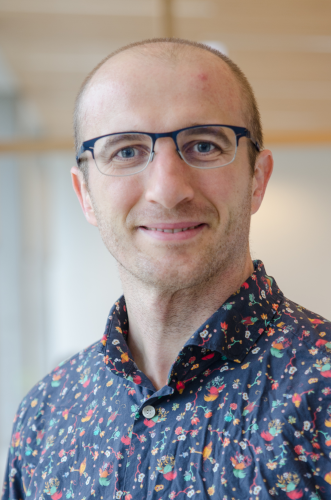
Hussain Jamil is an Assistant Professor at Sejong University 's Department of Data Science , specializing in User Experience (UX) evaluation , Machine Learning , and Medical Informatics . His work bridges Artificial Intelligence with Healthcare Applications , particularly in DXA image analysis and social media-based mental health detection . Education: Ph.D. in Biomedical Engineering (Kyung Hee University, 2019) MS in Biomedical Engineering (Kyung Hee University, 2014) BCs in Computer Science (Kohat University, 2010) Research interests focus on Machine Learning for Medical Imaging , User Experience , and Text Mining . Key projects include AI-driven osteoporosis diagnosis , depression detection via SNS analysis , and multimodal UX platforms . Recent publications span 2024 research on respiratory disease prediction , Arabic text analysis for pandemic monitoring , and multimodal emotion recognition , alongside foundational work in 2023-2018 on UX evaluation frameworks and knowledge-based systems .
Dr. Andrew Peng is a Lecturer (Research) at the Australian Artificial Intelligence Institute (AAII) within the Faculty of Engineering and Information Technology at University of Technology Sydney (UTS), Australia. With dual PhDs from UTS (2015) and Beijing Institute of Technology (2013), he has published 45 peer-reviewed papers across top venues like IEEE ICDM, COLING, and Frontiers in Molecular Biosciences. Education: Dual PhD (2013-2015) from Beijing Institute of Technology and University of Technology Sydney His research focuses on Data Science , Artificial Intelligence , and Healthcare Analytics , addressing challenges in medical data analysis, unstructured clinical text processing, and federated learning frameworks. Recent publications explore: Deep graph clustering for community detection Privacy-preserving medicine shortage detection via social media Time-aware medication recommendation using dynamic treatment regimes Knowledge tracing enhancements for online education Contrastive learning approaches for ICD coding Hypergraph-based sequential diagnosis prediction Dr. Peng has secured over AUD $1M in external research grants and serves as Subject Coordinator for undergraduate/postgraduate courses. He contributes to professional leadership through roles as Web Chair at AJCAI 2021 and ADMA 2021, PC member for major conferences, and reviewer for journals like NeurIPS and AAAI. His work spans collaborations with universities, industry, and government agencies.
Hien Nguyen is an Associate Professor in the Department of Computer Science at the University of Wisconsin-Whitewater , where she has been employed since Fall 2005. She holds a Ph.D. in Computer Science from the University of Connecticut (2005), a Master’s degree from the University of Wisconsin-Milwaukee (1999), and a Bachelor of Science in Informatics and Applied Mathematics from Hanoi University of Technology (Vietnam). Her career spans industry experience at 3C Inc. and the United Nations Development Programme before transitioning to academia. Education: B.Sc. Informatics and Applied Mathematics, Hanoi University of Technology M.Sc. Computer Science, University of Wisconsin-Milwaukee Ph.D. Computer Science, University of Connecticut Research Interests: Hien Nguyen’s interdisciplinary research focuses on user modeling , information retrieval , human-computer interaction , collaborative filtering , and human factors . She integrates system-centered and user-centered approaches to improve information retrieval performance through formal knowledge representations in artificial intelligence. Article Trends: While her core research aligns with computer science, recent publications span medical informatics, pharmacology, public health, and environmental science, indicating interdisciplinary collaborations. Topics include genomic studies in Vietnam , transnational caregiving , AI in healthcare , and environmental monitoring systems . Grants: Notable grants include a $200,000 award (2007–2010) from IAPRA/DTO for collaborative problem-solving frameworks and a $50,000 award (2015–2016) from the Office of Naval Research for real-time inverse reinforcement learning . Professional Service: She has served on program committees for conferences like User Modeling and Personalization (2010) and FLAIRS (2008–2016). She has chaired departmental committees at UW-Whitewater and reviewed for journals such as IEEE Transactions on Systems, Man and Cybernetics and Journal of Intelligent Information Systems .
Dr. Jaehyun Jo is an Assistant Teaching Professor at Rutgers University, having joined in fall 2020. He holds a PhD in East Asian Linguistics from UCLA and MA/BA degrees in Korean Linguistics and Literature from Yonsei University. His research examines the intersection of language, culture, and society through the lens of functional and interactional linguistics, with specializations in Korean linguistics, discourse analysis, and socio-pragmatics. Dr. Jo teaches foundational and advanced Korean language courses, translation studies, and cultural-linguistic subjects. His publications focus on Korean pragmatics (honorifics, negation), cultural semantics (Buddhism terminology, 'Han' in music), and language acquisition. Recent work (2018) explores formality markers in interviews and negation patterns in conversational Korean. Awards & Affiliations: Mellon-EPIC Fellowship, UCLA (2018) Excellence in Teaching Award, UCLA (2017) Research Fellowship & Summer Grant, UCLA (2017) Member: AATK (lifetime), International Pragmatics Assoc., Applied Linguistics Assoc. of Korea He has organized academic events like the 26th Japanese/Korean Linguistics Conference (UCLA, 2018) and contributed musically to the documentary 'Land of My Father' (2019).
Klim Zaporojets is a Marie Skłodowska-Curie Postdoctoral Fellow in the Department of Computer Science at Aarhus University, where he conducts research within the Data-Intensive Systems Group. His work bridges theoretical advancements and practical applications in natural language understanding. His research focuses on information extraction systems that connect textual content with structured knowledge bases. His methodology emphasizes leveraging external knowledge sources to enhance information extraction performance, particularly in document-level contexts where entities evolve over time. His work spans temporal relation extraction, entity linking, and biomedical text mining applications. The publication record reveals a strong focus on document-level information extraction with increasing emphasis on temporal aspects and knowledge integration. Recent work explores large language model applications for graph learning and calibration challenges in LLMs, showing evolution from traditional NLP tasks to cutting-edge foundation model research. His publications appear in top-tier venues including ACL, EMNLP, CIKM, and NeurIPS. His scientific recognition includes the prestigious Marie Skłodowska-Curie Postdoctoral Fellowship, supporting his research at Aarhus University. His work has produced several influential datasets including DWIE, TempEL, and BioDEX that have become benchmarks in document-level information extraction. Zaporojets maintains active collaborations with researchers at Ghent University (evidenced by his ugent.be email address) and has contributed to multiple interdisciplinary projects spanning computational linguistics, healthcare informatics, and knowledge representation. His technical contributions include open-source implementations of his research, demonstrating commitment to reproducible science.
Dimitrios Karapiperis serves as an Academic Scholar at the School of Science and Technology, International Hellenic University (IHU), specializing in Entity Resolution and Privacy-Preserving Record Linkage. Previously, he held a post-doctoral position at the Hellenic Open University. He earned his PhD from the Hellenic Open University and his MSc from the University of York (UK). His doctoral thesis was featured in the IEEE Intelligent Informatics Bulletin of August 2017, highlighting its significance in the field. Dr. Karapiperis' research centers on developing advanced algorithms for entity resolution, including similarity measures, data structures, and scalable distributed solutions using randomization techniques. His work extends to privacy-preserving methods for record linkage with applications in electronic health records, cryptocurrency analysis, and social media sentiment. He has made significant contributions to efficient record linkage in data streams and spatio-temporal data through innovative blocking techniques and approximation schemes. His recent publications (2020-2022) reveal a consistent focus on scalable and privacy-aware record linkage, with increasing applications in financial technology and affective computing. Collaborations with prominent researchers like V.S. Verykios have resulted in numerous publications in top venues including IEEE Big Data and IEEE TIFS, demonstrating expertise in both theoretical foundations and practical implementations. Scientific Recognition Doctoral thesis featured in IEEE Intelligent Informatics Bulletin (2017) Research Projects University of York: Development of Java servlets for converting VisioXML into GSML within the High Integrity Systems Engineering research group University of Macedonia: Standardization of distance learning systems University of Macedonia: Establishment of a data bank for the fur sector in Kastoria University of Macedonia: System for organizing business processes of the Ministry of Macedonia and Thrace Dr. Karapiperis has collaborated with research teams across multiple institutions, contributing to diverse projects from healthcare data integration to government business process optimization, while maintaining active research in scalable entity resolution methodologies.
Dr. Kyle Martin is a Lecturer in the School of Computing, Engineering & Technology at Robert Gordon University (RGU), where he works in the Artificial Intelligence & Reasoning Research Group. He completed his PhD in 2021, after having been hired as a full-time lecturer and researcher in 2019. His academic focus centers on making AI systems more transparent and explainable, with applications across multiple sectors including digital health (with partners Jiva and Walk With Path), fintech (Sticklr), and horizon scanning (Citizen Advice Scotland). Dr. Martin's primary research interests include: Case-Based Reasoning Deep Metric Learning Explainability in AI systems Applied Machine Learning across various domains His recent publications (2023-2025) demonstrate a strong focus on explainable AI, particularly in developing case-based reasoning approaches to enhance the transparency of machine learning systems. He has published extensively on counterfactual explanations, legal question-answering systems, and automated essay grading, with 48 research outputs spanning multiple publication types. His work often bridges theoretical AI concepts with practical applications in real-world domains where understanding AI decision-making is critical. Dr. Martin is actively involved in research funding and supervision: Co-investigator on the iSee project (European consortium) focused on personalized explanation experiences Available for PhD supervision in Case-Based Reasoning, Deep Learning, Explainability, and Applied Machine Learning Program committee member for ICCBR and SGAI conferences Organizer of international workshops on Case-Based Reasoning and Deep Learning As a member of the Artificial Intelligence & Reasoning Research Group at RGU, Dr. Martin contributes to advancing reasoning capabilities in AI systems and developing practical applications of these technologies. His research has resulted in multiple publications in prestigious venues including ECAI, ICCBR, and Knowledge-Based Systems, demonstrating his growing impact in the AI research community.
Dr. Ikechukwu Nkisi-Orji is a Research Fellow at Robert Gordon University's School of Computing, Engineering & Technology, where he conducts research at the intersection of artificial intelligence, semantic technologies, and case-based reasoning. He is affiliated with the university's Artificial Intelligence & Reasoning Research Group and has extensive collaboration experience with the British Geological Survey and Oil and Gas Innovation Centre. His research focuses on intelligent information retrieval systems, ontology engineering and alignment, semantic web technologies, natural language processing, and case-based reasoning applications to real-world problems. Dr. Nkisi-Orji has made significant contributions through the development of the CloodCBR platform, a cloud-based CBR framework that received an honorable mention at ICCBR 2020, and the iSee platform for personalized explainable AI experiences. His recent publication trends (2023-2025) show a strong focus on integrating case-based reasoning with modern AI techniques, particularly large language models and retrieval-augmented generation systems. His work increasingly addresses explainable AI challenges, legal question answering systems, and methods for improving the reliability of AI outputs in specialized domains. Honourable mention at ICCBR 2020 for CloodCBR platform Dr. Nkisi-Orji has active supervision availability for PhD students in Semantic Information Retrieval, Natural Language Processing, and Ontology design/alignment/application. His research is supported by collaborations with industry partners including the Oil and Gas Innovation Centre, where he has worked on extracting business intelligence from text and applying case-based reasoning to asset inventory management. As the key architect of the CloodCBR platform and contributor to the iSee XAI platform, Dr. Nkisi-Orji leads research efforts focused on making AI systems more transparent, reliable, and applicable to industrial-scale problems through the integration of traditional AI methods with contemporary approaches.
Jun Wang is a Professor of Information and Data Science in the Department of Computer Science at University College London. He serves as the Founding Director of the MSc Web Science and Big Data Analytics program and is the Co-founder and Chief Scientist of MediaGamma Ltd (acquired), a UCL startup focused on AI for intelligent audience decision-making. His educational background includes: Doctor of Philosophy from Technische Universiteit Delft (2007) Master of Science from National University of Singapore (2003) Bachelor's degree from Southeast University Nanjing (1997) Professor Wang's primary research focuses on AI and intelligent systems, with particular expertise in multiagent reinforcement learning, deep generative models, and their applications across several domains. His work spans information retrieval, recommender systems and personalization, data mining, smart cities, bot planning, and computational advertising. His research has practical implications in healthcare, robotics, and intelligent systems for decision-making, aligning with Sustainable Development Goal 3 (Good Health and Well-Being). His recent publications demonstrate a strong trend toward integrating large language models with reinforcement learning techniques to create more efficient and capable systems. The research spans healthcare applications, robotics, information systems, and strategic decision-making, with an emphasis on privacy preservation, efficient computation, and multi-agent coordination. Professor Wang has received several prestigious awards: Beyond Search – Semantic Computing and Internet Economics award from Microsoft Research Yahoo! FREP Faculty award UCLB One-to-Watch award 2016 for MediaGamma First place in global real-time bidding algorithm contest (80+ participants worldwide) Multiple Best Paper awards With over 15 years of experience, Professor Wang has advised numerous startups including Last.Fm, Passiv Systems, Massive Analytic, Context Scout, and Polecat. He has also collaborated with major industry players such as BT, Microsoft, Yahoo!, Alibaba, and Didi. His knowledge transfer activities bridge academic research with practical industry applications. Professor Wang has developed the Information Retrieval and Data Mining MSc module and the MSc/MRes programme on Web Science and Big Data Analytics. He also teaches a multiagent AI MSc module, sharing his expertise in cutting-edge AI techniques with the next generation of computer scientists.
Sylvia Bendel Larcher serves as a Lecturer at the Institute for Communication and Marketing within the School of Business at Lucerne University of Applied Sciences and Arts. With appointments spanning multiple institutions including the University of Bern and University of Innsbruck, her academic career demonstrates deep expertise in linguistic analysis of professional communication. She maintains active research collaborations while contributing to editorial work at the Reformed Church of Uri since 2024. Her educational background includes a Dr. phil. from the University of Zurich and a PD Dr. habil. from the University of Bern, establishing her scholarly foundation in linguistic analysis. These qualifications support her extensive research in conversation patterns across various professional contexts. Bendel Larcher's research focuses on the intersection of linguistic theory and practical business communication. Her work examines conversation structures in agile teams, institutional discourse patterns, and historical advertising rhetoric. Recent publications reveal growing interest in technology-mediated communication, particularly how AI tools like ChatGPT interact with traditional linguistic analysis methods. She investigates how personality manifests in professional interactions and how communication quality can be systematically evaluated in organizational settings. Her 15 most recent publications demonstrate consistent output across multiple formats - books, journal articles, and conference presentations - with increasing attention to digital communication environments. The research shows evolution from traditional discourse analysis toward hybrid methodologies incorporating computational approaches while maintaining core linguistic principles. Her professional activities extend beyond academia to practical applications in organizational settings. She has served as Public Relations Officer for the Evangelical-Reformed Parish of Einsiedeln (2012-2016) and currently edits for the Reformed Church of Uri. Her work bridges theoretical linguistic research with real-world communication challenges in business and institutional contexts. Bendel Larcher leads several research initiatives including 'Videotaped professional practice for the business world,' 'Business book summary using natural language generation,' and 'Interaction profile and personality.' These projects reflect her commitment to applying linguistic analysis to contemporary business communication challenges while exploring the relationship between individual personality and professional discourse patterns.
Christy Jie Liang is an Associate Professor at the School of Computer Science, University of Technology Sydney (UTS), where she leads the Data Visualisation Research Lab in the Visualisation Institute. With extensive experience in both academic and industry settings, including appointments at IBM and Peking University, she has established herself as a leading researcher in data visualization and visual analytics. Dr. Liang earned her PhD in Data Visual Analytics from UTS, where she was awarded the University Medal with First Class Honours. Her educational background includes a Bachelor of Information Technology (First Class Honours) also from UTS. Professor Liang's research focuses on data visualization and visual analytics, with particular emphasis on information visualization, narrative visualization, and the application of these techniques to real-world problems. Her work spans multiple domains including finance, food safety, biomedical applications, smart cities, and social media. She has developed novel visualization techniques and owns five intellectual properties in this field. Her recent publications demonstrate a clear trajectory toward more sophisticated visualization techniques that integrate machine learning, with increasing focus on narrative visualization, user engagement across demographics, and practical applications in domains such as public health and education. The interdisciplinary nature of her work is evident in collaborations across computer science, behavioral science, and domain-specific applications. Dr. Liang has received significant recognition for her work, including: University Medal with First Class Honours from UTS Capital Markets CRC Honours scholarship Australian Postgraduate Awards As an educator, Professor Liang coordinates core subjects for Bachelor of Information Technology, Bachelor of Computer Science with Honours, Master of Interaction Design, and Master of Business Analytics programs. She has recently developed enterprise learning courses including short courses and micro-credentials in data visualization education. Her leadership extends to service roles as associate editor for JVLC and Journal Visual Informatics, program committee member for numerous conferences, and advisory board member for the Australian Computer Society and Peking University Medical Visualization Centre. Professor Liang leads the Data Visualisation Research Lab, which focuses on developing innovative visualization techniques and applying them to real-world problems. The lab maintains strong industry connections, with collaborations spanning government agencies, academic institutions, and commercial enterprises across multiple continents.
Dr. Aimee A. Kane holds the Donahue Chair in Management and serves as an Associate Professor of Management at the Palumbo-Donahue School of Business, Duquesne University. Her interdisciplinary research examines group and team processes, with recent work exploring how AI influences collaboration. She teaches courses on management, organizational behavior, and leadership at undergraduate, graduate, and executive levels. Dr. Kane earned her Ph.D. and M.S. in Organizational Behavior and Theory from Carnegie Mellon University's Tepper School of Business and a B.A. in Spanish from Duke University. Her educational background reflects her interdisciplinary approach to organizational studies. Her research focuses on identifying processes that enable those separated by boundaries (social, informational, technological) to collaborate effectively. She employs various methodologies including small group experiments, automated text analysis, social network analysis, questionnaires, and interviews. Recent work explores how AI influences collaboration and decision-making in teams, with publications extending into 2025. Her research spans knowledge transfer, team receptivity to newcomers, boundary spanning, and language processes in groups. Dr. Kane's recent publications demonstrate a focus on AI collaboration, emotional contagion in online environments, and language analysis in group settings. Her work shows consistent progression in methodology sophistication and interdisciplinary integration across psychology, computer science, and organizational behavior. Most Valuable Paper (MVP) Co-Winner, Group Dynamics: Theory, Research and Practice, 2023 Best Article Award, Small Group Research, 2019 Dean's Award for Excellence in Research, 2023 Dean's Award for Excellence in Teaching, 2022-2023 William and Helen Lyons Faculty Fellowship in Management, 2022 Harry W. Witt Faculty Fellowship in Management, 2018-2021 Dr. Kane serves as an Associate Editor at Group Dynamics: Theory, Research and Practice and on editorial boards of Academy of Management Discoveries and Small Group Research. At Duquesne University, she serves on the Faculty Senate Executive Committee and previously served as an Assembly Member from 2020-2024. She played a key role in university initiatives including the COVID Health and Safety Task Force responsible for the COVID-19 Dashboard and served for 9 years on the Institutional Review Board (IRB), receiving the Eugene P. Beard Outstanding Service Award in 2021. Dr. Kane leads research on knowledge transfer, computer-supported collaboration, team receptivity to newcomers, boundary spanning, and language & group processes. Her work has been supported by grants from the Army Research Office, National Science Foundation, and the A.J. and Sigismunda Palumbo Charitable Trust. She has developed teaching materials including the case study 'Stranded in the Nyiri Desert' and conducted webinars on remote collaboration during the pandemic.