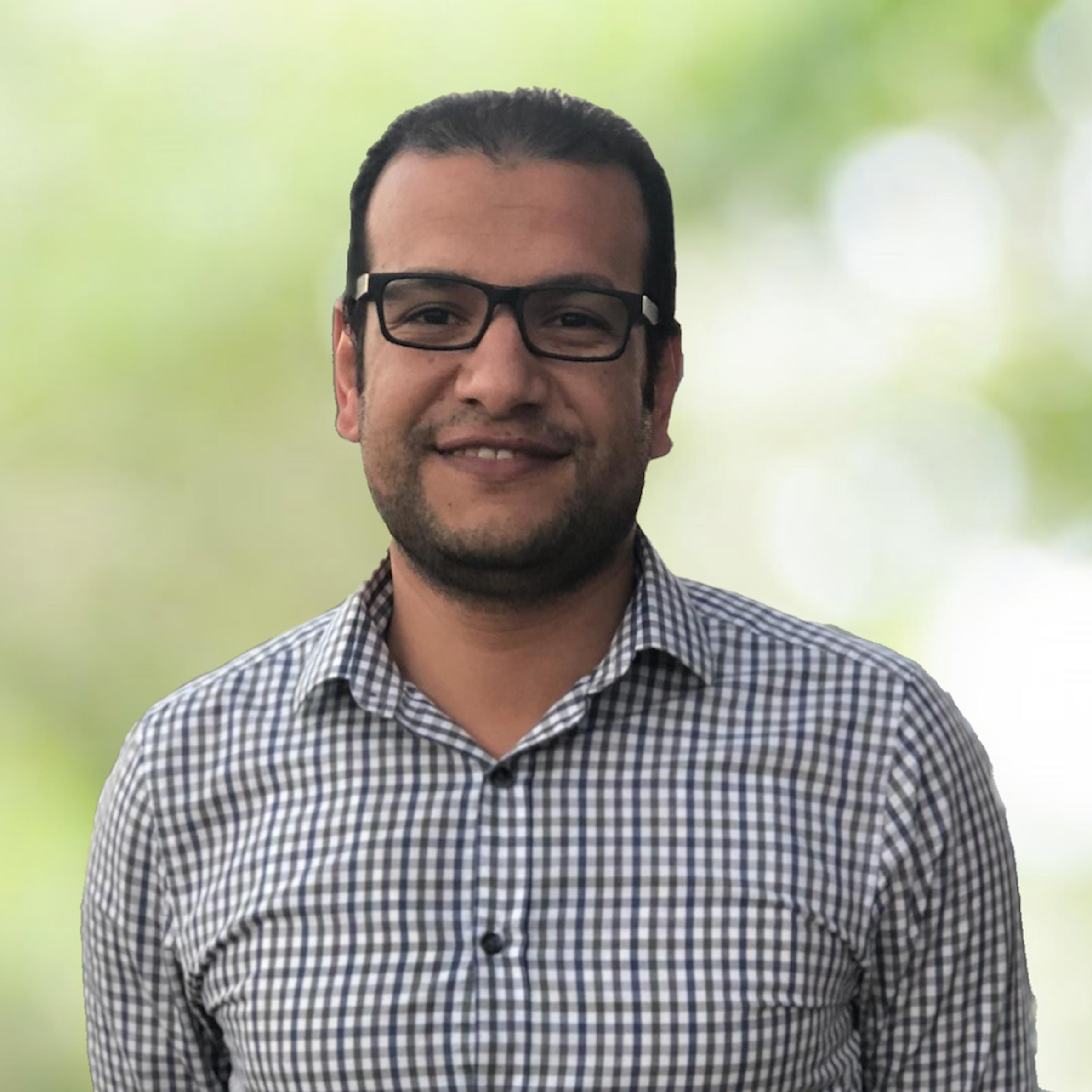
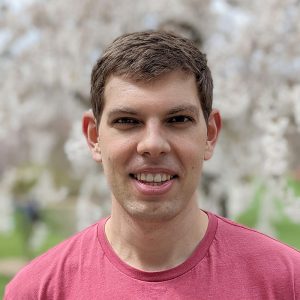
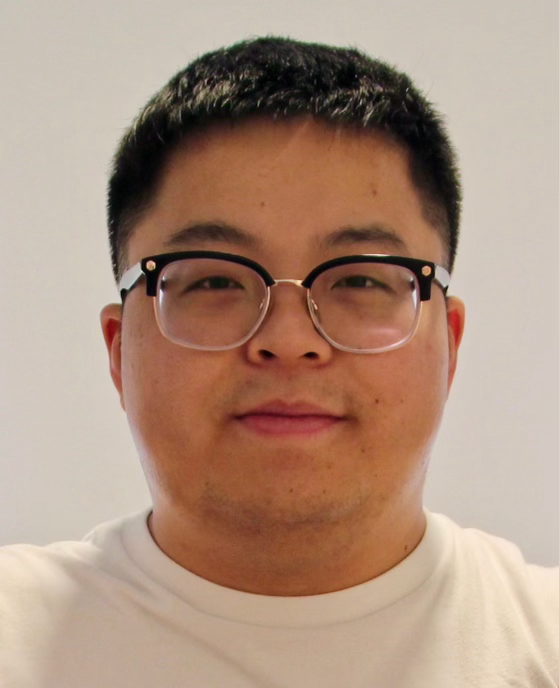
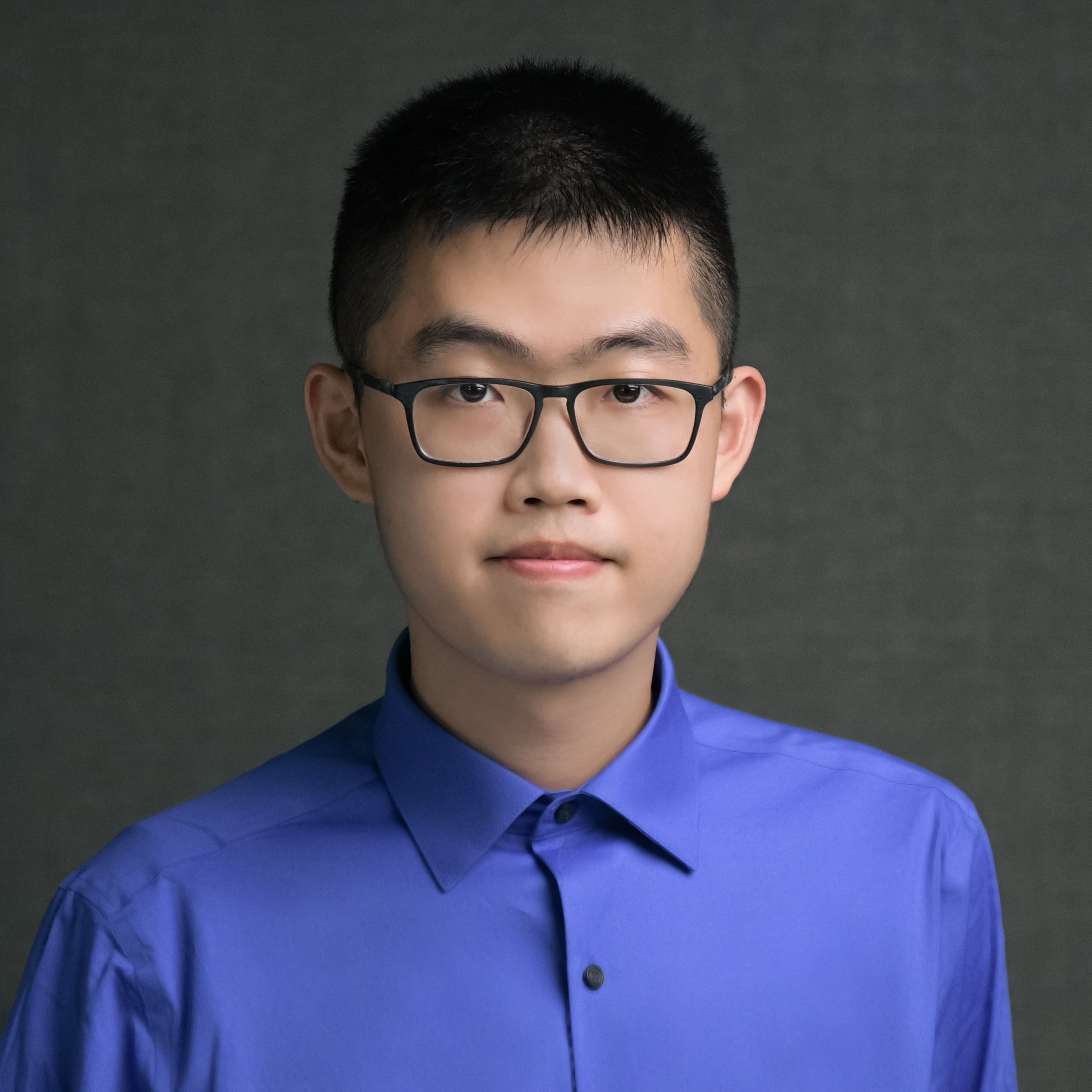
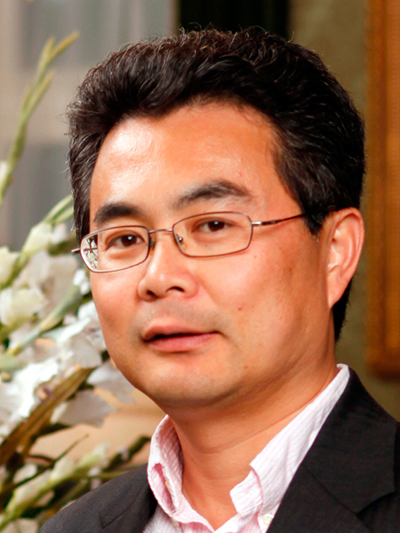
Jeffrey P. Bigham is an Associate Professor at the Human-Computer Interaction Institute within the School of Computer Science at Carnegie Mellon University . His research spans human-computer interaction , human-AI interaction , accessibility , dialog systems , NLP , and crowdsourcing . Current PhD Students: Hamza El Alaoui, Jessica Yin Huynh, Sara Kingsley, Peya Mowar, Yi-Hao Peng, Atieh Taheri PhD Graduates: Erin Brady, Yu Zhong, Ting-Hao Huang, Anhong Guo, Cole Gleason, Prakhar Gupta, Stephanie Valencia, Kundan Krishna, Jason Wu His work is funded by Apple , Bosch , DARPA , Google , Microsoft , the National Institute of Disability Rehabilitation Research , the National Science Foundation , and Yahoo! He also holds a CMU HCII Career Development Fellowship . Selected Awards: NSF CAREER Award 2019 Best Paper at ASSETS 2021 Best Paper Nomination at CHI 2024 Best Paper Nomination at CHI 2021 Best Paper Nomination at DIS 2021
Jon Atle Gulla is a Professor at NTNU and Director of the Norwegian Research Centre for AI Innovation (NorwAI). He holds academic leadership roles, including former Head of the Department of Computer Science and Informatics at NTNU. His expertise spans Semantics, Language Technology, Recommender Systems, and AI-driven innovation. He has nearly 150 international publications and advised over 100 students across MSc, PhD, and postdoctoral levels. Education: MSc in Computer Science (1988), PhD in Computer Science (1993) from Norwegian Institute of Technology (NTH) MSc in Linguistics (1995), University of Trondheim MSc in Management (Sloan fellowship, 2003), London Business School Research interests focus on Semantics and Language Technology applied to Recommender Systems, Information Retrieval, and Text Analysis. He explores AI-based innovations in digitalization and entrepreneurship, advising industry on AI adoption and commercialization. Notable projects include Big Data collaborations with DNB, RecTech for news recommendation, and Trondheim Analytica analyzing political texts/social media. Publications emphasize AI applications in news recommendation, political text analysis, and Scandinavian language models. His work addresses ethical AI, copyright implications, and cross-lingual NLP challenges. Awards: Member of the Royal Norwegian Society of Arts and Sciences. Advising/grants: Supervised 30 PhD students and 70 MSc students. Involved in startups like Fast Search & Transfer (acquired by Microsoft) and Mito.ai/Strise.ai. Active in reviewing for journals like Data & Knowledge Engineering and conferences like ACL. Labs/teams: Leads NorwAI, co-founder of INRA and NOBIDS workshops. Collaborates with industry and academia on AI-driven solutions.
Elsayed Issa is an Assistant Professor in the School of Languages and Cultures at Purdue University. Specializing in Computational Linguistics and Arabic, his interdisciplinary research bridges Natural Language Processing (NLP) with Second Language Acquisition (SLA), focusing on conversational AI and speech technology for under-resourced languages. Ph.D. in Linguistics from the University of Arizona (2023) Research integrates NLP, conversational AI, and SLA methodologies Develops tools for computer-assisted pronunciation training (CAPT) Focuses on Arabic dialectology and large language models (LLMs) His work employs Transformer architectures and end-to-end machine learning to enhance language learning systems. Recent projects include ArabiBot development and dialect identification models. He specializes in speech-to-text systems , prosody modeling , and emotional speech analysis for Arabic language learning applications.
Ryo Suzuki is an Assistant Professor in the Department of Computer Science at the University of Calgary's Faculty of Science. His research focuses on Human-Computer Interaction (HCI) and robotics, particularly in tangible user interfaces, swarm robotics, and shape-changing interfaces. He holds a PhD in Computer Science from the University of Colorado Boulder (2020) and has conducted research internships at Stanford University, UC Berkeley, the University of Tokyo, and Adobe Research. His educational background includes advanced coursework in robotics and HCI, with a strong emphasis on interdisciplinary innovation. He teaches courses such as Human-Computer Interaction II, Human-Robot Interaction, and Special Topics in Mixed Reality Application Design. Research interests include designing novel interfaces for AR/VR/MR systems, haptic feedback mechanisms, and collaborative robotics. His work often bridges physical and digital spaces, such as through projects like LiftTiles (shape-changing building blocks) and RoomShift (room-scale haptic environments). Key awards include the UIST 2020 Honorable Mention Paper Award, DIS 2019 Best Paper Award, and the Ministry of Internal Affairs and Communications in Japan Innovation Award. His research has been featured in IEEE Computer Graphics and Applications, TechXplore, and Wired. He actively explores future work in symbiotic AI systems, AI-in-the-loop AR applications, and scalable shape-changing robotics. His lab emphasizes hands-on prototyping and user-centered design principles.
Dr. Jason J. Corso is a Professor in the Department of Electrical Engineering and Computer Science at the University of Michigan . His research focuses on high-level computer vision , video understanding , and the intersection with human language and robotics . His work emphasizes Bayesian approaches to segmentation and recognition, with applications spanning biomedicine and recreational video analysis . He is particularly known for contributions to video object segmentation , activity recognition , and vision-language frameworks . Scientific awards include: NSF CAREER award (2009) ARO Young Investigator award (2010) Google Faculty Research Award (2015) DARPA CSSG grant He also leads major projects like YouCook2 dataset , Video2Text.net , and LIBSVX framework.
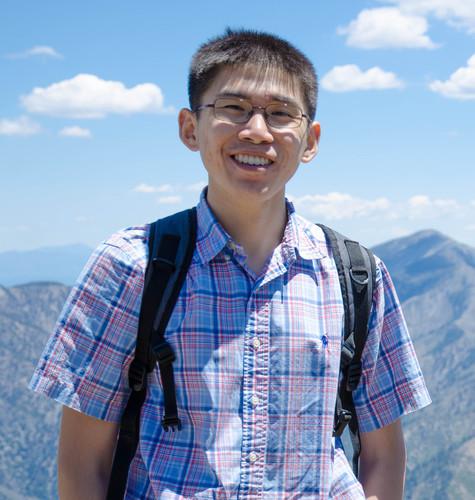
Chen Sun is an Assistant Professor of Computer Science at Brown University and a part-time Staff Research Scientist at Google DeepMind . His research bridges computer vision, machine learning, and artificial intelligence , focusing on multimodal representation learning, visual commonsense, and controllable video generation . He directs the PALM🌴 research lab , which explores scalable models for robotic planning, video understanding, and human activity recognition . Chen Sun earned a Ph.D. in Computer Science from the University of Southern California (2016) , advised by Professor Ram Nevatia , and a Bachelor of Science in Computer Science from Tsinghua University (2011) . His lab's work has been supported by Adobe, Honda, Meta, NASA, and Samsung , and he is affiliated with the NSF AI Research Institute on Interaction for AI Assistants . His research spans multimodal transformers, embodied agents, and physics-informed video generation . Key trends include Learning from unlabeled videos for human activity recognition Developing controllable generation techniques using motion trajectories and physics-based signals Advancing scalable frameworks for video-language tasks Scientific awards include the Brown University Richard B. Salomon Faculty Research Award and Samsung Global Research Outreach Award . He has served as Workshop Chair (CVPR 2025) , Action Editor (TMLR) , and Area Chair for top conferences like ICLR, CVPR, and NeurIPS . Chen Sun mentors a dynamic team including Ph.D. students Apoorv Khandelwal (Presidential Fellow) Calvin Luo (Research Mobility Fellow) Nate Gillman (Math Department) Shijie Wang Tian Yun (co-advised with Ellie Pavlick) Yuan Zang Zilai Zeng Zitian Tang and alumni now pursuing Ph.D. programs at Princeton, Cornell, UBC, and UNC . His teaching portfolio includes graduate-level courses on Deep Learning (CSCI 2470) , Advanced Topics in Deep Learning (CSCI 2952N) , and a short course on Multimodal Transformers at ICASSP 2022 and AAAI 2023 .
Wesley Willett is an Associate Professor in the Department of Computer Science at the University of Calgary, holding the NSERC CRC II Chair in Visual Analytics. His primary research focuses on information visualization, human-computer interaction, and new media applications. He leads the Data Experience Lab and Interactions Lab, exploring innovative methods for data representation and interaction in augmented/virtual reality environments. Education includes a B.S. in Computer Science from the University of Colorado (2006) and a Ph.D. in Computer Science from UC Berkeley (2012). His work bridges technical innovation with user-centered design principles, emphasizing ethical considerations in data visualization and inclusive representation. Key research contributions include: spatial visualization techniques for large environments, gesture-based interfaces for AR/VR, and physical data representations through projects like Cetonia (swarm robotics visualization) and Data Embroidery. His work has been recognized with Best Paper awards at CHI 2015 and Pervasive 2010. Current research emphasizes immersive analytics, wearable visualization systems, and demographically diverse anthropographics. He collaborates with urban designers, neurologists, and environmental scientists to apply visualization in diverse domains like epilepsy surgery planning and air quality monitoring.
Gedas Bertasius is an Assistant Professor in the Department of Computer Science at the University of North Carolina at Chapel Hill. Previously, he served as a postdoctoral researcher at Meta AI (Facebook AI) and earned his PhD in Computer Science from the University of Pennsylvania. His academic journey began with a bachelor’s degree in Computer Science from Dartmouth College. Dr. Bertasius specializes in computer vision and machine learning with specific interests in: Video understanding First-person vision (egocentric vision) Human behavior modeling Multimodal deep learning Transfer learning Computer vision for sports analytics Video+robotics integration His research produces practical frameworks like Video ReCap for hierarchical captioning of long videos, SiLVR for language-based video reasoning, and BASKET for fine-grained skill estimation. He focuses on developing models that can process videos across multiple temporal granularities while maintaining computational efficiency. Key research themes in his work include: Recursive video processing architectures Space-time attention mechanisms Generative video modeling LLM integration with vision systems 3D-aware representation learning Continual learning for video QA He has received notable recognition, including: CVPR 2024 Egocentric Vision (EgoVis) Distinguished Paper Award CVPR 2020 Best Paper Award Nomination First Place at CVPR 2025 Multi-Discipline Lecture Understanding Workshop Dr. Bertasius collaborates with prominent researchers like Mohit Bansal and Lorenzo Torresani . His recent publications demonstrate expertise in advancing video-language models, with applications in semantic alignment, temporal grounding, and cross-modal reasoning. For detailed information about his research, publications, and ongoing projects, please visit his official website .
Olga Vechtomova is a Professor at the University of Waterloo, affiliated with the Information Systems research group and specializing in Search Engines and Natural Language Processing. Her work bridges computational creativity, multimodal systems, and AI-driven text generation. She leads projects like LyricJam , a real-time lyric generation system for live music, and explores applications in dynamic story generation, hate speech detection, and low-resource summarization. Her research emphasizes ethical AI, creative technologies, and leveraging large language models for diverse tasks. Research interests include natural language processing, machine learning, and multimodal interaction. Recent work focuses on artistic inspiration modeling, stylized text generation, and improving NLP efficiency through semi-supervised learning and distillation techniques. Her contributions span over 60 papers since 2000, with a strong emphasis on foundational NLP challenges and real-world applications. She collaborates on systems like Promptmix for model distillation and LyricJam sonic for music-audio lyric generation.
Sarah Ebling is a Full Professor of Language, Technology and Accessibility at the University of Zurich's Faculty of Arts and Social Sciences. She leads the Language, Technology and Accessibility research group within the Institute for Computational Linguistics. Her work focuses on computational linguistics applications for assistive technologies targeting disabilities such as hearing impairments, visual impairments, and cognitive disorders. Key areas include sign language technologies, automatic text simplification, and audio description systems. She directs the large-scale Swiss innovation project 'Inclusive Information and Communication Technologies' (2022-2026, CHF12 million budget) and collaborates on EU H2020 and SNSF Sinergia projects. Education: Holds a doctoral degree (summa cum laude, 2016) from the University of Zurich with research on automatic translation to Swiss German Sign Language. Completed studies in German Linguistics, Computational Linguistics, and English Linguistics at Universities of Zurich and Heidelberg, with research stays in Dublin, Chicago, and Rochester. Research emphasizes multimodal accessibility solutions, including sign language fluency assessment, gesture-based interaction, and AI-driven text adaptation. Current projects explore audio description translation systems (SwissADT), sign language corpus development (SwissSLi), and digital tools for comprehensibility assessment in simplified texts. Her work bridges computational linguistics with ethical considerations in assistive technology deployment. Grants and Leadership: Principal Investigator on major accessibility-focused grants, including the CHF12M Swiss innovation project. Supervises PhD candidates in areas like sign language assessment tools and text simplification algorithms. Active in international collaborations, publishing extensively in computational linguistics and accessibility journals/conferences. Technology Development: Created the 'DigiSpon' benchmark for language sample analysis and developed open-source tools for sign language translation baselines. Her team's innovations include the SignCLIP model connecting text and sign language via contrastive learning, and pose estimation frameworks for sign language recognition.
Luke Miratrix serves as Assistant Professor at Harvard Graduate School of Education and affiliate faculty in Harvard Department of Statistics. His methodological expertise centers on causal inference applications in educational research, particularly treatment effect heterogeneity and cluster-randomized trial evaluation. His academic background includes a Doctorate in Statistics from University of California, Berkeley (2012), Master of Science in Computer Science from M.I.T., Bachelor of Science in Computer Science from California Institute of Technology, and Bachelor of Arts in Mathematics from Reed College. Prior to academia, he spent seven years as a high school teacher and tutor. Miratrix's research prioritizes minimal-assumption statistical approaches to validate data-driven arguments. Key interests include developing methods for characterizing variation in treatment impacts, analyzing post-treatment subgroups, and applying high-dimensional techniques to text summarization in legal, journalistic, and educational contexts. His work consistently bridges theoretical statistics with practical implementation challenges in real-world settings. Analysis of his recent publications (2023-2025) reveals three dominant trends: advancement of matching methodologies (e.g., synthetic controls, caliper matching), refinement of heterogeneous treatment effect estimation across multisite trials, and integration of machine learning with human coding for efficient text-based inference in educational assessments. These efforts demonstrate increasing focus on scalable, accessible tools for applied researchers. He contributes to methodological infrastructure through the CARES Lab and software packages like 'matchMulti' and 'textreg', providing practical implementation guides for complex statistical techniques. His work emphasizes translating advanced causal inference methods into usable frameworks for education researchers and policymakers.
Eldan Cohen serves as an Assistant Professor of Industrial Engineering within the Department of Mechanical & Industrial Engineering at the University of Toronto's Faculty of Applied Science and Engineering. His academic journey includes a PhD from the same department followed by a postdoctoral fellowship in Computer Science at the University of Toronto and the Vector Institute for Artificial Intelligence. His educational background is detailed as follows: PhD in Mechanical & Industrial Engineering, University of Toronto Postdoctoral Fellowship in Computer Science, University of Toronto and Vector Institute for Artificial Intelligence Dr. Cohen's research centers on machine learning, deep learning, heuristic search, and optimization with strong emphasis on interpretable and human-compatible AI systems. His work bridges theoretical advancements with practical applications in healthcare (e.g., patient-physician interaction analysis, surgical safety diagnostics), automated planning, natural language processing, and software engineering. Recent projects develop interpretable clustering methods for medical data and optimization techniques for constrained sequence generation. Analysis of his 2023-2025 publications reveals a concentrated focus on healthcare AI applications, particularly using large language models for clinical text analysis and diagnostic support systems. Significant work also addresses interpretable machine learning for medical imaging, diverse plan selection in optimization, and constrained sequence generation in domains like vehicle routing. No major scientific awards or fellowships are documented in the available information. As an academic advisor, Dr. Cohen mentors graduate students in mechanical and industrial engineering, guiding research in optimization and machine learning. His OptiMaL research group fosters collaboration between computer science and industrial engineering to solve real-world decision-making challenges through human-centered AI approaches. The Optimization and Machine Learning (OptiMaL) research group, led by Dr. Cohen, serves as the primary hub for developing scalable, interpretable AI solutions for complex healthcare, planning, and engineering problems, with active projects in medical diagnostics and automated planning systems.
Dong Li is an Assistant Professor in the Department of Computer Science and Electrical Engineering (CSEE) at the University of Maryland, Baltimore County (UMBC). His research focuses on wireless sensing, mobile computing, wearable sensing, multi-modal sensing, and smart health, aiming to develop affordable and accessible technologies to address healthcare equity and environmental sustainability challenges. He holds a PhD from the Manning College of Information and Computer Sciences at the University of Massachusetts Amherst, an M.Eng. in Software Engineering from Shanghai Jiao Tong University, and a B.S. in Computer Science from the University of Electronic Science and Technology of China. His work has been published in prestigious venues such as MobiCom, SenSys, IPSN, UbiComp, and HotNets. Key research themes include anomaly detection via knowledge graphs, privacy prediction models for social networks, and interactive recommendation systems. His interdisciplinary approach integrates machine learning, data mining, and cybersecurity to tackle real-world problems in health and environmental sustainability. Dr. Li’s contributions span theoretical advancements and practical system development, with a focus on bridging the gap between cutting-edge research and societal impact. His recent publications highlight innovations in data stream processing, weak supervision frameworks, and privacy behavior analysis in online platforms.
Xinya Du is an Assistant Professor in the Department of Computer Science at the University of Texas at Dallas (UT Dallas), affiliated with the Erik Jonsson School of Engineering and Computer Science. She holds a Ph.D. in Computer Science from Cornell University and completed a postdoctoral fellowship at the University of Illinois at Urbana-Champaign. Her research focuses on advancing trustworthy and impactful AI systems, particularly in Natural Language Processing (NLP), Large Language Models (LLMs), and Vision-Language Models (VLMs). Key research areas include Document understanding and knowledge acquisition Trustworthy reasoning and hallucination detection in LLMs Applications of NLP in scientific research and multimodal systems Alignment of AI systems with human values Dr. Du has received notable awards such as the NSF CAREER Award (2024), Amazon Research Award (2023), and recognition as a Spotlight Rising Star in Data Science. She has authored over 30 papers in top venues like ACL, EMNLP, NeurIPS, and CVPR, contributing to foundational work in multimodal reasoning, LLM evaluation, and automated scientific hypothesis generation. She teaches advanced courses including CS 6301: Special Topics in Computer Science - Deep Learning for NLP and actively mentors students in research projects. Her work has been highlighted in major media and led to impactful open-source contributions, including repositories for event extraction and LLM benchmarking.
Jiebo Luo is the Albert Arendt Hopeman Professor of Engineering and Professor of Computer Science at the Hajim School of Engineering & Applied Sciences, University of Rochester. He holds a PhD and has been affiliated with the Department of Computer Science since 2011, following a 15-year career at Kodak Research. His research spans computer vision, natural language processing, machine learning, data mining, computational social science, and digital health. Luo is an ACM Fellow, AAAI Fellow, IEEE Fellow, SPIE Fellow, and IAPR Fellow. Education: PhD (specific discipline not explicitly stated in text). Research interests include computer vision, machine learning, data mining, social media analysis, biomedical informatics, human-computer interaction, and ubiquitous computing. He co-authored the book Deep Neural Network for Medical Image Computing: Principles and Applications (Elsevier, 2022). His work has led to nearly 600 technical papers and 90+ U.S. patents. Research Trends: Recent work focuses on large language models (LLMs), multimodal systems, AI-driven social media analysis, and healthcare applications. Key areas include bias analysis in political simulations, video understanding, and benchmark development for AI-generated content evaluation. His research bridges theoretical advancements with practical applications in healthcare, social sciences, and multimedia systems. Awards: ACM SIGMM Technical Achievement Award (2021), IEEE Region 1 Technological Innovation Award (2018), Eastman Innovation Award (2004), and multiple best-paper recognitions at top conferences. Service & Leadership: Served as program co-chair for ACM Multimedia 2010, IEEE CVPR 2012, ACM ICMR 2016, and IEEE ICIP 2017. Currently Editor-in-Chief of IEEE Transactions on Multimedia (2020–2022). Editorial board roles include several IEEE Transactions journals and conferences. Labs & Teams: Leads research groups in computer vision and multimodal computing at the University of Rochester, collaborating on projects like UroSAM (kidney stone classification) and computational social science initiatives.