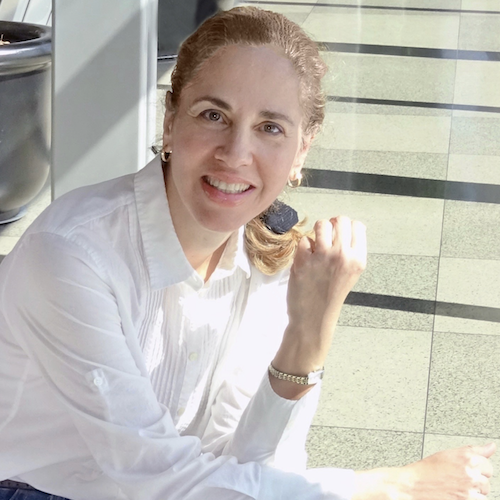
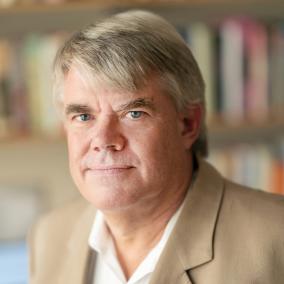
Andrea Megela Simmons is a Professor at Brown University in the Department of Cognitive, Linguistic, and Psychological Sciences with a secondary appointment in the Department of Neuroscience . She is a member of the Carney Institute for Brain Science and serves as a Principal Investigator on an ONR MURI project. Education : A.B. from the University of Pennsylvania (1973), Ph.D. from Harvard University (1978), Postdoctoral research at Cornell University Simmons specializes in cognitive and neural mechanisms of sound perception and communication across species including frogs, bats, dolphins, and humans. Her work bridges behavioral neuroscience, comparative neurology, and developmental studies to explore auditory processing, echolocation, and sensory integration. Her recent publications highlight interdisciplinary trends in auditory neuroscience, focusing on sound exposure effects, metamorphic neurodevelopment, and sensory-motor coordination in cluttered environments. Key subfields include echolocation, lateral line function, tectal connectivity, and acoustic adaptation across species. Scientific Awards : Fellow, Acoustical Society of America Simmons has received grants from the Office of Naval Research (ONR) for MURI projects and has taught courses such as Animal Behavior , Evolution and Development of the Brain , and Auditory Perception Laboratory .
Celeste Sagui is a Professor in the Department of Physics at North Carolina State University (NC State), affiliated with the College of Sciences. She holds additional roles as a faculty affiliate in Genomics Sciences at NC State and is a member of the Center for High Performance Simulation. Her research focuses on computational biophysics, biomolecular simulations, and free energy methods applied to nucleic acid structures, protein dynamics, and nanotechnology systems. She has contributed to the AMBER simulation package development, co-authoring versions from 10 to 14. Education: Doctorate in Physics, University of Toronto (1995) Licentiate degree, National University of San Luis, Argentina Research Interests: Sagui’s work explores DNA/RNA structure and phase transitions, electrostatic interactions, and methodologies for large-scale molecular simulations. Recent studies include nucleic acid hairpin instabilities linked to neurodegenerative diseases, polyglutamine aggregation mechanisms, and novel DNA motifs like the eGZ structure in Z-DNA. She employs quantum chemistry, density functional theory, and phase-field models to investigate systems ranging from biomolecules to nanomaterials. Publications: Her recent work emphasizes nucleic acid dynamics, free energy landscapes, and computational methods for studying diseases such as Friedreich’s ataxia and polyglutamine disorders. Key contributions include advancements in laser-driven simulations and infrared spectroscopy analysis of protein structures. Labs/Teams: Active in the Center for High Performance Simulation, focusing on high-throughput computational modeling and collaborative software development for biomolecular research.
Molly Greene is a Professor of History and Hellenic Studies at Princeton University. Her work focuses on the Ottoman Empire and the Mediterranean world, with expertise in early modern Christian-Muslim interactions, maritime history, and colonial dynamics. She served on the Executive Committee of the Program in Hellenic Studies from 2011 to 2022. Her research bridges Ottoman administrative systems, ethnic communities, and religious coexistence. Affiliations: Princeton University (current), Center for Hellenic Studies (past committee role) Her research explores themes such as Ottoman governance mechanisms, the role of piracy in Mediterranean trade, and socio-economic relationships between Christian and Muslim populations. Recent work emphasizes the agency of non-state actors and marginalized groups in shaping imperial structures. Greene’s publications include seminal works like A Shared World (2002) and Catholic Pirates and Greek Merchants (2010), which reframe understandings of religious and economic networks in early modern Europe. She has also published in Greek, reflecting her deep engagement with Hellenic cultural history. Teaching: Courses on the Mediterranean’s historical trajectory, Ottoman Empire studies, and early modern global connections. She advises students on topics spanning Ottoman social history, Mediterranean maritime networks, and interfaith historiography. Her research has been supported by grants from the National Endowment for the Humanities and the Andrew W. Mellon Foundation. Greene’s interdisciplinary approach integrates archival research from multiple languages and regions, emphasizing the Mediterranean as a cohesive yet diverse space. She is a leading voice in redefining narratives of early modern empire and cross-cultural interaction.
Dr. Alain Bonneville is a Lab Fellow and Geophysicist at Pacific Northwest National Laboratory (PNNL) and holds a Courtesy Professor appointment at Oregon State University's College of Earth, Ocean, and Atmospheric Sciences. With extensive experience in geological storage of CO2, geothermal energy, and geophysical monitoring techniques, Dr. Bonneville leads diverse research projects that bridge fundamental science and practical applications for energy and environmental challenges. Dr. Bonneville's educational background includes: PhD in Geophysics from the University of Montpellier, France MS in Petroleum Geophysics from IFP-School, Paris, France BS in Geology from the University of Lyon, France Dr. Bonneville's research spans several critical areas in Earth sciences and energy systems. His work on geothermal energy focuses on super-hot enhanced geothermal systems (EGS), site characterization, monitoring, and stimulation fluids. In geological CO2 storage, he investigates project management, site characterization, numerical modeling, and monitoring methods using potential fields and remote sensing. His expertise in geophysical methods includes heat flow measurements, gravity surveys, muon tomography development for borehole deployment, and remote sensing applications. Additional research areas encompass marine heat flow instrumentation development, thermal monitoring of active volcanoes, and intraplate volcanism studies in the Indian and Pacific Oceans. Dr. Bonneville has received significant recognition for his contributions to science, including: Membership in the Washington State Academy of Sciences Lab Fellow position at Pacific Northwest National Laboratory Executive Committee membership on the U.S. National Risk Assessment Partnership Scientific Committee membership at IFP-Energies Nouvelles, France He also holds two U.S. patents related to electrophilic acid gas-reactive fluids for enhanced fracturing and recovery of energy producing materials. Throughout his career, Dr. Bonneville has led significant research initiatives, including the PNNL Carbon Sequestration Initiative (2009-2013) and the European Marie Curie Research Training Network on Greenhouse Gas Removal (GRASP), which involved 14 academic and industrial institutions across 7 countries and supported 35 PhD students and post-docs. His work on the FutureGen 2.0 project demonstrates his leadership in large-scale carbon storage site characterization and monitoring program design. Dr. Bonneville maintains active collaborations with research teams at PNNL's Environmental Molecular Sciences Laboratory and works closely with Oregon State University's geoscience researchers. His laboratory work focuses on developing novel instrumentation for geophysical monitoring, particularly in the areas of muon tomography for subsurface characterization and thermal monitoring systems for geothermal and carbon storage applications.
Konstantinos Kalogeropoulos is an Assistant Professor at the Department of Biotechnology and Biomedicine, Technical University of Denmark (DTU), leading research at the Cell Diversity Lab. His work bridges proteomics, computational biology, and snake venom research. Current projects: "The Proteomic Landscape during Influenza Infection" (2022-2025) Supervisor for PhD projects on protease network rewiring in psoriasis and wound exudate degradomics Research interests include: Proteomic analysis of inflammatory diseases Snake venom toxin structure prediction Extracellular matrix biomechanics De novo peptide sequencing algorithms Computational modeling of protease networks Recent article trends demonstrate his work in • Database-free proteomics (InstaNovo/InstaNexus) • Snake venom pathophysiology (V-ToCs clustering) • Inflammatory disease biomarkers (psoriasis, impaired healing) • Extracellular matrix mechanics (fibronectin tension, gut inflammation) Advising: Supervises PhD students Polhaus, C. J. M. and Haack, A. M., focusing on protease networks and wound healing.
Dr. Matthew Brookhouse is a Senior Lecturer at the Fenner School of Environment & Society, part of the Australian National University's Institute for Climate, Energy & Disaster Solutions. With a PhD in Dendroclimatology from ANU, he specializes in using forest structural complexity and tree-ring analysis to understand climate interactions and ecological responses in Australian subalpine environments. Research Focus: Sub-alpine ecology, Dendrochronology, CO2 responsiveness in eucalypt species Teaching: First-year research methods with emphasis on statistical application, advanced modeling and field botany Projects: Leading collaborative snow-gum dieback research and dendrochronological monitoring initiatives His publications span 2006-2025 with recent emphasis on machine learning applications for forest monitoring, tropical tree-ring chronologies for climate change, and climate sensitivity in Australian alpine ecosystems. Key collaborations include institutions like Australian Nuclear Science and Technology Organisation and University of Canberra researchers. Current projects focus on snow-gum woodland dieback mechanisms, high-resolution dendrometric monitoring, and integrating dendrochronology with environmental policy frameworks. He maintains active supervision of research students and contributes to both undergraduate and postgraduate curriculum development.
Pedro M. Reis serves as Full Professor and Director of the Institute of Mechanical Engineering (IGM) at École Polytechnique Fédérale de Lausanne (EPFL), leading the Flexible Structures Laboratory (FLEXLAB) within the School of Engineering (STI). He holds additional appointments as Full Professor in STI-SGM Teaching, Member of the STI Academic Evaluation Committee, and PhD Program Committee Member for Mechanics. His academic journey includes: B.Sc. in Physics, University of Manchester (1999) Certificate of Advanced Studies in Mathematics, University of Cambridge (2000) Ph.D. in Physics, University of Manchester (2004) Postdoctoral research at City College of New York (2004-2005) and CNRS/ESPCI Paris (2005-2007) Faculty positions at MIT (2007-2013) as Esther and Harold E. Edgerton Assistant Professor and Gilbert W. Winslow Associate Professor Reis's research pioneers the exploitation of mechanical instabilities in flexible structures, spanning experimental mechanics, fluid-structure interactions, and buckling phenomena. His work bridges theoretical modeling with physical experimentation to develop novel functional materials and devices, emphasizing practical applications in engineering design and soft matter systems. His accolades include: 2013 Brilliant 10 recognition by Popular Science 2014 NSF CAREER Award 2016 Thomas J.R. Hughes Young Investigator Award (ASME) 2016 GSOFT Early Career Award (APS) APS Fellowship and 2021 Presidency of the Society of Engineering Science (SES) Reis actively mentors nine PhD students across current and graduated cohorts while directing FLEXLAB's experimental research on structural instabilities. His leadership extends to institutional roles including Director of IGM and committee memberships shaping EPFL's academic framework and doctoral programs in mechanics.
Nick Montfort is a Professor of Digital Media at Massachusetts Institute of Technology (MIT) and Professor II & Principal Investigator at the University of Bergen 's Center for Digital Narrative. He directs MIT's Trope Tank lab/studio and contributes to platform studies, critical code studies, and electronic literature. Ph.D. in Computer and Information Science from University of Pennsylvania (2007) M.A. in Creative Writing (Poetry) from Boston University (2001) S.M. in Media Arts and Sciences from MIT (1998) B.S./B.A. in Computer Science and Liberal Arts from University of Texas at Austin (1995) Montfort's research focuses on computational creativity and digital poetics , particularly through exploratory programming and constraint-based writing . He has developed over ten computer-generated print books and co-edited MIT Press volumes like The Future and The New Media Reader . His work bridges computer science and literary arts , emphasizing algorithmic expression and platform-specific creation. His recent computational works include All the Way for the Win (2025), written entirely in three-letter words, and collaborations like The Deletionist and Sea and Spar Between . Notable books cover interactive fiction ( Twisty Little Passages ), platform studies ( Racing the Beam ), and generative literature ( 10 PRINT ). He also co-edits the Hardcopy and Using Electricity book series. Montfort's academic contributions span digital narrative systems , creative code , and computer-generated literature . His 101 BASIC Poems and Output: An Anthology of Computer-Generated Text exemplify his focus on code as cultural artifact and algorithmic literary practice . He has presented at major conferences including ELO, C&C, and Digital Arts and Culture, addressing topics from minimalist computational poems to narrative modeling . Through collaborations with institutions like University of Bergen and MIT's Comparative Media Studies/Writing, Montfort explores digital storytelling , machine-generated poetry , and platform-specific creativity . His academic leadership includes directing the Trope Tank and co-founding Bad Quarto press.
Dr. Edoardo Gallo is a University Associate Professor at the Faculty of Economics, University of Cambridge, and a member of Magdalene College. His research focuses on Experimental Economics , Networks , and Behavioural Economics . Harvard University: A.B. in Physics and Mathematics University of Oxford: M.Phil. and D.Phil. in Economics Gallo's research explores how network structures influence economic behavior, cooperation, and decision-making. His work spans topics like cybercrime disruption , social exclusion , COVID-19 behavioral responses , and unethical behavior in rivalry . Gallo's recent publications (2020-2025) analyze networked social dynamics , including cooperation mechanisms , monetary exclusion , and pandemic-induced behavioral changes . His experiments often employ interactive online platforms like UbiquityLab. Unicredit Foundation Best PhD Thesis Award CRASSH Early Career Fellowship Gallo supervises PhD students such as Rebecca Heath and Christian Höhne , with interests in online social networks and network cognition . He has received grants from the International Foundation for Research in Experimental Economics and the Isaac Newton Trust .
Ben Green is the Waynflete Professor of Pure Mathematics at the University of Oxford and a Fellow of Magdalen College. His work spans additive combinatorics, analytic number theory, harmonic analysis, ergodic theory, discrete geometry, and group theory, with a focus on interdisciplinary approaches. Research Interests: Additive combinatorics and its applications to primes Analytic number theory (prime distribution, L-functions) Harmonic analysis (Fourier methods, spectral theory) Ergodic theory and its combinatorial applications Discrete geometry (ordinary lines, convex structures) Group theory (approximate groups, expansion) Article Trends: His recent work emphasizes multiplicative functions, Ramsey-type problems in number theory, expansion in finite groups, and extremal set theory. Themes include prime gaps, arithmetic progressions, and interactions between analysis and algebra. Scientific Awards: Clay Research Award (2004) Ostrowski Prize (2005) Whitehead Prize (2005) Leverhulme Prize (2007) European Mathematical Society Prize (2008) Royal Society Fellow (2010) Sylvester Medal (2014) Senior Whitehead Prize (2019) Advising: Ben has supervised numerous D.Phil students across additive combinatorics, analytic number theory, and related fields. Past students hold postdoctoral and academic positions globally.
Julia DiBenigno is a Professor of Organizational Behavior at Yale School of Management, where she has been faculty since 2016 and was promoted to full professor in 2023. She holds a courtesy appointment in Sociology and is an organizational ethnographer whose research focuses on the sociology of work, professional collaboration, upward influence, and organizational change. Her research interests include understanding how professional groups collaborate across boundaries, how frontline workers can effectively voice concerns upward in organizational hierarchies, and how organizations navigate change during crises. She specializes in qualitative, ethnographic methodologies, immersing herself in organizational settings ranging from hospitals to the U.S. Army to uncover the social dynamics that shape workplace behavior. DiBenigno's publication record includes multiple articles in top journals like Administrative Science Quarterly and Organization Science, with her most recent work examining how crises create opportunities for implementing long-resisted changes. Her research demonstrates patterns where frontline staff can successfully push through organizational resistance when they move quickly and demonstrate both short- and long-term value of their proposals. Ned Smith Rising Star Award, Organization & Management Theory Division of the Academy of Management, 2023 Thinkers50 Radar List, Class of 2022 Equity, Diversity, and Inclusion Research Award, NYU Wagner, 2021 Grigor McClelland Best Dissertation Award, EGOS, 2017 W. Richard Scott Outstanding Paper Award, American Sociological Association, 2016 As an educator, DiBenigno teaches Managing Groups & Teams and Power & Politics at Yale SOM. Her research on team dynamics has revealed insights about coordination loss, the common knowledge problem in group decision-making, and how hierarchical structures can both help and hinder effective teamwork. Her work with healthcare providers during the pandemic demonstrated how team identification reduces stress and burnout among frontline workers.
Stephen Marshall is Professor of Urban Morphology and Urban Design at The Bartlett School of Planning, University College London. He also served as Visiting Professor at the Department of Architecture and Urban Studies, Politecnico di Milano, Italy from 2019 to 2021. With over twenty-five years of experience in the built environment fields, initially in consultancy and subsequently in academia, Professor Marshall has established himself as a leading expert in urban morphology and design. His educational background includes a Doctor of Philosophy from University College London (2001), a Postgraduate Diploma from Edinburgh College of Art (1995), a Master of Science from the University of Leeds (1989), and a Bachelor of Engineering from the University of Glasgow (1988). Professor Marshall's principal research focuses on urban morphology and street layout, examining their relationships with urban formative processes including urban design, coding and planning. His work bridges urban design theory with practical applications, exploring how cities evolve through complex interactions of physical form, social processes, and planning interventions. He has written or edited several influential books including 'Streets and Patterns' (2005), 'Cities, Design and Evolution' (2009), and 'Urban Coding and Planning' (2011). His recent publications reveal a growing interest in applying complexity science to urban morphology, with particular attention to biological analogies for understanding self-organizing cities. He has pioneered research on digital participation methods in urban planning, exploring how online platforms can enhance public engagement in urban space design. His work consistently bridges theoretical urban morphology with practical applications for contemporary urban challenges like pandemic adaptation and sustainable transport. Professor Marshall has served as Chair of the Editorial Board of Urban Design and Planning from its launch to 2012, and is now co-editor of Built Environment journal. His editorial work has significantly shaped scholarly discourse in urban planning and design. He leads several significant research initiatives including the Incubators of Public Spaces project, which explores digital platforms for co-creating urban spaces, and the Self-Organising Built Environment project, which investigates biological analogies in urbanism. These projects reflect his interdisciplinary approach to understanding and shaping urban environments, connecting with Sustainable Development Goal 11 (Sustainable Cities and Communities).
Brett Sanders is a Professor in the Department of Civil and Environmental Engineering at the Samueli School of Engineering, University of California, Irvine. His research focuses on developing innovative algorithms for flow and transport in river and coastal systems and integrating information technologies to create more accurate and efficient simulation tools for flood hazard assessment. His primary research interests include: Flooding and erosion hazards, particularly coastal flooding and urban flooding Surface water quality Low impact development impacts on hydrology Dam-break flooding Aerial and terrestrial lidar scanning Geographical information systems High performance computing for simulation tools Social dimensions of flood risk and adaptation behaviors Dr. Sanders' recent publications (2024-2025) reveal a comprehensive research program addressing both technical and social aspects of flood risk. His work spans computational hydrodynamics, flood hazard mapping, infrastructure vulnerability assessment, and the socioeconomic dimensions of flood risk. He has made significant contributions to understanding multi-grid modeling of urban flooding, post-fire flood hazards, satellite-based monitoring of land motion, and social inequalities in flood exposure. His research demonstrates how flood dynamics are more complex than simple bath-tub filling models suggest, with important implications for urban planning and climate adaptation. Dr. Sanders has received recognition as a Chancellor's Professor at UC Irvine, indicating distinguished scholarly achievement. His educational background includes: Ph.D. in Civil Engineering from the University of Michigan (1997) M.S. in Civil Engineering from the University of Michigan (1994) B.S. in Civil Engineering from the University of California, Berkeley (1993)
Hedvig Kjellström is a Professor at the Division of Robotics, Perception and Learning within the School of Electrical Engineering and Computer Science at KTH Royal Institute of Technology. She holds significant affiliations with the Swedish e-Science Research Centre and the Max Planck Institute for Intelligent Systems in Germany. Her work spans multiple interdisciplinary domains and she serves as Editor-in-Chief for CVIU and was Program Chair for CVPR 2025. Her research centers on Computer Vision as a sub-field of AI, with three interconnected themes: Computational Aesthetics (exploring aesthetic aspects of human communicative behavior), Communicative Behavior (developing models of how humans and animals perceive and produce non-verbal communication), and Embodied Artificial Intelligence (creating methodologies for robots and autonomous agents to perceive the world through sensors, primarily vision). Her work has significant applications in medical diagnostics, animal welfare, human-robot interaction, and creative arts. Analysis of her recent publications reveals a strong trend toward multimodal AI systems that integrate vision, language, and action understanding. Her research increasingly focuses on animal-centered applications, particularly equine pain detection and behavior analysis, while maintaining strong foundations in human communication modeling, gesture recognition, and 3D reconstruction techniques. The interdisciplinary nature of her work bridges computer science with veterinary medicine, neuroscience, and performing arts. Hedvig Kjellström actively supervises numerous PhD and Master's students across various projects and maintains extensive collaborations with institutions including Karolinska Institutet, Swedish University of Agricultural Sciences, and international partners. Her research is supported by major funding bodies including WASP, VR, and SeRC. She leads or participates in several notable projects including OrchestrAI (communication between conductor and orchestra), ANITA (Animal Translator), MARTHA (3D horse motion analysis), and STING (synthesis and analysis with transducers and invertible neural generators). Her work with ACAI (Animal Centered Artificial Intelligence), which she co-founded and directs, demonstrates her commitment to applying AI for animal welfare.
Stephen Morris is the Peter A. Diamond Professor of Economics at the Massachusetts Institute of Technology (MIT). He specializes in economic theory, game theory, and financial economics. Born in England, he earned a degree in Mathematics and Economics from the University of Cambridge (1985) and a Ph.D. in Economics from Yale University (1991). Before MIT, he taught at the University of Pennsylvania, Yale, and Princeton. Morris has held leadership roles, including President of the Econometric Society (2019) and President of the Society for the Advancement of Economic Theory (2023). His research focuses on higher-order beliefs, strategic coordination, and financial market dynamics. Notable contributions include work on global games, contagion effects, and information design. Morris has advised numerous PhD students across institutions like Penn, Yale, Princeton, and MIT, many of whom hold academic and industry positions globally. His awards include the Sloan Fellowship (1996), Econometric Society Fellowship (2002), and membership in the American Academy of Arts and Sciences (2005), National Academy of Sciences (2021), and British Academy (2023). His work spans theoretical frameworks in mechanism design, macroeconomic policy, and political economy, emphasizing the role of information in shaping economic outcomes.