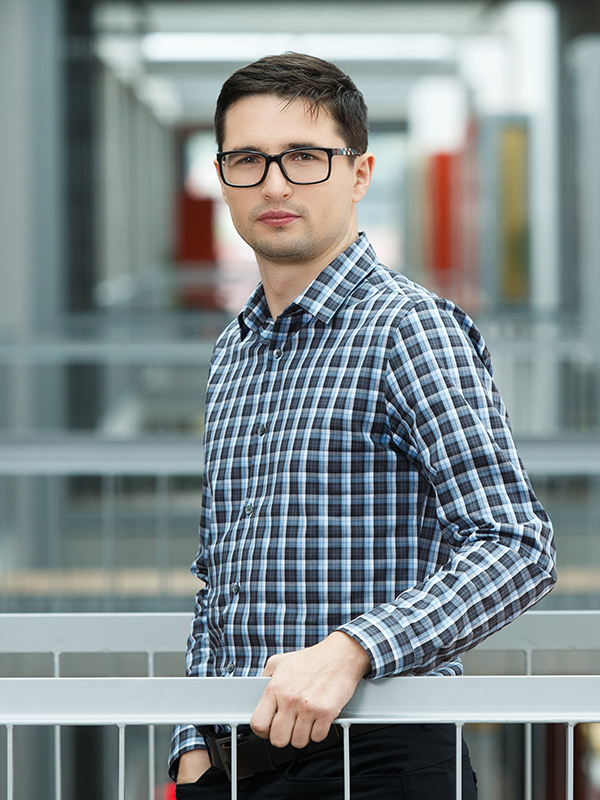
Fernando Marmolejo Ramos is a Lecturer in Psychology at Flinders University's College of Education, Psychology and Social Work. He holds external roles including Adjunct Research Fellow at University of South Australia (2024–present) and Visiting Research Fellow at University of Adelaide (2011–present). His research focuses on embodied cognition, AI, statistical modeling, and open science practices. Education: PhD in Psychology (University of Adelaide, 2007–2011), MSc (University of Ballarat, 2005–2007), and BSc (Universidad del Valle, 1997–2003). Research interests include language processing in neurodegenerative disorders, machine learning applications in healthcare, and AI in education. He has secured grants totaling over $1M AUD for projects like statistical infection detection algorithms using wearables and AI-enhanced learning tools. Recent awards include CSIRO On Prime Innovation Reward (2024) and Flinders University Teaching Award (2025). He reviews for journals like Neuroscience and Biobehavioral Reviews and serves on grant review panels for national research councils in multiple countries.
Felix Elwert is the Vilas Distinguished Achievement Professor of Sociology at the University of Wisconsin-Madison, with a joint appointment in Biostatistics. He specializes in causal inference methodologies and investigates social inequality, demography, and health disparities through large-scale experiments, population registers, and survey analyses. His work bridges sociology, statistics, and public health, with notable contributions to understanding peer effects, neighborhood effects, and methodological innovations in causal analysis. Elwert holds a Ph.D. in Sociology (2007) and M.A. in Statistics (2006) from Harvard University. Before his current position, he served as Karl W. Deutsch Professor and Acting Director of Social Inequality and Social Policy at the WZB Berlin Social Center (2014–2016). He currently leads the Sociological Methods & Research journal as Editor-in-Chief. His research focuses on: Contextual drivers of inequality in income, education, and health Causal mediation analysis Experimental designs for estimating peer effects Bias detection in statistical models Elwert has received prestigious awards including the ASA's Causality in Statistics Education Award (first recipient) and the ASA's Leo Goodman Award. His collaborations span institutions globally, emphasizing interdisciplinary approaches to causal questions. He teaches advanced causal inference courses at UW-Madison and international universities, covering topics like graphical models, mediation analysis, and experimental design. His campus affiliations include the Center for Demography and Ecology, Center for Demography of Health and Aging, and Institute for Diversity Science.
Gabriel Kerekes serves as a Postdoctoral Researcher and Group Leader of 3D Data Acquisition and Monitoring at the Institute of Engineering Geodesy Stuttgart (IIGS), part of the Faculty of Aerospace Engineering and Geodesy at the University of Stuttgart. He is actively affiliated with the Cluster of Excellence IntCDC (Integrative Computational Design and Construction for Architecture), contributing to cutting-edge research in computational construction methodologies. Dr. Kerekes specializes in terrestrial laser scanning (TLS), engineering surveying, and 3D data acquisition systems. His research addresses critical challenges in point cloud processing, stochastic modeling of geodetic measurements, and robotic total station networks for real-time construction monitoring. He develops innovative solutions for deformation analysis, geometric quality control of bio-based building elements, and integration of multi-sensor systems in architectural applications, with significant contributions to biomimetic shell construction and infrastructure monitoring projects. No scientific awards or fellowships were documented in the provided materials. Dr. Kerekes has supervised ten Master's and Bachelor's students since 2018, with research spanning TLS intensity analysis, atmospheric error modeling, and robotic positioning systems. His grant-funded projects include RP 16-2 (Spider Crane Robotic Platform) and AP 7 (Integrated Space-Time Point Cloud Modeling) under the IntCDC cluster. As leader of the 3D Data Acquisition and Monitoring team, he drives advancements in geodetic measurement technologies for next-generation construction processes.
Olaf Hall-Holt is an Associate Professor in the Department of Mathematics, Statistics, and Computer Science at St. Olaf College, where he has been a faculty member since Fall 2004. He is based in Regents Hall and teaches in the Computer Science program, contributing to interdisciplinary areas such as mathematical biology. Olaf earned his Ph.D. in Computer Science from Stanford University in 2002, followed by a postdoctoral research position at SUNY Stony Brook. His academic journey includes early research experience at the Geometry Center in Minnesota, between undergraduate studies at Swarthmore College and graduate school. He also studied mathematics in Budapest and grew up in West Africa. His research interests include computational geometry, computer graphics, computer vision, and aspects of human cognition. These fields reflect a blend of theoretical computer science and applications involving perception and spatial reasoning. Though no specific publications are listed, his long-standing engagement with student research suggests a strong mentorship and scholarly presence. Olaf co-founded the Twin Cities Free-Net and is actively involved in student advising and research collaboration. His office hours are regularly scheduled, and he encourages student interaction via Zoom and appointments. Affiliated with the College of Arts and Sciences, he contributes to a liberal arts environment that values interdisciplinary scholarship and student-centered learning. His work bridges computer science with cognitive and biological applications, enriching the academic offerings at St. Olaf.
Julien Arino is a Professor in the Department of Mathematics at the University of Manitoba , specializing in Mathematical Epidemiology and Mathematical Population Dynamics . He is an active member of the Mathematical Biology group and focuses on the role of movement in disease transmission, with applications to both human and animal health. Department of Mathematics Faculty of Science University of Manitoba His research spans: Metapopulation dynamics with explicit movement Multi-pathogen and multi-species transmission modeling Computational epidemiology with data science integration Evaluation of travel control measures for disease variants Recent work includes publications on: Cholera transmission in Chad Multi-species bovine tuberculosis dynamics Measles resurgence patterns Software tools for R compilation and data visualization He maintains a public YouTube channel with lecture videos on Mathematical Epidemiology and contributes open-source code for scientific computing in R and Python. His methodological contributions include novel approaches to plot formatting and computational efficiency in epidemic modeling.
Tanya Braun is a Junior Professor in the Institute of Computer Science at the University of Münster, Department of Mathematics and Computer Science. She leads the Data Science research group, focusing on statistical-relational AI, human-aware AI, and text understanding. Her work bridges formal AI methods with real-world applications in healthcare, digital humanities, and public sector systems. Education: Bachelor's and Master's in Computational Informatics, Hamburg University of Technology Doctorate in Computer Science, University of Lübeck (2020), thesis: 'Rescued from a Sea of Queries - Exact Inference in Probabilistic Relational Models' Her research centers on probabilistic inference in relational domains , with a focus on lifted inference techniques that exploit symmetries to scale reasoning. She investigates human-aware AI , particularly how AI systems can reconcile learned models with human expectations to improve explainability and trust. Her work on text understanding addresses challenges in data-scarce settings such as digital humanities, where traditional large language models fail. She has developed methods for identifying and enriching subjective content descriptions, topic modeling in specialized domains, and feedback-driven model improvement. The 15 most recent publications highlight a strong trajectory in lifted inference, model compression, privacy-preserving AI, and explainability . Her work integrates formal AI foundations with practical concerns in high-stakes domains like healthcare. She frequently publishes in top venues such as AAAI, IJCAI, ECAI, and Artificial Intelligence, often in collaboration with Ralf Möller, Marcel Gehrke, and Jan Speller. Scientific Awards: No specific awards listed in the provided text. Tanya Braun actively advises students and leads the HAPPI project, which focuses on human-AI model reconciliation using lifted probabilistic inference. She has supervised multiple theses and mentored researchers including Jan Speller (PostDoc), Nazlı Nur Karabulut, and Sagad Hamid. She has secured funding from the Ministry of Culture and Science of North Rhine-Westphalia for her research. She is deeply involved in academic service: serving as program co-chair for KI 2025, guest-editing special issues in journals like Künstliche Intelligenz and Annals of Mathematics and Artificial Intelligence , and organizing major conferences including ICCS and KR. Labs and Teams: She leads the Data Science Group at the University of Münster, which conducts research in AI, probabilistic modeling, and data science. The group is actively involved in teaching and mentoring students in advanced AI topics.
Cécile Ané is a Professor in the Department of Statistics and an affiliate of the Department of Botany at the University of Wisconsin-Madison. She serves as Director of the Statistical Consulting Group and is a member of several interdisciplinary initiatives including the Institute for Foundations of Data Science, the quantitative biology initiative (QBI), the Genomic Sciences training program (GSTP), and Wisconsin Evolution. As an H. I. Romnes Faculty Fellow, she has made significant contributions to statistical methods for evolutionary biology. PhD in Probability from University of Toulouse, France (2000) Professor Ané's research focuses on statistical inference for molecular evolution and trait evolution, utilizing graphical models with stochastic processes (discrete Markov processes or continuous diffusions). She develops tools for model selection, Bayesian inference, and creates computationally feasible models for big data applications. Her work spans various biological domains through statistical consulting across campus, including ecology, food science, and veterinary science. Ané is particularly known for her contributions to phylogenetic network methodology and software development. Her recent publications demonstrate a strong focus on phylogenetic networks, trait evolution along networks, and methodological advances in statistical phylogenetics. The work spans theoretical developments in network identifiability and practical applications in evolutionary biology, showing how her statistical innovations directly impact biological understanding. Her research group has made substantial contributions to the JuliaPhylo ecosystem, creating open-source software that has been widely adopted in the field. H. I. Romnes Faculty Fellow Open Hall of Fame inductee for JuliaPhylo ecosystem Publisher's award for Excellence in Systematic Research 2023 Margaret Menzel Award (awarded to her student Lauren Frankel) Professor Ané actively mentors students and has taught numerous courses including Statistical Methods for Bioscience, Statistical Phylogenetics, and Computing Tools for Data Analytics. She directs the Statistical Consulting Group, providing statistical expertise across campus. Her research group emphasizes valuing and supporting each individual to reach their full potential, aligning with diversity statements from both the Botany and Statistics departments. Ané is a strong advocate for open-source software in scientific research, believing it enables community collaboration and accelerates scientific discovery.
Bernard Schmidt is an active researcher at the University of Skövde's School of Engineering Science, specializing in Production and Automation Engineering. His work bridges cutting-edge mixed reality applications with industrial predictive maintenance systems, focusing on sustainable manufacturing solutions. Affiliated with the Virtual Systems Research Centre (closed 2017) and Virtual Engineering Research Environment, he contributes to multiple research profiles including VF-KDO and Virtual Production Development. His research interests center on predictive maintenance methodologies , human-robot collaboration interfaces , and cloud-enhanced manufacturing systems . Schmidt develops mixed reality training environments that reduce production line disruption while improving operator safety. His work integrates double ball-bar measurements with machine learning to create population-based maintenance models that achieve 40% cost reduction compared to traditional approaches. Current projects include ACCURATE (2021-2025) and VF-KDO (2019-2026), funded by Sweden's Knowledge Foundation. Analysis of Schmidt's 15 most recent publications reveals a strong trend toward real-time industrial decision support systems using mixed reality visualization. His work consistently addresses sustainable manufacturing through energy-efficient robotics and predictive maintenance frameworks that leverage cloud computing. Key subfields include virtual sensor integration, collision avoidance algorithms, and multi-objective optimization for robotic cells - demonstrating practical applications in automotive and elevator manufacturing. Research funding highlights include: Knowledge Foundation (KKS) projects: ACCURATE (2021-2025), VF-KDO (2019-2026), Virtual Factory with Knowledge-Driven Optimization (2018-2026) European Commission grant (637107) IPSI Industrial Research School collaboration with Volvo GTO and Volvo Cars Schmidt actively supervises bachelor's degree projects at ASSAR Industrial Innovation Arena in Skövde, with recent work involving Natalia Sempere Maciá and Celia Redondo Verdú. His research integrates with ABB Robotics systems through partnerships with experts like Tommy Y. Svensson. Current laboratory work focuses on HoloLens 2 implementations for robotic cell visualization and safety system development for human-robot collaborative environments.
Arif Tanju Erdem serves as Professor of Computer Science and Vice Rector for Academic Affairs at Ozyegin University, Istanbul. He joined the university in 2009 after 18 years at Eastman Kodak Research Laboratories and as CTO of Momentum, A.S., a digital media technologies company he co-founded. His leadership roles include Dean of the School of Engineering (2014-2018) and Head of Computer Science Department (2012-2014). His academic credentials feature: Ph.D. in Electrical Engineering, University of Rochester (1990) M.S. in Electrical Engineering, University of Rochester (1988) Dual B.S. degrees in Electrical & Electronics Engineering and Physics, Boğaziçi University (1986) Erdem's research centers on digital video processing and computer graphics with expanding applications in computer vision and machine learning. His foundational work in bispectrum analysis and video compression evolved into modern applications including face recognition systems, augmented reality tracking, and sensor fusion. Current investigations focus on overcoming data labeling challenges in biometric systems and developing robust motion tracking solutions for immersive technologies. Analysis of his recent publications (2012-2023) reveals three dominant research trajectories: (1) Advancements in face recognition using curriculum and semi-supervised learning techniques, (2) Precision sensor fusion for augmented reality through IMU-camera calibration and occlusion handling, and (3) Educational technology innovations through gamified learning systems. His work consistently bridges theoretical signal processing with practical implementations in medical monitoring, entertainment, and education. Professional service highlights include ISO-MPEG committee membership (1991-1998), IEEE Signal Processing Society leadership roles across Rochester, Turkey, and Region 8 chapters, and editorial contributions to Signal Processing: Image Communication. He has organized major conferences including the 3DTV Conference (2011) and IEEE Turkey Signal Processing Conference (2012).
Rafael de Andrade Moral is a Professor of Statistics at Maynooth University's Faculty of Science & Engineering (since 2025), with prior roles as Associate Professor (2023-2025) and Assistant Professor (2018-2023). He holds a PhD in Statistics (University of São Paulo, 2014-2017) and dual bachelor's degrees in Biology and Education. His work bridges Statistical Ecology , Computational Biology , and Data Science , focusing on modeling ecological systems, agricultural pest dynamics, and biodiversity-ecosystem function relationships. Key research themes include Bayesian modeling , multivariate ecological forecasting , and machine learning applications . He founded the Theoretical and Statistical Ecology Research Group and serves on committees like the Young-ISA Chair . His recent articles span topics like insect abundance forecasting , weed-crop competition under climate change , and neuroinformatics-based learning analysis , reflecting interdisciplinary engagement. Scientific accolades include the Young Statistician Showcase Prize (2018), A-mu-sing Competition First Place (2021), and Maths Week Award (2022). He has advised three PhD students and contributed to over 50 peer-reviewed publications. Active in teaching innovation (e.g., Teaching Statistics through Music ), he also provides statistical consultancy to organizations like NIBIO and Jomakol .
Dr. Charles Markham is an Associate Professor in the Department of Computer Science at Maynooth University's Faculty of Science & Engineering. He graduated with a degree in Applied Physics from Dublin City University and earned his PhD in element specific imaging in computerised tomography. His research spans novel imaging systems, biomedical instrumentation, and human-computer interaction with a strong focus on brain-computer interfaces and motion capture technologies. Research Affiliations: Hamilton Institute, ALL Institute Teaching: Robotics, Computer Graphics, Advanced Computer Architecture Professor Markham's research interests center on novel imaging technologies including coded aperture imaging and wide-baseline stereo systems, motion capture and wearable computing with applications in rehabilitation, and mobile machine vision for driving simulation and augmented reality. His work with the Mathematics and Statistics Ecology group demonstrates interdisciplinary interests in ecological modelling . His publication record shows consistent contributions to brain-computer interfaces (2007-2011), driver behavior analysis (2014-2021), motion capture systems (2006-2009), and optical imaging techniques (2001-2008). The research spans multiple disciplines including neuroscience, biomedical engineering, and ecological mathematics. He has supervised several graduate students including D. Kelly (2009 thesis on sign language recognition) and J. Foody (2007 thesis on motion capture biofeedback systems). His collaborations extend across institutions with partnerships at TU Dublin and University College Dublin.
Jure Demšar, PhD , is an Assistant Professor at the Faculty of Computer and Information Science , University of Ljubljana . He conducts interdisciplinary research bridging neuroinformatics, collective behaviour, and game development, while actively collaborating with leading institutions worldwide. Education & Academic Journey: PhD studies supported by the prestigious “Inovativna shema” scholarship for promising doctoral researchers. Research visits: three months at Newcastle University (Game Lab & Institute of Neuroscience), three months at University of Groningen (Prof. Charlotte K. Hemelrijk’s lab), one month at University of Houston (Computer Graphics and Interactive Media Lab). Research Interests: Dr. Demšar’s work converges on four core themes: Neuroinformatics & Neuroimaging: development of scalable platforms for multimodal neuroimaging data processing (Qu|Nex, autohrf, bayes4psy R packages). Collective Behaviour & Modeling: adaptive agent-based simulations of predator–prey interactions and flocking, evolution of composite tactics. Computational Psychiatry: mapping brain–behavior relationships along the psychosis and mood spectra, placebo vs. drug neural signatures. Game Development & Personalization: generating personalized game content, GPU-accelerated Bayesian modeling, and recommender systems. Scientific Awards & Recognition: Faculty Award for Outstanding Pedagogic Work, 2017/2018 Faculty Award for Outstanding Research Achievements, 2017 Inovativna shema scholarship for promising PhD students Collaborations & Funding: Dr. Demšar has established long-standing collaborations with: Washington University in St. Louis (Connectome Coordination Facility) – Human Connectome Project Yale University (Anticevic Lab) – Qu|Nex platform Harvard University (Applied Neuroimaging Statistics Laboratory) Internal University of Ljubljana partners: Faculty of Arts, Faculty of Medicine, Faculty of Sport Laboratory & Team: He leads the Bayesian Statistics Project Laboratory , where he mentors students and drives open-source tool development for Bayesian data analysis and neuroimaging workflows.
Dr. Martin Možina is an Assistant Professor at the University of Ljubljana , affiliated with the Artificial Intelligence Laboratory since 2004. His work bridges classical machine learning with argumentation theory and focuses on interpretable AI methods. Research includes argument-based machine learning for knowledge-driven AI Developed nomogram visualization techniques for linear models Created automated chess tutors for move explanation Research projects span from 2004 to 2025, including: Current DRIFT project (2022-2025) on deep learning for power grid optimization Deep reinforcement learning applications in energy systems Argumentation for medical prognosis (lung cancer) and knowledge acquisition Publications show interdisciplinary work between: AI explainability (4/6 articles) Education technology (2/6) Healthcare AI applications (2/6) Graphical model interpretation (1/6) Multi-agent research (1/6) Teaching includes Decision Systems courses, with a focus on applied AI methods.
Dr. Kevin Tiede is a Research Associate (Post-Doc) at the Chair of Health Communication within the Department of Media and Communication Studies at the University of Erfurt's Faculty of Philosophy. He is also a member of the Institute for Planetary Health Behaviour (IPB). His academic journey spans prestigious institutions including the University of Konstanz, the Max Planck Institute for Human Development in Berlin, and Ohio State University in the USA. Kevin completed his BSc (2011-2014) and MSc (2014-2017) in Psychology at the University of Koblenz-Landau, followed by his PhD in Psychology at the University of Konstanz's Graduate School of Decision Sciences (2017-2022). His research focuses on decision making under risk and uncertainty , particularly examining how information in health and climate domains can be communicated to help individuals make more informed decisions. His expertise spans risk communication, climate communication, policy acceptance, and numeracy. Kevin's publication record demonstrates a clear progression from foundational work on statistical information processing and risk representation toward applied research on climate policy acceptance. His recent 2025 publications on enhancing perceived effectiveness of climate policies indicate a strategic shift toward addressing urgent environmental challenges through psychological insights. His work consistently bridges theoretical decision science with practical applications in health and environmental contexts. PhD Scholarship from German Academic Scholarship Foundation (Studienstiftung des deutschen Volkes), 2019-2021 Kevin has secured research funding through prestigious institutions including the German Academic Scholarship Foundation. His current position at the University of Erfurt's Institute for Planetary Health Behaviour suggests ongoing research in climate communication and health behavior. While his publications show significant contributions to the field, specific grant funding details beyond his doctoral scholarship are not explicitly mentioned in available materials. His work appears to be conducted within collaborative research environments at the Max Planck Institute and University of Erfurt. Kevin is actively involved in the Institute for Planetary Health Behaviour (IPB) at the University of Erfurt, positioning his research at the intersection of psychological science and planetary health challenges. His recent focus on climate communication suggests engagement with interdisciplinary teams addressing environmental crises through behavioral science approaches. His research methodology typically involves experimental designs examining cognitive processes in decision making under uncertainty.
Tianmin Shu is an Assistant Professor in the Department of Computer Science at Johns Hopkins University's Whiting School of Engineering, with a secondary appointment in the Department of Cognitive Science. He directs the Social Cognitive AI (SCAI) Lab and is a member of the Data Science and AI Institute. Dr. Shu's educational background includes: PhD in Statistics, University of California, Los Angeles (2019) BS in Electronic Engineering, Fudan University (2014) Dr. Shu's research pioneers machine social intelligence to build human-centered AI systems. His work integrates: Embodied AI for physical-world human-robot collaboration Neurosymbolic methods for multimodal social reasoning Computational models of human social cognition Theory of Mind frameworks for mental state inference Continual learning for adaptive social agents Recent publications (2024-2025) reveal three dominant research thrusts: (1) Multimodal Theory of Mind systems like MMToM-QA for mental state reasoning, (2) Embodied assistance frameworks such as GOMA for goal-oriented human-robot alignment, and (3) Human feedback learning methods including pragmatic feature preferences. His work increasingly bridges language models with world models while exploring neural correlates of social cognition through fMRI studies. Dr. Shu's scientific contributions have been recognized with prestigious awards: Cognitive Science Society’s 2017 Computational Modeling Prize 2020 NeurIPS Best Paper Award (Cooperative AI Workshop) 2022 IROS Workshop Excellent Paper Award 2024 ACL Outstanding Paper Award (MMToM-QA) As director of the SCAI Lab, Dr. Shu leads research on socially intelligent systems through open-source platforms including VirtualHome 2 (multi-agent household simulator) and SimWorld (photorealistic interaction simulator). His lab develops computational frameworks that enable machines to perceive social dynamics, infer intentions, and provide context-aware assistance in complex environments.