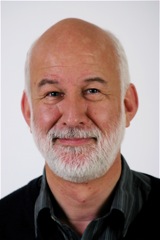
Krzysztof Apt is a Professor at the University of Amsterdam and a CWI-Fellow. His academic work focuses on theoretical computer science, game theory, and formal verification of algorithms. He is affiliated with the Networks and Optimization department at the University of Amsterdam. Research Interests His research spans multiple fields including: Logic and formal verification Game theory and mechanism design Network optimization algorithms History of computer science Programming methodology Distributed systems Scientific Contributions His recent publications (2021–2025) cover loop termination proofs, historical analyses of computer science pioneers, coordination games on graphs, and foundational work in Hoare logic. The research combines theoretical rigor with applications in machine learning and distributed systems. Awards and Grants NWO TOP grant (2013) for combining machine learning with game theory
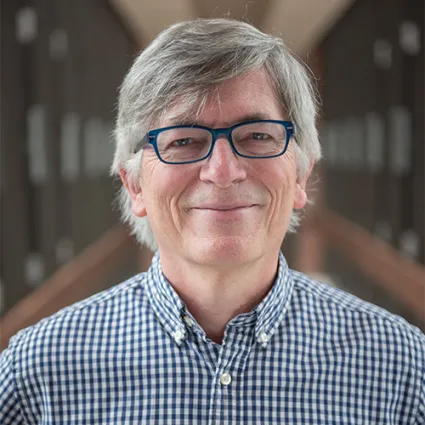
Jinting Bian is a Researcher at the Computer Security department of Centrum Wiskunde & Informatica (CWI), Amsterdam, The Netherlands . Their work focuses on formal verification , object-oriented programming , and software correctness . Research Interests include: Formal verification of object-oriented systems History-based reasoning for behavioral subtyping Dynamic frames and footprint logic Java Collection Framework specification Integration of Isabelle/HOL with KeY Interactive deductive proving Publications between 2020-2025 demonstrate expertise in Hoare logic , behavioral subtyping , and Java standard library verification . Key collaborations include Frank de Boer , Hans-Dieter Hiep , and Stijn de Gouw .
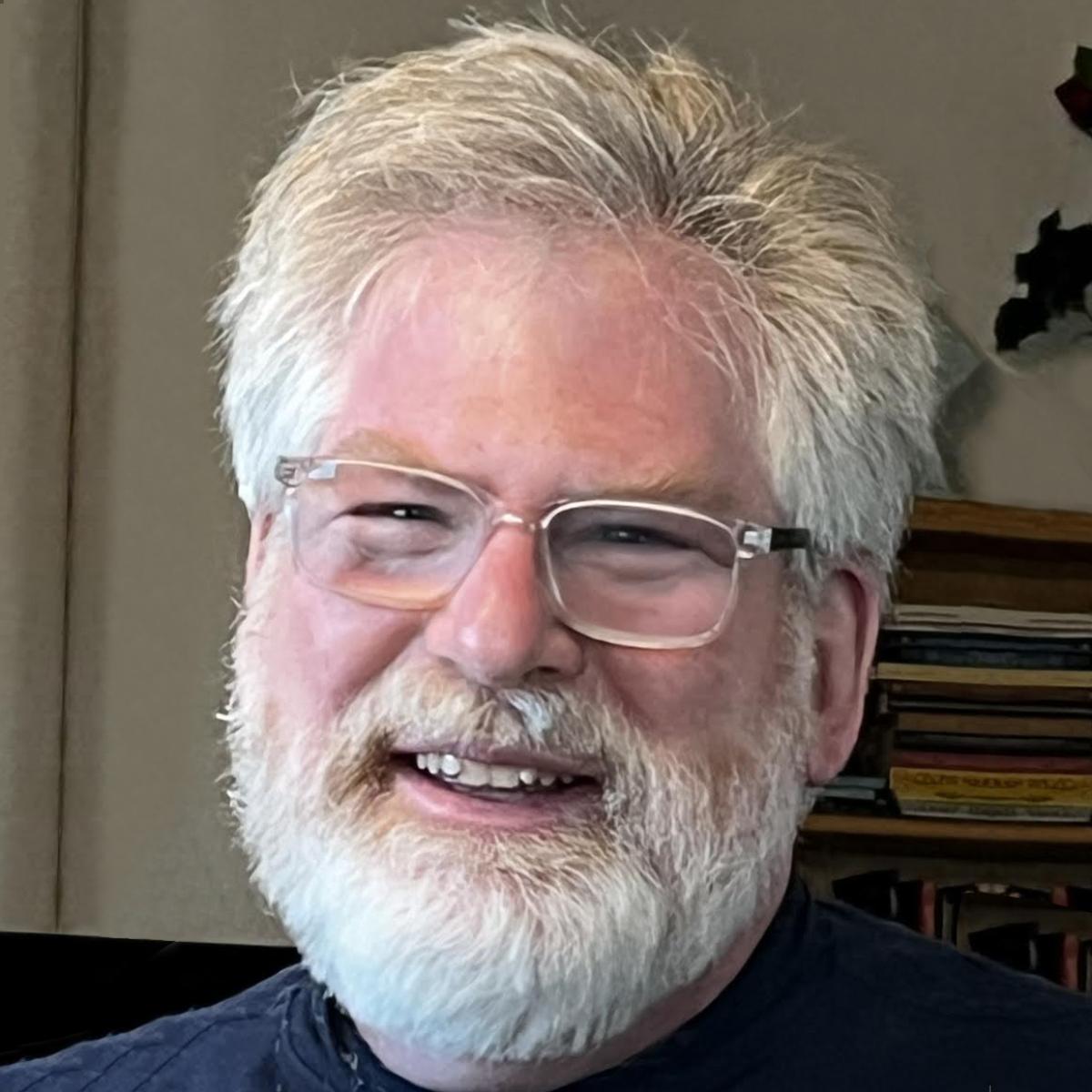
Christophe Golé is a full-time Professor in the Department of Mathematical Sciences at Smith College . He has held academic positions at the University of Minnesota, ETH Zurich, SUNY Stony Brook, and the University of California, Santa Cruz. His research bridges Dynamical Systems and Mathematical Biology , with a focus on Phyllotaxis and Fibonacci Spirals in plant patterns. Golé co-founded the NSF-funded 4 College Biomath Consortium , which evolved into the Five College Biomathematical Sciences Certificate Program . He directed the Smith Geneva and Paris Junior Year Abroad programs in 2003-04 and 2014-15, respectively. Ph.D. , Boston University M.A. , University of California, Santa Cruz B.A. , Université Paris Golé's work on Phyllotaxis explores the mathematical underpinn'tion of Fibonacci spirals in plants and deviations from them. His earlier research in Hamiltonian Systems and Symplectic Twist Maps advanced understanding of periodic orbits and ghost tori. Articles span Mathematical Biology , Dynamical Systems , and Sub-Riemannian Geometry , with trends in Pattern Formation , Biological Modeling , and Hamiltonian Dynamics . Collaborations include the Smith Botanic Garden , where he co-created the exhibit Plant Spiral: Beauty You Can Count On . His courses include Introduction to Real Analysis , Topics in Continuous Applied Math: Dynamical Systems , and Topology . Golé is active in advising students through projects like zebrafish neurogenesis and crab-snail antagonism . He also participates in the Smith French and Spanish Tables and is involved in cross-disciplinary initiatives at the intersection of mathematics and biology.
Filippo Pavanello serves as a Contract Lecturer in the Department of Economics at Ca' Foscari University of Venice, actively engaged in climate change research and specialized teaching programs. His scholarly work centers on: Household-level adaptation to climate change through energy-intensive solutions like air conditioning Economic modeling of thermal comfort choices and insulation adoption Macroeconomic implications of climate adaptation strategies Integration of remittance flows into climate resilience frameworks Policy evaluation for sustainable energy transitions Recent publications (2019-2023) reveal consistent focus on the socioeconomic dimensions of cooling technologies, with methodological approaches spanning integrated assessment modeling and empirical analysis of household behavior. These works appear in leading environmental economics journals and culminate in a comprehensive monograph on air conditioning's societal impacts. Dr. Pavanello collaborates extensively through the ENERGYA research team, particularly with Enrica De Cian and Teresa Randazzo, on interdisciplinary projects examining climate adaptation economics. His current teaching includes 'Applied Environmental Economics and Policy Evaluation' for both Master's and Doctoral programs in Climate Change Science and Management.
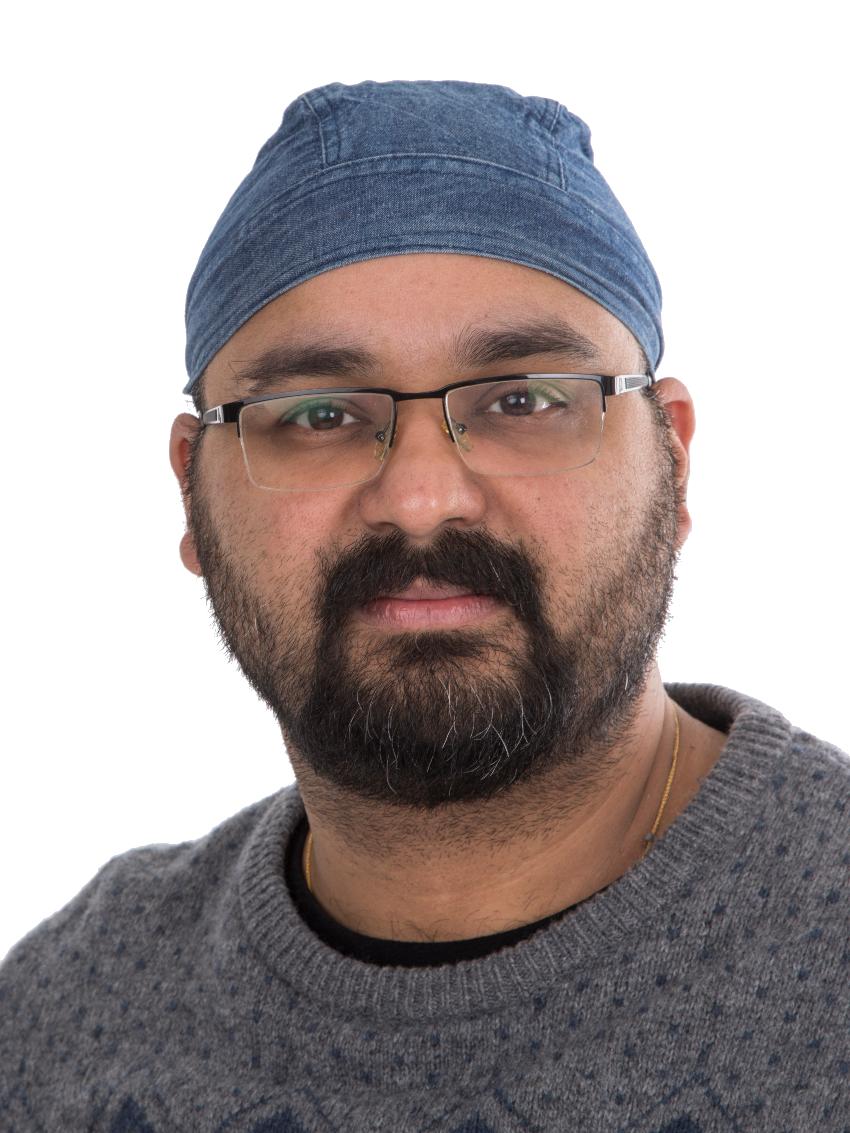
Professor Balpreet Singh Ahluwalia is a distinguished academic at UiT The Arctic University of Norway, where he serves in the Department of Physics and Technology. His expertise lies at the intersection of advanced optical technologies and biomedical applications, with a focus on developing cutting-edge microscopy techniques for life science research. As a principal investigator of multiple high-impact research projects, including ERC-funded initiatives, he leads a dynamic research group focused on optical nanoscopy and bio-imaging. Dr. Ahluwalia's research spans several critical areas in modern optical science: Development of super-resolution optical nanoscopy techniques Quantitative phase imaging for live-cell analysis Integrated photonic circuits for biomedical applications Optical trapping and manipulation of biological specimens Raman spectroscopy for molecular fingerprinting His work has established UiT as a leading center for optical nanoscopy in Northern Europe, with particular emphasis on applications in marine biology, liver physiology, and pathogen detection. The research group has pioneered several novel approaches to high-speed, label-free imaging that overcome traditional limitations in resolution and speed. Analysis of Dr. Ahluwalia's recent publication record reveals a strong trajectory toward computational and AI-enhanced microscopy, with increasing focus on real-time imaging of dynamic cellular processes. His work bridges fundamental optical engineering with practical biomedical applications, particularly in the areas of nanoparticle-cell interactions, bacterial identification, and tissue imaging of marine organisms. Dr. Ahluwalia has received significant recognition through competitive research funding: ERC Starting Grant (16 M NOK) for high-speed chip-based nanoscopy ERC Proof-of-Concept grant (1.5 M NOK) for affordable photonic-chip based optical nanoscopy UiT Strategic Funding (13 M NOK) for Centre for Advanced Nanoscopy Multiple international collaborations including EU MSCA projects As an educator, Dr. Ahluwalia teaches FYS-8029 Optical Nanoscopy and mentors PhD students through multiple funded projects. His laboratory, part of the Ultrasound, Microwaves and Optics research group, maintains state-of-the-art facilities for optical nanoscopy, including custom-built super-resolution microscopes and integrated photonic platforms. The research environment fosters interdisciplinary collaboration between physicists, biologists, and computer scientists working toward next-generation imaging solutions.
Dr. Andrew Butterfield is a faculty member at the School of Computer Science and Statistics, Trinity College Dublin. He serves as Head of the Foundations and Methods Group and actively contributes to Lero: the Irish Software Research Centre. His research focuses on Formal Methods and Functional Programming, particularly the Unifying Theories of Programming (UTP) paradigm, with applications in clinical pathways, medical device software, and spacecraft operating systems. Current research includes developing UTP theories for shared-variable concurrency, rely/guarantee reasoning, and separation logic in collaboration with Jim Woodcock. He also explores Process Modelling Language (PML) semantics with John Noll and Anila Mjeda. His contributions feature proof-assistance tools like UTP2 Theorem Prover, UTP Calculator, and ReasonEq implemented in Haskell. Andrew leads funded projects such as ESA's RTEMS-SMP (2019) and SFI's FMHIDA (2016-2020). Past projects encompass formal verification of separation kernels, Handel-C language semantics, and NAND flash memory models. He has taught courses in Formal Methods, Functional Programming, and Concurrency, while serving on editorial and program committees including Formal Aspects of Computing.
Sarah D Castle serves as Assistant Professor of Mathematics Education at the University of Idaho with dual appointments in the Department of Mathematical and Statistical Sciences (College of Science) and Curriculum and Instruction Department (College of Education, Health and Human Sciences). Her research bridges computational methods and mathematics education to advance equity and foster creativity in undergraduate STEM contexts. Her educational background includes: B.A. in Mathematics, Whitworth University (2012-2016) B.S. in Engineering Physics, Whitworth University (2012-2016) M.S. in Mathematics, Michigan State University (2019-2022) Ph.D. in Mathematics Education, Michigan State University (2018-2023) Castle's research centers on computational approaches to uncover systemic inequities in STEM education while creating environments that nurture mathematical creativity, particularly for marginalized students. She investigates how computational modeling—such as Jupyter Notebook implementations in linear algebra—can transform mathematical engagement and understanding. Her work critically examines power structures in educational spaces and develops pedagogical frameworks that leverage coding to deepen conceptual learning and promote equitable participation. Analysis of her 13 publications (2020-2024) reveals three dominant trends: (1) computational tools as catalysts for mathematical creativity and conjecture, (2) quantitative critical analyses of systemic advantages in STEM courses, and (3) investigations of student agency development in proof-based mathematics. These works span ACM computer science education conferences, mathematics education research forums, and interdisciplinary learning sciences venues. Castle actively contributes to major research initiatives: SEISMIC Project: Multi-institutional analysis of equity in introductory STEM courses Transition to Proof Project: Studying sense-making in advanced mathematics Computational Education Research Lab: Developing computational modules for mathematics learning Her teaching portfolio includes Secondary Mathematics Methods (EDCI 434), Proof and Viable Argumentation (MTHE 410), and Calculus I (MTH 132), reflecting her dual expertise. She has extensive experience as instructor of record, teaching assistant, and developer of STEM curricula including high-altitude balloon launch modules for K-12 students.
Russell Impagliazzo is a Professor in the Department of Computer Science and Engineering at the University of California, San Diego (UCSD). He has held positions as Assistant Professor, Associate Professor, and Professor at UCSD since 1991 and was a Visiting Professor at the Institute for Advanced Study (Princeton) from 2007 to 2012. His academic journey includes a BA in Mathematics from Wesleyan University and a PhD in Mathematics from UC Berkeley. His research focuses on computational complexity theory , with key contributions to: Randomness in computation Cryptography (e.g., pseudorandom generators) Circuit lower bounds Proof complexity (e.g., polynomial calculus, resolution) Structural complexity (e.g., average-case hardness) Optimization heuristics (e.g., local search) The trends in his publications include foundational work on derandomization, hardness amplification, and algebraic proof systems. His papers often bridge theoretical computer science with mathematics, particularly in analyzing the limits of computational models. Scientific awards and honors include: NSF Young Investigator Sloan Fellow Fulbright Scholar Guggenheim Fellow Simons Investigator Best Paper Award (Computational Complexity Conference) Best Paper Award (STOC) Outstanding Paper Award (SIAM) He actively advises students and has contributed to grants and programs such as the Simons Institute’s Fine-Grained Complexity and Algorithms and the Meta-Complexity program at the Simons Lab in Spring 2023.
Amin Timany serves as an Associate Professor in the Department of Computer Science at Aarhus University, Denmark. His research focuses on foundational aspects of programming languages and formal verification systems, with particular expertise in logical frameworks for program correctness. His primary research interests span: Programming Languages Theory Formal Methods and Verification Type Systems and Type Soundness Separation Logic for Concurrency Logical Relations and Denotational Semantics Mechanized Proof Systems Analysis of Timany's recent publications (2022-2025) reveals a strong emphasis on separation logic extensions for distributed systems, guarded recursion techniques, and type soundness proofs. His work frequently bridges theoretical foundations with practical verification challenges, particularly in capability-based security and CRDT verification. The publications demonstrate consistent contributions to top venues including POPL, PLDI, and CPP. Timany actively participates in academic service, having served as conference chair for CPP 2025. His research involves significant collaboration with international teams, particularly with researchers at Aarhus University and other European institutions. The publication record shows steady output with 40+ research items, including 2 PhD supervisions noted in his profile.
Professor Marianella Chamorro-Koc is a distinguished academic at Queensland University of Technology, where she holds the position of Professor in Industrial Design within the School of Design, Creative Industries, Education and Social Justice Faculty. With a BA from Pontificia Universidad Catolica del Peru, MA from Ohio State University, and PhD from QUT, her career spans over two decades of design research and education. Her transdisciplinary work focuses on human-centered technological solutions in healthcare, particularly designing devices for self-health management and promoting viable local manufacturing through initiatives like the CRC-P11 project. Her research explores critical intersections of design and technology, including: Person-centred health tech devices for chronic disease management Transformative service design for wellbeing in community contexts Human mobility solutions for people with disabilities Co-design methodologies for healthcare innovation Experience design principles for interactive products Advanced manufacturing strategies for Health 4.0 ecosystems These interests bridge industrial design, healthcare technology, and social innovation. Her recent publications demonstrate strong thematic coherence around healthcare innovation, with over 60% focusing on medical device design, patient experience, and health technology adoption. Emerging trends include pediatric care solutions, wearable rehabilitation technologies, co-design frameworks for healthcare systems, and advanced manufacturing applications. Her work consistently integrates human-centered methodologies with practical healthcare applications. Significant recognitions include: 2022 AAUT Citation Award for educational excellence Gold Design Award for inclusive design project 'Vis-ability' Two consecutive Good Design Australia Awards (2021-2022) for healthcare innovation Nationally Competitive Research Fellowship for disability mobility research As Senior Fellow of the Higher Education Academy, she leads research training initiatives and supervises doctoral candidates in health technology design. Her current supervision focuses on wearable devices for home-based rehabilitation. Major grants include: CRC-P11 for smart orthotics manufacturing Defense-funded Wearable Predictive Diagnostics project ARC Linkage Project on disability employment pathways She serves as Chief Investigator at QUT's Tier 2 Design for Health Lab and leads the PAS Lab Research Group. Her collaborations include Queensland Health clinicians, international universities (Germany, Colombia, Peru), and industry partners like i-Orthotics and Healthia Group to advance healthcare innovation through design-led approaches.
Iftach Haitner is a Professor at Tel Aviv University's School of Computer Science, currently on leave while serving as Principal Researcher at the Stellar Development Foundation. His primary academic affiliation remains with Tel Aviv University where he maintains an active research group and supervises multiple PhD students. His educational background includes a PhD (2008) and Master's degree from the Weizmann Institute of Science under Omer Reingold and Oded Goldreich respectively, and undergraduate studies in Mathematics and Computer Science at Tel Aviv University. His research focuses on Cryptography and Computational Complexity , with significant contributions to coin-flipping protocols, one-way functions, differential privacy, and secure computation. Analysis of his 15 most recent publications reveals consistent focus on foundational cryptographic problems. His work demonstrates strong emphasis on computational entropy concepts (inaccessible entropy, next-block pseudoentropy), protocol security against adaptive adversaries, and tight complexity bounds for cryptographic primitives. The publications span top venues including STOC, FOCS, Crypto, and Eurocrypt, showing sustained high-impact research output. The Kadar Family Award for Outstanding Research (2018) Tel Aviv University Rector's Awards for Excellence in Teaching (2017, 2018) SIAM Outstanding Paper Prize (2011) Intel Israel award for outstanding PhD students (2008) Multiple best paper awards (CRYPTO 2006, ICALP 2006) Haitner has advised numerous PhD students including Noam Mazor, Jad Silbak, and Eliad Tsfadia. His research has been supported by multiple Israel Science Foundation grants (2011-2023), an ERC Starting Grant (2015-2020), and Blavatnik ICRC grants. He also maintains industry connections through roles at Coinbase (2022-2024) and previous consulting positions at Unbound Security and Team8. His professional service includes editorial work for SIAM Journal on Computing and program committee memberships for major cryptography conferences including Crypto, Eurocrypt, and TCC. He co-organizes the Greater Tel Aviv Area Cryptography Seminar and other specialized workshops.
Lisa Maria Kohl is a tenured researcher in the Cryptology Group at CWI Amsterdam , where she has worked since 2020. She focuses on developing practical post-quantum secure protocols and secure multi-party computation . Her academic journey includes a PhD at Karlsruhe Institute of Technology (2019), postdoctoral research at Technion (2020), and a visiting researcher role at the FACT Center at IDC Herzliya during her PhD. Education : PhD from Karlsruhe Institute of Technology (2019) Previous Positions : Postdoctoral researcher at Technion (2020), visiting researcher at IDC Herzliya (2019), visiting student at CWI (2015) Current Role : Research Scientist at CWI Amsterdam (2020–present) Kohl’s research spans cryptographic theory and its practical applications. Key areas include secure multi-party computation , homomorphic secret sharing , oblivious transfer , and lattice-based cryptography . Her work often addresses efficiency, tight security reductions, and post-quantum resilience, as seen in her recent publications on scalable protocols and topology-hiding computation. Her 15 most recent publications (2025–2019) reveal a focus on secure computation (e.g., SPDZ extensions, RMS programs), pseudorandomness (e.g., LPN-based constructions), and privacy-preserving technologies (e.g., Privacy Pass, topology-hiding communication). Collaborations with prominent researchers like Elette Boyle, Yuval Ishai, and Ronald Cramer underscore her integration into global cryptographic research networks.
Professor Kung Chen serves as a Professor in the Department of Management Information Systems at National Chengchi University (NCCU) in Taipei, Taiwan. With over two decades of academic experience, he has established himself as a leading researcher in blockchain technology, financial technology, and cybersecurity. His work bridges theoretical computer science with practical business applications, particularly in the financial sector. Ph.D. in Computer Science, Yale University (1989-1994) M.S. in Computer Science, National Taiwan University (1985-1987) B.S. in Computer Science, National Taiwan University (1981-1985) Professor Chen's research primarily focuses on blockchain applications, cybersecurity solutions, and data privacy technologies. His work explores practical implementations of blockchain in financial systems, secure data management frameworks, and privacy-preserving protocols. He has made significant contributions to smart contract development, consensus algorithms, and blockchain integration with IoT systems. His research demonstrates strong interdisciplinary collaboration across computer science, business, and policy domains. Analysis of Professor Chen's recent publications reveals a strong focus on blockchain technology (45%), cybersecurity (25%), and IoT systems (15%). His work shows a clear evolution from foundational research in aspect-oriented programming toward applied financial technology solutions. The interdisciplinary nature of his publications spans computer science, medical informatics, and public policy domains, reflecting his ability to connect technical innovations with real-world applications. Senior Excellent Teacher Award (20 years service) Senior Excellent Teacher Award (10 years service) Distinguished Professor at National Chengchi University Special Outstanding Talent Award from National Science Council Excellent Research Award for Internationalization (multiple years) Type A Research Award from National Science Council Professor Chen has secured substantial research funding as Principal Investigator for numerous projects totaling millions of dollars, primarily from Taiwan's National Science and Technology Council and industry partnerships. His grants focus on blockchain applications in finance, cybersecurity solutions, and academic network infrastructure. He has led major initiatives including the Financial Technology Innovation Operations Research Center and various blockchain laboratory development projects across multiple institutions. Professor Chen is affiliated with several research laboratories at NCCU, including the Lab of Intelligent Finances and Smart Contracts, Blockchain and Financial Technology Innovation Lab, and the E-Business Lab. His research teams typically include interdisciplinary members from computer science, business, and policy backgrounds, reflecting the applied nature of his work. He frequently collaborates with industry partners, particularly in the financial sector, to ensure practical relevance of his research findings.
Simge KIRTEKE is a Researcher at Uskudar University’s Visual Communication Design Department. She holds a BSc in Visual Communication Design (Yeditepe University, 2017), an MSc in Communication Sciences (Inonu University, 2021), and is pursuing a PhD in Art and Design at Yıldız Technical University since 2022. Current administrative roles: Coordinator of International Accreditation Research Group (2023–), Laboratory Supervisor (2023–), Commission member for Applied Education (2023–2024), and Research Group Member (Visual Studies, 2022–). 2023 award: Typo Day Poster Design Competition (Banaras Hindu University). Her research focuses on AI-driven design, real-time marketing, and critical media analysis. Recent publications explore AI’s role in corporate branding, Orientalist advertising tropes, and neuroscientific approaches to Z-generation design preferences. She contributes to editorial roles at periodic publications and leads TUBITAK-funded projects like ‘Neurodesign for Z-Generation’ (2025).
Peter Hocke-Bergler is a Senior Researcher at the Institute for Technology Assessment and Systems Analysis (ITAS) under the Karlsruhe Institute of Technology (KIT) , with over two decades of experience in socio-technical nuclear waste governance. He leads the HAFF work package in the BMUV-funded TRANSENS project (2019–2022), focusing on capacity and flexibility in reversible waste disposal processes. His career spans roles in editorial teams, international delegations, and expert groups, including the OECD-NEA Nuclear Development Council (2012–2015). Current Projects: TRANSENS, DAEF, ARL Working Group Academic Network: Springer, OECD/NEA, transcript Verlag Research Interests center on transdisciplinary approaches to nuclear waste management, blending social science with technical challenges. He examines: Public participation in high-level waste governance Multi-level governance structures Long-term institutional frameworks Expert-lay communication dynamics Temporal challenges in nuclear decision-making Comparative analysis of German and Swiss disposal strategies Publications (since 2001) address socio-technical integration, stakeholder conflicts, and adaptive governance. His 2024 work on uncertainty management in TRANSENS highlights innovative approaches to future-proof disposal strategies, while 2023–2022 contributions analyze Swiss governance models and participatory mechanisms. Professional Collaborations include partnerships with institutions like the University of Hannover , Öko-Institut e.V. , and Free University of Berlin . He co-edited journals such as TATuP and contributed to Springer and transcript Verlag publications.