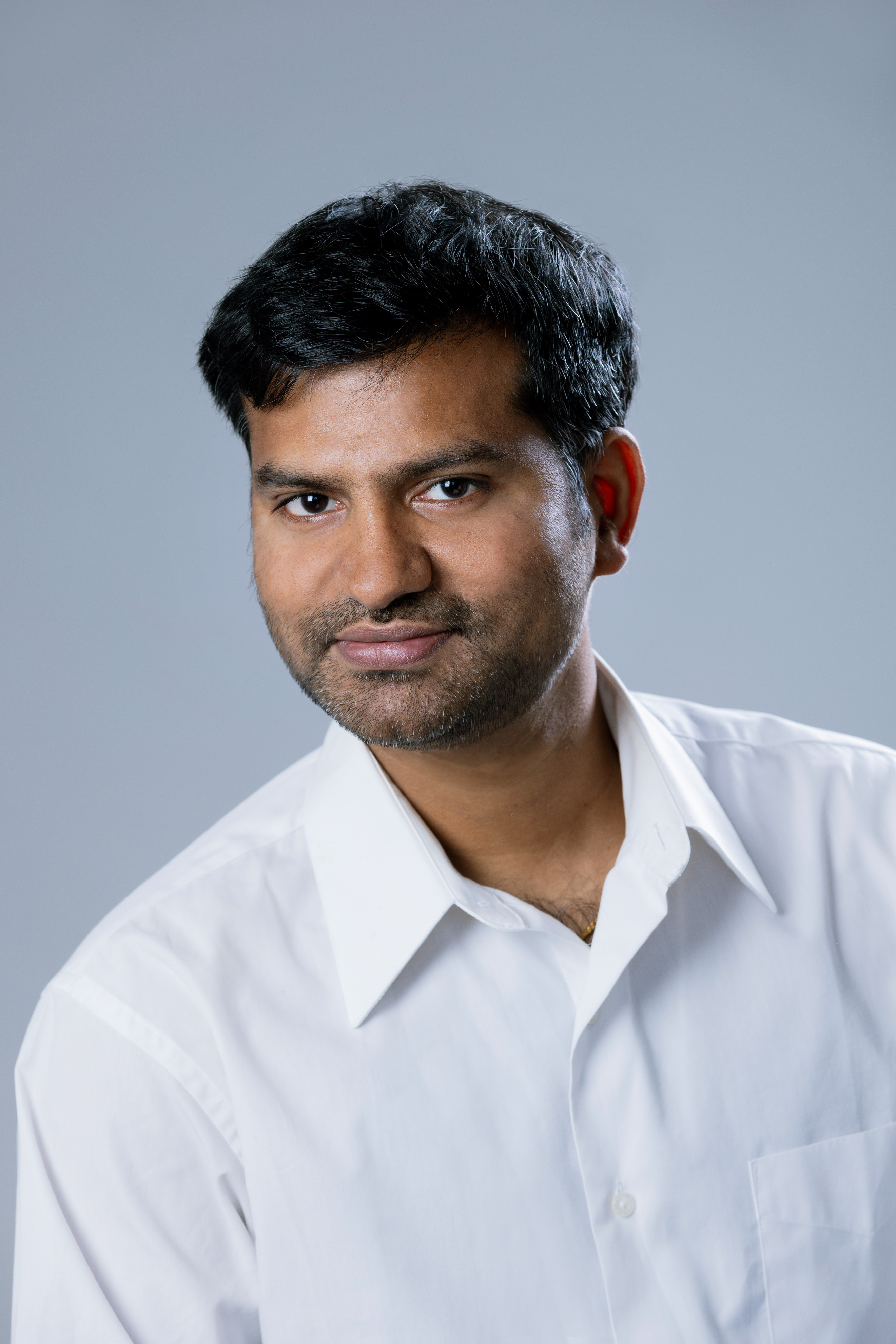
Françoise Levy-dit-Vehel is a Lecturer-Researcher at ENSTA Paris, part of Institut Polytechnique de Paris, affiliated with the Computer Science and Systems Engineering Unit. She is also an Associate Researcher in the GRACE team at INRIA Saclay and a member of the LIX computer science laboratory at École Polytechnique. She obtained her Habilitation (HDR) from Paris 6 University in 2010. Her research spans: Cryptography & Security : Focus on cloud data protection, interactive cryptographic protocols, and algebraic foundations of encryption. Public-Key Systems : Analysis of MinRank, rank-metric decoding, and word-based cryptosystems. Efficient Storage Solutions : Designs for proofs of retrievability and private information retrieval using coding theory. She teaches courses in cryptography, discrete mathematics, and algorithms at ENSTA Paris and contributes to curriculum development for IP-Paris's cybersecurity master's program. She holds multiple patents in cryptographic systems and has authored research reports for INRIA.
Julia P.G. Jones is a Professor of Conservation Science at Bangor University's College of Environmental Sciences and Engineering . Her research focuses on the intersection of conservation biology , ecosystem services , and socioeconomic equity , particularly in tropical regions like Madagascar. She leads projects evaluating the effectiveness of REDD+ , biodiversity offsets , and payment for ecosystem services in reducing deforestation while addressing poverty alleviation . Her work emphasizes causal inference , impact evaluation , and behavioral science in conservation policy design. Funding : NERC, ESRC, and DFID grants for ecosystem services and poverty reduction (2013-2017); NERC/ESRC/DFID grant on Amazon PES (2009). Key Themes : No Net Loss frameworks, tropical forest conservation, policy evaluation, and community engagement. Recent Publications : 15+ articles (2020-2025) on topics like carbon market ethics , invasive species control , and post-project evaluation gaps in conservation. Methodologies : Pioneering randomized control trials and statistical matching to assess conservation interventions. Her work bridges ecological science and socioeconomic policy , with fieldwork in Madagascar, Bolivia, and Bangladesh. She advocates for evidence-based conservation , transparent reporting , and adaptive management of protected areas.
Professor Michael Butler serves as Dean of the Faculty of Physical Sciences and Engineering at the University of Southampton, a position he has held since January 2021. Previously, he served in key leadership roles including Associate Dean for Academic Infrastructure (2018-2020) and Associate Dean for Enterprise (2014-2018). As a distinguished computer scientist, his career spans decades of groundbreaking work in formal methods for software safety and security. Butler is internationally renowned for his pioneering work in developing and industrially deploying formal methods, particularly his specialization in model-based methods and Event-B. His research encompasses applications, tools, and methodology for ensuring the trustworthiness of software-based systems, especially high integrity systems where failures could lead to loss of life or significant business impact. He has made key theoretical contributions that enable scaling formal analysis to large complex systems. His recent publications reveal a consistent focus on applying formal methods to critical domains including cyber-physical systems, autonomous vehicles, and security analysis. The research demonstrates innovative approaches to exception handling, safety requirements capture, and formal verification of complex systems, with strong industry relevance. Scientific recognition includes: Fellow of the British Computer Society Chair of IFIP WG 2.3 on Programming Methodology (2013-2019) Editorial board member for Formal Aspects of Computing (2008-present) Editorial board member for International Journal of Critical Computer-Based Systems (2010-present) Editorial board member for Software Tools for Technology Transfer (2015-present) Butler actively supervises PhD students including Haider Mahmood Al-Shareefy and has secured substantial research funding through numerous projects with EPSRC and European Union funding programs. His industry collaborations with Thales, Hitachi, and Airbus demonstrate his commitment to translating academic research into real-world applications. As a member of the Cyber Physical Systems research group, he continues to lead cutting-edge research in formal verification of safety-critical systems.
Kai-Hsiung Chang is a Professor in the Department of Computer Science and Software Engineering at Auburn University's College of Engineering. He has been a faculty member since 1986, progressing from Assistant to Associate Professor in 1991, and to full Professor in 1998. He served as Department Chair from 2006 to 2016 and was honored with the Alumni Professorship from 2004 to 2009. Ph.D., Electrical and Computer Engineering, University of Cincinnati, 1986 M.S., Electrical and Computer Engineering, University of Cincinnati, 1982 Diploma, Electrical Engineering, Taipei Institute of Technology, 1977 Dr. Chang's research focuses on software testing, software comprehension and visualization, complexity metrics, information assurance education, computer supported cooperative work (CSCW), and artificial intelligence in software engineering. His work integrates formal methods and usage profiles to enhance software quality and safety. He has led research sponsored by the National Science Foundation (NSF) and the Department of Defense (DoD), particularly in pervasive and mobile computing and information assurance education. His recent publications reflect a strong focus on software testing methodologies, formal specification-based validation, collaborative systems, and intelligent software tools. Themes include object-oriented testing, complexity measurement, CSCW, and AI-driven test generation, indicating a long-standing commitment to improving software reliability and development processes. Alumni Professorship, Auburn University (2004–2009) ACM Certificate of Appreciation for Outstanding Service (1997) IEEE Senior Member INFOSEC Professional Certification (2005) Multiple Outstanding Teaching Awards at Auburn University (1989, 1992, 1997) Summer Faculty Fellowship at NASA Marshall Space Flight Center (1995) Dr. Chang has advised over 50 graduate students, including numerous Ph.D. and Master’s candidates, many of whom now hold academic and industry positions. He has served on NSF and DHS fellowship review panels, contributed to ABET accreditation as a commissioner and program evaluator, and participated in the IEEE-Computer Society/ACM Curriculum Committee for Software Engineering. He also served as Vice President of the International Society of Applied Intelligence. He has led significant research initiatives, including NSF-sponsored REU programs in pervasive computing, and has been deeply involved in curriculum development and professional service. His lab and research group have focused on software quality, intelligent systems, and collaborative environments, fostering interdisciplinary work in software engineering and AI.
Roles and Affiliations: Jørgen Villadsen is an Associate Professor at the Technical University of Denmark (DTU), affiliated with the Department of Applied Mathematics and Computer Science and the Algorithms, Logic and Graphs Section. He serves as Head of Study and focuses on formal logic, multi-agent systems, and computer science education. Education: MSc in Computer Science and Engineering (1989, DTU) and PhD in Computer Science (1995, DTU). Research Interests: Villadsen’s work centers on logic and its applications in computer science and artificial intelligence, including formal methods, multi-agent systems, type theory, and non-classical logics. He emphasizes the development of proof assistants like Isabelle and tools for teaching logic and formal reasoning. Recent Research Trends: His publications from 2020–2017 highlight contributions to logic education, automated reasoning, and multi-agent system design. Key areas include Isabelle-based proof systems, hybrid logic formalization, and competitive agent development in programming contests. Scientific Contributions: He has led teams in the Multi-Agent Programming Contest, published extensively in journals like Annals of Mathematics and Artificial Intelligence , and contributed to open-source tools like NaDeA and SPA. Grants and Projects: Involved in projects such as CONTROL (constraint-based language processing) and HyLoMOL (hybrid logic integration). Supervised numerous MSc and PhD students in multi-agent systems and formal methods. Labs/Teams: Active in the Multi-Agent Systems Lab, leading development of agents for competitions and educational tools. Collaborates internationally on logic, AI, and formal verification.
Aviral Kumar is an Assistant Professor in the School of Computer Science at Carnegie Mellon University (CMU), jointly appointed in the Computer Science Department (CSD) and Machine Learning Department (MLD). He earned his PhD from UC Berkeley in 2023, where he received prestigious awards including the CV Ramamoorthy Distinguished Research Award, Apple PhD Fellowship, and Facebook PhD Fellowship. His research focuses on reinforcement learning (RL), particularly offline RL, scaling RL methods, and their intersection with foundation models. He leads the CMU AI & Reinforcement Learning (AIRe) lab, exploring core RL algorithms, robotics applications, and AI foundation models. Education: PhD in Computer Science from UC Berkeley (2023) Research Interests: Reinforcement Learning Offline Reinforcement Learning Robotics Foundation Models His lab emphasizes scalable RL techniques and real-world applications. Current advisees include Bhavya Kumar Agrawalla and Max Sobol Mark. Notable awards include the CV Ramamoorthy Distinguished Research Award for pioneering contributions to CS research. Lab activities and future work focus on advancing RL for autonomous systems and integrating foundation models into decision-making frameworks. The lab recruits PhD students annually from CMU SCS programs (CS, ML, RI). Undergraduates and MS students can apply via a dedicated form for research opportunities.
Seung Yeob SHIN is a Research Scientist at the Interdisciplinary Centre for Security, Reliability and Trust (SnT) at the University of Luxembourg. He holds a PhD from the University of Massachusetts Amherst (2016), specializing in software engineering with a focus on system modeling and analysis through simulation and model checking frameworks. His work is centered at the Software Verification and Validation (V&V) Lab , led by Prof. Lionel Briand. Research Interests: Software Engineering Methodologies Cyber-Physical Systems Testing Real-Time Systems Analysis AI-Driven Testing Techniques Model Checking & Simulation Key Contributions: Pioneering work on fuzzing techniques for SDN controllers Development of probabilistic WCET estimation methods Advancements in metamorphic testing for CPS Control theory-based stress testing frameworks Publications: Over 30 peer-reviewed articles focusing on testing methodologies for real-time systems, cyber-physical systems, and quantum programming analysis. Recent trends emphasize AI integration in software validation and uncertainty-aware system design. Labs & Teams: Active member of the V&V Lab, collaborating on hardware-in-the-loop testing and embedded system validation projects.
Roles & Affiliations: Vijayanand Nagarajan is a Professor at the Kahlert School of Computing, University of Utah. He leads the CAPS Research Group, focusing on computer architecture, programming languages, and systems. His work emphasizes constructive, specification-driven design for efficiency and correctness. Research Interests: His research spans consistency models for distributed systems, persistent memory, coherence protocols, and hardware/software co-design. Key areas include key-value-store consistency, persistent memory optimization, and automated protocol synthesis. His group explores topics like cache coherence, fault tolerance, and scalable distributed storage. Articles Trends: Recent work emphasizes automated protocol generation (e.g., HeteroGen, PipeGen), consistency in distributed systems (LAW theorem), and fault-tolerant designs (Apta, Dve). Publications span top conferences like ISCA, ASPLOS, and VLDB, addressing both theoretical foundations and practical implementations. Advising & Grants: Advises current PhD students (An Qi Zhang, Soham Bagchi, et al.) and has mentored over a dozen alumni now in academia and industry (e.g., NVIDIA, Google, Huawei). Active in organizing and reviewing for conferences like ISCA, MICRO, and HPCA. Labs & Teams: Heads the CAPS Research Group, collaborating on projects like C3D, ATCache, and Odyssey. Engages in interdisciplinary work with robotics and compiler communities.
Ben Greenman is a Researcher at Brown University , specializing in Gradual Typing , Formal Methods , and Programming Language Design . He has developed tools like Forge for teaching formal methods FlowFPX for floating-point exception debugging CnD for specification visualization His work bridges theoretical advancements and practical software engineering challenges. Research Trends: Recent publications focus on Temporal logic misconceptions (2024-2025) Gradual typing performance (2023-2025) Tool-driven formal methods education (2023) Language design for macro systems (2023) Numerical computation reliability (2023) Key Contributions: Unified deep/shallow type systems Blame assignment strategies Collapsible contracts Corpus studies for type analysis Visual debugging frameworks
Piotr Napieralski serves as Associate Professor and Head of the Computer Graphics and Multimedia Department at Lodz University of Technology's Institute of Computer Science, where he has maintained continuous academic employment since 2000. His institutional leadership and research activities position him as a key figure in Poland's computer graphics research community. His research program centers on computer graphics, virtual reality, and game development with significant extensions into mobile systems and human-computer interaction. Core specialties include 3D graphics programming, computer animation, simulation/visualization techniques, and user interface design. Recent work increasingly integrates artificial intelligence methodologies while maintaining strong foundations in geometric algorithms and real-time rendering systems. Analysis of his 2021-2025 publications reveals a dual trajectory: continued innovation in graphics fundamentals (stereo vision consistency, 3D point cloud segmentation, procedural content generation) alongside strategic expansion into interdisciplinary applications including power electronics (solid-state transformers), transportation optimization (AI-driven ecodriving), and behavioral science (eating behaviors, mineral policy). This reflects deliberate diversification while preserving computer graphics as the unifying thread. Dr. Napieralski actively secures research funding through participation in numerous EU-funded projects and serves as a long-term expert for Poland's National Centre for Research and Development (NCBR). His teaching responsibilities include computer graphics instruction for both Polish and international students, though specific student mentorship details are not documented in available sources. As department head, he oversees research directions and educational programs in graphics, games, and multimedia technologies. His leadership fosters collaboration between theoretical computer science and practical industrial applications, particularly in virtual reality systems and mobile gaming platforms where his publications demonstrate consistent output.
Brandon McFadden serves as Professor and Tyson Endowed Chair in Food Policy Economics within the Department of Agricultural Economics and Agribusiness at the University of Arkansas. His research program employs behavioral and experimental economics methodologies to investigate human interactions with food systems, with emphasis on consumer decision-making, policy impacts, and agricultural technology adoption. His educational background includes: Ph.D. in Agricultural Economics (minor in Statistics) from Oklahoma State University M.S. in Agricultural Economics from the University of Arkansas B.S. in Marketing from the University of Arkansas – Fort Smith Research interests center on food policy analysis through experimental approaches, examining consumer responses to biotechnology, nutrition labeling, and sustainability initiatives. His work bridges agricultural economics with public health, addressing issues like food security, health behavior, and market responses to regulatory changes. Current projects investigate hemp applications, gene-edited foods, and equity in food access, utilizing eye-tracking and neuroeconomics methodologies to understand decision processes. Recent publications demonstrate strong focus on contemporary food system challenges including biotechnology acceptance (GMOs, gene editing), labeling policy impacts, and sustainability transitions. His work increasingly addresses intersectional issues like racial disparities in food access, climate-smart agriculture, and novel protein adoption, with methodological innovation in experimental design. Information regarding specific advisees, grant funding, or laboratory facilities was not provided in available materials.
Jesper Bengtson is a Lecturer in Theoretical Computer Science specializing in Programming Logic and Semantics at the IT University of Copenhagen. His research primarily focuses on formal methods for programming languages, with particular expertise in session types, separation logic, and proof assistants. Dr. Bengtson's research interests center around programming language theory and formal verification. His work explores how to mathematically verify software correctness through logical frameworks. He specializes in session types for communication protocols, separation logic for reasoning about concurrent programs, and developing tools for interactive theorem proving. His research bridges theoretical computer science with practical applications in software verification. His publication record shows consistent contributions to programming language theory over the past decade, with a clear trend toward applying formal methods to concurrent and distributed systems. Recent work demonstrates increasing focus on mechanized verification of session type systems and integration of session types with separation logic for concurrent program verification. Dr. Bengtson has been involved in several significant research projects including MECHANIST (MECHANIsation of Session typEs, 2021-2025), ToMeSo (Tools and Methods for Scalable Software Verifications, 2009-2013), and a general-purpose framework for software verification (2013-2017). These projects were funded by major Danish research foundations including Danmarks Frie Forskningsfond and Independent Research Foundation of Denmark. His work has been featured in media outlets, including a 2015 article titled 'Danish researcher wants to eradicate software errors' and a 2021 piece about 'Natural or woke? Big shooter introduces controversial soldier,' indicating public engagement with his research.
Louise Barkhuus is a Professor at the IT University of Copenhagen, affiliated with the Theoretical Computer Science Center for Information Security and Trust. Her research spans across social science studies of technology, privacy, and human-computer interaction, with a particular focus on qualitative and quantitative methods in examining mobile social technologies. Her research interests include: Social science studies of technology and its societal implications Privacy concerns in digital environments, particularly in health contexts and contact tracing Human-computer interfaces with emphasis on gender differences and inclusive design Hybrid work technologies and the challenges of maintaining equitable collaboration Mobile social technologies and their impact on everyday life Professor Barkhuus's recent work shows a strong trend toward understanding the social dynamics of technology use in various contexts. Her publications over the last five years reveal a focus on hybrid work challenges, gender differences in computing education, privacy in health technologies, and the design of inclusive technological experiences. She has made significant contributions to understanding how people interact with technology in work, educational, and health contexts, with particular attention to the social and ethical implications of these interactions. Her notable scientific contributions include: Research on collocated distance as a fundamental challenge in hybrid work technologies Studies on gender differences in CS1 project group dynamics Investigations into privacy concerns around mobile COVID-19 tracing applications Work on designing for shared remote video experiences Professor Barkhuus has been actively involved in several significant research projects including DIREC: REWORK (2022-2024) focusing on digital research in Denmark, DIREC: SoftwareIn for teaching at scale (2021-2025), and research on encouraging grade school girls' interest in computer programming funded by Mozilla Corporation (2018-2019). She has also contributed to the academic community through media appearances discussing YouTube's impact on public domain content, generative AI regulation, and digital age verification policies. Her work bridges computer science with social sciences, creating meaningful insights into how technology intertwines with human experiences across various contexts including work, education, and healthcare.
Frank Hung is a Professor in the Department of Management Information Systems at National Chengchi University's College of Business. He has held various academic positions including Department Chair (2020-2022) and has been actively involved in research, teaching, and academic service. His work bridges theoretical research with practical applications in information systems and digital transformation. Dr. Hung received his Master's and PhD in Management Systems from the University of Waikato in New Zealand (2001-2006). His academic journey includes positions at National Chengchi University, National Chung Cheng University, and visiting appointments at DePaul University. Dr. Hung's research focuses on the intersection of information systems and business management, with particular emphasis on digital transformation, technology adoption, and human-computer interaction. His work spans multiple domains including e-commerce, social media, mobile applications, and supply chain management. His research methodology often combines quantitative and qualitative approaches to address complex business problems in the digital age. Analysis of Dr. Hung's recent publications reveals a strong trend toward applied research addressing contemporary challenges. His work increasingly focuses on AI applications, pandemic response systems, and digital transformation across various industries. The interdisciplinary nature of his research demonstrates how information systems can create value across healthcare, tourism, manufacturing, and financial services sectors. Senior Excellent Teacher Award (10 years) from National Chengchi University Management College Research Excellence Award from National Chung Cheng University Ministry of Labor First Youth Social Enterprise and Social Innovation Award Runner-up Dr. Hung has secured numerous research grants from Taiwan's National Science and Technology Council and other funding agencies, demonstrating his ability to translate theoretical research into practical solutions. His projects often involve collaboration with industry partners, reflecting his commitment to bridging the academic-practitioner divide. As an academic leader, he has advised numerous graduate students and contributed to curriculum development in information systems education. Dr. Hung is actively involved with several research laboratories at National Chengchi University, including the E-Business Lab and the Emerging Technologies and Applications Lab. His work contributes to the university's research ecosystem focused on digital innovation and management.
Johannes Hölzl is a Post-doctoral Researcher in the Faculty of Science , specifically within the Department of Computer Science at Vrije Universiteit Amsterdam . He works in the Section of Theoretical Computer Science , focusing on formal verification and probabilistic systems. His research integrates higher-order logic with programming languages to model and verify complex computational processes. Position: Post-doctoral Researcher Institution: Vrije Universiteit Amsterdam Department: Computer Science Section: Theoretical Computer Science Hölzl's research spans formal verification, probabilistic programming, and concurrency. He has contributed extensively to the Isabelle/HOL proof assistant, formalizing mathematical structures like measure theory, Markov chains, and timed automata. His work bridges theoretical analysis with practical verification tools, ensuring rigorous proofs in automated reasoning. His publications highlight advancements in probabilistic systems, including formalizing Markov decision processes (2017), verifying compilers for probability density functions (2015), and analyzing expected running times of probabilistic programs (2016). The 2025 article on probabilistic timed automata indicates ongoing exploration of concurrent probabilistic models. Hölzl has no explicitly listed scientific awards in the provided texts. His collaborations with researchers like Tobias Nipkow and Andrei Popescu underscore interdisciplinary efforts in formal methods and security verification. He contributes to the Theoretical Computer Science Section at VU Amsterdam, advancing foundational research in logic-based programming and probabilistic modeling.