Dr. Tomislav Hengl is a leading researcher and Technical Director at OpenGeoHub Foundation and Envirometrix BV, specializing in spatial statistics, machine learning, and environmental data science. With over 20 years of experience in predictive soil mapping and geostatistics, he has pioneered open source frameworks for automated global environmental mapping. Co-founder of OpenGeoHub Foundation Initiator of OpenGeoHub Summer Schools (running since 2007) Project leader of OpenLandMap system Recipient of Clarivate Highly Cited Researcher (2021) His research focuses on: Machine learning for spatial/spatiotemporal data Environmental data cube systems Global soil and vegetation mapping Open source geospatial software development Spatio-temporal predictive modeling Cloud computing for Earth observation data Recent research trends include: Development of high-resolution global terrain models Analysis of vegetation productivity using satellite time-series Ensemble machine learning for environmental mapping Integration of multi-source geospatial datasets Applications in climate change impact assessment Advancing open data infrastructures Scientific contributions include: Clarivate Highly Cited Researcher (2021) Over 60 journal publications Founding Vice-Chair of the International Society for Geomorphometry (2011-2015) Development of open source R packages for geospatial analysis
Dr. Benjamin Winkeljann serves as a Group Leader at the Department for Pharmacy, Ludwig-Maximilians-University Munich, and as a Principal Investigator at the Comprehensive Pneumology Center Munich (CPC-M), Helmholtz Munich. He simultaneously holds the position of Co-Founder & CEO at RNhale GmbH since 2023. His academic trajectory includes completing his PhD in Mechanical Engineering at the Technical University of Munich, followed by postdoctoral positions at both LMU Munich and TUM's Department of Mechanical Engineering and Munich School of Bioengineering. Dr. Winkeljann's research centers on nanomedicine and advanced drug delivery systems, with specialized expertise in RNA therapeutics and pulmonary delivery platforms. His work uniquely bridges engineering principles with pharmaceutical applications, developing novel delivery systems for siRNA and other nucleic acids. He employs integrated experimental and computational methodologies to optimize drug carrier systems, with particular focus on endosomal escape mechanisms that determine therapeutic efficacy. His engineering background provides a distinctive perspective on pharmaceutical challenges that traditionally fall within pure pharmacy disciplines. His publication record reveals a clear progression from fundamental studies on polymer-RNA interactions toward increasingly applied research on pulmonary delivery systems. Recent work demonstrates integration of machine learning with traditional drug delivery approaches, reflecting his engineering background. The articles collectively address the critical bottleneck of efficient intracellular delivery in nucleic acid therapeutics, with growing emphasis on translational applications. His research shows strong interdisciplinary character, combining mechanical engineering, computational modeling, and pharmaceutical sciences. As a Group Leader completing his Habilitation, Dr. Winkeljann likely supervises PhD students and postdoctoral researchers, though specific advisees aren't listed in available materials. His position at the intersection of academia (LMU), research centers (CPC-M), and industry (RNhale GmbH) demonstrates a strategic approach to translational research, aiming to accelerate the path from discovery to clinical application. He operates within Prof. Olivia Merkel's research ecosystem at LMU, contributing engineering expertise to the lab's focus on "novel non-viral and targeted nanosized RNA delivery systems" for applications in cancer immunology, inflammatory diseases, and respiratory viruses.
Harald Köstler is an Associate Professor and Head of Research at the Erlangen National High Performance Computing Center (NHR@FAU) within the Department of Computer Science at Friedrich-Alexander-Universität Erlangen-Nürnberg (FAU). He leads the research group on HPC Software Design at the Chair of Computer Science 10 (System Simulation), focusing on software engineering for high-performance computing and data analytics. His research interests include: Software Engineering for HPC Code Generation for Numerical Solvers Performance Engineering on Hybrid Architectures Discontinuous Galerkin and Lattice Boltzmann Methods Multigrid Solvers and Parallel Algorithms Performance Portability across CPUs, GPUs, and FPGAs The recent publications highlight a strong trend in developing efficient, scalable, and portable simulation frameworks for complex physical systems. His work emphasizes code generation, performance optimization, and the integration of classical model-driven and data-driven approaches. Key application areas include computational fluid dynamics, geotechnical engineering, and climate modeling, often leveraging the waLBerla and ExaStencils frameworks. Harald Köstler has no listed scientific awards in the provided text. He advises students in the areas of high-performance computing, numerical methods, and software engineering for scientific applications. His research is supported by collaborations within the FAU HPC ecosystem and likely involves grants related to national high-performance computing initiatives. He is a key contributor to the waLBerla framework, a block-structured, high-performance software for multiphysics simulations, and is involved with the ExaStencils project, which focuses on advanced multigrid solver generation. These frameworks form the core of his research team's efforts in scalable scientific computing.
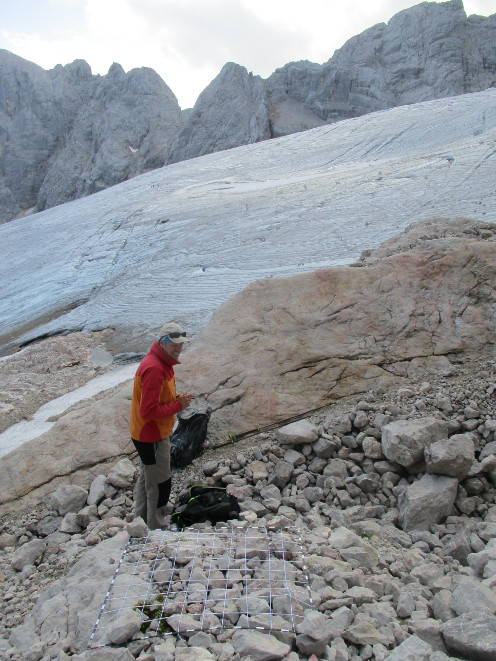
Ingolf Kühn is a Professor of Macroecology at Martin-Luther University Halle-Wittenberg and Head of the Department of Community Ecology at the Helmholtz Centre for Environmental Research (UFZ) in Halle, Germany. He is also a member of the German Centre for Integrative Biodiversity Research (iDiv) and holds a fellowship at the Swiss Federal Institute for Forest, Snow and Landscape Research (WSL). His research is centered on plant invasions, functional traits, and biodiversity responses to global change, with a strong methodological focus on spatial and phylogenetic modeling. His research interests span macroecology , plant invasion dynamics , urban and alpine flora , and data-driven ecological modeling . He has led major projects such as Biodiversity Meets Data (BMD) , eLTER PLUS , and AlienScenarios , and contributed to EU frameworks like EuropaBON and DAISIE . He is deeply involved in developing and managing large databases, including BiolFlor and the TRY Plant Trait Database . His recent publications focus on functional traits of invasive plants, biodiversity digital twins, and climate-driven shifts in species distributions. They reflect a strong trend toward integrating big data, machine learning, and macroecological theory to predict ecological change. Scientific Awards: Highly Cited Researcher (2014–2022) Fellow of the Swiss Federal Institute for Forest, Snow and Landscape Research (WSL) He serves as Editor-in-Chief of NeoBiota and Associate Editor of Journal of Vegetation Science . His advising spans PhD students and postdocs in the GLIMPSE cohort and iDiv projects. He leads multiple long-term monitoring initiatives, including alpine glacier forefield studies in the Dachstein and Berchtesgaden regions. He is affiliated with key research teams and platforms such as: Macroecology & Vegetation Science Working Group iDiv Science Strategy Board Task Forces: sTWIST, sUMMITDiv, sCoMuCra, sREGPOOL eLTER Research Infrastructure Biodiversity Digital Twin initiative
Jatinder Singh is a Professor at the RC Trust and Principal Research Associate (equivalent to Research Professor) at the Department of Computer Science & Technology, University of Cambridge. He is primarily affiliated with the University of Duisburg-Essen, Germany, where he leads the Compliant and Accountable Systems research group within the Law department. His work operates at the critical intersection of computer science, legal frameworks, and societal impact, focusing on practical implementations that align technology with regulatory requirements while addressing user and community concerns. Research interests center on accountability mechanisms for AI systems, responsible development practices, data governance, and privacy/security in emerging technologies. He examines governance, agency, trustworthiness, and transparency gaps in algorithmic systems through interdisciplinary socio-technical lenses. Current work addresses bias in LLMs, stakeholder participation frameworks, and human rights implications in domains like healthcare, maritime enforcement, and consumer IoT, emphasizing contextual awareness and real-world applicability. His 15 most recent publications (2025-2024) reveal dominant trends in AI transparency, fairness proxy development, and legal-compliance engineering. Key focus areas include stakeholder involvement in AI governance, bias mitigation in language models, data justice applications for vulnerable populations, and operationalizing human-centered AI in clinical settings. The work consistently bridges technical implementation with regulatory frameworks like the EU Cyber Resilience Act and GDPR. Scientific Awards: No awards or fellowships were mentioned in the provided text. Advising and Grants: The text does not specify PhD/Master's students or grant details. As leader of an active research group publishing high-impact work on EU regulations and human rights, he likely directs funded projects and mentors early-career researchers, though concrete evidence is absent in the source material. His position suggests involvement in interdisciplinary grant consortia addressing socio-technical challenges. Labs and Teams: Singh leads the Compliant and Accountable Systems research group at University of Duisburg-Essen, which collaborates across university-wide clusters including Artificial Intelligence and Society, Human-AI Interaction, Trustworthy Human Language Technologies, and Verification of Machine Learning. The group develops frameworks for legal compliance in AI, focusing on demonstrable accountability through tools for transparency, bias auditing, and stakeholder engagement in real-world deployments.
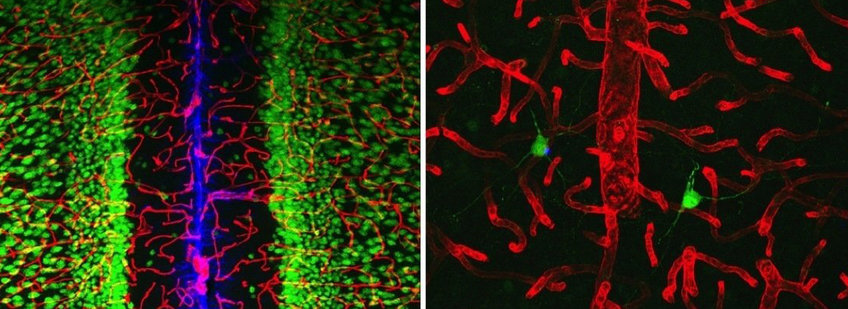
Amparo Acker-Palmer is a Professor at Goethe University Frankfurt's Institute of Cell Biology and Neuroscience, Department of Molecular and Cellular Neurobiology, and holds a Max Planck Fellow position at the MPI for Brain Research since 2014. Her research focuses on the molecular crosstalk between vascular and nervous systems at the neurovascular interface. Her primary research interests include: Neurovascular communication during CNS development Molecular pathways in vessel-nerve crosstalk Vascular roles in synaptic plasticity Ephrin/VEGF receptor signaling mechanisms Neurovascular interface in disease models Analysis of her 51 publications reveals consistent focus on vascular guidance in neural development, receptor crosstalk (particularly EphrinB2/VEGFR2), and neurovascular unit dynamics. Her work spans molecular neuroscience, vascular biology, and developmental neurobiology, with significant contributions to understanding how blood vessels instruct neuronal behavior. Her laboratory utilizes mouse and zebrafish models to investigate these processes, with recent work emphasizing therapeutic implications for neural repair and cancer metastasis.
Christin Schulze serves as Senior Research Scientist at the Max Planck Institute for Human Development and Adjunct Associate Professor at The Arctic University of Norway since 2019. Her work bridges cognitive psychology and decision science, focusing on how humans develop and execute choices under uncertainty across individual and social contexts. Education Ph.D. Psychology, University of New South Wales (2015) M.Sc. Psychology (Dipl. Psych.), Friedrich-Schiller University Jena (2011) Research Focus : Schulze leads the “Development of Decision Making” research area within the Adaptive Rationality group. Her investigations span experience-based decisions under uncertainty , childhood development of decision strategies , cognitive modeling of judgment , and social/group decision dynamics . She employs experimental paradigms and computational models to dissect how environmental structure, cognitive constraints, and social interactions shape choices from infancy through adulthood. Publication Trends : Her 2015-2021 corpus reveals consistent exploration of probability matching phenomena, social sampling mechanisms, and description-experience gaps. Key contributions demonstrate how group contexts eliminate individual decision biases (Schulze & Newell, 2016) and how bounded rationality governs social information acquisition (Schulze et al., 2021), bridging cognitive, developmental, and social psychology. Scientific Awards Advising & Grants : While specific students and funding sources aren’t detailed in available materials, her leadership of a Max Planck research area implies significant mentorship responsibilities and grant management for decision-science projects. Research Infrastructure : Schulze heads the “Development of Decision Making” unit within the Adaptive Rationality department at Max Planck, directing a team investigating cognitive architectures of choice through behavioral experiments and mathematical modeling.
Dan Casas is a Senior Applied Scientist at Amazon in Seattle and an Associate Professor (Profesor Titular) on leave from King Juan Carlos University in Spain. His research spans the intersection of Computer Graphics, Computer Vision, and Machine Learning with a focus on 3D reconstruction, modeling, and animation of virtual humans and clothing. He has authored over 40 high-impact publications in top venues including SIGGRAPH, CVPR, and NeurIPS, and holds 3 international patents. Dr. Casas received his M.Sc. degree (2009) from Universitat Autònoma de Barcelona (Spain), including a research visit at Carnegie Mellon University. He earned his Ph.D. in Computer Graphics (2014) from the University of Surrey (UK), supervised by Prof. Adrian Hilton. He completed postdoctoral research at the University of Southern California's Institute for Creative Technology (2014-2015) and the Max Planck Institute in Saarbrücken (2015-2016). His research interests center on creating realistic virtual humans and digital clothing through advanced techniques in computer vision and machine learning. Casas has pioneered methods for 3D reconstruction of humans and garments from video input, physics-based simulation of soft-tissue deformations, and data-driven approaches to character animation. His work bridges the gap between theoretical computer graphics and practical applications in virtual reality, digital fashion, and immersive communication. Analysis of his recent publications reveals a consistent focus on human digitization, with increasing emphasis on machine learning approaches. His work has evolved from traditional computer graphics techniques toward neural representations and diffusion models, particularly in the areas of 3D garment simulation and human avatar creation. The trend shows growing integration of physics-based modeling with data-driven approaches to achieve both realism and computational efficiency. Marie Skłodowska-Curie Individual Fellowship (2015) FBBVA Leonardo Fellowship (2021) Medal from the Royal Academy of Engineering of Spain for Young Researcher Award (2023) i3 certification (outstanding researcher) from Spanish Ministry of Universities (2022) Winner of 2021 IEEE Retail Digital Transformation Grand Challenge Multiple Outstanding Reviewer Awards at top conferences (CVPR, BMVC, 3DV) Dan Casas has successfully advised multiple PhD students including Suzanne Sorli, Cristian Romero, Raquel Vidaurre, and Igor Santesteban (now at Meta Reality Labs), with several ongoing students including Melania Prieto-Martin, Gonzalo Gómez-Nogales, and Andrés Casado-Elvira. He has secured significant research funding as Principal Investigator, totaling over €1.2 million from Spanish Ministry of Science projects, EU H2020 programs, and industry fellowships including the FBBVA Leonardo Fellowship. His leadership extends to conference organization as Area Chair for ICCV 2023 and General Chair for ACM i3D 2020. Dr. Casas leads research in digital human modeling with applications in virtual reality, fashion technology, and immersive communication. His team develops advanced techniques for creating personalized 3D avatars from minimal input (like smartphone videos), addressing challenges in geometry, appearance, and physical simulation of virtual humans and their clothing.
Morris Siu-Yung Jong is a Professor at The Chinese University of Hong Kong's Faculty of Education, Department of Educational Administration and Policy. With over 100 publications from 2006 to 2025, he has established himself as a leading researcher in educational technology, particularly focusing on innovative applications of virtual reality, artificial intelligence, and game-based learning in formal education settings. His work bridges theoretical frameworks with practical classroom implementations, making significant contributions to how technology enhances teaching and learning experiences. Professor Jong's research interests span multiple cutting-edge domains in educational technology. He has pioneered work in spherical video-based virtual reality (SVVR) applications for education, developing frameworks for immersive learning experiences that transform traditional classroom instruction. His research on AI in education, particularly examining ChatGPT's impact on student engagement and language learning, positions him at the forefront of understanding how emerging technologies reshape educational practices. Additionally, his extensive work on game-based learning, flipped classroom methodologies, and STEM education integration demonstrates a comprehensive approach to technology-enhanced learning across multiple educational contexts and age groups. Analysis of Professor Jong's recent publications reveals a clear progression from foundational work in game-based learning to more sophisticated applications of immersive technologies. His research increasingly focuses on AI integration in educational settings, with a significant portion of his 2023-2025 publications examining ChatGPT's educational applications. The methodological approaches in his work have evolved from basic implementation studies to more sophisticated designs incorporating hierarchical linear modeling, longitudinal analyses, and systematic reviews, demonstrating growing methodological rigor and impact across the educational technology field. Professor Jong has made substantial contributions to educational research through his extensive publication record in top-tier journals including Computers & Education, British Journal of Educational Technology, and Educational Technology & Society. His work has significantly influenced how educators implement virtual reality, AI, and game-based approaches in classrooms worldwide. His research on teacher concerns, implementation challenges, and pedagogical frameworks provides crucial insights for successful technology integration in formal educational settings. Through his supervision of numerous research projects and collaborations with scholars worldwide, Professor Jong has fostered a robust research ecosystem focused on advancing educational technology. His work on design-based research approaches has provided valuable methodological frameworks for studying technology implementation in authentic educational contexts. His recent focus on AI in education positions him as a key contributor to understanding how emerging technologies can be effectively integrated into teaching and learning processes. Professor Jong's research laboratory focuses on immersive learning environments, with particular emphasis on spherical video-based virtual reality applications. His team has developed several innovative frameworks for implementing VR in educational settings, addressing both technical and pedagogical challenges. Current projects appear to focus on AI integration with immersive technologies, exploring how generative AI can enhance virtual learning experiences and support student engagement across various subject areas.
Prof. Azzurra Ruggeri is a Professor in the Professorship for Cognitive and Developmental Psychology at Technical University of Munich (TUM). Her research focuses on understanding how children and adults strategically gather information, make decisions, and learn through embodied and active processes. She leads the iSearch Lab (https://isearchlab.org) and explores topics such as active learning, embodied cognition, and social-cognitive development. Her academic background includes a Dr. rer. nat. (PhD) in Psychology. She is based in Munich, coordinating research on developmental trajectories of learning, exploration strategies, and the interplay between motor skills and cognitive planning. Key areas of investigation include children's decision-making in uncertain environments, the impact of active learning on memory, and the role of embodiment in cognitive development. Recent work emphasizes adaptive information search behaviors, the effectiveness of question-asking strategies, and the application of embodied cognition principles to training interventions. Her studies often employ experimental paradigms involving climbing and spatial navigation to explore motor-cognitive interactions.
Prof. Julija Zavadlav is an Assistant Professor of Multiscale Modeling of Liquid Materials at the Technische Universität München (TUM), affiliated with the TUM School of Engineering and Design. Her research integrates physical modeling with machine learning and Bayesian techniques to develop multi-scale simulation frameworks for diverse applications in bioinformatics and engineering. Education: She earned her PhD in Physics from the University of Ljubljana (2015) and conducted postdoctoral research at ETH Zurich (2016–2019), where she received an ETH Postdoctoral Fellowship. Since 2019, she has held her current position at TUM. Research Interests: Her work focuses on advancing machine learning potentials, Bayesian uncertainty quantification, and multi-scale modeling for complex systems like ionic liquids, metal-organic frameworks, and biomolecules. Her ERC Starting Grant (2022) supports the SupraModel project, emphasizing scalable and interpretable models. Awards: Golden Teaching Award 2022 (Best Lecture), ERC Starting Grant 2022, and ETH Postdoctoral Fellowship. Her recent publications emphasize neural network potentials, transfer learning, and computational tools like JaxSGMC for Bayesian analysis. Grants and Labs: While specific lab names are not mentioned, her ERC grant underscores active funding. No formal student advisee list is provided, but her collaborative work suggests involvement in training next-generation computational scientists.
Santiago Berrezueta is a Lecturer at the School of Computation, Information and Technology within Technical University of Munich (TUM). He actively contributes to research in Virtual Reality , Artificial Intelligence , and Robotic Assistance , with a focus on applications in Education and Healthcare . 2025 : 10 publications in VR, robotics, and AI ethics. 2024 : 4 co-authored studies on ChatGPT in ADHD therapy and collaborative learning. His research intersects Interactive Learning and Computer Vision , particularly in ADHD treatment , Language disorder detection , and VR-based education . He supervises Bachelor’s/Master’s theses on topics like gaze-based interaction, collaborative VR workflows, and AI-driven therapeutic tools. 2025: Excellent Paper Award at International Symposium on Educational Technology (ISET 2025) 2024: Best Presentation Award at International Conference in Intelligent Environments (IE 2024) He leads courses on Software Engineering and Programming Fundamentals at TUM’s Heilbronn campus. His work also explores IoT applications and ethical AI in vulnerable populations.
Laura Andrea Cecchi is an active researcher specializing in computer science education, logic programming, and ontology engineering. Her work focuses on developing innovative pedagogical approaches for teaching computational thinking at early educational stages, with significant contributions to gender-inclusive STEM education. Research Interests: Her primary research explores: Logic programming curriculum development for primary education Visual tools for ontology engineering and knowledge representation Eye-tracking and HCI applications in programming pedagogy Gender-inclusive strategies for computer science education Automated reasoning in ontology-based systems Publication Trends: Her recent work (2020-2024) shows a strong focus on educational technology and democratizing programming education, while earlier publications (2015-2019) centered on formal methods and ontology engineering. She consistently publishes at premier computer science conferences including ICLP, CLEI, and IJCAI. Collaborations: Frequent collaborations with Jorge Pablo Rodríguez and Verónica Dahl appear across her publication record, particularly in education-focused research.
Prof. Dr. Peter Sollich is a Professor of Theoretical Physics at Georg-August-Universität Göttingen, affiliated with the Institute for Theoretical Physics. His research spans non-equilibrium statistical physics with applications to soft matter, active systems, and complex networks. He maintains a small part-time appointment at King's College London. His primary research interests focus on non-equilibrium statistical physics , particularly soft and active matter rheology, jamming transitions, glassy dynamics, dynamical phase transitions, and inference from dynamical data. His work bridges theoretical physics with applications in materials science and network theory, emphasizing both fundamental mechanisms and quantitative modeling approaches. Analysis of his recent publications reveals strong thematic consistency in studying glassy dynamics and active matter systems , with increasing integration of machine learning techniques for network analysis. Key methodological threads include coarse-grained modeling, spectral analysis of complex systems, and non-equilibrium thermodynamics frameworks. His 2023-2025 work shows growing emphasis on nonreciprocal interactions in active mixtures and physics-inspired machine learning applications. Prof. Sollich actively supervises Bachelor's, Master's, and PhD students, welcoming thesis inquiries in theoretical physics. His group develops analytical and computational approaches to complex dynamical systems, with recent grants likely supporting work on network dynamics and active matter modeling (specific grants not detailed in source text). His research group operates within the Institute for Theoretical Physics at Göttingen, focusing on computational and analytical modeling of disordered systems. Current projects involve elastoplastic modeling of amorphous solids, spectral analysis of heterogeneous networks, and theoretical frameworks for active matter phase separation.
Ilhan Aslan is a researcher affiliated with the University of Augsburg and DFKI GmbH , focusing on Human-Computer Interaction , Machine Learning , and Affective Computing . His work explores emotional speech interfaces , tangible interaction , and playful multimodal systems . Research Themes : Speech emotion recognition, proxemic-aware interaction, AI ethics, and user experience design. Recent Contributions : 2025 studies on proactive AI agents , voice emotion conversion , and solo role-playing AI ; 2024 work on audio enhancement and emotional trajectory modeling . His publications with Elisabeth André , Timothy Merritt , and Niels van Berkel demonstrate cross-institutional collaboration. Current projects emphasize sustainable creativity support , haptic feedback systems , and bias detection in speech AI .