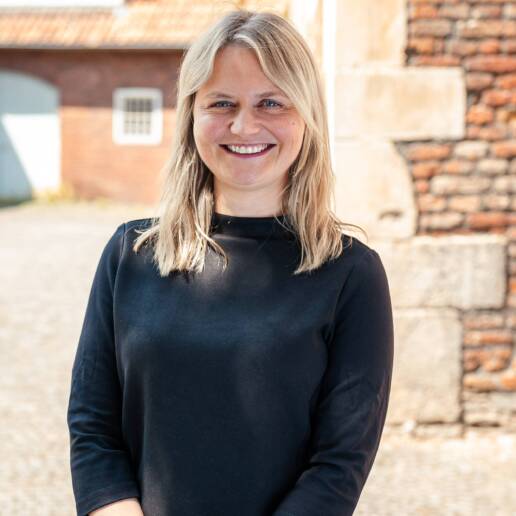
Dr. Duncan Robertson is a Senior Lecturer in Management Sciences at Loughborough University and Coordinator for the MSc Business Analytics program. His research focuses on simulation, agent-based modeling, strategy dynamics, and pandemic policy analysis. Prior to academia, he worked as a Chartered Accountant at KPMG and held visiting roles at institutions like The Wharton School and London Business School. He is a Fellow and Trustee of St Catherine’s College, Oxford. Educations: BSc (University of London), MA & DPhil (University of Oxford), ARCS CSci CPhys MInstP FHEA FCA Professional Background: Former Chartered Accountant at KPMG, Advisory roles in banking sector Robertson’s research emphasizes pandemic response strategies, policy modeling, and the integration of foresight approaches in healthcare. His work on pandemic control models has informed government decisions during the COVID-19 crisis. Key contributions include analyzing the interaction between scientific models and policy implementation, as well as advocating for improved data infrastructure for future health crises. Notable Achievements: Recipient of the Companion of Operational Research Award (2024) Published extensively on pandemic policy, including seminal works on SAGE’s role in scientific dialogue and foresight methodologies Advisor to UK government bodies during the pandemic, with frequent media engagement on epidemiological strategies Advising & Grants: While specific grants are not detailed, his pandemic modeling research aligns with major public health initiatives. No formal advisees listed, but actively contributes to collaborative research networks like the Management Science and Operations Group at Loughborough. Labs/Teams: Leads research within Loughborough’s Management Science and Operations Group, focusing on agent-based simulation and policy impact analysis.
Johan Ekroos is a researcher at Lund University's Centre for Environmental and Climate Science (CEC), where he leads significant interdisciplinary work at the intersection of landscape ecology, biodiversity conservation, and sustainable land management. His research portfolio spans over 87 publications and 24 research projects, with 4 currently active initiatives addressing critical environmental challenges. Dr. Ekroos's work centers on three interconnected domains: landscape ecology, environmental science, and interdisciplinary environmental research. His landscape ecology investigations examine why certain species persist in transformed landscapes while others disappear, using trait-based approaches across taxa with contrasting ecological requirements. His environmental science research analyzes fundamental trade-offs between different ecosystem services and how to optimize land-use in production landscapes to simultaneously address food production, biodiversity protection, and climate change adaptation. His interdisciplinary work focuses on bridging scientific evidence with policy decisions, particularly regarding the efficacy of agri-environment schemes and conservation interventions. His recent publication record reveals consistent focus on agricultural landscapes as critical arenas for biodiversity conservation. Key themes include the relationship between green infrastructure and biodiversity, landscape composition effects on ecological processes, fire ecology in boreal systems, organic farming dynamics, and sustainable bioenergy production. These works collectively address the complex challenge of balancing human needs with environmental protection in rapidly changing landscapes. Dr. Ekroos actively contributes to major collaborative initiatives including LU Land (a network project), Land4biomass, BECC AG: Social and ecological context of climate change adaptation for biodiversity, and Land sparing 2.0. His collaborations span multiple disciplines, working closely with economists, sustainability scientists, and governance experts to develop evidence-based solutions for environmental challenges. He regularly participates in knowledge exchange activities, having organized and presented at numerous workshops, seminars, and public lectures on ecological farming and biodiversity conservation. His involvement in projects like the LONA Pollineringspilot on Lindängen demonstrates his commitment to practical applications of research findings. With 8 supervised works documented, he plays an active role in mentoring the next generation of environmental researchers.
Rui Silva is an Associate Professor with Tenure at the Nova School of Business and Economics (Universidade Nova de Lisboa), holding the Haddad Chair in Entrepreneurship. He previously served as an Assistant Professor of Finance at the London Business School. His academic affiliations include a Research Affiliate role at the Centre for Economic Policy Research (CEPR). **Education:** PhD in Economics, University of Chicago (2012) MA in Economics, University of Chicago (2008) Bachelor's in Economics, Nova University of Lisbon (2004) **Research Focus:** Rui’s work bridges corporate finance, labor economics, and organizational economics. Key themes include corporate governance, innovation dynamics, and the interplay between financial distress and labor markets. His recent studies explore mergers’ mental health impacts on employees, bankruptcy’s legal-economic implications, and institutional drivers of innovation. **Awards & Grants:** No explicit awards are mentioned, though his Haddad Chair indicates recognition in entrepreneurship. His research has been supported by institutions like CEPR and through collaborative projects. **Advising & Teams:** While no advisees are listed, his work involves interdisciplinary collaborations with scholars like Ramin Baghai (University of Chicago) and Viktor Thell (Lund University). **Labs & Platforms:** He contributes to the Finance Knowledge Center at Nova School, focusing on entrepreneurial finance and policy-relevant research. His work integrates methodologies from decision science and simulation modeling to address industrial and organizational challenges.
Prof. Dr. Julia Backmann is a Full Professor and Chair of Transformation of the World of Work at the University of Münster, where she also serves as Co-Director of the Research Center for Business Transformation in Times of Radical Change. Previously, she held positions as Assistant Professor at University College Dublin (2019–2022) and Ludwig Maximilian University of Munich (2014–2018). Her academic journey includes a habilitation (2021) on 'Leadership and Collaboration in Challenging Contexts' and a PhD summa cum laude (2014) from WHU – Otto Beisheim School of Management. Prior to academia, she worked as a consultant at Accenture. Her research focuses on collaboration, leadership resilience, organizational transformation, and the impact of emerging technologies like AI and virtual reality on work structures. Current projects include exploring the four-day workweek in Germany and adaptive strategies for companies in disruptive environments. Her work has been published in top journals such as the Academy of Management Journal and Organization Science . Teaching-wise, she designs MBA programs in Management & Innovation, Sports Management, and Nonprofit Governance, emphasizing interactive learning and critical thinking. Awards include Best Paper Awards, the 2021 Teaching Award, and recognition on UCD’s Dean’s List. Her research trends highlight themes like team boundary management, stress resilience in leadership, and the dynamics of technology adoption in healthcare. She investigates how organizational changes interact to create systemic challenges, and how cultural gaps affect multinational team performance. Awards include multiple Best Paper Awards, the 2021 Teaching Award, and inclusion in the Dean’s List at University College Dublin. Her work bridges academic theory with practical business transformation, addressing modern workplace challenges through interdisciplinary methods.
Susan Freeman is a Professor of International Business at the Business School of the University of South Australia (UniSA). She is actively involved in research and supervision within the UniSA Business academic unit, with a strong focus on international entrepreneurship, SME internationalization, and global strategy. Her work frequently appears in top-tier journals such as International Business Review , Global Strategy Journal , and Scandinavian Journal of Management . Her research interests span a broad range of topics including international business strategies, subsidiary autonomy in multinational enterprises, value creation in global value chains, high-performance work systems, and the dynamics of social networks in firm internationalization. She has contributed significantly to the understanding of how SMEs from diverse contexts—such as Brazil, India, and Australia—navigate international markets and develop competitive strategies. The recent publications of Professor Freeman reflect a strong trend toward conceptual and systematic reviews that integrate theoretical frameworks like the attention-based view, resource-based view, and dynamic capabilities. Her work often explores paradoxes and tensions in international management, such as coopetition at the supranational level and the balance between autonomy and control in multinational subsidiaries. She also contributes to policy-relevant research, particularly in how governments can better support foreign subsidiaries through after-care services and tailored investment promotion. Internationalization through social networks: a systematic review and future research agenda (2024) Paradoxical tensions at multiple levels: a model of unbalanced supranational coopetition (2024) High-performance work systems in public service units (2024) Are all cats grey in the dark? A new taxonomy of internationalizing SMEs (2024) Developing successful assumed autonomy-based initiatives (2023) Professor Freeman has received recognition through citations in Web of Science and Scopus, with several of her articles cited over 10 times. She has collaborated with researchers from institutions in France, Iceland, China, and the UK, indicating a strong international research network. While specific grants are mentioned in some publications (e.g., Watanabe Trust Fund, Letterstedtska Fund, HI NIAS), detailed grant histories are not fully elaborated in the provided texts. She serves as a Research Degree Supervisor at UniSA and has contributed to edited volumes and book chapters on SME internationalization and growth frontiers in international business. Her work bridges academic theory with practical implications for managers and policymakers, particularly in the areas of export strategy, organizational design in MNEs, and support mechanisms for growing firms.
Simone Ferlin is an Adjunct Senior Lecturer at Karlstad University working with 5G and Internet evolution. She completed her PhD in computer science in 2017 at the Simula Research Lab and Universitetet i Oslo under the supervision of Dr. Ozgu Alay and Prof. Michael Welzl. Her PhD dissertation focused on increasing robustness in multipath transport with MPTCP. Dr. Ferlin's educational background includes a PhD in Computer Science from the Simula Research Lab and Universitetet i Oslo (2017). Her doctoral research centered on enhancing robustness in multipath transport protocols, specifically focusing on MPTCP (Multipath TCP). She also completed undergraduate work that contributed to a book project with Prof. Friedrich Oehme on electronics and circuit technology. Dr. Ferlin's research spans multiple domains at the intersection of networking, systems, and performance engineering. Her primary interests include network and system measurements, performance analysis, security, and congestion control. She investigates how networks like the Internet evolve, examining technology development, adoption patterns, and their impacts on various entities. Additionally, she explores ways to harmonize security and privacy while making them more usable and assessable. Her work particularly focuses on transport layer and multipath transport protocols, examining their performance and security aspects. She also investigates application and transport layer performance, automation, and monitoring. Her research extends to network programming in both Linux kernel and user space, mobile broadband networks from 2G to 5G, and their intersection with the Internet. She is deeply engaged in observability, distributed and system performance monitoring, and automation. Analysis of Dr. Ferlin's recent publications reveals a strong focus on next-generation networking technologies. Her work spans multiple domains including 5G/6G networks, transport protocols (particularly QUIC and MPTCP), network virtualization, container orchestration, and the application of machine learning to networking problems. She has increasingly incorporated large language models into network configuration and automation research. Her publications demonstrate a consistent emphasis on performance measurement, optimization, and security across diverse networking environments from the edge to the cloud. Dr. Ferlin has received notable recognition for her research contributions: Best paper award at IEEE ICIN'21 for 'Learning-based Incast Performance Inference in Software-Defined Data Centers' Applied Networking Research Prize (ANRP)'25 winner for 'NetConfEval: Can LLMs Facilitate Network Configuration?' Dr. Ferlin is actively involved in mentoring the next generation of networking researchers. She has co-supervised numerous Master's and PhD students across multiple institutions including Karlstad University, KTH, TU Berlin, University of Oslo, and universities in Brazil. Her students have worked on diverse topics including NAT64 performance comparison, system tracing visualization, network observability, ML applications to multipath transport, FEC integration with QUIC, high-performance networking for 5G, congestion control, shared bottleneck detection, multipath IoT applications, and container runtime performance. She is also involved in several significant research projects including Vinnova's SEMLA (Securing Enterprises via Machine-Learning-based Automation), Horizon Europe's CODECO (Cognitive Decentralised Edge Cloud Orchestration), and the Knowledge Foundation of Sweden's DRIVE (Data-driven Latency-Sensitive Mobile Services for a Digitized Society). Dr. Ferlin serves as Workshop Chair for ACM SIGCOMM '25, is a member of the ACM/IRTF Applied Networking Research Workshop (ANRW) steering committee, and co-chairs the Internet Congestion Control Research Group (ICCRG) at the IRTF. She previously served as Associate Technical Editor for IEEE Communications Magazine and has been active on numerous program committees for major networking conferences including SIGCOMM, CoNEXT, IMC, and PAM.
Dr. Ciarán Ó Catháin is a Lecturer in the Department of Sport and Health Science within the Faculty of Science and Health. He is actively engaged in research at the intersection of sports science, exercise physiology, and nutritional health, with a strong emphasis on athlete performance and well-being. His research interests include: Sports Science and Exercise Physiology Nutritional Science in Athletics Female Athlete Health, particularly menstrual cycle and hormonal contraceptive tracking Dietary intake and culinary nutrition among athletes Resisted sprint training and performance monitoring Systematic reviews and meta-analyses in sports interventions Application of machine learning and wearable technology in sports Dr. Ó Catháin’s recent publications demonstrate a trend toward evidence synthesis (systematic reviews and meta-analyses), interdisciplinary methodologies, and a growing focus on gender-specific considerations in sports performance. His work integrates engineering concepts such as gait analysis and phase velocity with health sciences, reflecting a cross-disciplinary approach. He also explores emerging technologies like augmented reality and synthetic data generation for performance prediction. While no formal scientific awards are listed, his research has contributed to high-impact journals including Sports Medicine , Frontiers in Sports and Active Living , and Nutrition Bulletin . His h-index of 10 and 254 citations reflect a solid and growing academic influence. There is no available information regarding student supervision, grant funding, laboratory affiliations, or collaborative teams. However, his frequent co-authorship suggests active research collaboration, particularly with researchers in sports physiology and nutrition.
Assoc Prof Henry Nguyen is an Associate Professor at Griffith University's School of Information and Communication Technology, with expertise in data integration, data quality, recommender systems, and big data visualization. He directs the Responsible Big Data Lab and has secured over $3.5M in funding since 2015 from ARC, DFAT, and industry partners. PhD & Master's from EPFL, Switzerland ARC DECRA Award (2020) His research focuses on privacy-preserving AI for social data , IoT , and satellite analytics , with over 200 publications in top venues like SIGMOD, KDD, and IEEE TKDE. Recent work spans federated learning , graph neural networks , and secure AI systems . Article trends highlight 2024-2025 publications on: Federated recommendation security On-device AI optimization Privacy-preserving explainable AI Graph condensation techniques LLM-powered risk analysis Cloud-edge collaboration Scientific contributions include ARC DECRA Award 2020 Multiple senior PC roles in A* conferences Citations in International AI Safety Report 2025 Henry Nguyen supervises 12 active PhD/MSc students and has directed 8 completed doctoral theses . His funded projects include collaborations with Ubitech , KARI , and CSIRO , focusing on Australia-Korea partnerships and responsible AI development.
Professor Joseph Baker is a faculty member at the School of Kinesiology and Health Science, York University, specializing in optimal human development and athlete expertise. His research examines psychosocial and environmental factors in athletic skill acquisition, talent identification, and aging in sports. Institution: York University School: School of Kinesiology and Health Science Academic Rank: Professor Research Interests His work spans high-performance athlete development , Masters athlete aging studies , relative age effects , and talent wastage . He investigates how environmental constraints and practice structures influence expertise, with applications in para-sport and life-long physical activity . Publication Trends Recent studies focus on early specialization in hockey, talent selection policies , and psychological drivers of athlete longevity. Collaborations include analyses of physical load in handball, self-regulated learning in training, and barriers to sports participation for older adults. Students & Funding He mentors 15+ graduate students and has secured funding from Social Sciences and Humanities Research Council of Canada , Sport Canada , and Canadian Institutes of Health Research . His team explores topics like paralympic pathways , coach decision-making , and genetic/environmental interactions in performance.
Campbell Drake is a Senior Lecturer in Interior Architecture at the University of Technology Sydney's School of Architecture within the Faculty of Design, Architecture and Building. Registered as an architect in New South Wales and Victoria with over 15 years of professional experience, he specializes in sustainable eco-tourism development in environmentally sensitive locations. His work bridges academic research and practical application through partnerships with government and non-government agencies focused on Indigenous infrastructure and housing. Education: PhD from RMIT University (2012-2018) Masters of Research Architecture from Goldsmiths College, University of London (2009-2010) Bachelor of Architecture from RMIT University (1999-2005) Dr. Drake's research centers on the interaction between urban infrastructure and social formation within remote communities, particularly investigating socio-architectural relations in Indigenous contexts. His work explores how infrastructure can enhance wellbeing, cultural practices, and environmental sustainability. He specializes in participatory design methods that empower communities through culturally responsive approaches that integrate Indigenous knowledge systems. His research spans sustainable tourism development in Indonesia, Indigenous housing policy in Australia, cultural burning practices, and the spatial politics of tourism infrastructure, demonstrating a commitment to decolonizing design practices and creating architecture that serves community needs. His recent publications reveal a clear trajectory toward evaluating specific programs (like the Roads to Home Program and Wreck Bay housing strategy) while simultaneously developing theoretical frameworks for culturally responsive architecture. There's a consistent focus on Indigenous infrastructure, housing, and participatory design methodologies, with increasing attention to the intersection of traditional knowledge systems with contemporary design practices in remote Australian communities. His work bridges practical implementation with critical theoretical analysis of power dynamics in architectural practice. Scientific Awards: 2018 UTS Teaching and Learning Awards: Indigenous Professional Capabilities High Commendation Interior Design/Interior Architecture Educators Association Teaching Award (2018 Third place finalist) 2018 AILA Research, Policy & Communication Landscape Architecture Award International Interior Design Association 2014 Global Excellence Awards Dr. Drake supervises Masters and PhD students with a focus on Indigenous architecture and sustainable design. His funded research includes culturally responsive design principles for Aboriginal housing, evaluations of the Wreck Bay Village housing program, Roads to Home evaluations for Gulargambone & Bowraville Reserves, and solar lighting projects for Namoi and Gingie Reserves. His grants come from diverse sources including the NSW Aboriginal Land Council, National Indigenous Australians Agency, and Department of Planning Industry and Environment, reflecting the practical impact of his work. As a founding member of UTS TIISHA (The Indigenous Infrastructure and Sustainable Housing Alliance), Dr. Drake leads collaborative research projects focused on 'health enabling infrastructure' to address structural factors of Indigenous disadvantage. TIISHA works with multiple Aboriginal Land Councils and government agencies to evaluate and implement housing and infrastructure programs that respect cultural values and community needs, demonstrating his commitment to creating tangible benefits for Indigenous communities through architectural practice.
Dr. Kerstin Raudonat is a researcher at the Institute of Computer Science, Faculty of Mathematics and Natural Sciences, Humboldt University of Berlin. She has been working at the 'Computer Science and Society' chair since September 2022, focusing on the intersection of technology, gender, and society. Her research spans multiple domains including human-computer interaction, media education, and digital game culture, with particular emphasis on creating more inclusive technological environments. Dr. Raudonat's research interests center on gender equity in technology development, examining how societal biases manifest in IT systems and how to break cycles of discrimination in software design. Her work explores the complex relationships between technology and social structures, with special attention to how digital environments can be designed to promote diversity and inclusion. She investigates these issues through multiple lenses including practice theory, cyberfeminism, and participatory design methodologies, seeking practical approaches to make technology development more socially responsible. Her recent publications reveal a consistent trajectory examining gender dynamics in technology, with increasing focus on AI systems and their societal impacts. The research shows evolution from analyzing gaming cultures and communication patterns to addressing systemic biases in contemporary AI technologies. Her work demonstrates strong interdisciplinary connections between computer science, sociology, gender studies, and media education, reflecting a comprehensive approach to understanding technology's role in society. Dr. Raudonat has been actively involved in multiple significant research projects funded by the German Federal Ministry of Education and Research, including: KIRA (2021-2024): Developing AI-based matching for vocational training with gender sensitivity considerations IT&me (2017-2020): Creating multimedia knowledge resources for women in IT fields Gender-UseIT (2013-2014): Establishing a network for interdisciplinary research on gender perspectives in human-computer interaction VIT3A : International virtual teaching and collaboration initiatives Her research has been conducted in collaboration with multiple institutions including Fraunhofer IAO, Hochschule Heilbronn, and Vietnamese-German University, demonstrating strong national and international research partnerships. Dr. Raudonat's work contributes significantly to understanding how technology can be developed in more socially responsible ways that promote equity and inclusion.
Dr. Sam S. Ramanujan is Professor of Computer Information Systems and Analytics at the University of Central Missouri , affiliated with the Harmon College of Business and Professional Studies . He teaches advanced object-oriented programming and software engineering courses, combining over two decades of academic expertise with substantial industry experience in complex system deployment. Doctor of Philosophy in Information Systems (University of Houston, 1995) MBA in CIS and Quantitative Analysis (University of Arkansas, 1989) PGDM in Information Systems (XLRI Institute of Management Studies, 1987) Bachelor of Arts (Hons) in Economics (University of Delhi, 1985) His research spans big data architecture , visual analytics , healthcare IT , and legal aspects of technology . He has published extensively on topics including software maintenance, e-commerce trust models, and cloud-based healthcare systems, with a focus on bridging technical and legal challenges in digital environments. Dr. Ramanujan's academic work shows a consistent focus on software engineering (1995–2017), healthcare IT (2004–2017), and legal-compliance frameworks (2000–2017). His publications demonstrate interdisciplinary expertise in merging technical systems with regulatory requirements . Best Paper Award , Journal of American Academy of Business, Cambridge (2006) He has contributed to pedagogical advancements in distributed computing curricula and collaborates with scholars like S. Kesh and S. Nerur. His industry experience informs real-world applications of his research in software maintenance and offshore operations.
Professor Anna Rakowska leads the Department of Intellectual Capital and Quality at Maria Curie-Skłodowska University's Faculty of Economics. With over 200 publications, her research spans human resource management, organizational diversity, and managerial competencies, while pioneering studies at the intersection of artificial intelligence in management and Human-Robot Interactions (HRI). She also investigates individual competencies within Circular Economy frameworks. Department Head of Intellectual Capital and Quality Deputy Editor in Human Management Systems Active in American Academy of Management and Polish Academy of Sciences (Lublin section) Focus on organizational justice, employee well-being, and diversity management Her scholarly work reveals trends in cross-cultural management studies, legal-comparative analyses of judicial systems, and evolving competencies for sustainable economies. Notably, she explores AI ethics in workplaces and migration-induced diversity challenges. Recipient of editorial board roles in international journals Research grant leadership in employee development and innovation Keynote speaker at conferences on organizational effectiveness Current projects examine robotic integration in business environments and diversity-driven innovation strategies, while maintaining active collaborations with industry leaders and policy experts.
Dr. Jully Tan serves as an Associate Professor (Education Focused) at Monash University Malaysia's School of Engineering, leveraging over fifteen years of expertise in chemical engineering education and curriculum development. She plays pivotal roles in program accreditation through Malaysia's Engineering Accreditation Council and actively contributes to UN Sustainable Development Goals via educational and environmental research. Her academic credentials include: PhD in Chemical Engineering, Universiti Malaya (research: life cycle assessment for microalgae production) Master of Environmental Engineering, Universiti Teknologi Malaysia B.Eng. in Chemical Engineering, Universiti Teknologi Malaysia Dr. Tan's research centers on engineering education innovation —developing VR tools for process safety and gamified learning—and sustainable manufacturing , specializing in life cycle assessment of carbon/water footprints across palm oil, plastic waste, and biogas systems. Her work bridges theoretical knowledge with practical workplace readiness for multidisciplinary engineering students. Analysis of her 15 most recent publications (2022-2024) reveals dual thematic trajectories: educational technology (VR, gamification, digital equity) and circular economy solutions (plastic recycling, biowaste valorization, cellulose nanocrystals). These integrate environmental economics with industrial ecology, emphasizing scalable sustainability metrics for developing economies. Her accolades demonstrate excellence in both domains: IChemE Malaysia Highly Commended Award (2024) for educational innovation Engage & Educate Digital Learning Design Competition winner (2024) Faculty of Engineering Australia-Malaysia Travel Grant (2023) School of Engineering Certificate of Commendation for Early Career Education (2021) Institution of Engineers Malaysia Presidential Award (2022) As Primary Chief Investigator, Dr. Tan secures competitive grants including the 2025 Monash-Warwick project on ethical preparedness in engineering education and the ongoing VR-based process safety initiative (2022-2024). She mentors PhD candidates in teaching tool development and sustainable manufacturing while serving on national accreditation panels. Her leadership extends to organizing the Asia PSE Symposium and Malaysian Chemical Engineers Symposium, fostering industry-academia collaboration through the Institution of Engineers Malaysia.
Sharon Alvarez is a Professor at the University of Pittsburgh's Katz Graduate School of Business, holding the Thomas W. Olofson Chair in Entrepreneurial Studies. She is an academic leader in entrepreneurship and strategic management, with a focus on the agency of entrepreneurs in creating opportunities under Knightian uncertainty. PhD in Business Administration (Entrepreneurship and Strategic Management), University of Colorado MBA in International Management, University of Denver BSBA, University of Colorado Her research redefines opportunity theory by emphasizing endogenous creation through managerial choice, challenging the bounded rationality paradigm in management. Key themes include the philosophical foundations of entrepreneurship, strategic alliances, and organizational behavior under uncertainty. Her publications span top journals such as Academy of Management Review , Strategic Management Journal , and Journal of Business Venturing , with notable awards including the Academy of Management Review Best Paper (2024) and Strategic Entrepreneurship Journal Best Paper (2019). Recent articles focus on opportunity typology, institutional co-creation, and the interaction of managerial and technological capabilities. 2024: Academy of Management Review Best Article Award 2019: Academy of Management Foundational Paper Award 2014: Strategic Management Society Best Paper Award 2010: Journal of Management Best Paper Award Alvarez has received significant grants, including Kauffman Society seed grants and Max Planck Scholarships. She served as Associate Editor for the Academy of Management Review and Strategic Entrepreneurship Journal , and was elected to the Academy of Management Board of Governors in 2020, later serving as its President in 2023. Her affiliations include the International Business Academic Area and the Organizations and Entrepreneurship Center at Katz. Her work has been cited over 1,500 times, with her 2007 paper on entrepreneurial rents being among the most cited in Journal of Management .