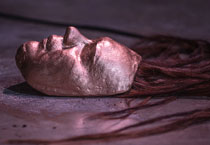
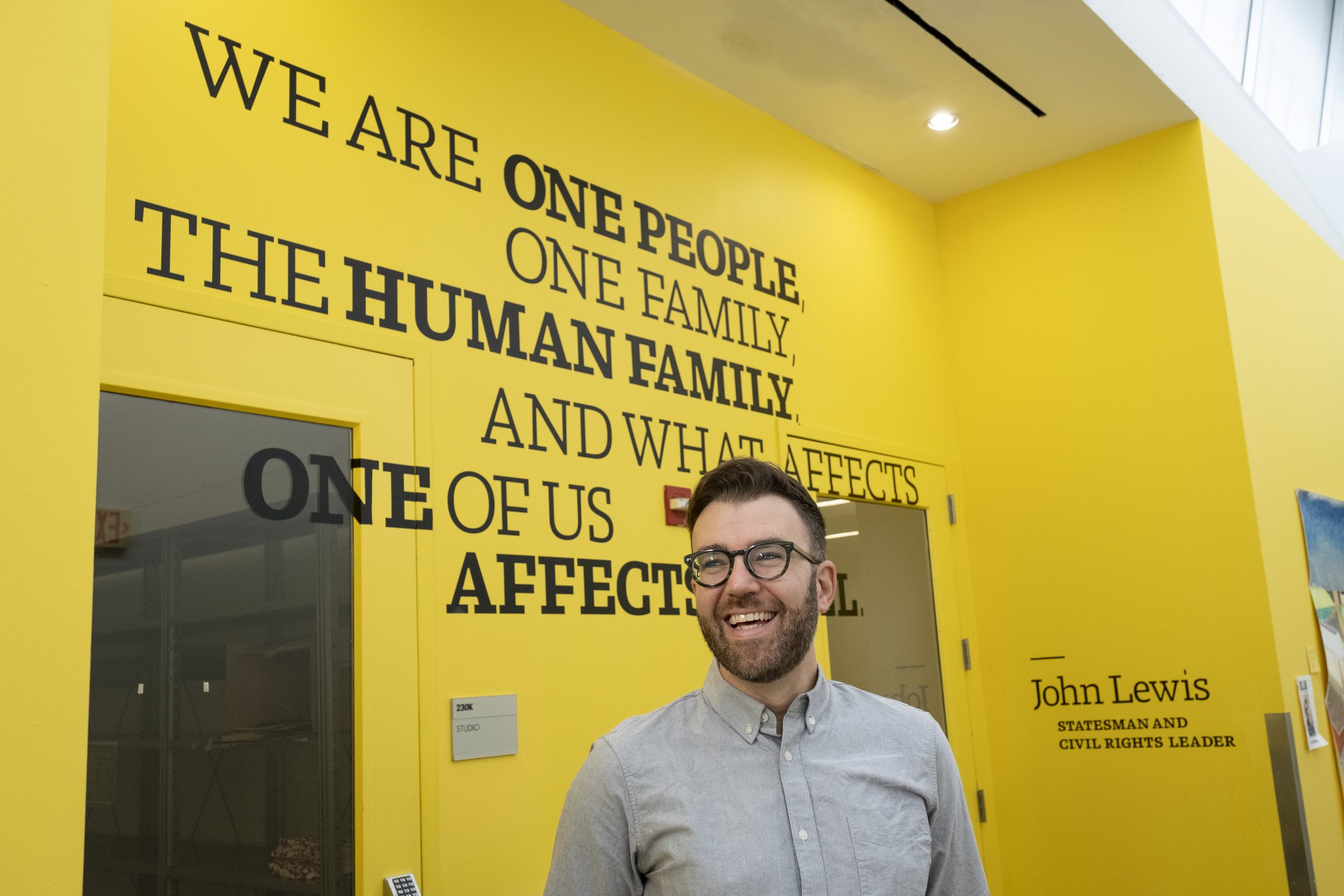
Jules Gimbrone is an Adjunct Assistant Professor in the Sonic Arts department at the School of Visual, Media and Performing Arts, Queens College . Their practice combines sound, sculpture, and conceptual frameworks to explore the intersections of sensory perception, gender, and ecological systems.
Morten Breinbjerg serves as Associate Professor at the Department of Digital Design and Information Studies within Aarhus University's School of Communication and Culture. His academic work bridges sound studies, digital design, and urban informatics with a focus on public space dynamics and sonic citizenship. His research centers on the ecological and political dimensions of sound in urban environments. He investigates how sonic practices shape citizenship through messy and fragile negotiations in public spaces, examining media architecture aesthetics, participatory sound art, and dynamic sound atmospheres. His methodological approach emphasizes ecological frameworks for understanding sound's role in civic engagement, combining fieldwork with theoretical analysis of sound's political potential. Analysis of his publication trends reveals consistent interdisciplinary work spanning sound studies, urban sociology, and digital design. Recent outputs focus on pandemic-era soundscapes and sonic citizenship frameworks, while earlier work established foundations in media architecture participation and ecological sound methods. His research demonstrates longitudinal commitment to understanding sound as a civic medium across evolving technological and social contexts. Breinbjerg has secured significant research funding through major projects including Sonic Citizenship (2021-present), Objects humans and the Rift (2014-2016), PIT: Participatory IT Center (2012-2017), Ekkomaten (2012-2014), Atmosphere (2009), DUL: Digital Urban Living (2008-2012), and Interface Aesthetics projects (2004-2007). These initiatives involved cross-institutional collaborations examining digital-physical urban interactions. He contributes to research collectives focused on sonic citizenship methodologies and media architecture evaluation, developing ecological approaches for sound art in public spaces and advancing theoretical frameworks for understanding sound's role in contemporary civic life.
Georgios Anogiatis serves as Associate Professor at KU Leuven's Faculty of Engineering Technology, Department of Civil Engineering, based at the Bruges Campus. He heads the Hydraulics and Geotechnics subdivision and holds key committee roles including membership in the Council of the Faculty of Engineering Technology, Civil Engineering Department Council, and Faculty Council for International Policy. His research centers on soil-structure interaction dynamics, specializing in pile foundation behavior under seismic and cyclic loading. He develops continuum analytical models for geotechnical systems including retaining walls and embedded foundations, with emphasis on wave propagation in layered soils and p-y/t-z curve development. Current work integrates physics-informed neural networks and probabilistic methods to address offshore wind turbine foundation challenges. Recent publications (2023-2025) reveal a concentrated focus on offshore renewable energy infrastructure, particularly soil-pile interaction mechanisms in inhomogeneous soils, cyclic foundation response, and computational efficiency enhancements. Key themes include decommissioning strategies for wind turbine foundations, sediment bed system development for ocean basin testing, and probabilistic performance assessment under seabed variability. He leads multiple major research initiatives including the €2.1M ATHENA project (2022-2026) on analytical programming efficiency and the 2024-2029 decommissioning strategies project for offshore wind foundations. His grant portfolio demonstrates strong industry-academia collaboration in offshore renewable energy validation and coastal engineering applications. Anogiatis directs research activities at KU Leuven's Bruges Campus Hydraulics and Geotechnics group, leveraging the Coastal & Ocean Basin facility for experimental validation of offshore foundation systems. His team specializes in centrifuge testing, wave basin experiments, and computational modeling for dredging, coastal protection, and offshore renewable energy infrastructure.
Thomas Parker is an Associate Professor (Teaching) at The Bartlett School of Architecture, University College London, specializing in architectural design, 3D scanning, metrology, and computer vision systems. His research bridges academic inquiry with practical applications in digital architectural practices. Education: BA (Hons) Architecture (Part 1), University for the Creative Arts (2010-2013); MArch Architecture (Part 2), University College London (2015-2017); PhD in progress at UCL (2021-2026). His research focuses on integrating computer vision and artificial intelligence into architectural design, emphasizing adaptive media studies and the aesthetics of noise . Current projects explore 3D scanning applications in urban environments and dialogic design practices. Recent publications highlight advancements in neural radiance fields for architectural visualization, sustainable stone reuse in construction, and innovative drawing methodologies using digital tools. Scientific Awards include RIBA Serjeant Award (Part II), LAHP Image Competition Prize, multiple UCL and RIBA recognitions, and AHRC funding for his PhD research. Teaching roles encompass leading the 3D Scanning for Urban Environments module, directing Year 2 of the Architecture MSci program, and lecturing at the Architectural Association’s Hooke Park campus. He co-founded ScanLAB Projects and contributes to international exhibitions and conferences, aligning with Sustainable Development Goals 11 (Sustainable Cities) and 9 (Industry Innovation).
Jeppe Just Christensen is an Associate Professor at Royal Danish Academy of Music (DKDM) since 2011, serving as a Study Lecturer since 2019. He teaches composition and leads artistic initiatives like the Pulsar Festival. His practice integrates DIY instrument design with contemporary composition, often involving personal performance with ensembles like Jeppe Just Instituttet. Royal Danish Academy of Music (DKDM): Study Lecturer (2019-present) Royal Music Conservatory (RMC): Part-time teacher His research focuses on amateurism , folk music reinterpretation , and street music , using self-built or repurposed instruments. Works like Geteilten Saiten (2022) demonstrate advanced motorized string instrument integration, while Neko (2009) explores translational semiotics through flexatone inversion techniques. Notable awards include the Wilhelm Hansen Award and grants from the Danish Arts Foundation . His pedagogical work spans formal institutions (DKDM, RMC) and community workshops with children aged 3-6, emphasizing instrument-building and sound exploration. Collaborations with SCENATET and Klang Festival highlight his interdisciplinary approach.
Dr. Gregory Ferris is a Senior Lecturer in the Faculty of Design and Society at the University of Technology Sydney (UTS). His academic work bridges media art practice and research, with a focus on interactive and immersive media environments. He is affiliated with the Faculty Visualisation Institute (VI) Research Network and The Trustworthy Digital Society at UTS. Dr. Ferris completed his PhD at the College of Fine Arts, Sydney, Australia in 2013 with a thesis entitled "Every time I leave the room: image, time and metadata in off-screen space." His academic journey reflects a unique blend of artistic practice and scholarly research in contemporary media. Dr. Ferris's research interests span multiple domains of contemporary media practice. As a "media 'construct-ant'", he works across interactive media, installation art, virtual reality, and traditional moving image production. His creative practice has evolved from experimental films that screened on the ABC in the mid-eighties to pioneering work in panoramic interactive narratives and 360-degree virtual reality. His research focuses on microbudget feature filmmaking, immersive and interactive narrative structures, and emerging media technologies including virtual reality. His work explores the intersection of media production, post-production technologies, and experimental media making, with particular attention to aesthetic considerations in contemporary digital environments. Dr. Ferris's creative outputs demonstrate a consistent trajectory of innovation in media art. His work shows increasing sophistication in immersive technologies, with a focus on VR, 360-degree media, and interactive installations. His scholarly contributions connect media practice with educational applications, particularly in how immersive media can be integrated into teaching contexts. The themes across his work include explorations of narrative structures beyond traditional frames, spatial relationships in media, and the evolving relationship between creators, technologies, and audiences in digital environments. Dr. Ferris has received research funding from significant sources including the City of Sydney, UTS Chancellor's Research Fellowship, and Create NSW. His current projects include "Spirit of the Hoey" (2023-2024), "Envisaging and enacting just climate futures through immersive media" (2022-2027), and "Sympathetic Threads" (2017-2018). As an educator, Dr. Ferris teaches "Experimental Media" and is available for Masters Research and PhD student supervision. His teaching focuses on media arts exploration, production and post-production techniques, experimental media making, and aesthetics. He has organized academic conferences including microWAVE 2011 and microWAVE 2013, demonstrating leadership in his field.
Mary Pietrowicz is a Teaching Assistant Professor in the Department of Biomedical and Translational Sciences at the University of Illinois and a Senior Research Scientist at the Illinois Applied Research Institute. Her interdisciplinary research integrates computational methods with health sciences, focusing on acoustic and behavioral signal analysis for conditions like ALS, schizophrenia, and depression. She earned a Ph.D. in Computer Science from the University of Illinois, an M.S. in Computer Science from Florida Atlantic University, and a B.S. in Electrical Engineering from Purdue University. Her research explores computational modeling of human expression through speech, movement, and creativity to develop scalable health assessment tools. Key areas include: Machine learning for disease state detection via vocal and kinetic biomarkers Deployable telehealth systems using ubiquitous devices (phones, sensors) Cross-disciplinary applications in neurology, psychiatry, and addiction science Cultural computing through interactive art and sonic installations Her publications reveal a consistent focus on acoustic signal processing applied to neurodegenerative/psychiatric disorders, with innovations in laughter analysis, verbal fluency testing, and real-time health monitoring. Trends include machine learning refinement for clinical diagnostics and multimodal data fusion. She contributes to patented technologies in sensor security, geolocation systems, and speech characterization. At the Illinois Applied Research Institute, she develops deployable health-assessment frameworks and collaborates on interdisciplinary projects bridging engineering, medicine, and digital art.
Alastair Walker is an Adjunct Professor at the School of Earth and Oceans, The University of Western Australia. His research focuses on offshore pipeline mechanics, particularly lateral buckling control and structural design in marine environments. University: University of Western Australia School: School of Earth and Oceans Academic Rank: Adjunct Professor Email: alastair.walker@uwa.edu.au Research interests center on lateral buckling , pipeline stability , and mechanical design for subsea infrastructure. Key themes include: Thermo-mechanical behavior of pipelines on sloped seabeds Embedment trends and axial stiffness optimization Pipe-soil interaction variability Robust design methodologies for offshore environments
Kirsti Taiviola is a Lecturer at the Department of Design, Aalto University, specializing in glass art and light installations. She holds a Master of Arts and Bachelor of Arts from Aalto University School of Arts, Design and Architecture. Education: MA (2001), BA (1998) in Ceramics and Glass Art Her research focuses on artistic creation through coproduction, merging materials science with visual expression. She explores topics like optical quality in glass, light patterns, and surface science, often creating immersive public installations. Recent artistic outputs include Aaltojen alla (2024), a light installation interpreting wave dynamics, and 365 glasburkar i olika färgnyanser (2019), a colored glass altar artwork. Her 2023 activities extended UNESCO's recognition of Finnish glassmaking traditions. Scientific Awards Alttariteoksen suunnittelukilpailu (2019) Glass Art Society 2024 exhibition third place (2024) Her work bridges design pedagogy and practical glass art innovation, with notable collaborations in Scandinavian glass art deconstruction and reinvention projects (2023).
Chris Myhr is an Associate Professor in Communication Studies & Media Arts at McMaster University. His practice spans photography, moving image, sound, and media installation, focusing on intersections of art, science, philosophy, and ecology. His decade-long project Point-Line-Intersection examines human-hydrosphere relationships through themes like water's duality as life-sustaining and destructive force. His exhibitions include solo shows at Decode Gallery (Arizona), Prefix Institute of Contemporary Art (Toronto), and Robert McLaughlin Gallery (Ontario). Recent audio/video works have been featured in international festivals such as the New York City Electroacoustic Music Festival and Changwon Sculpture Biennale (South Korea). Myhr received the 2021 Prefix Prize in Photography for his environmental research. His teaching includes courses like Cultural Production and the Environment (2025) and Senior Thesis Research (2025). Collaborations with institutions like the Canada Centre for Inland Waters and support from the Ontario Arts Council highlight his interdisciplinary approach. Myhr's work interrogates materiality and non-human agency, often addressing mercury contamination, hydrocarbon pollution, and climate change impacts. Prefix Prize in Photography (2021) Contact: myhrch@mcmaster.ca | chrismyhr.com
Jackson Leween, also known as Two Bears (Tékeniyáhsen Ohkwá:ri), is an Associate Professor in the Department of Visual Arts and Indigenous Studies at Western University. He holds a Tier 1 Canada Research Chair in Indigenous Arts Research & Technology and directs the Onkwehonwe Research Environment (ORE). A Kanien’kehaka (Mohawk) multimedia installation/performance artist and cultural theorist from Six Nations and Tyendinaga, he integrates Haudenosaunee cosmologies with digital technologies to explore decolonization in the digital age. Ph.D., Interdisciplinary Studies, University of Victoria (2012) M.F.A., Digital Media, University of Victoria (2003) B.A. & Diploma in Fine Arts, University of Toronto at Mississauga and Sheridan College (1999) His research focuses on Haudenosaunee land-based histories and embodied knowledge, using digital tools like Virtual Reality Environments (VREs) and AI to revitalize Indigenous practices. Key themes include reconciling Indigenous epistemologies with modern technology, creating multimedia art installations in collaboration with communities, and theorizing Indigenous methodologies through digital/physical hybridity. Canada Research Chair (Tier 1) in Indigenous Arts Research & Technology Canada Council for the Arts Media Arts Grant
Nathan W. Young is an Assistant Professor of Graphic Design at Temple University's Tyler School of Art and Architecture , where he focuses on critical pedagogy and social justice in design education. Holding an MFA from the Rhode Island School of Design (2019), Young's practice merges metatheatrical design strategies with ethical engagement. Education MFA, Graphic Design, Rhode Island School of Design (2019) His research explores how graphic design can challenge Western hegemonic narratives through pluriversality, emphasizing empathy and inclusivity in design education. He created the Fruit for Thought podcast (2017–present) as an experimental platform for exploring creative processes. Selected design projects include: Salt City Coffee identity (2016), The Glass Menagerie (2014), and CSU Theatre and Dance Season Work (2012–13). His work has been featured in the RISD Graphic Design Triennial (2018) and Walker Art Center Magazine (2018). Awards Regional Design Annual (2016) International Design Annual Merit Award (2016, 2014) Young's teaching methodology emphasizes conceptual risk-taking, critical self-reflection, and the use of design to subvert dominant power structures. His Pluriversal Design Workbook (2018) provides frameworks for decolonizing design curricula through inclusive practices.
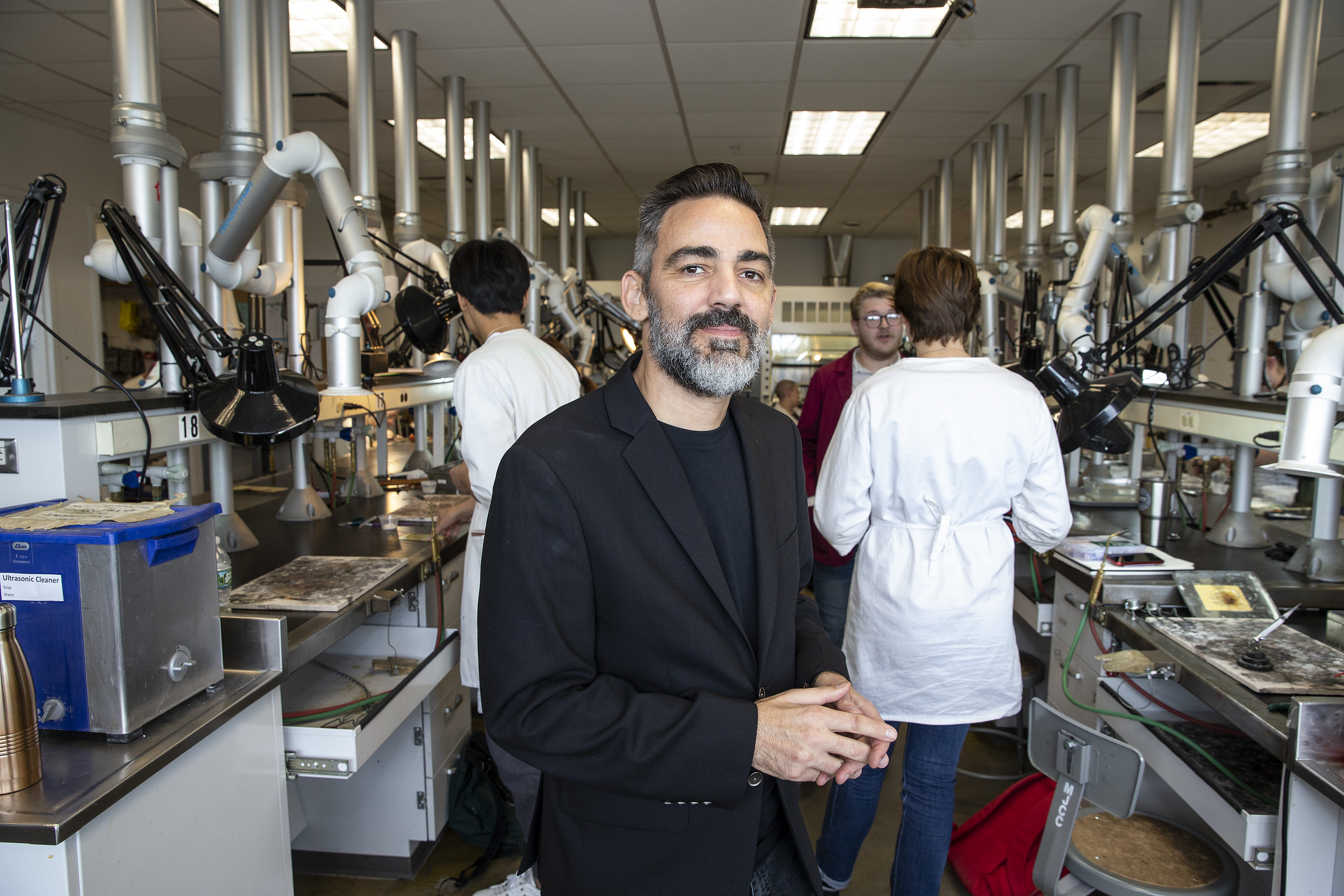
Doug Bucci is an Assistant Professor and Program Head of Metals/Jewelry/CAD-CAM at Tyler School of Art and Architecture, Temple University. His work merges digital technologies with traditional metalworking to explore biological systems and the impact of disease on the human body, informed by his lifelong experience with diabetes. MFA, Tyler School of Art and Architecture, Temple University (1998) BFA, University of the Arts (1994) Bucci’s research focuses on creating wearable art that visually translates complex biological data and medical narratives. His 2021 installation The Last Course examines the tension between indulgence and mortality through an 18th-century-inspired dessert table, while earlier works like the Islet Series and Mellitus investigate cellular structures and diabetic experiences via CAD-CAM processes. His artistic output includes commissions such as Breakthrough T1D and curated exhibitions like Decorative Digitalism . Bucci’s pieces are featured in major collections including the Philadelphia Museum of Art and the State Hermitage Museum. His practice emphasizes creative freedom through digital fabrication, contrasting with traditional handmade methods.
Eric Handman is an Associate Professor at the University of Utah's Department of Modern Dance since 2014, with prior academic positions at the same institution from 2003-2014. He holds an MFA from the University of Utah (2003) and BA in English from Skidmore College (1991). As a choreographer and educator, he has created works for companies across the United States and performed internationally with New York-based dance groups including Doug Varone and Dancers, Nicholas Leichter Dance, and Joy Kellman and Company. His research focuses on Choreographic thinking and mobile technology integration Contemporary dance criticism and theory Contact improvisation pedagogy Interdisciplinary performance systems Eric's choreographic works from 2016-2024 demonstrate Exploration of ecological themes through 'greenland' (2023) Philosophical inquiry in 'The Cause of Itself' (2024) Archival experimentation in 'The Weight of Dust' (2018) Mythological reinterpretation in 'Galatea Prime' (2018) Academic recognition includes Fulbright Specialist designation (2013) Pretty Creatives International Choreography Competition winner (2014) New Visions Choreography Competition winner (2014) Professional leadership roles encompass Board membership at American College Dance Association Previous directorship at Congress on Research in Dance His teaching extends to international venues in technique, composition, and improvisation.
Prof. Achim Stahl serves as University Professor and Chair at RWTH Aachen University, where he directs JARA-FAME (Jülich Aachen Research Alliance - Fundamental Forces and Particle Physics) and leads the 3rd Physics Institute B with approximately 70 scientists, engineers, and administrators. His research spans multiple domains of particle physics and experimental physics with significant contributions to major international collaborations including CMS at CERN, JUNO, Double Chooz, and the Einstein Telescope project. PhD in Physics from University of Heidelberg (1993), thesis: 'Installation, optimization and analysis of the ALEPH event trigger and investigation of muonic decays of tau leptons' Diploma in Physics from University of Tübingen (1988) with optimal mark 1.0 Habilitation with book 'Physics with tau leptons' published in Springer Tracts in Modern Physics Prof. Stahl's research spans multiple frontiers of particle physics. His primary interests include neutrino physics (mass hierarchy and CP-violation with experiments like JUNO, T2K, and Double Chooz), gravitational wave detection with the Einstein Telescope project, CP-violation studies through electric dipole moment searches, CMS experiment data analysis with tau leptons, and medical physics applications including radiation therapy and GEANT4 simulations. He has extensive hardware experience in detector development, including trigger systems, PMT readout, calorimeters, and position sensors. His recent publications demonstrate expertise across diverse areas of particle physics, with significant contributions to Higgs boson physics, neutrino oscillations, CP violation studies, and detector development. A substantial portion of his work focuses on the CMS experiment at CERN and the JUNO neutrino experiment, reflecting his leadership in these major international collaborations. His publications show equal strength in theoretical analysis and experimental hardware development, particularly in trigger electronics and precision measurement systems. While specific awards aren't detailed in the available information, Prof. Stahl has achieved an h-index of 120, reflecting significant impact in his field. His leadership roles include membership on the executive board of JUNO and serving as speaker of the DFG research unit FOR 2319 'Bestimmung der Massenhierarchie mit dem JUNO-Experiment'. Prof. Stahl has supervised numerous students throughout his career, including 20 theses that led to 11 OPAL papers during his time at the University of Bonn. He coordinates national activities on the Einstein Telescope and is deeply involved in multiple neutrino projects. His research is supported by significant grants enabling participation in international collaborations and hardware development for major experiments. His team has developed innovative detector technologies including integrated PMT readout systems and trigger electronics for neutrino experiments. As director of the 3rd Physics Institute B at RWTH Aachen, Prof. Stahl leads a substantial research group focused on fundamental physics questions. He is a founding member and current director of the JARA section FAME, which focuses on CP-violation and the matter-antimatter asymmetry in the universe. His team is actively developing technologies for the Einstein Telescope project, contributing to the JUNO neutrino experiment, conducting research with the CMS experiment at CERN, and applying particle physics techniques to medical applications.