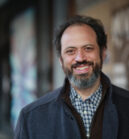
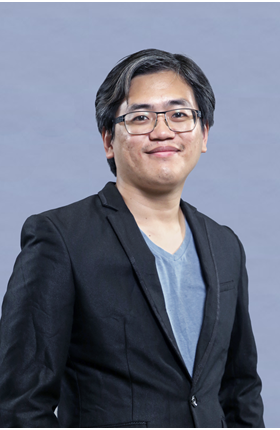
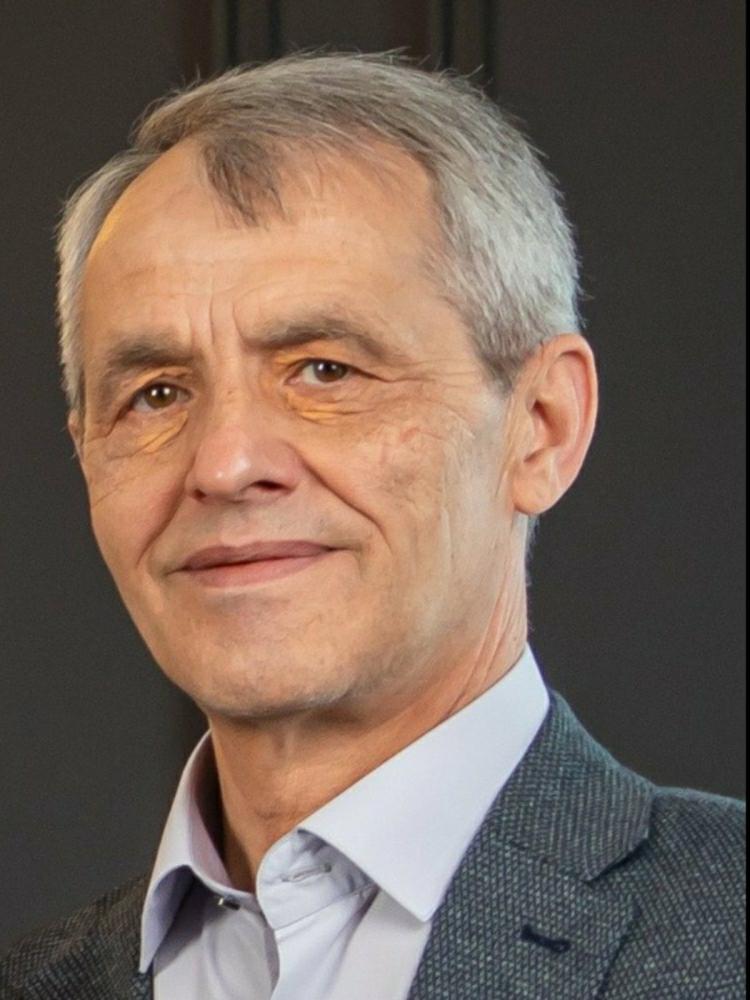
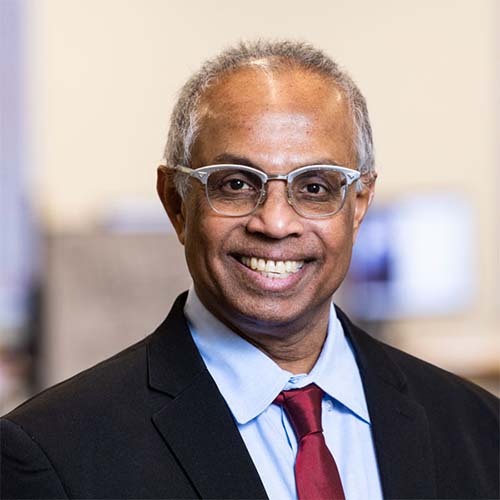
Nathan Youngblood is an Assistant Professor in the Department of Electrical and Computer Engineering at the University of Pittsburgh , with a secondary appointment in the Department of Physics and Astronomy . His research focuses on reconfigurable photonic materials and devices for energy-efficient artificial intelligence applications. Educational Background: PhD in Electrical Engineering from the University of Minnesota Postdoctoral research at the University of Oxford (2017–2019) His work explores photonic in-memory computing, neuromorphic systems, and phase-change materials to minimize computing latency and energy consumption. Recent publications highlight advancements in magneto-optical non-reciprocity, coherent crossbar arrays, and plasmonic-enhanced phase-change devices. Scientific Awards: NSF CAREER Award (2024) AFOSR Young Investigator Award (2024) William Kepler Whiteford Faculty Fellowship (2024) Dr. Youngblood's lab develops photonic accelerators like LightML and LightBulb for machine learning, emphasizing scalable integration and novel material applications in silicon photonics.
Ethan Mollick is the Ralph J. Roberts Distinguished Faculty Scholar, Rowan Fellow, and Associate Professor of Management at the Wharton School of the University of Pennsylvania. He serves as Co-Director of the Generative AI Labs at Wharton, where he researches AI's impact on work, entrepreneurship, and education. His academic background includes a PhD and MBA from MIT's Sloan School of Management and a bachelor's degree from Harvard University. Mollick's research spans artificial intelligence applications in business and education, entrepreneurship dynamics, and innovation management. He explores how generative AI transforms classroom education through simulations like PitchQuest, and investigates startup funding disparities with a focus on gender representation. His work on the 'jagged technological frontier' demonstrates how humans integrate AI capabilities through Centaur and Cyborg approaches. His publications reveal consistent focus on practical AI implementation, with recent work examining prompt engineering for diverse idea generation, AI-assisted teaching strategies, and gender representation tipping points in venture capital. The research shows increasing emphasis on educational applications since 2022, coinciding with the ChatGPT breakthrough. MBA Professor of the Year Award, Poets & Quants (2024) Named to TIME Magazine's Most Influential People in Artificial Intelligence ASQ Award for Scholarly Contribution (2024) Greif Research Impact Award (2020) McGraw-Hill/Academy of Management Innovation in Entrepreneurship Pedagogy Award (2016) As Co-Director of Wharton's Generative AI Labs, Mollick leads prototype development and research on human-AI collaboration. His teaching includes Technology Strategy, Entrepreneurship, and Innovation courses where he implements AI simulations. He has advised numerous organizations and co-founded a startup prior to academia, bringing practical experience to his research on solo versus team ventures. Mollick directs Wharton Interactive's game development initiatives, creating educational simulations including PitchQuest (AI-powered VC simulator), The Saturn Parable (crisis management), and The Entrepreneurship Game. His lab work focuses on creating scalable AI educational tools that provide personalized learning experiences through simulated practice environments.
Wan Shou is an Assistant Professor in the Department of Mechanical Engineering at the University of Arkansas. His research focuses on multiscale manufacturing, advanced materials, and functional devices, with applications in wearables, robotics, and sustainable technologies. Ph.D., Mechanical Engineering, Missouri University of Science and Technology M.S., Mechanical Engineering, University of Louisiana at Lafayette B.E., Textile Engineering, Tianjin Polytechnic University, China Dr. Shou’s research spans laser-based manufacturing , nanomanufacturing , machine learning-assisted processes , and bioresorbable electronics . He explores 3D printing of polymer and metal composites, energy materials , and functional textiles for wearable sensors and environmental applications. Recent publications highlight his work in additive manufacturing , computational design of composites, and self-powered sensing systems . His team integrates machine learning with materials discovery to optimize performance. Editor’s pick of Science Magazine US Patent 11,752,700: Data-driven material formulation US Patent 11,993,850: Laser-assisted nanoparticle printing Dr. Shou’s patents and publications reflect a commitment to innovative manufacturing and environmentally conscious design . His work bridges materials science , robotics , and smart systems , advancing energy and water technologies.
Sky Lo Tian Tian is an Assistant Professor at the School of Design, Hong Kong Polytechnic University. His research focuses on "Spatial Phygital Interaction", integrating technologies like XR (Extended Reality), BIM (Building Information Modeling), and gamification to bridge virtual and physical environments through human-centred architectural design. Key expertise includes computational architecture, digital fabrication, and interactive design Developed novel concepts like Human-Virtual Reality Interaction (HVRI) and phygital-aided construction systems His notable projects include the Green Weaved Corridor bamboo pavilion in Chaozhou, China, and the Meta Archive platform for 3D model archiving. He actively organizes workshops at international venues like DigitalFuture, CCD-ASC, and POLAR. Scientific Awards : Full Doctoral Scholarship recipient from The Chinese University of Hong Kong and Victoria University of Wellington
Marco Pedersoli serves as an Assistant Professor at École de technologie supérieure (ETS) in Montreal since February 2017, where he leads research in computer vision and machine learning. His work focuses on reducing computational costs and annotation requirements for deploying vision algorithms on embedded devices, positioning ETS at the forefront of Montreal's AI ecosystem. His academic journey includes: Ph.D. from Autonomous University of Barcelona (UAB) under Jordi Gonzàlez and Juan José Villanueva Post-doctoral research at INRIA Grenoble with Cordelia Schmid and Jakob Verbeek (2015-2016) Research at KU Leuven with Tinne Tuytelaars (2012-2015) Dr. Pedersoli's research tackles deep learning bottlenecks through weakly-supervised methodologies and computational efficiency innovations . His three core projects address: Reduced Supervision : Developing weakly/semi-supervised learning for images, video, audio and text Exploration Learning : Optimizing data selection in unstructured environments Efficient Computation : Accelerating deep learning training and inference These efforts enable vision algorithms to run on resource-constrained portable devices. Publication trends (2014-2022) reveal consistent focus on weak supervision (60% of works) and computational efficiency (30%), with recent expansion into medical imaging and multimodal emotion recognition. Key venues include CVPR, ICCV, NeurIPS and ECCV. His accolades include: Best Paper Award at ICIAR 2019 NVIDIA Titan X Pascal hardware donation Dr. Pedersoli actively mentors 18 graduate students across PhD and MSc programs, with notable placements at Huawei and Radio Canada. His lab secures competitive tax-free funding for projects with international collaborations, including Element AI and European institutions. Current openings emphasize Python/C++ proficiency and deep learning expertise. He leads a dynamic research group at ETS developing open-source tools for Roi-Pooling, weakly-supervised detection, and 3D object recognition, maintaining active GitHub repositories with community contributions. Recent WACV 2023 acceptances demonstrate ongoing productivity following medical leave.
Joan Iverson Nassauer is a Professor at the University of Michigan School for Environment and Sustainability (SEAS), specializing in Landscape Architecture. Her research bridges ecological design with cultural sustainability, focusing on human interactions with urban biodiversity and stormwater management at scales ranging from neighborhoods to continents. She has led Landscape and Urban Planning as Co-Editor-in-Chief from 2014-2021, elevating it to the top-ranked urban studies journal. Her work has earned recognition through Fellowships in the American Society of Landscape Architects and Council of Educators in Landscape Architecture, alongside Distinguished Scholar status from the International Association of Landscape Ecology. Her research emphasizes Transdisciplinary scenario-building for rural and urban landscapes Integrating community perceptions into ecological design Advancing policy through design innovation in agricultural and suburban environments Quantifying cultural sustainability through aesthetic and functional assessments Developing green infrastructure solutions for legacy cities and the Great Lakes region Key themes in her recent publications include stormwater management aesthetics, nature-based solutions for urban sustainability, and design methodologies for enhancing ecosystem services in human-dominated landscapes. Scientific awards include Fellow of the American Society of Landscape Architects (1992) Fellow of the Council of Educators in Landscape Architecture (2007) Distinguished Practitioner of Landscape Ecology (1998) IALE Distinguished Scholar (2007) 2023 Lifetime Achievement Award in Landscape Architecture Grants and collaborations highlight her NSF-funded projects on neighborhood greening, smart stormwater systems, and Detroit's green infrastructure initiatives. She leads the Landscape Ecology, Perception, and Design Lab , fostering partnerships between designers, ecologists, and local communities to advance sustainable landscape futures.
Tariq Iqbal is an Assistant Professor at the University of Virginia , with joint appointments in the Department of Systems and Information Engineering and Department of Computer Science . He leads the Collaborative Robotics Lab (CRL) , specializing in human-robot teams and embodied AI . Previously, he was a Postdoctoral Associate at MIT's CSAIL , advised by Prof. Julie Shah , and earned his Ph.D. in Computer Science from University of California San Diego (UCSD) under Prof. Laurel Riek . Ph.D. in Computer Science, University of California San Diego (2017) M.S. in Computer Science, University of Texas at El Paso (2012) B.S. in Computer Science and Engineering, Bangladesh University of Engineering and Technology (2007) His research lies at the intersection of artificial intelligence and robotics , focusing on human-robot collaboration in dynamic environments. Key areas include motion prediction , multimodal fusion , trust modeling , and collaborative learning . His work integrates cognitive science and deep learning to enhance robotic fluency in naturalistic settings. Recent publications (2023–2025) highlight advancements in human-robot team dynamics , multimodal dataset creation , and motion prediction algorithms . Notable works include Energy-Based Transformers for scalable AI, PoseTron for motion prediction, and Accessible Navigation Mapping for assistive robotics. These contributions span trust modeling , cloud robotic infrastructure , and safety in close-proximity collaboration . National Science Foundation (NSF) CAREER Award Air Force Office of Scientific Research (AFOSR) Young Investigator Program (YIP) Award Commonwealth Center for Advanced Manufacturing (CCAM) Innovation Award As faculty, he has secured grants from NSF and AFOSR , mentored research students, and taught courses like Stochastic Modeling I (SYS 6005) and Robots and Humans (SYS 4582/6465, ECE 4502/6465, CS 6465) . His prior industry roles at IBM Watson Lab and Grameenphone Ltd. inform his applied research in telecom infrastructure and cognitive robotics . He leads the Collaborative Robotics Lab (CRL) at UVA, which develops multimodal datasets , real-time coordination algorithms , and adaptive pathfinding systems . Current projects explore human motion prediction , team synchrony , and embodied question-answering , reflecting his commitment to advancing human-robot fluency and contextual AI .
Ziran Wang is an Assistant Professor in the Department of Civil Engineering at Purdue University's College of Engineering, appointed as new faculty in 2022. His research bridges digital twin technologies, autonomous driving systems, and human-machine interaction to advance intelligent transportation solutions. Ph.D. in Mechanical Engineering, University of California, Riverside Prior role: Principal Researcher at Toyota North America His work focuses on creating personalized autonomous driving experiences through machine learning, emphasizing safety and efficiency in real-world applications. Key areas include multimodal large language model integration, federated learning for privacy-preserving data sharing, and cooperative perception frameworks. He develops novel approaches for digital twin-based traffic simulation, medical emergency detection in vehicles, and human behavior modeling in complex urban environments. Analysis of his 2024-2025 publications reveals a dominant trend toward generative AI applications in autonomous driving, particularly for perception-prediction-planning integration and real-world validation. His research increasingly incorporates digital twins for safety-critical testing and explores medical applications through in-vehicle health monitoring systems. Dr. Wang advises graduate students including Wenhui Huang and leads the Purdue Digital Twin Lab, which develops advanced simulation and testing platforms for autonomous systems. His lab maintains strong industry partnerships with Toyota for real-world deployment and validation of research成果.
Mykola Oleksiyovych Zhuravel serves as a Senior Lecturer at Zaporizhia Polytechnic National University within the Department of Occupational Safety and Environmental Protection, part of the Faculty of Construction, Architecture and Design. With over 37 years of service since 1987, he has established himself as a dedicated educator and researcher in occupational safety, civil defense, and environmental protection fields. His research interests span occupational safety, civil defense, environmental safety, life safety, industrial safety, ergonomics, and risk management. Zhuravel's scholarly work consistently addresses practical safety concerns in Ukrainian industrial and educational settings, with a particular focus on regional environmental challenges in Zaporizhzhia. His publications demonstrate a progression from foundational safety principles to contemporary concerns like ecological energy security and digital workplace safety. Analysis of his 15 most recent publications reveals a strong emphasis on practical applications of safety science, with recurring themes in environmental protection, workplace hazard mitigation, and emergency preparedness. His work bridges theoretical safety frameworks with practical implementation strategies, particularly relevant to Ukrainian industrial contexts. Zhuravel maintains active professional development, with numerous certifications through 2024 in occupational safety, civil defense, and academic integrity. He is an associated member of the European Community for Occupational Safety and Health (EUOP register number 13823000211, registered June 12, 2023). As an educator, he teaches multiple safety-related disciplines including Safety of Life of a Specialist with Basics of Labor Protection, Protection of Human Living Environment and Occupational Safety, and Civil Protection and Occupational Safety in Industry. His teaching approach integrates theoretical knowledge with practical safety applications relevant to Ukrainian industrial contexts.
Ahmad Al-Dabbagh is an Assistant Professor in Manufacturing Engineering and holds a Principal's Research Chair in Control Systems (Tier 2) with the School of Engineering at The University of British Columbia. As a Senior Member of IEEE and ISA, he contributes significantly to the field of resilient automation and control systems through research, teaching, and professional service. His academic journey includes postdoctoral fellowships at Imperial College London, the University of Toronto, and the University of Alberta, where he also earned his PhD in Electrical and Computer Engineering. Dr. Al-Dabbagh's research focuses on designing resilient automation and control systems by addressing critical challenges in fault diagnosis, cyber security, and alarm management. His work spans theoretical foundations and practical applications in industrial control systems, with particular emphasis on detection and isolation of faults and cyber attacks, control reconfiguration, event-triggered control, remote state estimation, and alarm systems design. His research interests also extend to causality analysis, prediction methods, and root cause analysis for industrial processes. His extensive publication record demonstrates consistent contributions to control systems security and reliability, with recent work focusing on sophisticated methods for detecting false data injection attacks, analyzing alarm correlations using advanced machine learning techniques, and developing recommender systems for human operators in industrial environments. The trajectory of his research shows an evolution from foundational control theory toward increasingly complex applications in cyber-physical security and human-system interaction in industrial settings. NSERC Postdoctoral Fellowship NSERC Alexander Graham Bell Canada Graduate Scholarship (CGS – D3) Queen Elizabeth II Graduate Scholarship Governor General's Academic Medal (Gold) As a graduate student supervisor, Dr. Al-Dabbagh mentors the next generation of control systems engineers while maintaining an active research program. He serves as an Associate Editor on the IEEE Control Systems Society Conference Editorial Board and is a licensed Professional Engineer in British Columbia and Ontario. His teaching portfolio includes courses such as System Identification, Digital Enterprise, Systems and Control, and Internet of Things, reflecting the breadth of his expertise. Dr. Al-Dabbagh leads the Okanagan Laboratory for Control Systems Research, where his team develops innovative approaches to enhance the security and reliability of industrial automation systems. The laboratory serves as a hub for interdisciplinary research that bridges theoretical control engineering with practical industrial applications, particularly in the energy, manufacturing, and process industries.
Giorgia Alù is an Associate Professor at the University of Sydney, affiliated with the Department of Italian Studies within the Faculty of Arts and Social Sciences. She holds a PhD from the University of Warwick and has taught at institutions including the University of Reading. Her research focuses on intersections between literature, photography, and cultural history, with a specialization in modern Italian studies and women's writing. Education: PhD (Warwick), MA (Warwick), BA (Catania). Research Interests: Travel writing and photographic culture Italian cultural history and visual studies Photography's ethical and aesthetic dimensions WWII Italian detainees' cultural production Recent Projects: Leading an ARC Discovery Project on WWII Italian detainees' creativity and co-investigating multilingual archives in Australia. Her book projects include Sicilian mining's global impacts and Italian female photographers' roles in cultural preservation. Awards: Excellence in Teaching (2013), Senior Fellowship at Freiburg Institute (2022-2023), and multiple research grants from the University of Sydney and ARC. Teaching: Courses on Italian language, literature, and visual culture including ITLN3688 (Advanced Italian Translation) and IC LS2626 (Words & Pictures Across Cultures). Labs/Teams: Member of Sydney Environment Institute and Vere Gordon Childe Centre. Collaborates internationally on digitizing cultural heritage and migrant archives.
Zackary Johnson , the Juli Plant Grainger Associate Professor of Biological Oceanography and Marine Biotechnology at Duke University, leads interdisciplinary research at the intersection of marine microbiology and biogeochemical innovation. Affiliated with the Nicholas School of the Environment and based at the Duke Marine Laboratory , his work spans microbial ecology, algal biotechnology, and climate mitigation strategies. Education: Ph.D. in Marine Science (Duke University, 2004), B.S. in Biology (MIT, 1994) Research Interests focus on marine microbial communities, particularly the model phytoplankton Prochlorococcus , algal cultivation for sustainable bioproducts, and the ecological impacts of ocean acidification. His lab investigates microbial interactions across diverse environments—from coastal estuaries to open-ocean gyres—and develops technologies for carbon-negative aquaculture systems. Publications highlight expertise in microbial biogeography, algal biofuels, and climate-resilient marine food webs. Recent work explores drone-based ocean color sensing, Gulf Stream eddy microbiomes, and the role of Labyrinthulomycetes protists in carbon export. Scientific Awards: Juli Plant Grainger Associate Professorship DOE and NSF-funded projects Grants include high-profile initiatives like the Marine Algae Industrialization Consortium (MAGIC) and REU Site program for coastal research training. His lab maintains a dedicated research site for studying microbial dynamics and sustainable algal cultivation.
Duminda Wijesekera serves as Professor in the Department of Cyber Security Engineering and Department of Computer Science at George Mason University, where he was inaugural chairman of the Cyber Security Engineering Department until December 2022. He concurrently held the position of visiting research scientist at the National Institute of Standards and Technology (NIST) from 2007-2022 and maintains status as a fellow at the Potomac Institute of Policy Studies. He leads the Mason Innovation Laboratory at Mason Square, driving translational research in cyber-physical security. His educational foundation includes: PhD in Computer Science, University of Minnesota (1997) PhD in Mathematical Logic, Cornell University (1990) BSc in Mathematics, University of Colombo Professor Wijesekera's research centers on cyber-physical system security , with pioneering work in Intelligent Transportation Systems spanning trains, aircraft, and connected vehicles. His digital forensics innovations establish frameworks for evidence-based scenario reconstruction and error management, while his formal methods research provides mathematical guarantees for safety-critical systems. Current projects address Next G-based edge services, digital twin vulnerability detection, and healthcare security architectures, consistently bridging theoretical rigor with real-world infrastructure protection. Analysis of his 2022-2025 publications reveals intense focus on autonomous vehicle security (38% of recent output), including traffic signal control optimization, ramming attack countermeasures, and CARLA-based scenario validation. Digital forensics using AI (20%) and secure manufacturing/edge computing (27%) constitute other major thrusts, demonstrating how formal verification and machine learning converge to solve complex cyber-physical security challenges across transportation, energy, and healthcare domains. His scientific recognition includes: CCI Impact Award (2022) for groundbreaking cyber-physical security contributions Fellowship at the Potomac Institute of Policy Studies for cybersecurity policy leadership Professor Wijesekera has secured substantial research funding through: NIST grants for health record security frameworks (2014-2015) US Department of Transportation projects on wireless frequency mapping for high-speed rail (2013-2014) Cyber Security Research Alliance funding for trust architectures in cyber-physical systems (2014) Commonwealth Cyber Initiative awards for autonomous vehicle security and energy-efficient manufacturing His industry partnerships with Honeywell and NIST ensure practical impact of theoretical research. The Mason Innovation Laboratory under his direction serves as an interdisciplinary hub for cyber-physical security, integrating researchers from computer science, electrical engineering, and policy studies to develop deployable solutions for transportation networks, power grids, and critical infrastructure protection.
Alyson M. Brooks is an Associate Professor in the Department of Physics and Astronomy at Rutgers University, part of the School of Arts and Sciences. Her research focuses on galaxy formation and evolution, particularly using cosmological simulations to study dark matter dynamics, stellar abundances, and galactic structures. She holds a PhD in Astronomy from the University of Washington (2008) and has held prestigious fellowships, including the Sherman Fairchild Fellowship at Caltech and the Grainger Postdoctoral Fellowship at UW-Madison. Brooks has been recognized with awards such as the 2015 Alfred P. Sloan Research Fellowship and the 2019 Maria Goeppert Mayer Award from the American Physical Society. Her educational background includes a B.A. in Physics with Astronomy from Macalester College (2000) and an M.S. in Astronomy from the University of Washington (2004). Her research interests span topics like the interplay between baryonic processes and dark matter, chemical evolution in dwarf galaxies, and the role of feedback mechanisms in galaxy formation. Brooks is actively involved in outreach, including founding the RU-PREP program to support undergraduate research and mentoring initiatives. Brooks has authored over 100 refereed publications, with recent work exploring the resolved stellar populations of dwarf galaxies using the James Webb Space Telescope and analyzing dark matter halo properties through simulations. Her scientific contributions have advanced understanding of galaxy kinematics, dark matter interactions, and the evolution of galactic structures across cosmic time.
Katherine J. Franz is a Professor of Chemistry at Duke University, affiliated with the Trinity College of Arts & Sciences and the Duke Cancer Institute. She holds a Ph.D. from MIT (2000) and a B.A. from Wellesley College (1995). Her research focuses on bioinorganic chemistry, particularly metal ion coordination in biological systems, with applications in antimicrobial therapies, cancer metallomics, and neurodegenerative diseases. Key projects include developing prochelators targeting fungal and bacterial pathogens, studying copper's role in antifungal drug efficacy, and designing light-activated metal complexes for controlled drug release. Dr. Franz has received numerous awards including the Camille Dreyfus Teacher-Scholar Award (2009), Sloan Research Fellowship (2008), and the NSF CAREER Award (2005). She leads a lab with 6 current students/mentees and has secured grants from NIH, NSF, and the US-Israel Binational Science Foundation. Her lab's work spans from fundamental metalloprotein studies to translational drug development, emphasizing interdisciplinary approaches in chemistry and biology. Education: Ph.D. in Chemistry, MIT, 2000 B.A. in Chemistry, Wellesley College, 1995 Research Interests: Metal homeostasis in pathogens, copper's role in antifungal resistance, prodrug design for targeted therapy, and mechanistic studies of metalloproteins. Grants: Tri-Institutional Molecular Mycology Training Program (NIH, 2024–2029) Duke PREP Biomedical Sciences Program (NIGMS, 2022–2027) Copper-Mucin Interaction Study (BSF, 2022–2026) Her lab's publications (n=15+ since 2020) highlight breakthroughs in prodrug selectivity, copper-induced protein toxicity, and histatin antifungal mechanisms. The Franz Lab actively collaborates with clinicians and computational scientists to advance therapeutic strategies addressing unmet medical needs in infectious diseases and cancer.