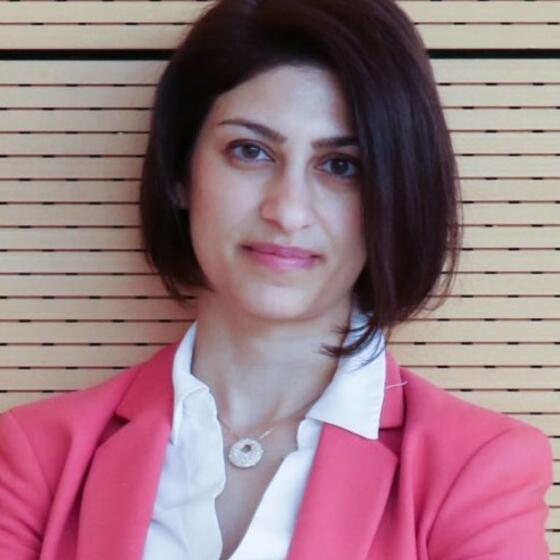
Danel Ahman is an Associate Professor at the Institute of Computer Science , University of Tartu , Estonia, specializing in programming language theory . His research focuses on dependent/refinement types , computational effects , and verified software . Education PhD in Theoretical Computer Science (University of Edinburgh, 2017) MPhil in Advanced Computer Science (University of Cambridge, 2012) BSc in Informatics (Tallinn University of Technology, 2010) Research Interests : Danel investigates programming languages with algebraic effects and effect handlers for verified software, exploring denotational/operational semantics and fibrational approaches to effects. His work bridges theoretical computer science with practical formal verification. Scientific Awards : Estonian Research Council grant (2025) Marie Skłodowska-Curie Fellowship (2019) PhD dissertation prize (2018) Google/Citrix dissertation awards (2012) Teaching & Supervision : He teaches courses like Logic in Computer Science and Functional Programming at the University of Tartu, and supervised BSc/MSc theses on topics including asynchronous effects and formal verification. Danel also organizes research seminars and guest lectures on F*.
Børge Rokseth is an Associate Professor at the Department of Engineering Cybernetics, Norwegian University of Science and Technology (NTNU). His work focuses on maritime systems, autonomous vessel control, and safety verification. He actively supervises Master's students and contributes to research on risk-informed control systems, hybrid power systems, and systems-theoretic process analysis (STPA). Research Interests: Rokseth's research spans autonomous ship systems, dynamic risk assessment, and safety verification. He explores risk-based decision-making for maritime autonomy, hazard identification in hybrid propulsion systems, and control function allocation in dynamic positioning. His work integrates systems theory, machine learning, and regulatory compliance (e.g., COLREGS) to enhance safety and environmental performance in marine operations. Publications: His recent work includes probabilistic trajectory prediction frameworks for autonomous ships, STPA-based safety analyses, and studies on decarbonization barriers in the maritime industry. These publications emphasize risk modeling, systems-theoretic approaches, and simulation-based verification. Teaching: Rokseth teaches courses such as TTK4130 - Modelling and Simulation, contributing to the education of future engineers and researchers in cybernetics and maritime systems.
Daniel Hyde is an Associate Professor in the Department of Psychology at the University of Illinois Urbana-Champaign, affiliated with the College of Liberal Arts & Sciences and the Neuroscience Program. His research explores the nature and development of abstract conceptual knowledge through behavioral and neural measures. PhD in Psychology from Harvard University Hyde investigates cognitive development from infancy to adulthood, focusing on quantitative reasoning , spatial reasoning , and psychological reasoning using techniques like event-related brain potentials (ERPs) , functional near-infrared spectroscopy (fNIRS) , and behavioral assessments. His recent work examines how symbolic number knowledge builds on non-symbolic foundations and how neural sensitivity to mental states in infancy predicts later theory of mind abilities. Hyde's publications demonstrate a consistent focus on numerical cognition, multisensory integration, and developmental neuroscience. He leads the Brain and Cognitive Development Lab , participates in global initiatives like ManyNumbers and ManyBabies , and collaborates across disciplines to apply developmental insights to education and public health contexts.
Dr. Leah Perlmutter is a tenure-track Assistant Professor in the Computer Science Department at Grinnell College, focusing on inclusive pedagogy and student belonging in post-secondary CS education. She earned her Ph.D. (2023) and M.S. (2020) in Computer Science and Engineering from the University of Washington, and her B.A. (2012) in Computer Science and Engineering from Colby College. Her research examines how course policies and teaching assistant interactions impact student inclusion in computer science, with a particular emphasis on resubmission opportunities and justice-centered approaches to teaching. Her work also includes human-robot interaction projects like GestureCalc (an eyes-free calculator for touchscreens) and EMAR (a social robot for emotional clarity support). Recent publications explore themes such as algorithmic ethics in education, student belonging in CS, and accessible interface design. She received the NSF Graduate Research Fellowship (2017) and the Outstanding Female Engineer Award (2018). At Grinnell, she teaches courses like Functional Problem Solving, Software Design, and Algorithms, Ethics, and Society.
Hassan Khan is an Associate Professor at the University of Guelph's School of Computer Science, with research spanning security, systems, and human-computer interaction (HCI). He is a member of the Centre for Advancing Responsible and Ethical Artificial Intelligence (CARE-AI). Research Interests: His work focuses on improving AI-driven mobile security systems through human-in-the-loop evaluations, addressing vulnerabilities in continuous authentication, shoulder surfing, and privacy in enterprise/repair settings. He explores how users interact with security mechanisms and designs interfaces to enhance usability. Scientific Recognition: He has received the NSERC Early Career Researcher Award and a NSERC Discovery Grant, with media coverage in outlets like Time Magazine, The Globe and Mail, and New Scientist. Teaching: Khan teaches courses such as Computer Security Foundations and Advanced Penetration Testing, emphasizing practical cybersecurity and AI systems architecture.
Michelle Doas is an Associate Professor of Nursing at Chatham University 's College of Health Sciences , where she has been actively contributing since 2007. Her expertise spans clinical nursing, education, and interdisciplinary research applications. Ed,D., MSN, BSN, RN Research Interests Dr. Doas focuses on critical thinking development in nursing education , adult literacy in healthcare , and reminiscence therapy . Her work bridges clinical practice with pedagogical innovation, exploring how techniques from service industries (e.g., Disney's hospitality model) can enhance patient satisfaction and communication in healthcare settings. Article Trends Her publications and presentations demonstrate a consistent emphasis on improving clinical outcomes through structured interventions like mind mapping for education, relaxation therapy for post-operative care, and concept mapping for knowledge organization. Key themes include patient safety , workplace culture , and interdisciplinary applications in nursing. Scientific Awards She is a member of the prestigious Sigma Theta Tau International Honor Society , recognizing her contributions to nursing scholarship. Additional Contributions Dr. Doas has served on the Business Faculty Search Committee (2008) and presented on diverse topics such as food handling safety in environmental science contexts and nursing career advocacy at high school outreach events.
Xiaowen Zhang is a Professor of Computer Science at the College of Staten Island (CSI), City University of New York (CUNY), and a Doctoral Faculty Member at the CUNY Graduate Center. His academic work bridges theoretical and applied research in cybersecurity, information systems, and network technologies. Dr. Zhang holds a Ph.D. in Computer Science from the CUNY Graduate Center (2007) and a Ph.D. in Electrical Engineering from Northern Jiaotong University (1999), along with an M.A. from CUNY Queens College, an M.S. from Northern Jiaotong University, and a B.S. from Shanxi University. His research focuses on Cryptography, Information Security, Cybersecurity, Secure Biometrics, RFID Security & Privacy, Information Retrieval, and Wireless Sensor Networks . He explores both foundational cryptographic methods—such as secret sharing schemes and hash functions—and their practical implementations in secure systems, including RFID authentication protocols and data visualization platforms for sensor networks. The analysis of his recent publications reveals a consistent focus on security mechanisms in distributed and wireless environments . His work frequently combines cryptographic theory with system-level implementations, particularly in RFID and sensor networks. There is a strong trend toward privacy-preserving protocols, efficient data retrieval, and secure information sharing , often leveraging mathematical structures like Latin squares and Bloom filters. Dr. Zhang has been actively involved in mentoring students, as evidenced by numerous co-authored publications with graduate and undergraduate researchers. His contributions span journals such as Security and Communication Networks , Journal of Applied Security Research , and International Journal of Security and Networks , as well as major conferences including IEEE LISAT, ACM CODASPY, and IEEE Sarnoff Symposium.
Martha Constantinou is an Associate Professor of Physics at Temple University, specializing in Theoretical/Computational Nuclear Physics with a focus on Lattice Quantum Chromodynamics (QCD). Her research addresses fundamental questions in hadron structure, including nucleon spin content and proton radius puzzles, leveraging supercomputing resources. She leads a group conducting advanced numerical simulations at major computational facilities. Constantinou holds a Ph.D. in Theoretical Computational Physics (University of Cyprus, 2008) and a BS in Physics (University of Cyprus, 2003). Her work aligns with the upcoming Electron-Ion Collider (EIC) at Brookhaven National Lab, aiming to explore nucleon structure and dark matter connections. Key research areas include generalized parton distributions (GPDs), axial form factors, and high-performance computing applications. Notable awards include the US Department of Energy Early Career Award (2019) and the Selma Lee Bloch Brown Professorship (2020). Her publications (15 most recent listed) emphasize Lattice QCD advancements, with contributions to GPDs, quark-gluon momentum partitioning, and EIC theory. She actively promotes STEM outreach and public engagement through collaborative initiatives.
Przemyslaw Grabowicz is an Assistant Professor of Computer Science at University College Dublin and an Adjunct Professor at the University of Massachusetts Amherst. He leads the SIMS (Socially Intelligent Media and Systems) Lab and the EQUATE initiative, and is actively involved in the Knowledge Discovery Lab (KDL). His work bridges computer science, social science, and public policy, focusing on responsible AI and digital society. Research Interests: Fair and Explainable Machine Learning Computational Social Science Social Media and Network Science Public Opinion Modeling Algorithmic Bias and Discrimination Prevention Open-World Learning His research develops statistical and machine learning methods to understand and augment public opinion in digital environments, ensuring fairness, transparency, and societal benefit. He emphasizes legal compliance and ethical design in AI systems. Recent Research Trends: His recent publications focus on social media polls, political bias, misinformation, and fairness in machine learning. He investigates how algorithmic systems shape public discourse, especially during elections and global crises, and develops methods to detect and mitigate bias in data and models. Scientific Awards and Recognition: Best Paper Honorable Mention, ICWSM’25 WICI Data Challenge Main Prize (2013) Arnold O. Beckman Research Award Multiple UMass Amherst Interdisciplinary Research Grants Volkswagen Foundation Grants (over €900k total) Advising and Grants: Dr. Grabowicz supervises several PhD students in the SIMS and KDL labs and collaborates with MS students. He has secured significant funding from the Volkswagen Foundation, UMass Amherst, and the University of Illinois, supporting research on political misinformation, media bias, and global agenda setting. He is currently recruiting a postdoc at UCD. Labs and Initiatives: He heads the SIMS Lab and the EQUATE initiative, and contributes to the KDL. His project socialpolls.org explores public opinion through social media, and he maintains an active presence through the Uncommon Good blog on responsible AI.
Dina El-Zanfaly serves as an Assistant Professor in the School of Design at Carnegie Mellon University (CMU), where she directs the hyperSENSE: Embodied Computations Lab. Her work bridges computational design and human-centered interaction, focusing on how physicality shapes sensory experiences and cognitive processes through intelligent systems. Education: PhD in Design and Computation, Massachusetts Institute of Technology (MIT) Master of Science in Design and Computation, MIT (Fulbright scholar) Her research critically examines computational methods for augmenting sensory perception, with emphasis on embodied sense-making in hybrid environments. She investigates co-creative interactions between humans and intelligent systems, exploring how computational tools empower designers and non-designers to shape products, social spaces, and interconnected technologies. Key questions address mutual learning between humans and machines through improvisation and creative production. Analysis of her 2022-2025 publications reveals dominant themes in mixed reality interfaces, AI-augmented skill acquisition (particularly in crafts and welding), and tangible co-creation with generative AI. Her work consistently integrates physical computing with mindfulness applications and privacy-aware smart environments, demonstrating interdisciplinary reach across education, manufacturing, and therapeutic contexts. Scientific Awards: Fulbright Scholarship As lab director, El-Zanfaly mentors students in computational making and embodied interaction projects. Her research is supported through initiatives like Fab Lab Egypt and collaborations with MIT, where she co-founded the Computational Making Group. She chairs major conferences including Fab15 in Egypt and serves on the DESFORUM program committee, indicating significant leadership in maker education and design research communities. She founded and leads the hyperSENSE Lab at CMU, which investigates computational embodiment through projects like Origami Sensei and Sand-in-the-loop. Previously, she co-established the Computational Making Group at MIT and co-founded Fab Lab Egypt (the first community maker space in North Africa/Arab world), demonstrating sustained commitment to global maker ecosystems and interdisciplinary team building.
Natalia Villanueva-Nieves is an Assistant Professor in the Department of Chicana and Chicano Studies at Sonoma State University. Her interdisciplinary scholarship bridges literary studies, affect theory, and digital humanities, with a focus on Latinx, Chicanx, Central American, and Caribbean expressive cultures. Her academic background includes a doctoral degree in Chicana and Chicano Studies from the University of California, Santa Barbara, and a master’s in Comparative Literary Studies from Utrecht University. Dr. Villanueva-Nieves' research explores Latinx emotional geographies, transnational feminisms, hemispheric race studies, and digital storytelling. She investigates how affect, space, and racialization intersect in Latina narratives, particularly through relational and hemispheric frameworks. Her work emphasizes collective archives of care and hope in Latinx testimonial writing. Her recent publications reflect a strong trend toward interdisciplinary and public-facing scholarship, combining literary analysis with digital tools and social justice engagement. The articles span themes such as affective spaces, digital archives, transnational feminisms, and geocritical approaches to Latinx literature. Her scholarly work has appeared in Chiricú Journal , Ex-Centric Narratives Journal , Zócalo Public Square , American National Biography , Aztlán: A Journal of Chicano Studies , and edited volumes from UNAM and the University of Alcalá de Henares. Dr. Villanueva-Nieves is currently developing a digital monograph that uses interactive maps and digital storytelling to present Latinx testimonial writing as living archives. She is also completing her book The True Colors of Feeling Brown: Affect and Space in Latina Narratives , under contract with Palgrave in the Geocriticism and Spatial Literary Studies series.
Andrew Pavlo is a Professor in the Computer Science Department at Carnegie Mellon University's School of Computer Science. His research focuses on database management systems, particularly in the areas of transaction processing, in-memory databases, and self-driving database systems. He leads a productive research group that has published extensively in top database venues including VLDB, SIGMOD, and CIDR. Pavlo's research interests span database management systems, transaction processing, in-memory databases, non-volatile memory databases, and self-driving database systems. His work often bridges theoretical database concepts with practical system implementation, focusing on performance optimization, query processing, and system architecture. Recent work has explored machine learning applications for database tuning, novel storage techniques, and innovative approaches to transaction processing. An analysis of his recent publications reveals a strong focus on self-driving database systems, with significant work on the Database Gym framework for training machine learning models to optimize database performance. His research also examines columnar storage formats, transaction scheduling, and novel approaches to user-defined function optimization. The work demonstrates a consistent trajectory toward making database systems more autonomous and efficient through a combination of systems techniques and machine learning. Pavlo has been instrumental in mentoring numerous PhD students who have become active contributors to the database research community. His research has been supported by significant grants that have enabled the development of innovative database technologies and frameworks. His research group operates within CMU's vibrant database ecosystem, collaborating with other researchers on projects related to database systems, storage engines, and query processing frameworks. The group maintains close connections with industry partners to ensure practical relevance of their research contributions.
Prof. Dr. Biliana Yontcheva is Professor of Economics at the University of Hamburg's Faculty of Business, Economics and Social Sciences, specializing in Health Economics and Empirical Methods. Her research explores market outcomes through spatial econometrics, price transmission dynamics, and competition analysis across diverse sectors including healthcare, gasoline markets, and professional services. Focus on empirical modeling of market structures Expertise in spatial competition and entry models Key contributions to understanding asymmetric cost pass-through Analyzes consumer information effects on pricing Recent publications examine market delineation methodologies , vertical integration impacts , and income inequality-product variety relationships . Collaborates with researchers across Europe on topics like transition economy dynamics and regulatory frameworks. The team includes academic assistant Birte Stadtlich at the Economics Department.
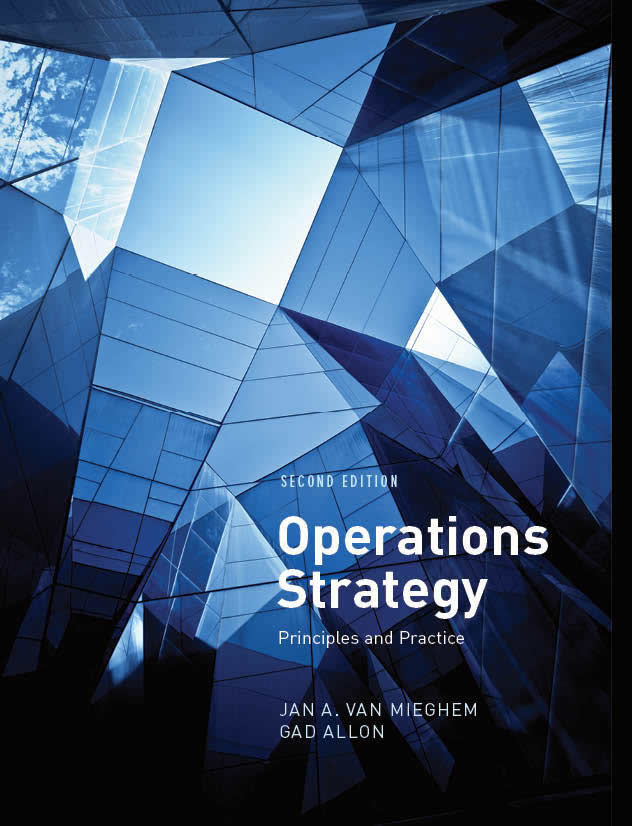
Jan A. Van Mieghem is the A. C. Buehler Professor and Professor of Operations at the Kellogg School of Management, Northwestern University. He also serves as a Professor by Courtesy at the McCormick School of Engineering and Applied Science. His research spans product, service, and supply chain operations, combining strategic and tactical perspectives with mathematical modeling, stochastic analysis, and empirical verification. Ph.D. in Business, Graduate School of Business, Stanford University (1995) MS in Electrical Engineering, Stanford University (1990) MS in Applied Sciences, KU Leuven, Belgium (1989) His research interests focus on operations strategy, supply chain optimization, and digital operations. He explores topics such as operational hedging, capacity investment, network flexibility, and the application of AI in inventory management. His work addresses healthcare operations, dual sourcing, and the interplay between collaboration and productivity in service networks. Recent research trends center on AI-driven inventory systems, dual sourcing under uncertainty, and healthcare resource allocation. He has authored over 60 academic articles and two textbooks: Operations Strategy: Principles and Practice and Managing Business Process Flows: Principles of Operations Management . 2023: First place in POMS College of Supply Chain Management Student Paper Competition 2020: Flexibility Excellence Award 2014: Wickham Skinner Award 2007: First MSOM Best Paper Award Van Mieghem has held leadership roles at Kellogg, including Deputy Dean (2023–present), Faculty Director of the Executive MBA program (2012–2017), and Chairman of the Department of Managerial Economics and Decision Sciences (2006–2009). He advises firms on operations strategy and management and has served on editorial boards of Management Science , Manufacturing & Service Operations Management , and Operations Research . He has mentored numerous Ph.D. students, including Audrey Bazerghi, Simrita Singh, Yangzi Jiang, and Dennis J. Zhang, who have secured academic and industry positions. His teaching spans operations management and strategy across MBA, Ph.D., and executive programs. Van Mieghem's work examines the intersection of operations strategy and execution, emphasizing financial value as a guiding metric. His empirical studies leverage real-world data from healthcare, manufacturing, and e-commerce to validate theoretical models and develop practical frameworks.
Berit Greinke is an Assistant Professor of Wearable Computing at the Berlin University of the Arts (UdK) and the Einstein Center Digital Future (ECDF) since 2018, previously serving as a researcher at UdK's Design Research Lab and DFKI (2016-2018). Her academic foundation includes a PhD from Queen Mary University of London (2017), an MA from Central St Martins (2009), and a Diploma from Weissensee Academy of Art Berlin (2007). Her educational trajectory: PhD in Media and Arts Technology, Queen Mary University of London (2017) MA in Design for Textile Futures, Central St Martins College of Art and Design (2009) Diploma in Textile and Surface Design, Berlin Weissensee School of Art (2007) Greinke's research pioneers the convergence of craft, textile design, and digital technology, with core expertise in electronic textiles and smart materials. She investigates metamaterial-based 'metatextiles' for electromagnetic applications and explores transdisciplinary collaboration between designers and scientists, particularly regarding 'negative data' in creative and scientific workflows. Her current UdK work focuses on four interconnected domains: performing materials for expressive textile/fashion design; multi-modal sensing converting visual processes into haptic/audible experiences; micro-to-macro material design spanning nanostructures to final products; and transdisciplinary processes for technology-art-science collaboration. Analysis of her 2020-2025 publications reveals dominant trends in sustainable textile electronics, with emphasis on knitted/folded sensor structures, origami-inspired capacitive shape estimation, and social sustainability in e-textile communities. Her work uniquely bridges fundamental material science (e.g., textile metamaterials) with artistic applications (e.g., interactive orchestra garments) and industrial production challenges. Berit Greinke supervises PhD students including Giorgia Petri. Her junior professorship is co-financed by SAP under a public-private partnership model, supporting projects like WEAR (Wearable technologists engage with artists for responsible innovation) and STELEC (Sustainable Textile Electronics), which emphasize ethical co-design and industry-academia collaboration. She leads research within UdK's Institute for Product and Process Design and collaborates with the Design Research Lab (formerly part of Connected Textiles group), focusing on sustainable industrial production of electronic clothing and transdisciplinary innovation frameworks.