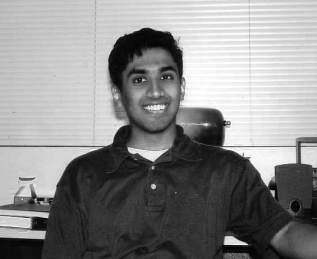
Nabeel Siddiqui is an Assistant Professor of Communications at Susquehanna University. His work bridges computational methods with humanities scholarship, focusing on digital humanities and computer science applications. Ph.D., College of William and Mary MA, George Mason University BA, University of Southern Mississippi Research interests include Digital Humanities , Machine Learning , Statistical Modeling , and Reproducibility in Research . He develops tools for data wrangling and digital scholarship workflows, emphasizing cross-cultural and multilingual approaches. Recent publications examine computer vision datasets , neural networks for image classification , and statistical validity in humanities research . His work also addresses inclusivity challenges in academic conferences and the materiality of data in scholarly ecosystems.
Jon Denning is an Associate Professor and Department Chair of Computer Science & Engineering at Taylor University. With a PhD in Computer Science from Dartmouth College and a BA in Computer Science & Mathematics from Tabor College, his work bridges algorithms, computer graphics, and video game development. PhD, Computer Science, Dartmouth College BA, Computer Science & Mathematics, Tabor College His research focuses on mesh editing workflows , 3D modeling tools , and Blender add-ons , including the development of RetopoFlow, one of the top-selling Blender add-ons. His publications on MeshGit and AppWarp highlight innovations in collaborative mesh manipulation and material retargeting. Scientific Contributions: Featured Scholarship in ACM Transactions on Graphics (SIGGRAPH/SIGGRAPH Asia) Key publications from 2010-2017 on mesh workflows, texture generation, and illumination control
Alex Lobos serves as Professor and Director of the School of Design within RIT's College of Art and Design, while also holding Visiting Fellow Emeritus status at Autodesk. His career bridges academia and industry, focusing on elevating quality of life through design innovation, emotional attachment, and neurodiverse perspectives. His educational background includes: MFA from the University of Notre Dame BID from Universidad Rafael Landivar Lobos's research explores emotional design and sustainability through computer-aided and generative methodologies, with special emphasis on neurodiversity applications and healthcare technology. His work demonstrates how emotional connections to products can enhance sustainability by extending product lifecycles and improving user experiences. Recent publications reveal a strategic shift from traditional industrial design toward digital innovation, particularly in generative systems and 3D printing applications. A consistent thread connects emotional design principles with neurodiverse user needs, reflecting his commitment to inclusive solutions that address real-world challenges in home environments and daily living. His accolades include: Eisenhart Award: RIT's highest teaching excellence honor Lobos advises MFA thesis projects and leads the Neurodiversity Studio, securing major industry funding from Autodesk, AT&T, Colgate-Palmolive, General Electric, Kraft, Makerbot, Staples, Stryker, Sun Products, Unilever, and Wegmans. These partnerships drive applied research in sustainable product ecosystems and assistive technologies. The Neurodiversity Studio develops specialized systems helping Autistic adults manage daily home activities through organizational tools that prevent sensory overload, exemplifying his human-centered design philosophy in action.
Margaret Workman is an Instructor/Laboratorian in the Department of Environmental Science and Studies at DePaul University's College of Science and Health, with over 21 years of service. She specializes in atmospheric chemistry, environmental science education, and sustainability, employing constructivist teaching methodologies including role-playing simulations like 'Climate Change in Copenhagen' and 'Acid Rain and the European Environment' to foster active learning. Her research examines ozone depletion, urban ecosystems, and pedagogical innovation in STEM fields. Workman's research bridges environmental chemistry and education, with publications spanning atmospheric molecular studies, invasive species ecology, and science pedagogy. Her recent work emphasizes urban sustainability and data literacy, while earlier contributions focused on radical chemistry mechanisms related to ozone depletion. Research consistently integrates practical applications, from soil restoration to curriculum design. Honors: National President of Iota Sigma Pi (2011-2014), advancing women in chemistry She develops service-learning initiatives like the Chicago Sustainability Index project, partnering with community organizations to analyze urban environmental indicators. Courses emphasize experiential learning through energy audits, ecological footprint analyses, and collaborative projects such as wind turbine design and sustainability film production.
Justin Johnson is an Assistant Professor at the University of Michigan and a Research Scientist at Facebook AI Research (FAIR) . His work spans computer vision and machine learning , with a focus on visual reasoning, vision-and-language integration, image generation, and 3D reasoning through deep neural networks. Education : PhD from Stanford University under Fei-Fei Li His research combines visual reasoning and 3D reconstruction with applications in image generation and neural rendering . He has contributed to advancing style transfer , super-resolution , and 3D deep learning through frameworks like PyTorch3D . Recent publications emphasize scalable 3D modeling , neural fields , and vision-language grounding . He advises PhD students including Karan Desai , Mohamed El Banani , and Chris Rockwell (co-advised with David Fouhey). He has taught courses like EECS 498/598: Deep Learning for Computer Vision at Michigan and CS 231N: Convolutional Neural Networks for Visual Recognition at Stanford.
Kylan Sattler serves as an Assistant Professor at Alfred State College, based in the Digital Media and Animation Engineering Technology Building which anchors his academic affiliation with applied digital media programs. His research spans Digital Media , Animation , and Engineering Technology , focusing on practical applications in computer graphics and interactive media development within technical education contexts. Contact: sattlek@alfredstate.edu
Ryan English serves as an Assistant Professor in the Simulation, Animation and Gaming program at Eastern Michigan University, where he maintains an office in room 211T of the Sill Building and can be contacted at 734.487.1864. His academic credentials include: Master of Fine Arts (MFA) in Design from The Ohio State University Dr. English's research spans simulation technologies, digital animation methodologies, and game design systems, with emphasis on real-time rendering pipelines and procedural content generation. His work bridges artistic expression with computational techniques in virtual environments, particularly exploring narrative structures in interactive gaming contexts and physics-based animation for educational simulations. Current investigations focus on cross-disciplinary applications of gaming engines in medical training scenarios and cultural heritage preservation through immersive media.
Wobbe F. Koning serves as an Associate Professor in the Department of Art and Design at Monmouth University, teaching animation, 3D modeling, motion graphics, and interactive media courses including 3-D Animation (AR 392), Animation/Motion Graphics I (AR 390), and Senior Animation Reel (AR 415). He holds an MFA from The Ohio State University and a BFA from the Netherlands Film and Television Academy. As a digital artist, Koning specializes in synthesizing video, 3D computer animation, and audio to create linear single-channel works. His creative practice spans Animation , 3D Computer Animation , Digital Art , Video Art , Motion Graphics , and Interactive Media , with exhibitions at SIGGRAPH Art Gallery and Prix Ars Electronica. Earlier projects include on-stage videos for dance performances and multi-screen installations. He maintains a personal creative portfolio at ideepix and contributes to the Monmouth Animation Blog.
Mike Massengale serves as an Instructor of Art in the Department of Art, Design & Letters at Converse University, where he maintains an office in Milliken 215 and can be reached at 864.596.9612. With a career spanning over three decades since 1988, Massengale specializes in Illustration , Graphic Design , and Interactive Media , having executed hundreds of visual projects for Fortune 500 clients including AT&T (creating pioneering pre-Internet interactive installations for Epcot), Universal Studios, Disney Theme Parks, Sara Lee, Converse Footwear, Avia Footwear, and the 1998 Olympics across print, video, and digital formats. His professional recognition includes: Selection as Official Artist for NFL Players Association Super Bowl 39 Features in Computer Graphics World , Computer Pictures , and Art World News Guided by his motto 'what he does not have in talent, skill and knowledge he makes up for with diligence,' Massengale approaches teaching with problem-solving focus and student-centered curiosity.
Jonathan R. Senning is a Professor of Mathematics and Computer Science at Gordon College, working within the Department of Mathematics and Computer Science in the School of Science, Technology and Health. He has maintained a dual focus on mathematical theory and practical computer applications throughout his academic career. Dr. Senning earned his educational credentials from prestigious institutions: Ph.D. in Applied Mathematics, University of Virginia, 1992 M.A.M. in Applied Mathematics, University of Virginia, 1989 B.S. in Physics and Mathematics, Gordon College, 1985 His research spans multiple interconnected domains with a strong emphasis on computational approaches. Senning has developed significant expertise in high-performance computing applications for solving complex mathematical problems, particularly in queueing network theory. His work bridges theoretical mathematics with practical computing solutions, creating tools that enable more efficient problem-solving in computational mathematics. He has maintained active membership in the Association of Christians in the Mathematical Sciences since 1993 and the Mathematical Association of America. Dr. Senning's scholarly output reveals a consistent trajectory from foundational mathematical research toward increasingly sophisticated computational implementations. His publications demonstrate expertise spanning theoretical queueing network analysis, high-performance computing implementations, and educational technology applications. The evolution of his work shows a progression from pure mathematical research to practical software development that makes complex mathematical concepts accessible. His professional activity includes significant software development projects that translate theoretical concepts into practical tools: QNetDP - for computing optimal policies in queueing networks QNet Approximator - NSF-funded project for computing cost bounds Numerical Solution of First Order Differential Equations - web-based educational tool LAVA (Linear Algebra Visualization Assistant) - interactive linear algebra learning platform As an educator, Senning has taught a comprehensive range of courses from introductory programming and calculus to advanced topics in machine learning and high-performance computing, demonstrating his ability to connect foundational mathematical concepts with cutting-edge computational applications.
Sky Larsen serves as a Lecturer in the Computer Animation and Game Development Program within the School of Media, Entertainment, and Communication Arts at California State University, Chico. His research focuses on practical applications in: Game Development (particularly arcade and mobile platforms) Computer Animation techniques Computer Graphics including shader programming Interactive Media systems Key projects demonstrate his technical expertise: Custom Ms. Pac Man clone development for Sierra Nevada Brewing Company with branded characters Hardware modification of arcade cocktail tables for custom game deployment Unity-based toon shader implementation for mobile game prototypes Office hours are held Monday 2:00 PM - 4:00 PM and Wednesday 1:00 PM - 4:00 PM in THMA 227. Contact via phone (530-898-4891) or email (kslarsen@csuchico.edu).
Narayana Prasad Santhanam is a Professor in the Department of Electrical Engineering at the University of Hawaii, College of Engineering. His research spans theoretical and practical aspects of information theory, statistical learning, and signal processing, with particular focus on high-dimensional and complex problems that cannot be addressed by traditional statistical methods. Santhanam maintains an active research program funded by the National Science Foundation and teaches courses including Probability and Statistics, Linear Algebra and Machine Learning, and Information Theory. Santhanam's research interests center on the intersection of statistical learning and information theory, particularly in high-dimensional settings. His work addresses fundamental questions about when learning is possible, how to characterize non-uniform learning, and how to interpret data from complex sources like slow mixing Markov processes. He has made significant contributions to understanding the limitations of statistical methods in large alphabet scenarios, where traditional approaches fail. His research has important applications in diverse fields including genetic data analysis, risk management, smart grids, and text processing. His recent publications reveal a consistent focus on theoretical foundations with practical applications. Santhanam's work often explores the connections between seemingly disparate fields, bringing combinatorial and probabilistic approaches to bear on complex problems. A notable trend is his development of frameworks for pointwise convergence rather than uniform convergence in statistical estimation, which has significant implications for handling large alphabet problems where traditional methods break down. 2006 IEEE Information Theory Society Best Paper Award 2003 Capocelli Prize Santhanam has successfully secured significant research funding as Principal Investigator on an NSF award of approximately $1.1 million to examine the interplay of statistics and information theory, with applications to document classification and genetic analysis. He has also served as co-PI on multiple NSF awards totaling roughly $800,000 for research on channels with memory and smart grid organization. His research group includes students M. Asadi, A. Esraghi, A. Lee, M. Hosseini, R. Paravi, and G. Tobin, who contribute to projects spanning statistical learning, information theory, and their applications to biological and engineering problems. Santhanam has co-organized three major workshops on large alphabet information theory and statistics, bringing together over 80 researchers from diverse disciplines including biology, computer science, economics, information theory, mathematics, networking, and statistics.
Hui Li, Ph.D., is an Assistant Professor in the Department of Bioinformatics and Systems Medicine at the McWilliam School of Biomedical Informatics, UTHealth Houston. His academic role includes leading the Center for Translational AI Excellence and Applications in Medicine (TEAM-AI). He holds a PhD in Computer Science from Beijing University of Technology (2009) and an MS in Computer Science from Jilin University (2004). Dr. Li’s research focuses on leveraging AI, big data analytics, and computational infrastructure to advance precision medicine, clinical decision-making, and biomedical informatics. Key areas include genomic data analysis, living systematic reviews for real-world evidence, automated clinical guideline updates via AI, and multi-modal patient data integration. His work emphasizes solution architecture, project management, and translational research applications. His publications span bioinformatics tools (e.g., VONC for genomic variant assessment), proteomic analysis techniques, and AI-driven approaches to protein interaction networks. Recent work addresses splice site detection in tumors, EGFR mutation analysis, and cancer pathway prediction using machine learning. Dr. Li’s expertise bridges computational methods and clinical practice, aiming to develop standardized protocols for genomic biomarker identification and improve diagnostic workflows through informatics solutions. His current projects include a learning precision medicine platform integrating AI with multi-source patient data for dynamic clinical decision support.
Sanmi Koyejo is an Assistant Professor at Stanford University's Department of Computer Science and an Adjunct Associate Professor at the University of Illinois at Urbana-Champaign. He leads the Stanford Trustworthy AI Research (STAIR) group, focusing on developing principles for robust and ethical machine learning, with applications in healthcare and neuroimaging. His work spans federated learning, metric elicitation, generative models, and interpretable AI. He holds a PhD from the University of Texas at Austin and completed postdoctoral research at Stanford. His research is supported by grants from NSF, NIH, DARPA, and industry partnerships. Notable awards include the Frederick E. Terman Faculty Fellowship, NSF CAREER Award, and the Skip Ellis Early Career Award. Key research interests include trustworthy AI, distributed learning security, fairness metrics, and biomedical imaging. His lab has developed frameworks like CSER for secure federated learning and contributed to healthcare applications such as diabetes detection from X-rays.
Rui Wang is an Associate Professor in the Department of Computer Science at the Manning College of Information and Computer Sciences, University of Massachusetts Amherst. His research focuses on computer graphics, including global illumination algorithms, real-time rendering, 3D scanning, and graphics hardware. He received a PhD in Computer Science from the University of Virginia (2006) and a Bachelor's from Zhejiang University (2001). He leads the Computer Graphics Research Group at UMass Amherst and holds an NSF CAREER Award (2008). He previously worked on open-source hardware projects (2013-2014) and has affiliations with the Center for Data Science and the Computer Graphics Laboratory. Education: PhD, Computer Science, University of Virginia, 2006 Bachelor's, Computer Science, Zhejiang University, 2001 Research interests include: Global illumination techniques Interactive photorealistic rendering Appearance modeling Graphics hardware optimization Key contributions involve advancing GPU-based graph algorithms, neural rendering methods, and real-time lighting effects. His work bridges theoretical computer graphics with practical applications in visualization and hardware acceleration. Awards: NSF CAREER Award (2008) Lab affiliations include the Computer Graphics Research Group and collaborations with the Center for Data Science.