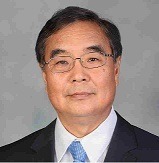
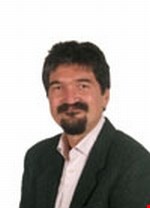
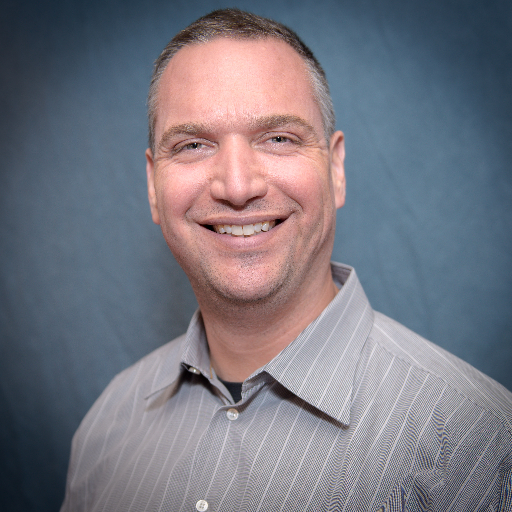
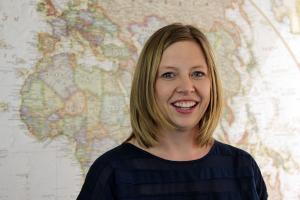
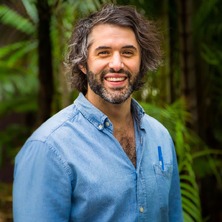
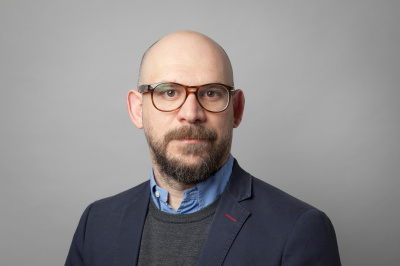
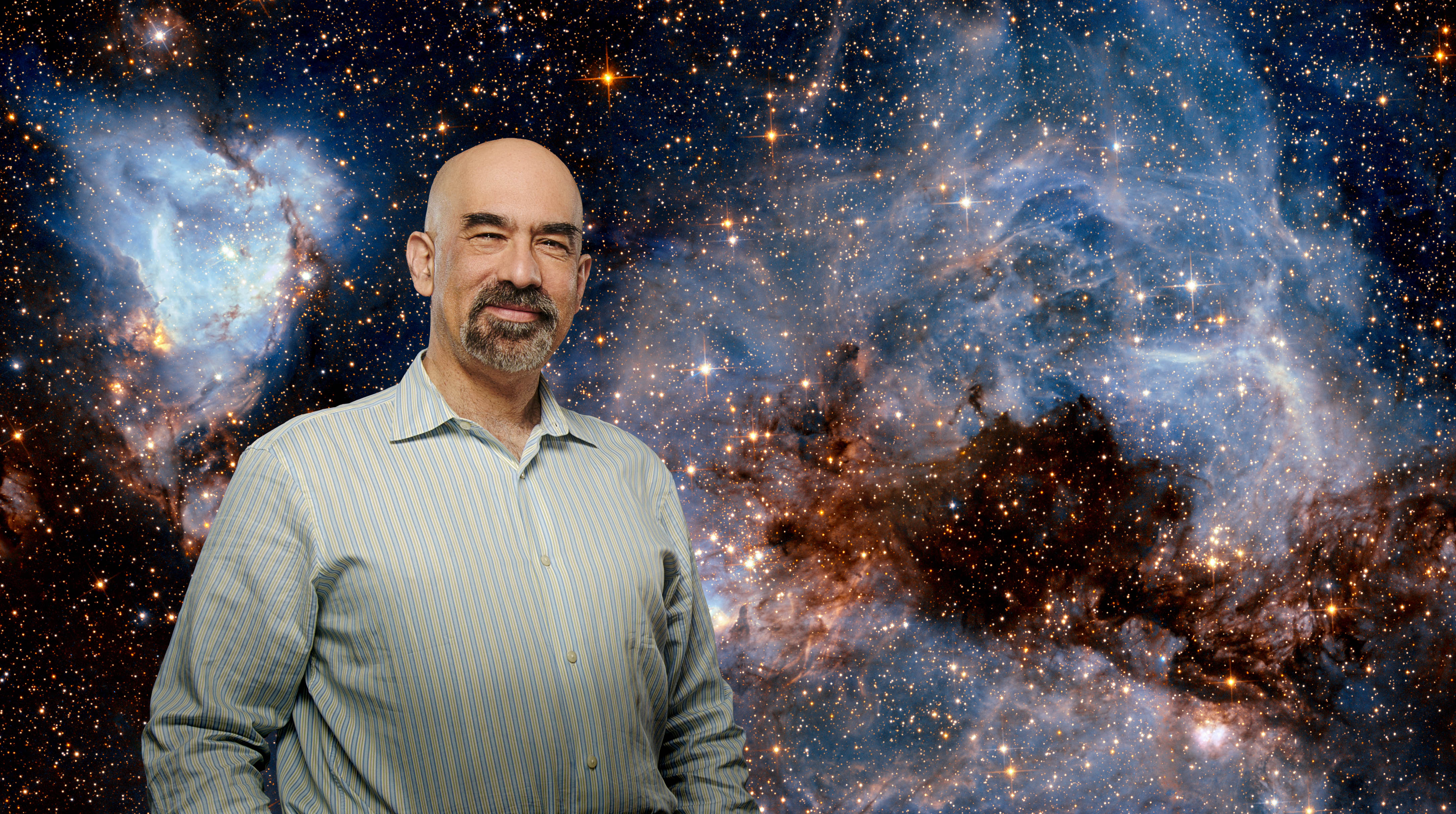
Dr. Tim Lau is a Program Director and Research Degree Supervisor at the University of South Australia's STEM College (UniSA STEM). He is available for media commentary and specializes in fluid dynamics, mechanical engineering, and renewable energy systems. Research Interests : Dr. Lau's work focuses on particle-laden flows, turbulence modeling, vortex dynamics, and solar thermal technologies. His studies explore particle behavior under radiation, flow dispersion in confined environments, and energy efficiency in residential and industrial systems. Publication Trends : His recent articles emphasize experimental and computational analyses of fluid-particle interactions, with applications in hydrogen combustion, solar receivers, and heat exchangers. Key methodologies include laser diagnostics and numerical simulations.
H. Peter Lu is the Ohio Eminent Scholar and Professor in the Department of Chemistry at Bowling Green State University's College of Arts and Sciences. His research focuses on Single-molecule spectroscopy Protein conformational dynamics Interfacial electron transfer processes DNA damage recognition mechanisms Lu's work bridges chemical physics and molecular biology through Development of AFM-enhanced optical imaging techniques Investigations into mechanical force effects on biomolecules Studies of ion channel conformational changes Elucidation of non-Markovian enzymatic reaction dynamics His recent publications reveal trends in Mechanically-induced protein aggregation Force-sensitive receptor dynamics Metal ion effects on protein misfolding Biophysics of DNA repair proteins Advanced single-molecule manipulation tools Scientific recognition includes 2019-2020 BGSU Teaching Award 2014 American Physical Society Fellowship 2009 Olscamp Research Award Multiple PNNL Outstanding Performance Awards 2008 Nobel Symposium Invitations Lu's research group trains students in Single-molecule experimental techniques Protein interaction dynamics Advanced biophysical instrumentation Mechanobiology of cellular processes while maintaining collaborations across disciplines including materials science and computational biology.
Professor George Ghinea is a distinguished academic in the Department of Computer Science at Brunel University London's College of Engineering, Design and Physical Sciences. With over 350 publications and 33 successfully supervised PhD students, he leads cutting-edge research at the intersection of computer science, media studies, and psychology. His educational background includes a PhD from the University of Reading (1999) where he pioneered the Quality of Perception (QoP) metric - a precursor to today's widely adopted Quality of Experience (QoE) concept. He holds multiple degrees with distinction from the University of the Witwatersrand in South Africa, including BSc, BSc (Hons), and MSc in Computer Science. Professor Ghinea's research focuses on perceptual multimedia quality and human-centered e-systems, with particular emphasis on mulsemedia (multiple sensorial media) - his own conceptual framework extending multimedia to engage non-traditional senses. His work spans eye-tracking applications, telemedicine, multi-modal interaction, and ubiquitous computing. Current research explores mulsemedia integration in autonomous vehicles, security-enhanced systems, and accessibility solutions. His publications reveal strong trends in multisensory computing (42% of recent works), telemedicine applications (28%), accessibility research (18%), and network optimization (12%). The work consistently bridges theoretical frameworks with practical implementations, often incorporating physiological data and user perception metrics. Distinguished Visiting Fellow of the Royal Academy of Engineering (2018) SPARC DUO-India 2020 Fellowship Programme recipient Principal Investigator for multiple EU Horizon 2020 projects Research featured in major media including BBC, Forbes, and Daily Telegraph Professor Ghinea has secured substantial research funding through projects like the EU H2020 NEWTON initiative, Royal Academy of Engineering partnerships, and multiple Newton Fund collaborations. His supervision portfolio includes 33 PhD completions with diverse research spanning security behavior in Ghana, physiological QoE in VR, smart city adoption in Oman, and sustainable digital transformation in Qatar. He leads the IMUSY research group focusing on mulsemedia systems and human perception. His laboratory work centers on the IMUSY research group where they develop mulsemedia applications integrating thermal, wind, and olfactory devices for enhanced user experiences. Current team projects include mulsemedia in autonomous vehicles (MulsEAV), physiological data for QoE assessment, and smart city adoption studies.
Dr. TÓTH Csaba is an Associate Professor at the Department of Highway and Railway Engineering, Budapest University of Technology and Economics (BME), Faculty of Civil Engineering. He teaches courses such as Highway and Railway Structures (BMEEOUVAI41) and Pavement Structures (BMEEOUVMU63), while previously teaching Pavement Analysis and Design (BMEEOUVDT81) and Project Management in Transportation (BMEEOUVMU-4). His research focuses on asphalt technology, pavement diagnostics, and sustainable road construction. Phone: +36 1 463 1154 Room: ÉL. ép / 206/E Research Interests: His work emphasizes non-destructive evaluation methods (e.g., Ground-Penetrating Radar), rheological modeling of asphalt binders, recycled asphalt pavement applications, and climate-adapted pavement design. Key methodologies include the Ramberg-Osgood model for dynamic modulus prediction and the virtual inertial point method for structural diagnostics. Scientific Contributions: Recent research trends highlight sustainable road rating systems, thermal stress analysis in asphalt pavements, and advanced diagnostic techniques for infrastructure monitoring. Scientific Awards: Magyar Felvételi Scholarship (#építő250)
Geoff Dover is an Associate Professor in the Department of Health, Kinesiology and Applied Physiology at Concordia University, where he has served since 2008 after directing the Graduate Athletic Training program at the University of Florida. A Certified Athletic Therapist and Certified Athletic Trainer, his research centers on biopsychosocial mechanisms of pain perception and disability, with emphasis on chronic low back pain and athlete rehabilitation. His academic credentials include: PhD from the University of Florida MS from the University of Florida Diploma in Sports Injury Management from Sheridan College BSc in Human Kinetics from the University of Guelph Dr. Dover implements biopsychosocial models to investigate how psychological factors like catastrophizing and fear avoidance interact with functional limitations in chronic pain development. His work identifies risk factors for heightened pain perception and reduced functionality across diverse populations, utilizing innovative tools such as infrared thermography for objective pain assessment and fracture healing monitoring. This research addresses the societal burden of chronic pain through improved clinical outcomes in musculoskeletal disorders. Analysis of his 2020-2024 publications reveals consistent focus on chronic low back pain mechanisms, athlete concussion recovery, and psychological determinants of rehabilitation outcomes. His methodology emphasizes randomized controlled trials, systematic reviews, and psychometric validation of assessment tools, with practical applications in athletic therapy settings. Key trends include quantifying fear avoidance behaviors, evaluating novel interventions like aquatic exercise, and establishing correlations between pain catastrophizing and physiological responses. Scientific Awards: No scientific awards were documented in the provided materials As a thesis supervisor for MSc and PhD candidates in Health and Exercise Science, Dr. Dover mentors graduate students through the Athletic Therapy Research Laboratory. This facility investigates pain perception variability, recovery trajectories, and functional adaptations in both athletic and general populations, with specialized focus on pain-related fear measures. His lab bridges clinical practice and research through partnerships with Concordia's Perform Centre.
Julie Sykes is a Professor in the Linguistics Department at the University of Oregon's College of Arts and Sciences, where she serves as the Director of the Center for Applied Second Language Studies. She is affiliated with the Language Teaching Studies program and maintains an office in Straub Hall on the University of Oregon campus in Eugene. Dr. Sykes' research focuses on interlanguage pragmatics, second language acquisition, and the integration of digital technologies in language education. Her work particularly emphasizes game-based approaches to language learning and the development of pragmatic competence through digital simulations and virtual environments. She has made significant contributions to understanding how learners acquire pragmatic knowledge in digital contexts and how technology can be leveraged to enhance language teaching and learning. Research Focus Areas: Interlanguage pragmatics in digital contexts Game-based language learning Digital simulations for language assessment Technology-enhanced language teaching methodologies Place-based mobile language learning Pragmatic competence development Her scholarly output demonstrates consistent engagement with the evolving landscape of language education, particularly in how digital spaces and gaming environments can facilitate authentic language use and pragmatic development. Dr. Sykes has published extensively on topics including language teaching through play, digital place-based learning, and the measurement of intercultural and pragmatic competence in simulated environments. As Director of the Center for Applied Second Language Studies, Dr. Sykes plays a leadership role in advancing research and practice in language education at the University of Oregon, contributing to the preparation of language educators who work in increasingly digital and globalized contexts.
Professor Eigil Kaas is affiliated with the Niels Bohr Institute at the University of Copenhagen . His work spans climate dynamics , numerical weather prediction (NWP) , and atmospheric modeling . As former Section Head of Climate and Computational Geophysics , he leads research on climate-chemistry coupling and sea ice impacts. Education : MSc (1987) and PhD (1993) in Meteorology from University of Copenhagen Research Focus : Climate dynamics and physics Numerical methods in atmospheric models Machine learning for weather prediction Arctic sea ice-climate interactions Thunderstorm electricity and radiation Coupled atmosphere-ocean modeling Article Trends : Recent work combines neural networks with radiative transfer optimization Focus on storm dynamics and gamma-ray flashes Extreme precipitation modeling under climate change Pioneering tidal flow studies in Faroe Island fjords Teaching Legacy : Instructor of Atmospheric Physics and Dynamical Meteorology courses Developed zonally averaged climate model for educational use Mentored 12 PhD/MSc students with DMI/ECMWF collaborations Professional Roles : Chairman of BFI Group 28 (Geosciences & Climate) Scientific Advisory Committee member at ECMWF Project lead in EU ENSEMBLES and PEGASOS initiatives
Josefine Rasmussen serves as an Assistant Professor in the Department of Business Administration within Linköping University's Department of Economic and Industrial Development (IEI). Her academic work focuses on the intersection of governance systems and industrial sustainability transitions, with particular emphasis on energy management practices in manufacturing and process industries. Faculty of Economic and Industrial Development (IEI) Department of Business Administration (FEK) Linköping University, Sweden Her research program investigates how governance structures can be designed to advance sustainability in industrial contexts, examining energy efficiency implementation, circular business model development, and the financial implications of sustainability transitions. Rasmussen employs qualitative case study methodologies to analyze management accounting practices, controller roles in energy systems transitions, and the integration of sustainability reporting requirements like the EU's Corporate Sustainability Reporting Directive (CSRD). Current research projects include The interaction between sustainability reporting and financial management practices , Local synergies for sustainable and diversified CO₂ use , and The controller - an unexplored actor in the transition to sustainable energy systems , which received 4.6 million SEK funding from the Swedish Energy Agency. Her publication record demonstrates consistent output in high-impact sustainability journals with a clear trajectory from foundational work on non-energy benefits of efficiency investments toward contemporary analyses of circular business models and sustainability governance. Rasmussen actively supervises master's theses in governance and sustainability topics and serves as course manager for Strategy & Governance (722G96) in the Master of Business Administration program. Her teaching directly connects with research through practical applications of governance frameworks for sustainability transitions in industrial settings.
J.W. Stewart is a Lecturer in the Sport, Tourism, and Hospitality Management Department at the Pompea College of Business, University of New Haven. A veteran broadcaster with nearly 30 years of experience, he has worked at ESPN for 12 years and spent four years as a sports anchor/reporter at NBC Connecticut. Currently teaching and advising students, he also broadcasts University of New Haven football games and co-hosts a sports podcast with the university's Interim President. B.A. in Communications from Marist College M.S. in Sport Management from University of New Haven Stewart's research and professional focus spans sports management, broadcasting techniques, and media relations in athletics. His recent media appearances cover diverse topics including: NFL and NBA draft analysis WNBA growth and fan engagement Controversial sports figure legacies League rule changes and merchandising His work emphasizes practical sports industry knowledge through active broadcasting and teaching.
Professor Richard Morgan is an academic at the University of Queensland's School of Mechanical and Mining Engineering, where he served as Director of the Centre for Hypersonics from 1997 to 2021. His research specializes in hypervelocity aerothermodynamics, scramjet propulsion, and advanced hypersonic testing facilities. He lectures in mechanical and aerospace engineering and maintains an extensive international research program. His research focuses on: Development of hypervelocity impulsive facilities (including the 'X' series expansion tubes) Hypersonic aero-thermo-dynamics and radiation physics Scramjet propulsion systems for high-speed flight Planetary entry phenomena including ablation and radiation coupling Superorbital ground testing methodologies Analysis of recent publications reveals a dominant focus on experimental hypersonics, particularly in expansion tube facility development, radiation measurement techniques, planetary entry simulations, and aerodynamic heating. His work consistently addresses challenges in recreating extreme flight conditions for spacecraft and missile technologies. Awards and honors include: NASA Ames Honour Award (2010) for contributions to Hayabusa asteroid sample return mission observations UQ Excellence in Research Higher Degree Supervision Award (2012) He leads significant research collaborations with DSTG, NASA, ESA, Oxford University, and Ecole Centrale Paris, supported by continuous ARC funding since 1990 including current Discovery grants. His laboratory develops cutting-edge facilities like the X3 expansion tube and T6 Stalker Tunnel for hypersonic testing.
Professor Vincent Wheatley is a Professor at the School of Mechanical and Mining Engineering, University of Queensland , and Co-Director of the Centre for Hypersonics . His research focuses on supersonic plasma flows , hypersonics , and computational fluid dynamics , with applications in inertial confinement fusion and scramjet engines for space propulsion. Education: PhD in Aeronautics (2005), California Institute of Technology MEngSc (Mechanical), University of Queensland BE (Mechanical and Space), University of Queensland His recent work (2025–2021) explores scramjet combustion dynamics (e.g., hydrogen/ethylene fuel injection), plasma instabilities in multi-fluid models, and hypersonic noise and shock wave interactions . These studies employ direct numerical simulation (DNS) , large eddy simulation (LES) , and reacting flow modeling . Scientific Awards: Australia's Research Field Leader in Aerospace and Aviation Engineering (2018) 2017 Australian Award for University Teaching – Award for Teaching Excellence Professor Wheatley supervises projects on plasma fuel engines and hypersonic propulsion , supported by grants from the Australian Research Council (ARC) and Commonwealth Defence Science and Technology Group . His team collaborates on multi-fluid plasma simulation and scramjet optimization .
Associate Professor James N. Kirby is a Clinical Psychologist and Co-Director of the Compassionate Mind Research Group at the School of Psychology, University of Queensland. He holds affiliate positions at the Parenting and Family Support Centre, Early Cognitive Development Centre, and Centre for Health Outcomes, Innovation and Clinical Education (CHOICE), all within the Faculty of Health, Medicine and Behavioural Sciences. Additionally, he maintains a Visiting Fellowship at the Center for Compassion and Altruism Research and Education at Stanford University and is an Honorary Member of the Compassionate Mind Foundation UK. Dr. Kirby earned his Bachelor (Honours) of Psychological Science and Doctor of Philosophy from the University of Queensland. His expertise spans clinical psychology with a specialization in compassion research and interventions. Dr. Kirby's research focuses on compassion and its applications in mental health. His work examines factors that facilitate and inhibit compassionate responding, with particular attention to how compassion-focused interventions help address self-criticism and shame underlying depression and anxiety disorders. His research spans multiple domains including parenting, athlete well-being, mental health in the performing arts, and compassion in healthcare settings. He investigates compassion from multiple angles: as a transdiagnostic treatment target, its neurophysiological correlates, its relationship to social rank and attachment, and its application in diverse populations including autistic adults and fathers. His recent publications reveal a strong emphasis on practical compassion-focused interventions across diverse contexts. There's a clear trend toward examining compassion's physiological correlates (particularly heart rate variability), its application in specific populations (autistic adults, athletes, performing artists), and its role in addressing specific mental health challenges like weight stigma in lipoedema. His work increasingly incorporates digital assessment tools and examines compassion in everyday life through experience sampling methods. The research demonstrates how compassion functions as a cross-cutting therapeutic mechanism applicable across multiple mental health conditions. Associate Editor, Mindfulness journal Associate Editor, Psychology & Psychotherapy: Theory, Research & Practice Author of Choose Compassion (2022) Co-editor of Making an Impact on Mental Health (2020) Co-author of Essentials of Compassion Focused Therapy: A Practice Manual for Clinicians (2024) Dr. Kirby is actively involved in research supervision, currently overseeing multiple PhD candidates across diverse projects related to compassion. His current supervision includes research on deepening self-compassion, online compassion skills training, compassion in healthcare, gender and sexuality perspectives on body image, and compassion-based interventions for caregivers of children born preterm. He has successfully supervised several PhD students to completion, with research focusing on social and affective impacts of attachment, compassion-focused therapy for body weight shame, neurophysiological correlates of compassion, and compassion in parenting contexts. His grants portfolio includes projects funded by Australian Red Cross Lifeblood, Anglicare Southern Queensland, Metro North Hospital and Health Service, and YoungCare Ltd. As Co-Director of the Compassionate Mind Research Group, Dr. Kirby leads a multidisciplinary team dedicated to advancing the science and application of compassion. His current research examines compassion in blood donation, the justice system, traumatic pregnancy, and compassionate decision-making, demonstrating the breadth and impact of his work across multiple domains of human experience.
Giacomo De Giorgi is Full Professor of Economics at the Institute of Economics and Econometrics, Geneva School of Economics and Management (GSEM), University of Geneva, and holds visiting appointments at UC Irvine. An alumnus of University College London (Ph.D.), he previously served as assistant professor at Stanford University (2006–2013), visiting professor at UC Berkeley and Columbia University, research professor at ICREA-MOVE/Barcelona GSE, and senior economist at the Federal Reserve Bank of New York (2014–2016). He is an associate editor of the Journal of the European Economic Association and a research fellow of CEPR and BREAD. Education Ph.D. in Economics, University College London Research Interests De Giorgi’s research integrates applied micro-econometrics with policy-relevant questions in development, labor, and household finance. His work explores how social networks shape economic decisions, the distributional impacts of cash and in-kind transfer programs, lifecycle inequality across racial and migrant groups, and the determinants of micro-enterprise formalization. Methodologically, he leverages large-scale randomized controlled trials, quasi-experimental designs, and cutting-edge network econometrics. Recent projects investigate: • Consumption and inequality : quantifying racial gaps in income and consumption dynamics over the lifecycle; • Financial inclusion : analyzing credit market imperfections, subprime borrowing, and the effects of business literacy interventions; • Migration and integration : comparing economic trajectories of migrants and natives in Denmark and the impact of refugee inflows on child poverty. Publications & Impact With more than 25 peer-reviewed articles in top journals—including the American Economic Review , Review of Economic Studies , Economic Journal , and Journal of Public Economics —De Giorgi’s scholarship has advanced understanding of social spillovers, program evaluation, and macro-financial linkages. His 2020 Review of Economic Studies paper on “Consumption Networks Effects” (with Frederiksen & Pistaferri) has become a benchmark for identifying neighborhood and family influences on household spending. Scientific Awards 2020 Banamex Prize for the best article published in American Economic Journal: Economic Policy Seminar & Grant Activity De Giorgi co-founded and co-organizes the Virtual Development Economics Seminar (VDEV), a joint initiative of BREAD, CEPR, and VDEV that hosts weekly online seminars reaching a global audience. He has delivered over 150 invited talks at institutions such as the World Bank, NBER, LACEA, and universities across five continents. His research has been supported by grants from the World Bank, CEPR, and private foundations. Teaching & Programs At Geneva, he teaches Development Economics, Labor Economics, and Advanced Econometrics at both graduate and executive levels. He co-founded the IEE Honors’ Program, an innovative selective track that immerses top undergraduate students in frontier research and policy engagement.
Dr Helen Parker is a Research Fellow in the Discipline of Exercise & Sport Science, School of Health Sciences, at the University of Sydney. Her work bridges nutrition, exercise science, and women's health. She holds a PhD (2015) and a Graduate Certificate in Educational Studies (2019), and is a Fellow of the Higher Education Academy. Her research explores body composition, omega-3 supplementation, gamified mobile apps for cardiac rehabilitation, and weight stigma in young women. Research trends from her 15 most recent publications (2025–2015) span cardiometabolic health, digital health interventions, obesity management, and behavioral nutrition. Key projects include the MyHeartMate gamification app and the everyBODY study targeting weight stigma. Scientific awards: Heart Foundation Vanguard Grant Rotary Mental Health Australia Funding Australia Nutrition Trust Fund Scholarship Multiple Higher Education and Research Society Awards She teaches in the Bachelor of Applied Science (Exercise & Sport Science, Exercise Physiology) and guest lectures across Physiotherapy, Nursing, and Nutrition programs. Active in professional societies including the Nutrition Society of Australia and Australian Cardiac Rehabilitation Association .
David Reiley is an Adjunct Professor at the UC Berkeley School of Information, where he teaches Data Science 241: Experiments and Causal Inference. He is also a Distinguished Scientist at SiriusXM Pandora, where he has worked since 2020, focusing on research related to advertising and consumer behavior. Dr. Reiley received his Ph.D. in Economics from MIT in 1996 and his AB in Astrophysical Sciences from Princeton University in 1991. His academic career includes positions as Arizona Public Service Professor of Economics at the University of Arizona (2006-2009), Associate Professor of Economics at the University of Arizona (2001-2006), and Assistant Professor of Economics at Vanderbilt University (1996-2001). He has also held visiting positions at institutions including Northwestern University, the European University Institute, and the Kiev School of Economics. Dr. Reiley is a leading expert in field experiments in economics, having helped popularize their use in the discipline. His research focuses on advertising effectiveness, auction theory, charitable giving, and electronic commerce. He has conducted numerous field experiments to measure the effects of online advertising, particularly during his time at Yahoo! Research (2007-2012) and Google (2012-2015). His work has demonstrated how field experiments can provide valuable insights into consumer behavior that traditional observational methods cannot capture. Dr. Reiley has received several prestigious awards including the Distinguished Faculty Award from UC Berkeley School of Information (2016) and the Dick Wittink Prize for the best paper published in Quantitative Marketing and Economics (2015). He was also honored with Yahoo!'s Super Star Award, the company's highest honor for employees, in 2009. As an educator, Dr. Reiley has been instrumental in developing courses on field experiments and experimental methods. He has advised numerous students and collaborated with researchers across various institutions. His textbook "Games of Strategy" (co-authored with Avinash Dixit and Susan Skeath) is widely used in game theory courses.