Prof. Dr. Jessie Pons is a Professor of South Asian Religious History at Ruhr University Bochum (Germany), affiliated with the Centre for Religious Studies (CERES). She holds a Ph.D. in Art History from the University of Paris-Sorbonne (2011) and has held postdoctoral and visiting research positions at institutions including the Käte Hamburger Kolleg. Her expertise spans Gandharan Studies, Early Buddhism, religion and materiality, and digital humanities. Pons leads projects like DiGA (Digital Gandharan Artefacts) and the Pelagios Working Group, advancing digital preservation of Buddhist cultural heritage. She teaches courses on South Asian religions and has supervised multiple Ph.D. students. Her research focuses on Gandhara’s artistic networks, Mahayana Buddhism’s emergence, and religious material heritage preservation. Education: Ph.D., Art History, University of Paris-Sorbonne (2011) M.A., Museum Studies, École du Louvre (2005) B.A., Art History & Archaeology, SOAS, London (2002) Research Interests: Early Buddhist Art and Networks in Gandhara Material Culture and Religious Experience Digitization of Cultural Heritage Inter-religious Dynamics in South Asia Recent Projects: DiGA: Digital Documentation of Gandharan Artefacts Pelagios Working Group: Linked Data Methodologies Co-edited De l'Oxus au Gange (2024) Grants & Roles: Principal Investigator, SFB 1475 „Metaphern der Religion“ Directorial Member, CERES Coordinator, „Religion & Medien“ initiative
Dr Sarah Son is a Senior Lecturer in Korean Studies at the School of Languages, Arts and Societies, University of Sheffield , where she has been a faculty member since 2019. Her work bridges academic research with practical engagement in human rights and cultural analysis. BA from Bond University MA from SOAS, University of London PhD from SOAS, University of London Dr Son's research focuses on identity in international relations , human rights monitoring in North Korea , and pop culture's role in East Asian international relations , with additional work on migration, diaspora, and peace-building. Her interdisciplinary approach combines anthropology, sociology, and history to analyze complex regional politics. Her recent publications explore transitional justice frameworks for North Korea, K-drama's geopolitical narratives , and remote sensing technologies for human rights documentation . These works highlight her expertise in both empirical and theoretical dimensions of East Asian studies.
Nicholas Dew is an Associate Professor and Department Chair in the Department of History at McGill University. He holds a D.Phil. from the University of Oxford, awarded in 2000. His research specializes in early modern European and Atlantic history, particularly the cultural, scientific, and colonial developments of France during the 17th and 18th centuries. Dew’s work examines the intersections of colonialism, science, and medicine, as well as the trans-Atlantic dimensions of French scientific endeavors. Education: D.Phil. (Oxford), 2000 Research Interests: His scholarship focuses on France’s cultural history, including the role of knowledge production under Louis XIV, global scientific networks, and the socio-political contexts of exploration and empire. He explores themes such as Colbert’s influence on scientific policy, the history of measurement, and the symbolic representation of science in art and iconography. Publications & Awards: Dew’s book Orientalism in Louis XIV’s France won the Wallace K. Ferguson Prize (2011). His work has been supported by prestigious fellowships, including the Dibner Fellowship (Huntington Library) and the Inter-Americas Fellowship (John Carter Brown Library). His recent articles analyze geodesy, scientific expeditions, and the intellectual foundations of early modern empires. Professional Contributions: He co-founded the French Atlantic History Group and contributed to edited volumes like Science and Empire in the Atlantic World . Dew has led SSHRC-funded initiatives, including the “Situating Science” and “Making Publics” collaborative projects, and teaches courses on the Scientific Revolution, Atlantic Worlds, and historiography. Labs & Teams: Active in interdisciplinary research, Dew collaborates with scholars across history, philosophy of science, and global studies. His current project traces French science’s trans-Atlantic networks between 1670–1740.
Timothy Pettipiece is an Associate Professor in the Department of Religion at Carleton University, part of the College of Humanities. He holds an Hon. BA in Classical Languages from the University of Guelph (2000), an MA in Religion and Culture from Wilfrid Laurier University (2002), and a PhD in Religious Studies from Université Laval (2006). His research focuses on interdisciplinary approaches to religious cultures of Late Antiquity, particularly Gnostic and Manichaean studies, and the reception of ancient religious ideas in modern media. His teaching interests include Classics and Religion, with a specialization in Manichaean literature and the intersection of late ancient religious texts with contemporary cultural narratives. Key research areas are Coptic Manichaean homilies, Syriac Christianities in Mesopotamia, and gender roles in early religious communities. Dr. Pettipiece’s publications emphasize textual analysis of apocryphal traditions, redaction criticism in Manichaean and early Christian texts, and comparative religious studies. Recent work explores intersections between Manichaean theology and global religious movements, as well as modern reinterpretations of ancient mythologies in popular culture. He currently serves as an academic leader in Carleton’s Religion program, contributing to both undergraduate and graduate curriculum development. His office is located in 2A51 Paterson Hall, and he maintains active engagement with international scholarly networks through conferences and collaborative research projects.
Miriam Shadis is an Associate Professor in the Department of History at Ohio University, affiliated with the College of Arts and Sciences and the Center for Law, Justice & Culture. She teaches courses on medieval Europe, gender, religion, and interfaith relations, and serves as Director of Studies for the History Program in the Honors Tutorial College and as an advisor in the Margaret Boyd Scholars Program. Education: Ph.D. in History, Duke University (1994) Graduate Certificate in Women's Studies, Duke University B.A. in Intercultural Studies (minor in Arts and Aesthetics), Simon's Rock of Bard College Dr. Shadis specializes in medieval European history, with a focus on royal women in Iberia during the High and Central Middle Ages. Her research explores the political agency of queens, gender and power, religious identity, and interfaith dynamics in medieval Spain and Portugal. She has published extensively on Berenguela of Castile and is currently working on a book about the queens of early Portugal. Her work intersects with feminist historiography, legal traditions, and cultural studies. Her recent scholarly output shows a strong thematic focus on women in medieval courts, Marian symbolism in legal documents, and cross-cultural interactions in the Mediterranean. These works reflect interdisciplinary engagement with gender studies, religious history, and political theory. Scientific Awards and Recognitions: Fulbright Fellow, Lisbon, Portugal (2016) Junior Faculty Fellow, Charles Ping Institute for the Humanities (2006–2009) Dr. Shadis is actively involved in academic mentoring, having directed study abroad programs and served in leadership roles in honors education. She has participated in NEH and CIEE faculty development seminars, contributing to curriculum innovation and international academic collaboration. Though specific grant details are not listed, her Fulbright and NEH affiliations indicate significant external support. She is associated with the Mediterranean Seminar at UC Santa Cruz and contributes to the global network of medieval scholars. Her teaching and research emphasize interdisciplinary approaches, bridging history, law, gender, and culture.
Dr. Charlotte Steenbrugge is a Lecturer in Medieval Literature at the School of English, University of Sheffield . She specializes in medieval English drama, interregional comparisons of Dutch and French drama, and the relationship between sermons and theatrical performance. PhD from University of Cambridge (2009) Former Marie Curie Fellow at Bristol and Toronto Vice-Chancellor’s Fellow at Sheffield (2015–present) Her research explores historical scepticism in medieval texts and the didactic aims of drama versus sermons. Recent work focuses on theatricality, authority, and audience engagement in medieval performances. She supervises PhD students in medieval literature and teaches undergraduate and postgraduate modules on medieval English language and literature. Scientific contributions include publications on moral plays, biblical adaptations, and comparative studies of the Vice/Sinnekens characters. She actively participates in medieval drama performance projects as a director and scholar.
Andres Verzijl is a Researcher focused on water justice, sustainability, and the interplay between indigenous knowledge and techno-scientific approaches. His work emphasizes grassroots initiatives and fostering symmetrical conversations between diverse forms of knowing. Over 15 years, he has engaged in training students, water professionals, and leaders in irrigation governance and water management in the Andean countries and Asian deltas, particularly the Nile Basin. He critiques how policy discourses and scientific knowledge often marginalize local water practices, advocating for inclusive frameworks that respect multiple knowledges. His research interests center on ontological tensions in water governance, applying political ecology and actor-network theory to study how scientific knowledge and policy discourses influence development projects. He explores these themes through case studies in Peru, Ecuador, India, and Sudan, focusing on groundwater management, irrigation systems in fragile environments, and transnational policy dialogues between regions like the Netherlands and Bangladesh/Vietnam. Recent articles highlight his engagement with spatial variability in Sudan’s Gezira scheme, socio-hydrology experiments in India’s Cauvery Delta, and community-driven water management in the Andes. These works emphasize grassroots perspectives and the role of local knowledge in addressing water security challenges. While no scientific awards are listed, his contributions reflect a commitment to equitable, practice-based solutions in water governance. Andres’s narrative on advising and grants notes his extensive training programs, though specific advisees or grant details are not provided. His work often intersects with community-based initiatives, suggesting a focus on applied research and policy advocacy. No lab or team affiliations are explicitly mentioned, though his collaborations with grassroots leaders imply ongoing engagement with field-based networks.
Yulia Mikhailova is an Associate Professor of History at the New Mexico Institute of Mining and Technology , specializing in Comparative History of Medieval Europe and Post-Soviet Russia . She actively promotes mental health advocacy as Chair of the ISPS-US Advocacy Committee . PhD in History (with distinction), University of New Mexico (2013) MA in Russian, Michigan State University (2002) Her research spans Medieval Europe , Early Modern Europe , Gender and Sexuality , and Inter-Ethnic Relations , with a focus on Rus-Latin Europe comparisons and modern political uses of medieval history . Recent publications examine elite women in chronicles , religious warfare , and emotion in political narratives . PhD with Distinction (University of New Mexico) She teaches courses on European history , Soviet/post-Soviet history , and history of science/technology , while collaborating with local mental health initiatives.
Michael Willis is a Senior Research Fellow at the Royal Asiatic Society in London, UK. He previously served as Corresponding Principal Investigator for the ERC Synergy Project 'Religion, Region, Language and the State' (2014–2020) and as a Curator in the Department of Asia at the British Museum (until 2014). He has held visiting professorships at the Collège de France and the University of Groningen. His research focuses on the political, cultural, and religious history of South and Southeast Asia (5th–14th centuries), with a specialization in inter-religious dynamics of mantra practices across Buddhism, Jainism, and Hinduism. He organized a workshop at Ruhr University Bochum (2011–2012), leading to a special issue of the Bulletin of the School of Oriental and African Studies (2012). Education: PhD from the University of Chicago, Art History teaching at SUNY New Paltz. Current Roles: Secretary of a research group on pre-modern slavery/servitude in South and Southeast Asia. His work bridges material culture (e.g., British Museum collections) with textual analysis, emphasizing trans-regional religious exchanges. Though no specific awards are noted, his contributions to ERC projects and academic publications highlight interdisciplinary impact. Grants/Projects: ERC Synergy Grant (2014–2020), British Museum curatorial leadership. He collaborates with international institutions like the Käte Hamburger Kolleg (2011 visiting fellowship) and maintains an active research group network.
Iana Shaheen is an Assistant Professor of Supply Chain Management in the Walton College of Business at the University of Arkansas. Her research focuses on leadership, uncertainty, and disruptions in supply chain settings, with particular attention to how disruptions affect commercial supply chains and the significance of leadership and resilience during response and recovery. She also studies inter-organizational relationships within humanitarian supply chains. Dr. Shaheen's educational background includes: PhD in Business Administration from the University of South Florida MS in Marketing from the University of South Florida BS in Management from The Higher School of Economics (Russia) Her research interests center around supply chain disruptions, humanitarian logistics, and leadership in crisis situations. Dr. Shaheen examines how organizations respond to and recover from disruptions, with special focus on the role of leadership and organizational resilience. She investigates the dynamics of inter-organizational relationships in humanitarian contexts, particularly in settings like refugee camps and food banks during crises such as the Rohingya refugee situation and the COVID-19 pandemic. Her work bridges theoretical frameworks with practical applications in both commercial and humanitarian supply chains. Dr. Shaheen's scholarly contributions demonstrate a consistent focus on understanding how supply chains function under stress, with increasing attention to humanitarian contexts in recent years. Her publications span top-tier journals in operations management and supply chain disciplines, showing a progression from theoretical frameworks to applied case studies in real-world humanitarian crises. The research reveals growing interest in social dimensions of supply chain management, including gender dynamics, religious influences, and psychological factors in disaster response. Her notable recognition includes: IJOPM Best Paper Award 2021 for "Leadership styles in supply chain disruptions: a multimethod evaluation based on practitioner insights" Dr. Shaheen is actively engaged in academic service, currently serving as Associate Editor for the Journal of Supply Chain Management and International Journal of Production and Operations Management. She holds leadership positions including VP of Marketing for the Decision Sciences Institute and VP of Awards for the Humanitarian Operations Crisis Management College within the Production and Operations Management Society. Her professional service reflects her commitment to advancing research in supply chain management, particularly in humanitarian contexts. As an educator, Dr. Shaheen focuses on creating a safe and active learning environment that empowers students to develop knowledge through experience and reflection. She aims to equip students with skills that make them comfortable, adaptive, and responsive to the fast-moving business world.
Dr. Sara Keller is a Postdoctoral Fellow at the Max-Weber-Kolleg (University of Erfurt), specializing in Architectural Theory and South Asian Urban History . Her current habilitation thesis "Water Urbanities..." (submission Feb 2025) explores medieval South Asian water architecture. University of Erfurt: Postdoctoral Fellow (2025) Max-Weber-Kolleg: Researcher in Architectural and Cultural Studies Research Focus : • Water Urbanities – analyzing water spaces as socio-political-religious urban nodes • Architectural Resonance – investigating built environments as 'living organisms' • Inter-cultural Connections – tracking Mediterranean-Indian Ocean knowledge transfers Publication Trends : Her 15 recent works (2016–2024) establish a water-centric urban theory for South Asia, combining archaeological analysis with cultural geography , epigraphic studies , and comparative architectural philosophy (Vāstu śāstra, Islamic traditions).
Holger Weiss serves as Professor of General History at Åbo Akademi University's Faculty of Arts, Psychology and Theology within the Department of Culture, History and Philosophy. Since January 2025, he has held an affiliated professorship at Gothenburg University, following prior guest professorships at Dalarna University (2015-2019) and Gothenburg University (2022). A member of the Finnish Society of Sciences and Letters, Weiss maintains active research collaborations across multiple institutions. Doctor of Philosophy (1997), University of Helsinki Licentiate of Philosophy (1994), University of Helsinki M.A. (fil.kand.) (1991), University of Helsinki Docent of African History (1998), University of Helsinki Docent of Global History (2003), Åbo Akademi University Weiss's research explores global and Atlantic historical entanglements , with specialized focus on Danish Gold Coast possessions and Swedish Saint Barthélemy colony dynamics. His work examines Caribbean/Atlantic cotton flows in early modern Sweden, West African environmental history (particularly Ghana), and Islamic studies in Ghana . Current projects analyze transnational labor movements including the International Trade Union Committee of Negro Workers and International of Seamen and Harbour Workers during the Interwar period, alongside contemporary Muslim social mobilization in Ghana. Recent publications reveal evolving research trajectories toward digital-era Muslim empowerment and transnational solidarity networks . His 2023-2025 output demonstrates increased focus on Ghanaian Islamic organizations, Atlantic labor history, and Nordic slavery heritage, with methodological emphasis on archival research across nine countries and fieldwork in Ghana. Weiss leads the active Muslim Empowerment in Ghana (MEG) project and Radikala sjötransportarbetare initiative, while previously directing projects on Ghanaian rhetoric analysis and Swedish class struggle. His supervised works include five academic projects examining West African history and Islamic studies. Fieldwork spans Ghana, Denmark, England, Finland, Germany, Nigeria, Norway, Russia and Sweden, with recent institutional visits to Kwame Nkrumah University of Science and Technology (2024) and Sweden's National Archives (2024).
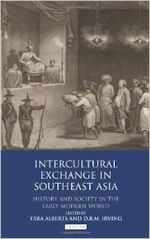
Dr. Tara Alberts is a Senior Lecturer in Early Modern History at the University of York's Department of History. Her research focuses on cross-cultural exchanges between Europe and Asia (c.1500–1700), particularly the circulation of medicines and health ideas along Southeast Asian trade routes. Before joining York in 2012, she held a Research Fellowship at Jesus College, Cambridge, and was a Max Weber Fellow at the European University Institute. She currently serves as the department's International Officer. Her teaching includes undergraduate modules like HIS00125I Historical Thinking and HIS00154H The Crossroads of the World: Southeast Asia c.1500–1750 , as well as postgraduate courses such as HIS00065M Medicine & Spiritual Healing in the Early Modern World . Her research projects explore topics like premodern medical translation, colonial religious conflicts, and intercultural exchange in Southeast Asia. Dr. Alberts has contributed to major journals like Osiris , co-editing special issues on translating medicine across premodern worlds. She leads the Translating Medicine in the Premodern World research project, investigating how medical knowledge traversed global networks between 800–1900. Her work bridges historical methods with interdisciplinary approaches to understand premodern globalization. Her activities include editorial work for Medical History and organizing workshops on medical translation. Her research emphasizes the agency of indigenous actors in knowledge exchange, challenging Eurocentric narratives of early modern global interactions.
Nicola Laneri is a Full Professor of Archaeology and Art History of the Ancient Near East and Eastern Mediterranean at the University of Catania, Department of Humanities. He also serves as Director of the School of Religious Studies at CAMNES in Florence. His academic career includes visiting positions at Columbia University, the University of Chicago, Leiden University, and the Middle East Technical University in Ankara. University: University of Catania School: Department of Humanities Academic Rank: Professor Email: nlaneri@unict.it, nicolalaneri@hotmail.com Office: Palazzo Ingrassia (Via Biblioteca 4), Catania Office Hours: Monday and Thursday, 9:00–12:00 Website: disum.academia.edu/nicolalaneri Education and Academic Appointments: Ph.D., University of Naples L'Orientale (1999) Fulbright Research Scholar, Columbia University (2000) Research Fellow, Italian Academy at Columbia University (2000) Visiting Professor, Middle East Technical University, Ankara (2002–2004) Research Fellow, Oriental Institute, University of Chicago (2005) Erasmus Visiting Professor, Leiden University (2015) Research Interests: Nicola Laneri specializes in the archaeology of religion, funerary practices, and material culture in the Ancient Near East. His work investigates the development of religious systems, ritual transformation, and socioeconomic dynamics across Mesopotamia, Anatolia, and the Eastern Mediterranean. He has conducted extensive fieldwork in Turkey, Iraq, Syria, Iran, and Azerbaijan. Recent Publications and Research Trends: His recent publications reflect a strong focus on the material dimensions of religion, funerary archaeology, and urban development. Key themes include the emergence of polytheism, the social analysis of death rituals, and ceramic production technologies. The 15 most recent works demonstrate a consistent engagement with interdisciplinary approaches, combining archaeology, anthropology, and textual analysis to reconstruct ancient belief systems and socioeconomic structures. Scientific Awards: Laurentum Prize (2024) Advising and Research Grants: Laneri supervises graduate students in topics ranging from Mesopotamian iconography to contemporary museum practices. He has directed or co-directed major archaeological projects including the Hirbemerdon Tepe Archaeological Project (2003–2016), the GaRKAP in Azerbaijan (since 2017), and the Baghdad Urban Archaeological Project at Tell Muhammad (since 2022). He is Principal Investigator of the PRIN 2020 project 'Godscapes: Modeling Second Millennium BCE Polytheisms in the Eastern Mediterranean,' funded by MUR. Labs and Research Teams: He leads international research collaborations involving scholars from Italy, Azerbaijan, the United States, and the Netherlands. His teams integrate archaeological excavation, material analysis, and digital modeling to explore ancient urban and religious landscapes. He is actively involved in training the next generation of archaeologists and fostering cross-institutional academic partnerships.
Dr. German Gamero Igea is an Assistant Professor at the Department of Economics and Business Administration, Faculty of Economic and Business Sciences, University of Burgos. His research focuses on Medieval and Political History, particularly Iberian court dynamics, economic governance, and minority integration during the reign of Ferdinand the Catholic. He leads the research group ERGO Accounting, Change and Society and has published extensively on topics such as royal livery practices, religious service in courts, and material culture in diplomacy. Education: PhD in History from Universidad de Valladolid (2020), thesis on 'Rey y reinos en la corte de Fernando el Católico' supervised by Dr. María Isabel del Val Valdivieso and Dr. John Hamilton Edwards. Key Research Areas: Medieval Court Culture, Political Integration in Iberia, Economic Dispossession Mechanisms, and Royal Governance Structures. His academic work explores the 15th-16th century Iberian Peninsula , analyzing how royal households managed power through gift exchanges, administrative reforms, and minority inclusion. Notable publications include studies on Ferdinand the Catholic’s court practices, Aragonese fiscal policies, and the role of non-elite servants in dynastic transitions. Awards and Collaborations: No specific awards mentioned. Collaborates with institutions like the University of León, Universidad de Alicante, and the research group EMICAL.