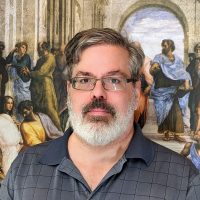
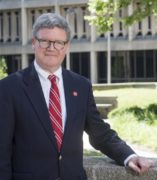
Hakan Karateke is the Kanuni Süleyman Professor for Ottoman and Modern Turkish Studies at the University of Chicago, affiliated with the Department of Near Eastern Languages and Civilizations. He has taught at UChicago since 2009 and serves as Admissions Chair. His research focuses on Ottoman cultural history, philology, and the evolution of Turkish language and historiography. Ph.D., University of Bamberg (1998) His methodological expertise bridges philology and historical analysis, emphasizing textual interpretation and contextual reconstruction. He is currently working on a monograph about 19th-century Ottoman historiography and a multi-year project tracing the cultural history of the Ottoman Turkish language. Recent publications include analyses of Evliya Çelebi’s travel account construction, Ottoman anti-Judaism discourse, and protocol evolution. He co-edits two major academic series: 'Ottoman and Turkish Studies' (Academic Studies Press) and 'The Ottoman Empire and its Heritage' (Brill). His courses cover Ottoman cultural history, language studies, and Near Eastern empires. Research themes span: Ottoman historiography transformation Language perception shifts Inter-ethnic relations Manuscript analysis Political rhetoric Ceremonial studies
Professor Jose Jouve-Martin is a faculty member in the Department of Hispanic Studies at McGill University. His research focuses on the intersection of history and literature in colonial Latin America, particularly exploring themes of slavery, literacy, and colonialism. He has held significant academic roles including Director of Undergraduate Programs in Hispanic Studies and has been funded by major grants such as SSHRC and FQRSC. His work spans monographs, peer-reviewed articles, and edited volumes, with notable publications like Esclavos de la ciudad letrada (2005). He teaches graduate and undergraduate courses on colonial literature, the baroque, and Afro-Hispanic studies. Education: Ph.D. in Hispanic Literature, Georgetown University (2003) Licenciatura in Philosophy, Universidad Autónoma de Madrid (1994) His research interests include the cultural history of opera, funerary rituals in the Spanish Empire, and the role of writing among enslaved populations. He has advised numerous graduate and undergraduate students on topics ranging from colonial drama to modern Latin American literature. His international collaborations include membership in the MCRI 'The Hispanic Baroque' and Brown University's research groups. Prof. Jouve-Martin’s scholarly contributions have been recognized with awards such as an honorable mention for the Franklin Pease G.Y. Memorial Prize (2007). He actively participates in academic service roles, including editorial boards for Revista Canadiense de Estudios Hispánicos and Latin American Research Review .
Dr James D. Holt is Associate Professor of Religious Education at the University of Chester, Faculty of Arts, Humanities and Social Sciences. He serves as subject leader for Religious Education and Social Science, teaching across all Initial Teacher Education programs including PGCE Early Years, PGCE Primary, BA QTS, and PGCE Secondary. James Holt holds a BA, MA, and PhD from the University of Liverpool, an MEd from the University of Birmingham, and a PGCE (Secondary Education) from Manchester Metropolitan University. Prior to his academic career, he was a secondary school Religious Education teacher for 13 years. Holt's research focuses on Religion and Education, particularly the representation of religions in the classroom. His work spans four key areas: Religious Education pedagogy across educational stages, Christian Education with emphasis on faith-based teaching practices, Religion and the arts with focus on fantasy literature, and Systematic theology with specialization in Mormon theology and inter-faith dialogue. His research has led to numerous publications including a series of guides for teaching world religions and books on Religious Education methodology. Holt's recent publications show a strong trend toward practical classroom guides for teaching specific world religions, particularly through his Bloomsbury series 'Teaching Religions and Worldviews.' His work bridges academic theology with practical classroom application, making complex religious concepts accessible to educators. There's also a consistent thread of exploring Mormon theology and inter-faith dialogue throughout his scholarly output. Senior Fellow of the Higher Education Academy (2015) Holt has supervised EdD students and welcomes postgraduate research students. His grant history includes significant projects such as the AHRC-funded 'Christian Ethics of Farmed Animal Welfare Education Project' (2021-2023) as Co-principal investigator, the LASAR Centre's 'Epistemic Insight Initiative' (2019-2020), and the 'Big Ideas' project led by Professor Michael Reiss from UCL (2016-2017). While not explicitly mentioning specific labs, Holt is deeply involved in research networks including the LASAR (Learning about Science and Religion) Centre at Canterbury Christ Church University and has collaborated with the National Institute for Christian Education Research. His work connects academic research with practical classroom application through various teacher training initiatives.
Dr. Simon Scott serves as Associate Professor and Programme Lead for the BASc Arts and Sciences within the Liberal Arts and Natural Sciences school at the University of Birmingham. He convenes the university's Inter- and Transdisciplinarity Education Group and co-leads the Integration Experts working group under the ITD Global Alliance for Inter- and Transdisciplinarity. BA from Kent MA from Royal Holloway PhD from Warwick His research centers on interdisciplinarity frameworks, the philosophical foundations of transdisciplinary approaches, and critical analyses of ancient Greek and continental philosophical traditions. He investigates pedagogical challenges in interdisciplinary education and explores ethical concepts through Platonic and Nietzschean lenses. Recent publications demonstrate consistent focus on bridging interdisciplinary methodology with philosophical inquiry, particularly examining educational implementation challenges, Platonic emotion theory, and Deleuzian interpretations of Nietzsche. This reflects his dual commitment to theoretical rigor and practical pedagogical application. Scientific recognition includes: Senior Fellow of the Higher Education Academy Scott supervises Stage Three LANS Independent Research Projects while teaching core modules including Interdisciplinarity: Study & Practice, Continental Philosophy of Religion, and One Planet Thinking. His editorial work includes co-editing the Springer Nature article collection 'Practice-Based Research of Interdisciplinary Higher Education' and an upcoming 2025 book on interdisciplinary pedagogy. He directs the university-wide Inter- and Transdisciplinarity Education Group, fostering cross-departmental collaboration on pedagogical innovation, and contributes to the ITD Global Alliance's Integration Experts initiative advancing international transdisciplinary research standards.
Petar Jandrić is Professor of Informatics at Zagreb University of Applied Sciences, Croatia, and holds visiting professor positions at University of Wolverhampton and Bath Spa University in the UK. He also serves as Visiting Associate Professor at University of Zagreb's Faculty of Humanities and Social Science. With a background spanning physics, education, and information science, Jandrić's research focuses on the post-disciplinary intersections between technologies, pedagogies, and society. His scholarly work centers on critical pedagogy and information and communication technologies, with particular emphasis on epistemology and multi-, inter-, trans-, and anti-disciplinary approaches. Jandrić has authored or edited numerous influential books including Mobility, Data, and Learner Agency in Networked Learning (2020), Postdigital Dialogues on Critical Pedagogy, Liberation Theology and Information Technology (2020), and Constructing Postdigital Research: Method and Emancipation (2023). He is Editor-in-Chief of the Postdigital Science and Education journal, book series, and encyclopedia, establishing himself as a leading figure in this emerging field. His recent publications demonstrate a consistent focus on postdigital theory, methodology, and applications across diverse contexts from education to theology to political economy. Jandrić's work often takes the form of dialogues with prominent scholars across disciplines, reflecting his commitment to collaborative knowledge production. His editorial and research leadership has helped establish postdigital studies as a significant academic field, with particular attention to the implications of digital technologies for knowledge production, education, and social justice. Jandrić maintains strong connections to Croatian academic contexts while operating at the forefront of international scholarly discourse.
Dr. Katherine Hockey is Lecturer in New Testament Studies at the University of Aberdeen's School of Divinity, History, Philosophy & Art History. Originally the Kirby Laing Postdoctoral Fellow, she specializes in the formation of early Christian identity through interdisciplinary approaches. Her research examines: Emotion in 1 Peter using Stoic philosophy and rhetorical analysis Inter-group dynamics in New Testament communities Methodist hermeneutics in pluralist contexts Ecumenical dialogue through Scriptural Reasoning Hockey's publications focus on Petrine theology, with recurring analysis of shame, non-retaliation, and resilience motifs. Recent work explores love/hate emotions in inter-group relations across biblical texts. She co-convenes Sophia: DRS Women's Network and serves on Society of Biblical Literature committees. Current collaborations include co-editing the T&T Clark Handbook to the Bible and Emotion. She supervises doctoral projects on Pauline community formation, Matthean divine presence, Lukan Mariology, and disability theology. Teaching includes 'Isaiah and the New Testament' and biblical interpretation courses.
Zuleyha Keskin serves as Associate Professor and Associate Head of School at the Centre for Islamic Studies and Civilisation (CISAC) at Charles Sturt University, where she co-founded ISRA Australia in 2009 leading to CISAC's establishment. She has directed multiple Islamic studies programs since 2010 including Bachelor and Master degrees, and currently teaches courses on Islamic spirituality and contemporary Islamic studies. Keskin also serves as Editor-in-Chief of the Australian Journal of Islamic Studies and Vice President of the Australian Association of Islamic and Muslim Studies. Her educational background includes: Bachelor of Pharmacy (BPharm) from University of Sydney Master of Arts (MA) from University of Sydney PhD from Australian Catholic University Keskin's research centers on Islamic spirituality, inner peace, and Islamic psycho-spirituality, with significant contributions to understanding Bediuzzaman Said Nursi's works. Her scholarship bridges traditional Islamic thought with contemporary psychological frameworks, examining how Islamic spiritual practices contribute to mental wellbeing. She has published extensively on Islamic theology and ethics, social justice, and women in Islam, making substantial contributions to Australian Islamic studies. Analysis of her publication record reveals a clear trajectory from foundational work on Said Nursi's perspectives toward increasingly applied research in Islamic psychology and contemporary social challenges. Her recent work explores intersections between Islamic thought and modern issues including risk management, environmental protection, and mental health, demonstrating growing interdisciplinary engagement while maintaining theological depth. Professional leadership roles include: Editor-in-Chief, Australian Journal of Islamic Studies Vice President, Australian Association of Islamic and Muslim Studies Member, Wellbeing and Mental Health Research Group Organising Committee Member, Women Acknowledging Women Awards Muslim Scholar Adviser, Australian Catholic Council for Inter-religious Relations Keskin actively supervises four doctoral candidates focusing on halal certification, Muslim leadership development, and youth entrepreneurship in Australia. Her academic service extends to editorial work, conference organization, and interfaith dialogue initiatives that strengthen Muslim-non-Muslim relations. With an h-index of 16, her research demonstrates significant scholarly impact in the field. She contributes to the Wellbeing and Mental Health Research Group, developing research that is 'insightful, inclusive, and inspiring' by connecting Islamic spiritual traditions with contemporary wellbeing approaches. This work creates meaningful bridges between religious studies, psychology, and social sciences in addressing modern mental health challenges.
Dr Sarah Son is a Senior Lecturer in Korean Studies at the School of Languages, Arts and Societies, University of Sheffield , where she has been a faculty member since 2019. Her work bridges academic research with practical engagement in human rights and cultural analysis. BA from Bond University MA from SOAS, University of London PhD from SOAS, University of London Dr Son's research focuses on identity in international relations , human rights monitoring in North Korea , and pop culture's role in East Asian international relations , with additional work on migration, diaspora, and peace-building. Her interdisciplinary approach combines anthropology, sociology, and history to analyze complex regional politics. Her recent publications explore transitional justice frameworks for North Korea, K-drama's geopolitical narratives , and remote sensing technologies for human rights documentation . These works highlight her expertise in both empirical and theoretical dimensions of East Asian studies.
Dr. Sarah M.A. Gualtieri is a Professor at the University of Southern California, affiliated with the Departments of American Studies and Ethnicity, History, and Middle East Studies. Her research bridges Middle East Migration Studies, Arab American Studies, and Critical Ethnic Studies, with a focus on race, gender, and power dynamics. She holds a B.A. in History from McGill University, an M.A. and Ph.D. in Middle East Studies and History from the University of Chicago. Key research projects include Arab Angelenos , exploring Syrian migration to Los Angeles and inter-ethnic relations, and her award-winning book Between Arab and White , which redefined Arab diaspora studies. Her work interrogates racialization processes, legal discrimination, and diasporic identity formation through historical case studies like the lynching of Syrian immigrant Nicholas Romey in the Jim Crow South. Awarded NEH and ACLS fellowships, Dr. Gualtieri has contributed to PBS documentaries like Faces of America and served as interim chair of her department. Her interdisciplinary approach links historical analysis to contemporary debates on migration, race, and gender, with publications spanning books, edited volumes, and peer-reviewed journals. Awards: Mary C. Turpie Prize (2024), NEH Fellowship (2016-17), ACLS Ryskamp Fellowship (2008-09) Service: Editor for Encyclopedia of Women and Islamic Culture , consultant for major media projects Grants: Over $22,000 for Arab Angelenos project (2010-11), USC Visions and Voices funding (2007-08) Her work establishes critical dialogues between Arab American Studies and broader ethnic studies frameworks, emphasizing transnational linkages and marginalized histories.
Professor Ben Quash is the inaugural Professor of Christianity and the Arts at King’s College London, part of the Department of Theology & Religious Studies. He holds a dual academic background in English Literature and Theology, with a PhD focusing on Hans Urs von Balthasar’s theological dramatic theory. Previously, he served as Dean and Fellow at Peterhouse, Cambridge, and Academic Director of the Cambridge Inter-Faith Programme (2004-2007). His research bridges Christian theology, the arts, and interfaith dialogue, emphasizing how visual, literary, and musical forms engage biblical and theological themes. Key roles include founding and directing the Centre for Arts & the Sacred (ASK) and leading the Visual Commentary on Scripture project. He teaches undergraduate and postgraduate modules on theology, art, and liturgy, including courses like Salvation and the City and Art as a Theological Medium . His work explores modernity’s impact on theology, the role of liturgy in shaping ethics, and the intersection of art with scriptural interpretation. Professor Quash’s media engagements include BBC broadcasts on topics like sacred spaces, Christian art’s legacy, and theological aesthetics. He has authored/co-edited over 60 publications, including Theology, Modernity and the Visual Arts (2024) and Visualising a Sacred City: London, Art and Religion (2016). Awards include the King’s Award for Excellence and Innovation in the Arts (2012).
Youde Fu served as a Visiting Research Fellow at the Center for Judaic and Inter-Religious Studies, Shandong University, China, in 2015. His research focuses on interdisciplinary religious studies, specifically: Judaic Studies (historical, theological, and cultural analysis of Jewish traditions) Inter-Religious Studies (comparative analysis of religious dialogues and conflicts) Religious Studies (broad academic examination of religious phenomena) No scientific awards were documented in the provided text. No details regarding student supervision, research grants, or laboratory affiliations were specified beyond the institutional center. The Center for Judaic and Inter-Religious Studies represents his sole documented academic affiliation, emphasizing cross-cultural religious scholarship.
Timothy Pettipiece is an Associate Professor in the Department of Religion at Carleton University, part of the College of Humanities. He holds an Hon. BA in Classical Languages from the University of Guelph (2000), an MA in Religion and Culture from Wilfrid Laurier University (2002), and a PhD in Religious Studies from Université Laval (2006). His research focuses on interdisciplinary approaches to religious cultures of Late Antiquity, particularly Gnostic and Manichaean studies, and the reception of ancient religious ideas in modern media. His teaching interests include Classics and Religion, with a specialization in Manichaean literature and the intersection of late ancient religious texts with contemporary cultural narratives. Key research areas are Coptic Manichaean homilies, Syriac Christianities in Mesopotamia, and gender roles in early religious communities. Dr. Pettipiece’s publications emphasize textual analysis of apocryphal traditions, redaction criticism in Manichaean and early Christian texts, and comparative religious studies. Recent work explores intersections between Manichaean theology and global religious movements, as well as modern reinterpretations of ancient mythologies in popular culture. He currently serves as an academic leader in Carleton’s Religion program, contributing to both undergraduate and graduate curriculum development. His office is located in 2A51 Paterson Hall, and he maintains active engagement with international scholarly networks through conferences and collaborative research projects.
Professor Linda Hogan is a leading ethicist at Trinity College Dublin, holding the position of Professor of Ecumenics in the School of Religion. She has served as Vice-Provost/Chief Academic Officer and Deputy President of Trinity (2011-2016), and previously as Head of the Irish School of Ecumenics (2006-2010). Her work bridges religious studies, human rights, and gender ethics, with global influence through roles like Chair of UNESCO's AI Ethics Expert Committee (2021). Her research focuses on inter-religious ethics, social-political ethics, and gender studies. Notable contributions include analyses of climate vulnerability through a gender lens and ethical frameworks for AI governance. She has authored three monographs, including Keeping Faith with Human Rights (2015), and edited volumes addressing bioethics and theological engagement. Professor Hogan has received prestigious recognitions such as Royal Irish Academy membership (2023), an Honorary Doctorate from Regis College (2022), and International Women's Forum election (2016). She has delivered keynotes at Oxford, Georgetown, and the United Nations, and advises institutions like the Coombe Hospital and Science Gallery. Her advisory roles include the Irish Council for Bioethics and UNESCO, reflecting her commitment to ethics in public policy and global challenges. Ongoing work addresses AI governance, climate justice, and human rights frameworks.
Ralph Keen is a Professor and Arthur J. Schmitt Foundation Chair in Catholic Studies at the Department of History, University of Illinois Chicago, within the College of Liberal Arts and Sciences. He specializes in early modern European religious history, focusing on the Protestant Reformation, Early Modern Catholicism, and the interplay between classical/patristic traditions and reform movements. He has held academic appointments at institutions like the University of Iowa and Harvard Divinity School. Education: PhD in History of Christianity from the University of Chicago (1990), MA in Classics from Yale University (1980), and BA in Greek from Columbia University (1979). His research has been recognized through prestigious awards including the ICRU Research Award (2009), Obermann Center Fellowship (2008), and NEH grants. He has authored two books and edited nine others, with contributions to major journals like Harvard Theological Review . Research interests span Reformation theology, Catholic Counter-Reformation, Jewish thought, and the reception of classical texts. His recent work examines religious reform's engagement with antiquity. He has advised numerous graduate students and served as Director of Undergraduate Studies at the University of Iowa. Active in academic service, he chairs the American Society of Church History and contributes to editorial boards such as the Catholic Christendom monograph series. Awards: ICRU Research Award, Obermann Fellowship, NEH Summer Stipend, and Margaret Mann Phillips Lectureship. Grants: Arts and Humanities Initiative Grant (2002), International Programs Travel Grants (2000, 2006), and Miller Fund Traveling Award (1998). He currently directs UIC's Honors College and oversees Catholic Studies initiatives. His work bridges historical scholarship and contemporary religious discourse.
Andres Verzijl is a Researcher focused on water justice, sustainability, and the interplay between indigenous knowledge and techno-scientific approaches. His work emphasizes grassroots initiatives and fostering symmetrical conversations between diverse forms of knowing. Over 15 years, he has engaged in training students, water professionals, and leaders in irrigation governance and water management in the Andean countries and Asian deltas, particularly the Nile Basin. He critiques how policy discourses and scientific knowledge often marginalize local water practices, advocating for inclusive frameworks that respect multiple knowledges. His research interests center on ontological tensions in water governance, applying political ecology and actor-network theory to study how scientific knowledge and policy discourses influence development projects. He explores these themes through case studies in Peru, Ecuador, India, and Sudan, focusing on groundwater management, irrigation systems in fragile environments, and transnational policy dialogues between regions like the Netherlands and Bangladesh/Vietnam. Recent articles highlight his engagement with spatial variability in Sudan’s Gezira scheme, socio-hydrology experiments in India’s Cauvery Delta, and community-driven water management in the Andes. These works emphasize grassroots perspectives and the role of local knowledge in addressing water security challenges. While no scientific awards are listed, his contributions reflect a commitment to equitable, practice-based solutions in water governance. Andres’s narrative on advising and grants notes his extensive training programs, though specific advisees or grant details are not provided. His work often intersects with community-based initiatives, suggesting a focus on applied research and policy advocacy. No lab or team affiliations are explicitly mentioned, though his collaborations with grassroots leaders imply ongoing engagement with field-based networks.