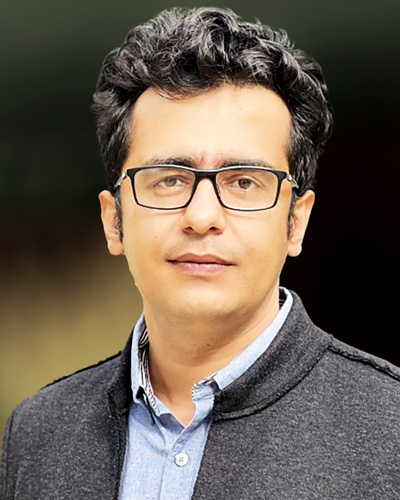
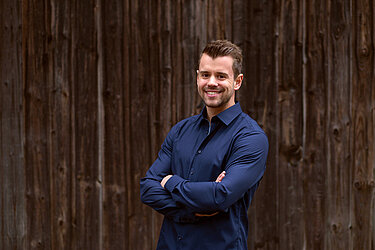
Simon Harvey is a Professor in Energy Engineering at Chalmers University of Technology, Sweden. With a background in Mechanical Engineering and over two decades of academic leadership, he focuses on industrial energy systems optimization and sustainable process integration. PhD from Thayer School of Engineering, Dartmouth College (1994) Assistant Professor at Chalmers (1997-2011) Full Professor since 2011 His research spans : Energy efficiency in chemical processes Biomass-based industrial energy systems Biorefinery techno-economics Climate impact assessment methodologies Energy market scenario modeling Recent publications demonstrate expertise in carbon capture integration, heat recovery optimization, and biomass utilization for negative emission technologies. Collaborative work emphasizes cross-sectoral energy synergies and uncertainty analysis in industrial retrofits. Key trends include: Decarbonization of pulp/refinery operations Hybrid electric/steam generation systems Excess heat valorization in district heating Process flexibility under uncertain parameters
Dr. Katja Wehner is a Postdoctoral Researcher in the Faculty of Biology at the Technical University of Darmstadt, Germany, specializing in soil arthropod ecology with a focus on oribatid mite communities across forest microhabitats including litter, soil, dead wood, and tree bark. Her work examines their role in forest food webs and responses to environmental stressors. Education: PhD in Biology, Technical University of Darmstadt (2009). Dissertation: 'Parthenogenesis and Sexuality in Oribatid Mites' Diploma in Biology, Technical University of Darmstadt (2004). Thesis: 'Variability at the hsp82-locus of the parthenogenetic oribatid mite Platynothrus peltifer' Research Focus: Dr. Wehner investigates biotic interactions and acarological dynamics in Central European forests, emphasizing how land-use intensity, drought, and structural factors shape oribatid mite biodiversity. Her work integrates community ecology, soil science, and microhabitat specialization to understand ecosystem resilience and food-web interactions, with particular attention to parthenogenetic versus sexual reproduction strategies in microarthropods. Publication Trends: Recent publications (2018-2022) reveal a strong emphasis on anthropogenic impacts, including land-use change effects on aboveground-belowground linkages, drought/storm damage consequences for soil communities, and microhabitat-driven variations in mite sex ratios and seasonal dynamics. Her collaborative work in journals like Nature Communications and Global Ecology and Conservation demonstrates methodological integration of field surveys, controlled experiments, and multi-taxon analyses. Collaborative Networks: Dr. Wehner actively participates in large-scale ecological initiatives including the Biodiversity Exploratories project, collaborating with researchers from institutions like the Technical University of Munich and University of Würzburg on cross-taxa biodiversity studies. Her co-authorship on multi-investigator papers indicates strong engagement with Germany's ecological research infrastructure.
Introduction Dr. Shelley Xuelian Meng is an Associate Professor in the Department of Geography and Anthropology at Louisiana State University (LSU), part of the College of Humanities & Social Sciences. Her research focuses on leveraging remote sensing technologies (e.g., UAVs, LiDAR, multispectral imaging) to study coastal dynamics, wetland restoration, vegetation health, and precision agriculture. Education Ph.D. in Geography and GIScience, Texas State University (2010) M.S. in GIS and Cartography, Chinese Academy of Sciences (2003) B.E. in Information Engineering, Wuhan University (2000) Research Interests Meng’s work emphasizes the application of advanced geospatial technologies to address environmental challenges. Key areas include: Coastal wetland die-off and restoration using multi-scale remote sensing LIDAR and UAV-based terrain and vegetation mapping Object-oriented classification algorithms for environmental monitoring GIS integration for precision agriculture and disaster management Awards & Recognition 2023 Tipton Team Award (for Roseau cane die-off research) 2014 Best Paper Award in Remote Sensing CPGIS Young Scholar (2012) Grants & Projects Notable funded projects include: USDA-funded Roseau cane die-off studies ($1.6M+ across multiple years) Development of LiDAR and thermal sensing tools for coastal research Acquisition of terrestrial LiDAR equipment for multidisciplinary studies Labs & Affiliations Meng directs the Technology Intensive Geospatial and Remote Sensing (TIGeRS) Lab , which houses advanced equipment including drones, LiDAR scanners, and multispectral sensors. The lab collaborates with the LSU Coastal Studies Institute and other institutions.
Farzad Hashemi serves as an Assistant Professor at the School of Architecture + Planning within The University of Texas at San Antonio (UTSA), affiliated with the Margie and Bill Klesse College of Engineering and Integrated Design. He leads the Climate-Sensitive Design Lab (CSDL), focusing on interdisciplinary research at the intersection of urban climate science, building performance, and environmental justice. Education: Ph.D., Pennsylvania State University Dr. Hashemi's research investigates urban heat island phenomena, building energy dynamics, and socio-spatial inequities in thermal exposure. His work employs advanced simulation techniques including GIS, ENVI-met, CFD, and machine learning to analyze climate impacts across diverse urban contexts. Key contributions include examining historical redlining's legacy on contemporary heat distribution, developing parametric workflows for energy modeling, and creating data-driven mitigation strategies for urban heat. His approach integrates technical building science with critical social analysis to address climate vulnerabilities in marginalized communities. His publication portfolio demonstrates consistent focus on urban heat mitigation, building energy performance, and environmental justice across multiple U.S. cities. Recent work emphasizes adaptive cooling strategies through computational modeling and examines thermal inequities through spatial analysis of social vulnerability indices. The research bridges technical climate modeling with socio-political dimensions of urban heat exposure. Honors and Awards: The 2024 ARCC Dissertation Award As director of the Climate-Sensitive Design Lab, Dr. Hashemi develops research initiatives that combine environmental simulation with community-focused design solutions. The lab's work informs both academic discourse and practical urban planning applications, particularly regarding climate adaptation in rapidly growing Sun Belt cities like San Antonio. Current projects integrate tree canopy data, occupancy patterns, and future climate scenarios to create resilient urban environments.
Andrew Kulmatiski , Associate Professor in the Wildland Resources department at Utah State University , specializes in plant-soil interactions and their ecological implications. His research focuses on soil ecology, plant physiology, and climate change adaptation in rangeland systems. PhD in Biology (Plant-soil interactions), Utah State University (2005) Forest Soils training, Yale School of Forestry and Environmental Studies (1999) BA in Biology (Environmental Science, Chemistry), Colby College (1994) Research highlights include: Plant-soil feedback mechanisms driving invasion and productivity Woody encroachment in grasslands linked to precipitation patterns Activated carbon applications for native plant restoration Depth-controlled tracer techniques for water/nutrient uptake Key awards: 2014 Oikos article ranked #16/769 via Altmetrics 2013 Nature Climate Change special feature Top 1% most cited in Ecology (2012) Invited expert in invasion ecology literature (2011) Academic mentorship includes guiding 11 graduate students (MS and PhD), and teaching courses on Wildland Soils , Rangeland Plant Taxonomy , and Plant Physiological Ecology . His lab investigates belowground processes for managing invasive species, enhancing productivity, and restoring native communities.
Yue Dou is an Assistant Professor in the Department of Natural Resources, focusing on sustainability, land-use dynamics, and food systems. His research addresses UN Sustainable Development Goals, particularly sustainability and food security. He employs advanced modeling techniques and remote sensing to analyze complex socio-ecological systems, emphasizing global-local interactions in agriculture and resource management. Key research interests include crop mapping accuracy in smallholder regions, food value-chain impacts on land use, and resilience in local food systems. His work integrates geospatial data, agent-based modeling, and systems analysis to explore biodiversity conservation, telecoupled systems, and policy implications for sustainable development. Collaborations span global institutions, with recent studies on Jordan’s water-energy-food nexus and Rwanda’s food security monitoring. His publications highlight innovative methods for estimating regional food flows and assessing cropland stability in China. Yue Dou’s contributions address pressing challenges in sustainable land use, agricultural economics, and environmental policy, leveraging interdisciplinary approaches to bridge ecological and socio-economic dimensions.
Wim van der Putten is a Professor in Functional Biodiversity at Wageningen University & Research and Head of the Department of Terrestrial Ecology at the Netherlands Institute of Ecology (NIOO-KNAW). He holds an honorary professorship at the Chinese Academy of Agricultural Sciences. His research focuses on climate change, land use dynamics, and soil biodiversity. He graduated from Wageningen University in 1984 and completed his PhD in 1989 on coastal dune ecosystems. He has led major projects like the Global Soil Biodiversity Initiative and the EU-funded EcoFinders and Liberation programs. His work bridges fundamental research with practical applications, such as soil health monitoring and ecosystem restoration. Key achievements include ERC and VICI grants, co-authoring the European and Global Soil Biodiversity Atlases, and chairing initiatives like the Heineken Environment Prize. His recent studies explore soil microbial communities, organic farming transitions, and biodiversity responses to global changes. He emphasizes sustainable land management, advocating for 'productive deintensification' in agriculture.
Prof. Dr. Anita Kirmer is Acting Professor of Vegetation Science at Anhalt University of Applied Sciences (Hochschule Anhalt), Department 1: Agriculture, Nutritional Science and Landscape Development, Bernburg campus, Germany. Since 2019 she has also been a Privatdozentin (private lecturer) at TU Berlin . Her career combines research, teaching and applied restoration practice focused on biodiversity enhancement in farmland, ecological restoration of grasslands and post-mining landscapes, and climate-adapted land management. Education & Career Path 1994 – Diploma Biology, University of Hohenheim 2003 – Dr. rer. nat. (Geobotany), Martin-Luther-University Halle-Wittenberg 2017 – Habilitation & Venia legendi in Applied Biodiversity Research, TU Berlin 2021-present – Acting Professor of Vegetation Science, Hochschule Anhalt Research Focus Prof. Kirmer’s work centres on restoring biodiversity in degraded ecosystems , especially: Long-term experiments on species-rich field margins and wildflower strips in intensive farmland. Developing best-practice methods for restoring open habitats (grasslands, fringes, post-mining slopes). Climate-change adaptation strategies in viticulture and grassland management. Knowledge transfer between science and practice for green-sector professionals. Research Funding & Projects She currently leads or co-leads numerous large, externally funded projects: AgriRestore (DFG, 2024-2029) – ecosystem restoration across scales for biodiversity & climate resilience. Grassworks (BMBF, 2021-2024) – multi-region assessment of successful grassland restoration concepts. LIFE VineAdapt (EU LIFE, 2020-2025) – sustainable viticulture adapting to climate change. TEAM#UP & TRAIN#ER (Erasmus+, 2022-2027) – vocational excellence in ecological restoration training. Further projects funded by DBU, ELER, BMBF, EU Interreg, etc. Scientific Output & Recognition Prof. Kirmer has authored >100 peer-reviewed publications, co-edited international handbooks (e.g., Guidelines for Native Seed Production and Grassland Restoration , Cambridge Scholars), and published practical guides widely used by practitioners. She is active in the Society for Ecological Restoration (SER) and the Ecological Society of Germany (GfÖ). Laboratories & Collaborations She heads activities within the KAT Competence Center LIFE SCIENCES at Hochschule Anhalt and collaborates with >30 national and international partners (e.g., TU München, Leuphana Lüneburg, Thünen Institute, Universities of Alicante & Greifswald, NINA Norway, Czech Academy of Sciences).
David Roueche serves as the Gottlieb Associate Professor of Structural Engineering within the Department of Civil and Environmental Engineering at Auburn University's Samuel Ginn College of Engineering. His research focuses on structural performance under extreme wind events, forensic engineering methodologies, and improving building resilience against hurricanes and tornadoes through interdisciplinary approaches. Dr. Roueche's academic foundation includes advanced degrees from the University of Florida, with complementary physics training: Ph.D. in Structural Engineering, University of Florida M.S. in Civil Engineering, University of Florida B.S. in Civil Engineering, University of Florida B.S. in Engineering Physics, Jacksonville University His primary research explores extreme wind loads on low-rise buildings , post-disaster field investigations , and performance-based wind engineering , with specialized expertise in light wood-frame structures and surge/flood modeling. He integrates engineering analysis with social science through survivor interviews to reconstruct tornado events and identify vulnerabilities in residential construction, particularly for mobile and manufactured housing in the Southeastern United States. Analysis of his recent publications reveals a dominant focus on post-disaster assessment frameworks, field data collection protocols, and performance-based evaluation methods for wind-affected structures. His work increasingly emphasizes interdisciplinary collaboration—combining engineering, social science, and geospatial technologies—to develop comprehensive disaster response systems and improve building codes. Key trends include standardization of forensic engineering practices through organizations like StEER and application of computational modeling to predict structural failures. Dr. Roueche's significant recognitions include: Ginn Faculty Achievement Fellow designation NSF CAREER Award (2020) for advancing post-windstorm assessment methodologies He directs substantial research funding including a $500,000 USDA grant for timber-steel composite research and leads the Auburn Mass Timber Collaborative—an interdisciplinary initiative uniting forestry, architecture, and engineering faculty. Through the Structural Engineering Emergency Response (StEER) network, he coordinates Field Assessment Structural Teams for disasters like Hurricane Ian and the 2022 Arabi tornado, developing standardized protocols adopted nationally for post-disaster evaluations. His mentoring extends to doctoral students in civil engineering, with recent success in securing competitive fellowships for advisees. As a core member of StEER, Dr. Roueche develops and implements field assessment protocols used in rapid disaster response. He leads FAST teams deploying UAVs, LiDAR, and ground surveys to document structural performance after hurricanes and tornadoes, with datasets informing FEMA guidelines and building code revisions. His work with the Auburn Mass Timber Collaborative advances sustainable construction methods through experimental testing of innovative structural systems.
Prof. Dr. Jörg Ewald is a Research Professor in the Faculty of Forestry and Agriculture at the Technical University of Applied Sciences Weihenstephan-Triesdorf. He leads the Research Professorship on Diversity and Functions of Mountain Ecosystems and holds key leadership roles as Dean of the Faculty and Scientific Director of the Doctoral Center Sustainable Land Use Systems (SusLand). He is also a member of the steering committee for the BayWISS Joint College Life Sciences and Green Technologies. His research is centered on botany, vegetation science, and mountain ecosystems , with a strong emphasis on the impacts of climate change, land-use dynamics, and conservation in alpine and forest environments. His work spans plant ecology, biodiversity assessment, soil ecology (particularly Tangelhumus), and forest site evaluation. He teaches courses such as General Botany, Systematic Botany, Forest Communities, and Climate Change Management. His recent publications reveal a consistent focus on long-term ecological monitoring, species distribution shifts in response to warming, and the effects of land use on biodiversity across trophic levels. He employs methods like NMDS ordination, cluster analysis, metabarcoding, and GIS-based modeling. His work often involves large collaborative networks across Germany and integrates citizen science data with historical records. Prof. Ewald is actively involved in applied research for sustainable forest management and conservation policy, contributing to projects like StratALP for assessing forest degradation sensitivity. His leadership in doctoral education and interdisciplinary research initiatives underscores his central role in advancing sustainable land use science.
Hongyun Han is a Professor and Doctoral Supervisor at Zhejiang University's School of Public Affairs, where she serves as Director of the Institute of Modern Agriculture and Investment. With over 20 years of teaching and research experience, Professor Han specializes in natural resource and environmental management, agricultural investment and modernization, rural development, and agricultural economics and management. Her work has significant implications for policy development in China's agricultural and environmental sectors. Educational Background: Ph.D. in Economics, Trade College of Shenyang Agricultural University (1997-2000) M.S. in Forestry, College of Shenyang Agricultural University (1990-1993) B.S. in Mathematics, Department of Lanzhou University (1984-1988) Professor Han's research focuses on the intersection of agricultural economics, environmental management, and rural development in China. Her work examines critical issues such as energy transition in rural households, land use policies, agricultural diversification, and the economic implications of environmental policies. She has conducted extensive empirical research on China's agricultural policies, including the Sloping Land Conversion Program and Grain for Green initiative, analyzing their environmental and economic impacts. Her research often employs quantitative methods to assess policy effectiveness and provide evidence-based recommendations for sustainable development. Professor Han's publication record demonstrates consistent focus on China's agricultural and environmental challenges, with particular attention to policy design and implementation. Her work spans multiple disciplines including agricultural economics, environmental policy, rural development, and energy economics. A notable trend in her recent publications is examination of behavioral aspects in environmental policy implementation, such as household energy transition and waste management practices. She also investigates economic mechanisms behind agricultural structural changes and their implications for sustainable development in China. Research Funding and Projects: Principal Investigator, National Social Science Fund Major Project (2014): 'The study on path of transformation and innovation policies of environment management' Principal Investigator, Zhejiang Provincial Natural Foundation (2014): 'The study on the evolution of large-scale offshore aquaculture and non-point source pollution control policy design' Principal Investigator, Humanities and Social Sciences Department of Education Fund (2014): 'Job search, social capital, occupational mobility and generation of migrant workers to integrate into the city' Principal Investigator, Doctoral Program of Higher Specialized Research Fund (2013): 'Social capital and cooperation mechanisms of urban non-point source pollution control suburban' Participant, Fulbright Program (2010): 'Policy making of NPP in America: lessons and implications' Professor Han leads the Institute of Modern Agriculture and Investment at Zhejiang University, where her team conducts interdisciplinary research on agricultural economics, environmental management, and rural development policy. The institute collaborates with government agencies and international organizations to provide evidence-based policy recommendations for sustainable agricultural development in China.
Luke Sanford is an Assistant Professor of Environmental Policy and Governance at Yale School of the Environment with a secondary appointment in Political Science. His research examines how political institutions shape environmental policymaking, particularly the relationship between public preferences and policy outcomes, alongside spatial and temporal distributional impacts of natural resource decisions. His educational background includes: Ph.D. in Political Science and International Affairs from University of California San Diego M.A. in Political Science from University of California San Diego, School of Global Policy and Strategy B.A. in Politics from Whitman College Sanford specializes in integrating digital data methodologies—including satellite imagery and text analysis—with environmental policy research. His work bridges political institutions, remote sensing, machine learning, economic development, and causal inference to measure policy preferences and outcomes. He develops innovative techniques for analyzing deforestation patterns, air pollution disparities, and carbon market effectiveness. Recent publications reveal a pronounced shift toward data-intensive environmental governance research, with increasing emphasis on satellite-driven spatial analysis and machine learning applications. His 2021-2025 work demonstrates methodological innovation in causal inference using remote sensing, particularly in deforestation monitoring, air pollution justice, and jurisdictional climate initiatives like REDD+. Sanford is affiliated with The Forest School and Yale Institute for Biospheric Studies, teaching courses including ENV 821a Environmental Policymaking: From Local to Global. He will be on leave during Spring 2026 semester.
Dr. Julian Fäth is a Research Fellow at the Chair of Remote Sensing within the Institute of Geography and Geology at the University of Würzburg. Since May 2024, he has been leading the main working package "Forestry" in the EO4CAM project. His academic career spans forest science, remote sensing, and environmental geophysics with a focus on forest hydrology and soil moisture dynamics across temperate forest ecosystems in Germany. His educational background includes: PhD in Forest Nutrition and Water Balance from the Technical University of Munich (2017-2021) Studies in Forestry Science at the Technical University of Munich (2011-2017) Dr. Fäth's research focuses on applying geophysical methods, particularly electrical resistivity tomography (ERT), to monitor soil moisture fluctuations in forest ecosystems. His work bridges remote sensing technologies with traditional forestry practices to understand how forests respond to climate change, particularly drought stress. He investigates the complex interactions between soil properties, water availability, and tree health in temperate forests across Germany, with particular attention to beech decline under recurrent drought conditions. His publication record shows a strong trend toward integrating multiple monitoring approaches for soil moisture and forest hydrology. Recent work emphasizes 2D and 3D ERT techniques combined with traditional hydrological measurements to create comprehensive understanding of water dynamics in forest soils. His research increasingly addresses climate change impacts on forest ecosystems, particularly beech decline under recurrent drought stress, examining how individual neighborhood structure and soil properties influence tree survival. Dr. Fäth has been involved in several significant research projects including the EO4CAM project where he leads the forestry component. His collaborative work spans multiple institutions including the University of Würzburg and the Technical University of Munich. His research has practical applications for sustainable forest management under changing climatic conditions, providing critical insights for forest managers facing increasing drought frequency and intensity.
Sebastian Karlsson is a Researcher in the Department of Energy Technology at Chalmers University of Technology, Sweden, specializing in industrial decarbonization through carbon capture and storage (CCS) systems. His work focuses on modeling cost-optimal CO 2 transport infrastructure and biomass supply chains for Swedish industries, particularly the pulp and paper sector. His educational background includes a Doctoral thesis titled Energy infrastructures for low-carbon-emitting industries (2023) and a Licentiate thesis on CO 2 transportation infrastructure and biomass supply systems for carbon capture and storage (2021). Research interests center on industrial decarbonization pathways , with expertise in: CO 2 capture and transport network optimization BECCS implementation in biomass-intensive industries Policy-economic analysis of permitting and grid constraints Regional biomass supply chain modeling His methodology integrates systems engineering with climate policy analysis to address Sweden-specific industrial challenges. Publication trends since 2021 reveal consistent focus on Swedish industrial decarbonization , with 9 works spanning journal articles, theses, and conference papers. Key thematic clusters include infrastructure cost optimization (40% of works), biomass-CCS integration (30%), and policy-regulatory analysis (30%), demonstrating technical depth in energy systems modeling applied to real-world industrial contexts. Currently participating in the European Commission-funded project Providing access to cost-efficient, replicable, safe and flexible CCUS (ACCSESS) (2021-2025), he collaborates with senior researchers including Filip Johnsson and Fredrik Normann. No student supervision activities are documented in the provided materials. His research operates within Chalmers' Energy Technology department, contributing to Sweden's national decarbonization strategy through industry-focused technical solutions and policy recommendations.
Dr. Tim Ritter is a Senior Scientist at the Institute for Forest Growth, University of Natural Resources and Life Sciences Vienna (BOKU), with expertise in biometrics, forest inventory, and laser scanning applications. He earned his Dr. forest. ("summa cum laude") in 2014 from Georg-August-Universität Göttingen, following M.Sc. and B.Sc. degrees in Forest Ecosystem Analysis and Forestry. Research Focus: Terrestrial/Personal Laser Scanning (TLS/PLS) for forest mapping Stochastic corrections for tree non-detection Spatial statistics and 3D forest modeling Deadwood inventory and carbon storage analysis Forest road monitoring and harvesting damage detection Publications Trends: Recent work emphasizes LiDAR integration in forest inventory, automated point cloud analysis, and digital twin development for forest ecosystems. Key methods include machine learning, spatial regression, and multi-sensor data fusion for timber volume estimation and biodiversity assessment. Scientific Awards: 2014: Finding talent: Researcher Career Grant Professional Activities: Editorial Board Member for Frontiers in Forests and Global Change (2023), Topical Advisory Panel for Sustainability (2020), and active reviewer for 15+ journals including Remote Sensing and Forests . Presented 55+ lectures across 5 countries, including keynote speeches at international conferences.