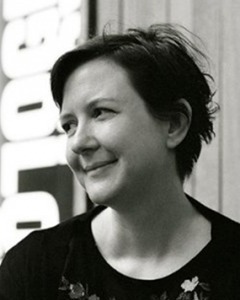
Miranda Prendergast-Miller is a Senior Lecturer in the Department of Geography and Environmental Sciences at Northumbria University . Her work bridges soil ecology, environmental sustainability, and biogeochemical cycles, with a focus on anthropogenic impacts on terrestrial ecosystems. Current academic affiliation: Northumbria University (2019–present) Prior postdoctoral roles: University of York (2015–2019), CSIRO Australia (2012–2015), University of Edinburgh (2009–2011) Her research explores below-ground interactions between microbes, soil fauna, and plants, particularly how these systems are disrupted by human activities. Key themes include: Greenhouse gas emissions and soil carbon sequestration Microplastic pollution and organic waste recycling Nutrient use efficiency in agricultural systems Novel soil amendment technologies Analysis of her publications reveals trends in microplastic ecotoxicology , earthworm-microbial dynamics , and agroecosystem resilience . Subfields span from polymer degradation in soils to silicon biogeochemistry in land-use transitions. She supervises postgraduate researchers in projects related to: Emily Donaghy (2023–present): Microfibres in soils Kevin Stott (2020–present): Carbonate precipitation in engineered soils
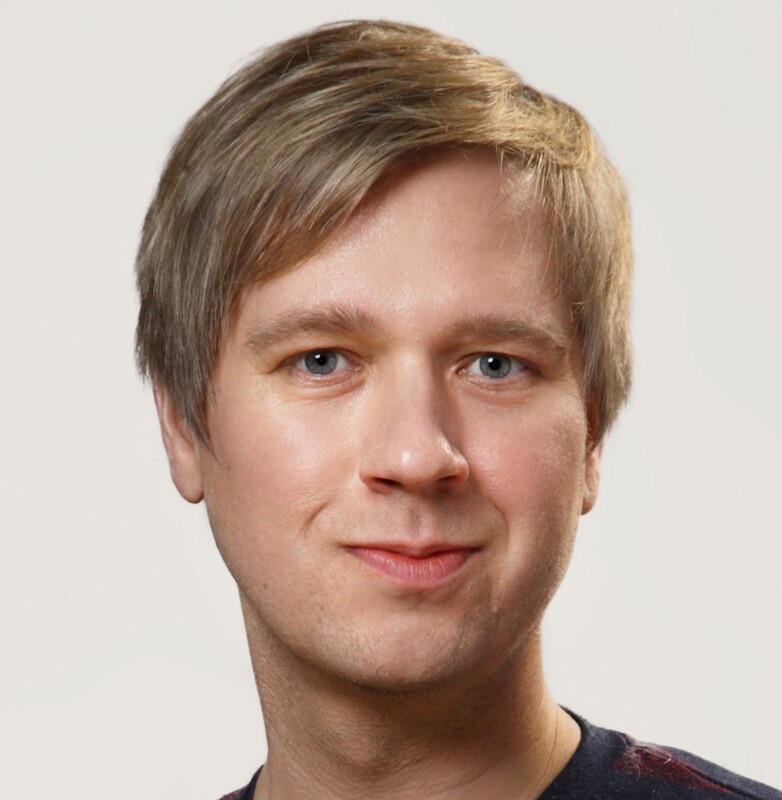
Adel Mhamdi serves as Associate Professor and Chair of Process Systems Engineering within the Faculty of Mechanical Engineering at RWTH Aachen University. Based in the Research building NGP2 (AVT, BTA [5001]) at Forckenbeckstraße 51, Aachen, he holds the position of Senior Academic Councillor and maintains active research leadership in chemical process engineering. His research spans dynamic modeling, optimization, and control of complex chemical systems with emphasis on sustainable process design. Key focus areas include electrified biodiesel production, microgel synthesis with tailored properties, reactor intensification, and hybrid mechanistic/data-driven modeling approaches. He integrates experimental validation with computational techniques such as Raman spectroscopy, CFD, and Bayesian optimization to address challenges in energy efficiency and product quality. Analysis of his 2022-2025 publications reveals dominant trends in electrification of chemical processes (particularly biodiesel), advanced microgel synthesis methodologies, and innovative control strategies for flexible operation. His work consistently bridges fundamental polymer chemistry with industrial-scale process optimization, demonstrating strong interdisciplinary collaboration through co-authored datasets and experimental validations. Dr. Mhamdi operates within the AVT (Aachener Verfahrenstechnik) research ecosystem at RWTH Aachen, leveraging shared infrastructure for millireactor development, process monitoring, and plantwide control systems. His laboratory focuses on translating theoretical models into practical implementations for sustainable chemical production.
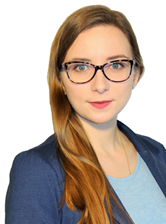
Kim de Laat is an Assistant Professor of Organization and Human Behaviour at the Stratford School of Interaction Design and Business , University of Waterloo. As a sociologist specializing in work and culture, her research interrogates inequality and uncertainty within creative and knowledge-based organizations, with particular focus on remote and hybrid work arrangements. Her work explores: Gender inequality mechanisms in post-bureaucratic work environments Intersectional analysis of creative labor dynamics Cultural politics of technological transitions Policy implications for family-work reconciliation Structural barriers in music and IT industries Key article trends show consistent examination of: Remote/hybrid work equity Racial/gender gaps in funding mechanisms Postfeminist representations in media Digital labor transformation Cultural canonization processes Care work intersectionality Scientific recognition includes: 2024 Rosabeth Moss Kanter Award Nominee for Work-Family Research SSHRC-funded research projects Dr. de Laat holds Sole-Supervisory Privilege Status and mentors students in work and inequality studies through collaborative research opportunities.
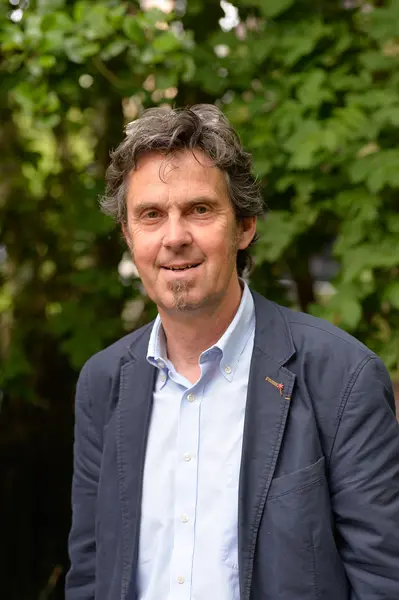
Erika Wall is a Professor at the Department of Health Sciences , Mid Sweden University . Her work focuses on Occupational Health Science , with particular emphasis on workplace dynamics, risk management, and employee engagement, especially in public sector and rural settings. Occupational Health Science faculty Research on activity-based workplaces, hybrid work environments, and employee net promoter scores Her research explores: Employee engagement and advocacy in public sector workplaces Transition to activity-based and hybrid work models Risk management strategies during crises like power loss or pandemics Work-life balance and mental health among young adults Recent publications highlight: Qualitative studies on leadership and organizational factors Narrative analyses of coworking spaces in rural Sweden Examinations of sense of coherence in public sector transitions Additional areas include: Informal caregiving during the coronavirus pandemic Return-to-work processes for individuals with mental disorders Visual methods for risk perception analysis
Jamie A Hestekin is Professor and Maurice E. Barker Chair in Chemical Engineering at the University of Arkansas College of Engineering, specializing in membrane separations and algal biofuels research with significant industry and national laboratory collaborations. His academic credentials include: Ph.D. in Chemical Engineering, University of Kentucky (2000) B.S. in Chemical Engineering, University of Minnesota, Duluth (1995) Professor Hestekin's research pioneers charged separation technologies using wafer enhanced electrodeionization for applications ranging from grape juice deacidification to biofuel purification, while simultaneously developing integrated algae-to-biofuels systems through mechanical disruption and sonication techniques for lipid and carbohydrate extraction. His work bridges fundamental electrochemical engineering with scalable bioprocess development. Publication analysis reveals consistent focus on sustainable energy solutions, with recent work emphasizing continuous processing systems for organic acid separation and year-round algal biofuel production. Key cross-cutting themes include process intensification, waste stream valorization, and integration of electrochemical methods with biological systems. His distinguished recognition includes: R&D 100 Award (2006) for Argonne National Laboratory research University-wide Faculty Gold Medal for undergraduate mentorship Inaugural Honors College Distinguished Faculty Award Dr. Hestekin's mentorship has produced exceptional student outcomes including four NSF Graduate Research Fellowships and multiple EPA/DOD awards, supported by research funding enabling advanced membrane separations laboratories. He actively shapes the field through leadership as North American Membrane Society Secretary and conference chair roles. His research group maintains state-of-the-art facilities for membrane process development and algal biorefining, building on industry collaborations like the Kraft Foods Tassimo co-invention, with current work focused on continuous integrated systems for next-generation biofuel production.
Katrina Sluis is Associate Professor and Head of Photography & Media Arts at the Australian National University's School of Art & Design within the College of Arts & Social Sciences. She co-convenes the Computational Culture Lab and serves as Chair of the Research Committee. Previously, she was Senior Lecturer and founding Co-Director of the Centre for the Study of the Networked Image at London South Bank University, and held the inaugural position of Senior Curator (Digital Programmes) at The Photographers' Gallery in London, where she now continues as Adjunct Research Curator. Her educational background includes a PhD from the University of Sunderland, MA from University of the Arts London, PGCHE from London South Bank University, and BFA (Hons) from the University of New South Wales. Sluis serves on the Editorial Advisory Boards of Photographies (Routledge) and Media:Art:Write:Now (Open Humanities Press), and is a Board Member of PhotoAccess, the ACT's center for photography. She advises Serpentine Galleries on Future Art Ecosystems 2 & 3, and has served on international juries for the P3 Post-Photography Prototyping Prize, Organ Vida Festival, and Brighton Photo Fringe's OPEN20 SOLO award. Sluis' research focuses on the politics and aesthetics of art and photography in computational culture, examining social circulation, automation, and cultural value. As a curator and educator, she has worked extensively with museums and galleries to develop digital strategies, programming, and pedagogy. Her current work addresses emerging paradigms of human-machine curation in response to the massive intensification of global image production and circulation. Funded by the Swiss National Science Foundation, her project 'Curating Photography in the Networked Image Economy' explores the transit of data analytics and AI imaginaries into museums. Her recent publications reveal a strong focus on the intersection of photography, artificial intelligence, and network culture. Key themes include machine vision's photographic theory, generative AI's impact on photographic style, the cultural value of photographic documentation in the age of big data, and the transformation of museum practices in the networked image economy. Her work consistently bridges technical developments in computer vision with critical cultural analysis. Editorial Advisory Board, Photographies (Routledge) Editorial Advisory Board, Media:Art:Write:Now (Open Humanities Press) Board Member, PhotoAccess Incorporated Advisor, Serpentine Galleries Future Art Ecosystems Peer Assessor, Creative Australia International jury member for P3 Post-Photography Prototyping Prize Funded by the Swiss National Science Foundation, her project 'Curating Photography in the Networked Image Economy' explores the transit of data analytics and AI imaginaries into museums, while an AHRC-funded research strand examines computational reproduction's impact on the art object. She is registered to supervise higher degree research students and co-convenes the Computational Culture Lab, which investigates how network culture transforms the production and circulation of images and cultural objects. Her research has generated 267 citations with an h-index of 4 according to Scopus.
Ylenia Curzi is an Associate Professor at the Department of Economics 'Marco Biagi' at the University of Modena and Reggio Emilia. Her research and teaching focus on organizational studies, human resource management, performance systems, and the intersection of digitalization with inclusion dynamics. Current courses: Organization and Management of Human Resources , Performance, Digitalization and Inclusion , and Organizational Forms and Design for international management. Key research areas: Work ability, organizational inclusion, human-robot collaboration, and gender/age disparities in performance management. Her recent publications address: Workplace violence in healthcare settings Intersectional analysis of performance systems Organizational responses to pandemic pressures Technological impact on managerial control Scientific contributions include collaborations on: Green transition and labor quality Human-robot collaboration in Industry 5.0 Digital platforms and creative workers' voice
Anna Camilla Moonen is a researcher at the Agroecology Group of Scuola Superiore Sant'Anna , focusing on agroecological crop management and biodiversity conservation. Her work integrates weed management, soil fertility enhancement, and functional biodiversity to promote sustainable agricultural systems. Key Research Areas: Cover cropping, relay intercropping, pollination limitation, field margin management. Projects: H2020 IWMPRAISE (Integrated Weed Management in Europe), CAPSELLA (Soil Health Technologies), LEGVALUE (Legume Biodiversity), FRAMEWORK (Biodiversity Valuation). Scientific Contributions: She has published extensively on sustainable cropping systems, emphasizing ecological approaches to reduce chemical inputs and enhance ecosystem services. Her work spans tropical and European agricultural contexts. Outreach: Developed educational resources like the SoilApp for farmer engagement and participated in public science events such as Bright2018 and the H2020 FRAMEWORK podcast series.
John Jeansson serves as a Senior Lecturer in Business Informatics at Linnaeus University's School of Business and Economics, where he also functions as subject manager for Business Informatics within the Department of Management. His academic work bridges teaching and research with a strong emphasis on practical applications in the digital economy. The School of Business and Economics at Linnaeus University holds prestigious AACSB accreditation, reflecting its commitment to high-quality business education. Jeansson's research focuses on how organizations create and capture value from information systems investments and digital transformation initiatives. His work spans multiple sectors with particular attention to healthcare digitization and small-to-medium enterprise (SME) digital transformation. He examines benefit realization processes, channel expansion strategies, and the complex dynamics of organizational change in digital contexts. His theoretical approaches incorporate activity theory, actor-network theory, and systems thinking to understand digital transformation as a multifaceted phenomenon. His recent publications reveal a strong trajectory toward applied AI and IoT solutions for business problems, with increasing focus on energy forecasting, digital ecosystems, and regional digital development. The publication pattern shows consistent academic output since 2003, with recent intensification in practical applications and collaborative industry-academia projects. Jeansson actively contributes to regional development through several major research initiatives including DigIT Hub Sweden (a national digital innovation hub), HPC for SMEs (providing AI capabilities to small businesses), and IoT lab for SMEs 2.0 (developing regional IoT expertise networks). These projects demonstrate his commitment to translating academic research into practical business value. As an educator, Jeansson teaches digital commerce, marketing, tourism, and strategic information systems at both undergraduate and graduate levels for Swedish and international students. He also supervises bachelor's and master's theses, helping develop the next generation of digital business professionals.
Jeff A. Hattey serves as Professor and Assistant Dean in the College of Food, Agricultural and Environmental Sciences (CFAES) at The Ohio State University, maintaining an office at 406C Kottman Hall. His dual role combines academic leadership with direct engagement in soil science research and education. His research expertise spans critical areas including: Soil Science and Management Animal Waste Management systems Urban Agriculture and Soil applications Educational Outcomes Assessment in soil science pedagogy Analysis of his 2009-2012 publications reveals consistent focus on sustainable agricultural practices, particularly manure management applications, soil amendment effects, and educational technology development. His work frequently involves field studies in Oklahoma and desert ecosystems, emphasizing practical solutions for environmental stewardship. No scientific awards were documented in the source materials. Regarding academic mentorship, while specific student names weren't provided, Hattey teaches undergraduate courses including FAES Survey (FAES 1100) and FAES First Year Experience in Ecuador (FAES 2194), demonstrating active student engagement. He also maintains professional outreach through resources like the On-Field Ohio P-Index and Urban Soil Management websites.
Nadia MICHEL is a Researcher at the University of Lorraine (France), focusing on biodiversity-crop-landscape interactions through multi-scale approaches. Her work integrates Geographic Information Systems (GIS) with ecological modeling to address agricultural sustainability. Key Research Themes: Biodiversity conservation, ecosystem services assessment, pollinator ecology, agroecosystem sustainability, and GIS applications. Notable Projects: Development of integrated sustainability indicators, functional diversity analysis in grasslands, and collaborative studies like DEPHY-Abeille (bee-friendly farming systems). Recent publications highlight her expertise in landscape-scale biodiversity modeling, pollination services, and oilseed rape impacts on wild bees. While no formal awards are mentioned, her extensive collaborative work and methodological contributions underscore her professional impact.
Pasi Tolvanen is a researcher affiliated with the Faculty of Natural Sciences and Engineering in the Technical Chemistry and Reaction Engineering department. His work focuses on sustainable chemical processes, including catalytic ozonation, starch oxidation, and vegetable oil epoxidation. He employs advanced methodologies such as microwave and ultrasound-assisted reactions, with a strong emphasis on reaction kinetics and process intensification.
Dr. Eng. Joanna Łechtańska is a researcher at the Institute of Chemical Technology and Engineering , Faculty of Chemical Technology, Poznań University of Technology. She holds a PhD in Chemical Technology (2016) and has been actively involved in research and teaching since her doctoral studies (2010-2016). Educational Background : Master's & PhD in Chemical Technology, specialization in Chemical Process Engineering (Poznań University of Technology) Her research focuses on metal recovery from waste , polymer inclusion membranes , and aqueous solution separation processes . She has pioneered work on microwave/ultrasound-assisted convective drying for biological materials, with notable publications in Drying Technology and Ultrasonics Sonochemistry . Her 2023 article on ultrasound-enhanced heat transfer highlights innovations in drying efficiency. Key trends in her publications (2013-2023) include: Advancements in hybrid drying technologies Membrane-based metal ion separation Process optimization for food preservation Energy efficiency in drying systems She collaborates with international researchers, including Prof. Evangelos Tsotsas' group at Otto von Guericke University (Magdeburg). Her teaching portfolio includes Chemometrics and Extraction Methods laboratory classes.
Dr. Eng. Piotr Wesołowski is a faculty member at the Institute of Chemical Technology and Engineering , Faculty of Chemical Technology , Poznań University of Technology . He can be contacted at piotr.wesolowski@put.poznan.pl or by phone at +48 61 665 37 58. Academic titles include Doctor of Technical Sciences (1992) with dissertation on aerated liquid mixing Member of Polish Academy of Sciences subsections (1995–2016) Court expert in chemical equipment safety Research focuses on mechanical mixing processes in multiphase systems , including: Energy input assessment Mixer design with mechanical agitators CFD modeling of mixing processes Industrial process optimization Recent publications (2001–2013) examine: Agitator geometry effects on suspension stability Power consumption in cereal-coffee systems Turbine impeller performance Baffle-free mixing solutions Scientific distinctions: 2010: Medal of the National Education Commission 2006: 'Exemplary Academic Lecturer' diploma 2006: Rector's Award for achievements Mentored 93 diploma theses (33 master's, 60 engineering) and reviewed 43 theses. Coordinated industry-university collaboration (2009–2013).
Roland Hoffmann-Bahnsen serves as Professor of Field and Plant Production in Organic Farming at Eberswalde University of Sustainable Development since 2009, where he also directs the Research and Experimental Station for this field. Previously, he held professorships at Martin-Luther-University Halle (2006-2008) and Humboldt-Universität zu Berlin (1998-2004), and served as Vice Dean of the Faculty of Landscape Utilization and Nature Conservation (2011-2013). He earned his PhD magna cum laude from Humboldt-Universität zu Berlin in 1995 with research on water stress sensitivity in tropical grain legumes, later initiating habilitation work on forgotten genetic resources like proso millet. His academic journey includes leadership of the Master's program in Organic Agricultural Management (2010-2020) and practical environmental consulting in Berlin's waste composting sector during the 1990s. Hoffmann-Bahnsen's research centers on drought stress physiology in organic farming systems, pioneering the "water-saver" and "water-spender" framework for understanding crop adaptation strategies. His work extensively explores proso millet's potential as a climate-resilient summer crop and investigates nitrogen dynamics in organic cereal production, with significant contributions to grain legume physiology and genetic resource utilization. His 15 most recent publications (2000-2006) reveal consistent focus on drought adaptation mechanisms, particularly in millets and legumes, with increasing emphasis on practical organic farming applications. International collaborations with Cuba, Russia, and Turkey feature prominently, addressing urban agriculture, saline soil reclamation, and comparative variety trials for forgotten crops. As Program Director for the Master's in Organic Agricultural Management, he supervised numerous students and developed strong industry connections through the "Studienpartner Ökobetrieb" network of practical farm partners. His research receives support from German state agricultural agencies including Landesforschungsanstalt Mecklenburg-Vorpommern and Landesamt für Ländliche Entwicklung Brandenburg. He leads the Research and Experimental Station for Field and Plant Production in Organic Farming while maintaining active roles in international networks such as the Global Grain Legumes Drought Research Network and European Association for Grain Legume Research, facilitating knowledge exchange across Europe, the Americas, and Asia.