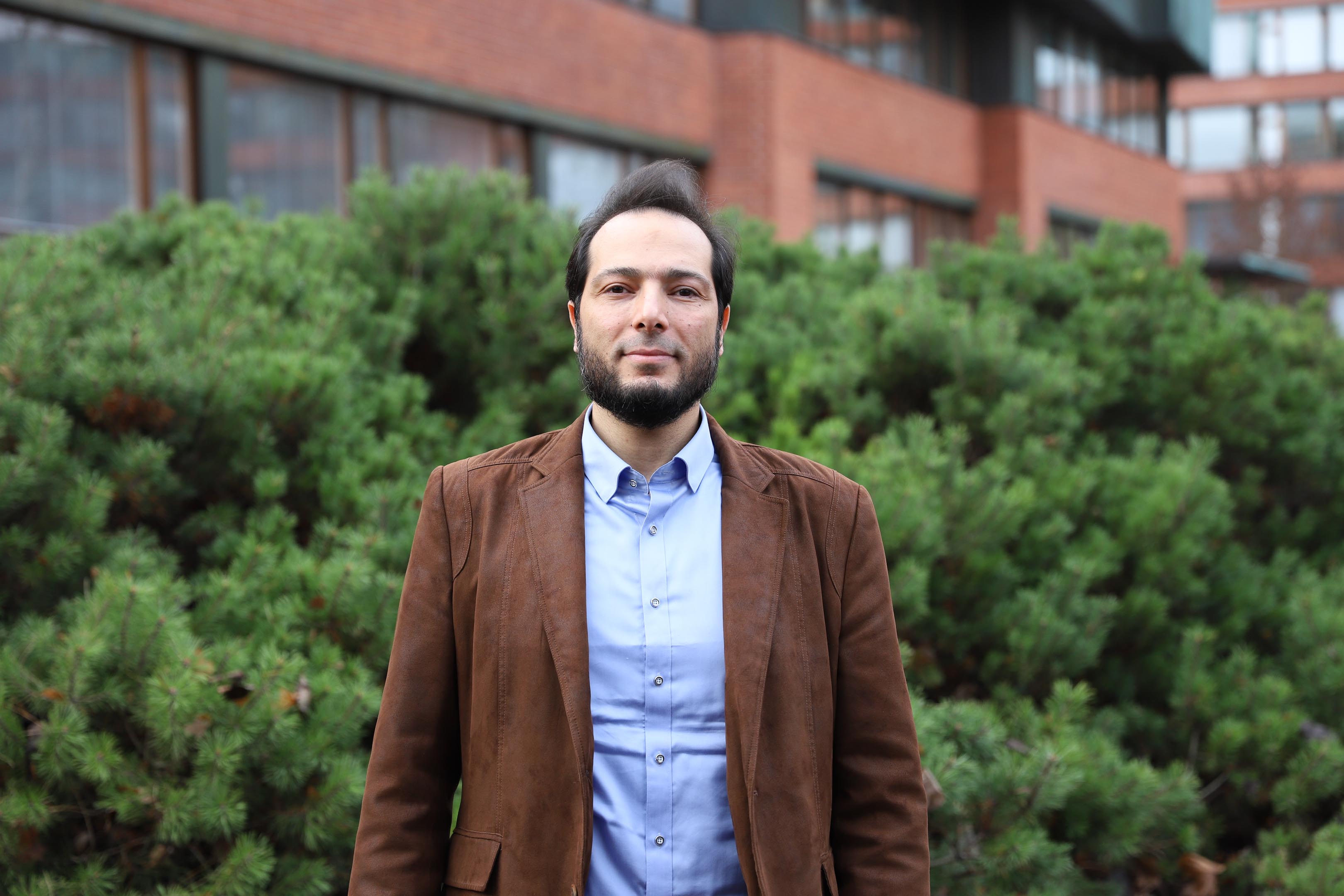
Mohamed Noureldin is an Assistant Professor at the Department of Civil Engineering, Aalto University , Finland, with prior academic roles at Sungkyunkwan University, South Korea (2015–2022). His expertise lies in integrating Artificial Intelligence (AI) with Structural Health Monitoring (SHM) , Structural Digital Twin , Predictive Maintenance , and Seismic Retrofitting . Research Focus : AI-powered sustainable structural design, smart retrofitting, predictive maintenance, structural material innovation, and next-generation performance-based seismic/wind design. Industrial Experience : 20+ years in offshore/onshore structural engineering (Hyundai Heavy Industries, Samsung Engineering, Arab-Swiss Engineering Company, Zuhair Fayez Partnership). Teaching : Courses in structural analysis, seismic design, dynamics, and reinforced concrete at Aalto and Sungkyunkwan Universities. Laboratory : Leads the Structural Design AI Lab (SDAI), focusing on AI-driven resilient infrastructure. Contact : mohamed.noureldin@aalto.fi , +358504544861. His publications explore cutting-edge applications of AI, ML, and DL in seismic retrofitting, structural durability, soil stabilization, and hybrid damping systems. Collaborative work emphasizes life-cycle cost assessment and augmented reality for predictive maintenance.
Leena Aarikka-Stenroos is a Professor at Tampere University, leading the Research Centre for Managing Circular Economy (ManCE). She holds a Doctor of Science degree in Economics and Business Administration from Turku School of Economics (2011). Her research focuses on circular economy innovation, business models, sustainability transitions, and value creation mechanisms. She has pioneered studies on catalysts for circular economy ecosystems, B2B customer referencing, and the role of digital technologies in enabling circular value chains. Academic Qualification: PhD in Economics and Business Administration (Turku School of Economics, 2011) Roles: Head of Research Centre for Managing Circular Economy, Tampere University Research Interests: Circular Economy, Sustainability, Business Models, Innovation Management, Value Creation Her work contributes to UN Sustainable Development Goals, particularly addressing climate action and responsible consumption. Key contributions include frameworks for circular business model innovation and stakeholder engagement strategies in sustainability transitions. She has received prestigious awards such as the Alex Gofman Award (2016) and multiple best paper recognitions. Her research spans industries like construction, textiles, and healthcare, emphasizing cross-sector collaboration. Recent articles explore emotional dynamics in innovation, ethical value co-creation, and AI-driven value creation in B2B contexts. She actively collaborates internationally, contributing to conferences and editorial boards. Her work bridges theoretical insights with practical business strategies for environmental sustainability.
Professor Athina E Markaki serves as Professor of Materials & Biomedical Engineering in the Department of Engineering at the University of Cambridge, leading research in advanced biomaterials and tissue engineering solutions for regenerative medicine with emphasis on vascularization and tubular scaffold development for human conduit replacement. Her academic credentials include a Diploma in Metallurgical Engineering (8.6/10) from the National Technical University of Athens and a PhD in Materials Science from the University of Cambridge. Markaki's research program centers on vascularisation techniques for clinically relevant tissue dimensions and tubular scaffolds to replace diseased or damaged human conduits, integrating biomaterials science with regenerative medicine principles. Key applications span liver tissue engineering, neural crest-derived stem cell differentiation, and vascular graft development, with strong translational focus on orthopaedic and cardiovascular medical devices. Analysis of her recent publications reveals dominant trends in biomimetic scaffold design, particularly collagen-based tubular structures and hydrogel systems for vascularized tissue constructs. Her work demonstrates interdisciplinary convergence of AI-driven retinal assessment, glioblastoma modeling, and self-healing cementitious materials, with consistent emphasis on clinically applicable regenerative solutions for liver, bone, and neural tissues. Her distinguished scientific contributions are recognized by major awards: Rosetrees Trust 2017 Interdisciplinary Award European Research Council (ERC) Starting Grant (2010) Advanced EPSRC Fellowship (2005) De Montfort Award at SET for Britain National Event (2004) Young Scientist Prize 2003 (5th Euromech Solid Mechanics Conference) Multiple academic excellence awards from Greek foundations Markaki directs a well-funded research program including ERC and EPSRC grants, mentoring graduate students in tissue engineering while teaching core engineering curricula covering plastic deformation, fracture mechanics, and medical materials design. Her group maintains strong industry and clinical partnerships to advance regenerative technologies. Her laboratory, accessible via http://www-memti.eng.cam.ac.uk/, specializes in vascularized tissue constructs and tubular scaffolds using laser-based manufacturing, biomimetic design, and hydrogel engineering to address critical challenges in tissue replacement and disease modeling.
Mohammad Hamdaqa is an Associate Professor in the Department of Computer Engineering and Software Engineering at Polytechnique Montréal, where he leads the Laboratory of Software and Emerging Technologies. His academic journey includes a Ph.D. in Electrical and Computer Engineering from the University of Waterloo (2016), a Master's in Electrical and Computer Engineering from Concordia University, an MBA from the New York Institute of Technology, and a Bachelor's in Computer Engineering from Jordan University of Science and Technology. His research focuses on the intersection of software engineering and emerging technologies, particularly examining how software engineering approaches can be adapted for complex new platforms like cloud computing and blockchain. His work spans model-driven software engineering, cloud application architecture, smart contract development, and infrastructure as code. He investigates both how traditional software engineering practices can evolve to address the challenges of modern distributed systems and how emerging technologies can transform software development processes themselves. Analysis of his recent publications reveals a strong emphasis on blockchain technologies (particularly smart contracts), cloud-native applications, and the application of AI to software engineering tasks. His work shows a consistent thread of empirical research combined with practical tool development, with increasing focus on sustainability aspects of software systems in recent years. Much of his research bridges theoretical foundations with practical implementation concerns. Professor Hamdaqa serves as a thesis supervisor for multiple graduate students, with recent completed Master's theses focusing on smart contract auditing, prompt engineering for OCL generation, model-driven epidemiology, and security practices in infrastructure as code. He actively recruits students for research projects in his laboratory. He is a member of both the IEEE Computer Society and the Association for Computing Machinery (ACM), has served on program committees for major software engineering conferences, and is on the editorial board of Service Transaction on Internet of Thing. His laboratory, the Laboratory of Software and Emerging Technologies, serves as the hub for his research activities in blockchain, cloud computing, and model-driven engineering.
Ioannis Antoniadis is a Professor at the School of Mechanical Engineering , National Technical University of Athens (NTUA), and serves as the Dean and Director of the Dynamics and Acoustics Laboratory (DAL) . He has held academic positions since 1982, rising through the ranks from Scientific Research Assistant to full Professor since 2012. Education: Diploma in Mechanical Engineering (NTUA, 1981), Ph.D. (NTUA, 1987) Research Focus: Vibration isolation, negative stiffness systems, smart materials, seismic protection, and energy conversion Key Projects: 25+ funded research initiatives including KDamper for seismic mitigation, TRANVIC for vehicle vibration control, and 3BUILD for 3D-printing construction systems His work has resulted in 15+ peer-reviewed publications on seismic protection devices and vibration control systems, with applications in bridges, wind turbines, and industrial equipment. He has taught courses in Dynamics and Vibrations , Noise Vibration , and Signal Processing at NTUA, while leading the Mechanical Design and Automatic Control Section .
Dr. Andy Nguyen is a Senior Lecturer in the School of Engineering at the University of Southern Queensland. He holds a PhD from Queensland University of Technology (QUT), an MEng from the National University of Civil Engineering (NUCE), and a BEng from NUCE. His research focuses on structural health monitoring, integrating machine learning and deep learning techniques to assess infrastructure integrity. Key areas include damage detection in bridges, pavements, and buildings, as well as sustainable construction materials like bamboo. Nguyen leads projects such as the 'Next Generation Living Laboratory for Engineering Education and Engagement,' emphasizing real-world applications of technology in civil infrastructure. His work spans crack detection algorithms, finite element model updating, and vibration-based structural analysis. He collaborates on AI-driven solutions for autonomous vehicle object detection and smart maintenance planning. Nguyen’s contributions include over 50 peer-reviewed publications and active supervision of postgraduate research in composite materials and transport infrastructure. His research outputs highlight advancements in computational mechanics, sensor technologies, and data-driven methods for infrastructure resilience. Nguyen’s expertise bridges civil engineering challenges with cutting-edge machine learning, advancing both theoretical and applied solutions for sustainable and safe structures.
Professor Abir Al-Tabbaa is a Professor of Civil and Environmental Engineering at the University of Cambridge, specializing in intelligent, sustainable, and low-carbon infrastructure materials. She leads major research initiatives including the EPSRC Programme Grant 'Resilient Materials for Life (RM4L)', the 'Digital Roads of the Future' initiative, and two EPSRC Centres for Doctoral Training (FIBE CDT and FIBE2 CDT). Her work spans ground improvement, land remediation, self-healing concrete, carbon capture, and biomimetic infrastructure systems. Chartered Engineer (CEng) Fellow of the Institution of Civil Engineers (FICE) Visiting Professor at Nanjing Tech University Guest Professor at Southeast University Her research focuses on: Development of smart low-carbon materials for geo-environmental engineering, road transport, and construction Biomimetic infrastructure materials with self-healing, self-sensing, and self-diagnosing properties Integration of digital twins, robotics, and data science for resilient road networks Thermal capacity optimization for thermoactive geo-structures (SaFEGround project) Major grants and projects include: TSB SMiRT Project (£1.24M) EPSRC M4L Project (£1.67M) EPSRC RM4L Programme Grant (£4.9M) EPSRC Centre for Doctoral Training (FIBE CDT: £5M, FIBE2 CDT: £6.7M) Digital Roads of the Future (£15M) SaFEGround Project (EPSRC collaboration) Scientific awards: Reed and Mallik Medal (2003) She supervises numerous PhD and MRes students and collaborates with institutions like Imperial College London, Cardiff University, and Bath University. Her research team includes senior researchers such as Dr. Damian Palin and Dr. Sripriya Rengaraju.
Summary Associate Professor Mehrdad Arashpour is an internationally recognized researcher and educator in construction and civil infrastructure, focusing on automation and information technologies. He leads the ASCII Lab at Monash University's Department of Civil and Environmental Engineering. His academic roles include Head of Construction Engineering and membership in the CIB's Working Commission on Off-site Construction (W121) and Infrastructure Task Group (TG91). Education: Ph.D., RMIT University, Australia M.Sc., Grenoble University, France B.Sc., IU University, Iran Research Interests: Digital twins, computer vision, robotics, BIM integration, sustainable construction, and automation in construction processes. His work contributes to UN Sustainable Development Goals, particularly in sustainable cities and communities. Grants & Awards: Over $6M in grants from ARC, Austroads, and industry partnerships. Recognitions include Editor's Choice Paper (ASCE, 2019) and Outstanding Reviewer (Elsevier, 2016). Teaching: Courses like Risk Management in Engineering Projects and Infrastructure Research Project. Advises on PhD topics in computer vision, robotics, and BIM. Labs & Collaborations: ASCII Lab focuses on smart, sustainable solutions for construction. Collaborates with global researchers and organizations like SPARC Hub and Building 4.0 CRC.
Alexandru G. Bardas is an Associate Professor at the University of Kansas in the Department of Electrical Engineering & Computer Science (EECS) and the Institute for Information Sciences (I2S) . He received his PhD from Kansas State University under advisors Xinming (Simon) Ou and Scott A. DeLoach. His research focuses on cybersecurity from a systems perspective , including moving target defenses, security operations center (SOC) metrics, DevOps security, power grid cybersecurity, and defensive technologies for political activists. He explores UDP-based DDoS detection, DNS traffic analysis, and the intersection of AI with cybersecurity, emphasizing foundational knowledge over tool-specific training. Key research areas: Cybersecurity, Systems Security, Moving Target Defenses, SOC Metrics, DevOps Security Recent publications in ACSAC 2024 , USENIX Security 2024/2023 , and IEEE Security & Privacy 2022 Dr. Bardas has received significant recognition including: NSF CAREER Award (2022) for SOC automation Bellows Scholar (2021) at KU NSA SoS Honorable Mention (2023) He actively advises students across disciplines, with graduates now at Sandia National Laboratories , Blue Cross Blue Shield , and Pacific Northwest National Laboratory . Dr. Bardas participates in NSF grant reviews , serves on program committees for SOUPS and MILCOM , and leads outreach initiatives like the GenCyber Summer Camp .
Liam Butler is Associate Professor of Civil Engineering at York University and Director of the CD3 Facility for Built Infrastructure, specializing in sustainable concrete structures. Education includes Ph.D. from University of Waterloo and postdoctoral research at University of Cambridge's Centre for Smart Infrastructure and Construction. Research develops climate-resilient materials and intelligent monitoring systems with focus on: Low-carbon concrete formulations Embedded sensor networks Structural digital twins 3D-printed concrete applications Industry collaborations advance sustainable construction practices through material innovation and structural health monitoring technologies. The CD3 Facility studies climate impacts on infrastructure materials.
Ebenezer Fanijo is an Assistant Professor at the School of Building Construction, part of the College of Design at Georgia Institute of Technology. He joined in Spring 2023 and specializes in sustainable and smart-resilient infrastructure, focusing on low-carbon construction materials and alternative energy sources. His work addresses carbon emissions in building materials and processes through advanced research on cementitious composites, recycled materials, and green technologies. Dr. Fanijo holds a B.S. in Building Construction (Obafemi Awolowo University, Nigeria), M.S. in Civil Engineering (University of Idaho, 2019), and a Ph.D. in Civil Engineering with a concurrent MEng in Materials Science and Engineering from Virginia Tech (2022). He is also a Professional Engineer (P.E.) and LEED Green Associate with over five years of construction sector experience. Education: B.S. Building Construction, Obafemi Awolowo University, Nigeria (First Class Honours) M.S. Civil Engineering, University of Idaho (2019) Ph.D. Civil Engineering & MEng Materials Science, Virginia Tech (2022) Research Interests: His research spans sustainable construction materials, concrete durability, green technologies using recycled/by-product materials, 3D-printed cementitious materials, and advanced sensing for structural monitoring. He emphasizes decarbonizing infrastructure and developing innovative composites to reduce lifecycle emissions. Awards: NSBE Golden Torch Award (2022) – Recognized as Graduate Student of the Year National/international awards for research excellence Teaching & Advising: Dr. Fanijo teaches courses on construction materials, green technologies, and sustainable practices. He developed core curricula such as Construction Materials and Methods and Green Construction Technology . His advising focuses on student mastery of material properties and their integration into environmental performance frameworks. Professional Contributions: He has led funded research projects, published widely in peer-reviewed journals, and pioneered work on alkali-silica reactivity mitigation, asphalt mix design optimization, and corrosion monitoring. His lab integrates AI and nanoscale techniques for material analysis.
Dr. Andy Nguyen is a Senior Lecturer in Structural Engineering at the University of Southern Queensland, within the School of Engineering. He is an active researcher and educator, specializing in the Structural Health Monitoring (SHM) of critical civil infrastructure such as bridges, buildings, and transport tunnels. Bachelor of Engineering (BEng), NUCE, 1999 Master of Engineering (MEng), NUCE, 2003 Doctor of Philosophy (PhD), Queensland University of Technology (QUT), 2014 Dr. Nguyen's research is at the forefront of integrating advanced technologies into civil engineering. His primary focus is on developing and deploying sophisticated SHM systems that utilize sensors, data analytics, and machine learning to provide real-time insights into the structural integrity of ageing infrastructure. His work aims to enable proactive maintenance, extend the lifespan of structures, and enhance public safety. He has successfully implemented monitoring systems on major bridges and high-rise buildings in Queensland and New South Wales, with systems capable of even detecting distant earthquake events. His research interests span Structural Health Monitoring, Machine Learning for Engineering, Damage Detection, Finite Element Model Updating, Sustainable Building Materials like bamboo, and the application of AI for automated condition assessment of transport infrastructure. The analysis of his recent publications reveals a strong and consistent research trajectory centered on the application of data-driven and AI methods to solve practical problems in civil infrastructure. His work frequently combines signal processing techniques (like Stockwell Transform) with deep learning models for tasks such as crack detection in concrete and pavement. He also conducts significant research on model updating for complex structures like cable-stayed and arch bridges, using vibration data and optimization algorithms. The integration of machine learning for overload classification and the development of cost-effective, automated monitoring systems are key trends in his recent output. Advanced Queensland Fellow (2024-2027) Dr. Nguyen is actively involved in research supervision and collaboration. He is currently supervising several postgraduate students on projects related to AI-powered condition assessment, bamboo as a sustainable building material, and railway track design. He receives research funding from the Queensland Government through his Advanced Queensland Fellowship. His research has direct practical applications, as evidenced by his public engagement, such as writing for The Conversation on safeguarding ageing bridges, and his work with the Australian Network of Structural Health Monitoring. Dr. Nguyen's work embodies the development of a next-generation 'Living' Laboratory for engineering education, where research, teaching, and real-world infrastructure monitoring are integrated. His current projects involve creating smart, automated fault detection systems and advancing 'digital twin'-based monitoring platforms for infrastructure.
Dr. Paweł Kwaśnicki is an Assistant Professor at the Department of Analytical and Engineering within the Faculty of Natural and Technical Sciences, John Paul II Catholic University of Lublin. His research focuses on advanced photovoltaic technologies, particularly third-generation solar cells, quantum dots, and transparent conductive oxides. He has contributed to scalable electrodeposition methods for platinum nanoparticles in dye-sensitized solar cells and explored TiO₂-based nanocomposites for energy applications. Research Trends: Specializes in photovoltaic materials (perovskite, TiO₂), thin-film deposition, and circular economy strategies for waste-to-energy systems. Key Collaborations: Works with institutions like Agricultural University of Krakow and ML System S.A. Laboratory. Supervisory Roles: Serves as a PhD thesis supervisor and has guided numerous bachelor's and master's theses on topics ranging from diet impacts to microplastics in food.
Professor Tommy Chan is Chair in Civil Engineering at Queensland University of Technology's School of Civil and Environmental Engineering. With over $10M in research funding, his work focuses on structural health monitoring of bridges and infrastructure systems. His research group develops cutting-edge methods for assessing structural integrity using vibration analysis, optical sensors, and machine learning. Professor Chan leads major projects including the ARC-funded 'Next Generation Bridge Monitoring' initiative developing real-time monitoring systems for prestressed concrete bridges. His team's innovations include GNSS-based settlement monitoring and synergic identification methods for prestress force evaluation. Current research explores vehicle-bridge interactions, damage detection algorithms, and novel materials for impact protection. He has received numerous honors including the Vice Chancellors' Leadership Award and Top Supervisor Award. Professor Chan founded the Australian Network of Structural Health Monitoring and serves on editorial boards for multiple journals in structural engineering.
North Carolina Agricultural and Technical State UniversityUnited States
Dr. Yuhan Jiang is an Assistant Professor in the Department of Built Environment at North Carolina A&T State University's College of Science and Technology. He serves as the Founding Director of the HUD Center of Excellence for Innovation in Affordable Housing and Sustainable Communities (CIAHSC). Dr. Jiang leads a multidisciplinary research team focused on integrating robotics, artificial intelligence, and Building Information Modeling in construction operations and infrastructure management. Ph.D. in Civil Engineering from Marquette University M.M. in Construction Management from Guangzhou University Additional Construction Management degree from Guangzhou University Dr. Jiang's research primarily focuses on artificial intelligence applications in architecture, engineering, construction, and operations (AECO). His work integrates robotics and remote sensing for data collection, computer vision and machine learning for data processing, and BIM, GIS, and AR/VR for data visualization. His research enables more efficient construction operations, building inspection, and infrastructure management. Additionally, he has extensive experience in community redevelopment planning and complex systems simulation, including investigating urban village formation mechanisms. Analysis of Dr. Jiang's recent publications reveals a strong focus on applying drone technology, computer vision, and deep learning to construction and infrastructure challenges. His work spans multiple domains including façade modeling, pavement evaluation, sidewalk inspection, earthwork calculation, and 3D reconstruction. A consistent theme across his research is the development of automated systems that improve efficiency, accuracy, and safety in construction and infrastructure management through AI and robotics. N.C. A&T and CoST Junior Faculty Teaching Excellence Award 2024-25 N.C. A&T and CoST Rookie Researcher of the Year Award 2024 ASCE Journal of Architectural Engineering Best Paper Award 2022 ASCE CI & CRC Joint Conference Best Paper Award 2024 AAAS HBCU Making and Innovation Showcase 1st Place 2024 CoST SciTech Week Innovation Challenge awards (2023-2025) N.C. A&T Provost's Faculty Fellow (2023 & 2024) Dr. Jiang has successfully secured over $4.5 million in research funding as PI or Co-PI, including a $2.5 million HUD Center of Excellence grant. He has mentored students who won 1st and 3rd place in the 2023 & 2024 Sci-Tech Week Innovation Challenge competitions and 1st place at the 2024 AAAS HBCU Making and Innovation Showcase. His funded projects span AI-driven BIM education tools, smart farming with robotics, drone-based façade modeling, and digital twin applications for infrastructure management. As Founding Director of the HUD Center of Excellence for Innovation in Affordable Housing and Sustainable Communities (CIAHSC), Dr. Jiang leads a multidisciplinary team focused on innovative approaches to affordable housing and sustainable community development. His lab work integrates drone technology, computer vision, and AI to create practical solutions for real-world construction and infrastructure challenges.