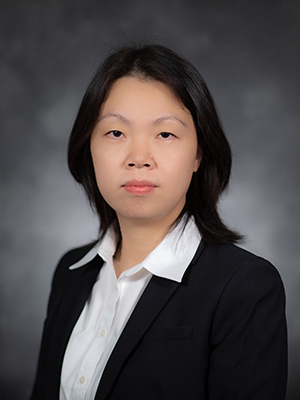
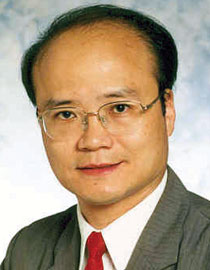
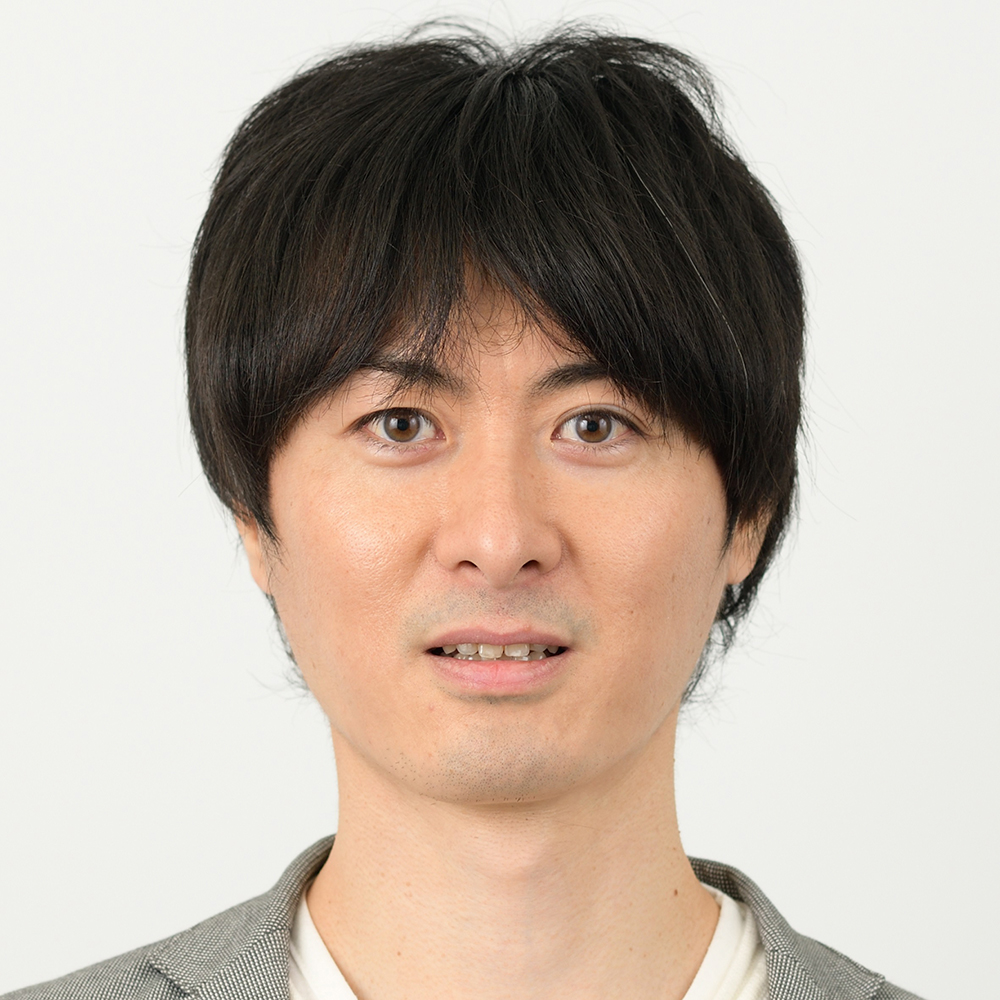
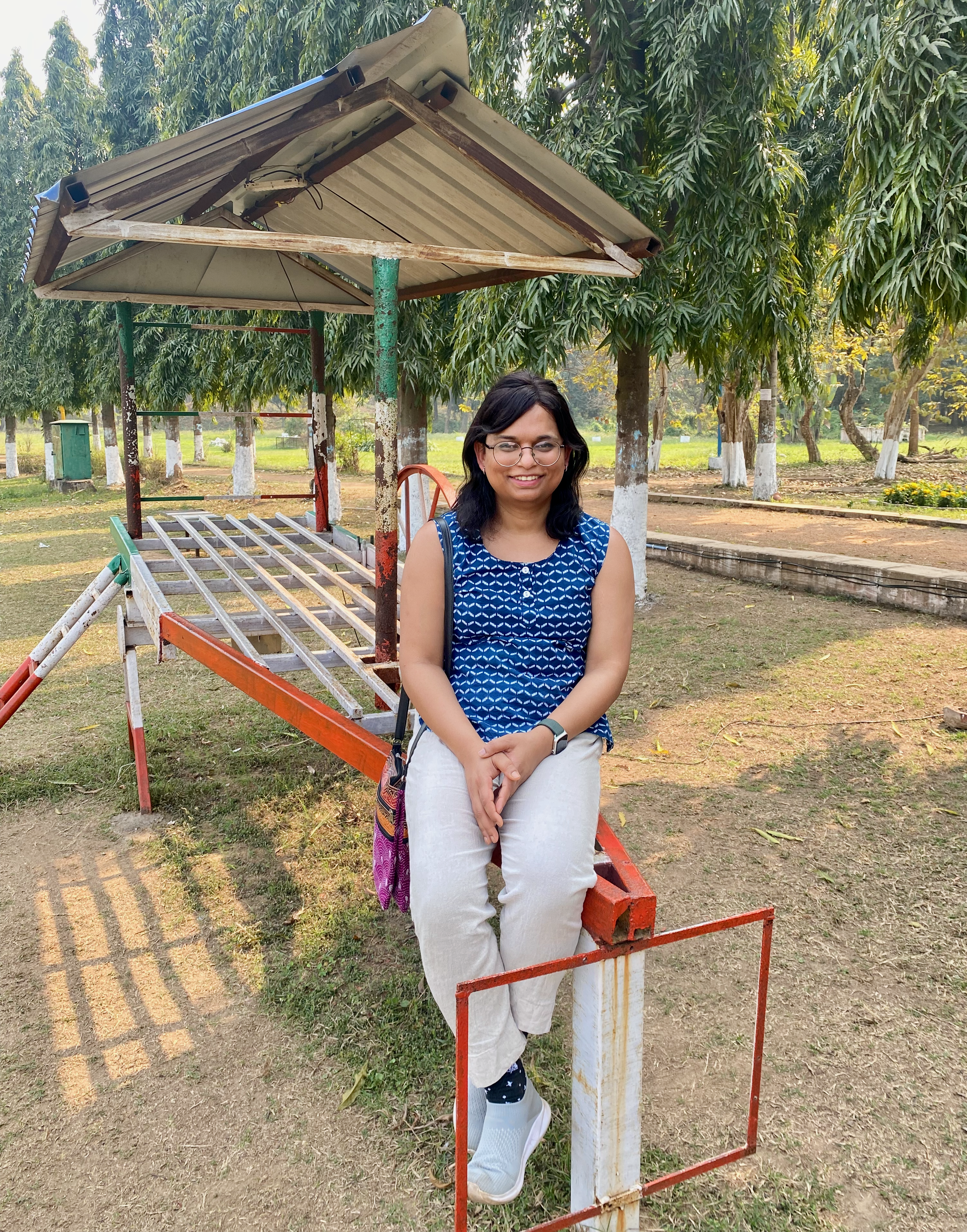
Dr. Richard Jiang is a Senior Lecturer (Associate Professor) at Lancaster University's School of Computing and Communications. His research focuses on Artificial Intelligence, Neurocomputing, Quantum AI, Privacy Computing, and Medical Computing. He has pioneered secure pattern recognition in encrypted domains and quantum neuromorphic computing. With over £1M in research grants from EPSRC and others, he has authored 100+ publications and supervised over 20 PhD students. Dr. Jiang's work includes the Face2Brain method for neurodegenerative assessment and explainable models for brain aging analysis. He contributes actively to academic committees, editorial boards, and conferences like the World Conference on eXplainable AI. His research spans ethical AI frameworks, quantum algorithms for medical imaging, and privacy-preserving biometric systems.
Dr. Jingjing Qiu is an Associate Professor in the Department of Mechanical Engineering at Texas A&M University (TAMU), leading the Advanced Materials & Manufacturing (AM²) Lab. Her research focuses on advanced manufacturing, nanomaterials, multifunctional composites, sustainable materials, energy harvesting, and healthcare applications. She holds a Ph.D. in Industrial & Manufacturing Engineering from Florida State University (2008), and M.S./B.S. degrees in Materials Science from Beihang University (2004/2001). Prior to academia, she gained 1 year of industrial experience as a Quality Engineer at SAIC Motor. Research interests include AI-driven nanomaterials synthesis, low-carbon manufacturing processes, and biomedical innovations such as drug delivery systems for brain tumors. The AM² Lab emphasizes interdisciplinary collaboration in materials science, data science, and sensor integration for energy and medical devices. Recent work highlights include AI-assisted microplastics removal, thermoelectric energy harvesting via graphene aerogels, and neuromorphic computing systems. Her team actively pursues postdoctoral and PhD candidates for research in energy/healthcare materials, requiring expertise in nanomaterials characterization (e.g., SEM, XPS, electrochemical techniques) and interdisciplinary problem-solving. Lab facilities support cutting-edge fabrication and testing of functional materials. Publications span over 15 years, with recent trends in sustainable manufacturing, soft robotics, and bio-inspired materials. Ongoing projects include DOE-funded initiatives on rare earth recycling and low-carbon ceramic production. No scientific awards are explicitly listed in the provided texts.
Xi Zhang is a Full Professor in the Department of Electrical and Computer Engineering at Texas A&M University . He is also the Founding Director of the Networking and Information Systems Laboratory. His academic career includes research fellowships at the University of Technology Sydney and James Cook University, as well as prior roles at AT&T Bell Laboratories and AT&T Laboratories Research. Education: B.S. and M.S. in Electrical Engineering & Computer Science, Xidian University, China M.S. in Electrical Engineering & Computer Science, Lehigh University, USA Ph.D. in Electrical Engineering-Systems, University of Michigan, USA Research Interests: His work focuses on Quality-of-Service (QoS) theory, 6G/Next-Generation Wireless Networks , Massive MIMO , Integrated Sensing and Communications (ISAC) , and Network Function Virtualization (NFV) . He has pioneered advancements in statistical delay/error-rate bounded QoS , AI-driven 6G architectures , and mURLLC (massive ultra-reliable low-latency communications) . Awards & Honors: IEEE Fellow (2014) for contributions to QoS theory in mobile wireless networks NSF Early Career Award (2004) Multiple Best Paper Awards (IEEE GLOBECOM, WCNC, ICC) Outstanding Faculty Award from Texas A&M (2020) Leadership Roles: He has held key positions as Technical Program Committee (TPC) Chair for major conferences (e.g., IEEE GLOBECOM 2011, IEEE ICDCS 2026) and serves as Editor for top-tier journals like IEEE Transactions on Communications and IEEE Transactions on Wireless Communications . Labs & Teams: He leads the Networking and Information Systems Laboratory , focusing on 6G mobile networks, ISAC systems, and AI-driven network architectures.
Dr. Jue (Grace) Xie is a Lecturer in the Department of Human Centred Computing at Monash University's Faculty of Information Technology. She is also a Senior Software Engineer and Research Fellow at Action Lab, with over 15 years of experience in applied research spanning software architectures, web systems, consumer health informatics, and conversational AI. Grace holds a PhD from Monash Faculty of Information Technology (2012) and has contributed to diverse interdisciplinary projects, including collaborations with Microsoft Research Asia and Monash research centers. Her teaching roles include Chief Examiner for units like FIT5183 Mobile and Distributed Computing Systems and Lecturer for Programming for Distributed Systems and Service-Oriented Computing . Research Interests Applied Conversational AI Human-Computer Interaction (HCI) Web Systems & Social Networks Knowledge Engineering Recent publications focus on AI-driven healthcare interventions, mental health support via chatbots, and stakeholder-inclusive design in aged care. Her work aligns with UN Sustainable Development Goals 3 (Good Health) and 9 (Innovation). Awards include the Future Women Leaders Conference 2019 . She is a Fellow of the Computer Society (IEEE) and the Association for Information Systems .
Zhu-Tian Chen is an Assistant Professor in the Department of Computer Science and Engineering at the University of Minnesota, Twin Cities, where he leads research in data visualization, human-computer interaction, and augmented reality. Prior to this, he held postdoctoral positions at Harvard University and UC San Diego, working with leading researchers in visual computing and interactive design. Ph.D. in Computer Science, Hong Kong University of Science and Technology B.Eng. in Software Engineering, South China University of Technology His research focuses on augmenting human intelligence through hybrid human-AI systems, particularly in everyday and outdoor environments. He specializes in designing intelligent AR interfaces, embedded visualizations, and language-oriented interactions for applications in sports analytics, education, and data analysis. His work integrates human-centered design with applied machine learning to create intuitive and effective visualization tools. The recent trend in his publications shows a strong emphasis on intelligent AR systems for dynamic scenes, LLM-based code generation interfaces, and real-time augmentation of sports videos using natural language and gaze-based interactions. His work frequently appears in top-tier venues such as IEEE VIS, ACM CHI, and UIST. Best Paper Award, ACM CHI'23 Best Short Paper Honorable Mention, EuroVis'23 Best Paper Honorable Mention, IEEE VIS'22 (twice) Certificate of Distinction and Excellence in Teaching, Harvard University Hong Kong Ph.D. Fellowship Dr. Chen actively mentors undergraduate, master’s, and PhD students, as well as visiting scholars and interns, and is building a new research lab focused on visualization for intelligent AR systems. He has served on program committees for major conferences including ACM CHI, IEEE VIS, and EuroVis, and has been invited to speak at institutions such as Apple, JP Morgan, and multiple universities worldwide. He also contributes to the academic community through grant reviewing for NSF and the Department of Energy. He leads research projects in intelligent AR systems for sports, language-oriented interactions with LLMs, and immersive data visualization, often in collaboration with institutions like Harvard, UC San Diego, and HKUST. His lab welcomes students and collaborators interested in visualization, HCI, and applied AI.
William W. Braham is the Andrew Gordon Professor of Architecture at the University of Pennsylvania’s Stuart Weitzman School of Design, where he also directs the Master of Science in Design – Environmental Building Design (MSD-EBD) program and the Center for Environmental Building + Design (CEBD). He previously served as Department Chair and Chair of the Faculty Senate, reflecting his longstanding leadership within the institution. His education includes a B.S.E. in civil and mechanical engineering from Princeton University, followed by a Master of Architecture and PhD in Architecture from the University of Pennsylvania. He also holds a Certificate in Traditional Chinese Architecture from Tsinghua University, underscoring his global perspective on sustainable design. Braham’s research lies at the intersection of architecture, energy, and ecological systems. His work applies systems ecology and building performance modeling to address climate change, energy efficiency, and urban sustainability. Key themes include responsive building envelopes, urban morphology, embodied carbon, and regenerative architecture. He has pioneered the use of emergy synthesis in architectural analysis and has led energy and carbon planning for institutions like the University of Pennsylvania Health System and the Chautauqua Institution. His recent publications reveal a strong focus on smart building technologies, thermal comfort modeling using AI, indoor air quality, and sustainable materials. Collaborations with the Thermal Architecture Lab and international partners highlight the interdisciplinary nature of his work. The articles span topics from blockchain-based environmental accounting to bioclimatic design pedagogy, indicating both scholarly depth and educational innovation. 2021 Best Paper Award, Building and Environment Fellow, American Institute of Architects (FAIA) Braham has advised numerous graduate students and researchers in environmental building design and urban sustainability. His research has been supported by collaborations with PennPraxis, DOE, and industry partners such as Daikin. He continues to lead high-impact research initiatives through the CEBD, including campus energy analysis and building energy modeling tools. He leads the Center for Environmental Building + Design, a hub for interdisciplinary research on energy, climate, and sustainable design. The center fosters collaborations across engineering, architecture, and environmental science, supporting innovative projects in urban metabolism, low-carbon materials, and smart building systems.
Jose M. Carmena is the Chancellor's Professor of Electrical Engineering and Neuroscience at the University of California-Berkeley and Co-Director of the Center for Neural Engineering and Prostheses (CNEP). His research focuses on brain-machine interfaces (BMIs), neuroprosthetics, and sensorimotor learning mechanisms. Ph.D., Robotics, University of Edinburgh (2002) M.S., Artificial Intelligence, University of Edinburgh (1998) M.S., Electrical Engineering, University of Valencia (1997) B.S., Electrical Engineering, Polytechnic University of Valencia (1995) Dr. Carmena's work bridges neural engineering and systems neuroscience, investigating corticostriatal plasticity, wireless neural recording systems (e.g., neural dust), and closed-loop BMI adaptation. His publications reveal expertise in Neuroprosthetic Algorithms , Wireless Neural Interfaces , and Sensorimotor Learning with applications in chronic neuroprosthetic systems. McKnight Technological Innovations in Neuroscience Award (2017) IEEE Fellow (2017) NSF CAREER Award (2010) Sloan Research Fellow (2009) Hellman Fellow (2007) His advisees include Paul Botros, Archit Gupta, and Vivek Athalye. Dr. Carmena has published extensively in journals like Nature , Neuron , and Nature Neuroscience , developing technologies such as ultrasonic neural dust for cortical recording and adaptive control algorithms for prosthetics.
Shahrokh Valaee is a Professor and Associate Chair for Undergraduate Studies in the Edward S. Rogers Sr. Department of Electrical and Computer Engineering at the University of Toronto, part of the Faculty of Applied Science and Engineering. He founded and directs the Wireless and Internet Research Laboratory (WIRLab). Education: BSc and MSc in Electrical Engineering from University of Tehran PhD in Electrical Engineering from McGill University Research Interests: Focuses on wireless networks (vehicular/sensor networks, B5G/6G), signal processing (indoor localization, machine learning for medical imaging), and integrated sensing/communication. His work spans: Localization in GPS-denied environments Machine learning for healthcare with limited/imbalanced data Reconfigurable Intelligent Surfaces (RIS) and drone networks Publications: Recent articles (2014-2016) show strong focus on indoor localization techniques, vehicular network protocols, and network coding, with emerging trends in machine learning applications for wireless systems and healthcare. Awards: Connaught Award (2012, 2013) NSERC Discovery Accelerator Award (2010) MaRS Innovations cPOP Award (2012) IEEE Fellow (FIEEE) Engineering Institute of Canada Fellow (FEIC) Leadership: Advises graduate students at WIRLab, where research combines theory with practical implementation (GPU-based ML, Android localization). Manages projects in integrated sensing/communication, ML for health, and B5G networks. Labs/Teams: Directs WIRLab with focus on wireless signal processing, networking, and ML implementations. Current team includes postdocs and PhD students working on localization, B5G networks, and medical ML applications.
Haoyi Xiong is an active academic researcher in artificial intelligence, machine learning, and data science, with extensive publications in top-tier journals and conferences including IEEE TPAMI, NeurIPS, ICML, KDD, and AAAI. His work spans explainable AI, graph neural networks, diffusion models, remote sensing, and large language models. Research Interests: Explainable AI (XAI) and model interpretability Graph Neural Networks and contrastive learning Diffusion models and generative AI Medical and remote sensing image analysis Large language models and autonomous agents Learning to rank and web search His recent publications (2023–2025) show a strong trend toward self-supervised learning , model robustness , and integration of LLMs with structured data and knowledge graphs . He frequently collaborates with researchers from major tech and academic institutions. Scientific Awards: No explicit awards mentioned in the provided text. Advising and Grants: While no direct mention of students or grants, his role as a senior author on numerous papers suggests he advises graduate students and likely leads funded research projects in machine learning and AI. His work on frameworks like COLTR , GS2P , and MUSCLE indicates leadership in developing scalable AI systems. Labs and Teams: Though not explicitly stated, his frequent collaboration with Jiang Bian, Dejing Dou, and Dawei Yin suggests affiliation with a well-established AI research lab or industry-academia partnership focused on data mining, intelligent systems, and large-scale learning.
Nuno Miguel Fonseca Ferreira is a Full Professor at the Instituto Superior de Engenharia de Coimbra (ISEC), part of the Polytechnic of Coimbra, where he currently serves as President of the Scientific Council. His academic career spans over 25 years at ISEC, progressing from Assistant to Professor Coordenador Principal. He has held significant leadership positions including Vice-President of ISEC (2001-2005), Pro-President of the Polytechnic of Coimbra (2009-2010), President of ISEC (2010-2013), and Vice-President of the Polytechnic of Coimbra (2013-2017), where he was responsible for internationalization initiatives. His educational background includes a degree in Electrical Engineering from the University of Porto (1996), a Doctorate in Electrical Engineering from the University of Trás-os-Montes and Alto Douro (2006), and a Habilitation Title (Aggregation) from the same institution (2020). His research focuses on Robotic Systems, with specialization in cooperative robotic systems as evidenced by his Habilitation work. Professor Ferreira's research spans multiple domains of robotics and intelligent systems, with particular emphasis on multi-robot coordination, environmental applications, and medical robotics. His work bridges theoretical control systems with practical applications across diverse fields including forestry, healthcare, manufacturing, and education. He has developed innovative approaches to robotic manipulation, sensor integration, and human-robot interaction, often incorporating advanced techniques from artificial intelligence and machine learning. His recent publications demonstrate a strong trend toward practical applications of robotics in real-world environments, particularly in forestry maintenance, industrial automation, and medical applications. The research shows progression from theoretical control systems to applied robotics in challenging environments, with increasing integration of computer vision, deep learning, and collaborative systems. His work spans both fundamental robotics research and immediate industrial applications, reflecting a balance between academic inquiry and practical implementation. Professor Ferreira has supervised two doctoral theses and participated in numerous research projects with substantial funding. His leadership extends to coordinating 15 of the 33 national and international R&D projects he has participated in, demonstrating significant grant acquisition and management capabilities. His international collaborations through Erasmus+ and other European programs highlight his role in fostering global research partnerships. He is an integrated member of GECAD (Research Group in Engineering and Intelligent Computing for Innovation and Advanced Development), a Portuguese R&D unit classified as Excellent by the Portuguese Science and Technology Foundation. Additionally, he is a member of LASI (Associated Laboratory for Intelligent Systems), the Portuguese laboratory associated with Artificial Intelligence, connecting him to a broader national research ecosystem.
Kantaro Fujiwara serves as Associate Professor at the Graduate School of Medicine, The University of Tokyo, with concurrent appointments at the International Research Center for Neurointelligence (IRCN) and the Department of Mathematical Informatics, Graduate School of Information Science and Technology. He also manages the Data Science Core infrastructure for IRCN. His academic background includes a Ph.D. in Information Science and Technology from the University of Tokyo (2008), followed by postdoctoral research at the University of Tokyo (JSPS) and University of Cambridge, then assistant professorships at Saitama University and Tokyo University of Science before joining the University of Tokyo faculty. Dr. Fujiwara's research bridges computational neuroscience and neural data analysis through mathematical modeling of neural networks, development of neural data analysis methodologies, and exploration of brain-inspired machine learning. His work extends to biological information processing with specific applications in pancreatic beta cell modeling for diabetes research, establishing connections between theoretical frameworks and experimental neuroscience. His publication record (2017-2023) reveals consistent interdisciplinary contributions applying echo state networks, recurrence analysis, and nonlinear dynamics to neural data classification, physiological signal processing, and disease modeling. These works demonstrate strong integration of computer science, neuroscience, and biomedical engineering methodologies to solve complex neurobiological problems. As Data Science Core Manager at IRCN, he oversees computational infrastructure and software resources that enable advanced neurointelligence research across the University of Tokyo ecosystem, providing critical support for data-intensive neuroscience projects.
Prof. Dr.-Ing. Maria Francesca Spadea serves as Director of the Institute of Biomedical Engineering (IBT) at Karlsruhe Institute of Technology (KIT), part of the Helmholtz Association. Her leadership role includes overseeing research initiatives, teaching activities, and administrative responsibilities within the institute. Located in space 512, she maintains regular consultation hours on Wednesdays from 10:30-11:30 am by appointment. Professor Spadea's research spans several cutting-edge areas in biomedical engineering, with particular focus on medical image processing, artificial intelligence applications in healthcare, and radiomics. Her work bridges computational techniques with clinical applications, emphasizing practical solutions for medical imaging challenges. She has pioneered approaches in federated learning for medical image translation, particularly in CT/MRI synthesis for radiation therapy applications. Her research also extends to cancer cell analysis, vascular biomechanics, and medical robotics, demonstrating a broad yet cohesive research portfolio that addresses critical challenges in modern healthcare. Analysis of Professor Spadea's recent publications reveals a strong emphasis on AI-driven medical imaging solutions, particularly in the translation between different imaging modalities (like MRI-to-CT) using federated learning approaches that preserve patient privacy. Her work demonstrates growing specialization in radiation therapy applications, with multiple publications addressing synthetic CT generation for treatment planning. There's also a clear trajectory toward multi-institutional collaboration, as evidenced by her involvement in projects spanning multiple research centers across Europe. Professor Spadea actively mentors numerous students, including M. Krohmer Zabaleta, N. Skupien, and M. Destito, who have completed bachelor's and master's theses under her supervision. Her research group appears well-integrated within the broader Institute of Biomedical Engineering, collaborating extensively with colleagues like P. Zaffino and C.B. Raggio on multiple projects. The group maintains strong connections with clinical partners, as evidenced by publications addressing real-world medical challenges in radiation therapy, cardiology, and neurosurgery. The research activities of Professor Spadea's team are centered within the Institute of Biomedical Engineering at KIT, with particular focus on medical imaging processing and AI applications. Her laboratory appears to specialize in developing computational tools for medical image analysis, with recent work emphasizing privacy-preserving federated learning frameworks that enable multi-institutional collaboration without sharing sensitive patient data. The team maintains active collaborations with clinical departments, particularly in radiation oncology, as evidenced by numerous publications addressing CT synthesis for radiation therapy planning.
Atrisha Sarkar is an Assistant Professor in the Department of Electrical and Computer Engineering at Western University , Canada, and heads the Humans and Autonomous Agents Lab . She is also a faculty member of the Rotman Institute of Philosophy and a Faculty Affiliate at the Schwartz Reisman Institute for Technology and Society . Her research integrates empirical and behavioral game theory with software engineering to design human-centric AI systems that prioritize safety and societal well-being. Education: Atrisha holds a PhD and has previously served as a postdoctoral fellow at the Schwartz Reisman Institute for Technology and Society at the University of Toronto under the supervision of Prof. Gillian Hadfield. Research Focus: Her work centers on human-centric multiagent systems , combining methods from: Behavioral and empirical game theory Software engineering Human-AI and human-robot interaction AI safety and reliability She applies these to domains such as autonomous driving, cooperative AI, and social media dynamics, aiming to ensure AI systems align with human values and societal norms. Publications and Impact: Atrisha has published extensively in top-tier venues including AAAI , AAMAS , ICRA , NeurIPS , and EC . Her work spans from theoretical models of strategic behavior to practical frameworks for validating autonomous systems, with a strong emphasis on real-world applicability. Labs and Teams: She leads the Humans and Autonomous Agents Lab at Western University, where her team focuses on designing AI agents that can cooperate effectively with humans in complex, dynamic environments.
Sarah Hernandez is an Associate Professor in the Civil Engineering Department at the University of Arkansas , specializing in transportation systems engineering. Her research focuses on advanced data collection and analysis for freight planning, and she teaches graduate courses in transportation planning and data analysis. Ph.D. in Civil and Environmental Engineering, University of California, Irvine M.S. in Civil Engineering, University of California, Irvine B.S. in Civil Engineering, University of Florida Her research integrates Intelligent Transportation Systems (ITS) technologies to address freight data gaps, including: Development of tools for freight performance measures Fusion of GPS, WIM, and lock performance data Weather impact on freight traffic Lidar-based truck classification Key trends in her publications include: Advancing sensor technologies for freight analytics Improving long-range infrastructure planning Addressing data gaps in commercial vehicle operations Enhancing freight network efficiency through modeling Scientific awards: Private Sector Applicability Award, TRB Intermodal Freight Committee (2018) As founder of the Freight Transportation Data Research Lab , she leads initiatives on unbiased freight planning and workforce diversity. Her outreach includes mentoring middle and elementary school STEM programs.
Frank Willems is a Full Professor of Systems and Control Technology and Chair of Integrated Powertrain Control at Eindhoven University of Technology (TU/e), holding a part-time position realized with support from TNO. He is affiliated with the Control Systems Technology group within the Department of Mechanical Engineering, and also contributes to EIRES and EAISI research initiatives. Dr. Willems obtained his MSc (1995) and PhD (2000) in Mechanical Engineering from Eindhoven University of Technology (TU/e). His academic journey continued with a position at TNO Automotive, where he currently serves as a principal scientist in powertrain control. Professor Willems' research focuses on developing optimal and robust control methods for automotive powertrain systems. His work addresses the critical challenge of integrating energy and emission management strategies at the powertrain system level, which is essential as traditional methods become infeasible due to increasingly strict environmental regulations. Key research areas include control-oriented modeling of internal combustion engines, cylinder pressure-based combustion control, and integrated energy and emission management. His research aims to minimize development time and costs through model-based control methods, with the ultimate goal of achieving auto-calibration where powertrain energy efficiency is optimized online using smart sensors and route information. Dr. Willems serves as an Associate Editor for Control Engineering Practice and is an active member of the IFAC Technical Committee Automotive Control. He has participated in numerous international program committees for conferences including the IFAC Conference on 'Engine and Powertrain Control, Simulation and Modeling (E-CoSM)', IFAC Symposium 'Advances in Automotive Control (AAC)', and 'Symposium for Combustion Control (SCC)'. His research has been supported by organizations including the Dutch Technology Foundation (STW) and DENSO Japan. At TU/e, Professor Willems teaches courses on 'Optimal control and reinforcement learning' and 'Advanced control for future heavy-duty powertrains.' His research group, part of the Control Systems Technology group, focuses on developing self-learning powertrain control systems to address the complexity and diversity of future ultra-clean and efficient vehicles.