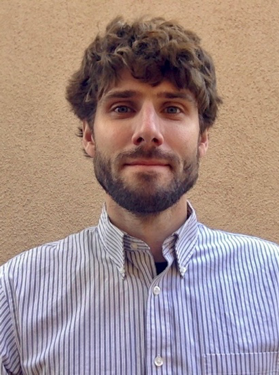
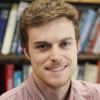
Brandon Schmandt is a Professor in the Department of Earth and Planetary Sciences at the University of New Mexico. His research focuses on geophysics, seismology, tectonics, structural geology, and volcanology. He holds a Ph.D. from the University of Oregon (2011). His research group specializes in seismic imaging methods to study subsurface structures related to tectonic and magmatic processes. They analyze seismic data from both fieldwork and public archives, with applications to earthquake mechanics, magma storage, and explosion discrimination. Recent work emphasizes continental magmatic systems, induced seismicity in the Raton Basin, and Yellowstone's magmatic architecture. Collaborative projects include seismic array deployments and machine learning applications for signal analysis. No scientific awards are explicitly listed in the provided texts. His advising includes undergraduate and graduate students such as Wilgus, Stairs, and Maguire. No specific grants or labs are mentioned beyond his departmental affiliation.
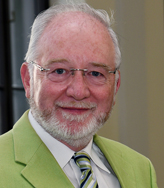
Dr. Abubakar Bello is a Senior Lecturer in Criminal Justice and Program Leader at Edge Hill University's School of Law, Policing, and Criminal Justice. Previously, he held roles at Western Sydney University, including Academic Program Advisor and Lecturer in Cyber Security and Behaviour. He holds a PhD in Cyber Criminology, an MBA in Business Law and Technology, and degrees in Computer Science. His research focuses on interdisciplinary approaches to cyber security risks, threat intelligence models, and behavioral aspects of cyber crime. Education: PhD (Cyber Criminology, Murdoch University), MBA (Business Law & Tech, Western Sydney University), MSc & BSc (Computer Science, University of Wolverhampton). Research Interests: Combating cyber crime through AI and machine learning, secure systems design, and behavioral cybersecurity. Key areas include ransomware defenses, social engineering, and cybersecurity frameworks for diverse populations. Grants & Projects: Awarded funding for initiatives such as 'Social Engineered Payment Diversion Fraud' (NSW Cyber Security Network), 'Brain-Inspired Algorithm for Network Anomaly Detection' (DST Group), and 'Cyber Security Awareness Framework' (ECR Grant). Awards: 'Award for Teaching and Learning Contributing to Public Good.' Active in professional networks like the International Centre on Racism and Centre for Applied Criminal Justice Research. Labs & Collaboration: Engages in cyber investigations, forensics, and community outreach through initiatives like Western Cyber Aid. Serves as a consultant for corporate espionage cases and a speaker on ransomware and AI in law enforcement.
Univ.-Prof. Karl Crailsheim is a Professor at the University of Graz, affiliated with the Institute of Zoology within the Faculty of Natural Sciences. His research focuses on honeybee behavior, physiology, and health, particularly investigating the honeybee superorganism and threats to their colonies. He explores swarm systems, robotics, and swarm intelligence, with recent emphasis on colony losses and environmental threats. His work bridges biology and robotics, applying insights from honeybee behavior to algorithm design. Research interests include honeybee nutrition, immune responses, pathogen impacts, and the application of citizen science in ecological studies. Key projects involve tracking honeybee behavior, analyzing pollen diversity, and developing robotic systems inspired by swarm dynamics. Collaborative efforts with citizen scientists enhance ecological data collection. Publications highlight advancements in understanding bee health, pesticide effects, and swarm robotics. His interdisciplinary approach addresses both biological and technological challenges in apiculture and robotics.
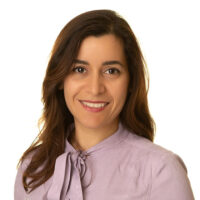
Ajita Rattani is an Assistant Professor in the Department of Computer Science and Engineering at the University of North Texas, affiliated with Discovery Park. Her research focuses on biometrics, AI fairness, deepfake detection, and machine learning applications in health and security. She holds a Ph.D. in Computer Science and Engineering, with expertise in facial recognition, ocular biometrics, and multimodal authentication systems. Research Interests: Her work addresses algorithmic fairness in facial attribute classification, robustness of biometric systems against adversarial attacks, and developing lightweight models for on-device authentication. She also explores applications of machine learning in health informatics, such as BMI prediction from facial images and analyzing social determinants of health. Publications Trends: Recent work emphasizes bias mitigation in AI systems (e.g., gender/racial fairness), deepfake detection through fusion of audio-visual cues, and advancing ocular biometric recognition under challenging conditions. Notable contributions include frameworks like CodeIT for data-efficient deepfake detection and PatchBMI-Net for lightweight BMI prediction. Advising & Grants: Leads research projects funded by NSF SaTC grants (e.g., probing fairness in ocular biometrics). Active in organizing competitions like VISOB 2.0 for mobile ocular biometrics evaluation. Her lab develops practical solutions for real-world challenges in biometrics and AI ethics. Labs/Teams: Involved in interdisciplinary teams addressing transdisciplinary collaboration challenges and applying AI to disaster detection (wildfires, droughts) using satellite and sensor data fusion.
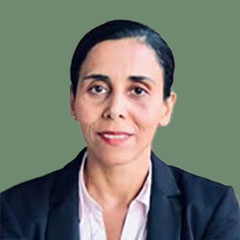
Dr. Marjan Alavi is an Assistant Professor at McMaster University's W Booth School of Engineering Practice and Technology, affiliated with the Mechanical Engineering department as an Associate Member. She holds a Professional Engineer (P.Eng.) license in Ontario and has over 15 years of academic and industrial experience in electrical engineering. Her research focuses on model-based and data-driven approaches for fault diagnosis, prognosis, and fault-tolerant control in hybrid systems, with applications in power electronics, energy systems, and smart infrastructure. Education: B.Sc. (2004) from K.N. Toosi University of Technology, M.Sc. (2007) from Sharif University of Technology, Ph.D. (2014) from Nanyang Technological University (Singapore), and a Postdoc (2015) at the University of Toronto's Energy Systems Group. Teaching: Instructs courses on Real-Time Systems (SEP 6ES3, SFWRTECH 4ES3), Smart Cities and Communities (SMRTTECH 4SC3), integrating real-world engineering challenges with theoretical frameworks. She emphasizes hands-on learning through remote labs and experiential projects. Professional Contributions: Serves as IEEE Toronto Section Executive Member, Technical Reviewer for IEEE Transactions on Industrial Electronics, and Vice Chair of IEEE Industrial Applications Society (2015). Founded Intelligent Diagnosis Corporations, a Canadian startup focused on research and innovation in diagnostics technologies. Key Projects: Developed fault diagnosis strategies for electro-hydraulic actuators, vehicle-mounted infrastructure monitoring systems, and remote laboratory platforms for emergency traffic control. Research spans predictive maintenance, smart city technologies, and railway systems certification benefits. Awards: Recipient of the Singapore International Graduate Award (SINGA) 2010. Recognized for her work in bridging academic research with industrial applications, particularly in enhancing system reliability through advanced control methodologies.
Professor David Wagg is a Professor of Nonlinear Dynamics and Departmental Director of Research and Innovation at the School of Mechanical, Aerospace and Civil Engineering, University of Sheffield. His research focuses on nonlinear structural dynamics, digital twins, vibration suppression, and real-time hybrid testing. He holds a BEng and PhD from University College London and previously served as a Professor at the University of Bristol (2008–2013). Notable awards include the EPSRC Advanced Research Fellowship (2004–2009). Education: BEng and PhD in Nonlinear Dynamics from University College London. Research Interests: Digital twins for dynamics applications, nonlinear structural dynamics, vibration control, real-time hybrid testing, and identification methods for nonlinear dynamics. His work emphasizes applying nonlinear models and control strategies to engineering challenges like wind turbines and large civil infrastructure. Grants & Leadership: Co-Investigator for EPSRC grants on CITCoM and Digitwin, coordinator of the Marie Curie ETN DyVirt, and PI for the EPSRC programme on Engineering Nonlinearity (2012–2017). He co-authored Nonlinear Vibration with Control (2015) and edited books on structural dynamics. Lab/Teams: Involved in the Laboratory for Verification and Validation (LVV) and leads research groups focused on digital twin applications, inerter-based systems, and structural health monitoring.
Joao Carlos Amaro Ferreira is a Professor at the Faculty of Logistics, Molde University College (HiMolde), Norway. He holds PhDs in Computer Engineering and Industrial Engineering from the Technical University of Lisbon and the University of Minho, respectively. His research focuses on Artificial Intelligence (AI) applications in healthcare, energy, transportation, IoT, blockchain, and smart cities. He has led over 40 projects, including 6 as Principal Investigator, and contributed to international conferences like OAIR and INTSYS. He served as IEEE CIS President (2016-2018) and is an IEEE Senior Member since 2015. His academic contributions span AI-driven solutions for public sector informatics, healthcare data quality, and cybersecurity. He actively participates in European projects such as e-Hospital4Future and explores blockchain applications in supply chains and medical records. Ferreira leads the ABC-AI research group, emphasizing ethical and applied AI. His work bridges academia and industry through projects like gamification systems for eco-driving and AI in fisheries traceability. Recent publications highlight AI's role in cardiovascular disease detection, emergency department optimization, and blockchain-enhanced healthcare interoperability. He collaborates internationally, co-editing journals like Applied Sciences , and has authored patents in edge computing for maritime monitoring.
Julie Legrand is an Assistant Professor in the Mechanical Engineering department at Eindhoven University of Technology , affiliated with the Group Van de Molengraft. Her work focuses on soft robotics , self-healing materials , and medical robotics applications . She designs actuators and sensors for adaptive robotic systems, emphasizing resilience through self-healing mechanisms and embodied intelligence. She teaches courses including Control of a Flexible Robot System , Haptics and Soft Robotics , and Robot-Arm , reflecting her expertise in both theoretical and applied robotics. Her research spans actuator design , material science integration , and minimally invasive surgical robotics , with notable contributions to self-healing actuator validation and continuum robot end-effectors for surgical applications. Legrand collaborates internationally on topics like shape memory alloys and anisotropic materials , and her work has been featured in media for breakthroughs in self-healing polymer limitations in soft robots. She actively contributes to the Medical Robotics research theme at TU/e, advancing interdisciplinary approaches to robotic systems in healthcare.
Daniel Quinn is an Associate Professor at the University of Virginia, jointly affiliated with the Department of Mechanical and Aerospace Engineering and the Department of Electrical and Computer Engineering. He is a member of the Link Lab, focusing on Cyber-Physical Systems, particularly autonomous vehicles and bio-inspired robotics. His roles include teaching courses like Aerodynamics I and Fluid Mechanics. Education: BS in Aerospace Engineering (University of Virginia), PhD in Mechanical & Aerospace Engineering (Princeton University). Postdoctoral research at Stanford University and visiting fellowships at Harvard University's Museum of Comparative Zoology. Research focuses on Fluid-Structure Interactions, Biomechanics, Bio-Inspired Robotics, Energy-Harvesting, and Cyber-Physical Systems. Key projects include studying ground effects on propulsion, fish schooling dynamics, and self-powered breath sensors. Notable awards include the NSF Career Award (2020), Pi Tau Sigma Outstanding Faculty Award (2021–2023), and the Hartfield Excellence in Teaching Award (2024–2025). His work bridges experimental optimization, computational modeling, and interdisciplinary collaboration. Grants include DURIP support for advanced research facilities. Lab locations include Olsson Hall and 122 Engineer’s Way. Active in media, featured in articles on teaching excellence and UAV design innovations.
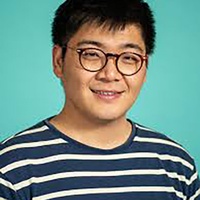
Dewei Yi is a Senior Lecturer (Associate Professor) in the Department of Computing Science, School of Natural and Computing Sciences at the University of Aberdeen, UK. He holds a PhD from Loughborough University and is an active researcher in AI, computer vision, and intelligent systems. He serves as Director of the MSc AI and MSc Robotics and AI programmes. Research Interests: His research spans AI-enabled healthcare, medical image processing, intelligent vehicles, robotics, precision agriculture, remote sensing, and applied machine learning. He focuses on hybrid intelligent systems, personalised AI, federated learning, fairness, and explainability. Recent Publication Trends: His latest work includes medical image quality evaluation using contrastive learning, federated learning for diabetic retinopathy, UAV-based solar panel inspection, vascular image analysis, and emotion recognition from ECG data, reflecting a strong trend toward healthcare and intelligent systems with real-world impact. Scientific Awards: Fellow of the Higher Education Academy (FHEA) Outstanding Reviewer, Transportation Research Part C (TRC) Advising and Grants: Dr Yi supervises multiple PhD students in AI, computer vision, and machine learning. His graduated PhDs include Debinal Bakyavathi Rajan, Sami Hamid Al Sulaimani, and Adinath Abhimanyu Ghadage. He has secured significant funding as PI and Co-PI, including a £408K Smartawl 5.0 project and a £794K Cancer Research UK grant (Co-PI). Labs and Teams: He leads research in AI for healthcare and intelligent vehicles, collaborating with institutions like University of Warwick, Loughborough University, and industry partners such as AVL Powertrain Ltd. His work is supported by interdisciplinary teams focusing on embedded AI, medical applications, and sustainable technologies.
Mathew Yarossi is an Assistant Professor at Northeastern University with a joint appointment in the College of Engineering (Electrical and Computer Engineering) and Bouvé College of Health Sciences (Physical Therapy, Movement, and Rehabilitation Sciences). He holds a PhD from Rutgers University (2017) and joined Northeastern in 2022. Research Focus: His work bridges movement neuroscience, clinical research, and engineering, with emphasis on AI-driven solutions for rehabilitation. Key areas include physiological signal processing, neuromuscular control, and human-robot interaction. His NSF-funded project on dyadic object handover with robots highlights his interdisciplinary approach. Publications: Recent work explores VR-based interventions, EMG-driven prosthetics, and computational modeling of transcranial stimulation. His 2025 patent on virtual reality experiment design underscores his translational impact. Awards: Holds a patent for VR experiment systems (2025). Advising & Grants: Mentors students in PEAK Experiences programs and collaborates with the U.S. Army on AI applications in combat systems. His lab is part of the Institute for Experiential AI.
Torgeir Welo is a Professor at the Department of Mechanical and Industrial Engineering , Norwegian University of Science and Technology (NTNU) . He specializes in metal forming , particularly aluminum alloy structures , with a focus on plastic bending behavior , dimensional stability , and 3D forming technologies . His research also encompasses Lean Product Development , emphasizing knowledge reuse and maximizing customer value in automotive and aerospace applications. Key Research Areas : Metal Forming, Aluminum Processing, Springback Control, Lean Development, Additive Manufacturing, Material Substitution Teaching : Courses on Aluminum Technology , Metal Forming Analysis , and Machine Element Design Publications (15 most recent): Focus on springback monitoring , charge weld evolution , flexible forming , machine learning applications , and circular economy frameworks in metal manufacturing.
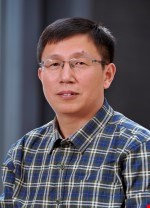
Maozhen Li is a Professor in the Department of Electronic and Electrical Engineering at Brunel University of London , within the College of Engineering, Design and Physical Sciences . He serves as the Vice-Dean of the NCUT Transnational Education (TNE) programme, overseeing a joint school with North China University of Technology. He has been at Brunel since 2002, progressing from Lecturer to Professor in 2013. Education: PhD, Institute of Software, Chinese Academy of Sciences (1997) Postdoctoral Research, School of Computer Science and Informatics, Cardiff University (1999–2002) His primary research interests lie in high performance computing, big data analytics, and artificial intelligence, with applications in smart grids, smart manufacturing, and cybersecurity. He focuses on developing interpretable, robust, and lightweight AI models, including work in causal AI, parallel machine learning, and edge computing. His research integrates advanced techniques such as deep learning, reinforcement learning, and blockchain for real-world system optimization. An analysis of his recent publications reveals a strong and consistent research trajectory in AI-driven solutions for environmental monitoring (e.g., PM2.5 prediction), industrial defect detection, IoT security, and intelligent transportation. His work frequently combines deep learning with graph-based modeling and federated or reinforcement learning, emphasizing scalability, efficiency, and robustness in distributed and edge environments. Scientific Awards and Recognition: Fellow of the Institution of Engineering and Technology (IET) Fellow of the British Computer Society (BCS) Shortlisted for the Computing UK BIG DATA EXCELLENCE AWARDS 2018 in the category of Most Innovative Big Data Solution Maozhen Li has successfully supervised 25 PhD students and examined over 30 PhD theses externally. He has secured significant research funding from EPSRC, the European Union (Horizon 2020), Innovate UK, and the Royal Society , with projects including Z-BRE4K, IoRL, and TDX-ASSIST. He serves as an Associate Editor for journals such as the Journal of Cloud Computing and the International Journal of Grid and High Performance Computing . Research Groups and Teams: He is affiliated with the Intelligent Engineering Frameworks (IEF) research group at Brunel, contributing to collaborative efforts in AI, IoT, and smart systems. His leadership in transnational education also fosters international research collaboration between Brunel and Chinese institutions.
Martin Rajman is a Senior Scientist at École Polytechnique Fédérale de Lausanne (EPFL) with multiple affiliations across the institution. He holds positions in the School of Computer and Communication Sciences (SIN - Teaching, SCI IC MR Group, SSC - Teaching) as well as in the Vice Presidency for Strategic Development (VPS Artificial Intelligence) and the Vice Presidency for Academic Affairs (SNAI Administration). He serves as the Executive Director of Nano-tera.ch, a large Swiss Research Program funding collaborative multi-disciplinary projects in Health and the Environment. Rajman's research spans the intersection of artificial intelligence, natural language processing, and information retrieval. His work demonstrates a consistent focus on developing practical applications of computational linguistics and machine learning techniques. Early in his career, he contributed significantly to syntactic parsing, stochastic language models, and vector space representations for text. More recently, his research has expanded into deep learning applications for 3D reconstruction, empathetic conversational agents, and distributed analytics systems. His publications reveal a trajectory from foundational NLP research toward increasingly applied and interdisciplinary work connecting AI with healthcare, environmental monitoring, and human-computer interaction. Analysis of his recent publications (2015-2024) shows a clear evolution toward more applied AI research with strong interdisciplinary connections. While maintaining his core expertise in natural language processing and information retrieval, his work has expanded into computer vision, healthcare applications, and sustainable computing. The publications demonstrate increasing collaboration across disciplines, with applications in medical imaging, mental health support systems, environmental monitoring, and human-centered AI. His leadership role in the Nano-tera.ch program reflects this interdisciplinary approach, connecting computing research with real-world challenges in health and environmental contexts. Rajman has mentored several PhD students including Ailomaa Marita, Eckard Emmanuel, Melichar Miroslav, and Veselý Martin. His research has been supported through the Nano-tera.ch program, which has funded more than 100 research projects with over 95 million CHF in public funding. He has also managed more than 20 European projects during his tenure as Director of the EPFL Global Computing Center. As Executive Director of Nano-tera.ch, Rajman leads a significant research initiative connecting EPFL with national and international partners. His work bridges academic research with industry applications, notably through collaborations with eBay on product ranking technology and with Elsevier on article recommendation systems. His leadership extends to managing large-scale research programs while maintaining an active research agenda and mentoring the next generation of computer scientists.
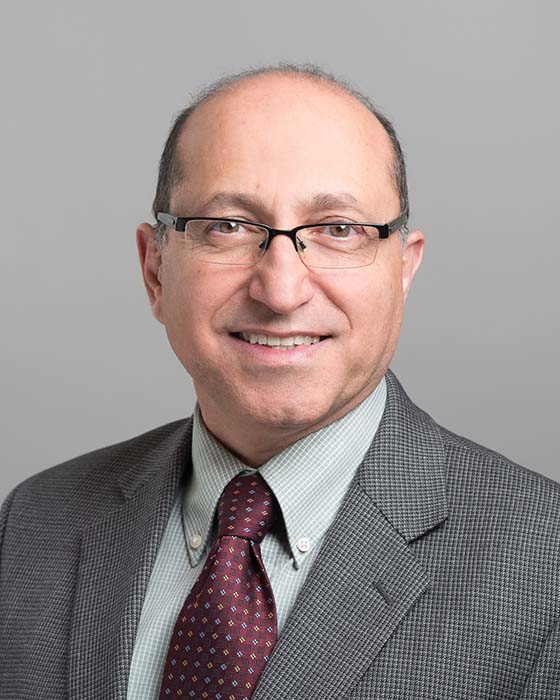
Shahrokh Valaee is a Professor and Associate Chair for Undergraduate Studies in the Edward S. Rogers Sr. Department of Electrical and Computer Engineering at the University of Toronto, part of the Faculty of Applied Science and Engineering. He founded and directs the Wireless and Internet Research Laboratory (WIRLab). Education: BSc and MSc in Electrical Engineering from University of Tehran PhD in Electrical Engineering from McGill University Research Interests: Focuses on wireless networks (vehicular/sensor networks, B5G/6G), signal processing (indoor localization, machine learning for medical imaging), and integrated sensing/communication. His work spans: Localization in GPS-denied environments Machine learning for healthcare with limited/imbalanced data Reconfigurable Intelligent Surfaces (RIS) and drone networks Publications: Recent articles (2014-2016) show strong focus on indoor localization techniques, vehicular network protocols, and network coding, with emerging trends in machine learning applications for wireless systems and healthcare. Awards: Connaught Award (2012, 2013) NSERC Discovery Accelerator Award (2010) MaRS Innovations cPOP Award (2012) IEEE Fellow (FIEEE) Engineering Institute of Canada Fellow (FEIC) Leadership: Advises graduate students at WIRLab, where research combines theory with practical implementation (GPU-based ML, Android localization). Manages projects in integrated sensing/communication, ML for health, and B5G networks. Labs/Teams: Directs WIRLab with focus on wireless signal processing, networking, and ML implementations. Current team includes postdocs and PhD students working on localization, B5G networks, and medical ML applications.