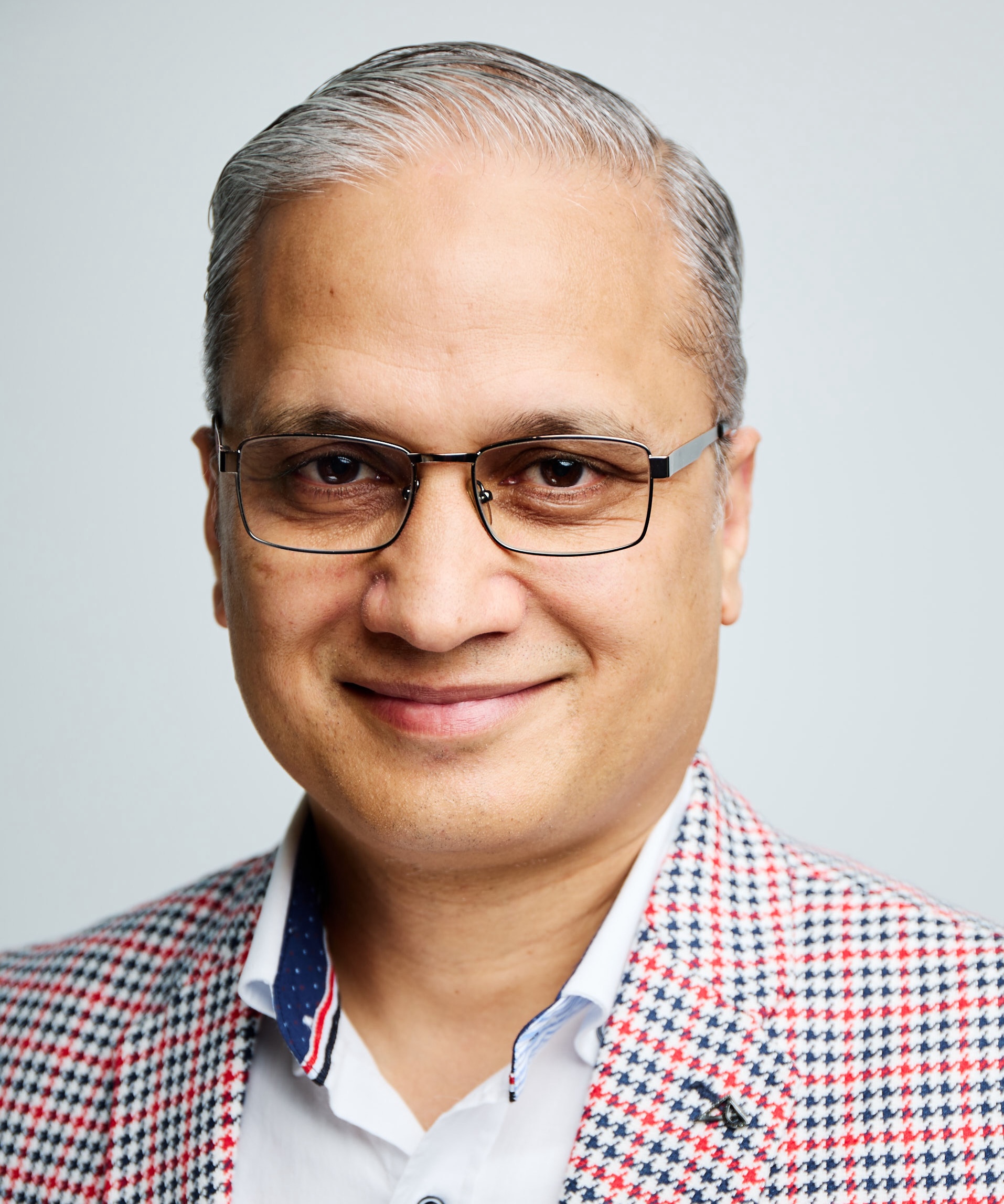
Shahid Raza is a Professor of Cybersecurity at the University of Glasgow's School of Computing Science. He previously led the RISE Cybersecurity Unit in Sweden, establishing it as a leading research group. His expertise spans IoT Security, PKI, AI-driven cybersecurity solutions, and hardware/data security. Raza holds a PhD and Docentship from Uppsala University, alongside a Bachelor's with a Gold Medal for academic excellence. Education: B.Sc. (Computer Science, 3.99/4.0 CGPA, Gold Medal), Licentiate, PhD, and Docentship in Cybersecurity from Sweden. He leads EU-funded projects like H2020 CONCORDIA and Horizon Europe CUSTODES, coordinating initiatives such as the Cyber Node and Cyber Range. Active in cybersecurity policy, he serves on the EU SCCG, ECSO, and EARTO Security & Defence Research working groups. Research Interests Public Key Infrastructure (PKI) for IoT AIAgent-Driven Cybersecurity Solutions IoT Certification Standards Hardware Security for Low-Power Devices Grants & Projects Coordinator: Horizon Europe CUSTODES Technical Leader: H2020 Arcadian-IoT Founder: RISE Cyber Range (Sweden's largest cybersecurity test facility) Awards & Memberships IEEE Senior Member Gold Medal for Academic Excellence (Bachelor's)
Alexander Budzier is a Research Fellow in the Department of Technology and Operations Management at Saïd Business School, University of Oxford. He specializes in managing projects across IT, infrastructure, energy, and mega-events, with a focus on risk mitigation and systems thinking. His roles include teaching on the MSc for Major Programme Management, MBA, and the Major Project Leadership Academy. Education: PhD from Saïd Business School (2014). Prior experience includes roles at T-Mobile International and McKinsey's Business Technology Office in Düsseldorf and Chicago, advising on IT and operations strategy. Research interests center on IT-enabled change, project setups, and risk analysis. Notable contributions include work on cost overruns in IT projects, the uniqueness trap in project management, and sustainable development via mega-events like the Olympics. Publications span journals like Harvard Business Review , iScience , and Event Management , with a focus on megaprojects, risk, and digital transformation. He has advised governments and corporations on infrastructure investments and project governance, emphasizing evidence-based decision-making.
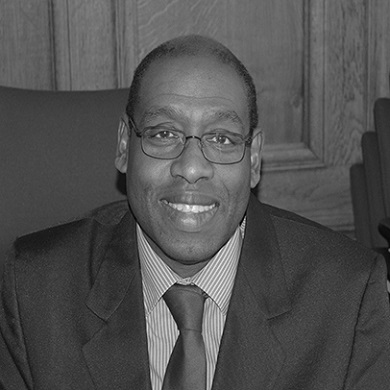
Professor Washington Ochieng, currently Head of the Department of Civil and Environmental Engineering at Imperial College London, is a globally recognized expert in positioning and navigation systems. He holds the Chair Professor role and serves as Director of the Centre for Active Resilience and Security (CARS), with affiliations spanning the Centre for Systems Engineering and Innovation, Centre for Transport Engineering and Modelling, Institute for Molecular Science and Engineering, and Space Lab. Educated with a First Class BSc in Engineering (University of Nairobi), MSc (Distinction) in Civil Engineering (University of Nottingham), and PhD in Civil Engineering (University of Nottingham) 2024 Commander of the Order of the British Empire (CBE) for services to global positioning systems 2023 DSc honoris causa from Technical University of Kenya and Kenya’s Elder of the Order of the Burning Spear 2019 Harold Spencer-Jones Gold Medal (Royal Institute of Navigation) Ochieng’s research spans critical infrastructure resilience , user-centric mobility , and safety-critical positioning, navigation, and timing (PNT) systems . His work includes designing satellite navigation systems like Europe's EGNOS and GALILEO, and contributions to Air Traffic Management (ATM) and Intelligent Transport Systems (ITS). He has advised UK Government bodies (RAEng, Government Office for Science, POST) and international entities (European Parliament, FCDO, UK-Kenya Technology Challenge Board). Key affiliations include: Board of Trustees, Science Museum Group (UK) President of the Royal Institute of Navigation Chair of the Africa Engineers Steering Committee (Royal Academy of Engineering) Member of the UK Department for Transport’s Scientific Advisory Group Member of the National Physical Laboratory’s Science and Technology Council
Soufiene Djahel is a Professor at the Centre for Future Transport and Cities (CFTC) at Coventry University, UK. His research focuses on connected and autonomous vehicles (CAVs), unmanned aerial vehicles (UAVs), cyber security, and smart cities. He holds a PhD in Secure Routing and Medium Access Protocols from Université des Sciences et Technologies de Lille (2010), and has held academic positions including Senior Lecturer at the University of Huddersfield and Manchester Metropolitan University. His research interests include CAV coordination protocols, cyber-physical security solutions, and intelligent transportation systems. Djahel leads projects such as the £1.2M AeroPharma Logistics initiative and has secured funding from the Newton Fund and JSPS. He is a recipient of the 2021 JSPS Invitational Fellowship and has published extensively in IEEE journals and conferences. Current projects explore UAVs-as-a-service, digital twins for CAVs, and B5G/6G for smart infrastructure. He advises PhD students on topics like AI-based threat mitigation and transport electrification. Djahel also serves as an external examiner and editorial board member for journals like IEEE Transactions on Intelligent Transportation Systems.
Prof. Ahmed Al-Dubai is a Professor at the School of Computing, Engineering and the Built Environment, Edinburgh Napier University, where he leads the IoT and Networked Systems Research Group and serves as Cybersecurity and Cyber Physical Systems Research Lead. His interdisciplinary research spans Multi-access Edge Computing, High-Performance Networks, Cognitive IoT Systems, VANETs, AI, E-Health, Smart Cities, and Security . He earned his PhD in Computing Science from the University of Glasgow in 2004. His recent publications focus on edge computing architectures, digital twin security, Arabic NLP, wireless energy harvesting, and vehicular communication . His work has been recognized with IEEE Outstanding Service Award, Best Paper Awards at IEEE IUCC 2015 and ACM MoMM 2013 , and fellowships like Senior IEEE Member and British Higher Education Academy Fellow . He supervises 20+ PhD students and has served on 60+ IEEE/ACM conference committees. Current projects include AI-driven fish identification (Innovate UK £265K) , secure IoT protocols (Royal Society £12K) , and COG-MHEAR (EPSRC £3.26M) . He has held visiting professorships at Universite de Valenciennes, University of Sydney, and University of Shenyang.
Dr. Nagham Saeed is an Associate Professor in Electrical and Electronic Engineering at the School of Computing and Engineering, University of West London, where she has been actively engaged in teaching and research since 2007. She holds a PhD in Intelligent MANET Optimisation from Brunel University and leads the Industrial Internet of Things (IIoT) research group. Her academic service includes editorial and technical committee roles for IEEE and MDPI, and she is a Chartered Engineer (CEng), Senior Member of IEEE, Member of IET, and Senior Fellow of the Higher Education Academy (HEA). PhD in Intelligent MANET Optimisation System, Brunel University (2011) Her research focuses on intelligent systems for smart cities, applying artificial intelligence to telecommunications, energy modeling, and industrial applications. She explores AI-driven optimization in next-generation networks, smart grid integration, battery management systems, and sustainable ICT. Her work also extends to engineering education, particularly feedforward teaching methods and student engagement. The recent publications reveal a strong trend in applying AI and machine learning to solve real-world challenges in energy systems, IoT, transportation, and environmental sustainability, often with a focus on smart cities and renewable integration. Dr. Saeed has been recognized with several awards, including: 2021 University of West London Student Union Best Supervisor/Tutor Award 2022 IEEE Region 8 Outstanding Women in Engineering Section Volunteer Award She mentors early-career engineers and academics and actively promotes electrical and electronic engineering among young girls. She has served as the 2023 IEEE Women in Engineering UK & Ireland Chair and is currently the Vice Chair (Chair-Elect) for the IEEE UK & Ireland Section (2024–2025). Her leadership spans technical innovation, academic service, and diversity advocacy in engineering. She teaches across a range of programs, including MSc Industrial Internet of Things, BEng and MSc Electrical and Electronic Engineering, and supervises PhD research in related fields.
Panos Constantinides is a Professor of Digital Innovation at Alliance Manchester Business School, University of Manchester. He holds a PhD from the Judge Business School, University of Cambridge, and is a Fellow of the Cambridge Digital Innovation Centre. A co-founder of the European Digital Platforms Research Network (EU-DPRN), his research focuses on human-AI collaboration and digital platform governance. He has secured grants from the British Academy, Innovate UK, and UKRI, with publications in top-tier journals like Information Systems Research and MIS Quarterly . Education: PhD in Business (2005), Judge Business School, Cambridge MPhil in Business (2002), Judge Business School, Cambridge BSc in Computer Science (2000), New York University Research Interests: Exploring ethical and governance frameworks for AI integration in healthcare and autonomous systems Designing platform ecosystems resilient to crises like pandemics Advancing digital health through ecosystem approaches Studying innovation dynamics in decentralized systems Key Contributions: Authored Digital Transformation in Healthcare: An Ecosystem Approach (2023) Host of the Digital Podcast on YouTube/Spotify Advisor to corporations and policymakers on digital strategy Grants & Projects: Leading the £1.2M Applied AI and Quantum Technology in the Port Environment project (2024-2026) Recipient of British Academy grants (2015-2016) Co-PI on digital resilience research (2023) Labs/Initiatives: Principal Investigator at the Digital Futures Beacon Member of Christabel Pankhurst Institute Editorial roles at MIS Quarterly (2016-2025)
Oliver Carsten is a Professor of Transport Safety at the Institute for Transport Studies within the Faculty of Environment at the University of Leeds. His career spans over three decades, including leadership roles as Director of ITS (2004–2007) and Director of Research at ITS (2000–2004). PhD in History, University of Michigan MA in History, University of Michigan BA in Modern History, Oxford University Research focuses on integrating safety with emerging transport technologies, including: Road safety policy and accident causation Human-machine interfaces in vehicles Intelligent speed adaptation systems Naturalistic driving studies (e.g., UDRIVE, ecoDriver) His work has addressed European and global challenges through projects like XCYCLE (cyclist safety) and ADAS User Attentiveness. While no specific publications or awards are listed in the provided text, his career includes 15+ large-scale research initiatives funded by entities such as EPSRC, EC Framework Programmes, and UK government agencies. He leads the Human Factors and Safety research group and has advised on policy through roles like Chair of the Road User Behaviour Working Party for PACTS and membership in EU advisory bodies (GEAR 2030, C-ITS Platform). Teaching activities include courses on future transport technologies and traffic management.
Ken Peattie is a distinguished Professor of Marketing and Strategy at Cardiff Business School, Cardiff University, where he has been employed since 1986. His academic career spans over three decades of research and teaching focused on sustainability, ethics, and social responsibility in business contexts. He has established himself as a leading authority in sustainability marketing, corporate social responsibility, and social enterprise research, with significant contributions to both theoretical frameworks and practical applications. BA Hons Degree in Management and Geography from Leeds University (1983) Industrial experience: 3 years with Kimberly-Clark UK in Marketing, Distribution and Information Systems 2 years in strategic planning within UK electronics industry Professor Peattie's research interests center on sustainability marketing, corporate social responsibility, social marketing, and social enterprise. His work explores how management and marketing practices can be oriented toward ethics, environmental sustainability, and social responsibility across diverse contexts including Fair Trade, consumption reduction, fire prevention, and low-carbon behaviors. He has developed theoretical frameworks examining the interplay between CSR, sustainability, leadership, and ethics, while also investigating practical applications of social marketing principles in novel contexts. His recent publications demonstrate an evolving research trajectory from theoretical development toward increasingly applied research addressing specific sustainability challenges. The articles reveal a consistent focus on the intersection of temporal and spatial dimensions in sustainability marketing, practical implementation of CSR across diverse cultural contexts, and innovative business models for social enterprise. His work increasingly examines urban environments, consumer behavior patterns, and the practical challenges of implementing sustainable practices in real-world settings. 2010 Business Book of the Year award by the German Academic Association for Business Research for 'Sustainability Marketing: A Global Perspective' (co-authored with Frank-Martin Belz) 2000 Marketing & Public Policy Conference, Outstanding Paper Award 1998 Marketing Intelligence & Planning, Outstanding Paper Award 1992 Marketing Education Group Conference, Best Paper in Marketing Education Professor Peattie has supervised numerous PhD students focusing on corporate social responsibility, fair trade, social enterprise, and sustainability marketing. From 2001 to 2013, he directed the ESRC-funded BRASS Centre, securing over £13 million in research funding. As a Principal Investigator for Cardiff University's Sustainable Places Research Institute (PLACE) from 2010 to 2020, he collaborated with researchers across 11 different schools. His research has been supported by major organizations including Defra, BIS/DTI, the Welsh Government, and the Environment Agency. Professor Peattie directed the ESRC-funded Centre for Business Relationships, Accountability, Sustainability and Society (BRASS) for over 11 years, establishing it as the UK's largest social science research center dedicated to business sustainability and CSR. From 2010 to 2020, he co-directed Cardiff University's interdisciplinary Sustainable Places Research Institute (PLACE), which integrated researchers from diverse disciplines to address sustainability challenges. He has also been actively involved with various research networks and initiatives focused on sustainability policy and practice, contributing to the development of interdisciplinary approaches to complex sustainability issues.
Dr. Mike Pake is a Senior Lecturer at Anglia Ruskin University (ARU), affiliated with the Faculty of Science and Engineering and the Department of Psychology, Sport and Sensory Science in Cambridge. He joined ARU in 1996 when the Psychology course was established, and his work focuses on computational models of language acquisition, visual perception, and educational technology. Educations: PhD in Cognitive Science from the University of Edinburgh (Centre for Cognitive Science) MSc in Artificial Intelligence from the University of Edinburgh BSc in Psychology from the University of Stirling Research Interests: Mike’s research combines computational modeling of child language acquisition with visual perception studies using eye-tracking. He investigates how infants infer language syntax from speech and explores how eye-movement patterns influence face recognition and hazard perception. He also develops conversational learning tools via his company Psychonovo Publishing Ltd, creating interactive educational materials for voice/text interfaces. Teaching & Innovation: He teaches research methods and cognitive psychology, and his Psychonovo system is used for smartphone/laptop-based learning modules. He presented this work at ARU’s Digifest 2019. Labs & Collaborations: Member of the ARU Centre for Mind and Behaviour. Co-authored Cognitive Psychology for Dummies (2016) and its translations, and developed software for interactive learning systems.
Robert Berry is a Senior Lecturer at the Faculty of Computing, Engineering and Science at the University of South Wales. He holds a PhD in Geographical Information Systems, an MSc in GIS, and a BSc in Geography. His research focuses on geocomputation, integrating AI, NLP, and GIS to address geospatial challenges, with recent work in accessibility modeling and 3D landscape visualization. He is affiliated with the GIS Research Centre and WISERD, an interdisciplinary social science institute. Dr. Berry teaches modules in computing and information systems, including big data analytics, GIS, and project management. He has supervised numerous MSc and PhD students and contributed to over 50 research outputs, including peer-reviewed articles, conference papers, and technical reports. His expertise spans FOSS tools, programming (R, Python), and cloud computing for geospatial applications. Key projects include the 'People, Places and the Public Sphere' initiative (2024–2027) and evaluations of agricultural risk management policies. He has collaborated with UK government agencies, local authorities, and third-sector organizations on projects involving environmental planning, flood management, and cultural heritage preservation. Dr. Berry is a Fellow of the Royal Geographical Society and actively engages in advancing participatory technologies for environmental decision-making. His work emphasizes enhancing public participation through digital tools and addressing socio-economic challenges via geospatial analysis.
Professor Wafaa Saleh is affiliated with Edinburgh Napier University , where she contributes to the School of Computing Engineering and the Built Environment . Her research spans Transport Policy , Pedestrian Safety , and Travel Demand Management , with a focus on sustainable mobility and behavioral impacts of technology on road safety. Research Interests : Transportation sustainability, pedestrian behavior at junctions, motorcycle emissions, congestion pricing, and AI applications in transportation. Advisees : Supervised students in studies involving road safety in Qatar, bus passenger discomfort analysis, and mode choice modeling using behavioral theories. Grants & Projects include funding from the European Commission for gender inclusion in transport systems, the Qatar National Research Fund , and Tabuk University for Saudi Arabian transport behavior studies. Key publications address helmet compliance , pedestrian red-light violations , and congestion charging impacts . Collaborations span institutions in Taiwan, Saudi Arabia, and the UK, with work featured in journals like Transportation Research Part A and Accident Analysis and Prevention . Her Transport Research Innovation Centre involvement highlights interdisciplinary approaches to road safety and emissions reduction.
Professor Subhajit Basu is a leading academic at the University of Leeds , holding the position of Professor of Law and Technology within the School of Law . His work bridges Law, Artificial Intelligence, Big Data, and Emerging Technologies , with a focus on the Global South . He has authored influential books including Privacy and Healthcare Data (Routledge, 2016) and Global Perspectives on E-Commerce Taxation Law (Ashgate, 2008). PhD, Liverpool John Moores University LLB, Calcutta University Called to the Bar in 1998, specializing in Corporate Law in India Research Interests span Regulation of Emerging Technologies, AI Governance, Health Data Privacy, Autonomous Systems, and Online Harm . His recent projects include CoR: Sextortion in the Age of Blockchain and Deepfakes (Naif Arab University, 2025–2026) and Autonomy and Moral Agency in Bioethics (WBNUJS, 2024–2025). He previously led EU Horizon projects like PASCAL (2019–2023) on Connected and Autonomous Vehicles. Scientific Awards include the Hind Rattan (Jewel of India, 2020) and fellowships from the Royal Society of Arts and Higher Education Academy . His editorial leadership includes Editor-in-Chief of the International Review of Law Computers and Technology and associate roles on five journals. Notable Grants include funding from Naif Arab University (Saudi Arabia), EU Horizon 2020, EPSRC, and the Atlantic Philanthropies. He has provided consultancy to the National Cybercrime Research Centre (Poland), the Government of Saudi Arabia on AI frameworks, and The Dialogue (India) on IT Rules.
Roy Sterritt is a Lecturer in Informatics at the School of Computing, Ulster University. His research focuses on autonomic computing, robotics, machine learning, and cybersecurity. He has contributed extensively to decentralized systems and fault management in autonomous environments. Research Interests: Roy’s work spans autonomic computing, robotics, and AI, with applications in cloud systems, space exploration, and drone fleets. He emphasizes self-adaptation, fault tolerance, and security protocols. Scientific Awards: Highly Ranked Scholar in Autonomic Computing (2024) Multiple Best Paper Awards (2016–2023) Recent Trends: His recent publications highlight autonomic solutions in cloud security, robot swarms, and space systems, leveraging machine learning and adaptive communication protocols. Projects & Collaborations: Roy has led projects like SPAAACE-Ware and DEL CAST AWARD, focusing on autonomic analytics and apoptotic computing. He organizes international conferences on autonomous systems and collaborates globally.
Dr. Glenford Mapp is an Associate Professor in the Department of Computer Science at Middlesex University. His research focuses on Cooperative Intelligent Transportation Systems (C-ITS), transport protocols for mobile environments, and edge computing frameworks such as the Y-Comm system. He explores intelligent algorithms for caching, network memory servers, and energy-efficient resource allocation in vehicular edge networks. His work emphasizes cybersecurity in healthcare, digital forensics for big data networks, and smart city infrastructure. Notable contributions include frameworks for secure service ecosystems, decentralized digital forensics, and AI-driven network design integrating IoT and cloud computing. He collaborates on projects involving vehicular communications, wireless medical networks, and post-pandemic healthcare security. Publications span topics like edge computing, vehicular networks, and smart city technologies. His research bridges theoretical models (e.g., queuing theory, particle swarm optimization) with practical implementations, including prototypes for traffic management and secure cloud-based services.