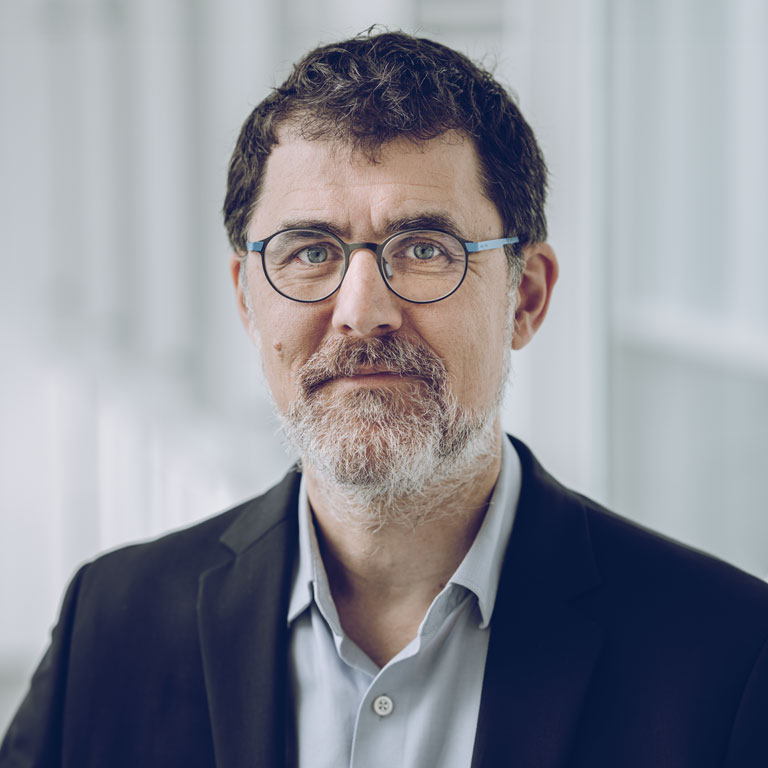
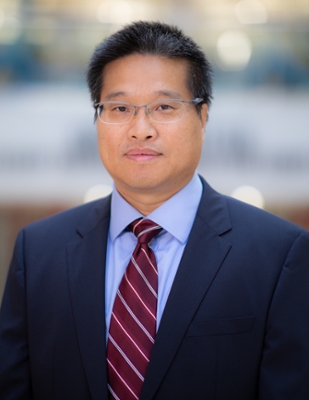
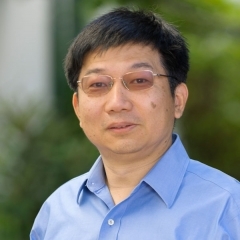
Pierre-Olivier Pineau is a Professor at HEC Montréal, holding the Chair in Energy Sector Management within the Department of Decision Sciences. His research focuses on energy policy, electricity markets, and sustainable development. He has a Ph.D. in Administration from HEC Montréal and a Master's in Philosophy from Université de Montréal. His expertise spans energy policy, electricity market dynamics, decision analysis, and decarbonization strategies. Current research includes environmental impacts of energy trade, electricity market modeling, and voluntary price mechanisms for energy conservation. Pineau has supervised over 30 master's and doctoral students, contributing to impactful studies in energy transition and policy. Recent publications emphasize reinforcement learning in energy demand response, price forecasting in Ontario, and decarbonization challenges in North America. He co-authored the book Games in Management Science: Essays in Honor of Georges Zaccour and received the 2024 Hubert-Reeves Prize for his work on energy balance. Pineau teaches courses on energy value chains and sustainable supply chains, reflecting his commitment to bridging academia and industry. His work addresses global energy challenges, advocating for integrated regional energy systems and equitable climate policies.
Dr. Dariusz Weiland is an Assistant Professor at the Department of Logistics within the Faculty of Economics at the University of Gdańsk . His contact information includes phone (+48 58 523 12 35) and email (dariusz.weiland@ug.edu.pl), with office room 221. He holds an M.A. (mgr) degree, and his research focuses on logistics systems, information logistics in Industry 4.0, transportation economics, and sustainable energy logistics . Key areas include railway infrastructure impact on regional development, urban logistics optimization, and the application of RFID and AI in supply chain processes. His publications span topics like green hydrogen storage for road transport, process maturity in inland transport, and the theoretical aspects of Control Tower systems for last-mile distribution. He actively participates in debates on defining urban logistics frameworks and the strategic role of information logistics in production and distribution. Consultation hours are held via MS Teams on Mondays from 11:30–13:00, with urgent matters addressed via private chat. Awards and grants are not explicitly mentioned in the profile, but his work emphasizes interdisciplinary collaboration in logistics innovation and policy analysis.
Fudong Li is a Professor and Principal Academic in Cyber Security at Bournemouth University, leading the Cyber Security pathway for multiple undergraduate programs and serving as Programme Leader for BSc Forensic Computing and Security. His expertise spans over 15 years in teaching and research, focusing on digital forensics, biometric authentication, ethical hacking, and network security. He holds certifications such as EC-Council’s CHFI, CEH, and Cisco’s CCNA. Fudong has supervised 12 completed PhD students and authored over 60 publications in journals and conferences. His research interests include wearable computing for authentication, blockchain security, privacy-preserving technologies, and cloud storage verification. Notable work includes studies on Ethereum’s consensus mechanism transition and smartwatch-based continuous authentication systems. He has led the FORESIGHT grant (2019) for advanced cyber-security simulation platforms and serves as an external examiner for multiple UK universities. Fudong’s contributions align with UN SDGs for Quality Education and Gender Equality through cybersecurity education initiatives and inclusive technology design. His advisory roles include overseeing 13+ PhD candidates and collaborating on grants addressing cybersecurity challenges in aviation, power grids, and naval systems. He also leads external engagement activities, including visiting lectureships and international examiner roles.
Dr. Amirreza Khodadadian is a Lecturer in Mathematics at the School of Computer Science and Mathematics, Keele University, since August 2023. He holds a Ph.D. from the University of Vienna (2017), followed by postdoctoral positions at the Technical University of Vienna and Leibniz University Hannover. His research focuses on uncertainty quantification, numerical methods for stochastic PDEs, finite element methods, computational mechanics, and machine learning applications in nanoelectronics and biological systems. Key research interests include Bayesian inversion, multiscale modeling, reduced-order methods, and the design of nanoscale sensors. He has collaborated with institutions like the University of Oxford and secured an Austrian Science Fund (FWF) grant (476k€) for nanozyme sensor research. Dr. Khodadadian mentors postdoctoral researchers, including Dr. Samaneh Mirsian, and actively publishes in top-tier journals such as Journal of Computational Physics and Computer Methods in Applied Mechanics and Engineering . His work bridges applied mathematics with engineering challenges, emphasizing efficient numerical algorithms for real-world problems like battery degradation, groundwater contamination, and biomedical sensor optimization. Recent projects involve machine learning integration for enhanced predictive modeling. Education: Ph.D. in Mathematics, University of Vienna, Austria (2017) Postdoctoral Fellowships: TU Vienna (2018), Leibniz University Hannover (2018–2022) Grants/Awards: Austrian Science Fund (FWF) Grant: Single Atom Catalysts as Nanozymes in FET Sensors (2023) Advising: Postdoctoral Mentor: Dr. Samaneh Mirsian (Keele University) Dr. Khodadadian’s publications span computational mechanics, stochastic modeling, and interdisciplinary applications, reflecting his expertise in translating mathematical theory into practical engineering solutions.
Kazuyuki Iwase serves as Associate Professor at Tohoku University's Institute of Multidisciplinary Research for Advanced Materials since April 2025, following progressive appointments as Senior Assistant Professor (2023-2025) and Assistant Professor (2019-2023). His academic journey includes postdoctoral research at Paul Scherrer Institute (Switzerland) and multiple JSPS Research Fellowships. He maintains active collaborations with prominent researchers including Prof. Itaru Honma and Prof. Takaaki Tomai. Dr. Iwase's research focuses on electrocatalysis for sustainable energy conversion, specializing in carbon dioxide reduction reaction (CO2RR) and oxygen evolution reaction (OER) systems. His work spans nanomaterials engineering, electrocatalyst design, and device integration for renewable energy applications. Key methodologies include supercritical hydrothermal processing, mechanical alloying, and machine learning optimization of electrochemical systems. His publication record demonstrates consistent high-impact output with 36 accepted articles through 2025, featuring 11 as corresponding author and 15 as first/equal-first author. Recent work explores manganese nanospinels for OER, Ag-Sn intermetallics for CO2RR, and machine learning approaches for reaction optimization, showing strong interdisciplinary connections between materials science, electrochemistry, and sustainable engineering. The 5th Symposium for The Core Research Clusters for Materials Science and Spintronics Poster Award (2021) Student Presentation Award, Chemical Society of Japan (2016) International Exchange Support Award, Electrochemical Society of Japan (2016) SIEMME Best Oral Presentation Award (2014) Dr. Iwase has secured significant research funding as Principal Investigator, including a JST PRESTO grant (¥40,000,000) for CO2 conversion research and multiple JSPS Grants-in-Aid totaling over ¥59,000,000. His academic service includes peer review for prestigious journals including Angewandte Chemie and Nature Sustainability. He maintains active international engagement through invited lectures in Japan, India, and Switzerland, focusing on nanomaterials for electrocatalysis.
Kuuipo Walsh is the GIScience Program Director and Senior Lecturer I at Oregon State University's College of Earth, Ocean, and Atmospheric Sciences (CEOAS). She oversees the GIScience certificate program, advising over 200 students annually on course selection, career paths, and academic plans. Her research focuses on GIS, metadata standards, digital libraries, and coastal atlases. She teaches advanced undergraduate and graduate courses in GIScience via Ecampus, including GIScience I-III and Geospatial Perspectives on Intelligence. Education: B.S. in Computer Science (California Polytechnic State University, 1993) and M.S. in Marine Resource Management (Oregon State University, 2002). Her publications emphasize spatial data infrastructure, coastal data networks, and usability in geospatial tools, with notable contributions to the Oregon Spatial Data Library and Virtual Oregon projects. She has no listed scientific awards but maintains active engagement in geospatial education and professional advising. Lab/Team Affiliation: Directs the GIScience certificate program and collaborates on geospatial initiatives within CEOAS.
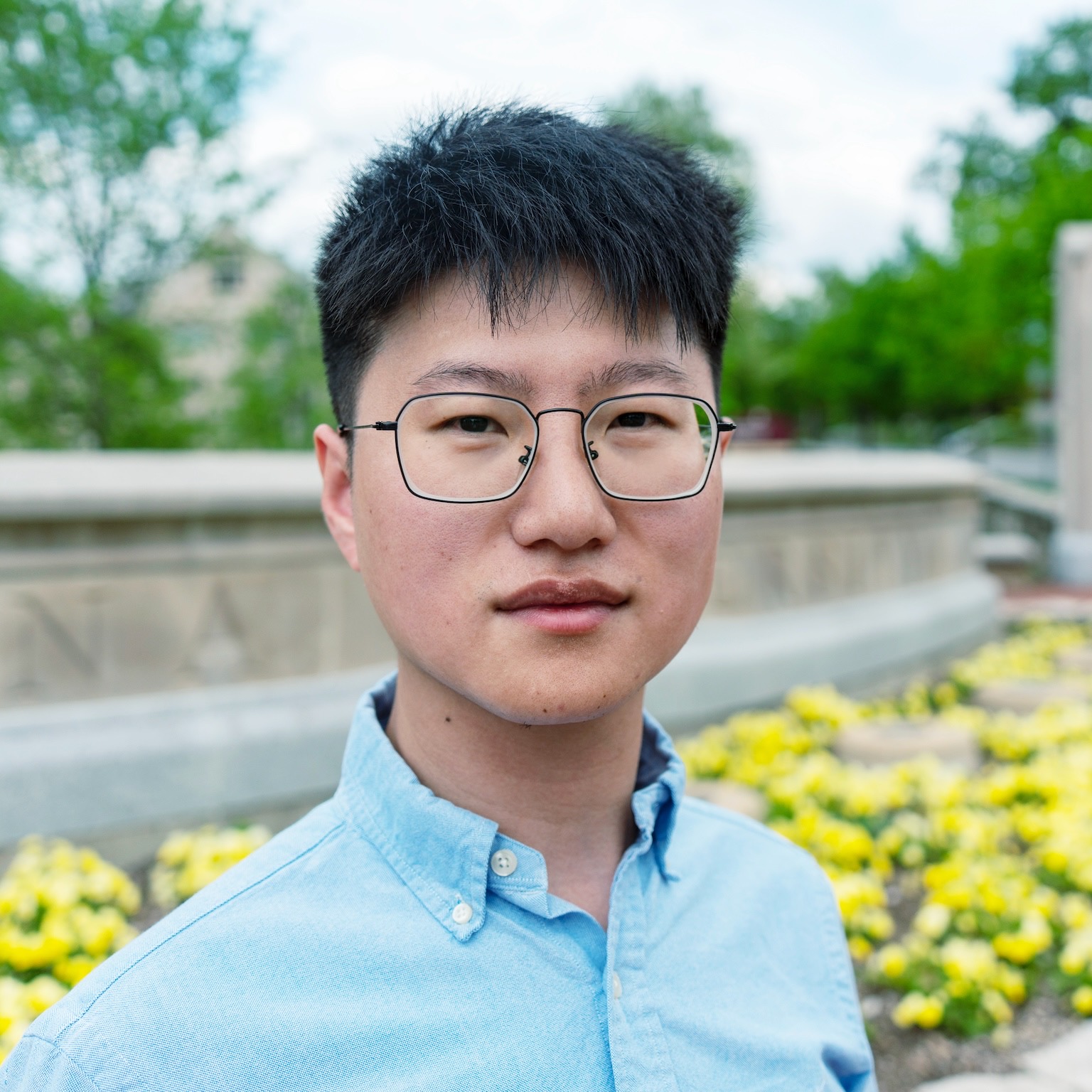
Chengming Zhang is a tenure-track assistant professor in the Computer Science Department at the University of Houston. He recently completed his Ph.D. in Computer Engineering from Indiana University in May 2024, where he was a member of the HiPDAC group working on building efficient and scalable deep learning systems under the advisement of Prof. Dingwen Tao. He has extensive industry research experience with multiple projects at Microsoft Research, Meta Reality Labs, and Argonne National Laboratory. His educational background includes: Ph.D. in Computer Engineering, Indiana University (May 2024) Dr. Zhang's research focuses on creating efficient machine learning systems that can operate effectively across diverse hardware platforms. His work bridges the gap between theoretical algorithms and practical implementation with particular emphasis on efficient machine learning systems for training and inference on parallel, distributed, and heterogeneous hardware; AI algorithm-hardware co-design, particularly for GPU architectures; effective efficiency algorithms including model compression, data efficiency, and parameter-efficient tuning; and large-scale deep learning applications such as Large Language Models, Agents, and Image/Video Generation systems. His publication record demonstrates a consistent focus on optimizing deep learning systems through hardware-aware approaches. The majority of his work centers around making deep learning more efficient through techniques like model compression, hardware-algorithm co-design, and memory optimization. His research spans both theoretical algorithm development and practical system implementation, with publications in top-tier conferences including the International Conference on Supercomputing, PPoPP, and AAAI. A notable trend in his work is the emphasis on practical efficiency - not just theoretical improvements but solutions that deliver real-world performance gains on actual hardware. Dr. Zhang is actively building his research group at the University of Houston and has secured significant computational resources for his lab, including multiple high-performance computing servers worth a total of $130K (two 8-Ada6000 servers and one dual-4090 servers).
Andrés Suárez García is an Assistant Professor at the University of Vigo's Department of Systems and Automation Engineering. His teaching includes courses on Systems and Control Engineering, Industrial Computing, Robotics, and Automation Fundamentals. He has consistently taught across multiple academic years from 2014/2015 to 2024/2025, covering disciplines like structural mechanics, fluid dynamics, and manufacturing quality control. His research focuses on interdisciplinary engineering applications, emphasizing automation, robotics, additive manufacturing, and energy systems. Notable projects include optimizing 3D printing parameters, analyzing lithium-ion battery health using machine learning, and developing IoT-based educational platforms. He also explores naval and military engineering challenges, such as energy storage for submarines and structural design for space exploration vehicles. Over 20+ supervised final-year projects highlight his mentorship in cutting-edge technologies like piezoelectric energy harvesting, supercapacitor integration in military vessels, and AI-driven anomaly detection in maritime routes. His work bridges theoretical engineering principles with practical applications in defense, environmental monitoring, and sustainable infrastructure.
Sarah Perez is a Postdoctoral Research Associate in the GeoEnergy research group at the Lyell Centre, part of the School of Energy, Geoscience, Infrastructure and Society at Heriot-Watt University. Holding a PhD in Applied Mathematics from the University of Pau in France, she specializes in developing numerical and machine learning models for geological carbon storage applications. Her research sits at the intersection of mathematical modeling, numerical simulation, and AI-driven approaches for subsurface energy systems. She develops frameworks that integrate pore-scale imaging with AI-based uncertainty quantification to improve reliability of subsurface predictions, with particular focus on fractured and reactive media. Her work bridges multiple scales to address leakage risks and subsurface integrity in carbon storage systems. Analysis of her publications reveals consistent focus on computational methods for geological applications, with increasing integration of AI techniques across her work from 2022-2025. Her research shows strong interdisciplinary connections between computational physics, machine learning, and geoscience. Beyond research, Perez actively contributes to academic community through science communication and early-career initiatives. She co-chairs the InterPore Student Awards Sub-Committee and organizes YouTube webinars on Porous Media research and AI for Net Zero, demonstrating commitment to knowledge exchange and interdisciplinary collaboration. Her professional network shows significant international collaboration, with research activities spanning multiple countries and institutions. She maintains active engagement with the scientific community through conference presentations and peer-reviewed publications in high-impact journals.
Ingrid Bouwer Utne is a Professor in the Department of Marine Technology at the Norwegian University of Science and Technology (NTNU). Her research focuses on risk assessment, autonomy, safety, and maintenance management of marine and maritime systems. She leads the Risk Group at NTNU and has been a main supervisor for numerous PhD students in areas like autonomous systems safety and risk modeling. She is actively involved in research projects such as the ERC AdG BREACH (Risk-Based Rationality in Autonomous Systems), SFI Autoship (Center for Autonomous Ships), and SAFEGUARD (Intelligent autonomous systems for safeguarding ocean infrastructure). Her work emphasizes risk-based control systems, online risk monitoring, and human-autonomy collaboration in maritime operations. Key publications include 'Risk and Interdependencies in Critical Infrastructures' (Springer) and 'Online Probabilistic Risk Assessment of Complex Marine Systems' (Springer). She has advised over 20 PhD students and contributed to industry-funded projects like UNLOCK and ORCAS, focusing on safer autonomous systems design and verification.
Prof. Sandford Bessler is affiliated with the Technische Universität Wien's Faculty of Informatics, specifically within the Compilers and Languages department. His research focuses 75% on Information Systems Engineering and 25% on Logic and Computation. He teaches courses such as Bachelor Thesis for Informatics and Business Informatics . His work emphasizes smart grids, electric vehicle management, scheduling algorithms, and distributed systems. Research interests include optimizing energy networks, resilience in power grids, and integrating renewable energy systems. He has contributed to projects like ARTE (2012–2017) , exploring disruption-tolerant vehicle-infrastructure communication. Supervised theses include Electric vehicles recharge scheduling with time windows and A service overlay network for telematic applications . Key projects involve improving grid resilience through demand-side management and collaborative frameworks. He collaborates with industry and academia on smart grid technologies and electric vehicle infrastructure.
Mark Vousden is a Lecturer at the University of Southampton's School of Electronics and Computer Science. His research focuses on event-driven parallel computing and energy-efficient systems, particularly within the Partially Ordered Event Triggered Systems (POETS) architecture. He contributes to projects on high-throughput computing solutions for complex simulations. His teaching includes supervision of PhD students working on electronic engineering and intelligent systems. External activities include invited talks on event-based computing challenges and knowledge transfer initiatives.
Dr. Doudou Zhang is a Macquarie University Research Fellow (MQRF) in the School of Engineering, affiliated with the Transforming Energy Markets Research Centre and the Centre for Applied Artificial Intelligence. She holds a PhD in Materials Science from Shaanxi Normal University (2018) and has conducted research at UNSW and ANU. Her research focuses on solar-driven (photo)electrochemical energy conversion, low-cost catalysts, and scalable electrolyser technologies. She has supervised multiple PhD and master’s students, including current advisees Abhishek Vijayan K and Shane Hustwayte. Dr. Zhang has received prestigious awards such as the MQRF (2023) and Best Oral Presentation (2024). She contributes to teaching roles like convenor of ENGG8405 and co-lecturer in MECH3005. Her projects include AI-driven catalyst engineering and solar energy systems. She actively participates in academic leadership, serving as ECR Representative for the School of Engineering and organizing international conferences. Education: PhD (Materials Science, Shaanxi Normal University, 2018), Master’s (Materials Science & Engineering, 2014), Bachelor’s (Polymer Materials, 2012) Research Interests: Electrochemical reaction engineering, functional thin films, renewable energy conversion Projects: 2025 AI-driven catalyst project, 2024 Idea Pitch Her work bridges fundamental materials science with applied energy solutions, emphasizing sustainability and scalability. Recent publications highlight advancements in perovskite solar cells, Ni-based catalysts, and photoelectrochemical systems.
Professor Wang Shiren is a faculty member in the Department of Industrial & Systems Engineering at Texas A&M University, holding the Jill & Charles F. Milstead '60 Faculty Fellowship. He is affiliated with Biomedical Engineering and Materials Science & Engineering. His research focuses on additive manufacturing, bio/nano-manufacturing, brain-inspired AI, and decarbonization. He leads the Manufacturing Intelligence and Nanotechnology Innovation (MINI) Lab, emphasizing sustainable manufacturing and commercialization. Education: Ph.D. in Industrial & Manufacturing Engineering from Florida State University (2006) Research interests span advanced materials, energy-efficient manufacturing, and AI integration. Recent work includes low-carbon ceramics, thermoelectric materials, and nanozyme-based therapies. Over 100 peer-reviewed publications demonstrate expertise in additive manufacturing, nanocomposites, and energy harvesting. Awards include NSF CAREER Award (2010-15) and multiple faculty fellowships. Awards: NSF CAREER Award, AFOSR Fellowship, Texas A&M TEES Fellowship, and 3M Non-tenured Award. Grants and collaborations focus on AI-driven manufacturing, eco-friendly processes, and medical device innovation. The MINI Lab develops smart materials and sustainable solutions for industrial and biomedical applications. Labs/Teams: MINI Lab at Texas A&M, specializing in nanotechnology and manufacturing intelligence.
Tao Yang is a Professor in the Department of Computer Science at the University of California, Santa Barbara, where he has been a faculty member since 1993. His research spans web search and mining, database and information systems, machine learning and data mining, parallel and distributed systems, and cloud computing. He serves as an active educator, teaching courses including CS170 Operating Systems (Spring 2024), CS291A Neural Information Retrieval (Fall 2024), and CS140 Parallel Computing (Winter 2025). PhD in Computer Science, Rutgers University ME in Artificial Intelligence, Zhejiang University MS in Computer Science, Rutgers University BS in Computer Science, Zhejiang University Professor Yang's research focuses on advancing the field of information retrieval with particular emphasis on neural approaches to search and ranking. His recent work explores neural document ranking, privacy-aware search systems, and versioned data search. He has led significant projects including Neptune clustering infrastructure, Sorrento self-organizing storage cluster, and TMPI for MPI execution optimization. His research bridges theoretical advances with practical implementations, particularly in scaling search architectures to handle billions of documents while maintaining relevancy, performance, and freshness. His publication record shows a clear evolution from foundational work in parallel and distributed systems toward contemporary research in neural information retrieval. Recent publications demonstrate expertise in optimizing both sparse and dense retrieval methods, with particular focus on efficiency improvements for multi-vector representations. His work consistently addresses real-world challenges in search scalability and privacy preservation. Faculty Research Award, Google Research Research Initiation Award, NSF (1994) UC Regents' Junior Faculty Award (1994) Computer Science Faculty Teacher Award (1995) CAREER Award, NSF (1997) Noble Jeeviant Award, AskJeeves (2002) Professor Yang has supervised numerous graduate students, many of whom have gone on to prominent positions at companies like Google, Apple, and Coursera, or academic positions at universities worldwide. His industry experience as Chief Scientist for Ask.com (2001-2010) and founding Chief Scientist for Teoma (2000-2001) has informed his research direction and provided valuable practical context for his academic work. He has served on program committees for major conferences including WWW, SIGIR, KDD, WSDM, CIKM, ECIR, and EMNLP. His research group maintains active projects in neural information retrieval, privacy-aware search, similarity computing, and parallel computing systems. The group collaborates closely with industry partners, particularly in the search technology space, and has developed systems that power major search engines serving over 100 million users.