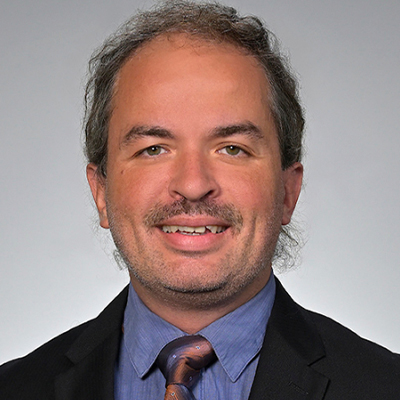
Pavel P. Kuksa is a Research Assistant Professor in the Department of Pathology and Laboratory Medicine, specializing in bioinformatics, computer science, and functional genomics. His work focuses on high-throughput sequencing analysis, chromatin interaction data, and developing scalable software platforms for genomics research.
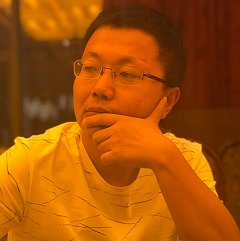
Xin Peng is a Professor and Deputy Dean at the School of Computer Science, Fudan University, China. He leads the CodeWisdom research team focusing on intelligent software engineering techniques for development, maintenance, and operation of software systems. His educational background includes a PhD in Computer Science (2001-2006) and Bachelor's degree in Computer Science (1997-2001), both from Fudan University. He progressed through the academic ranks from Assistant Professor (2006-2010) to Associate Professor (2010-2015) and finally to Professor (2015-present). Professor Peng's research interests span Software Analytics, Intelligent Software Development, Microservice systems, and AIOps. His work leverages AI technologies including deep learning and knowledge graphs to develop intelligent software engineering techniques. A significant portion of his recent work focuses on applying Large Language Models to various software engineering tasks, including vulnerability detection, API usage analysis, and test automation. His publication record shows a clear trend toward increasingly sophisticated applications of AI in software engineering, with recent work heavily featuring LLMs for tasks ranging from vulnerability patch porting to resource leak detection. The research spans multiple domains including microservice systems, automotive software, and Web of Things security. Best Paper Award of ICSM 2011 ACM SIGSOFT Distinguished Paper Award of ASE 2018 and 2021 IEEE TCSE Distinguished Paper Award of ICSME 2018, 2019, and 2020 IEEE Transactions on Software Engineering Best Paper award for 2018 Professor Peng serves in numerous leadership roles including Deputy Director of CCF Technical Committee on Software Engineering, Co-Editor-in-Chief of Journal of Software: Evolution and Process, and Associate Editor for ACM Transactions on Software Engineering and Methodology. He has been actively involved in program committees for major software engineering conferences including ICSE, ASE, ESEC/FSE, and ICSME. He leads the CodeWisdom research team at Fudan University, which has developed several benchmark systems including TrainTicket for microservice research. The team's work bridges academic research with industrial applications, particularly in microservice systems analysis and intelligent software development tools.
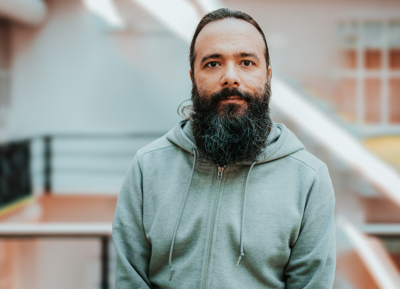
James C. Davis is an Assistant Professor in the Elmore Family School of Electrical and Computer Engineering at Purdue University. He leads the Duality Lab, which focuses on the engineering of software-intensive computing systems with particular interest in how these systems fail and how those failures can be mitigated. His research takes a socio-technical approach, considering both human and technical perspectives in system engineering. Dr. Davis received his PhD in Computer Science from Virginia Tech, where he was advised by Dongyoon Lee. His research interests span empirical software engineering, security, safety, testing, and web technologies, with a strong emphasis on practical impact and measurement. He applies a socio-technical philosophy to his work, believing high-quality systems must be engineered considering both human and technical perspectives. His recent research focuses on software supply chain security, regular expression vulnerabilities (particularly ReDoS), pre-trained model security, and failure analysis in software systems. His work often involves empirical studies of real-world software systems and security practices, with a strong emphasis on practical impact and measurable results. Dr. Davis has received significant funding from the National Science Foundation, Google, Cisco, and Rolls Royce for his research. His publications appear in top-tier venues including ICSE, FSE, ASE, and USENIX Security. He has served on program committees for many major software engineering and security conferences. Among his notable achievements are being elevated to IEEE Senior Member in 2022, receiving the Ruth and Joel Spira Outstanding Teacher Award from ECE@Purdue in 2022, and multiple Best Paper and Best Poster awards. He has successfully mentored numerous PhD and Master's students, with several completing their theses on topics related to software security and engineering. Dr. Davis actively recruits graduate and undergraduate research assistants for his Duality Lab, which has produced influential work on software failure analysis, regular expression security, and machine learning supply chain security. His lab is supported by multiple federal and industry grants focused on improving the security and reliability of software systems.
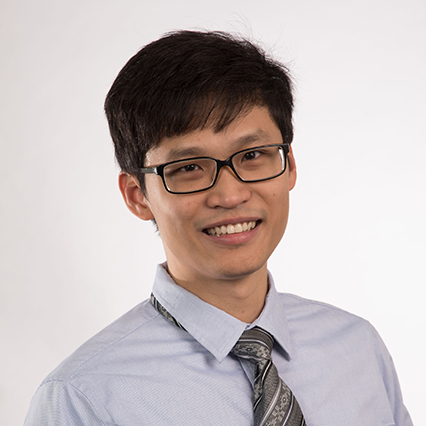
Andrea Arcuri is a Professor at the School of Economics, Innovation and Technology within Kristiania University of Applied Sciences . His research focuses on Software Testing , Software Engineering , and Cloud Computing , with a particular emphasis on automated testing techniques for web APIs. Specialized in RESTful, GraphQL, and RPC API fuzzing Developer of the open-source EvoMaster testing tool Pioneer in integrating evolutionary algorithms and symbolic execution for test generation Active in bridging academic research with industrial software testing practices His recent publications show a strong focus on Search-Based Software Testing (SBST) , Automated Test Generation , and Industrial Adoption of Testing Technologies . He has contributed extensively to improving testability through mock generation and database handling in API testing. While no formal scientific awards are listed in the public records analyzed, his work has been consistently published in top-tier software engineering venues since 2013. The articles demonstrate increasing sophistication in fuzzing techniques, with recent extensions to handle complex dependencies like MongoDB and SQL databases.
Peng Li is a Professor in the Department of Electrical and Computer Engineering at the University of California, Santa Barbara. His research focuses on integrated circuits, brain-inspired computing, electronic design automation, and hardware machine learning systems. He holds Fellow status in the Institute of Electrical and Electronics Engineers (IEEE). His work emphasizes neuromorphic engineering, spiking neural networks, and the intersection of machine learning with analog circuit design. Education includes a PhD in Electrical and Computer Engineering from Carnegie Mellon University, an MS in Systems Engineering from Xi'an Jiaotang University, and a BS in Information Science and Engineering from the same institution. His research has been recognized with prestigious awards including the ICCAD Ten-Year Retrospective Most Influential Paper Award and multiple Design Automation Conference Best Paper Awards. Key research trends in his articles include advancements in spiking neural networks (SNNs), hardware accelerators for neuromorphic computing, Bayesian optimization for analog circuit design, and robustness in machine learning systems. He explores topics like adversarial robustness, energy-efficient architectures, and data-efficient prediction techniques. His work bridges theoretical machine learning models with practical hardware implementations, particularly in 3D integration and systolic array acceleration. Notable contributions include pioneering hybrid approaches combining formal verification with machine learning for analog circuits (HFMV framework), and innovations in neuromorphic processors such as the 3D Liquid State Machine architecture. His research also addresses challenges in semiconductor manufacturing, including wafer map pattern recognition and failure detection through semi-supervised learning and contrastive methods. Awards highlight his impactful contributions to both design automation and neural computing. His grants and collaborations likely span industry partnerships in semiconductor technology and neuromorphic computing. He leads a lab focused on next-generation hardware-software co-design for intelligent systems, emphasizing energy efficiency and scalability.
Wenchao Li is an Assistant Professor in the Department of Electrical and Computer Engineering at Boston University, directing the Dependable Computing Laboratory. He holds a B.S., M.S., and Ph.D. in Electrical Engineering and Computer Sciences, along with a B.A. in Economics from UC Berkeley. His research focuses on dependable computing, applying formal verification, machine learning, and control theory to cyber-physical systems, electronic design automation, and AI safety. Key research interests include neural network verification, safe reinforcement learning, autonomous systems security, and resilient control strategies for connected vehicles. His work emphasizes provable safety guarantees and defense against adversarial attacks in critical infrastructure systems. Notable awards include the ACM Outstanding Ph.D. Dissertation Award and the Leon O. Chua Award. His lab investigates topics such as neural network repair, secure multi-robot coordination, and formal methods for autonomous systems. He advises students like Jiameng Fan and collaborates on projects funded by grants in AI safety and cyber-physical systems. Labs/Teams: Dependable Computing Laboratory Grants: Focus on formal verification, AI safety, and autonomous systems resilience
Angelica Lim is an Assistant Professor of Professional Practice and Rajan Family Scholar in the School of Computing Science at Simon Fraser University. Her research focuses on Human Robot Interaction, Affective Computing, and Multimodal Perception with applications in healthcare and developmental robotics. She holds a PhD in Informatics from Kyoto University (2014), an M.Sc. from Kyoto University (2012), and a B.Sc. in Computing Science from SFU (2008). Her work bridges robotics and human-centered AI through projects like the ROSIE Lab, exploring emotion-aware systems, socially assistive robots, and VR programs for aging populations. Key contributions include benchmarking emotional speech recognition (BERSting), developing embodied emotion models for robots, and co-designing healthcare technologies with patient partners. Recent publications emphasize ethical AI, multimodal perception systems, and human-robot collaboration in dynamic environments. Teaching includes courses on software engineering, artificial intelligence, and introductory computer science. Her research has been applied in dementia care through VR programs, robotic companionship for older adults, and emotion-aware human-robot communication systems. Current initiatives focus on inclusive HRI design and sim2real methodologies for underrepresented data in affective computing.
Hans Klein is an Associate Professor and Director of Undergraduate Studies at the Jimmy and Rosalynn Carter School of Public Policy, part of the Ivan Allen College of Liberal Arts at Georgia Institute of Technology. His research focuses on institutions and policy processes related to large technical systems like the Internet and surface transportation. He has held visiting roles at Princeton University, the Hertie School of Governance, and the Paris School of Mines. Education: Ph.D. in Political Science, MIT (1996) M.S. in Technology and Policy, MIT (1993) B.S. in Electrical Engineering & Computer Science, Princeton University (1983) Research Interests: Internet governance, globalization, and democratic accountability mechanisms Media institutions, digital persuasion, and propaganda Intelligent transportation systems (ITS) policy and institutional design Urban transit policy, including the Atlanta Beltline project Social construction of technology and policy frameworks Professional Experience: Prior roles as software developer, international marketer, and policy analyst Service on advisory committees for ICANN, the Transportation Research Board, and Atlanta’s Telecommunications Policy Advisory Committee Presentations on information warfare and political warfare at institutions like the US Special Operations University Advising & Grants: Contributed to policy design for ICANN, ITS national programs, and the Atlanta Beltline Recipient of DAAD and Chateaubriand fellowships for international academic collaborations Labs & Teams: Active in interdisciplinary policy teams focused on transportation infrastructure, digital governance, and media ethics.
Geoff Hollinger is a Professor in the Department of Mechanical, Industrial, and Manufacturing Engineering at Oregon State University, and a Ron and Judy Adams Faculty Scholar. His research focuses on robotic decision-making, planning, and coordination for autonomous systems, particularly in underwater and multi-robot environments. He leads the Robotic Decision-Making Laboratory and has expertise in mission planning, control systems, and marine robotics. Dr. Hollinger holds a PhD in Robotics from Carnegie Mellon University (2010), an MS in Robotics (2007), and a BS in General Engineering and BA in Philosophy from Swarthmore College (2005). His work spans theoretical advancements and practical applications, including underwater docking systems, autonomous exploration, and soft robotics for hazardous environments. Research Interests: Autonomous underwater vehicle (AUV) systems and docking Multi-robot coordination and task assignment Probabilistic planning and decision-making Behavior trees and formal grammars for task planning Underwater manipulation and grasping Energy-efficient trajectory planning Key Achievements: Recipient of the 2017 ONR Young Investigator Award 2017 Celebrate Excellence Awards and Engelbrecht Young Faculty Award Developed frameworks like Angler for intervention tasks and Wave for underwater emulation Labs/Teams: Robotic Decision-Making Laboratory, Collaborative Robotics and Intelligent Systems Institute (CRIS).
Matti Tedre is a Professor at the School of Computing, Faculty of Science, Forestry and Technology, University of Eastern Finland. His research focuses on computer science education, ICT4D, social studies of computer science, and the history and philosophy of computer science. He leads the Technologies for Learning and Development research group and is involved in the Generation AI project (2022–2028), exploring AI education for security mindset development. His work bridges theory and practice, emphasizing educational technology, AI literacy, and participatory design. Recent projects include developing low-cost AI kits for novice learners and co-designing ML-driven apps with children. He collaborates globally on topics like K-12 computing education, data agency, and ethical AI integration in classrooms. Key contributions include studies on scaffolding in ML education, children’s understanding of algorithmic biases, and the role of generative AI in creative learning. His research also addresses challenges in Tanzanian ICT adoption, including financial management systems for informal groups and timetabling software for higher education institutions. Tedre’s interdisciplinary approach spans computer science, education, and sociology, with a focus on democratizing AI access and fostering critical digital literacy among youth and educators.
Pierre Baldi is a Distinguished Professor at the University of California, Irvine (UCI), holding appointments in the School of Information and Computer Sciences (ICS), the Institute for Genomics and Bioinformatics (IGB), and the Center for Machine Learning and Intelligent Systems (CML). His research focuses on AI, machine learning, and their applications in natural sciences, including physics, chemistry, and biology. He leads projects on neural networks, probabilistic modeling, and bioinformatics. Key roles include Director of the IGB and AI in Science Institute. Awards include the Dennis Gabor Award and Fellowships from AAAI, AAAS, and IEEE. His work spans interdisciplinary collaborations, such as the DUNE neutrino experiment and AI-driven drug discovery. Teaches courses like Probabilistic Modeling of Biological Data and Neural Networks. Active in conferences, including workshops on deep learning and its implications in science.
Shao-Fang Wen is an Associate Professor at the Department of Information Security and Communication Technology, Faculty of Information Technology and Electrical Engineering, Norwegian University of Science and Technology (NTNU). Their work focuses on integrating artificial intelligence with cybersecurity, secure software development, and socio-technical systems. Research Interests: Artificial Intelligence and Cybersecurity Secure Software Development Semantic Web and Ontology Socio-Technical Systems System Security Assurance Publications and Contributions: Shao-Fang Wen has contributed significantly to developing frameworks for AI security assurance, quantitative security evaluation models (e.g., SAEOn metamodel), and contextualized learning systems for software security. Their work spans journal articles, conference papers, and book chapters, emphasizing ontology-based approaches and open source community dynamics. Teaching: IIKG2001 - Software Security
Kay C. Wiese is a Professor and Software Systems Chair at the School of Computing Science, Simon Fraser University. His research focuses on computational intelligence and bioinformatics, particularly RNA secondary structure prediction and visualization. He leads the Bioinformatics Research Lab and has contributed to RNA design and gene finding. Wiese holds a PhD in Computer Science from the University of Regina (1999) and degrees in Computer Science and Mathematics from the Universität des Saarlandes (Germany). He has extensive editorial roles, including Associate Editor for the IEEE/ACM Transactions on Computational Biology and Bioinformatics, and has organized major conferences like the IEEE Symposium on Computational Intelligence in Bioinformatics. His teaching interests include Bioinformatics, Computational Biology, and Discrete Mathematics. Wiese has supervised numerous graduate students, including Boris Shabash, Wenbo Jiang, and Andrew Hendriks. His research group developed tools like jViz.RNA for RNA visualization and SARNA-Predict for structure prediction. His work bridges computational methods with biological applications, emphasizing algorithmic innovation and practical software solutions.
Min Peng is a Professor at Wuhan University's School of Computer Science. His research focuses on artificial intelligence, machine learning, natural language processing, and knowledge graphs. He has collaborated extensively with institutions like Hefei University of Technology and the University of Chinese Academy of Sciences. His work bridges theoretical advancements in AI with practical applications in finance, social media analysis, and network optimization. Recent contributions include neural-symbolic reasoning frameworks, contrastive learning for knowledge graphs, and financial benchmarking with large language models. Research interests emphasize scalable machine learning models for complex reasoning tasks, explainable AI, and domain-specific applications in finance and social networks. Over 100 publications span venues like WWW, ACL, and NeurIPS, highlighting interdisciplinary impact. Notable projects include SymAgent (neural-symbolic agent frameworks), PIXIU (financial LLM benchmark), and DTC (commonsense machine comprehension). Key technical trends include integrating large language models with structured data, temporal knowledge graph reasoning, and transfer learning across domains. His work often addresses real-world challenges in data efficiency, interpretability, and cross-domain scalability. Current efforts explore financial LLMs, agent-based reasoning systems, and multimodal applications. While no specific grants or awards are listed in the provided data, his prolific publication record indicates sustained research excellence. Collaboration networks include teams in computer science, electrical engineering, and finance disciplines.
Brenna D. Argall is an Associate Professor of Computer Science, Mechanical Engineering, and Physical Medicine & Rehabilitation at Northwestern University, and a Faculty Research Scientist at the Shirley Ryan AbilityLab. Her research focuses on assistive and rehabilitation robotics, with an emphasis on human-robot interaction, shared autonomy, and intelligent control systems. She holds a PhD in Robotics from Carnegie Mellon University and has held postdoctoral fellowships at EPFL (Switzerland) and the NIH. Education: PhD in Robotics, Carnegie Mellon University (2009) Postdoctoral Fellow, EPFL (2009–2011) B.S. in Mathematics, Carnegie Mellon University (2002) Affiliations: Director, Argallab (Assistive & Rehabilitation Robotics Laboratory) Member, Northwestern Center for Robotics and Biosystems Advisor, Northwestern MS in Robotics Program Her research explores dynamic autonomy allocation , shared control systems , and interface-aware robotics , with applications in rehabilitation and assistive devices. Key projects include wheelchair automation, robotic arm control, and body-machine interfaces for users with motor impairments. Research Highlights: NSF CAREER Award (2016) AIMBE Fellow (2020) "40 under 40" Innovator (Crain’s Chicago Business) Publications emphasize human-centered robotics, including over 50 peer-reviewed articles on topics like intent inference, assistive autonomy, and teleoperation assistance. Current lab efforts prioritize interface-aware systems and customizable shared control to enhance accessibility for users with disabilities.