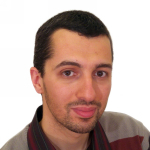
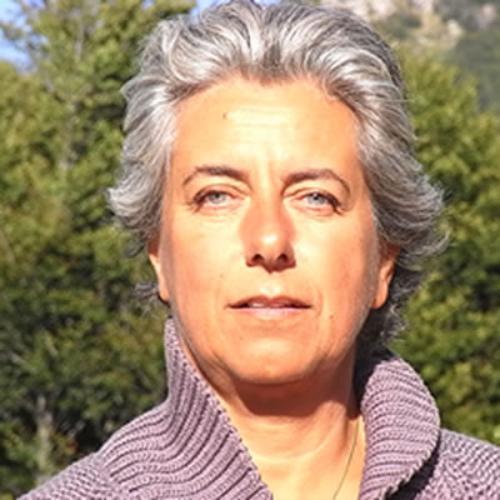
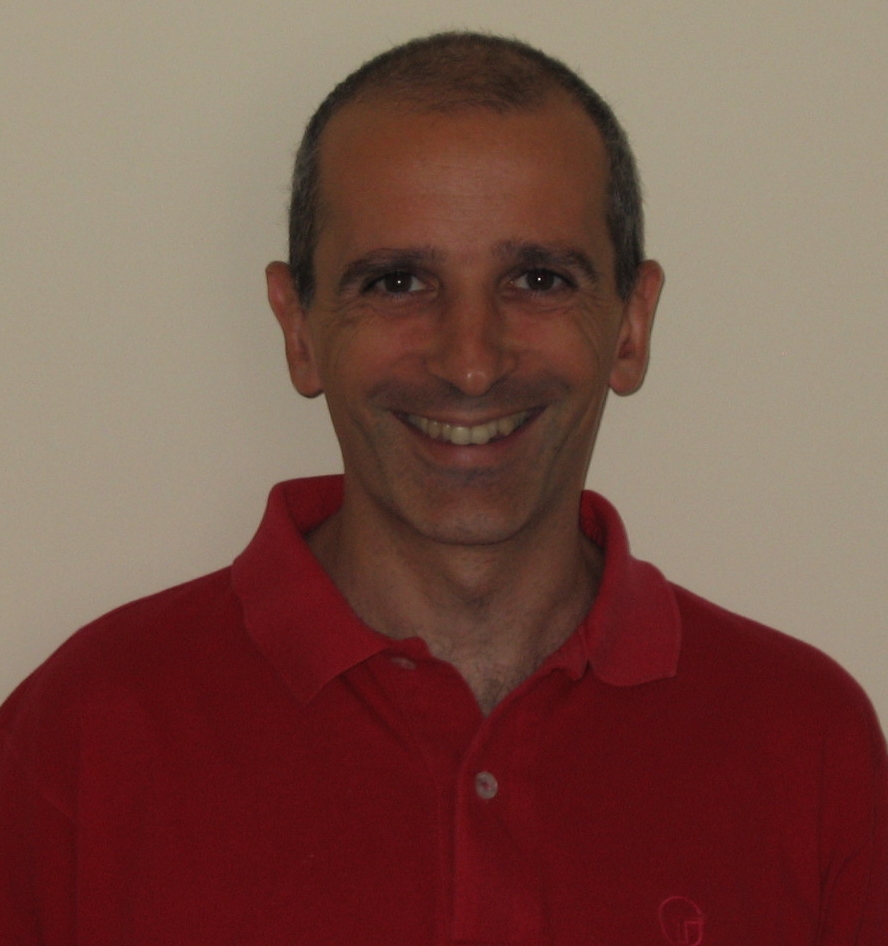
Mirco Marchetti is an Associate Professor at the University of Modena and Reggio Emilia, affiliated with the Department of Engineering 'Enzo Ferrari'. He specializes in cybersecurity, network security, and automotive systems. His teaching responsibilities include courses on cybersecurity fundamentals, computer networks, operating systems, and automotive cyber defense. Research interests focus on intrusion detection systems (IDS), vehicular networks (VANETs), machine learning applications in cybersecurity, and automotive cybersecurity. He has contributed to projects like HackCar (automotive attack/defense testbed) and RealCAN (real-time CAN bus analysis tools). His work also explores adversarial attacks on ML-based systems and secure communication protocols for industrial and vehicular systems. Recent publications emphasize automotive cybersecurity (e.g., Mercedes-Benz infotainment system analysis, CAN bus anomaly detection), ML robustness against adversarial attacks, and zero-trust architectures. He collaborates with the SECloud research group (secloud.ing.unimore.it) and uses experimental platforms like Software-Defined Radios for security evaluations. Teaching responsibilities span multiple academic programs including Master's degrees in Computer Engineering and Artificial Intelligence Engineering. Courses emphasize practical skills in Linux/Unix administration, network configuration, and embedded system security.
Maurizio Morisio is a Full Professor at the Department of Control and Computer Science (DAUIN), Polytechnic University of Turin, where he is also a member of the Interdepartmental Center SmartData@PoliTO - Big Data and Data Science Laboratory. He has held numerous leadership roles in national and international research projects and academic events. University: Polytechnic University of Turin Department: Department of Control and Computer Science (DAUIN) Research Affiliation: SmartData@PoliTO, SOFTENG Research Group Email: maurizio.morisio@polito.it His research interests include software engineering, mobile and web application testing, energy efficiency of software, machine learning, data science, and green software. He has led significant research in empirical software engineering, gamification of testing, and user-centric service platforms. The recent publications highlight a strong focus on GUI testing , gamification in education and testing , and software process improvement . These works reflect interdisciplinary integration of software engineering with human factors, education, and AI. Scientific Awards and Editorial Roles: Editor-in-Chief of IEEE SOFTWARE since 2008 Program Chair of major conferences including ICSR, ESEM, and GREENS workshops Advising and Grants: He has advised multiple PhD students, including Anna Arnaudo and Simone Leonardi. He has served as the Scientific Manager or Director on over 20 research projects funded by EU, national, regional, and commercial sources, including FP6, Clean Sky, FIRB, and industrial contracts in data science, AI, and software engineering. Research Groups and Labs: He is a key member of the SOFTENG - Software Engineering Group (DAUIN) and contributes to the SmartData@PoliTO center, focusing on data-intensive systems and AI applications in software engineering.
Lerina Aversano is an Associate Professor in the Department of Engineering (DING) at the University of Sannio, specializing in Information Processing Systems (ING-INF/05). Her research focuses on the intersection of business processes and information technology, with particular expertise in business/IT alignment, process mining, and machine learning applications. Her research interests include: Business/IT alignment and strategic integration Machine learning and deep learning applications in healthcare diagnostics Process mining and predictive analytics for business processes Software engineering and service-oriented computing Semantic integration of heterogeneous data sources Over her extensive career, Aversano has published 145 research items with a clear evolution from foundational work in business/IT alignment to cutting-edge applications of AI in healthcare and business process management. Her most recent publications demonstrate expertise in explainable AI for process prediction, AI applications in medical diagnosis (including Parkinson's and thyroid diseases), and security for IoT systems, showing her ability to adapt to emerging technologies while maintaining focus on core alignment issues between business needs and technological solutions. She maintains an active research group with frequent collaborations with Mario Luca Bernardi, Marta Cimitile, Martina Iammarino, and Maria Tortorella, producing significant contributions to information systems literature. Her work appears in reputable venues including IEEE conferences, Springer publications, and journals like Information and Software Technology.
Andrea Calimera is a Full Professor in the Department of Control and Computer Science (DAUIN) at the Polytechnic University of Turin, where he is also a member of the Interdepartmental Center SmartData@PoliTO - Big Data and Data Science Laboratory. He is actively involved in teaching and research, contributing to doctoral programs and undergraduate and graduate courses in computer engineering and data science. Full Professor (L.240), Polytechnic University of Turin Department of Control and Computer Science (DAUIN) Member, SmartData@PoliTO - Big Data and Data Science Laboratory Member, College of Computer, Film and Mechatronics Engineering His research interests center on electronic design automation, energy-efficient electronic systems, and low-power design, with strong connections to artificial intelligence, embedded systems, and IoT. His work bridges hardware and software optimization for intelligent edge devices. The recent publications (2023–2025) reflect a focused trend on federated learning, secure and efficient AI deployment on edge devices, and low-power embedded systems. Topics include robust evaluation in federated learning, resource management under label skew, homomorphic encryption for private tensor operations, pipeline optimization for keyword spotting, and side-channel attacks via DVFS for neural network fingerprinting—highlighting expertise in both performance and security of AI systems on constrained hardware. Andrea Calimera supervises PhD and master's students and leads research projects funded by competitive and commercial grants. He has contributed to national and international patents on low-power depth estimation and single-image signal processing. Scientific Director, SENSEI Project (2017–2019): Energy-efficient machine learning on chip for IoT Scientific Director, Commercial Project (2020–2022): Design tools for AI on energy-efficient embedded mobile devices Supervision of PhD student Erich Malan (ongoing, since 2022) on distributed and federated learning over IoT networks Supervision of Bachelor's student Chen Xie (2020–2024) on synthesis of smart sensors He teaches courses such as High-Level Synthesis (PhD), Synthesis and Optimization of Digital Systems, Machine Learning for IoT, and Efficient Computing for Artificial Intelligence across Computer Engineering and Data Science programs. His research group is EDA - Electronic Design Automation (DAUIN), which focuses on hardware-software co-design for intelligent systems.
Vittorio Curri is a Full Professor in Optical Communications and Networking at the Department of Electronics and Telecommunications (DET) of Politecnico di Torino , Italy. He is a founding member of the OptCom Group and PhotonLab and leads the PLANET research team. His work spans optical network modeling, AI-assisted control, open-source software (GNPy), and environmental sensing via optical fiber. He has led numerous EU and industry-funded projects and is a key figure in open optical networking. Research Interests: Multi-band optical transmission in single-mode fibers Physical layer aware networking Machine learning and AI for optical network optimization Environmental sensing using optical network telemetry Open and disaggregated optical networks Digital twin development (GNPy project) WDM and coherent transmission modeling The recent publications reflect a strong trend toward integrating AI and machine learning with digital twin technologies for real-time network control, anomaly detection, and performance optimization. There is a clear focus on wideband, multi-band, and converged metro-access networks , with modeling efforts extending to filtering effects, polarization, and nonlinear impairments. The research is highly applied, with strong industry collaboration and open-source contributions. Scientific Awards: Concorso "Galileo Feraris" (2002) JLT Best Paper Award (2014, 2015) FFABR 2017 Research Grant Advising and Grants: Prof. Curri has supervised 25 PhD students and numerous postdocs. He has served as Principal Investigator on major projects including WON (EU H2020) , ALLEGRO , NESTOR , RESTART , SENSEI , and SCIPIO . He leads the GNPy open-source project under TIP and has extensive collaborations with Synopsys, Open Fiber, INFINERA, and CESNET. His research is funded by EU programs (Horizon Europe, H2020), PNRR, and multiple industrial contracts. Labs and Teams: He leads the PLANET (Physical Layer Aware NETworking) team, a subgroup of the OptCom Group at PoliTo. The team focuses on simulation, modeling, and AI-driven control of next-generation optical networks. They collaborate closely with the LINKS Foundation and international partners including Soochow University and CESNET .
Dr. Markus Borg is a Senior Researcher and Adjunct Lecturer at Lund University, Sweden, specializing in the intersection of software engineering and applied artificial intelligence. He is a Principal Researcher at CodeScene and contributes to editorial boards for Empirical Software Engineering and IEEE Software . His work bridges academic research with industrial practice through collaborations with Ericsson and contributions to open-source tools like SMIRK. Markus's research focuses on empirical software engineering , technical debt , safety engineering , and requirements engineering for AI-integrated systems. He explores two key directions: AI4SE (applying machine learning to software engineering challenges like defect management and technical debt remediation) and SE4AI (ensuring quality assurance for ML components in safety-critical domains such as automotive systems). His work aligns with regulatory frameworks like the EU AI Act and industry standards for automotive safety. 2025 Contributions : Gamify Track: Two papers on gamification in software maintainability ICSE Journal-First: Longitudinal study on automated bug assignment at Ericsson IDE Track: Trust calibration in AI-assisted refactoring TechDebt Technical Papers: ACE tool for LLM-based technical debt remediation 2024 Contributions : PROFES: AI Act compliance in requirements engineering MO2RE: Code quality specifications TechDebt: Maintainable code ROI analysis Programming with AI: CodeScene platform demonstration 2023 Contributions : CAIN: ML testing in automotive perception systems EASE: Code ownership and defect resolution Mutation Track: Safety-critical mutation testing validation His recent publications emphasize automated defect management , LLM-driven refactoring , and safety validation for ML components , particularly in automotive contexts. Tools like SMIRK and ACE demonstrate practical applications of his research. Markus actively participates in program committees for ICSE, TechDebt, and ICSME, with a focus on bridging academic research with industrial AI/SE challenges.
Nancy Varshney is a Part-Time Lecturer at the Department of Electronics and Telecommunications (DET) at Politecnico di Torino. She contributes to the College of Electronic Engineering, Telecommunications, and Physics, as well as the College of Mechanical, Aerospace, and Automotive Engineering within the university. Her academic work focuses on telecommunications technologies, particularly in the context of 5G and beyond. Research Interests : Nancy Varshney's research spans key areas such as millimeter-wave (mmWave) communication systems, beamforming strategies, UAV (drone)-assisted networks, and backscatter sensor technologies. Her work addresses critical challenges in optimizing data collection, energy efficiency, and network performance for next-generation wireless systems. Recent Publications : Her recent publications highlight advancements in mmWave beamforming, UAV-aided communication, and resource allocation for 5G+. These studies explore low-complexity algorithms, wideband mmWave systems, and beam squint effects to enhance network performance. The research contributes to the evolution of telecommunications infrastructure and wireless signal processing. Teaching Contributions : She collaborates on courses including 'Software-defined communication systems,' '5G and next-generation mobile computing,' and 'Communication and network systems,' particularly focusing on computer network design and control. Her teaching roles span multiple academic years and programs at Politecnico di Torino.
Grazia Ragone is a Postdoctoral Researcher at the IVU Laboratory , Department of Computer Science, University of Bari Aldo Moro. Holding a PhD in Human-Computer Interaction from the University of Sussex and a Master's in Psychological Research Methods, she specializes in Usability, User Experience (UX), and Human-Centered AI , focusing on systems that integrate human factors for enhanced technology interaction. Academic Background: PhD in Human-Computer Interaction (University of Sussex, UK), Master’s in Psychological Research Methods (University of Bari) Key Research Areas: Social Motor Synchrony, Child-Computer Interaction, Trustworthy AI, Embodied Interaction, Autism Research, Usability Engineering Her recent work on the Future Artificial Intelligence Research (FAIR) project develops new metrics for human-AI symbiosis. She has presented at major conferences like Interaction Design and Children (IDC) and Advanced Visual Interfaces (AVI) , with publications in ACM Transactions and Springer LNCS. Scientific awards include the Microsoft Research Best Student Research Competition (2021) and IDC Conference Best Work in Progress (2020). Grazia actively contributes to academic governance as a member of ACM SIGCHI and SIGCHI Italy , and has organized international conferences like INTERACT 2021. She has delivered workshops on Child-Centered AI at institutions including the University of Delft and Sussex University.
Maurizio Leotta is an Assistant Professor in Computer Science at the University of Genova, Italy, where he has been employed since 2018. He is a member of the Department of Computer Science, Bioengineering, Robotics, and Systems Engineering (DIBRIS) within the School of Mathematical, Physical and Natural Sciences. Additionally, he serves on the School Council and the Department Board of DIBRIS. Dr. Leotta received his PhD in Computer Science from the University of Genova in 2015, with a thesis on Automated Web Testing under the supervision of Prof. Filippo Ricca. His doctoral work was revised by Prof. Massimiliano di Penta (Università del Sannio, Italy) and Prof. Ali Mesbah (University of British Columbia, Canada). Before his academic career, he worked as an IT Technician in various companies and participated in research and industrial projects funded by organizations such as Finmeccanica S.p.A. and the Italian Space Agency. Dr. Leotta's primary research focuses on Software Engineering, with particular emphasis on Test Automation, which is his main research topic. He collaborates with Prof. Paolo Tonella from USI, Switzerland on this area. His other significant research interests include Empirical Software Engineering, Requirements Engineering, Business Process Modelling, and Model-Driven Software Engineering. His work often addresses practical challenges in web and mobile application testing, with a growing interest in applying AI and gamification techniques to improve software testing processes. His recent publications demonstrate a strong trend toward integrating artificial intelligence with traditional software testing methodologies, particularly in end-to-end web testing. He has made significant contributions to improving test robustness, addressing flakiness in test execution, and developing tools for better test maintenance. His work also shows increasing interest in gamification approaches to engage developers and students in software testing activities, as well as applications of large language models to enhance test automation. Dr. Leotta has received multiple prestigious awards for his research, including: Best Paper Award at ICST 2025 (Short Papers, Vision and Emerging Results) Distinguished Paper Award at ICST 2023 (Industry Papers) Best Paper Award at QUATIC 2022 (Full Papers) Best Paper Award at ICST 2022 (Demo and Testing Tool Papers) Best Paper Award at QUATIC 2020 (Full Papers) Best Student Paper Award at ICWE 2016 (Full Papers) Dr. Leotta has advised numerous graduate students, including three PhD candidates who have completed their degrees (Andrea Fasciglione in 2024, Dario Olianas in 2023, and Diego Clerissi in 2020). He currently supervises multiple Master's students working on topics related to software testing, web accessibility, and AI applications in software engineering. He has also served as a postdoctoral advisor for researchers including Diego Clerissi and Dario Olianas. Beyond advising, Dr. Leotta has secured research funding through collaborations with industry partners and has been involved in multiple research projects focused on software testing and verification. He co-directs the Software Engineering for Healthcare (SEH) Laboratory, which has been partially supported by Janssen Italia (previously by Actelion Pharmaceuticals Italia). The lab focuses on applying software engineering techniques to healthcare applications, particularly in the areas of wearable technology for patient monitoring and medical data analysis. Dr. Leotta is also active in the Gamify research community, organizing workshops on gamification in software development, verification, and validation.
Giovanna Sissa is a PartTime Lecturer in the Department of Naval, Electrical, Electronic, and Telecommunications Engineering at the University of Genoa . Her work bridges computational modeling and environmental sustainability, focusing on ICT's ecological footprint. Research Interests She specializes in: Agent-Based Modeling for environmental awareness and policy simulation Green Computing and sustainable ICT practices Resource consumption reduction through behavioral modeling Dematerialization via digital technologies Her research explores how micro-level individual behaviors translate into macro-level environmental outcomes, particularly in energy policy and digital sustainability. Selected Publications Recent work includes: 2024 : Environmental impact analysis of digital technologies 2022 : Agent-Based Modeling of resource consumption 2017 : AI applications in energy policy modeling
Simone Bianco is an Associate Professor at the Department of Informatics, Systems and Communication (DISCo) of the University of Milano-Bicocca, Italy. His academic and research contributions span computer vision, artificial intelligence, machine learning, and optimization algorithms applied to multimodal and multimedia systems. His educational background includes a PhD in Computer Science (2010) and BSc/MSc degrees in Mathematics (2003/2006), both from the University of Milano-Bicocca. Bianco’s research focuses on color constancy, deep learning for video restoration, neural architecture search, and computational color imaging, with a strong emphasis on practical applications like biometric recognition, medical imaging, and environmental monitoring. The 15 most recent articles (2025–2020) highlight trends in computer vision, including uncertainty estimation in color constancy, portable material appearance modeling, temporal consistency in low-light videos, and advanced deep learning architectures for image and video processing. His work often integrates photogrammetry, sensor technology, and multimodal data analysis. Scientific accolades include recognition on Stanford University’s World Ranking Scientists List for achievements in artificial intelligence and image processing. Bianco also serves as R&D Manager for the University of Milano-Bicocca spin-off Imaging and Vision Solutions and contributes to international conferences and workshops.
Andrea Vinci is an accomplished researcher with 66 publications and 1,261 citations, specializing in the intersection of quantum computing, edge-cloud architectures, and Internet of Things (IoT) systems. His work demonstrates significant contributions to solving complex computational problems through innovative approaches that bridge theoretical quantum algorithms with practical distributed computing applications. His research interests span quantum computing applications for resource management, multi-density clustering techniques for urban analytics, and platform-independent IoT application development. Vinci has pioneered work in variational quantum algorithms for cloud/edge resource allocation, quantum kernels for IoT data classification, and distributed AI for cognitive building systems. His research demonstrates a consistent focus on addressing NP-hard problems through quantum-classical hybrid approaches. Analysis of Vinci's publication trends reveals a strategic research trajectory moving from foundational work in smart city analytics and crime prediction toward cutting-edge quantum computing applications for IoT and edge-cloud systems. His recent publications (2023-2025) show increasing focus on quantum machine learning techniques specifically tailored for IoT data processing, with significant attention to practical implementation challenges. Vinci maintains an extensive collaborative network, frequently publishing with researchers including Fabrizio Marozzo, C. Mastroianni, J. Settino, and Antonio Guerrieri across multiple high-impact venues including IEEE Transactions, ACM conferences, and specialized journals in quantum computing and distributed systems. His technical contributions include the development of the COGITO platform for cognitive buildings, novel approaches to multi-density crime prediction, and significant advancements in quantum kernel methods for IoT data analysis. Vinci's tutorial publications indicate his role in educating the broader research community about emerging quantum computing applications for distributed systems.
Giovanni Squillero is a Full Professor in the Department of Control and Computer Engineering (DAUIN) at Politecnico di Torino, Italy. He leads the CAD group (Electronic CAD & Reliability) and serves on Politecnico's Joint Committee for Teaching and Ph.D. Steering Committee (Pure and Applied Mathematics).
Beppe Liotta is a Full Professor at the Department of Engineering, University of Perugia. He serves as Rector Delegate for ICT and Digital Agenda. His research spans network discovery, graph drawing, algorithm engineering, and computational geometry . Laurea in Electrical Engineering (1990), Ph.D. in Computer Engineering (1995), both from University of Rome 'La Sapienza' Post-doc at Brown University (1995-1996) Current teaching: Information Visualization and Database Management Systems Liotta has authored over 170 papers and led projects like VisFAN (financial crime detection), VHyXY (large graph visualization), COWA (web traffic analysis), and WhatsOnWeb (web clustering). His work focuses on hybrid visualizations and network robustness . Recent articles highlight his expertise in biological networks , financial activity networks , and one-to-many matched graph visualizations . He has contributed to journals like IEEE Transactions on Visualization and Computer Graphics and conferences including PacificVis and Graph Drawing . Liotta actively participates in scientific service, including editorial roles for the Journal of Graph Algorithms and Applications and program committees for IEEE PVIS 2019.
Franco ZAMBONELLI is a Full Professor in the Department of Engineering Sciences and Methods at the University of Modena and Reggio Emilia. He holds positions in both the Reggio Emilia and Modena campuses, offering courses such as Software Engineering and Distributed Artificial Intelligence. His research focuses on IoT, pervasive computing, multiagent systems, and self-organization in distributed systems, with applications in smart cities, healthcare, and mobility. He leads projects like FLUIDWARE (PRIN 2017) and CONNECARE (H2020), exploring adaptive IoT systems and integrated healthcare solutions. ZAMBONELLI is an IEEE Fellow, ACM Distinguished Scientist, and member of the Academia Europaea. His work bridges theory and practice, emphasizing software engineering methodologies for IoT and agent-based systems. Education: Not explicitly detailed in provided texts. Research Grants: FLUIDWARE (2019-2022), CONNECARE (2016-2019). His research interests include causal discovery in pervasive environments, reinforcement learning for cybersecurity, and digital twin technologies. He contributes to editorial boards of journals like ACM Transactions on Autonomous and Adaptive Systems and IEEE Technology and Society Magazine. His teaching spans software engineering, distributed AI, and IoT-oriented methodologies. The Agents and Pervasive Computing Lab (agentgroup.unimore.it) is a focal point for his experimental work. Professional memberships include IEEE, ACM, and the Italian Association for Artificial Intelligence. Recent achievements include successful final reviews for CONNECARE and advancements in fluidware programming paradigms.