Cesare Fabio Valenti is an Associate Professor at the University of Palermo, Department of Mathematics and Computer Science. He teaches courses in Informatics, including Digital Image Analysis , Artificial Vision , and Operating Systems , with office hours available by appointment via email. His research focuses on Computer Vision Digital Image Analysis Operating System Design Software Engineering Contact: cesare.valenti@unipa.it
Cesare Tucci is a Research Fellow at the IVU Laboratory, Department of Computer Science, University of Bari Aldo Moro, Italy. His work focuses on computational research within computer science. Institution: University of Bari Aldo Moro Department: Department of Computer Science Email: cesare.tucci@uniba.it Research Interests: Cesare's research spans Computer Science , with emphasis on emerging technologies in artificial intelligence, data science methodologies, and software engineering innovations.
Federica Borio is a Research Fellow at the Department of Control and Computer Engineering (DAUIN) at the Polytechnic University of Turin. Her work focuses on advancing research in computer science and control systems, with a particular emphasis on collaborative laboratory initiatives. Research Interests Computer Science Control Systems Software Engineering Robotics Artificial Intelligence Machine Learning Recent Publications Her 2014 publication S3+ Lab highlights her contributions to collaborative research environments and system development. Labs and Teams Federica Borio is actively involved with the S3+ Lab, focusing on interdisciplinary projects that bridge theoretical and applied computer science in educational and industrial contexts.
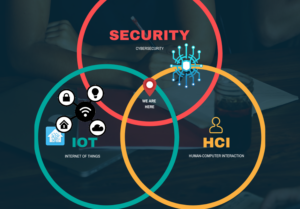
Luca Mannella is a Research Fellow at the Department of Control and Computer Engineering (DAUIN) , Politecnico di Torino. His work spans Cybersecurity , Internet of Things (IoT) , Software Engineering , and Human-Computer Interaction (HCI) . PhD in Computer and Control Engineering from Politecnico di Torino (2024) M.Sc. and B.Sc. in Computer Engineering from Politecnico di Torino (110/110 final score) His research focuses on IoT security , particularly in smart home gateways and automotive systems , with recent work on SOCMATI (Social Media Automotive Threat Intelligence) and COLTRANE-V projects. He has contributed to frameworks for CAN attack simulation , cryptomining detection , and privacy-preserving vulnerability scanning . Publications since 2018 reflect expertise in malware optimization , Cloud-IoT security , and edge computing for constrained devices. His teaching roles since 2020 include Web Applications and Algorithms and Programming courses. He is also a member of the SMILIES research group and co-founded the Mu Nu Chapter of IEEE-HKN .
Edoardo Battegazzore is a Research Fellow at the Department of Control and Computer Engineering (DAUIN) at Politecnico di Torino , where he also serves as an external lecturer and teaching assistant. His work spans virtual and augmented reality applications in medical training, cognitive psychology, and public safety, supported by funded projects such as Holo-BLSD (2024-2025). Education: Completed his PhD (XXXV Cycle) with a thesis titled "Virtual and Augmented Reality Applications for Public Health and Safety" (2024), advised by Andrea Bottino and Fabrizio Lamberti Research interests focus on: Virtual Reality (VR) and Augmented Reality (AR) for medical training and cognitive testing Human-Computer Interaction in collaborative AR environments Simulation Modeling for seismic and pedestrian evacuation dynamics Gamification in education and behavioral studies Recent publications highlight trends in VR/AR applications for prosthetics, airway management, and public health, alongside behavioral studies on cooperation and competition. His work also covers usability evaluations of AR/VR devices for industrial and emergency training. Current affiliations include: CGVG - Computer Graphics and Vision Group (DAUIN) Collaborator on funded projects like Holo-BLSD (2024-2025)
Stefano Calzolari is a Ph.D. candidate in Computer and Systems Engineering at the Department of Control and Computer Engineering (DAUIN), Polytechnic University of Turin. He is also an external lecturer and teaching assistant at DAUIN, contributing to courses such as Game Design and Gamification, Computer Science, and Aerospace Engineering. Education MSc in Cinema and Media Engineering (LM-32), Polytechnic University of Turin (2023) PhD in Computer and Systems Engineering (2023–present) Stefano's research focuses on Embodied Conversational Agents (ECAs) for Extended Reality (AR/VR) applications. His work integrates animation techniques (Motion Matching and Inverse Kinematics), emotion modeling (PAD and Circumplex models), speech technologies (STT/TTS), and AI-based behavior planning (FSM, BT, GOAP, and LLMs). The goal is to enhance user believability through UX questionnaires and interaction data analysis. Research Groups Computer Graphics & Vision Group (CG&VG) Teaching Contributions Master's Degree Course in Game Design and Gamification (2024/25) Bachelor's Degree Course in Computer Science (2025/26 and 2024/25) for Aerospace Engineering
Giacomo Garaccione is a Ph.D. candidate in Computer and Systems Engineering at the Polytechnic University of Turin , affiliated with the Department of Control and Computer Engineering (DAUIN) and the SOFTENG - Software Engineering Group . He holds an MSc in Computer Engineering (Software) from the same institution. Current Role : Ph.D. candidate (38th cycle, 2022-2025) Teaching : External lecturer and teaching assistant for Information Systems and Software Engineering courses in Engineering and Management and Computer Engineering programs (2022-2025). His research focuses on applying gamification to software engineering education , with emphasis on conceptual modeling and GUI testing . He develops gamified tools like UMLegend and GERRY , integrating artificial intelligence and natural language processing for automated model validation and feedback. Publications analyze gamification’s impact on student productivity and perception in UML/BPMN education. Scientific recognition : Nominated for merit awards (2025). Collaborator on multiple studies involving large language models and gamified IDE plugins , with ongoing work to create a comprehensive gamified environment for software modeling and requirements training.
Stefano Di Carlo is a Full Professor at the Department of Control and Computer Science (DAUIN) at Politecnico di Torino. He is the Coordinator of the Doctoral School in Artificial Intelligence and a member of the PolitoBIOMed Lab and the Doctoral School Council. His research spans Artificial Intelligence , Computer Architecture , Bioinformatics , and Cybersecurity , with a focus on 3D bioprinting , hardware security , and reliability analysis . Research Interests : Approximate computing systems Cybersecurity for connected vehicles Spiking neural networks and neuromorphic hardware Multicellular synthetic biological systems Hardware-based malware detection Biomedical simulation tools Article Trends : His recent publications address approximate computing (7/15), cybersecurity (6/15), and bioinformatics (4/15). Key subtopics include RISC-V security , gradient inversion attacks , photonic computing , and real-time fault injection . Scientific Awards : Best Paper Awards at IEEE AQTR (2010, 2012), IEEE DDECS (2013), and BIOINFORMATICS/BIOSTEC (2014) IEEE Computer Society Golden Core Award (2006), Meritorious Service Award (2010) IEEE Fellow (2011-) and Senior Member Advising & Grants : He supervises 14 PhD students and leads projects like Vitamin-V (RISC-V cloud services), APROPOS (approximate computing), and SERICS (cybersecurity). His lab, SMILIES, focuses on resilient computer architectures and bioinformatics . Labs & Teams : Lab 6 - Research Laboratory (DAUIN) SMILIES - Resilient computer architectures and life sciences PolitoBIOMed Lab - Biomedical engineering
Paolo Rech is an Associate Professor in the Department of Industrial Engineering at the University of Trento, Italy, teaching core courses including Informatica (DISPARI) and Advanced Programming and Artificial Intelligence for Industrial Engineering students. His research spans hardware-software reliability under radiation exposure with emphasis on real-world applications. His primary research domains feature: Reliability Engineering : Pioneering fault-tolerance methodologies for radiation-prone environments Radiation Effects : Quantifying neutron/gamma impacts on GPUs, TPUs, and quantum devices Computer Architecture : Designing hardened RISC-V systems and post-CMOS accelerators AI Reliability : Developing fault-aware neural networks for safety-critical deployment Quantum Vulnerability : Characterizing error mechanisms in quantum circuits Analysis of his 15 most recent publications reveals a dominant focus on radiation-hardened computing systems, with 83% of works addressing neutron-induced faults in GPUs/TPUs and quantum devices. His methodology consistently integrates neutron beam experiments, fault injection frameworks, and architectural hardening techniques across space, medical, and autonomous systems applications. Scientific Awards: None documented in available sources. His teaching directly feeds into research supervision, with course content on C++ programming, object-oriented design, and quantum computing foundations forming the basis for student projects in fault-tolerant system development. Current grants likely support neutron irradiation testing and quantum reliability initiatives given publication patterns, though specific funding details aren't publicly itemized. He operates within University of Trento's engineering research ecosystem, collaborating with teams specializing in radiation testing and quantum computing through projects like ARCHYTAS and Trikarenos, though no dedicated lab name is specified in source materials.
Francesca Calabrese is an Assistant Professor at the University of Trento in the Department of Industrial Engineering . Her academic focus revolves around digital production systems, sustainable logistics, and advanced optimization techniques. Teaches courses on Industry 5.0, digital logistics, and sustainable industrial engineering Applies mathematical models, AI, and RAMS theories to complex industrial systems Specializes in lean management, materials planning (MRP, EOQ, ROP), and automated transport networks Her research emphasizes modern industrial systems through digitization, failure analysis, and efficient resource planning. Teaching activities include hands-on optimization software training and environmental impact assessments in logistics.
Andrea Molinari is a Contract Professor at the University of Trento since 1990 and at the Free University of Bozen since 2002. He also serves as a Visiting Professor at Lappeenranta University of Technology (2021-2025) and holds a Docent position in Decision Making at the same institution (2024-2029). Previously, he was an Adjunct Professor at Turku University/Abo Akademi in Finland (2007-2019). Education: 2022: Doctoral Degree - Doctor of Science (Technology), Engineering Science, Software Engineering research field from LUT - Lappeenranta University of Technology. Dissertation: "Integration Between eLearning platforms and Information Systems: a New Generation of Tools for Virtual Communities" 1988: Master Degree in Economics from Università degli Studi di Trento with grade 110/110. Thesis: "P.I.R.S. Personal Information Retrieval Systems" Professor Molinari's research focuses on the intersection of education technology and information systems. His primary areas include e-learning/m-learning systems, virtual communities and social media, semantic technologies and ontologies, data management with AI applications, and Enterprise Project Management. His work bridges theoretical computer science with practical applications in educational and organizational contexts, particularly examining how technology can enhance learning experiences and organizational efficiency. His recent publications reveal a strong emphasis on the evolution of Learning Management Systems in the AI era, integration of semantic technologies with educational platforms, and applications of serious games for professional training. There's a clear trajectory toward more sophisticated, AI-enhanced educational technologies that incorporate data analytics, personalized learning, and advanced user modeling. Scientific Awards: Winner of the "S. Ciancio" scholarship (1980, 1982, 1983) Outstanding Paper Award at the Ed-Media World Conference on Educational Technology (1995) Since 1994, Professor Molinari has supervised approximately 10 thesis projects annually across multiple institutions including the University of Trento (Economics, Engineering), University of Bolzano (Computer Science, Education), and Abo Akademy in Finland. His teaching spans numerous courses related to information systems, project management, and technology applications across various academic disciplines. He has coordinated numerous research projects, particularly in the areas of e-learning platforms, virtual communities, and semantic technologies for educational applications. Professor Molinari is actively involved with several research communities and has served on program committees for numerous international conferences including IEEE-STAR, SMARTGREENS, and the International Conference on Web-based Education. His work often involves interdisciplinary collaboration between computer scientists, educators, and domain specialists to develop innovative technology-enhanced learning solutions.
Christian Peukert serves as Professor of Digitization, Innovation and Intellectual Property at HEC Lausanne (Faculty of Business and Economics at University of Lausanne) and leads the Digital Markets Lab. His research examines how digitization transforms consumer behavior, firm strategies, and market dynamics, with particular focus on intellectual property frameworks and the economics of data and artificial intelligence. He actively contributes to the Digital Economy Network and teaches courses in strategy, innovation, applied econometrics, and data science. Peukert's research interests center on the economic implications of digital transformation across multiple domains. His work investigates copyright economics in the digital age, AI regulation challenges, open source software business models, and the impact of data governance frameworks like GDPR. He explores how technological changes affect market efficiency in creative industries including publishing, music, and comics, while examining the relationship between innovation incentives and intellectual property systems in digital environments. His publication portfolio demonstrates strong interdisciplinary engagement across law, economics, and computer science, with recent articles appearing in top journals like Management Science, Research Policy, and Organization Science. Notable research trends include examining AI training data economics, analyzing digital market regulation effectiveness, and studying the welfare impacts of mobile internet access policies. His work frequently employs empirical methods including field experiments, natural experiments, and large-scale data analysis. Peukert has received significant recognition for his scholarly contributions, including: Best Paper Award at Strategy Science Conference for research on startup funding and open source communities Best Paper Award at WISE for work on news recommendation algorithms Best Paper Award at INFORMS Annual Meeting 2024 for research on AI training data dynamics His research has attracted media attention from major outlets including Wall Street Journal, Washington Post, MIT Technology Review, and VoxEU, demonstrating the policy relevance of his work. Peukert maintains active collaborations with researchers across Europe and regularly contributes to policy discussions on digital markets and intellectual property through his leadership in the Digital Markets Lab and Digital Economy Network.