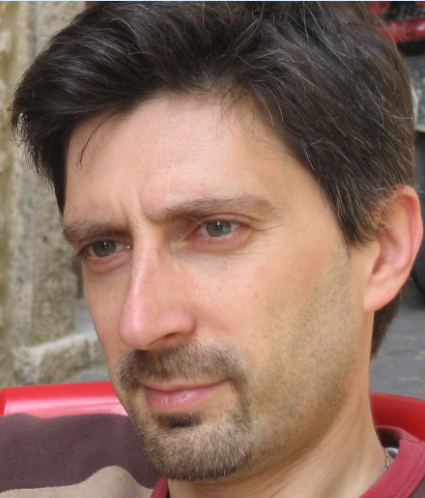
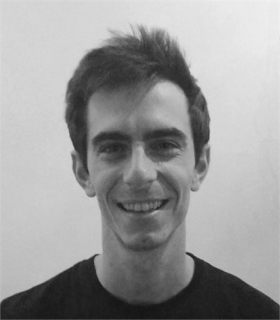
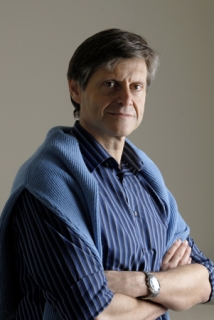
Grégoire Burel is a Research Fellow at the Knowledge Media Institute (KMI), The Open University. His work focuses on ontologies and semantic technologies for EU-funded projects such as WeKnowIt, ROBUST, DecarboNet, and COMRADES. Currently based in Milton Keynes Develops tools for Docker container vulnerability monitoring (e.g., Counsel ) Active contributor to open-source projects His research spans computer science, artificial intelligence, and cybersecurity domains, with a practical emphasis on software engineering and semantic web technologies.
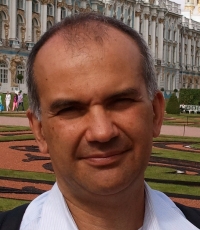
Walter Didimo is a Full Professor of Computer Engineering at the University of Perugia, with a career spanning over two decades. His expertise lies in Graph Drawing, Network Visualization, and Algorithm Engineering, contributing to advancements in Computational Geometry and Big Data. Researcher in Graph Algorithms (1996-2000) Assistant Professor (2001-2004), Associate Professor (2005-2024), Full Professor (2024-) Director of Research Unit CINI (2019-2022) His research focuses on hybrid graph visualization models (e.g., ChordLink), distributed graph processing (e.g., GiViP), and practical applications in cultural heritage (e.g., CHIP) and web analytics (e.g., COWA). Recent work includes scalable algorithms for heterogeneous networked data and visual analytics for genomics (GGB Consortium). Scientific Awards: Best Paper Award - Track 2, Graph Drawing 2021 He has been instrumental in technology transfer, co-founding Vis4 Srl (2009) and contributing to the GGB Consortium. His editorial roles include Associate Editor of IEEE Access and guest editorships for CGTA and JGAA.
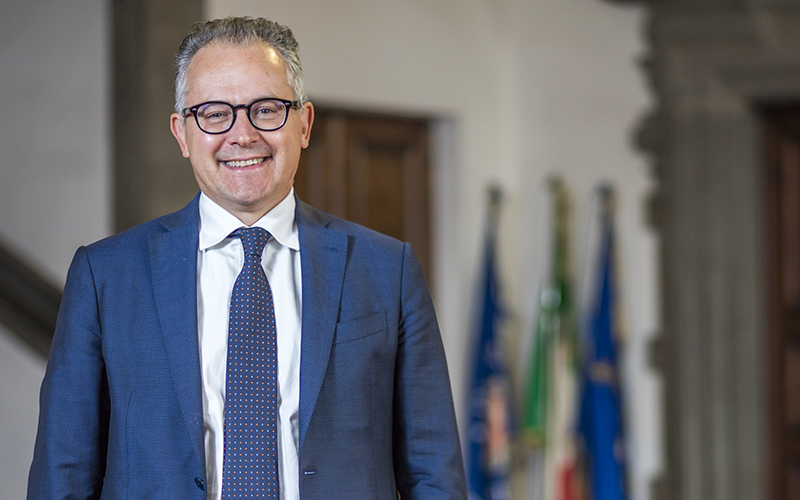
Santa Di Cataldo is an Associate Professor at the Department of Control and Computer Engineering (DAUIN) of Politecnico di Torino. His research focuses on computer vision, pattern recognition, digital image processing, and medical image processing, with applications in industrial systems and AI for manufacturing. Scientific Branch: IINF-05/A - Information Processing Systems ERC Sectors: PE6_8 - Computer graphics, computer vision, multi media, computer games ERC Sectors: PE6_11 - Machine learning, statistical data processing His work includes developing AI-driven anomaly detection frameworks, physics-informed neural networks for additive manufacturing optimization, and neuro-symbolic approaches for Industry 4.0 applications. He supervises PhD students in Artificial Intelligence and Computer Engineering programs, collaborating on projects like BIG (Blue Is Green) and PNRR-Complementary Plan. Premio Donna Innovazione (2010) He leads courses such as Machine Learning in Applications and Applied AI and Machine Learning , while contributing to bioinformatics and robotics-related teaching. His research is supported by IAM@PoliTo and EDA groups, utilizing LADISPE laboratory facilities.
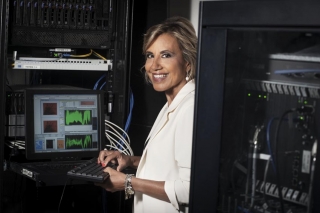
Alessandro Savino is an Associate Professor at the Department of Control and Computer Engineering (DAUIN) of Politecnico di TORINO. He serves as an academic advisor for Bachelor’s and Master’s degree programs in Computer Engineering (Ingegneria Informatica) and contributes to PhD programs in Artificial Intelligence and Computer Engineering. Research Interests: Approximate computing, Cybersecurity (including automotive systems), Dependability, Parallel computing, Reliability analysis, and Neuromorphic architectures. Key Projects: Leads RESCHIP4EU (2024-2028), NEUROPULS (2023-2027), and commercial contracts focused on real-time OS validation and avionics design. Publications: Recent work spans hardware security (e.g., VeriSide for leakage assessment), spiking neural networks (SpikeExplorer, SpikingJET), and automotive cybersecurity (CARACAS, CAN-MM). Teaching: Instructs courses on Parallel and Distributed Computing, Hardware & Wireless Security, and System Programming across Politecnico di TORINO and Scuola IMT Alti Studi - LUCCA. Research Group: Leads the SMILIES group, focusing on resilient computer architectures and life sciences.
Luca Barbierato is a Fixed-term Assistant Professor at the Department of Control and Computer Engineering (DAUIN), Politecnico di Torino, specializing in applied artificial intelligence, cybersecurity, and co-simulation infrastructures for integrated energy systems. He actively contributes to research in edge computing, IoT, and sustainable energy technologies. Research Focus: AI applications in energy systems, secure IoT infrastructures, and co-simulation frameworks Teaching Roles: Invited PhD teaching component (2025/26), teaching assistant across multiple programs His recent publications address critical areas including OpenTitan-based security controllers, urban building energy modeling, and distributed power system co-simulation. Barbierato's work aligns with SDG Goals 7 (Affordable Energy), 9 (Innovation Infrastructure), and 11 (Sustainable Cities). Notable scientific recognition includes the Learning to Teach (L2T) badge from Politecnico di Torino.
De Marsico Maria is a Full Professor at the Department of Computer Science , Sapienza University of Rome. Her office is located at Via Salaria, 113, 3rd floor, room 313. Email: demarsico@di.uniroma1.it Phone: +39.06.4991.8312 (ext. 28312) Her research interests are aligned with the Department of Computer Science, focusing on broad areas within Computer Science , including Artificial Intelligence , Software Engineering , and Data Structures .
Enrico Tronci is a Full Professor in the Department of Computer Science at Università degli Studi di Roma La Sapienza , Italy. His research focuses on model checking, formal verification, and synthesis of cyber-physical systems, with applications to mission-critical and safety-critical domains such as space systems, smart grids, and healthcare. He leads the Model Checking Lab (MCLab) and has coordinated numerous national and international research projects funded by organizations including the European Community (EC), European Space Agency (ESA), and Italian Ministry of University and Research (MUR). Research Highlights : Automatic control software synthesis from closed-loop specifications Model checking algorithms for hybrid and stochastic systems Technology transfer in sectors like energy, transportation, and aerospace Teaching : Undergraduate: Software Engineering (Fall 2024) Graduate: Automatic Verification of Intelligent Systems (Fall 2024), Verification and Validation of Intelligent Systems (Spring 2025) Scientific Awards : Recipient of the IBM-Italia 1987 prize for best thesis in Artificial Intelligence Publications Trends : 2024: Scaling up model checking for cyber-physical systems via HPC 2023: Hormonal impact on behavior and fault-tolerant sensor deployments 2021-2022: In silico clinical trials, smart grid management, and scenario enumeration 2020: AI-guided diabetes patient modeling and forensic psychiatry applications Software Tools : QKS (Quantized Kontrol Synthesizer) NashMV (MAD systems verification) CMurphi (Hybrid systems model checker) FHP-Murphi (Probabilistic verification) BSP (Boolean symbolic programming)
Avola Danilo is an Associate Professor at the Sapienza University of Rome , affiliated with the Department of Computer Science . His research interests span core areas of computer science, including artificial intelligence, algorithms, data structures, and software engineering. Contact: avola@di.uniroma1.it
Giuseppe Perelli serves as an Associate Professor in the Department of Computer Science at Sapienza University of Rome, maintaining his office at Viale Regina Elena, 295 (Building E), 1st floor, room 106. His academic responsibilities encompass teaching and research within the university's computing discipline. His scholarly work focuses on core areas of Computer Science, with specialized contributions to Algorithms development and Software Engineering methodologies. These research interests drive advancements in computational theory and practical software systems design. Contact is facilitated through email perelli@di.uniroma1.it or telephone at +39.06.49255.470 (extension 36470), supporting collaboration and academic inquiries.
Fausto Francesco Lizzio is a Fixed-term Researcher at the Department of Mechanical and Aerospace Engineering (DIMEAS) within the College of Mechanical, Aerospace and Automotive Engineering at the Polytechnic University of Turin . His work focuses on consensus protocols , distributed control , and unmanned aerial systems (UAVs) . Research Interests: Multi-agent systems, time-delay networks, robotics, and aerospace engineering. Teaching Roles: Course instructor for advanced flight dynamics and collaborator in courses on spacecraft control, flight mechanics, and aerospace simulation. His recent research explores stability-switching properties in multi-agent systems, decentralized target estimation for UAV swarms, and digital twin applications for prognostic health management. These studies intersect aerospace engineering, control theory, and networked robotics. Scientific Contributions: He has been recognized with an open badge for participating in research funding calls through the Rimini School 2025. His publications span journals like IEEE Control Systems Letters , Drones , and conference proceedings for SICE and EASN events.
Martina Battisti is a Tutor in the Department of Information Engineering and Computer Science at the University of Trento, with a focus on integrating Artificial Intelligence into educational practices. She is affiliated with the Agriculture, Food and Environment Center-C3A, where she contributes to interdisciplinary courses. Research Interests: Her work centers on data processing, visualization, and presentation using traditional software and AI, particularly applied to experimental laboratories and challenge-based learning in the winemaking supply chain domain.
Professor Luca Fanucci is a Full Professor of Electronics at the Department of Information Engineering , University of Pisa. He serves as Rector's Delegate for Inclusion of Students with Disabilities and leads research in integrated circuits, embedded systems, and assistive technologies . Institutional roles include membership in the National University Conference of Delegates for Disability (CNUDD) and leadership in the PhD program in Information Engineering. Born: Montecatini Terme (1965) Education: Laurea in Electronic Engineering (1992), PhD in Information Engineering (1996), University of Pisa Professional Journey: ESA research (1992-1996), CNR researcher (1996-2004), University of Pisa faculty (2004-present) His research focuses on: System-level design of integrated circuits and embedded systems Hardware-software co-design for low power consumption Spacecraft and satellite communication systems Medical devices and telemonitoring platforms Assistive technologies for disabilities Recent publications highlight AI in space applications and telemedicine systems . Key projects include the Ingeniars spin-off for satellite communications and the AsTech National Laboratory for assistive technologies. Scientific Recognition : IEEE Fellow (2019) 40+ patents H-index 34 (5000+ citations) He coordinates international conferences (DATE, HiPEAC, Spacewire) and serves as Associate Editor for Technology and Disability and Microprocessors and Microsystems journals.
Tiziana Catarci is a Full Professor ( Professore Ordinario ) at the Department of Computer, Automation and Management Engineering Antonio Ruberti (DIAG) within the Faculty of Computer Engineering, Computer Science and Statistics at Sapienza Università di Roma since November 2000. She has had a distinguished academic career marked by numerous leadership roles at Sapienza, including serving as Pro-Rector for Infrastructure and Technologies (2010-2014) and directing the DIAG department (2018-2024). Her research focuses on Human-Computer Interaction , Data Quality , and Database Systems . In recent years, she has expanded her interests to include Ethics of Artificial Intelligence and Gender Issues in STEM , co-founding the Italian Society for AI Ethics (SIpEIA) in 2020 and serving as its president since 2024. She has published over 200 articles in prestigious journals and conferences, and has edited or authored more than 20 books. She has been actively involved in numerous national and international research projects including KIM, VENUS, FADIVA, LAURIN, SEWASIE, DELOS, Interop, WORKPAD, SM4All, PROMISE, and SmartVortex. Her recent publications cover topics ranging from visual analytics solutions to data management architectures, and from ethical considerations in AI to declarative process modeling. Dr. Catarci has received several honors throughout her career, including: Stanford University's World's Top 2% Scientists (2020) Premio Le Tecnovisionarie (2021) Fellow of the European Alliance for Innovation (2018) Nominated among 100 Donne per la Scienza by Fondazione Bracco (2016) Commendatore della Repubblica Italiana (2015) IBM Eclipse Innovation Award for the SEAWER project (2003) She is also a pioneer in promoting women in STEM fields, with activities that have been recognized by the Levi Montalcini Association in 2017, and has been included in InspiringFifty, a list of 50 women who serve as role models in the technology world.
Simone Lenti is an Assistant Professor (Ricercatore RTDa) at the Department of Computer, Control, and Management Engineering of Sapienza University of Rome. He is an active member of the A.WA.RE research group , which specializes in visual analytics. Lenti obtained his Ph.D. in 2021 with a dissertation on visual analytics techniques for cybersecurity. His research bridges cybersecurity , visual analytics , and human-computer interaction , focusing on: Developing computational methods for vulnerability analysis (e.g., NLP for CVE relevance, smart contract taxonomies) Designing visual tools for threat detection (e.g., attack graphs, firmware fuzzing) Enhancing interpretability in data-driven systems (e.g., partial dependence analysis, process mining) Lenti's publications (2019–2025) demonstrate a consistent focus on applying visual analytics to cybersecurity challenges , with recent expansions into bioinformatics and education. Key trends include automated vulnerability management, human-centered explainability, and scalable threat modeling. Awards: IEEE VizSec 2018 Best Paper for contributions to cybersecurity visualization. He contributes to academic infrastructure through tools like easyDeclare (declarative process modeling) and BUCEPHALUS (business-centric cybersecurity analysis), emphasizing practical applications of his research.
Stefano Lucidi is a Full Professor of Operations Research at Sapienza University of Rome, where he is affiliated with the Department of Computer, Automatic and Management Engineering within the Faculty of Information Engineering, Computer Science and Statistics. He has held this position since November 1, 2000, after serving as Associate Professor from November 1, 1992 to October 31, 2000. He was coordinator of the PhD program in Operations Research from 2010 to 2012 and was a shareholder of the university spin-off ACTOR SRL until July 2024. His research interests span Nonlinear Optimization, Derivative-Free Optimization, Mixed Integer Programming, and Global Optimization. His methodological work focuses on unconstrained optimization methods, constrained optimization methods, non-differentiable optimization methods, derivative-free methods, and global optimization techniques. His applied research includes mathematical modeling of biological phenomena in cell kinetics, identification of astrophysical parameters, optimal management of bookable seats in rail transport, and optimal design of electromagnetic devices and industrial electric motors. His recent publications demonstrate a strong focus on derivative-free optimization methods, complexity analysis of algorithms, multi-objective optimization, and applications in diverse fields including healthcare, transportation, and neuroscience. His work bridges theoretical advances in optimization with practical applications across multiple domains. His significant contributions to the field include developing algorithms for simulation-driven design optimization, addressing nonsmooth optimization problems, and creating methods for multi-fidelity computations. His research has been published in top journals including Optimization Methods & Software, Journal of Optimization Theory and Applications, and Optimization Letters. Full Professor of Operations Research since 2000 PhD program coordinator (2010-2012) Shareholder of ACTOR SRL spin-off (2011-2024) Active contributor to optimization theory and applications Professor Lucidi has been instrumental in advancing optimization methodologies while maintaining strong connections to practical applications across various industries. His work continues to influence both theoretical developments and real-world implementations of optimization techniques.