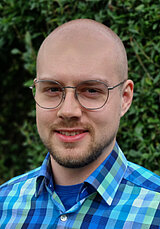
Sofiène Tahar is a Professor at Concordia University's Department of Electrical and Computer Engineering, affiliated with the Faculty of Engineering and Computer Science. His research focuses on formal verification, theorem proving, and their applications in cyber-physical systems, circuit design, and reliability engineering. He has authored over 300 publications in top-tier conferences and journals, including DATE, ICFEM, and FMCAD. Key research areas include formal methods for analog/digital circuits, approximate computing, stochastic systems, and safety-critical systems. His work bridges theoretical foundations (e.g., theorem proving in HOL) with practical engineering problems like circuit reliability and autonomous systems verification. Recent projects involve formal analysis of vehicular systems, energy-efficient approximators, and machine learning integration with formal verification frameworks. Tahar collaborates extensively with industry partners and holds leadership roles in international conferences, including co-chairing ICFEM 2023.
Florian Kern is a PhD candidate in Human-Computer Interaction at the University of Würzburg, supervised by Prof. Marc Erich Latoschik. He holds an M.Sc. in Computer Science focusing on HCI (2018). His research centers on Extended Reality (XR), particularly text input methods, surface alignment for handwriting/sketching, and VR applications in rehabilitation. Key projects include the Off-The-Shelf Stylus framework for XR interaction and the Reality Stack I/O modular framework for cross-platform XR development. Research Interests: XR Interaction: Handwriting/sketching in VR/AR, physical-virtual surface alignment. Rehabilitation Technology: VR-based gait training (e.g., Homecoming application for MS/stroke patients). Framework Design: Cross-platform tools like Reality Stack I/O, modular animation pipelines. User Experience: Evaluating input techniques, sketching behavior, and usability in immersive systems. Publications emphasize technical innovations (e.g., stylus calibration, surface refinement) and interdisciplinary applications (e.g., healthcare VR). Collaborations span HCI, psychology, and engineering departments.
Stephan Zelewski is a full Professor at the Faculty of Business and Economics of the University of Duisburg-Essen since 1998 and head of the Institute for Production and Industrial Information Management. He studied business administration and economics at the Universities of Münster and Cologne (1977-1981), earning two diplomas with distinction. Key Research Areas : Production Management, Logistics, Industrial Information Systems, Semantic Knowledge Management, AI/Operations Research applications in business, and Game Theory-based fair distribution models. Academic Leadership : Dean of Studies (1993-1996), founder of the Ruhr Campus Academy (2001-2002), and chair of multiple research projects including KI-LiveS (AI brainware development) and OrGoLo (Semantic Knowledge Management in logistics). Recent Articles focus on AI-based knowledge reuse systems, e-mobility sustainability analysis, and semantic modeling tools. His work integrates Artificial Intelligence with Operations Research and Game Theory across logistics and production domains. Scientific Recognition : Multiple scholarships (Konrad Adenauer, Hoechst, Fritz Honsel Foundations) Cologne University Prize (1992) Leadership in academic associations (VHB, Wissenschaftliche Kommission Wissenschaftstheorie)
Nikolas Zöller is a research scientist at the Max Planck Institute for Human Development 's Adaptive Rationality department. His work focuses on collective intelligence, human-AI collaboration, and computational modeling of social systems. He combines methods from physics, computer science, and psychology to study decision-making processes in both natural and artificial collectives. Ph.D. candidate at Constructor University Bremen (2020-2024) Research Associate at Potsdam University of Applied Sciences (2015-2022) Master of Science in Physics from Freie Universität Berlin (2014) Bachelor of Science in Physics from Freie Universität Berlin (2010) His research spans: Collective intelligence frameworks Human-AI collaborative diagnostics Agent-based modeling of social networks Technological co-diffusion patterns Thermodynamic optimization in physical systems Recent publications highlight his work on: Diagnostic accuracy in human-AI collectives GitHub collaboration topology Affect control theory in group dynamics Co-diffusion of complementary technologies Scientific recognition includes: European Press Prize (2022) as part of a team Springer Best Masters Award (2014)
Shweta Suran is a Postdoctoral Fellow at the Max Planck Institute for Human Development (Berlin, Germany) with affiliations as an External Researcher at Tallinn University of Technology (School of Information Technologies, Department of Software Science) and IT University of Copenhagen (Collective Intelligence Research Group). She previously held roles at TalTech, The Open University (UK), and Krishna Engineering College. Doctor of Philosophy (2022) in Computer Science, Tallinn University of Technology Research Master's Degree (2014) in Knowledge Engineering, SRM Institute of Science and Technology Her research focuses on Collective Intelligence, Collective Behaviour, Social Network Analysis, Data Mining, and Digital Image Processing. She explores how individuals interact with online content, the impact of conversational affordances on deliberation quality, and correlations between social media preferences, media choices, and socio-economic/political factors. Her recent publications include work on a digital collaborative platform for the silver economy (2023), frameworks for collective intelligence (2020), pathfinding in medical imaging (2014), and AI applications in spatial data infrastructure (2019-2021). She co-supervised Sijo Arakkal Peious (2019 Master's thesis). Marie Skłodowska-Curie Postdoctoral Fellowship (2024) Seal of Excellence from European Commission (2023) SAP Fellowship Award (2016) Gold Medal at SRM University (2014) She contributed to projects like the EU Green Deal-aligned Waterway Safety Management program (2020-2021) and cost-effective 3D spatial data infrastructure (2019-2021), with funding totaling €1,996,000. Her work bridges ICT, collective behavior, and societal challenges.
E. Rukzio is a prominent researcher in Computer Science with a focus on Human-Computer Interaction (HCI) , Virtual Reality (VR) , and Mobile Interaction . Their work spans disciplines like Engineering and Psychology , emphasizing user experience and innovative interaction techniques. Research Interests include: Designing cross-device interaction styles (e.g., mobiles and surfaces). Improving touch performance on smartphones through error compensation functions. Creating co-located VR experiences for both HMD and non-HMD users. Investigating biometric feedback and strategic interdependence in VR games. Optimizing typing behavior on mobile virtual keyboards. Publication Trends reveal a focus on Human Factors in Computing Systems , Mobile HCI , and Ambient Intelligence . Key subtopics include VR mechanics , tracking offsets , multiplayer game design , and ubiquitous computing . Collaborative work with co-authors like Jan Gugenheimer and Mark Colley highlights their interdisciplinary approach. Notable Contributions include the ShareVR prototype for collaborative VR, studies on touch accuracy for over 100 million taps, and frameworks for co-located asymmetric VR gameplay.
Saeed Amizadeh is a prominent researcher specializing in artificial intelligence and machine learning, currently affiliated with Microsoft's research division. His work spans multiple domains of AI including speech processing, natural language understanding, computer vision, and time series analysis, with a particular focus on developing novel frameworks that bridge symbolic reasoning with neural approaches. Over the past decade, he has established himself as a significant contributor to the field through publications in top-tier conferences including ICASSP, ICLR, AAAI, KDD, and IJCAI. Dr. Amizadeh's research interests primarily center around advancing the theoretical foundations and practical applications of machine learning systems. His work on neuro-symbolic visual reasoning has contributed to understanding how to effectively disentangle visual perception from logical reasoning in AI systems. He has made significant contributions to differentiable programming, particularly in making classical machine learning pipelines fully differentiable, which enables end-to-end optimization of complex ML workflows. His research on speech enhancement using GANs represents cutting-edge work in audio processing, while his time series anomaly detection frameworks have practical applications in numerous industry settings. Analysis of his publication trends reveals a consistent trajectory from theoretical machine learning foundations toward increasingly applied research with practical industrial relevance. His early work (2010-2015) focused on fundamental algorithms and probabilistic modeling approaches, while his more recent publications (2019-2025) demonstrate a shift toward practical AI systems with direct applications in speech processing, audio separation, and enterprise machine learning. A notable theme throughout his career is the development of frameworks that enable more efficient, scalable, and interpretable AI systems. As a key contributor to Microsoft's ML.NET framework, Dr. Amizadeh has played an important role in developing tools that make machine learning more accessible to enterprise developers. His collaborative work spans academia and industry, with notable partnerships with researchers from various institutions as well as within Microsoft Research.
Dr. Shaukat Ali is a leading researcher at Simula Research Laboratory (Certus Software V&V Center, Norway), with a PhD from the University of Oslo . His work bridges quantum software engineering and cyber-physical systems (CPS) validation, focusing on digital twins, autonomous vehicles, and healthcare IoT applications. Collaborates with institutions like South Dakota State University, COMSATS University, and Mohammad Ali Jinnah University Co-developed tools: QuCAT (Quantum combinatorial testing), DeepScenario (autonomous driving datasets), and EvoCLINICAL (medical digital twin evolution) Research spans quantum software testing (IBM quantum computers), uncertainty-aware validation of medical devices, and search-based optimization in CPS. His 2025 work introduces quantum circuit mutants, uncertainty-wise test oracles, and foundational models for digital twin creation. Publications in journals like ACM Transactions on Software Engineering and conferences including ICSE , GECCO , and IEEE Quantum Software reflect his interdisciplinary approach. Current projects address quantum software robustness, LLM-driven scenario realism, and safe adaptation in robotics.
Prof. Dr. Wolfgang Renz is a faculty member at the Department of Computer Science, Faculty of Mathematics and Natural Sciences, University of Hamburg. He works on decentralized coordination mechanisms in self-organizing multi-agent systems, with applications in demand-side management, logistics, and urban mobility. Current affiliation: University of Hamburg (Informatik) Research focus: Systemic modeling, emergent behavior analysis, and validation of adaptive systems His publications cover topics like ant-colony optimization for energy management, peer-to-peer coordination spaces, and mesoscopic stochastic models for validating agent dynamics. He has supervised several doctoral and diploma theses on related subjects.
Ghang Lee is a Professor at the Department of Architecture and Architectural Engineering of Yonsei University in Seoul, South Korea. He directs the Building Informatics Group, focusing on Building Information Modeling (BIM) , AI applications in construction , and automated code compliance checking . His work bridges human expertise with artificial intelligence, advancing digital transformation in the built environment. Developed systems: Tower Crane Navigation System (TCVS), IoT-based exit signs, and NADIA (speech-to-BIM tool) Co-author of the internationally recognized BIM Handbook Recipient of Silver Medal (President of Korea) and multiple Outstanding Research Achievement Awards Research Interests span BIM, information interoperability, quality management, and AI-driven construction technologies. His recent work emphasizes: NLP for defect detection and classification Domain-specific corpus embeddings Human-AI collaboration in design Smart construction and digital twinning Building informatics standardization Visual-language models for defect analysis Scientific Awards include Silver Medal (President of Korea), Stanford/Elsevier Top 2% Scholar recognition, and multiple Outstanding Conference Paper Awards from KICEM, AIK, and KAIARI. He also holds Yonsei Distinguished Teaching Awards and Ministry of Land, Infrastructure, and Transport commendations.
Jonathan Tschanter is a researcher at the University of Würzburg's Human-Computer Interaction department, specializing in virtual reality (VR) and extended reality (XR) systems. He contributes to the Reality Stack team's development of reusable XR software components and has worked on projects like BMBF-funded HiAvA (social VR accessibility) and ViLeArn (XR education). Educational Background: B.Sc. in Human-Computer Systems M.Sc. in Human-Computer Interaction (both from University of Würzburg) His research focuses on XR interaction design , including: Harassment dynamics in social VR environments Comparative analysis of handwriting input across VR/VST AR platforms Virtual-to-physical surface alignment techniques Modular pipeline architectures for real-time character animation Key publication trends highlight: Systematic studies of avatar self-similarity for harassment mitigation Empirical evaluations of XR display technologies and surface alignment Open-source software frameworks for character animation pipelines Scientific Recognition: IDEATExR Best Paper Award (2025) Currently teaching XR development courses, he previously contributed to: HiAvA project (2021-2024): Scalable hybrid avatar-agents technology ViLeArn project (2021-2023): Student worker role Ubiquitous Interaction group (2023): Research intern at University of Helsinki
Dr.-Ing. Michael Selzer is a Group Leader in Research Data Management at the Karlsruhe Institute of Technology (KIT), specifically within the Institute of Nanotechnology. He leads the Kadi4Mat project, focusing on FAIR (Findable, Accessible, Interoperable, Reusable) research data infrastructure for materials science. His work bridges computational modeling and digital research workflows. Research Interests: Michael Selzer specializes in computational materials science , with a strong emphasis on phase-field modeling for simulating microstructure evolution, fracture mechanics, and multiphase systems. His research extends to materials informatics , digital workflows , and research data management , particularly in the context of battery materials, porous media, and solid-state systems. He integrates machine learning and data science to analyze and optimize materials properties. Publication Trends: His recent publications (2023–2025) highlight a growing focus on FAIR data infrastructure (e.g., Kadi4Mat, KadiStudio), large language models in battery science (LISA), low-code simulation platforms (MUSICODE), and reproducibility in bioprinting . These reflect a strategic shift toward digitalization and automation in materials research, while maintaining a strong foundation in physics-based modeling. Scientific Contributions: Developed and advanced phase-field models for grain growth, crack propagation, and interfacial phenomena. Contributed to the development of Kadi4Mat, a research data infrastructure for materials science. Integrated machine learning and AI into materials characterization and battery research. Published extensively in journals such as Acta Materialia , Computational Materials Science , and Scientific Data . Advising and Grants: While no direct students are listed, his leadership role in Kadi4Mat suggests mentorship and team supervision. He has likely secured funding for digital infrastructure and computational materials projects, evidenced by sustained publication output and collaborative work with major institutions. His research is highly collaborative, involving teams across KIT and international partners. Labs and Teams: He leads the Research Data Management group under the Kadi4Mat initiative at KIT. This team focuses on developing digital tools for materials research, including electronic lab notebooks (KadiWeb), workflow automation (KadiStudio), and ontology-based data integration. The group operates at the intersection of computational science, data engineering, and materials discovery.
Prof. Christian Zenger is a Junior Professor at Ruhr University Bochum's Faculty of Electrical Engineering and Information Technology, leading the Secure Mobile Networking department. He co-founded PHYSEC GmbH in 2015, developing anti-tamper radio technology for IoT security, recognized with awards from MIT, BMWi, and ECSO. His academic roles include previous positions as a Lecturer and Post-Doc researcher at Ruhr University, alongside board memberships and advisory roles in cybersecurity and water management sectors. Education: PhD in Electrical Engineering (Ruhr University Bochum, 2013–2017) Research: Focuses on IoT security, wireless systems, nuclear disarmament, and start-up ecosystems. His work bridges academic research with industrial applications, highlighted by PHYSEC's commercial success. Publications: Over 30 peer-reviewed articles since 2013, emphasizing physical-layer security, 6G vulnerabilities, and tamper detection mechanisms. Notable recent work includes anti-tamper radio systems and reconfigurable intelligent surfaces. Awards: MIT Award (2023), BMWi Innovation Prize (2022), and ECSO Security Excellence Award (2021). Advisory Roles: Member of Competence Center Digital Water Management’s Advisory Board and Cube 5’s Technical Board, reflecting his interdisciplinary impact. His lab, Secure Mobile Networking, collaborates with the Horst Görtz Institute for IT Security and promotes start-up culture through academic mentorship.
Marius Hadry is a doctoral researcher at the Chair of Software Engineering (Computer Science II) at the University of Würzburg, under the supervision of Prof. Samuel Kounev. He is affiliated with the Department of Computer Science within the Faculty of Mathematics and Computer Science. His research focuses on Self-aware Computing Systems , Sel-adaptive Systems , IoT and Cyber-physical Systems , Industry 4.0 , Platooning , and Intelligent Transportation Systems . Marius holds a Master's (2021) and Bachelor's (2019) in Computer Science from the University of Würzburg. Education: Master of Computer Science (2019-2021), Bachelor of Computer Science (2016-2019), both at the University of Würzburg. His work emphasizes practical applications of adaptive systems in transportation and logistics. Recent research explores traffic forecasting models, failure prediction in HDDs, and performance analysis of microservices. Marius actively contributes to international conferences like MASCOTS, SEAMS, UCC, and ICPE. Teaching activities include supervising Bachelor/Master theses, coordinating software architecture lectures, and organizing seminars on software engineering. He has also taught operating systems and contributes to academic initiatives like the Secure Software Systems Group.
Erwin Fielt is a prominent academic researcher specializing in digital business models, enterprise architecture, and information systems innovation. His work spans theoretical frameworks and practical applications in areas such as platform ecosystems, big data analytics, and metaverse-driven entrepreneurship. With over 100 publications in top-tier journals like Journal of Strategic Information Systems and Journal of Management Information Systems , his research emphasizes strategic IT management, business model innovation, and the societal impact of emerging technologies. Key contributions include studies on digital industrial platforms, inhibitors/enablers of platform ecosystems, and the role of emotional speech in AI collaboration. Fielt frequently collaborates with global institutions, contributing to conferences like ECIS, PACIS, and ICIS. His work bridges academic rigor with industry relevance, addressing challenges such as data-driven business model design and service-oriented architecture integration. Research interests are reflected through recurring themes: digital transformation strategies, complex adaptive systems in IS, and the ethical implications of emerging technologies. Despite no explicit mention of awards or grants in the provided data, his extensive publication record underscores sustained academic excellence.