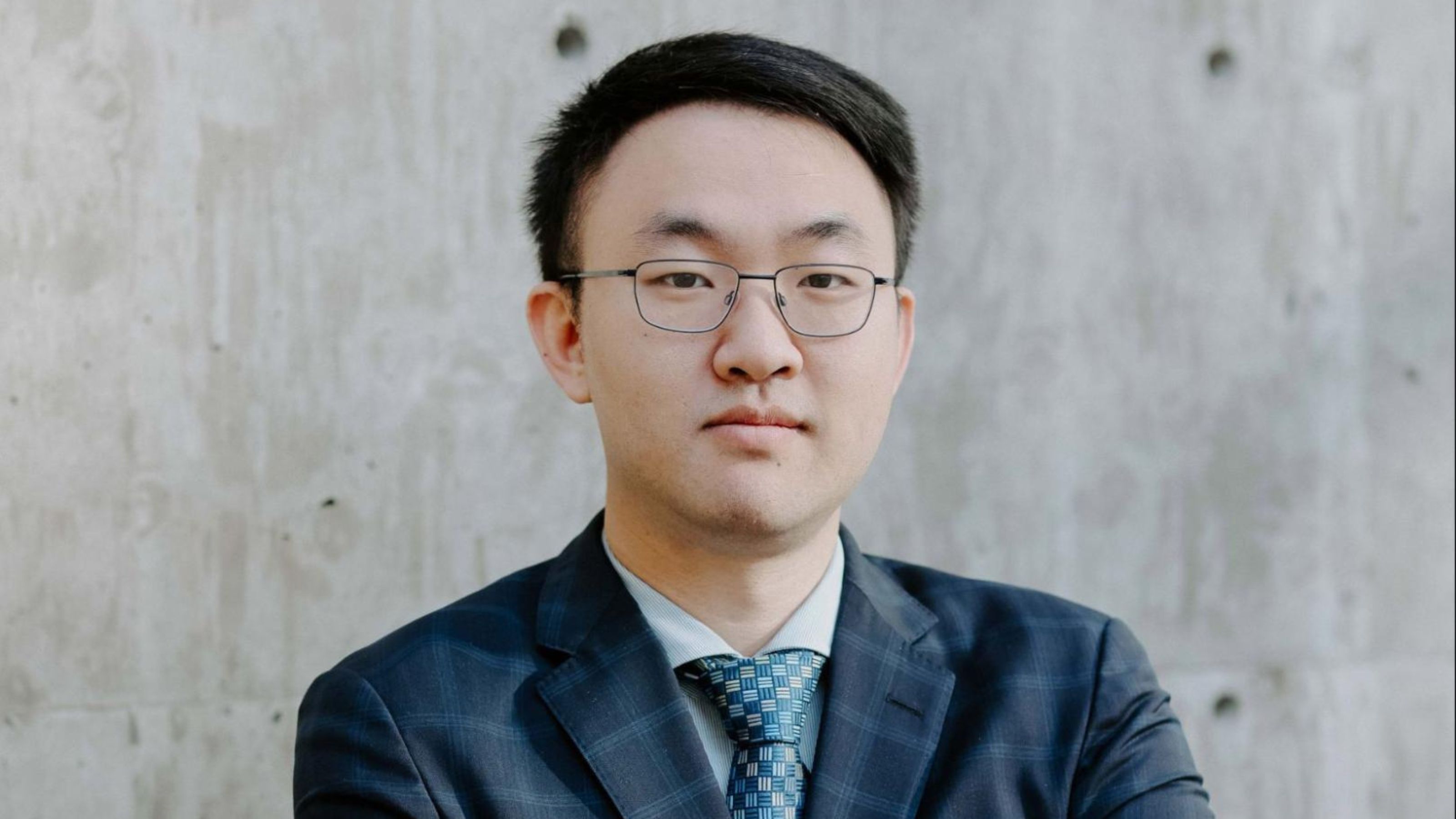
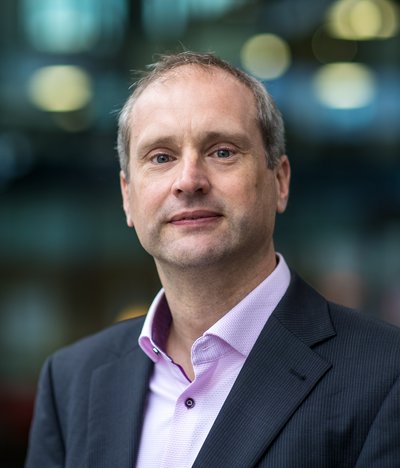
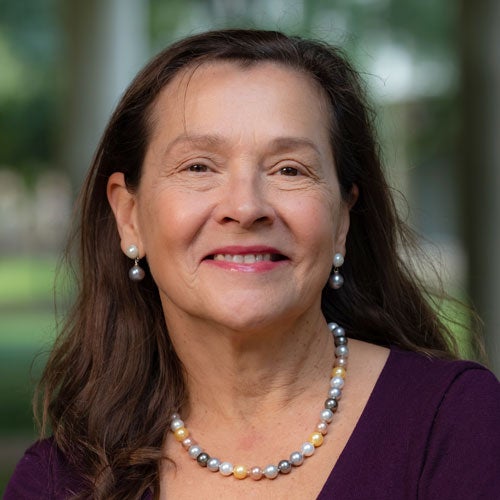
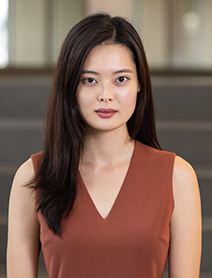
Sarah Hernandez is an Associate Professor in the Civil Engineering Department at the University of Arkansas , specializing in transportation systems engineering. Her research focuses on advanced data collection and analysis for freight planning, and she teaches graduate courses in transportation planning and data analysis. Ph.D. in Civil and Environmental Engineering, University of California, Irvine M.S. in Civil Engineering, University of California, Irvine B.S. in Civil Engineering, University of Florida Her research integrates Intelligent Transportation Systems (ITS) technologies to address freight data gaps, including: Development of tools for freight performance measures Fusion of GPS, WIM, and lock performance data Weather impact on freight traffic Lidar-based truck classification Key trends in her publications include: Advancing sensor technologies for freight analytics Improving long-range infrastructure planning Addressing data gaps in commercial vehicle operations Enhancing freight network efficiency through modeling Scientific awards: Private Sector Applicability Award, TRB Intermodal Freight Committee (2018) As founder of the Freight Transportation Data Research Lab , she leads initiatives on unbiased freight planning and workforce diversity. Her outreach includes mentoring middle and elementary school STEM programs.
Qipei Mei is an Assistant Professor in the Department of Civil and Environmental Engineering at the University of Alberta's Faculty of Engineering. With an MSc in Computer Science and a PhD in Structural Engineering, he bridges civil engineering with artificial intelligence to enhance infrastructure productivity and sustainability. His research spans AI-driven design automation, robotics for construction safety, and IoT-based condition assessment. PhD, Structural Engineering - University of Alberta (2020) MSc, Computer Science - Georgia Institute of Technology (2018) MSc, Structural Engineering - University of Alberta (2014) B.E., Civil Engineering - Huazhong University of Science and Technology (2011) Mei's work focuses on three key areas: leveraging data-driven methods for design automation, applying sensing/robotics to construction operations, and using digital twins for infrastructure assessment. His team explores generative AI for housing design, robotic construction in remote communities, and smart monitoring systems. Recent publications highlight advancements in: lateral capacity prediction for monopile foundations, transformer-based architectural layout analysis, large language models for building code compliance, vision-language models for safety hazard detection, and sensor networks for bridge monitoring. These works demonstrate interdisciplinary integration of AI, structural engineering, and IoT. Mei actively collaborates with diverse researchers and welcomes graduate students to his Smart Infrastructure Technologies (SITE) Research Group, part of the Infrastructure and Human Tech Lab (IHT-Lab). He teaches advanced topics in structural and civil engineering while pursuing industry-funded projects through NSERC, CFI, and Alberta Innovates.
Dr. Anwar Ali is a Lecturer in the Department of Electronic and Electrical Engineering at Swansea University's Bay Campus, affiliated with the School of Aerospace, Civil, Electrical and Mechanical Engineering. He holds an M.S. in Electronic Engineering (2010) and a Ph.D. in Electronic and Communication Engineering (2014) from Politecnico di Torino, Italy. His research focuses on: Power electronic converters and conditioning systems Embedded systems for aerospace applications Analog/mixed-signal circuit design Satellite technologies including power management Attitude determination and control systems Thermal modeling of aerospace systems Dr. Ali has authored over 50 publications with recent works concentrated in satellite power systems, thermal analysis of spacecraft, machine learning applications in healthcare/robotics, and energy harvesting techniques. His research demonstrates consistent innovation in small satellite technologies and cross-disciplinary applications of electrical engineering principles. He currently supervises PhD projects on: Wireless power transfer for implantable medical devices Integrated power and attitude control optimization for small spacecraft and teaches modules including Analogue Design, Software Engineering, Embedded System Design, and Integrated Circuit Design.
Frank Willems is a Full Professor of Systems and Control Technology and Chair of Integrated Powertrain Control at Eindhoven University of Technology (TU/e), holding a part-time position realized with support from TNO. He is affiliated with the Control Systems Technology group within the Department of Mechanical Engineering, and also contributes to EIRES and EAISI research initiatives. Dr. Willems obtained his MSc (1995) and PhD (2000) in Mechanical Engineering from Eindhoven University of Technology (TU/e). His academic journey continued with a position at TNO Automotive, where he currently serves as a principal scientist in powertrain control. Professor Willems' research focuses on developing optimal and robust control methods for automotive powertrain systems. His work addresses the critical challenge of integrating energy and emission management strategies at the powertrain system level, which is essential as traditional methods become infeasible due to increasingly strict environmental regulations. Key research areas include control-oriented modeling of internal combustion engines, cylinder pressure-based combustion control, and integrated energy and emission management. His research aims to minimize development time and costs through model-based control methods, with the ultimate goal of achieving auto-calibration where powertrain energy efficiency is optimized online using smart sensors and route information. Dr. Willems serves as an Associate Editor for Control Engineering Practice and is an active member of the IFAC Technical Committee Automotive Control. He has participated in numerous international program committees for conferences including the IFAC Conference on 'Engine and Powertrain Control, Simulation and Modeling (E-CoSM)', IFAC Symposium 'Advances in Automotive Control (AAC)', and 'Symposium for Combustion Control (SCC)'. His research has been supported by organizations including the Dutch Technology Foundation (STW) and DENSO Japan. At TU/e, Professor Willems teaches courses on 'Optimal control and reinforcement learning' and 'Advanced control for future heavy-duty powertrains.' His research group, part of the Control Systems Technology group, focuses on developing self-learning powertrain control systems to address the complexity and diversity of future ultra-clean and efficient vehicles.
Naomi J. Halas is a University Professor at Rice University, holding appointments in the Department of Electrical and Computer Engineering, Biomedical Engineering, Chemistry, and Physics & Astronomy. She is the Stanley C. Moore Professor in Electrical and Computer Engineering and serves as Director of both the Smalley-Curl Institute and the Laboratory for Nanophotonics. As a University Professor, she holds Rice's highest faculty rank, a distinction awarded to only 10 individuals (and only the second woman) in Rice's 111-year history. Halas is a pioneering researcher in the field of plasmonics, having created the concept of the "tunable plasmon" and invented a family of nanoparticles with resonances spanning the visible and infrared regions of the spectrum. Her research spans fundamental studies of coupled plasmonic systems as well as applications in biomedicine, optoelectronics, machine learning-enabled chemical sensing of environmental toxins, and plasmon-based photocatalysis. She is the author of more than 400 refereed publications, has over 30 issued patents, has presented more than 600 invited talks, and has been cited more than 130,000 times. Her recent publications demonstrate a strong focus on practical applications of plasmonics, particularly in water purification, environmental toxin detection, and cancer treatment. Her work combines nanotechnology with machine learning approaches to create innovative solutions for pressing global challenges in healthcare, environmental sustainability, and energy. The interdisciplinary nature of her research is reflected in publications spanning journals from Nature Water and PNAS to ACS Catalysis. Benjamin Franklin Medal in Chemistry (2025) - For the creation and development of nanoshells for biomedical and chemical applications Mildred Dresselhaus Prize in Nanoscience and Nanomaterials (2024) American Physical Society Frank Isakson Prize for Optical Effects in Solids Willis E. Lamb Award Wood Prize of Optica National Security Science and Engineering Faculty Fellow (Vannevar Bush Fellow) of the U.S. Department of Defense Halas has co-founded two companies based on her research: Nanospectra Biosciences, developing photothermal therapies for prostate cancer (nearing FDA approval), and Syzygy Plasmonics, a deep decarbonization platform. She has advised numerous students who have gone on to successful careers in academia and industry. Her research has been supported by significant grants from NSF, DoD, and other funding agencies. She serves as an advisor to the Mathematical and Physical Sciences Directorate of the National Science Foundation. Halas leads the Laboratory for Nanophotonics at Rice University, where her team focuses on designing new optically active nanostructures, developing nanofabrication strategies, characterizing physical properties of these materials, and prototyping applications of technological and societal interest. Her group is dedicated to producing PhD research scientists with expanded skill sets who can develop solutions beyond traditional disciplinary boundaries.
Prof. Dr.-Ing. Maria Francesca Spadea serves as Director of the Institute of Biomedical Engineering (IBT) at Karlsruhe Institute of Technology (KIT), part of the Helmholtz Association. Her leadership role includes overseeing research initiatives, teaching activities, and administrative responsibilities within the institute. Located in space 512, she maintains regular consultation hours on Wednesdays from 10:30-11:30 am by appointment. Professor Spadea's research spans several cutting-edge areas in biomedical engineering, with particular focus on medical image processing, artificial intelligence applications in healthcare, and radiomics. Her work bridges computational techniques with clinical applications, emphasizing practical solutions for medical imaging challenges. She has pioneered approaches in federated learning for medical image translation, particularly in CT/MRI synthesis for radiation therapy applications. Her research also extends to cancer cell analysis, vascular biomechanics, and medical robotics, demonstrating a broad yet cohesive research portfolio that addresses critical challenges in modern healthcare. Analysis of Professor Spadea's recent publications reveals a strong emphasis on AI-driven medical imaging solutions, particularly in the translation between different imaging modalities (like MRI-to-CT) using federated learning approaches that preserve patient privacy. Her work demonstrates growing specialization in radiation therapy applications, with multiple publications addressing synthetic CT generation for treatment planning. There's also a clear trajectory toward multi-institutional collaboration, as evidenced by her involvement in projects spanning multiple research centers across Europe. Professor Spadea actively mentors numerous students, including M. Krohmer Zabaleta, N. Skupien, and M. Destito, who have completed bachelor's and master's theses under her supervision. Her research group appears well-integrated within the broader Institute of Biomedical Engineering, collaborating extensively with colleagues like P. Zaffino and C.B. Raggio on multiple projects. The group maintains strong connections with clinical partners, as evidenced by publications addressing real-world medical challenges in radiation therapy, cardiology, and neurosurgery. The research activities of Professor Spadea's team are centered within the Institute of Biomedical Engineering at KIT, with particular focus on medical imaging processing and AI applications. Her laboratory appears to specialize in developing computational tools for medical image analysis, with recent work emphasizing privacy-preserving federated learning frameworks that enable multi-institutional collaboration without sharing sensitive patient data. The team maintains active collaborations with clinical departments, particularly in radiation oncology, as evidenced by numerous publications addressing CT synthesis for radiation therapy planning.
Ayman Habib is the Thomas A. Page Professor of Civil Engineering at Purdue University's College of Engineering. He serves as Co-Director of the Civil Engineering Center for Applications of UAS for a Sustainable Environment (CE-CAUSE) and Associate Director of the Joint Transportation Research Program. His work focuses on integrating remote sensing technologies like LiDAR and UAV systems into infrastructure monitoring, environmental management, and transportation engineering. Key areas include sensor calibration, mobile mapping systems, and applications in forest inventory, pavement maintenance, and stockpile monitoring. Research interests span remote sensing, geomatics, and UAV-based solutions for civil engineering challenges. He actively develops methodologies for automated data processing, LiDAR intensity normalization, and machine learning-driven infrastructure assessment. His projects address sustainability through precise environmental and transportation systems analysis. Selected publications highlight advancements in LiDAR-based road cracking detection, forest reconstruction via neural networks, and UAV calibration for agricultural and environmental applications. His work emphasizes scalable solutions for infrastructure maintenance and environmental monitoring, leveraging interdisciplinary approaches in civil engineering and computer science.
Edward Delp is the Charles William Harrison Distinguished Professor of Electrical and Computer Engineering at Purdue University's College of Engineering. He holds affiliations with both the Department of Electrical and Computer Engineering and the Department of Biomedical Engineering. His research spans computer vision, medical imaging, and data forensics with a focus on synthetic media detection, deep learning applications, and healthcare technologies. Education: Not explicitly listed in the provided text. His work includes developing algorithms for speech forensics, microscopy image analysis, and food/nutrition assessment systems. He leads projects on synthetic speech detection, medical image segmentation, and automated crop disease measurement using RGB imaging. Delp collaborates across disciplines, integrating machine learning with healthcare and agricultural challenges. Recent work emphasizes ethical AI through fairness in synthetic media detection and explainable artifacts in biomedical imaging. He contributes to large-scale datasets like MetaFood3D and 3D nuclear segmentation frameworks for microscopy analysis. His grants and advising focus on interdisciplinary applications, though specific grant details are not provided. Delp is affiliated with the Purdue School of Biomedical Engineering and maintains active collaborations in medical imaging, computer vision, and aerospace anomaly detection.
Dengfeng Sun is a Professor and Associate Head of the Gambaro Graduate Program in the School of Aeronautics and Astronautics at Purdue University. His research focuses on distributed control systems, autonomy, resilient networks, and air traffic management. Sun holds a B.Eng. from Tsinghua University, an M.S. from The Ohio State University, and a Ph.D. from UC Berkeley. His work spans advanced air mobility, UAV trajectory planning, and stochastic optimization for large-scale systems. Key contributions include resilient UAV traffic control, distributed state estimation algorithms, and fault detection methods for navigation systems. Sun's research has been published in top journals like IEEE Transactions on Intelligent Transportation Systems and Transportation Research Part E. Education: B.Eng., Tsinghua University (2000) M.S., Ohio State University (2002) Ph.D., UC Berkeley (2008) He advises on cutting-edge projects integrating robotics, autonomous systems, and cloud-based traffic modeling. His lab develops solutions for urban air mobility, emergency medical UAV networks, and next-generation air traffic control systems. Notable collaborations include work with NASA and industry partners on continuous descent approach procedures and metroplex routing paradigms. Sun's work bridges theoretical control systems with practical applications in aviation and infrastructure optimization.
Dr. Ying He is a Senior Lecturer at the School of Electrical and Data Engineering, University of Technology Sydney (UTS). Her research focuses on wireless communication networks, particularly integrating machine learning with satellite and terrestrial systems. She holds a BEng from Beijing University of Posts and Telecommunications (2009) and a PhD from UTS (2017). Prior to her academic role, she worked on TD-LTE chip design at the Chinese Academy of Sciences. Affiliations : Faculty of Engineering and Information Technology Global Big Data Technologies Centre (GBDTC) Education : BEng in Telecommunications Engineering, Beijing University of Posts and Telecommunications (2009) PhD in Engineering (Telecommunications), UTS (2017) Her research interests include satellite communication (GEO-LEO integration), spectrum sharing, vehicular communication, and applying machine learning to physical layer algorithms. Notable contributions include optimizing beam design in LEO networks and developing secure IoT systems. She supervises PhD/Master’s students and teaches courses like CCNA and capstone projects. Funded projects span satellite networks, IoT security, and supply chain tracking. Recent grants include SmartSat CRC initiatives and collaborations with industry partners like Intel and Ericsson. Her work addresses challenges in 6G, UAV-enabled computing, and resilient quantum algorithms.
Cormac Fay is a Research Fellow in Artificial Intelligence for Smart Cities at the School of Computing and Information Technology (SCIT), University of Wollongong, within the Faculty of Engineering and Information Sciences. His roles include affiliations with the SMART Infrastructure Facility and the ARC Centre of Excellence for Electromaterials Science. Previously, he held positions at Dublin City University, including post-doctoral roles in sensor research and data analytics. He holds a PhD in Engineering from Dublin City University (2013), an M.Eng. in Telecommunications Engineering (2007), and a B.Eng. in Mechatronic Engineering (2005). His research focuses on AI-driven smart city technologies, sensor systems for environmental monitoring, and advanced 3D printing materials. Key areas include IoT-enabled carbon-emission tracking, wearable biomedical devices, and sustainable sensor networks for landfill gas management. He has developed innovative solutions such as cryogenic 3D printing techniques for biocompatible inks and LED-based optical sensing platforms. Dr. Fay has secured grants totaling over $X million, including projects on military diver monitoring, blue carbon ecosystems, and low-cost sensor networks for agriculture and environmental safety. His work integrates interdisciplinary approaches, bridging materials science, biomedical engineering, and environmental engineering. Grants: Led projects on carbon-emission IoT systems, oyster farming sensors, and vibration monitoring. Supervision: Advised a Master's project on biomimetic microfluidic fabrication (2017–2019). Labs/Teams: Collaborates with the SCIT, SMART Infrastructure Facility, and global institutions like École Polytechnique Fédérale de Lausanne.
Jun Chen is a Senior Professor at the University of Wollongong, affiliated with the Intelligent Polymer Research Institute within the Australian Institute for Innovative Materials. He holds a PhD from the University of Wollongong (2003). His research focuses on nanomaterials, electrocatalysis, energy storage, and fuel cell technologies. Key interests include carbon nanotube architectures, sustainable energy materials, and bionic device development. He has received notable awards such as the Clarivate Highly Cited Researcher (2020, 2018) and the Royal Society of Chemistry Fellowship (2021). Research activities emphasize design of novel electrocatalysts for hydrogen storage, CO₂ reduction, and water splitting. His group explores 3D-printed biocompatible materials and wearable energy systems. He leads projects on nanomaterial synthesis and electrochemical systems, supported by ARC grants. Supervision covers topics like electrochemical stimulation systems and energy storage interfaces. Professional service includes roles in academic leadership and editorial boards. Key contributions include patents on carbon nanotube architectures and over 360 publications. His work bridges nanotechnology with sustainable energy and biomedical applications, aiming to advance eco-friendly energy conversion and regenerative medicine.
Assoc. Prof. Nhien An Le Khac is an Associate Professor at the School of Computer Science, University College Dublin. He serves as Programme Director for the MSc in Forensic Computing & Cybercrime Investigation, which has trained over 1,500 law enforcement officers globally. His research focuses on cybersecurity, digital forensics, AI security, and secure healthcare IT systems. He holds a PhD from Institut National Polytechnique de Grenoble (France) and has supervised 9 PhD students. His work includes pioneering contributions to electromagnetic side-channel analysis (EM-SCA) for IoT forensics, blockchain forensics, and AI-based fraud detection. Education: BSc/MSc: Vietnam National University, Ho Chi Minh City PhD: Institut National Polytechnique de Grenoble, France Professional Certificate in University Teaching & Learning: UCD Research Interests: Cybersecurity, Digital Forensics, AI Security, Machine Learning, Cloud Computing, Big Data Analytics, Healthcare IT Security. Recent Article Trends: Focus on EM-SCA for IoT device forensics, illicit Bitcoin transaction tracking, and cross-device ML portability. His work bridges theoretical AI advancements with practical forensic applications, emphasizing privacy preservation and explainable AI. Awards & Recognition: World’s Top 2% Scientists (2024) UCD Teaching Excellence Awards (2022, 2018) Best Paper Awards at Elsevier, AI-2022, and DFRWS conferences Grants & Advising: Principal Investigator on grants like Cloud Atlas, CERBERUS, and Urban ARK. Advised 9 PhD students who now work in academia/research globally. Active in funding initiatives like ML-Labs (SFI-funded). Labs & Teams: Leads ASEADOS Lab and maintains datasets like EM-SCA and InSDN. Collaborates globally on forensic frameworks and cybersecurity tools.
Rui Teixeira is an Assistant Professor in the School of Civil Engineering at University College Dublin (UCD). He leads UCD's Centre for Critical Infrastructure Research (CCIR) and focuses on Uncertainty Quantification, Safety, and Risk in civil engineering systems, with applications to infrastructure resilience. His research emphasizes reliability analysis, multi-fidelity modeling, and AI-driven risk assessment. Education: MSc in Civil Engineering, University of Porto, Portugal PhD in Civil Engineering, Trinity College Dublin Professional Certificate in University Teaching and Learning, UCD Research Interests: Development of novel reliability analysis techniques Resilience of infrastructure systems Artificial intelligence applications for risk assessment Probabilistic system evaluation and safety standards Grants & Projects: Smart Enforcement of Transport Operations (SETO), Horizon Europe (2023–2026) Optimality-Tracking Civil Engineering Systems, Enterprise Ireland (2023–2025) Floating Offshore Wind Dynamic Cables (FlOWDyn), Sustainable Energy Authority of Ireland (2024–2027) Teaching: Coordinates courses such as 'Civil Engineering Systems' and 'Design of Structures 1'. Labs/Teams: Director of the Centre for Critical Infrastructure Research (CCIR), focusing on interdisciplinary approaches to infrastructure resilience.
Dr. Jackie Cha serves as an Assistant Professor in the Department of Industrial Engineering within Clemson University's College of Engineering, Computing and Applied Sciences. Her research bridges human factors engineering with healthcare innovation, focusing on surgical robotics, physiological signal analysis, and wearable medical technologies to enhance clinical performance and safety. Her academic foundation includes advanced degrees from leading institutions: Ph.D. in Industrial Engineering from Purdue University M.S.E. in Biomedical Engineering from the University of Michigan B.S.E. in Biomedical Engineering from the University of Michigan Cha's research program centers on quantifying human performance in high-stakes medical environments through sensor-based metrics. She investigates nontechnical skills in surgical teams, mental workload during robotic procedures, and ergonomics of exoskeleton implementation in operating rooms. Her work integrates physiological signals, eye-tracking, and proximity sensors to develop objective assessment tools for surgical proficiency and team dynamics. Analysis of her 2023-2025 publications reveals consistent thematic focus on human-robot collaboration in surgery, with emerging trends in AI-driven workload detection (s-DResNet), neural correlates of surgical expertise, and environmental factors affecting robotic surgery outcomes. Key methodological approaches include scoping reviews of human-robot interaction metrics, mixed-methods evaluations of exoskeleton efficacy, and extended reality applications for nontechnical skills training. She leads the ECHO Lab (Engineering for Clinical and Human Outcomes) at Clemson, which develops translational solutions for healthcare human factors challenges. Her lab's work spans from fundamental physiological signal analysis to applied interventions in operating rooms and emergency medical settings.