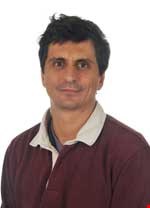
Emmanuel Vander Poorten is an Associate Professor at the Faculty of Engineering Technology , KU Leuven, specializing in Surgical Robotics , Medical Device Design , and Biomedical Engineering . He leads the Robotics, Automation and Mechatronics (RAM) unit and is involved in interdisciplinary research through institutes like the Leuven Centre for Affordable Health Technology and iSi Health . Research Focus : Surgical Robotics, Haptics, Teleoperation, and Virtual Reality Training Key Projects : MIRACLE, RIVUS, AR-Spine, and ARTISTE (Autonomous Robotic Suturing for fetal surgery) Technical Expertise : 3D Ultrasound Shape Completion, Endovascular Navigation, and Reinforcement Learning for Surgical Planning His recent publications highlight advancements in 3D augmented reality for image-guided surgery , deep reinforcement learning for pedicle screw placement , and novel sensing methods for bone drilling . He collaborates extensively on medical robotics and autonomous catheter navigation in deformable environments.
Dr. Denys Makarov is Head of the Department of Intelligent Materials and Systems at the Helmholtz-Zentrum Dresden-Rossendorf (HZDR) , Germany, and leads the Helmholtz Innovation Lab FlexiSens . His work bridges materials science, magnetism, and flexible electronics, with major contributions to curvilinear magnetism and shapeable magnetoelectronics. Taras Shevchenko National University of Kyiv – Master’s (2005) University of Konstanz – Ph.D. in Physics (2008) His research focuses on flexible magnetic electronics , printable sensorics , and 3D nanoarchitectures , enabling breakthroughs in human-machine interfaces , soft robotics , and medical devices . He explores magnetism on curved surfaces , antiferromagnetic thin films , and wearable magnetic sensors . His recent publications reveal a strong trend in topological magnetism , self-healing sensors , and reconfigurable soft systems , often published in Nature Communications , Advanced Materials , and Nature Electronics . Scientific Awards and Recognitions: ERC Advanced Grant (2025) Fellow, Young Academy of Europe (2020) ERC Starting Grant (2012) IEEE Senior Member (2016) ERC Proof-of-Concept Grants (2013, 2017) Fudan Fellow (2019) Research Prize of IFW Dresden (2011, 2012) Dr. Makarov has led numerous national and international projects as Principal Investigator, including ERC, EU Horizon, DFG, and BMBF grants. He mentors junior researchers and leads a vibrant team at HZDR. He is actively involved in scientific outreach, organizing major conferences such as iSIM and JEMS , and serves on editorial boards for top journals including Nature family and Advanced Materials . He is a key figure in the Dresden Center for Intelligent Materials (DCIM) and co-leads initiatives in magnetic nanomembranes and flexible sensorics , fostering collaboration between academia and industry.
Dr. Stasha Lauria is a Lecturer in the Department of Computer Science within the College of Engineering, Design and Physical Sciences at Brunel University London. With over 15 years of experience in intelligent robotics, she specializes in human-machine interactions, neural networks, and pattern recognition, leading the Brunel Robotics Laboratory for cognitive mobile robot experiments. Education: Laurea, University of Studies “Federico II” of Napoli, Italy Ph.D. in Cybernetics, University of Reading, UK Research Focus: Her work centers on modeling mobile robots through natural language interactions, converting human speech into robot actions, and AI-driven signal processing. Current projects investigate social media's impact on human-robot dialogue management and robotics as educational tools, with strong emphasis on neural networks and big data applications in vision systems. Publication Trends: Recent publications (2022-2009) reveal consistent innovation in computer vision (object detection, segmentation) and human-robot interaction, increasingly integrating deep learning for manufacturing and vision tasks. Educational robotics remains a parallel thread, with quantitative evaluations of programming pedagogy. Research Grants: A human-centred internet of things platform for the sustainable mine of the future (European Commission, May 2020 - April 2024) Intelligent data-driven pipeline for certified metal parts manufacturing (European Commission, October 2018 - March 2023) Big Data Learning-based QoS Analysis for Cloud-services (Royal Society, March 2016 - February 2018) Laboratory & Collaboration: Founder of the Brunel Robotics Laboratory, she collaborates extensively with Dr. Theodora Koulouri, Prof. Xiaohui Liu, and Dr. Stephen Swift on human-robot interaction, as evidenced by co-author networks spanning neural networks, dialogue systems, and multi-agent architectures.
Charaf Hassan is a Professor and Head of Department at the Budapest University of Technology and Economics, specifically in the Department of Automation and Applied Informatics. His work spans interdisciplinary domains, focusing on distributed systems, network coding, and IoT technologies. His research interests include Distributed Systems and Domain-Specific Modeling Network Coding and Mobile Peer-to-Peer Systems Model-Driven Development for Multiplatform Applications Machine Learning in Fluid Dynamics and Pharmaceutical Analysis Recent publications highlight trends in applying convolutional neural networks to viscosity estimation, model-driven methodologies for IoT, and network coding in cloud storage. He teaches advanced courses in distributed systems and software architectures at the university level.
Paul Fortier is a Full Professor at the Department of Electrical Engineering and Computer Engineering , Université Laval, with a career spanning over three decades. His work focuses on Digital Communications , Internet of Things (IoT) , Cyber-Physical Systems , and Wireless Communication Systems , particularly exploring complexity-performance tradeoffs in hardware implementations. PhD in Electrical Engineering, Stanford University (1989) MSc in Statistics, Stanford University (1987) MSc and BSc in Electrical Engineering, Université Laval (1984, 1982) His research integrates Machine Learning with FPGA architectures for applications like real-time hand gesture recognition and hardware-in-the-loop simulation . Current projects include Advanced Digital Twin Development and Quantum-Resistant Communication Protocols under the Quebec Strategic Microsystems Group . Key contributions appear in IEEE Transactions on Vehicular Technology , IEEE Internet of Things Journal , and IEEE Transactions on VLSI Systems . He has secured major grants from Fonds de recherche du Québec and NSERC for initiatives like Hardware-in-the-Loop Simulators and Wireless Cybersecurity Research . Fellow, Engineering Institute of Canada Fellow, Canadian Academy of Engineering Senior Member, IEEE
Aldo Grattarola is an Associate Professor in the Department of Naval, Electrical, Electronic and Telecommunications Engineering at the University of Genoa. He teaches Signal and Image Processing and Electric Communications to undergraduate students across Electronic and Information Engineering, Biomedical Engineering, and Computer Engineering programs. His research centers on telecommunications and IoT with emphasis on context-aware systems for Industry 4.0 applications. Key focus areas include structural health monitoring using low-energy IoT devices, machine learning for wireless sensing via channel state information, ultrasound-based context sensing, and robust speaker recognition for automotive environments. His work bridges theoretical signal processing with practical industrial implementations. Analysis of his 2018-2024 publications reveals a consistent trend toward optimizing resource-constrained IoT systems through compressive sensing and machine learning. His research prioritizes real-world validation using physical testbeds, addressing critical challenges in low-rate communication, energy efficiency, and robustness for industrial and automotive applications while reducing data transmission burdens.
Dr. Marissa Wechsler, a first-generation Hispanic biomedical engineer, returned to her alma mater The University of Texas at San Antonio (UTSA) in 2021 as an Assistant Professor in the Margie and Bill Klesse College of Engineering and Integrated Design. As UTSA's first biomedical engineering undergraduate student (class of 2015), she now leads a 12-member research team in her biomaterials and cell engineering lab while teaching advanced courses like BME 4443: Stem Cell Engineering. Academic Journey: UTSA BME program pioneer (2015) → NSF Graduate Research Fellowship → Ph.D. from UT Austin Leadership Roles: Founding faculty member of UTSA Sigma Xi chapter (2023), SWE faculty advisor, ESTEEMED mentor Research Focus: Specializes in biomaterials engineering with emphasis on: Stimuli-responsive hydrogels for drug delivery and tissue regeneration Stem cell engineering through controlled microenvironments Biosensing platforms using nanoparticle-hydrogel hybrids Regenerative medicine applications for vascular diseases Recent publications demonstrate expertise in RNA-based vaccine delivery systems , nanoparticle engineering , and mitochondrial dysfunction analysis in peripheral artery disease. Her work combines material science innovation with clinical translation potential. Award Highlights: 2023: Sigma Xi Grant-in-Aid of Research 2021: National Science Foundation Graduate Research Fellowship (during studies) Mentorship Impact: As a former participant in federal research programs (RISE, MARC), she now mentors through: Leading 12-member research team (undergraduate to postdoctoral) Sigma Xi leadership (President-elect) Faculty advisor for Society of Women Engineers ESTEEMED program mentor
Dr. Salam Daher is an Assistant Professor in the Department of Informatics at the New Jersey Institute of Technology (NJIT), with courtesy faculty status at the University of Central Florida (UCF). She holds a PhD in Modeling and Simulation from UCF (2018) and completed a postdoctoral fellowship there in 2019, focusing on augmented reality applications in healthcare simulation. Her educational background includes an MS in Digital Arts and Sciences from the University of Florida (2006) and a BS in Computer Science with a minor in Mathematics from the Lebanese American University (2004). Dr. Daher's research is centered on healthcare simulation and technology, particularly through the development of augmented reality systems. She pioneered the concept of Physical-Virtual Patients (PVP), which integrate real-time tactile, auditory, and visual cues to create immersive medical training environments. Her work bridges computer graphics, virtual and augmented reality, synthetic environments, and 3D character modeling with realistic facial expressions and body language. This research has applications in healthcare, education, and military training. Her publications from 2015 to 2020 reflect a consistent focus on interactive simulation technologies, especially AR-based patient simulators, touch sensing interfaces, and social presence in virtual environments. The work demonstrates interdisciplinary collaboration, particularly with medical and human-computer interaction experts. National Center for Women and Technology (NCWIT) National Award Winner (2018) RADM Fred Lewis (I/ITSEC) Scholarship (2017) Link Fellowship for Modeling, Simulation and Training (2016) UCF Modeling and Simulation Scholarship (2013, 2014, 2015) IEEE VR 2017 Doctoral Consortium Nominated for UCF’s Order of Pegasus Award (2018) Nominated for UCF’s Outstanding Dissertation Award (2019) Dr. Daher has advised and collaborated with students and researchers on projects involving augmented reality patient simulators, virtual humans, and interactive environments. Her work has been supported through competitive fellowships and scholarships. Prior to her academic career, she worked as a multimedia software developer at Vcom3D, leading simulation projects for education, healthcare, and military applications, including a multilingual cultural translator for the U.S. Army. She has been involved in the development of 3D synthetic environments and virtual human models, particularly through her work at UCF's Synthetic Reality Lab and the Digital Worlds Institute. Her projects often involve interdisciplinary teams focused on creating realistic, interactive simulations for training and education.
Yang Wang is an Associate Professor of Public Affairs at the La Follette School of Public Affairs, University of Wisconsin-Madison, with faculty affiliations spanning the Center for Demography and Ecology, Center for Demography of Health and Aging, Center for Financial Security, Institute for Research on Poverty, and the Risk Management and Insurance Department in the Wisconsin School of Business. Her educational background includes: Ph.D. in Economics, Duke University M.A. in Economics, Duke University MIPA in International Public Affairs, University of Wisconsin-Madison B.A. in International Relations, Peking University Dr. Wang's research focuses on applied microeconomics, health economics, and applied econometrics, with publications in high-impact journals including the American Economic Journal: Applied Economics and Health Economics. Her work examines policy impacts on health outcomes, economic disparities, and demographic trends, notably contributing to The Oxford Handbook of Economics and Human Biology. Her recent 2025 publications reveal a significant expansion into intelligent transportation systems, with 15 articles centered on autonomous vehicle technologies. These works explore cloud-based driving systems, edge computing architectures, and vehicle-to-everything communication frameworks, addressing critical challenges in adverse weather navigation, safety protocols, and computational resource allocation for connected vehicles. As Co-Principal Investigator for the project 'The Consequences of Abortion Restrictions for Intimate Partner Violence and Child Welfare Involvement,' Dr. Wang leads interdisciplinary policy analysis. She teaches core courses including PA 281 Discovering What Works in Health Policy and PA 871 Public Program Evaluation, mentoring students in evidence-based policy design. Her research integrates with UW-Madison's ecosystem through collaborations with transportation innovation initiatives and demographic research centers, positioning her at the intersection of public policy and emerging technology governance.
Marina Indri is a Tenured Associate Professor in the Department of Electronics and Telecommunications at Politecnico di Torino, Italy. She serves as a member of the Interdepartmental Center PIC4SeR for Service Robotics and chairs the Robotics Laboratory (1999–present). With over 100 publications, her work bridges industrial robotics , mobile robotics , and Industry 4.0 . Education: Laurea (Electronic Engineering, cum laude , 1991) Ph.D. (Systems Engineering, 1995) Research Interests: Specializing in Collision detection and avoidance for industrial manipulators Friction modeling and compensation Path planning and autonomous navigation Smart manufacturing systems Human-robot collaboration Awards: James C. Hung Best Paper Award (ETFA 2013, 2024) euRobotics Technology Transfer Prize (2014, 2017) Leadership: As IEEE Senior Member , she chairs the IEEE Industrial Electronics Society’s Factory Automation Technical Committee and serves on editorial boards for IEEE Transactions on Industrial Informatics and IEEE/ASME Transactions on Mechatronics . She leads projects like SpaceItUp! (space robotics) and PNRR FAIR (AI-driven manufacturing).
Dr. Mihai Teodor Lazarescu is an Associate Professor at the Department of Electronics and Telecommunications (DET), Politecnico di Torino , where he contributes to research and teaching activities. He is also a member of the PolitoBIOMed Lab (Biomedical Engineering Lab) and the Ambient Sensing and Processing research group. Scientific Affiliation: IEEE Member (2019-present) Editorial Roles: Guest Editor for SENSORS, ELECTRONICS, and ACM Transactions on Embedded Computing Systems His research interests focus on hardware acceleration for machine learning algorithms, particularly using FPGAs for data center and embedded applications. He works on high-level synthesis optimization flows, capacitive sensor design for indoor monitoring, and low-power embedded systems . His work intersects Internet of Things , Wireless Sensor Networks , and Machine Learning with applications in human localization, environmental monitoring, and industrial automation. Recent publications demonstrate expertise in neural network optimization , DSP resource sharing , and multi-FPGA allocation . His teaching spans Applied Electronics , Digital Electronic Design , and Embedded Systems Optimization across bachelor's and master's programs in Electronic Engineering and Computer Engineering . Patents: Noise cancellation for single-plate capacitive sensors Capacitive sensor for space change detection Projects: Scientific Manager for Horizon 2020-S2RJU project (2018)
Dr. Yaroslava G. Yingling is a Professor in the Department of Materials Science and Engineering at North Carolina State University. She holds adjunct appointments in Physics and Biomedical Engineering, reflecting her interdisciplinary expertise. Her research spans biomimetic materials, nanotechnology, and AI-driven materials discovery. Key Affiliations: NCSU College of Engineering, Joint Biomedical Engineering Department (NCSU-UNC), Triangle Materials Research Science and Engineering Center Research Focus: Combines materials simulations , data science , and biomolecular engineering to develop nanomaterials for environmental remediation, DNA/RNA-based nanostructures, and sustainable technologies. Specializes in molecular dynamics and machine learning for materials design. Scientific Contributions: Pioneered AI methods for materials informatics , DNA self-assembly , and biomimetic nanoparticle design . Her work on phosphorus sustainability and reflectin-inspired materials has received significant attention. Awards: DOE Ten at Ten Scientific Idea Award NSF CAREER Award University Faculty Scholar Leadership Roles: Served as Associate Department Head for Scholarship and Education, Director of Graduate Certificate in Materials Informatics, and Director of Undergraduate Program. Active in editorial boards of Journal of Materials Science and ACS Biomaterials Science .
Kasper Støy is a Professor in Robotics and Embodied Artificial Intelligence at the IT University of Copenhagen, specializing in distributed control of multi-robot systems and modular robotics. He has published over 95 works and authored the MIT Press book Self-Reconfigurable Robots: An Introduction . As co-founder of Universal Robots, he bridges academic research with industrial applications. M.Sc. in Computer Science & Physics, University of Aarhus (1999) Ph.D. in Computer Systems Engineering, University of Southern Denmark (2003) His research focuses on: Modular Robotics Bio-Inspired Robotics Human-Robot Interaction Embodied Artificial Intelligence Self-Reconfigurable Systems Recent publications address anxiety-reducing pocket robots, tactile comfort systems, and origami-inspired mechanical designs. He has won awards including the 2017 GECCO Virtual Creatures Competition. 2017: GECCO Virtual Creatures Competition Active in academic service, he chaired recruitment committees for Statistics and Machine Learning positions. Collaborations span European Commission projects like MUHMI-MOZART and BIG-MAP.
Dan O Popa is a Professor and Endowed Chair of Advanced Manufacturing in the Department of Electrical and Computer Engineering at the University of Louisville. His research spans robotics, human-robot interaction, and advanced manufacturing, with a particular focus on applications in healthcare and assistive technologies. Dr. Popa's educational background includes: B.A. in Math, Computer Science & Engineering from Dartmouth College (1993) M.S. in Engineering from Dartmouth College (1994) Ph.D. in Electrical Computer & Systems Engineering from Rensselaer Polytechnic Institute (1998) Dr. Popa's research interests center around robotics and human-robot interaction, with a strong emphasis on practical applications in healthcare settings. His work explores how robots can assist in medical procedures, support patients with special needs (particularly children with autism spectrum disorder), and enhance manufacturing processes through advanced robotics and additive manufacturing techniques. He has made significant contributions to the development of tactile sensors for robotic skin, brain-computer interfaces, and social robots for therapeutic applications. His research often involves interdisciplinary collaboration between engineering, computer science, psychology, and medical professionals to create innovative solutions that address real-world challenges. Analysis of Dr. Popa's recent publications (2024-2025) reveals a strong focus on explainable AI for robotic systems, particularly in grasp failure prediction and human intent estimation. His work increasingly integrates multimodal sensing with machine learning to enhance human-robot collaboration in both manufacturing and healthcare contexts. There's a clear trajectory toward more personalized and adaptive robotic systems that can better understand human needs and respond appropriately, especially in medical applications like nursing assistance and autism intervention. Dr. Popa holds an Endowed Chair of Advanced Manufacturing, which represents a significant recognition of his contributions to the field. His research has been supported by various grants, including NSF awards such as "SCH: INT: Adaptive Partnership for the Robotic Treatment of Autism" and "MRI: Development of a Multiscale Additive Manufacturing Instrument with Integrated 3D Printing and Robotic Assembly." Dr. Popa has collaborated extensively across disciplines, particularly in his work with the NAO humanoid robot for autism intervention, which demonstrates his commitment to applying robotics to improve quality of life. He leads a research group focused on robotic systems, sensors, and human-robot interaction, with projects spanning from fundamental research in microrobotics to applied healthcare robotics.
Alexandra Nilles is an Assistant Professor of Computer Science at Western Washington University since Fall 2024. Previously, she was a Postdoctoral Associate at Cornell University's Collective Embodied Intelligence (CEI) Lab from 2021-2024, where she worked under Prof. Kirstin Petersen. Her research focuses on sustainable robotics, distributed AI, and embodied intelligence for environmental applications. Education: PhD in Computer Science (2020) from University of Illinois at Urbana-Champaign, advised by Dr. Steven LaValle; BS in Engineering Physics from Colorado School of Mines. Her work develops minimalist mobile robot systems that leverage embodied intelligence and environmental interactions to reduce resource demands (battery, sensors, communication) while maintaining provable performance guarantees. Applications include under-canopy forestry monitoring, micro-scale medical agents, and carbon-capture auditing. She has published in venues such as ICRA, IROS, IJRR, and WAFR, often addressing scalability challenges in chaotic or constrained environments. Key methodologies span formalized planning algorithms, human-in-the-loop control interfaces, and inflatable soft robotics for collectives. Awards: Cyber-Physical Systems Rising Star (2023) Microsoft Future Leader in Robotics and AI (2023) Nilles received NSF support for robotic mouse toy development during her PhD and served as interim PI for Cornell's CEI Lab through the NSF Career-Life Balance Program. She actively participates in interdisciplinary workshops connecting math, art, and robotics.