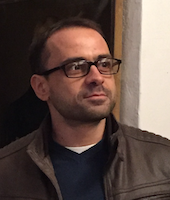
Andang Sunarto is an Associate Professor affiliated with the State Islamic Institute (IAIN) Bengkulu, Indonesia and the Lepage Research Institute, Slovakia . His work bridges Numerical Analysis , Computational Mathematics , and Algorithm Design with applications in Robotics , Image Processing , and Sharia-Compliant Systems . Research Focus: Fractional Calculus, Nonlinear PDEs, GPU-Accelerated Algorithms Collaborations: International institutions including Union of Czech Mathematicians and Physicists and University of Prešov His recent publications (2021–2025) emphasize Iterative Methods for solving Time-Fractional Diffusion Equations and Porous Medium Models . He also explores Digital Islamic Education and Halal Tourism Development . Despite no listed awards, his work spans diverse domains like Mobile Banking Evaluation , Environmental Pollution Analysis , and Ethnobotanical Applications . Andang actively designs EdTech tools (e.g., Wordwall-based modules) and contributes to computational methods in Climate Modeling and Nonlinear Diffusion .
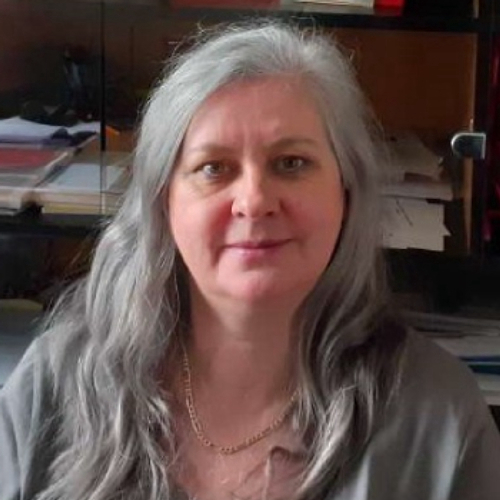
Stavros Vologiannidis serves as an Assistant Professor in the Department of Informatics, Computer and Telecommunications Engineering at the International University of Greece. His academic career spans both teaching and research in control theory, robotics, and machine learning applications. Previously, he was associated with the Mathematics Department at Aristotle University of Thessaloniki where he completed his education and conducted postdoctoral research. Education: B.Sc. in Mathematics from Aristotle University of Thessaloniki (1997) Ph.D. in Control Theory from Aristotle University of Thessaloniki (2005) with dissertation titled 'ALGEBRAIC-POLYONYMICAL COMPUTING METHODS IN CONTROL THEORY' Dr. Vologiannidis' research focuses on Classical and Intelligent Control Theory, Robotics, and Machine Learning, with particular expertise in polynomial matrices and automatic control systems. His work bridges theoretical mathematics with practical engineering applications, especially in educational robotics and industrial control systems. He has developed several educational platforms including EUROPA, a ROS-based educational robot for teaching sensor integration and data acquisition. His publication record shows a clear evolution from theoretical control systems research toward applied machine learning and educational technology. Recent work demonstrates increasing focus on practical applications of AI in education, urban feature recognition, industrial monitoring, and robotics education across multiple educational levels from middle school through university. His research combines mathematical rigor with real-world implementation. Scientific Recognition: Excellence Scholarship in the 'Excellence Scholarships 2010' program of the Research Committee Total citations exceeding 250 with Scopus H-index of 9 Dr. Vologiannidis has secured numerous research grants and led multiple projects including 'Rapid Earthquake Damage Assessment Consortium – REDACt', 'Predictive Maintenance 4.0', and 'Development of computational methods for optimization of eigenvalue assignment problems'. He has collaborated extensively with institutions across Europe including UTIA Foundation in Prague and has participated in EU-funded projects like GALENOS and GN4-1 GÉANT Research and Education Networking. His laboratory work centers around the EUROPA educational robotics platform and the StreetScouting urban feature detection system, both of which integrate hardware, software, and educational applications. These projects demonstrate his commitment to translating theoretical research into practical educational and industrial tools.
Ciprian Bogdan Chirila is a Senior Lecturer at the University Politehnica of Timisoara (Faculty of Automation and Computer Science, Computing and Information Technology Department) and also teaches at Ioan Slavici University . His career spans over two decades, with roles in teaching, research, and software development. Education : PhD in Computer Science (2010, University Politehnica Timisoara & University Nice-Sophia Antipolis) Master's in Computer Science & Software Engineering (2002) Engineer Diploma in Automation & Computer Science (2001) Analyst-Programmer Diploma (1996) Research Interests : His work focuses on reverse inheritance for software reusability, generative learning objects for education, and software quality assessment using code metrics. He explores interdisciplinary applications in healthcare, mathematics education, and industrial IT services. Article Trends : Recent publications emphasize adaptive e-learning frameworks , gamification in education , and model-driven development . Key themes include automated assessment , dynamic content generation , and integration of standards like SCORM and xAPI . Scientific Awards : Microsoft Award, Student Scientific Communications Session (2001) Award, Student Scientific Communications Session (2002) Third Place, Mechanics and Robotics Contest (1998) Fourth Place, Traian Lalescu Mathematics Contest (1998) Teaching & Development : He has led laboratory sessions and lectures in Data Structures , Compiler Design , Operating Systems , and Heuristic Methods . He organizes programming contests and develops centralized materials management software as a volunteer engineer.
Dr. Onet-Marian Zsuzsanna is a Lecturer in the Department of Computer Science at Babes-Bolyai University in Cluj-Napoca, Romania. Her research focuses on applying machine learning techniques to software engineering challenges, particularly software defect prediction and restructuring. Academic Rank: Lecturer Affiliation: Babes-Bolyai University Department: Computer Science Email: zsuzsanna.onet@ubbcluj.ro Research Interests : Dr. Marian specializes in developing machine learning models (clustering, association rules, reinforcement learning) for software defect detection, package-level restructuring, and test order optimization. She also explores applications of Formal Concept Analysis in text summarization and music pattern discovery. Recent Publications highlight her work in source-code embeddings, unsupervised learning for software analysis, and comparative studies of online/traditional learning environments. Her methods often integrate domain-specific metrics and AI-driven optimization. Contact : zsuzsanna.onet@ubbcluj.ro | Office: Teodor Mihaly street, Room 440
Călin-Adrian POPA is a Full Professor at the Department of Computer and Software Engineering, Politehnica University of Timişoara. He holds a Ph.D. in Computer Science and Information Technology (2015) from Politehnica University Timişoara, and additional degrees in Mathematics from West University of Timişoara (B.Sc. 2013, M.Sc. 2015). His research focuses on artificial intelligence, machine learning, and neural networks, with specializations in complex-valued systems (octonion, quaternion, Clifford algebra), stability analysis, and synchronization of neural networks. He has been awarded the 'Profesor Bologna' Distinction (2017). Research interests include: Advanced neural network architectures Deep learning for computer vision Fractional-order systems Nonlinear dynamics and control Applications in robotics and astrophysics His publications span 2014–2025, emphasizing theoretical contributions to neural networks and practical applications in computer vision and robotics. He supervises a large cohort of PhD students in AI-related fields.
Mihaela Constantinescu is a Lecturer at the Faculty of Philosophy, University of Bucharest, and Executive Director of the Center for Research in Applied Ethics (CCEA). She earned her PhD in 2013 with a thesis on applied ethics in organizational moral responsibility. PhD in Applied Ethics (2013), University of Bucharest Her research focuses on virtue ethics, business ethics, and AI ethics, particularly the intersection of individual, collective, and artificial moral responsibility. She leads the avataResponsibility project (2024–2028) funded by the ERC Starting Grants, exploring moral accountability in avatar communities. Recent publications analyze AI's ethical dimensions, including human-AI cooperation, avatar agency, and AI adjudication. Her work bridges Aristotelian ethics with modern technological challenges. She previously worked 15+ years in communication consultancy across public, private, and NGO sectors. As part of CCEA, she contributes to ethics management frameworks and institutional integrity studies.
Răzvan Cioargă is a Lecturer at the Department of Computers, Politehnica University of Timisoara. He holds a Dr. Eng. degree and completed his B.Sc., M.Sc., and Ph.D. in Computer Science at the same institution. Research Fields: Embedded Systems, Intelligent Robotics, Web-based Systems, Intelligent Infrastructures and Environments Specific Interests: Complex web applications, web application design patterns, emergent behavior, modeling behavior patterns, associative/collaborative robotic systems His work focuses on intelligent robotic environments, web-based systems, and collaborative technologies. Recent projects include CloudPUTing (high-performance cloud platform), TEEFIOS (smart device interoperability), and MELISSEVS (collaborative robotic systems). Scientific Awards: Mit Diplomas 2022 Contact: Room B513, Phone: (0256 40) 3271.
Sorin Anagoste is a Professor and Vice Dean for Academic Affairs at FABIZ, part of the Bucharest University of Economic Studies. His primary affiliation is with the Bucharest Business School (BBS), where he contributes to academic leadership and faculty governance. He holds a PhD and focuses on interdisciplinary research at the intersection of business strategy, technology, and innovation. His academic career spans over two decades, with a strong emphasis on advancing education and research in digital transformation, artificial intelligence, and entrepreneurship. Prior roles include leadership in mergers and acquisitions studies, transformational leadership research, and Lean Six Sigma methodologies. Research Interests: Artificial Intelligence applications in business decision-making Digital transformation strategies Entrepreneurship dynamics across generations Impact of AI on political and economic systems Knowledge dynamics in organizational contexts Recent work emphasizes the societal implications of AI, including election influence via LLMs, post-pandemic consumer behavior, and Romania's economic interdependencies through Leontief matrix analysis. He has authored over 35 articles on topics ranging from robotic process automation to sustainable development. Professional Activities: Academic leadership in business education reform Consultancy on digital strategy for enterprises Founder of BBS's strategic frameworks for chatbot implementation
Mircea Neagoe is a Professor at the Department of Product Design, Mechatronics and Environment , part of the Faculty of Product Design and Environment at Transilvania University of Brașov. His work focuses on renewable energy systems, robotics, and product design innovation. He holds a patent for a counter-rotating wind system and has authored books on robotics kinematics and mechanical mechanisms. Research interests include Tracking systems for solar converters Wind energy systems and turbine dynamics Mechanism design and robotics Integrated product development Artificial intelligence in engineering Recent work emphasizes counter-rotating systems for wind and solar energy, planetary gear transmissions, and parallel robots. His studies bridge mechanical engineering with sustainable energy solutions for built environments. Professional contributions include over 100 peer-reviewed articles and collaborations on energy conversion technologies. No scientific awards explicitly listed, but his patents and publications reflect significant technical contributions. Advising focuses on graduate research in renewable systems and mechatronics. No specific grants cited, though his work aligns with EU sustainability initiatives.
Dr. Popirlan Claudiu Ionut is a Lecturer in the Computer Science Department at the Faculty of Exact Sciences, University of Craiova, Romania. He has been actively involved in academic and research activities since 2004, progressing from Assistant Lecturer to Assistant Professor and currently serving as a Lecturer. He holds a Ph.D. in Computer Science from the University of Pitesti and has extensive teaching experience in advanced programming, databases, GIS, and software engineering. His educational background includes: Ph.D. in Computer Science, University of Pitesti (2005–2009) Master in Artificial Intelligence, University of Craiova (2003–2004) B.Sc. in Computer Science, University of Craiova (1999–2003) Secondary Education, Fratii Buzesti National College (1995–1999) Dr. Popirlan's research is centered on Artificial Intelligence, with a strong emphasis on Mobile Agents and Multiagent Systems. His work explores knowledge representation, processing, and management using agent-based architectures, with applications in robotics, contact centers, and virtual organizations. He has also contributed to web-based 3D visualization and modeling in mechanical engineering. His technical expertise spans Java technologies, databases, and software engineering. The analysis of his recent publications reveals a consistent focus on mobile agents for knowledge processing, distributed systems, and intelligent control. Themes include agent architectures, knowledge base management, pathfinding algorithms, and simulation systems, indicating a deep and sustained research trajectory in autonomous and intelligent software systems. He has received research grants such as TD CNCSIS and CNCSIS IDEI, where he served as director and team member respectively, focusing on mobile agents and knowledge management. His editorial roles include Scientific Referent for INFO-PRACTIC and Editorial Secretary for the Annals of the University of Craiova. Dr. Popirlan is an active member of the academic community, affiliated with IEEE, IEEE Computer Society, ACM, IBM Academic Initiative, Microsoft Faculty Connection, and the Romanian Mathematical Society. He is also part of the Research Center of Artificial Intelligence in Craiova.
Kotov Oleksiy Borisovich is a Professor at the Department of Transport Technologies within the Faculty of Transport at Zaporizhzhia Polytechnic University. He commenced his activities at the university in 2021 and holds the academic title of Professor with a Doctor of Technical Sciences degree. His educational background includes higher education in 'Command and Staff Operational and Tactical Air Force' from Yuri Gagarin Air Force Academy (1988), and in 'State Military Administration' from Ivan Chernyakhovsky National University of Defense of Ukraine (2013). He defended his Candidate's thesis in 2008 at the National Defense Academy of Ukraine and his Doctoral dissertation in 2014 at the National Technical University 'Kharkiv Polytechnic Institute'. Kotov's scientific interests focus on avionics, multimodal transportation, and air transport. His research spans sustainable aviation technologies, alternative energy applications in transport, intelligent transportation systems, and UAV development. He has published 57 scientific works including 2 monographs, 2 textbooks, and 8 educational manuals. His recent publications demonstrate a strong trend toward addressing Ukraine's transportation challenges through innovative technological solutions, with particular emphasis on sustainable practices, multimodal integration, and military-civilian technology transfer in the transport sector. He teaches courses in History of aviation, Warehouses and warehouse complexes, and Vehicles. His work bridges military expertise with civilian transportation applications, creating unique interdisciplinary research approaches. Kotov is fluent in Ukrainian and Russian, with intermediate English proficiency. His office is located in room 164 at the university's campus on 64 Zhukovsky Street, Zaporizhzhia.
Sorin Grigorescu is a Professor in the Department of Automation and Information Technology at Transilvania University of Brașov's Faculty of Electrical Engineering and Computer Science, Romania. His research bridges robotics, artificial intelligence, and computer vision with a focus on autonomous systems development. His core research domains include: Robotics : Specializing in autonomous robotics architectures and complex automation systems Artificial Intelligence : Advancing neuroevolutionary techniques and deep learning frameworks Computer Vision : Developing novel approaches for autonomous vehicle perception Recent publications (2018-2024) reveal a clear trajectory toward integrated AI solutions for robotics, particularly in autonomous driving. His work spans theoretical innovations in one-shot learning and neuroevolution to practical implementations in predictive control systems and AI operating environments. This research consistently demonstrates cross-disciplinary integration of computer vision, deep learning, and control theory. Dr. Grigorescu publishes in premier robotics venues including Journal of Field Robotics and IEEE Robotics and Automation Letters, with significant contributions to autonomous vehicle technology.
Dr. Anca Udristoiu is an Associate Professor at the Department of Computers and Information Technology, University of Craiova's Faculty of Automatic Control, Computers and Electronics. She graduated from the same faculty in 2003 as a Software Engineering specialist and has been a PhD candidate in Computer Science since 2009 under Prof. Mircea Petrescu. Research Focus: Her work centers on AI-driven medical diagnostics, with emphasis on: Real-time analysis of endoscopic ultrasound (EUS) for pancreatic/liver pathologies Deep learning for cancer detection in biopsy samples Robotic navigation systems for minimally invasive procedures Computer-aided diagnosis frameworks for thyroid/liver disorders Teaching: Leads courses in Databases, Machine Learning, and Web Systems Engineering. Research Trends: Publications (2022-2025) demonstrate: Dominant focus on AI applications in endoscopic imaging (76% of recent works) Progression from theoretical models to clinical validation studies Integration of convolutional/long short-term memory neural networks Robotics development for endovascular/pulmonary interventions
Ildiko Peter is a Full Professor at the University of Medicine, Pharmacy, Science and Technology „George Emil Palade” in the Faculty of Engineering and Information Technology. She holds a PhD in Material Science and Engineering from Politecnico di Torino, Italy, and has been a key figure in interdisciplinary research involving materials science and engineering. Her work focuses on metallic alloys for biomedical and industrial applications, thermal barrier coatings, piezoelectric ceramics, and electromagnetic materials. She has supervised over 50 international conferences and served as an Associated Editor for IEEE Access. Her research interests span advanced materials development, including biomedical implants, automotive/aeronautical alloys, and sensor technologies. Notable contributions include studies on titanium alloys for biomedical uses and conformal antennas for medical devices. She has authored 150+ publications, holds 2 patents, and leads a Romanian Ministry-funded project (€245,675.83). Dr. Peter has held roles as Visiting Professor at Universitatea Politecnica Timisoara (2015-2018) and is a member of the American Romanian Academy of Arts and Science. She has received grants from UEFISCDI for diaspora researchers (2016-2018) and serves as a reviewer for multiple journals and PhD evaluations.
Lazar Alexandru is an Associate Professor at the Technical University of Iasi, specializing in control systems and electrical engineering. His research focuses on predictive control, model-free algorithms, and their applications in automotive systems, electric machines, and robotics. He has published extensively on topics such as motor control, vehicle platooning, and industrial automation. His work emphasizes practical implementation and simulation using tools like MATLAB and LabVIEW. Research interests include advanced control strategies for electric drives, nonlinear systems, and data-driven methods. His contributions span theoretical development and experimental validation, with a particular emphasis on automotive and aerospace applications. His articles explore predictive current control, model-free adaptive systems, and real-time control architectures. Despite his prolific output, no awards or grants are explicitly mentioned in the text. Advising details are also unavailable, though his work suggests involvement in graduate research projects.