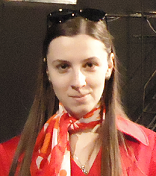
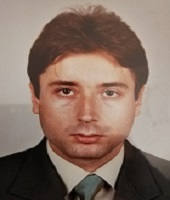
Dr. Onet-Marian Zsuzsanna is a Lecturer in the Department of Computer Science at Babes-Bolyai University in Cluj-Napoca, Romania. Her research focuses on applying machine learning techniques to software engineering challenges, particularly software defect prediction and restructuring. Academic Rank: Lecturer Affiliation: Babes-Bolyai University Department: Computer Science Email: zsuzsanna.onet@ubbcluj.ro Research Interests : Dr. Marian specializes in developing machine learning models (clustering, association rules, reinforcement learning) for software defect detection, package-level restructuring, and test order optimization. She also explores applications of Formal Concept Analysis in text summarization and music pattern discovery. Recent Publications highlight her work in source-code embeddings, unsupervised learning for software analysis, and comparative studies of online/traditional learning environments. Her methods often integrate domain-specific metrics and AI-driven optimization. Contact : zsuzsanna.onet@ubbcluj.ro | Office: Teodor Mihaly street, Room 440
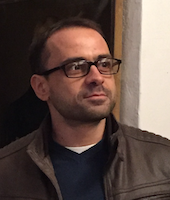
Călin-Adrian POPA is a Full Professor at the Department of Computer and Software Engineering, Politehnica University of Timişoara. He holds a Ph.D. in Computer Science and Information Technology (2015) from Politehnica University Timişoara, and additional degrees in Mathematics from West University of Timişoara (B.Sc. 2013, M.Sc. 2015). His research focuses on artificial intelligence, machine learning, and neural networks, with specializations in complex-valued systems (octonion, quaternion, Clifford algebra), stability analysis, and synchronization of neural networks. He has been awarded the 'Profesor Bologna' Distinction (2017). Research interests include: Advanced neural network architectures Deep learning for computer vision Fractional-order systems Nonlinear dynamics and control Applications in robotics and astrophysics His publications span 2014–2025, emphasizing theoretical contributions to neural networks and practical applications in computer vision and robotics. He supervises a large cohort of PhD students in AI-related fields.
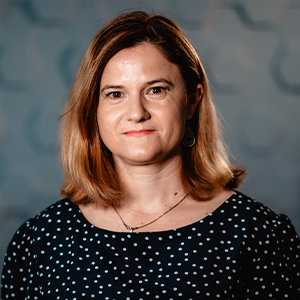
Răzvan Cioargă is a Lecturer at the Department of Computers, Politehnica University of Timisoara. He holds a Dr. Eng. degree and completed his B.Sc., M.Sc., and Ph.D. in Computer Science at the same institution. Research Fields: Embedded Systems, Intelligent Robotics, Web-based Systems, Intelligent Infrastructures and Environments Specific Interests: Complex web applications, web application design patterns, emergent behavior, modeling behavior patterns, associative/collaborative robotic systems His work focuses on intelligent robotic environments, web-based systems, and collaborative technologies. Recent projects include CloudPUTing (high-performance cloud platform), TEEFIOS (smart device interoperability), and MELISSEVS (collaborative robotic systems). Scientific Awards: Mit Diplomas 2022 Contact: Room B513, Phone: (0256 40) 3271.
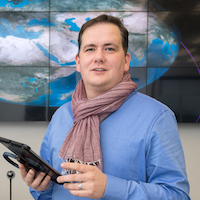
Sorin Anagoste is a Professor and Vice Dean for Academic Affairs at FABIZ, part of the Bucharest University of Economic Studies. His primary affiliation is with the Bucharest Business School (BBS), where he contributes to academic leadership and faculty governance. He holds a PhD and focuses on interdisciplinary research at the intersection of business strategy, technology, and innovation. His academic career spans over two decades, with a strong emphasis on advancing education and research in digital transformation, artificial intelligence, and entrepreneurship. Prior roles include leadership in mergers and acquisitions studies, transformational leadership research, and Lean Six Sigma methodologies. Research Interests: Artificial Intelligence applications in business decision-making Digital transformation strategies Entrepreneurship dynamics across generations Impact of AI on political and economic systems Knowledge dynamics in organizational contexts Recent work emphasizes the societal implications of AI, including election influence via LLMs, post-pandemic consumer behavior, and Romania's economic interdependencies through Leontief matrix analysis. He has authored over 35 articles on topics ranging from robotic process automation to sustainable development. Professional Activities: Academic leadership in business education reform Consultancy on digital strategy for enterprises Founder of BBS's strategic frameworks for chatbot implementation
Mircea Neagoe is a Professor at the Department of Product Design, Mechatronics and Environment , part of the Faculty of Product Design and Environment at Transilvania University of Brașov. His work focuses on renewable energy systems, robotics, and product design innovation. He holds a patent for a counter-rotating wind system and has authored books on robotics kinematics and mechanical mechanisms. Research interests include Tracking systems for solar converters Wind energy systems and turbine dynamics Mechanism design and robotics Integrated product development Artificial intelligence in engineering Recent work emphasizes counter-rotating systems for wind and solar energy, planetary gear transmissions, and parallel robots. His studies bridge mechanical engineering with sustainable energy solutions for built environments. Professional contributions include over 100 peer-reviewed articles and collaborations on energy conversion technologies. No scientific awards explicitly listed, but his patents and publications reflect significant technical contributions. Advising focuses on graduate research in renewable systems and mechatronics. No specific grants cited, though his work aligns with EU sustainability initiatives.
Sorin Grigorescu is a Professor in the Department of Automation and Information Technology at Transilvania University of Brașov's Faculty of Electrical Engineering and Computer Science, Romania. His research bridges robotics, artificial intelligence, and computer vision with a focus on autonomous systems development. His core research domains include: Robotics : Specializing in autonomous robotics architectures and complex automation systems Artificial Intelligence : Advancing neuroevolutionary techniques and deep learning frameworks Computer Vision : Developing novel approaches for autonomous vehicle perception Recent publications (2018-2024) reveal a clear trajectory toward integrated AI solutions for robotics, particularly in autonomous driving. His work spans theoretical innovations in one-shot learning and neuroevolution to practical implementations in predictive control systems and AI operating environments. This research consistently demonstrates cross-disciplinary integration of computer vision, deep learning, and control theory. Dr. Grigorescu publishes in premier robotics venues including Journal of Field Robotics and IEEE Robotics and Automation Letters, with significant contributions to autonomous vehicle technology.
Mihai V. Micea is a Professor and Head of the Department of Computer and Information Technology at the Politehnica University of Timisoara. He also serves as Director of the CCCTI Research Center and Coordinator of the DSPLabs. With a B.Sc., M.Sc., and Ph.D. (Cum Laude) from Politehnica University of Timisoara, he has been a faculty member since 1996. His research focuses on intelligent robotic environments, energy management, embedded systems, and real-time hardware/software systems. He has supervised 4 completed PhD theses and currently oversees multiple doctoral candidates. Micea has authored over 125 publications, 3 patents, and managed over 50 R&D projects worth €1.88M. His awards include the 'Eminent Young Researcher of Timisoara' (2006) and the IEEE Outstanding Reviewer Distinction (2017). Education: B.Sc. in Computer Engineering (Politehnica University of Timisoara, 1995) M.Sc. in Computer Engineering (Politehnica University of Timisoara, 1996) Ph.D. in Computer Engineering (Politehnica University of Timisoara, 2005) Habilitation Degree (2015) Research Interests: His work spans intelligent robotic systems, energy optimization, signal processing, and real-time embedded systems. Key areas include cyber-physical systems, sensor networks, and secure IoT communication protocols. His recent projects include RoNaQCI (Quantum Communication Infrastructure) and TEEFIOS (Time-Efficient Framework for Smart Devices). Grants & Projects: As Principal Investigator/Manager, he has led 29 projects with total funding exceeding €1.88M. Notable projects include CloudPUTing (High-Performance Cloud Platform) and MELISSEVS (Robotic-Sensor Collaboration Models). Awards & Recognition: 2006: Eminent Young Researcher of Timisoara (ANCS) 2017: IEEE T-IM Outstanding Reviewer Labs & Teams: Founder and Coordinator of DSPLabs (Digital Signal Processing Laboratories), focusing on real-time systems and smart sensing. Active in IEEE SSIT Romanian Chapter (2013–2022) and international conference organization (e.g., IEEE ROSE 2014).
Technical University of Civil Engineering BucharestRomania
Oana TONCIU serves as a Senior Lecturer at the Technical University of Civil Engineering Bucharest within the Faculty of Mechanical Engineering and Robotics in Construction, Department of Machines and Advanced Technologies in Construction. Her academic foundation includes: Graduation in 2003 from UTCB's Faculty of Technological Equipment in Technological Engineering and Mechanization in Construction Advanced Postgraduate Studies in 2004 specializing in Engineering for Recovery and Recycling of Construction Materials Her research focuses on sustainable construction methodologies, particularly technological mechanization project development, equipment system selection for construction execution, and technological equipment design. She integrates circular economy principles through construction material recycling while pioneering applications of artificial intelligence and solar energy in construction machinery optimization. Her funded research portfolio demonstrates significant industry impact: "Innovative energy-efficient sales systems for urban environments - SVIEE" as project manager (UTCB funding: 2,651,450.00 RON) "Optimization of mechanization processes using artificial intelligence" as research director "Construction machinery drive system using solar energy (SOLUT)" as team member ROSE project "We Invest, You ReUsesti (INTRU)" as tutor for secondary education She conducts research through UTCB's Technological Equipment Engineering in Construction center, bridging theoretical innovation with practical construction solutions.
Florica Moldoveanu is a Professor at the Faculty of Automatic Control and Computers, University Politehnica of Bucharest. Their research focuses on Virtual Reality (VR), Medical Informatics, and Human-Computer Interaction with a strong emphasis on healthcare applications, assistive technologies, and educational technology. Developed VR systems for phobia treatment and neuromotor rehabilitation (TRAVEE) Pioneered sensory substitution interfaces for visually impaired individuals Advanced GPU-accelerated medical imaging and 3D reconstruction techniques Contributed to SDN networking and healthcare interoperability standards Research spans VR therapy systems, machine learning for emotion/fear detection, and inclusive gaming for accessibility. Collaborations include projects on real-time medical image processing and augmented reality applications in education and healthcare. Publications emphasize interdisciplinary work combining computer science with medicine/education, with over 100+ peer-reviewed articles across journals like Sensors, IEEE Access, and Symmetry. Active in conferences such as IEEE VR, HCII, and CHI.
Dominik Knoll is an Assistant Professor at the Faculty of Mathematics and Computer Science, Babeș-Bolyai University in Cluj-Napoca, Romania, teaching undergraduate computer science courses since March 2023. His instructional portfolio includes Formal Languages and Compilers (Autumn 2020-2022), Object-Oriented Programming in C++ (Spring 2021-2023), and Computer Architecture (Autumn 2021-2022), delivered primarily in German language to international students. His academic credentials comprise: PhD in Engineering Systems (2014-2019) from Skoltech with thesis Model-based Processes and Tools for concurrent conceptual design of space systems MSc in Applied Computer Science (2004-2007) from University of Salzburg, passed with distinction BSc in Applied Computer Science (2000-2003) from University of Salzburg Knoll's research centers on Model-Based Systems Engineering (MBSE) and concurrent design methodologies, with specialization in aerospace applications. He pioneered the open-source CEDESK tool for collaborative design and has extensive experience in adapting MBSE frameworks to industrial contexts. His work bridges theoretical systems engineering with practical software tool development, emphasizing traceability across engineering lifecycles and cross-disciplinary data integration. Analysis of his 15 most recent publications (2007-2024) reveals an evolving research trajectory from robotics and communications engineering toward comprehensive MBSE frameworks. Recent works (2021-2024) focus on digital thread implementation, PLM-MBSE integration, and traceability in mechatronic systems, while earlier aerospace publications document high-altitude balloon experiments and concurrent design tool development. The corpus demonstrates consistent emphasis on solving data exchange challenges in multi-domain engineering environments. His scientific recognition includes: Stanford Global Balloon Challenge (2015) for inter-balloon communications experiments As an academic advisor, Knoll mentors bachelor students through structured thesis projects in privacy-by-design applications, distributed systems, and academic publication tools. His industrial engagement includes managing a 15-month research project for a major European aerospace company on technology roadmapping adaptation. He maintains active industry collaboration seeking solutions to complex engineering challenges. Knoll established Skoltech's concurrent design facility infrastructure and operations during his doctoral studies. Beyond academia, he co-founded the NGO New Humanity and contributes to the United World Project, promoting intercultural dialogue through initiatives like language exchange programs and community gardening. His technical proficiency spans Java, C++, Python, and web technologies with professional multilingual capabilities (German, English, Italian, Russian, Romanian).
Lecturer Catalin V Rusu is a faculty member at the Transylvanian Institute of Neuroscience (TINS) , where he directs the Applied Computational Intelligence Laboratory . His research spans biologically inspired neural systems , spiking neural networks , and machine learning applications in structural diagnostics . Rusu teaches courses like Advanced Programming Methods and Object-Oriented Programming . Research Interests Modeling cortical microcircuits and self-organizing neural systems Spiking neural networks for autonomous robotics (ROBBY framework) Damage detection in beam structures using frequency shifts and ML Predictive modeling for student attention and academic progress Probabilistic planning and reinforcement learning Teaching Requirements Students must bring laptops with Java/Python environments (JDK 8+/Python3) and IDEs (IntelliJ/PyCharm) Git setup required for collaborative coding sessions Hands-on sessions with extended durations (100 minutes with breaks) Contact Transylvanian Institute of Neuroscience (TINS) Str. Ploiești 33, Cluj-Napoca, Romania Email: rusu@bet-you-can-guess-it.much-obvious-very-wow
Daniel Ganea is a Professor at Ovidius University of Constanța, Romania, specializing in interdisciplinary research bridging biomechanics and renewable energy systems. His work demonstrates dual expertise in human movement analysis and Black Sea wind energy assessment. His primary research interests include Biomechanics (focusing on human kinematics, gait analysis, and upper limb modeling using neural networks and homogeneous transformation matrices) and Renewable Energy (specializing in Black Sea offshore wind patterns, high-altitude wind assessment, and AWES generator performance). Recent publications reveal strong methodology integration between artificial intelligence and physical modeling. Analysis of his 15 most recent publications shows dominant focus areas: 62% renewable energy research (particularly Black Sea wind dynamics), 32% biomechanics, and 6% educational technology. His energy work consistently targets regional potential assessment using 20-year hindcast data and neural network validation. His academic contributions include developing specialized testing equipment like horizontal bicycles for gait analysis and horizontal transformation frameworks for limb kinematics. Current work emphasizes practical applications in rehabilitation and sustainable energy infrastructure.
Dr. Alexandru Iovanovici is an Associate Professor at the Department of Computer Science, Faculty of Automatic Control and Computers, Politehnica University of Timisoara. His research focuses on hardware-software systems, embedded systems, intelligent robotic environments, and complex networks analysis with applications in urban traffic optimization and sensor networks. He holds a Dr. Eng. degree and has received Merit Diplomas in 2021 and 2023. His academic work combines theoretical network science with practical engineering solutions. Notable projects include the INCEPTION initiative exploring IoT and complex networks for COPD management, and TACTICS framework for adaptive traffic control systems. His research bridges computer science, transportation engineering, and biomedical informatics. Education: Dr. Eng. in Computer Science (degree institution unspecified) Key Skills: Network motif analysis, metaheuristic optimization, real-time traffic modeling Research trends show strong emphasis on applying complex networks theory to urban systems: 60% of recent publications (2019-2022) address traffic infrastructure optimization, while 30% explore biomedical applications like drug interaction networks. Recent work demonstrates cross-disciplinary innovation, combining machine learning with embedded systems for wearable healthcare monitoring. Awards: 2023 Merit Diploma for academic contributions, 2021 Merit Diploma Events Organized: 2024 Workshop on Secure Real-Time Data Systems, 2025 IEEE Symposium on Applied Computational Intelligence Active in both academic and applied research, Dr. Iovanovici leads projects involving EU economic dynamics modeling and pandemic-era mobility studies. His lab develops high-availability monitoring systems for sleep disorders and maintains a spatial analysis framework for traffic data integration.
Magdalena BARBU is a Lecturer at the Department of Engineering and Industrial Management, Faculty of Technological Engineering and Industrial Management, Transilvania University of Brașov. Her research focuses on production system design, flexible manufacturing systems, and computer-aided design. She has contributed to advancements in automation, tool management, and 3D printing process optimization. Her work bridges theoretical frameworks with practical applications in manufacturing processes and industrial systems. Key research interests include: Automation of assembly processes and robotics integration 3D printing techniques and process management Tool flow dynamics and manufacturing system perturbations Green manufacturing and eco-friendly lubrication systems Kanban-based inventory and production control methodologies Publications emphasize industrial automation, sustainable manufacturing, and mathematical modeling for technical-economic forecasting. Her work spans journals like RECENT and METALURGIA INTERNATIONAL , with a notable book on manufacturing equipment systems (2020). No scientific awards or grants are explicitly listed in the provided materials. Her advisory role is currently unspecified, though her research themes suggest involvement in industrial collaborations.
Răzvan BOCU is an Associate Professor at the Department of Mathematics and Computer Science, Faculty of Mathematics and Computer Science, Technical University of Civil Engineering Bucharest. His research focuses on software systems engineering, cloud infrastructures, bioinformatics, and machine learning applications. He is affiliated with the university's address at Iuliu Maniu nr. 50, Brașov, Romania, and can be reached via razvan.bocu@unitbv.ro. Research interests include developing secure systems for healthcare data management using homomorphic encryption, advancing autonomous driving through sensor data fusion, and exploring software-defined networking for containerized environments. His work bridges theoretical software modeling (e.g., interface-oriented systems) with practical applications in distributed and secure computing. Notable publications span from foundational software design principles to applied machine learning and networking solutions. While no awards are explicitly listed, his active publication record reflects sustained contributions to interdisciplinary computational research. No formal student advisement or grant details are provided in the text. He is part of the university's technical faculty without part-time status.