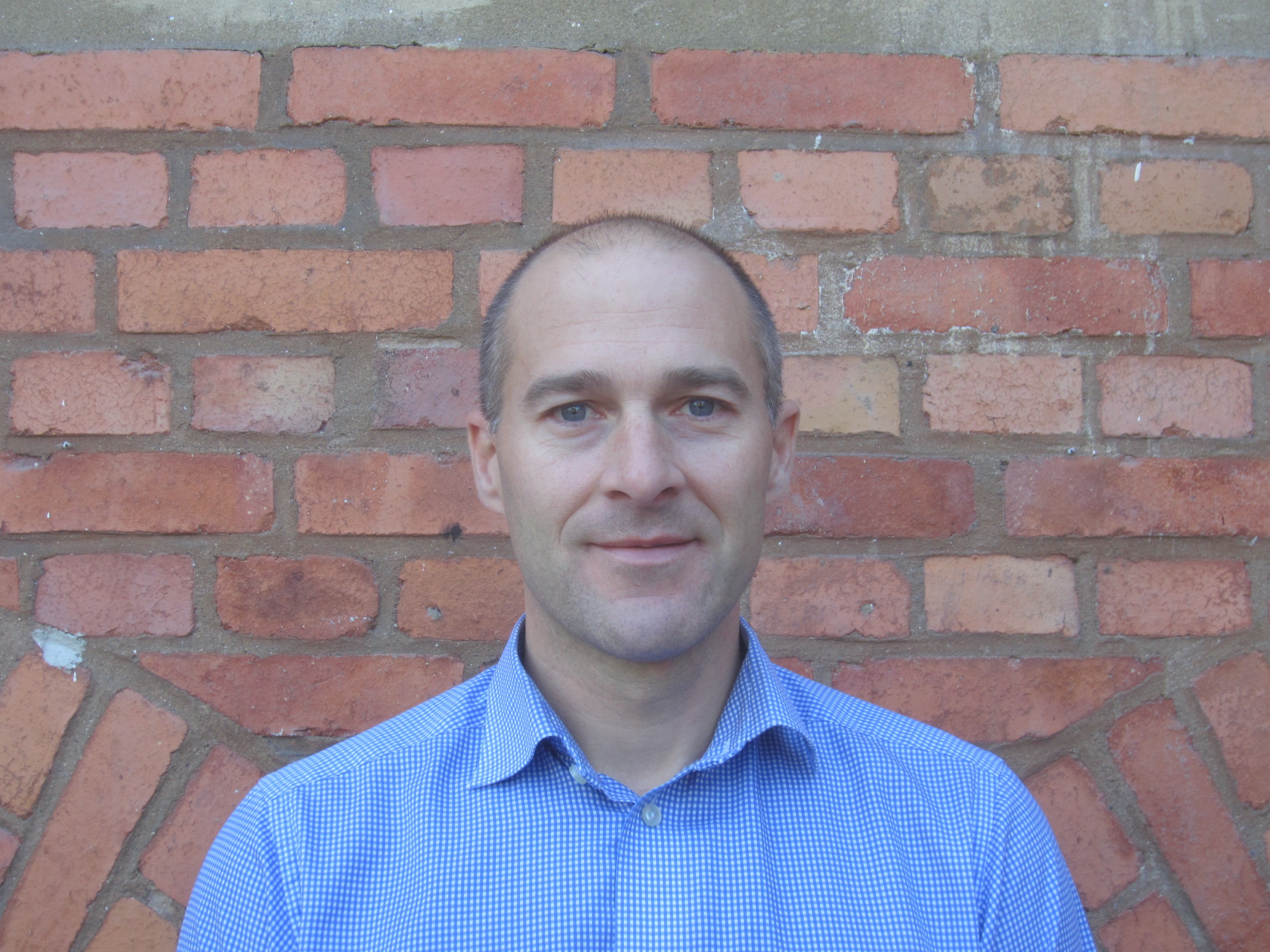
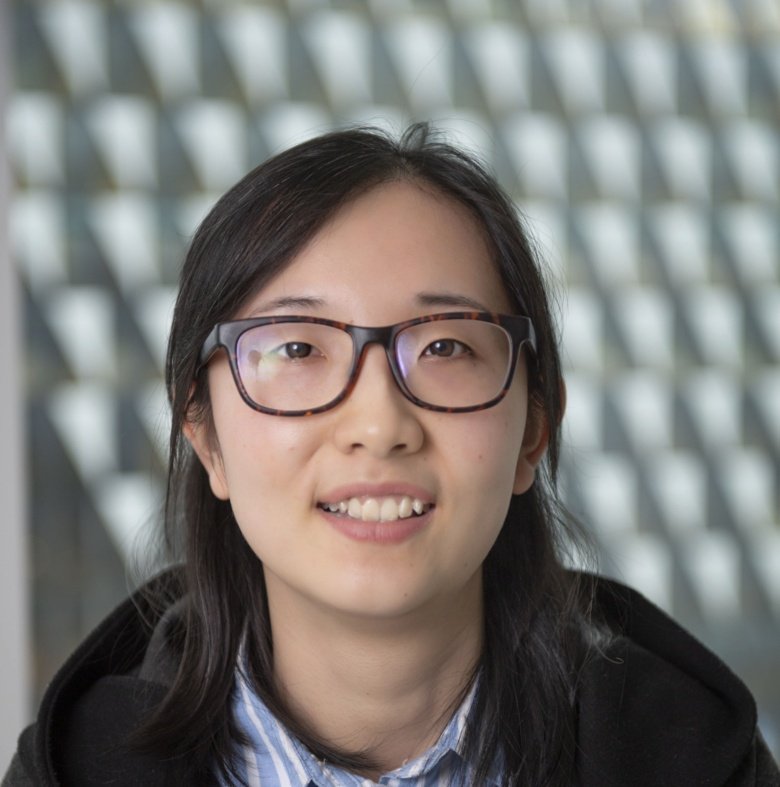
Eva Klintström is a researcher affiliated with the Department of Diagnostics and Specialist Medicine at Linköping University. Her work focuses on bone structure analysis and early diagnosis of osteoporosis, leveraging advanced imaging techniques such as photon-counting detector CT, energy-integrating detector CT, and cone-beam CT (CBCT). She collaborates with interdisciplinary teams in the Radiological Sciences Unit (RAD) and contributes to research in biomedical engineering and radiology. Her research integrates computational modeling, image analysis, and finite element analysis to study trabecular bone mechanics. Recent publications highlight applications of machine learning for super-resolution 3D CT models, automated segmentation algorithms for bone structure, and comparative studies of CT imaging modalities in maxillofacial and dental contexts. Eva Klintström actively participates in clinical research, including studies on biomarkers in juvenile idiopathic arthritis and their correlation with temporomandibular joint (TMJ) MRI findings. Her work spans both in vitro and in vivo methodologies, emphasizing the translation of imaging data into diagnostic and therapeutic insights. Key collaborations include researchers from the Department of Health, Medicine and Care (HMV) and institutions like Karolinska Institute and Uppsala University. Her studies often employ finite element analysis and region-growing algorithms to assess bone strength and microstructure.
Jeroen van der Laak is a Visiting Professor at Linköping University's Faculty of Medicine, affiliated with the Department of Health, Medicine and Care (HMV) and the Department of Diagnostics and Specialist Medicine (DISP). He is a key member of the Computational Pathology Group and contributes to the Wallenberg Centre for Molecular Medicine (WCMM), focusing on advancing digital pathology through artificial intelligence and deep learning methodologies. Dr. van der Laak's research centers on computational pathology, with specific expertise in developing deep learning algorithms to improve cancer diagnostics and prognosis. His work spans multiple domains including histopathological image analysis, tumor detection, biomarker identification, and computer-aided diagnosis systems. He investigates how machine learning techniques can enhance pathologist efficiency while reducing observer bias and identifying novel prognostic indicators for personalized cancer treatment. His research addresses critical challenges in computational pathology, including the need for high-quality, large-scale histopathological datasets and clinical validation of AI models. Analysis of Dr. van der Laak's recent publications reveals a strong focus on applying deep learning to diverse pathology challenges across multiple organ systems. His work demonstrates expertise in whole-slide image analysis, tumor segmentation, cancer grading, and biomarker discovery. Notably, his research spans breast cancer, prostate cancer, colorectal cancer, kidney transplant pathology, and gynecological pathology, showing both depth in specific applications and breadth across medical specialties. Key themes include attention-based image compression, human-in-the-loop refinement of AI models, and automated lesion scoring systems. Dr. van der Laak actively collaborates with international pathologists and participates in major European initiatives like the BIGPICTURE project, which aims to build an EU-scale digital pathology repository. His research emphasizes clinical validation of AI models to ensure safety and utility in routine practice, with contributions to consensus studies including recommendations for diagnosing serous tubal intraepithelial carcinoma (STIC) and standardization of molecular pathology education. As part of the Computational Pathology Group, Dr. van der Laak contributes to developing, validating, and deploying novel medical image analysis methods based on deep learning technology, with a focus on computer-aided diagnosis systems that directly support pathologists in their daily work while identifying potential new biomarkers for individualized treatment approaches.
Filip Lindskog is a Professor of Insurance Mathematics at Stockholm University (SU) , where he heads the Mathematical Statistics division within the Department of Mathematics . With a background in financial mathematics and actuarial science, his research focuses on quantitative risk management, non-life insurance pricing, and applications of biostochastics and biostatistics. He has co-authored the textbook Risk and Portfolio Analysis: Principles and Methods (Springer, 2012) and supervises PhD students in actuarial mathematics. Education \n \n MSc in Engineering Physics, KTH Royal Institute of Technology (2000) \n PhD in Mathematical Statistics, ETH Zürich (2004) \n Research Interests Filip's work spans actuarial mathematics , financial risk modeling , and insurance analytics . He investigates stochastic processes in regime-switching environments, capital requirements for insurers, and mathematical frameworks for claims reserving. His recent publications emphasize machine learning applications in risk adjustment, asymptotic analysis of Poisson models, and regulatory compliance under IFRS 17.\n Scientific Contributions \n \n Editor, Scandinavian Actuarial Journal (2018–present) \n Director of SU's Master's Program in Actuarial Mathematics (2016–present) \n Head of SU's Mathematical Statistics Division (2018–present) \n \n Students and Collaborations Current and former PhD students include Nils Engler , Lina Palmborg , Jonas Alm , and Johan Nykvist . Former postdocs include Julie Thøgersen , Abhishek Pal Majumder , and Kristoffer Lindensjö . His research group explores discrete random structures, financial applications of biostatistics, and insurance modeling under capacity constraints.\n
Raghav Bongole is a doctoral researcher at the Division of Information Science and Engineering within the School of Electrical Engineering and Computer Science at Kungliga Tekniska Högskolan (KTH). His work focuses on theoretical foundations of reinforcement learning through the lens of information theory , supervised by Professors Mikael Skoglund and Tobias Oechtering under the Wallenberg AI, Autonomous Systems and Software Program (WASP). Research Interests: Information-theoretic bounds for RL algorithms Duality between entropy and learning performance Theoretical optimization in autonomous systems Recent Work (2024): Co-authored a paper on arXiv addressing duality-based bounds for reinforcement learning, with implications for algorithm design and sample efficiency. The work intersects computer science , machine learning theory , and optimization . Contact: bongole@kth.se
Martin Lindström is a doctoral student at the Royal Institute of Technology (KTH) , affiliated with the Department of Technical Information Science since Autumn 2022. He is supervised by Ragnar Thobaben and Mikael Skoglund , focusing on the generalization properties of machine learning algorithms through an information theory lens. Lindström holds a Master of Science in Electrical Engineering from KTH, including a year spent at Imperial College London . His thesis was completed at the Information Processing and Communications Lab under Deniz Gündüz .
Sebastian Dalleiger is an Assistant Professor at the Division of Theoretical Computer Science, Kungliga Tekniska Högskolan (KTH Royal Institute of Technology). His research focuses on theoretical foundations of machine learning, data mining, and graph theory, with particular expertise in matrix factorization, pattern discovery, and hypergraph analysis. Current affiliation: KTH Royal Institute of Technology Department: Theoretical Computer Science Email: sdall@kth.se His recent work explores federated learning architectures, non-negative matrix factorization, and structural analysis of stochastic block models across multiple graphs. He develops algorithms combining proximal optimization with privacy-preserving techniques, addressing challenges in distributed data analysis. Publications demonstrate interdisciplinary applications in network science, information theory, and computational geometry. Key contributions include novel frameworks for Ollivier-Ricci curvature in hypergraphs and sequential false discovery control for pattern mining.
Viggo Kann is a Professor of Computer Science at the Royal Institute of Technology (KTH) in Stockholm, Sweden, holding this position since 2000. He serves as Director of Studies in the Theoretical Computer Science department at KTH's School of Electrical Engineering and Computer Science, a role he has maintained since 1998 with a brief interruption from 2012-2015. One-fifth of his time is dedicated to the Department of Learning, where he teaches courses on examinership and developing learning with grading criteria. He also chairs KTH's Language Committee and coordinates the director of studies network, PA network, PriU groups, and major institutional events. Professor Kann's research spans language technology and computer didactics, with current projects focusing on examination quality and diversity, cheating prevention, examiner training, and program-coordinating courses. His work bridges theoretical computer science with practical educational applications, particularly in assessment methodologies and educational technology. His recent publications reveal a strong emphasis on educational aspects of computer science, examining student behavior, programming fluency, and the impact of emerging technologies like ChatGPT on academic integrity. He has also published extensively on language technology, including grammar checking systems and natural language processing tools for Swedish language processing. As examiner and course coordinator, Professor Kann oversees multiple courses including Algorithms, Data Structures and Complexity (DD2350), Ethics in Introduction to Computer Science (DD1348), and various specialized degree projects across industrial economics, machine learning, systems engineering, robotics, and communication systems. His leadership in educational development initiatives at KTH demonstrates significant institutional influence in shaping educational policies and practices.
Kristiina Tammimies is an Associate Professor in Medical Genetics at Karolinska Institutet, where she serves as Research Group Leader at the KIND competence center and Director of Studies for Doctoral Education at KBH since 2024. Her work is situated within the Department of Women's and Children's Health, specifically focusing on neuropsychiatric research. Dr. Tammimies' research program centers on understanding the genetic and molecular architecture of developmental neurological and neuropsychiatric conditions, with particular emphasis on autism spectrum disorder, ADHD, and language disorders. Her laboratory combines clinical, genetic, and molecular data with advanced analytical approaches including machine learning algorithms to uncover how genetic variations influence symptom profiles and intervention outcomes. Her research group employs both basic science approaches (using 2D and 3D cellular modeling techniques) and clinically-oriented projects to elucidate the molecular pathways affected by genetic factors in neurodevelopmental disorders. Through collaborations with autistic individuals and their families, her team works to translate genetic research findings into clinical practice that meets community needs. Dr. Tammimies' work has been supported by major funding bodies including the Swedish Research Council, Hjärnfonden, and Stiftelsen för Strategisk Forskning. Her research output spans genetics, molecular biology, clinical applications, and ethical considerations in psychiatric genetics, with a strong focus on improving early detection and intervention strategies for neurodevelopmental conditions.
Dr. Rickard Karlsson works as a Lecturer at Linköping University's Department for Swedish as a Second Language, Rhetoric and Language Support (SAROS) under the Department of Culture and Society (IKOS). His teaching focuses on Swedish language didactics, grammar, and assessment of learner languages, with supervision across academic levels. PhD in Languages and Cultures of Europe Upper Secondary School Teacher in Swedish as a Second Language Research spans empirical analysis of adult language acquisition , historical linguistics , and multilingualism ideologies . Google Scholar publications reveal interdisciplinary contributions to particle filter algorithms and automotive sensor systems from 2001-2025. Notable collaborations include Fredrik Gustafsson and Per-Johan Nordlund. Recent publications (2025-2016) merge automotive engineering and historical Linguistics, covering tire diagnostics, cultural exchange patterns, and vibration-based navigation. This dual expertise reflects his transition from technical research to language education, maintaining academic connections across disciplines.
Yuhan Chen is a Researcher at Chalmers University of Technology in the Department of Marine Technology under the College of Mechanics and Maritime Sciences . Active in the AUTOBarge project (2021–2025), funded by the European Commission , Chen focuses on intelligent shipping systems and voyage optimization . Research interests include energy-efficient maritime transport , predictive route planning , and algorithm development for collision avoidance. Key themes involve integrating meteorological and oceanographic forecasts into shipping decision support systems, with a focus on isochrone-based optimization and Pareto-optimum routing . Recent publications highlight advancements in weather routing algorithms , sensitivity analysis of energy cost models , and AI-driven maritime navigation . Collaborations include Wengang Mao (Marine Technology) and Chi Zhang (Nautical Studies).
Jing Zhang is a researcher at the Department of Signals and Systems , School of Electrical Engineering , Chalmers University of Technology. Their work focuses on robotics , machine learning , and computational science , particularly in solving long-horizon tasks using hierarchical reinforcement learning and symbolic planning . Research interests include Robotics and automation Machine learning algorithms Control systems design In 2024, Jing Zhang co-authored a paper titled Hierarchical Reinforcement Learning Based on Planning Operators , which was presented at the 20th IEEE International Conference on Automation Science and Engineering in Bari, Italy. This work introduced a novel framework integrating hierarchical reinforcement learning with symbolic planning operators, achieving a 97.2% success rate in complex robotic tasks like stacking and cube insertion. The approach reduced training time by 68%.
Bengt Lennartson is a Professor of Automation at Chalmers University of Technology and Head of the Department of Systems and Control Engineering. His research focuses on automation engineering, sustainable production, robotics, and energy optimization, with over 280 international publications. Collaborations include industry leaders like Volvo, Daimler, Kuka, and TetraPak. IEEE Fellow for contributions to automation systems Specializes in hybrid/discrete-event systems Develops energy optimization strategies for robotic production lines Recent work explores Plug-and-Produce systems , digital twin calibration , and stochastic energy optimization in robotics. His team integrates AI with formal methods for safety verification and develops open-source educational tools like biomedical exoskeletons. Scientific awards include IEEE Fellowship , with articles addressing energy-efficient robot trajectories, safety-aware multi-agent control, and formal verification of cyber-physical systems.
Håkan Grahn is a Professor of Computer Engineering at the Department of Computer Science, School of Computing, Blekinge Institute of Technology (BTH) in Sweden. He has been a faculty member since 1996, becoming a full professor in 2007. His academic leadership includes serving as Head of Department (1999-2002) and Dean of Research (2011-2013) at BTH. He leads multiple significant research projects including GPAI (General Purpose AI Computing) and Green Clouds, with funding from ELLIIT, the Knowledge Foundation, and Vinnova. His educational background includes: M.Sc. in Computer Science and Engineering (1990) from Lund University Ph.D. in Computer Engineering (1995) from Lund University Håkan's research spans several interconnected domains in computer science and engineering, with a strong emphasis on practical applications. His work in computer architecture focuses on optimizing system performance through innovative cache coherence protocols and memory management techniques. In the realm of parallel computing , he investigates multicore systems, GPU computing, and thread-level speculation to enhance computational efficiency. His research in AI and machine learning addresses energy efficiency, data stream mining, and practical applications in areas like district heating systems and airborne networks. The integration of image processing with machine learning forms another significant strand of his work, particularly in historical document analysis and medical imaging applications. These research areas converge in his leadership of major initiatives like BigData@BTH and GPAI, where he bridges theoretical advances with real-world implementation challenges. Analysis of Håkan's recent publications reveals a clear trajectory toward increasingly applied research with strong industry connections. While maintaining foundational work in computer architecture, his output increasingly focuses on practical AI applications, energy efficiency in computing, and domain-specific implementations in sectors like telecommunications, energy systems, and defense. The interdisciplinary nature of his work is evident in collaborations spanning computer science, engineering, and domain-specific applications, with a growing emphasis on sustainability and resource optimization in computing systems. Håkan has successfully supervised numerous doctoral students, with ten graduates and six current Ph.D. candidates. His research has been supported by substantial funding from: The Knowledge Foundation (BigData@BTH, HINTS, Green Clouds) ELLIIT (GPAI project) Vinnova (FANET-MCA, Directed COM & EW) Industry partners including Ericsson, Saab, Telenor, and Fortnox He is actively involved in multiple research groups including DISL (Distributed and Intelligent Systems Lab), CCS-Lab (Communication and Computer Systems Research Lab), and previously PAARTS (Parallel Architectures and Applications for Real-Time Systems). His leadership extends to organizing academic events like the Nordic workshop on Multi-Core Computing and the Swedish Artificial Intelligence Society workshop.
Tobias Larsson is a Professor of Mechanical Engineering at Blekinge Institute of Technology (BTH), Sweden, with a focus on digitalized product development and innovation technology across aerospace, automotive, and industrial sectors. He serves as Research Director for the Product Development Research Lab and represents Mechanical Engineering in postgraduate education. His work bridges academia and industry, emphasizing Digital Twins , Internet of Things , and Product-Service Systems (PSS) in a circular economy context. Appointed professor at age 34 Former professor at Luleå University of Technology (2007-2011) Visiting professor at Lund University (2011) Research interests revolve around simulation-driven decision support tools for sustainable product development. His recent work explores AI integration in PSS design, dynamic programming for changeability assessment, and digital twins in automotive and healthcare applications. He has contributed to over 150 publications and led projects like the BTH KKS research profile Model Driven Development and Decision Support . Current research trends include: Digital twins for smart PSS AI-powered value co-creation Resilient automated transport systems Resource-limited society solutions He supervises 11 doctoral students and has directed the Product Development Research Lab since 2012. Tobias is also a co-founder of the Faste Laboratory (VINN Excellence Center) and the international research project Design for Wellbeing (with Stanford and Hosei University). His career spans EU projects in aerospace (VIVACE, CRESCENDO) and healthcare (PrimCareIT), while maintaining roles in research councils and academic boards.
Mattias Dahl is a Professor at the Faculty of Engineering, Blekinge Institute of Technology, affiliated with the Department of Mathematics and Natural Sciences since 1993. His research spans systems engineering, applied mathematics, and their applications in simulation, optimization, and modeling of technical systems, particularly in intelligent transport systems (ITS) through collaborations with Swedish Transport Agency and Administration. He has developed measurement systems using drones and satellites, focusing on area-wide change analyses and commercialization of research outputs. Education: B.Eng. in Electrical Engineering, Chalmers University M.Eng. in Computer Engineering, Luleå University of Technology Licentiate in Telecommunication Theory, Lund University of Technology PhD in Applied Signal Processing, Blekinge Institute of Technology (2000) His research emphasizes optimization of technical systems, self-learning methods, and artificial intelligence, with industry collaborations resulting in patents in mobile communication and computer vision. Recent work includes AI-driven weed seed reduction, railway capacity optimization (KAJT), and charging station allocation for EVs. He has contributed to projects like ADAS and Combating Reindeer Poaching with Drones, while also reviewing grants for international journals. Key scientific awards include the Teknikbrostiftelsen scholarship and Vinnova verification funds. His 15 most recent publications focus on radar interference mitigation, traffic data analysis, drone calibration, and charging infrastructure optimization.