Prof Bruce Grieve holds the N8 Chair in Agri-Sensors & Electronics at the University of Manchester's School of Electrical and Electronic Engineering. He leads the e-Agri Sensors Centre, focusing on sensor science for sustainable agriculture and food systems. His expertise spans industrial R&D (18 years at Syngenta, AstraZeneca, and ICI) and academic leadership, including £20.4M in collaborative research funding. Education & Qualifications PhD BSc (Hons) Chartered Engineer (CEng) Fellowships: IET, Agricultural Engineers, Higher Education Academy Research Focus Prof Grieve’s work bridges engineering and life sciences, addressing challenges in: Multispectral imaging for disease detection Wireless sensor networks for precision agriculture Electrical impedance tomography for root zone monitoring Low-cost biosensors for field deployability Key Projects £5.3M industrial/government grants since 2007 UN SDG contributions: Zero Hunger (SDG2), Climate Action (SDG13) Leadership roles in BBSRC and Innovate-UK strategy panels Awards & Recognition Best Paper Award (2017) RAEng Senior Fellowship (e-Agri research) Grants & Labs Current projects include Cassava disease surveillance systems in East Africa and IoT-enabled agri-robotics. His lab collaborates with industry partners like Syngenta and ADAS, with a focus on translating sensor tech into field-ready solutions.
Dr. Shirin Abbasinejad Enger is an Associate Professor at the Gerald Bronfman Department of Oncology, McGill University, and Director of the Medical Physics Unit. She holds a Tier 2 Canada Research Chair in Medical Physics and serves as research director at the Lady Davis Institute and Segal Cancer Centre (Jewish General Hospital). Her leadership roles include chairing the AAPM's TG-337 (Intensity Modulated Brachytherapy) and contributing to national/international committees on equity and radiation oncology standards. Education: PhD from Uppsala University (2009), postdoctoral research at Université Laval (2009–2011). Research focuses on advancing medical physics technologies, with four key axes: Novel brachytherapy techniques (e.g., Yb-169 for prostate cancer) Radiobiology/microdosimetry (e.g., alpha particle dosimetry) Detector development (e.g., scintillating fiber detectors, hydrated electron dosimeters) Artificial intelligence integration (e.g., deep learning for dose prediction) Publications emphasize precision dosimetry, brachytherapy optimization, and medical imaging innovations. Awards include multiple medical innovation prizes and the Young Investigator award at Curietherapies 2022. Grants and collaborations: Competitive funding for technology translation from concept to clinical trials, with patents on brachytherapy delivery systems and radiation dosimeters. Leads the EngerLab, fostering interdisciplinary research in radiation oncology.
Eunhwa Yang is an Associate Professor and Curriculum Committee Chair at the School of Building Construction, Georgia Institute of Technology. She holds a Ph.D. in Human Behavior and Design from Cornell University and an MS in Building Construction from Georgia Tech. Her research focuses on the interplay between built environments and human outcomes, employing Bronfenbrenner’s ecological systems theory to study workplaces, campuses, and homes. Key areas include sustainable building practices, facility management optimization, and aging-in-place strategies for individuals with mild cognitive impairment. As an advocate for innovative teaching methods, Dr. Yang has developed facility management courses using active learning and service learning approaches. She has led workshops on pedagogical strategies at GT’s Center for Teaching and Learning and Cornell’s Center for Teaching Excellence. Professional affiliations include the International Facility Management Association (IFMA) and CoreNet Global, where she has received young researcher awards and fellowships. Her recent work emphasizes data-driven solutions for energy performance contracting, hybrid workspaces, and inclusive housing designs. The Workplace Ecology Lab under her direction explores environmental factors influencing sleep health, workplace safety, and aging-in-place technologies. Over 15 years of grant-funded research has produced impactful studies on green leasing, building lifecycle analysis, and multi-stakeholder decision-making in urban transformation projects. Awards: IFMA Fellowships, IAPS Workshop Grant Grants: CoreNet Global Academic Challenges, IAPS sponsored projects Labs: Workplace Ecology Lab at Georgia Tech School of Building Construction Dr. Yang’s advisory work supports facility managers, corporate real estate directors, and designers in optimizing space utilization through evidence-based strategies. Her research bridges environmental science, architectural design, and human behavior studies to create healthier, more equitable built environments.
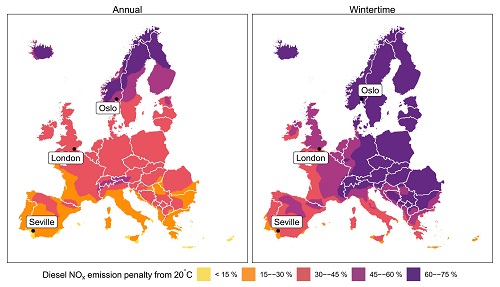
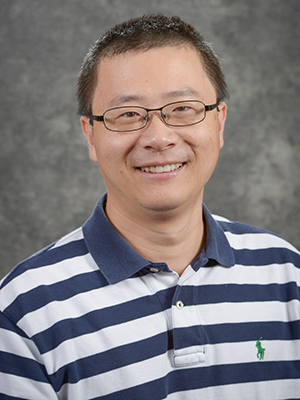
Professor David Carslaw is a leading academic in the Department of Chemistry at the University of York, specializing in urban air pollution, vehicle emissions, and receptor modeling. His research focuses on developing open-source tools (e.g., openair) and applying statistical techniques to quantify emissions and evaluate air quality interventions. Collaborations with institutions like Ricardo Energy & the Environment have advanced understanding of real-world vehicle emissions, particularly regarding NOx, ammonia, and temperature dependencies. His work has exposed critical gaps in national emission inventories and contributed to global air quality policy frameworks. Education details are not explicitly stated in the text, but his professional background indicates advanced academic training in atmospheric chemistry or environmental science. The openair project, funded by NERC, underscores his commitment to democratizing air quality data analysis through software development. Research interests include: (1) Urban air pollution dynamics, (2) Remote sensing of vehicle emissions, (3) Meteorological normalization for time series analysis, and (4) Source apportionment using statistical methods like bivariate polar plots and clustering. His team’s innovations, such as ammonia emission quantification and temperature-dependent NOx emissions, challenge conventional emission assumptions. Recent articles highlight advances in machine learning applications for air quality policy, hydrogen combustion impacts, and indoor-outdoor pollutant linkages. While no scientific awards are listed, his contributions have been widely adopted by the international air quality community. Grant activities include NERC funding for openair. Supervision of PhD students is implied through research group activities, though specific advisee names are not provided. The openair project and vehicle emission studies form core lab activities, supported by partnerships with industry and academic collaborators.
Brigitte Maranghino-Singer is a Senior Lecturer at the University of Zurich's Department of Finance, Faculty of Economics. Her research focuses on financial derivatives, corporate governance, sustainability, cybersecurity, and AI-driven boardroom strategies. She holds a Ph.D. from the University of Zurich (1998) and has contributed to seminal works on asset pricing and systemic risks. Key publications include analyses of generative AI applications in corporate governance, cyber resilience in board decision-making, and sustainable finance frameworks. Education : Ph.D. in Economics, University of Zurich (1998) Research Interests : Financial Derivatives and Systemic Risks Corporate Governance and Boardroom Strategies Sustainability and ESG Integration Cybersecurity and Digital Transformation Energy Economics and Regulatory Compliance Publications Trends : Recent work emphasizes AI-driven governance, cybersecurity, and sustainable practices. Earlier contributions explored insurance risk modeling and long-term energy financing strategies. Grants and Labs : No grants explicitly mentioned. Active in collaborative research with swissVR and Springer publications.
Ioannis Akkizidis is a Lecturer at the University of Zurich's Department of Finance since 2009. He concurrently serves as Global Product Manager at Wolters Kluwer Financial Services (since 2006) and as Boardmember & Chapter Lead in Regulatory Development at the Swiss Risk Association (since 2013). His work bridges academic research and industry applications in risk management systems. Education: PhD in Applied Mathematics, University of Wales MSc in Control Technology, University of Portsmouth BEng in Electronic & Computer Engineering, University of Athens His research focuses on designing advanced solutions for risk management and profitability analysis in financial institutions, with emphasis on Marketplace Lending, New Financial Regulations, Operational Risk, Artificial Intelligence, and Blockchain technology. He has authored influential books such as Basel IV Modelling and Marketplace Lending, Financial Analysis , both accompanied by freeware risk analysis tools. His book chapters on Solvency II and systemic risk analysis are cited in IMF and GARP materials. Publications include six financial magazine articles analyzing credit ratings, liquidity risk, and regulatory challenges. His academic contributions are integrated into the University of Zurich's Risk Lab course since 2009. No grants or formal advisees are listed, though his teaching includes the Risk and Finance Lab course (V-Nr 3603, Spring 2023). He is affiliated with the Risk Lab initiative and contributes to interdisciplinary teams through his work on financial regulations and technology applications.
Dr. Edmondo Minisci is a Senior Lecturer in Mechanical and Aerospace Engineering at the University of Strathclyde, part of the Faculty of Engineering. He leads the Intelligent Computational Engineering Laboratory (ICE-Lab) within the Aerospace Centre of Excellence. With over 25 years of experience, his expertise spans model-based analysis and design optimization of complex mechanical/aerospace systems, including aeronautical vehicles, wind turbines, and sustainable energy systems. He actively supervises PhD students in areas like multi-fidelity methods, intelligent control, and sustainable agriculture engineering. Dr. Minisci has received prestigious awards, including the NATO STO “Panel Excellence” Award (2024) and the Sir Arthur C Clarke Award (2015). His research focuses on multidisciplinary design optimization under uncertainties, machine learning applications, and aerospace technologies for sustainable development. Key projects include optimizing high-lift devices, wind turbine performance, and precision agriculture systems. He has contributed to numerous conferences, including organizing the International Conference on Bioinspired Optimisation Methods and serving as an examiner for PhD theses. His work bridges computational intelligence with practical engineering challenges, emphasizing resilience and innovation in aerospace and energy sectors. Research Interests: Multi-Objective Optimization, Nature-Inspired Algorithms, Uncertainty Treatment, Machine Learning, Intelligent Control. Recent Projects: Symbolic Computation for Differential Equation Systems, EPSRC-funded Uncertainty Quantification in Aeroelastic Systems, and Advanced Natural Language Models for Satellite Communications.
Mary Ann Lundteigen is a Professor in instrumentation systems and safety at NTNU’s Department of Engineering Cybernetics, part of the Faculty of Information Technology and Electrical Engineering. She holds an MSc (1993) and PhD (2009) in Engineering Cybernetics from NTNU, with 15+ years of industry experience across Phillips Petroleum, Nidar AS, DNV, and SINTEF. She has led major research initiatives including SFI SUBPRO (2014–2023) and SFI Autoship (2019–2022), focusing on subsea production, autonomous ships, and cybersecurity for safety-critical systems. Her research emphasizes functional safety of industrial control systems, cybersecurity compliance with standards like IEC 62443, and the integration of AI in safety-critical environments. She leads projects such as APOS 2.0 (digital lifecycle management) and CyberBarrier Management, while supervising multiple PhD students and postdocs. Lundteigen co-authored over 100 publications and received the ExxonMobil Doctoral Prize (2009) for her thesis on SIS reliability. Professional roles include: Co-director of SFI SUBPRO Director of SFI Autoship’s initial phase Adjunct Professor at NTNU (2013) Member of IEC 61511 maintenance team and PDS forum organizing committee Current research focuses on: Cybersecurity threats to SIS AI applications in safety systems Digital twins for safety demonstration Industry 4.0 frameworks like OPC UA Her work bridges academia and industry, with active projects funded by the Norwegian Research Council and industrial partners like Equinor and DNV.
Guofei Gu is a Professor of Computer Science & Engineering and holder of the Eppright Professorship in Engineering at Texas A&M University's College of Engineering. He leads the SUCCESS Lab, focusing on cybersecurity research in areas such as software-defined security, AI security, and IoT/malware analysis. His work bridges networking, systems, and applied cryptography, addressing practical security challenges. Guofei received his Ph.D. from Georgia Tech (2008) and holds prestigious awards including IEEE Fellow (2020), NSF CAREER Award (2010), and AFOSR Young Investigator Award (2013). He has published extensively in top venues like S&P, CCS, and NDSS, with over 18,000 citations. Research Interests: Network/System Security, AI Security, SDN/NFV Security, Mobile/IoT Threats, Malware Analysis, and Zero Trust Frameworks. Selected Awards: Best Paper at ASIACCS 2022 Eppright Professorship in Engineering (2020) IEEE Fellow (2020) AFOSR Young Investigator Award (2013) Labs/Teams: Director of the SUCCESS Lab, collaborating on projects like S2OS (Security OS) and FRESCO. His work emphasizes programmable security solutions for emerging technologies.
Terese Fiedler is a Senior Lecturer in Accounting at the Tasmanian School of Business and Economics, University of Tasmania. She is a CPA and holds a PhD in environmental collaboration within the building and construction industry. Her academic work is deeply rooted in sustainability, corporate social responsibility, and the transformative role of accounting in environmental and social change. Bachelor of Education with Professional Honours (Higher Education), University of Tasmania, 2020 PhD, University of Southern Queensland, 2003 Bachelor of Commerce (1st Class Honours), Griffith University, 1996 Her research focuses on sustainability in accounting , the circular economy , taxation reform for environmental outcomes , and Indigenous inclusion in education . She actively challenges traditional perceptions of accounting by integrating ethical and sustainability principles into curricula and professional development. Terese's recent publications reflect a strong trend toward AI-augmented research methods , accountability in seasonal work , and historical social auditing . Her work bridges accounting with social justice, environmental policy, and community engagement, particularly through her research on the Cygnet Folk Festival and Indigenous mentoring programs. Her scientific awards include: College Student Focus Award College Sustainability Award Vice Chancellor’s Award for Sustainability Finalist, 2023 Australasian Green Gown Awards She is actively involved in research funding and supervision. She leads a project on developing an accountability framework for seasonal workers and another on Indigenous student success. She currently supervises two doctoral students and has completed supervision of Xinchen Zhao on animal welfare accountability in global apparel companies. Her grants include funding from the Accounting & Finance Association of Australia and New Zealand and internal University of Tasmania initiatives. Terese is a key figure in the development of the CPA First Nations Accounting Mentoring Program and has led efforts to embed sustainability across accounting units at UTAS. She is also engaged in community service through festival impact assessments and public policy recommendations on taxation and circular economy.
Dr. Emily O'Dowd is a Senior Lecturer in Surgical Education within Surgical Affairs at the Royal College of Surgeons in Ireland (RCSI), Dublin. She holds a PhD in Population Health and Health Services Research from the National University of Ireland Galway, an MSc in Psychological Research from the University of Edinburgh, and a BA in Applied Psychology from University College Cork. She is actively involved in teaching and research, with a focus on human factors in patient safety and healthcare quality improvement. PhD in Population Health and Health Services Research, National University of Ireland Galway (2018–2021) MSc in Psychological Research, University of Edinburgh (2016–2017) BA in Applied Psychology, University College Cork (2013–2016) Her research centers on human factors in healthcare, patient safety, and healthcare quality , with a particular emphasis on analyzing patient complaints, gender equity in medical education, and the implementation of entrustable professional activities (EPAs). She has developed tools such as the adapted Healthcare Complaints Analysis Tool for general practice and has led systematic reviews on safety climate measures and healthcare innovation impact. Dr. O'Dowd’s recent publications (2021–2025) reflect a strong trajectory in medical education, patient safety, and health services research. These works frequently employ systematic review methodologies and co-design approaches, with recurring themes including gender equity, editorial training, autism and healthcare access, and patient complaint analysis . Her collaborative network includes frequent co-authors such as Lydon S, O’Connor P, and Madden C, indicating strong interdisciplinary research partnerships. She is the academic lead for the PG Diploma and MSc in Human Factors in Patient Safety at RCSI and has prior teaching experience in the Department of General Practice at the University of Galway. Her work contributes significantly to the UN Sustainable Development Goal 3: Good Health and Well-Being. Senior Lecturer, RCSI (current) Teaching experience, University of Galway Dr. O'Dowd has been involved in multiple research projects analyzing patient complaints, healthcare innovation, and gender disparities in medical publishing. While specific grants are not listed, her extensive publication record in high-impact journals suggests active research funding. She mentors students through her program leadership and supervision roles, particularly in the MSc and PG Diploma programs. She leads the PG Diploma and MSc in Human Factors in Patient Safety at RCSI, indicating leadership in a specialized academic program focused on improving healthcare safety through human factors principles. This program serves as a hub for training future healthcare leaders in safety and quality improvement.
Brendan Jackman is a Lecturer in the Department of Computing and Mathematics at South East Technological University (SETU), where he contributes to the Automotive Control Group. His work bridges computer science and automotive engineering, focusing on embedded and real-time systems for intelligent vehicles. His research interests include: Automotive control systems and embedded software In-vehicle networks (CAN, FlexRay, OSEK) Model-driven architecture and UML for automotive software Advanced Driver Assistance Systems (ADAS) Fuzzy logic and intelligent control systems Automotive diagnostics and ODX standards His publications from 2005 to 2018 reveal a strong focus on real-time automotive software, network integration, and intelligent diagnostics. Key themes include timing modeling, migration from CAN to FlexRay, and model-based development using UML and MDA. His work often appears in SAE Technical Papers and IEEE conferences, indicating strong industry and academic engagement. Brendan Jackman has supervised at least five research projects, reflecting his role in mentoring students in automotive software and control systems. His research has practical applications in adaptive cruise control, power steering, and diagnostic gateways. He has contributed to software integration frameworks that improve vehicle software quality and interoperability across OEMs. He is actively involved in teaching and research, with no indication of retirement or part-time status. His ORCID profile and institutional page confirm ongoing academic activity.
Robert Taylor is a Reader (equivalent to Associate Professor) in Public Law at the University of Aberdeen's School of Law, where he has been since 2014. He holds a PhD, MJur, and LLB (Hons) from Durham Law School. His research focuses on UK Public Law, Brexit-related legal frameworks, and constitutional law. He has contributed to prominent journals like Public Law and the Edinburgh Law Review. Taylor has served as an expert witness at the UK Parliament’s European Scrutiny Committee, advising on Brexit legislation and retained EU law. He directed the Aberdeen Centre for Constitutional and Public International Law (ACCPIL) and held a Scottish Parliament Academic Fellowship (2020–21). Awards include the Higher Education Academy Fellowship (FHEA) in 2016. His recent publications address parliamentary scrutiny of retained EU law, AI regulation, and gender recognition legal conflicts. Taylor has also been a visiting scholar at Edinburgh Law School, researching UK-Scotland constitutional foundations. His work emphasizes legal governance, legislative processes, and the intersection of EU law with UK and Scottish parliamentary systems.
Mehran Koohgilani is a Principal Academic in Engineering at Bournemouth University, affiliated with the Department of Design, Engineering and Computing within the Faculty of Science and Technology. He holds a PhD from Bournemouth University and has been actively contributing to engineering education and research for decades. He is a Chartered Engineer (CEng) and a member of the Institution of Mechanical Engineers. PhD in Damage Accumulation in High Performance (Bournemouth University, 1998) MSc in Polymer Science & Engineering (University of North London, 1993) BEng (Hons) in Mechanical Engineering Design & Production (South Bank University, 1992) Mehran's research focuses on Composite Materials , Neural Networks in engineering applications , design methods , material selection , and applied technology . He has pioneered the integration of virtual reality in design education and has contributed significantly to curriculum development and accreditation of undergraduate programs in design engineering. His recent publications (2011–2025) reflect a strong trend in combining materials science with artificial intelligence for structural monitoring, particularly in marine composites. Other key themes include design education , surface engineering with nanomaterials , and corrosion protection . His work bridges theoretical modeling, experimental validation, and practical application in industry-relevant contexts. Mehran has been instrumental in supervising PhD students and is an active member of the Design Simulation Research Centre . He has led numerous teaching units in technological principles, materials & processing, and design management. His contributions extend to project supervision, particularly in final-year design engineering projects, and to co-creation in design education. His scientific leadership is evident in his role in developing and validating multiple undergraduate courses. He has also contributed to research grants and collaborative projects, though specific grant names are not listed in the provided text.
Dr. Timothy McMahan is an Assistant Professor in the Department of Computer Science at the University of North Texas. His research focuses on adaptive virtual environments, neurogaming, and applying VR/AR technologies to neuropsychological assessment and training. He holds a Ph.D. in Computer Science (2016) and multiple advanced degrees from UNT. Education: Ph.D. Computer Science, University of North Texas (2014–2016) M.S. Computer Science, University of North Texas (2007–2013) B.S. Computer Science, University of North Texas (2003–2007) Postdoctorate in Computational Neuropsychology, University of North Texas (2016–2017) Research Interests: Adaptive VR environments for personalized user experiences Neurogaming applications in healthcare and education Machine learning for cognitive assessment and environmental adaptation EEG-based analysis of user engagement and cognitive workload VR tools for neuropsychological disorder diagnosis and treatment Recent work emphasizes VR applications in memory research, adaptive systems leveraging real-time ML predictions, and EEG-driven analyses of subjective experiences. Articles focus on bridging virtual and real-world interactions through computational neuroscience methods. No scientific awards or grants are explicitly listed in the provided materials. No advisees or lab affiliations are documented here.