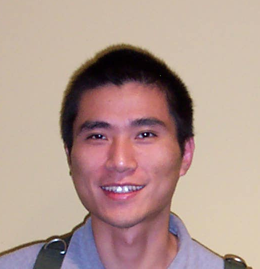
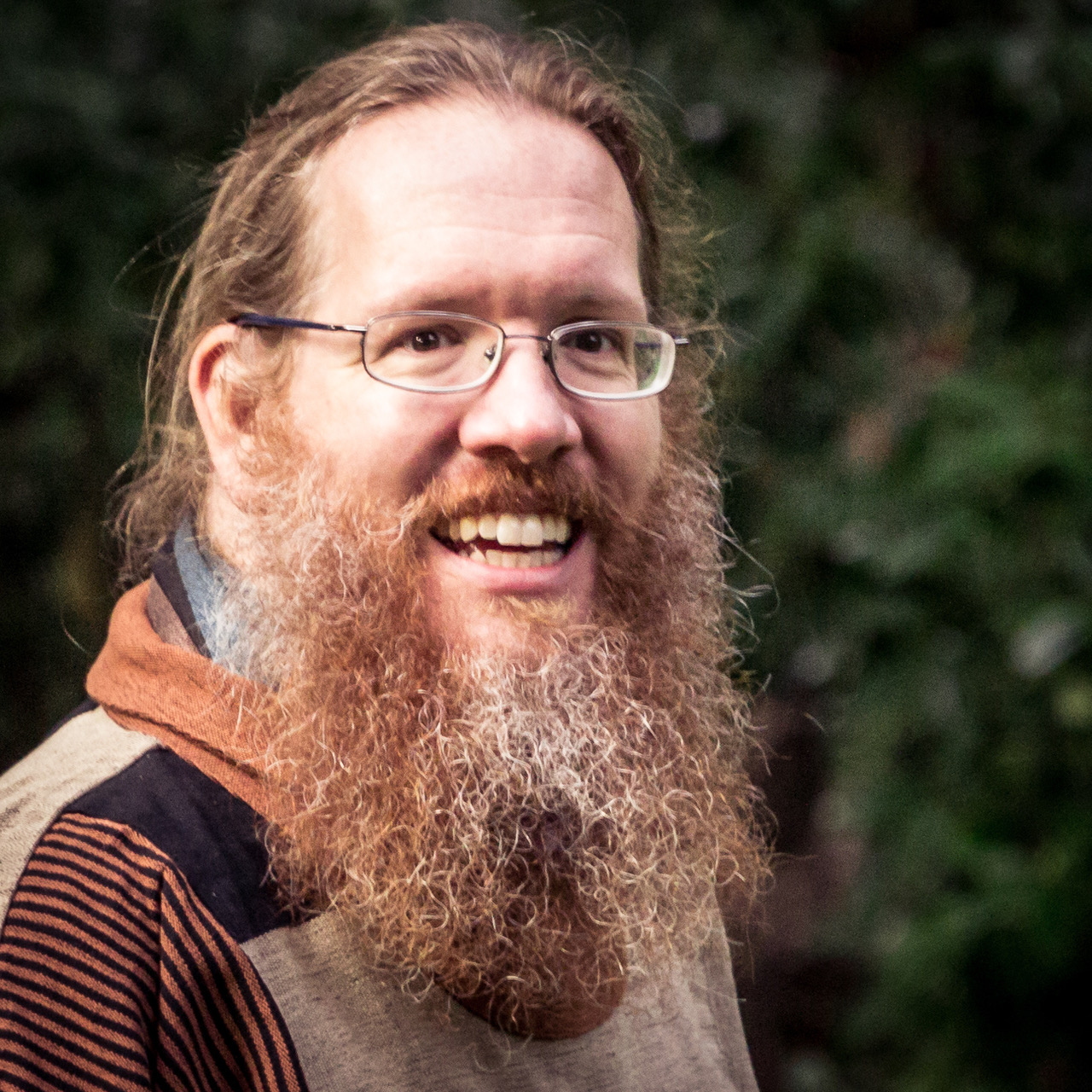
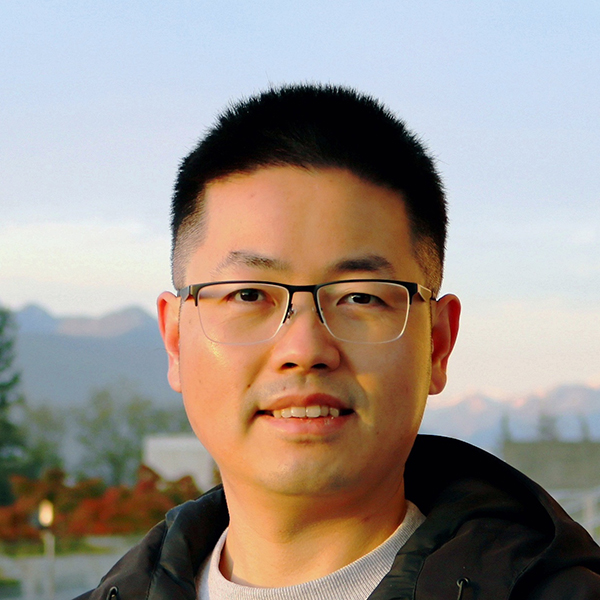
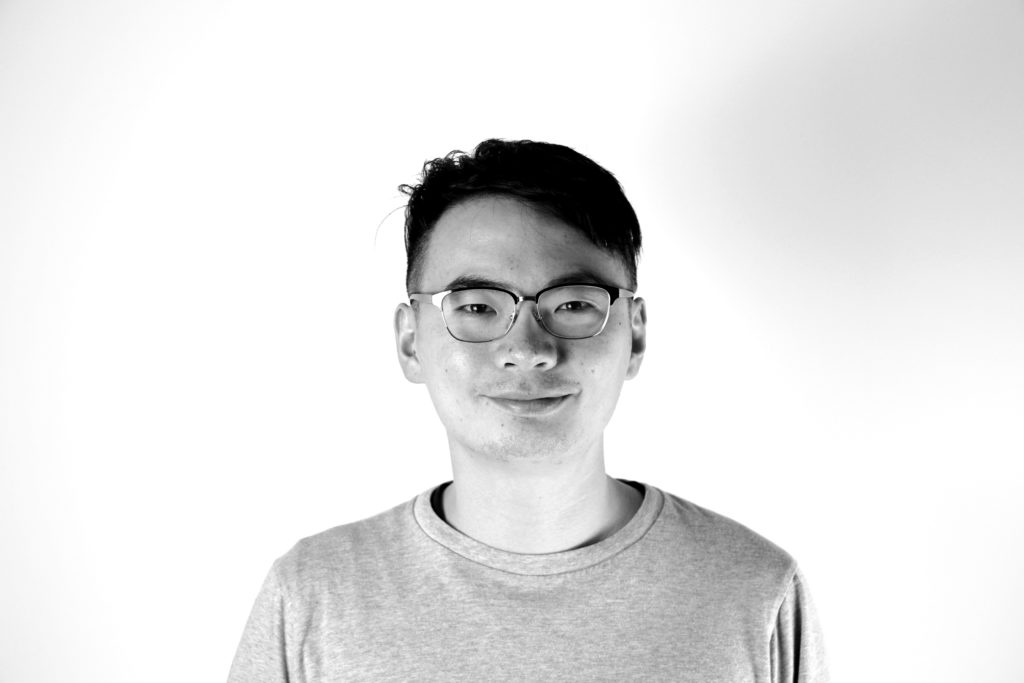
Ruixiang Tang is an Assistant Professor at Rutgers, The State University of New Jersey. His research focuses on artificial intelligence, machine learning, and natural language processing, with an emphasis on multimodal learning, model security, and ethical AI. He explores topics such as adversarial robustness, bias mitigation, and applications in healthcare and robotics. Key research interests include developing robust algorithms for vision-language models, analyzing model vulnerabilities like backdoors and hallucinations, and designing trustworthy AI systems. His work bridges theoretical advancements and practical applications, addressing challenges in healthcare data augmentation, copyright infringement detection, and cognitive reasoning. His recent publications highlight contributions to multimodal in-context learning, counterfactual reasoning benchmarks, and secure model optimization. Tang's research also intersects with fairness in AI, such as mitigating bias in NLP models and ensuring equitable outcomes in medical applications.
Dr. Jing Wang is a Professor in the Department of Bioinformatics at Southern Medical University's School of Medicine, with extensive research at the intersection of artificial intelligence and biomedical applications. Her work demonstrates strong cross-disciplinary collaboration across medical institutions, engineering departments, and computer science research groups. Her primary research interests include Artificial Intelligence in Healthcare , Biomedical Engineering , and Traditional Chinese Medicine Informatics , with recent publications showing particular expertise in medical imaging analysis, diagnostic assistance systems, and clinical decision support. Her work spans both theoretical algorithm development and practical clinical implementations. Analysis of her 15 most recent publications (2025-2026) reveals a strong trend toward clinically applicable AI systems, with approximately 60% of publications focused on medical diagnostics and treatment support systems. The remaining publications demonstrate expertise in industrial applications of computer vision and fundamental AI research. Her work shows consistent collaboration with both domestic Chinese institutions and international research groups. Notable scientific contributions include: Development of 'Tianyi', a traditional Chinese medicine language model for clinical practice Innovations in bionic soft robotics for rehabilitation assistance Novel approaches to medical image analysis for cancer diagnostics Her research program appears well-funded with consistent publication output across high-impact journals in biomedical engineering, AI, and medical informatics. Current work suggests strong emphasis on translating AI research into clinical practice, particularly in diagnostic support systems and rehabilitation technology.
Meeyoung Cha is a Professor at KAIST and Scientific Director of the Max Planck Institute for Security and Privacy (MPI-SP) in Bochum, Germany. Her research focuses on Data Science for Humanity, encompassing computational social science, misinformation dynamics, and human-machine interaction. She holds a PhD in Computer Science from KAIST (2008) and previously served as Chief Investigator at the Institute for Basic Science and Visiting Professor at Facebook. Her work addresses societal challenges such as poverty mapping, fraud detection, and AI ethics. Key achievements include best paper awards and recognition like the Hong Jin-Ki Creator Award (2024) and Test-of-Time Awards (ACM IMC 2022, AAAI ICWSM 2020). Research interests span AI ethics, social media analysis, and interdisciplinary applications of machine learning. Notable projects include modeling climate risks via satellite imagery and analyzing chatbot interactions' societal impacts. She leads the MPI-SP's Data Science for Humanity Group, mentoring over 20 students across PhD and postdoc programs. Education: PhD in Computer Science (KAIST, 2008) Affiliations: MPI-SP (Germany), KAIST Key Awards: Hong Jin-Ki Creator Award, Korean Young Information Scientist Award, Test-of-Time Awards Her publications bridge computational methods with societal issues, including climate modeling, protein engineering, and algorithmic fairness. Current projects explore geospatial AI for economic development and ethical AI design frameworks.
Claude DELPHA is a Full Professor at Université Paris Saclay, affiliated with CentraleSupélec’s Laboratoire des Signaux et Systèmes (L2S). He holds an IEEE Senior Member status and has been with L2S since 2001. His expertise spans signal processing, fault diagnosis, electrical engineering systems, and machine learning. He leads the Modelling and Estimation team (GME) at L2S and oversees engineering admissions at Polytech Paris Saclay. Education: PhD in Instrumentation & Measurements and Signal Processing from Université de Metz, with a focus on intelligent sensor systems. Graduate degree in Electrical and Signal Processing Engineering. Research Interests: Multidimensional/statistical signal processing, fault diagnosis/prognosis (modeling, detection, estimation), electrical systems (drives, converters, PV), data hiding (watermarking), and pattern recognition (machine/deep learning). Active in energy systems, industry 4.0, and health/biology applications. Professional Roles: Director of GME research team, Polytech admissions lead, member of Polytech’s executive and academic boards, and IUT department council member. Engaged in labs like SYCOMORE and ILOCOS. Publications: Over 200 works since 2015, focusing on fault diagnosis in electrical systems, photovoltaic modules, bearings, and tidal turbines. Key methods include Kullback-Leibler divergence, Jensen-Shannon divergence, Mahalanobis distance, and PCA-based approaches. Awards: Not explicitly listed in provided texts.
Dr. Irene Kamara is an Assistant Professor at Tilburg Law School and TILT (Tilburg Institute for Law, Technology, and Society) at Tilburg University. She holds a joint doctorate from Tilburg University and Vrije Universiteit Brussel (VUB), specializing in data protection standardization. Irene is an affiliated researcher at VUB’s Law, Science, Technology, and Society (LSTS) group and serves as Research Coordinator at TILT since August 2022. Education: PhD in Law with a focus on Data Protection Standardization (Tilburg University & VUB, 2021) LL.B. in Law (Democritus University of Thrace) MSc in International and European Studies (University of Piraeus) Research Interests: Irene examines the intersection of technology and human rights, particularly cyberviolence (cyberstalking, image-based abuse), cybersecurity governance, AI ethics, and data protection law. Her work emphasizes EU legal frameworks, technical standards, and soft law instruments. Recent projects include analyzing child cyberbullying legislation across EU states and developing privacy-preserving AI frameworks through the ENCRYPT Horizon Europe project. Teaching: Course coordinator for Cybercrime (LL.M. Law & Technology) and Regulating Cybersecurity (MSc Artificial Intelligence & Cybersecurity). Supervises PhD and master’s theses. Professional Activities: Member of ENISA Experts List, Netherlands Network for Human Rights Research (NNHRR), and European Academy for Standardisation (EURAS) Evaluator for EU-funded proposals on societal security Editorial Board member of the Journal of Standardisation Awards & Grants: 2025 KNAW Early Career Partnership Grant 2021 CEN CENELEC Standards+Innovation Individual Researcher Award 2023 Nominated for Praemium Erasmianum Foundation Prize Current Projects: CArE Project : Combating technology-facilitated cyberviolence (2023–2027) ENCRYPT Project : Privacy-preserving AI frameworks (2022–2025) HE Edu4Standards.eu : Standardization education initiatives (2024–2026)
Professor Hakan Ali Çırpan is a distinguished faculty member at Istanbul Technical University's Faculty of Electrical and Electronics Engineering, where he serves as Professor in the Department of Electronics and Communication Engineering. He also holds the position of Vice Dean at Istanbul Technical University since 2021. With over three decades of academic experience, Professor Çırpan has established himself as a leading researcher in signal processing and communications. His educational background includes: PhD from Stevens Institute of Technology (1993-1997) Master's degree in Electrical-Electronic Engineering (with thesis) from Istanbul University (1989-1992) Bachelor's degree in Electrical and Electronic Engineering from Uludağ University (1985-1989) Professor Çırpan's research spans multiple domains within signal processing and communications. His primary interests include wireless communications, radar systems, machine learning applications in communications, and electronic warfare. His work on channel estimation, orthogonal frequency division multiplexing, and maximum likelihood methods has been particularly influential. He has pioneered research in areas such as source localization, spectrum sensing, and physical layer security. His recent work focuses on 5G/6G networks, AI-enhanced communications, and integrated sensing and communication systems. Analysis of his recent publications (2023-2025) reveals a strong focus on next-generation wireless technologies, particularly 5G/6G networks, AI integration in communications, and electronic warfare applications. His research demonstrates a consistent pattern of addressing fundamental challenges in signal processing while adapting to emerging technological needs. A significant portion of his recent work involves machine learning applications for spectrum management, optimization techniques for radar systems, and novel approaches to network slicing and resource allocation. His notable scientific achievements include: ASELSAN ACADEMY THESIS COMPETITION WINNER (2020) Professor Çırpan has supervised 59 theses throughout his career, mentoring numerous graduate students in the fields of signal processing and communications. He has secured significant research funding, including the "AI-Enhanced 5G/6G Networks with Integrated Camera and ISAC Systems" project (2023-2024) and the "Railway Vehicle Infrastructure New Generation Secure Communication Systems" TÜBİTAK project with a budget of ₺955,000. His research has practical applications in defense systems, railway communications, and next-generation wireless networks. His laboratory work focuses on wireless communications systems, radar signal processing, and AI-enhanced communication technologies. Professor Çırpan leads research teams working on projects related to 5G/6G networks, electronic warfare countermeasures, and secure communication systems. His group collaborates with industry partners like ASELSAN and conducts research with practical applications in national defense and critical infrastructure.
William Wadsworth is Professor of Physics at the University of Bath, affiliated with the Centre for Photonics and Photonic Materials. His research focuses on photonic crystal fibres (PCFs) and hollow-core fibre technologies, with applications spanning quantum information, medical imaging, and fundamental metrology. Research Expertise Professor Wadsworth designs and fabricates microstructured optical fibres enabling unprecedented light control. His work centers on: Development of hollow-core anti-resonant fibres for deep ultraviolet guidance Supercontinuum generation across UV-to-infrared spectra Medical applications including UV light therapies and malaria diagnostics Quantum optical systems using alkali-metal vapours in fibres Research Impact His recent publications (2024-2025) demonstrate cutting-edge advances in hollow-core fibre technology for deep-UV applications and medical diagnostics. Key trends include resonance-free supercontinuum generation, integration of AI with photonics for malaria detection, and novel fibre designs enabling quantum applications. These innovations directly support UN Sustainable Development Goals in health and clean energy. Grants and Supervision Professor Wadsworth leads 24 research projects including: U-Care (2021-2026): Deep Ultraviolet Light Therapies (EPSRC) International Collaboration Awards (2020-2023): Clean Air (Royal Society) Plasmon-Enhanced Alkali-metal Vapours (2017): Quantum optical applications He has supervised 18 doctoral students and currently accepts new PhD candidates in photonics and fibre optics. Research Environment As core faculty in Bath's Centre for Photonics and Photonic Materials, he collaborates internationally with institutions in quantum optics, air pollution analysis, and medical instrumentation, maintaining active partnerships across Europe and Asia.
Sumit Chopra is an Associate Professor at the Grossman School of Medicine , affiliated with the Department of Radiology at New York University. His work focuses on integrating machine learning and artificial intelligence with medical imaging to enhance diagnostic accuracy and clinical decision-making. Research interests include: Deep learning applications in prostate cancer imaging and MRI reconstruction Development of open-access medical imaging datasets (e.g., FastMRI Prostate) Improving biopsy decision strategies via representation learning AI-driven Alzheimer's disease risk prediction using electronic health records Advancements in radiologic assessment for pancreatic cystic lesions Email: Sumit.Chopra@nyulangone.org
Xiaoning Qian is a Professor in the Department of Electrical and Computer Engineering at Texas A&M University, where he also serves on the Faculty Advisory Committee for the Texas A&M Institute of Data Science (TAMIDS) and the Executive Committee for the Texas A&M TRIPODS Research Institute for Foundations of Interdisciplinary Data Science (FIDS). He holds a joint appointment in the Applied Math group within the Computational Science Initiative at Brookhaven National Laboratory (BNL). Previously, he was an Associate Professor (2018-2022) and Assistant Professor (2013-2018) at Texas A&M, and an Assistant Professor in the Department of Computer Science and Engineering at the University of South Florida (2009-2013). Dr. Qian received his B.S.E. and M.S.E. degrees from Shanghai Jiaotong University, China, and his M.Ph. and Ph.D. degrees in Electrical Engineering from Yale University. Dr. Qian's research focuses on developing mathematical models and computational algorithms in signal processing, machine learning, and Bayesian methods, particularly in learning, uncertainty quantification, and experimental design. His work spans multiple disciplines, with applications in life sciences and materials science. His research group, the Biomedical Imaging, Sensing, and Genomic Signal Processing Group, actively applies probabilistic models and optimization algorithms to solve complex problems in interdisciplinary domains. His research has evolved from foundational work in bioinformatics and biomedical image processing to more recent applications in materials science and broader AI for science initiatives. Dr. Qian has received numerous scientific awards and recognitions including: National Science Foundation (NSF) CAREER Award Segers Family Dean's Excellence Professorship II in the College of Engineering TEES (Texas A&M Engineering Experiment Station) Senior Faculty Fellow Montague-Center for Teaching Excellence Scholar J. T. Oden Faculty Fellow at the University of Texas, Austin Finalist of the 2023 INFORMS QSR Best Paper Faculty Impact Fellow from the Department of Electrical & Computer Engineering As an advisor , Dr. Qian has mentored numerous graduate students through their PhD and MS programs, with many of his alumni securing positions at prestigious institutions and companies including NIH/NCBI, Microsoft, Baidu Research Lab, and Qualcomm. His research has been supported by multiple grants, including an NSF CAREER award and collaborative research funding from the Information Integration and Informatics program. He is actively recruiting postdoc and graduate student research assistants for projects in machine learning and optimization methods with applications in bioinformatics and materials science. Dr. Qian is involved with several research initiatives including the Objective-Based Uncertainty Quantification (ObjectiveUQ) project, which provides a mathematical framework for integrating prior knowledge and data while enabling effective operational and experimental design under uncertainty. He also co-organizes the Bio-Seminar series for the Biomedical Imaging, Sensing & Genomic Signal Processing group at Texas A&M.
Matthew J. Graham is a Research Professor of Astronomy at the California Institute of Technology (Caltech), serving as the Project Scientist for the Zwicky Transient Facility (ZTF). His work bridges astronomy, machine learning, and data science, focusing on time-domain sky surveys that produce hundreds of thousands of public transient alerts per night. Previously, he has worked on the Catalina Real-time Transient Survey (CRTS), NOAO DataLab, Virtual Observatory, and Palomar-Quest Digital Sky Survey. Dr. Graham's primary research interests involve applying machine learning and advanced statistical methodologies to astrophysical problems, particularly the variability of quasars and other stochastic time series. His work addresses the unprecedented data volumes generated by 21st-century astronomy while expanding our ability to work with complex information systems beyond simple correlations. His current projects include real-time low latency inferencing via the NSF-funded A3D3 Institute, reinforcement learning for optimizing astrophysical follow-up campaigns, neural differential models for supermassive black hole variability, and functional analysis of multivariate time series. Analysis of Graham's recent publications reveals a strong focus on time-domain astronomy, particularly leveraging the capabilities of the Zwicky Transient Facility. His work spans multiple areas including gravitational wave counterpart identification, active galactic nuclei variability, supernova characterization, and machine learning applications for transient detection. A notable trend is the integration of artificial intelligence techniques to handle the massive data streams from modern sky surveys, enabling real-time analysis and decision-making that would be impossible with traditional methods. Dr. Graham has been instrumental in developing infrastructure for time-domain astronomy, including the alert distribution system for ZTF and data processing pipelines for handling massive transient datasets. His work on the Catalina Real-time Transient Survey established important methodologies for identifying variable and transient sources that continue to influence the field. As Project Scientist for ZTF, Graham leads a major international collaboration involving Caltech, IPAC, and numerous partner institutions worldwide. The facility represents a significant advancement in time-domain astronomy, providing unprecedented coverage of the dynamic sky and enabling discoveries across multiple areas of astrophysics.
Yinzhi Cao is an Associate Professor at the Johns Hopkins University Department of Computer Science . He serves as Technical Director of the Johns Hopkins Information Security Institute and is affiliated with the Data Science and Artificial Intelligence Institute and the Institute for Assured Autonomy . Cao joined JHU in 2018 from Lehigh University, where he was an Assistant Professor. Doctor of Philosophy (PhD) in Computer Science, Northwestern University (2014) Bachelor of Engineering (BE) in Electronic Engineering, Tsinghua University (2008) Research Interests focus on security and privacy of web, mobile, and machine learning systems . Key projects include Vulnerability Analysis of Web Applications and Security, Privacy, and Fairness Analysis of ML Systems . His work addresses prototype pollution in JavaScript, node.js vulnerabilities, browser fingerprinting, federated learning privacy, and automated exploit generation. Scientific Recognition includes the NSF CAREER Award (2021) DARPA Young Faculty Award (2022) & Director's Fellowship (2024) Amazon Research Awards (2022, 2017) IEEE Security & Privacy Test of Time Award (2025) Distinguished Paper Awards at IEEE S&P 2025, CCS 2023, USENIX Security 2022 Advising & Grants highlight mentorship of 20+ PhD and Master’s students across institutions. Major grants include $1.2M collaborative CICI TCR grant (2024-2026) with Dr. John Aucott $750K DARPA YFA grant (2022-2025) $500K NSF SaTC grant (2022-2025) NSF EAGER grant (2016-2017) Labs & Teams : Affiliated with Johns Hopkins Information Security Institute , Data Science AI Institute , and Institute for Assured Autonomy . Collaborates with institutions like Columbia, UC Santa Barbara, and SRI International. His group investigates real-world vulnerabilities in over 2,500 websites and NPM packages, uncovering 80+ zero-day issues.
Gianni Franchi is an assistant professor at ENSTA Paris , affiliated with the Computer Science and Systems Engineering Unit (U2IS) . His work focuses on theoretical deep learning , with a strong emphasis on uncertainty quantification, robustness, and explainability in machine learning models. Current affiliation: ENSTA Paris (U2IS) Academic rank: Assistant Professor Key collaborators: David Filliat, Emanuel Aldea, Andrei Bursuc, Antoine Manzanera His research spans uncertainty quantification , explainable AI , and reliable machine learning . He investigates methods like Bayesian neural networks, ensemble approaches, and deterministic uncertainty models. His work also addresses domain adaptation , self-supervised learning , and autonomous systems , particularly in trajectory forecasting and semantic segmentation for autonomous driving. Recent publications analyze probabilistic modeling for robustness, symmetry-aware Bayesian methods , and multi-modal datasets like InfraParis. He develops frameworks like Torch-Uncertainty and benchmarks such as MUAD for uncertainty types in autonomous driving. Key themes: Uncertainty Quantification Deep Learning Theory Autonomous Systems Explainable AI Dataset Creation Bayesian Methods
Lingyang Chu is an Assistant Professor at McMaster University's Department of Computing and Software, previously serving as a postdoc fellow at Simon Fraser University under Jian Pei. He earned his Ph.D. in Computer Science from the University of Chinese Academy of Sciences. Research interests span data mining , machine learning , and statistics , with focus on trustworthy AI (privacy, interpretability, security, robustness, fairness), federated learning , and graph-based machine learning . His work includes scalable data mining on large graphs and deploying systems like personalized federated learning on Huawei Cloud's Harmony OS devices. Publications emphasize adversarial attacks, medical AI, graph robustness, and federated learning frameworks. His advising record includes 28 mentees across Ph.D., M.Sc., and internship levels. Scientific achievements include Best paper candidate at ICME'13 Best demo award at ICMR'13 Academic service roles include: Program Committee: NeurIPS, SIGKDD, CVPR, ICML, and 12+ other top-tier conferences Journal Reviewer: IEEE TKDE, ACM Transactions on KDD, and 8+ journals Editorial Board: ACM Transactions on KDD (Associate Editor) Grant Reviewer: Hong Kong RGC Labs/teams: Maintained open-source ALID algorithm (VLDB'15) for dominant cluster detection, demonstrating technical leadership in scalable graph mining
Shiyu Chang is an Associate Professor of Computer Science at the University of California, Santa Barbara, and a Research Staff Member at the MIT-IBM Watson AI Lab. His work bridges machine learning, natural language processing, and computer vision with a focus on interpretability and robustness. Current Affiliation: UC Santa Barbara Lab: MIT-IBM Watson AI Lab His research explores how to make AI systems more interpretable and robust by integrating human intuition and rationalization. Key themes include adversarial learning, self-supervised methods, and improving transferability in models. Recent publications span conferences like ICML, CVPR, and NeurIPS, addressing topics such as black-box text classification, fairness-aware algorithms, and speech representation disentanglement. Broad keywords include Machine Learning, NLP, and Computer Vision. Fairness Reprogramming (AI Fairness) TransGAN: Transformer-based GANs Adversarial Robustness Certificates
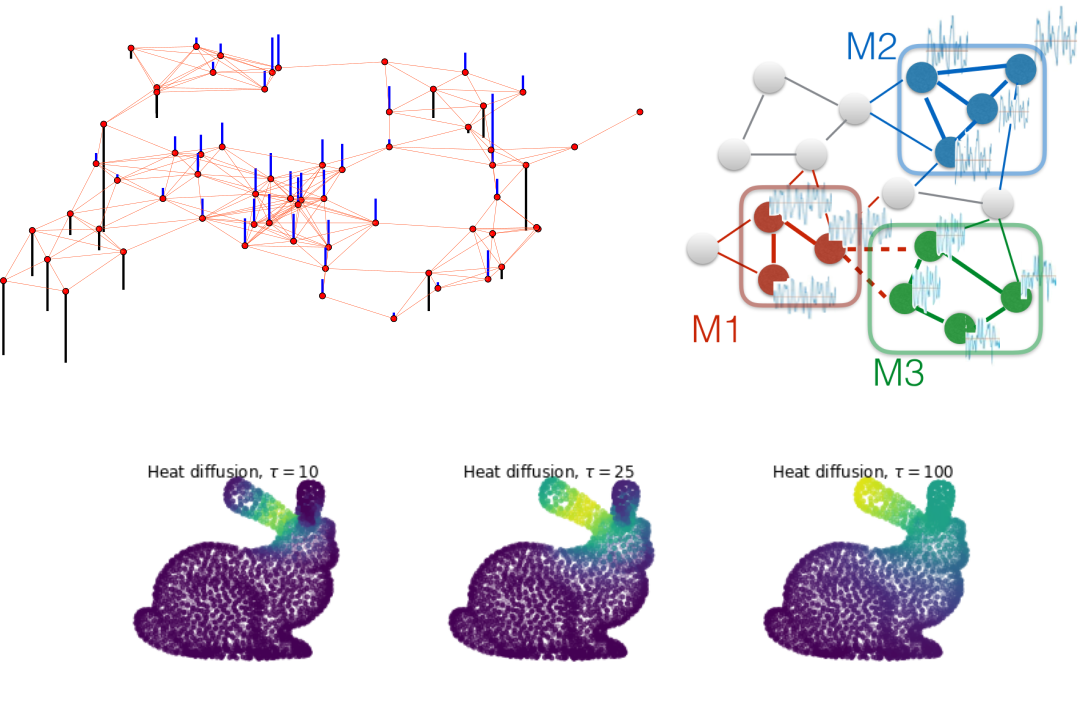
Benjamin Ricaud is an Associate Professor and Group Leader in Machine Learning at UiT The Arctic University of Norway's Department of Physics and Technology. His core affiliations include membership in the Machine Learning Group, Visual Intelligence center, and co-directorship of the Digital Technology Innovation Lab focused on Arctic-region tech startups. He also co-chairs the annual Northern Light Deep Learning conference. Ricaud's research spans: Fundamental ML : Graph signal processing, explainable AI, and generative models Applications : Microfossil classification, medical diagnostics (retinal aging), drug analysis, and climate data interpretation Emerging domains : Self-supervised learning and biological data analysis using Raman spectroscopy His recent publications (2020-2025) cluster in three domains: Graph ML methodologies (35%) Biomedical/biological applications (40%) Geoscience/climate informatics (25%) with consistent focus on interpretability and real-world data challenges. Teaching includes Image Processing (FYS-2010), Pattern Recognition (FYS-3012), and Machine Learning (FYS-2021). He leads outreach initiatives developing AI exhibits for Tromsø Science Centre.