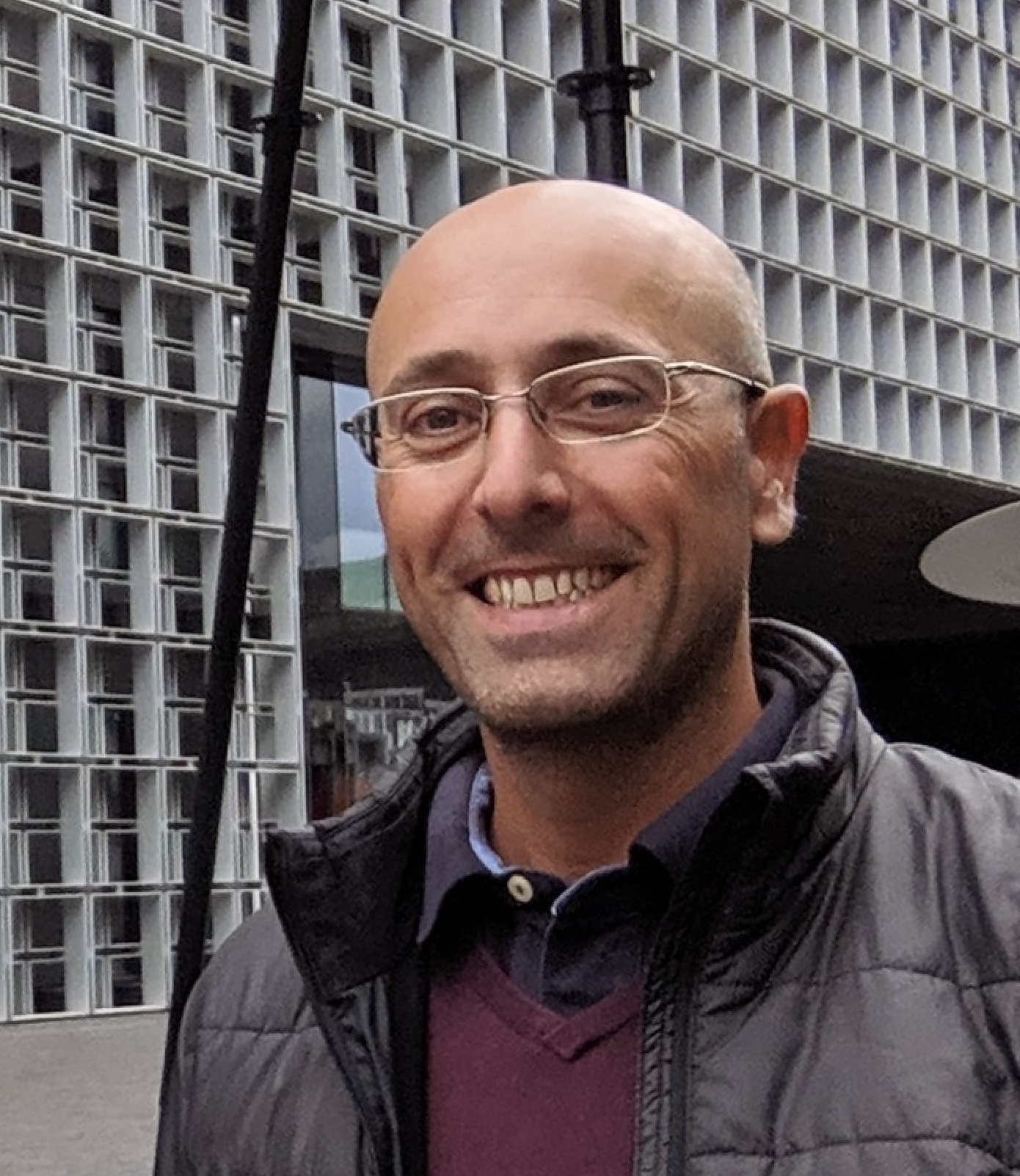
Gilbert Fridgen is Full Professor in Digital Financial Services and holder of the PayPal-FNR PEARL Chair at the University of Luxembourg's Interdisciplinary Centre for Security, Reliability and Trust (SnT). He leads the FINATRAX research group focusing on blockchain, digital identity, and sustainable digital solutions. His research explores decentralized technologies in finance, energy systems, and public administration. Current projects investigate blockchain applications in industrial demand response, NFT markets, EU digital identity wallets, and DeFi institutional adoption. Prof. Fridgen examines the intersection of technology with regulatory frameworks and user behavior in energy and financial systems. He collaborates extensively with industry partners including PayPal and Spuerkeess. Prof. Fridgen actively contributes to EU digital policy discussions, particularly regarding the European Digital Identity Wallet framework and decentralized finance governance.
Grégoire DANOY is a Researcher at the University of Luxembourg's Interdisciplinary Centre for Security, Reliability, and Trust (SnT) and Head of the Parallel Computing and Optimization Group (PCOG). He specializes in artificial intelligence, with a focus on optimization algorithms, machine learning, and swarm intelligence. His work addresses challenges in cloud computing, high-performance computing, smart mobility, and unmanned autonomous systems like drone swarms. He has authored over 150 publications, including articles in IEEE Transactions and conferences like NeurIPS and GECCO. He currently leads major projects such as UltraBO (€1.019M), ADHOC (€1.291M), and SERENITY (€1.228M), collaborating with institutions in France and Poland. Education: PhD in Computer Science (2008) from École Nationale Supérieure des Mines de Saint-Étienne, Master’s in Computer Science (2004), and Industrial Engineering Degree (2003) from Luxembourg University of Applied Sciences. Research Interests: Developing novel AI techniques for solving large-scale optimization problems, with applications in distributed systems, autonomous robotics, and federated learning. He emphasizes scalable solutions for combinatorial challenges using parallel computing and swarm intelligence. Grants & Projects: Principal Investigator for EU-funded initiatives like ADARS (2021–2024) and FNR PoC/SIMMS (2019–2021). His work bridges academia and industry, with technology transfer projects in autonomous robot swarms. Awards: Recognitions include the Best Student Paper Nomination (2022), IEEE CybConf Best Paper Award (2017), and ACM GECCO nominations (2016, 2009). He serves on the editorial board of Engineering Applications of Artificial Intelligence (EAAI). Labs & Teams: Leads the Parallel Computing and Optimization Group (PCOG), focusing on interdisciplinary research in AI and distributed systems. He also contributes to outreach programs like FNR's Researchers at School.
Alfredo Capozucca is a full permanent Researcher at the Department of Computer Science (DCS) within the Faculty of Science, Technology and Medicine (FSTM) at the University of Luxembourg. He holds a PhD in Computer Science from the University of Luxembourg (2010) and an M.S. from the National University of Rosario, Argentina (2003). His research focuses on modern software engineering methods, dependable systems, and computing education, with an emphasis on formal verification and sustainable computing practices. Capozucca has contributed to the design of courses at undergraduate and master's levels, including serving as Deputy Programme Director for the BSc in Computer Science from 2021-2024. His work bridges theoretical foundations with practical applications in education and industry. Research interests prominently include AI in education (e.g., ChatGPT's role in formal specification writing), formal verification techniques, and the integration of DevOps philosophies into academic curricula. He has authored numerous papers on topics ranging from security policy analysis to energy-efficient transactional models. Capozucca's contributions extend to open-source projects and tool development, such as the Messir UML requirements engineering tool. His teaching spans software engineering fundamentals, dependability, and modern DevOps practices, reflecting a commitment to aligning education with industry needs. Key professional roles include R&D engineer positions (2004-2006) and leadership in educational program design. His research infrastructure is based at the Maison du Nombre facility in Luxembourg. While no specific grants or awards are listed, his extensive publication record and teaching contributions highlight sustained academic engagement.
Prof. Leon van der Torre is a full professor of computer science at the University of Luxembourg, affiliated with the Lab for Intelligent and Adaptive Systems (ILIAS). He specializes in formal models of reasoning and interaction in intelligent systems, with research spanning deontic logic, argumentation theory, cognitive robotics, and compliance technologies. He was granted the Bao Yugang Chair Professorship at Zhejiang University (2023) and has held visiting positions, including at Stanford University's CSLI (2013). His research focuses on integrating logical formalisms with computational systems to address normative reasoning, multiagent coordination, and ethical AI. Key contributions include work on argumentation frameworks, deontic logic applications, and formal models of normative systems. He teaches courses such as 'Introduction to Intelligent Systems' and 'Game Theory', reflecting his expertise in AI and computational reasoning. Prof. van der Torre actively participates in international conferences (e.g., DEON, PRIMA) and has authored over 400 publications. His work bridges theoretical foundations with practical applications, addressing challenges in AI ethics, legal reasoning, and multiagent systems coordination.
Dr. Raphaël Frank is an Assistant Professor and Senior Research Scientist at the University of Luxembourg's Interdisciplinary Centre for Security, Reliability and Trust (SnT), where he leads the UBIX Research Group and directs the ATLAS IPBG Programme. With over 80 peer-reviewed publications, his research focuses on intelligent distributed systems, network security, and ubiquitous computing architectures. Dr. Frank serves on the University Council and actively participates in international scientific committees as a senior IEEE member. His professional experience includes co-founding Motion-S (the University of Luxembourg's first tech spin-off) where he served as Operations Director. He holds a Master's in Cryptography and Network Security from Université Joseph Fourier and a Ph.D. in Computer Science from University of Luxembourg, including research at UCLA.
Eva LAGUNAS is an Assistant Professor and Deputy-Head of the SIGCOM research group at the Interdisciplinary Centre for Security, Reliability and Trust (SnT) , University of Luxembourg. Her expertise lies in Non-Terrestrial Communication Systems , focusing on radio resource management and wireless networks optimization. She holds a Ph.D. and M.Sc. in Telecommunications Engineering from the Polytechnic University of Catalonia (UPC), Barcelona. Key Affiliations & Roles: Principal Investigator (PI) of the FNR CORE project VARRAY-5G (Vehicular Phase Array Antennas for 5G) PI of the CHIST-ERA project SHIELD (Secure Distributed Learning & Smart Contract Ecosystems) Co-PI in the ESA ARTES-funded NeuroSat project (Neuromorphic Processors for SatCom) Deputy-Head of SIGCOM group and active contributor to the TelecomAI-Lab (AI-driven satellite communication) Event organizer: Special Session on ML for NTN at IEEE ICMLCN 2025, Track Chair at EUCNC 2025 Research Interests: Non-Terrestrial Networks (NTN), 6G integration, satellite-ground network convergence, AI-driven optimization, reconfigurable intelligent surfaces (RIS), and neuromorphic computing for onboard processing. She also leads efforts in vehicular communications and energy-efficient satellite payloads. Recent Achievements: 2025: Elected to the EURASIP Board of Directors 2024: Listed in the 100 Brilliant and Inspiring Women in 6G list 2023: Co-authored NeuroSat project's IEEE publication on neuromorphic computing for SatCom Labs & Projects: TelecomAI-Lab : Developing neuromorphic hardware (e.g., Intel Loihi2, BrainChip AKIDA) for satellite applications ESA NeuroSat : Pioneering neuromorphic processors for onboard SatCom resource management Grants & Funding: Secured Luxembourg National Research Fund (FNR) and CHIST-ERA grants for projects like VARRAY-5G and SHIELD, totaling over €2M in research investment.
Jorge GONCALVES is a Full Professor at the Luxembourg Centre for Systems Biomedicine (LCSB), University of Luxembourg, and a Principal Research Associate at the University of Cambridge's Department of Plant Sciences. He holds expertise in computational biology, systems biomedicine, and machine learning applications in healthcare. His roles include leading research on gene regulatory networks, epidemic modeling, and deep brain stimulation technologies. Education: Licenciatura from University of Porto (1993), M.S. and Ph.D. from MIT (1995/2000). Postdoctoral work at MIT and Caltech, followed by academic positions at the University of Cambridge (Lecturer, Reader, Principal Research Associate). Visiting Professorships at the University of Luxembourg and Caltech. Research Interests : Dynamical systems modeling, network inference, biomedical applications of AI, and systems biology. His work spans drug repositioning, early warning signals for disease transitions, and multiomics analysis in immunology. Publications : Focused on interdisciplinary approaches combining machine learning with biological systems. Key themes include computational methods for gene network analysis, epidemic monitoring systems, and AI-driven medical diagnostics. Awards : Not explicitly listed in provided texts. Advising and grants: Extensive collaboration with institutions globally, including leadership in EU-funded projects and industry partnerships. Active in mentoring researchers across computational biology and engineering disciplines. Labs/Teams: Leads LCSB teams focused on systems biomedicine and AI-driven health solutions. Collaborates with the University of Cambridge on plant sciences and robotics initiatives.
Sylvain Kubler is a Researcher at the Interdisciplinary Centre for Security, Reliability and Trust (SnT) within the University of Luxembourg's SerVal group. He holds a PhD from Université de Lorraine (2013) and previously served as an Associate Professor at the Research Center for Automatic Control of Nancy. His work focuses on IoT applications, decision support systems, and their integration into Industry 4.0, renewable energy, and smart cities. He has contributed to projects involving blockchain consensus mechanisms, maintenance scheduling, and energy system optimization. His research emphasizes sustainable technologies and distributed systems security. Research Interests: IoT and Blockchain Integration Decision Support Systems for Smart Cities and Industry Renewable Energy and Multi-Energy Networks AI-Driven Maintenance and Prognostics Privacy-Preserving Distributed Systems Recent Contributions: Sylvain’s recent work explores adaptive blockchain frameworks (e.g., DRAFTEE), reinforcement learning for maintenance scheduling, and explainable AI (XAI) in prognostics. His articles analyze trade-offs in federated learning architectures and multi-level energy system coordination. Affiliations and Labs: A core member of the SerVal group, he collaborates on initiatives like the IoT-based BIoTope ecosystem and the Sabine blockchain project. His work aligns with Luxembourg’s focus on secure, reliable, and sustainable technological solutions.
Jean Botev is a Research Scientist and co-head of the Collaborative and Socio-Technical Systems (COaST) group at the University of Luxembourg's Faculty of Science, Technology and Medicine. He directs the VR/AR Lab, focusing on immersive technologies and human-centered design. His work bridges physical and digital realities through mediated reality approaches, emphasizing collaborative virtual environments and interaction techniques. Dr. Botev holds a PhD in Computer Science (2011, University of Luxembourg) and master's/bachelor's degrees from the University of Trier (Germany). He teaches courses in Virtual/Augmented Reality, Immersive Media, and programming disciplines across multiple university programs. His research spans 85+ peer-reviewed publications, with notable contributions to IEEE VR, ACM IVA, and TVCG. He leads €5M+ in grants, including the EU H2020 FET Open ChronoPilot project (€3M) exploring time perception modulation. Awards include the 2024 EuroXR Best Demonstration Award and multiple best paper recognitions. Botev actively engages in public outreach, organizing events like ACM SIGGRAPH Asia Demo Scene and promoting ethical design principles. His work integrates socio-technical systems, human factors, and interdisciplinary collaboration to advance immersive technology applications in education, cultural heritage, and healthcare.
Juan Carlos Merlano Duncan is a Research Scientist at the University of Luxembourg's Interdisciplinary Centre for Security, Reliability and Trust (SnT), specializing in the SigCom department. He contributes to the SATSENT project with Prof. Ottersten and Dr. Symeon Chatzinotas, focusing on satellite sensor networks for spectrum monitoring. His roles include advancing technologies in wireless communications, remote sensing, and embedded systems. **Education:** Bachelor's in Engineering from Universidad del Norte (2004) M.Sc. and Ph.D. in Telecommunications from Universitat Politècnica de Catalunya (2009 and 2012) **Research Interests:** Wireless communications, remote sensing, distributed systems, Software Defined Radios (SDR), embedded systems, and AI-driven satellite technologies. His work emphasizes FPGA design, radar systems (e.g., SABRINA project), and cognitive radio networks. **Publications:** Recent work spans AI in satellite communications, digital beamforming, and energy-efficient MIMO systems. Notable themes include STAR-RIS networks, onboard image classification, and THz reconfigurable surfaces. **Grants & Advising:** No explicit grants or advisees listed, though his projects imply collaborative research funding. He has led FPGA implementations for radar and cognitive radio systems. **Labs & Teams:** Core member of SnT’s SigCom group, contributing to satellite telecommunication testbeds using COTS devices and onboard processing architectures.
Djamila Aouada is an Assistant Professor and Senior Research Scientist at the University of Luxembourg's Interdisciplinary Centre for Security, Reliability and Trust (SnT), where she heads the Computer Vision, Imaging, and Machine Intelligence (CVI2) research group. She earned her State Engineering degree from École Nationale Polytechnique, Algeria, and PhD from North Carolina State University. Her research spans computer vision, signal processing, pattern recognition, and data modeling. Dr. Aouada leads several national and European projects including FNR FAVE, 3D-Act, and H2020 STARR, focusing on AI-driven solutions for industrial and security applications. She has received four IEEE Best Paper Awards for her contributions. Dr. Aouada has supervised 5 completed PhD theses and currently mentors 5 PhD candidates, while maintaining collaborations with Los Alamos National Laboratory and Mitsubishi Electric Research Labs. She serves as Senior IEEE Member and previously chaired IEEE Benelux Women in Engineering.
Caesar Wu is a Researcher at the University of Luxembourg's Interdisciplinary Centre for Security, Reliability and Trust (SnT) within the PCOG department. His work focuses on trustworthy AI, distributed learning systems, machine learning optimization, and strategic decision-making frameworks. He holds a Postdoctoral researcher position and contributes to advancing methodologies in data-centric AI, transformer models, and cybersecurity. Research interests include: - Trustworthy AI : Developing robust frameworks for explainability, fairness, and algorithmic transparency. - Distributed Systems : Optimizing communication and fault tolerance in distributed machine learning. - Time Series Forecasting : Hyperparameter tuning and transformer-based predictive models. - Financial Applications : Strategic decision-making in credit risk assessments using ML. Recent publications (2023-2025) emphasize: Trustworthiness metrics for stochastic gradient descent in distributed environments Unified hyperparameter optimization pipelines for transformer models Survey analysis of data-centric AI in time series forecasting Ethical considerations in AI-driven strategic decisions No scientific awards were explicitly mentioned in the provided texts. Current role involves no formal advisees, but contributes to interdisciplinary research teams within SnT. His work integrates machine learning with cloud computing principles, reflecting expertise in both theoretical and applied domains.
Aleksandr PILGUN is a Postdoctoral researcher at the University of Luxembourg's Interdisciplinary Centre for Security, Reliability and Trust (SnT), specifically within the TruX department. His research focuses on mobile application security, software testing methodologies, and reverse engineering of Android applications. He has developed tools like ACVTool and ACVCut for code coverage measurement and instrumentation. His work spans from foundational research in mathematical modeling of point distributions (2016) to cryptographic systems on embedded devices (2013), demonstrating interdisciplinary expertise. His recent publications (2020-2024) emphasize Android app security, including black-box testing, instruction-level coverage analysis, and cryptocurrency miner detection. Key outputs include tools for automated testing frameworks and vulnerability detection in third-party Android applications. Awards and grants are not explicitly listed in the provided texts. His research often intersects with practical tool development, as evidenced by GitHub repositories and open-source contributions.
Martin BRENNECKE is a doctoral researcher at the University of Luxembourg’s Interdisciplinary Centre for Security, Reliability and Trust (SnT), affiliated with the FINATRAX research group led by Prof. Dr. Gilbert Fridgen. He is pursuing a PhD in Computer Science and Engineering within the Doctoral Programme at the University of Luxembourg. His research bridges management and computer science, focusing on decentralized technologies like distributed ledgers, digital identities, and multiparty computations, particularly their societal and organizational impacts. He holds a master’s in International Economics and Governance and a bachelor’s in Philosophy and Economics from the University of Bayreuth, Germany, with an interdisciplinary focus on integrating economics, public policy, and philosophy into information systems research. **Research Contributions**: Martin has published in journals like Information Systems Frontiers and conferences such as ICIS and HICSS. His work explores blockchain governance, AI-driven cybersecurity, and socio-technical challenges in decentralized finance. His articles analyze topics ranging from Ethereum mixers to federated learning adoption strategies, reflecting a dual focus on technical innovation and socio-ethical implications. **Professional Involvement**: He serves as a reviewer for journals including Financial Innovation and conferences like ECIS and PACIS, and as an associate editor at the Academy of Management (AoM). Previously, he worked as a research assistant at Fraunhofer Institute and interned in e-commerce and automotive sectors, gaining industry insights into strategic information management and distributed ledger applications. **Technical Expertise**: His work emphasizes interdisciplinary collaboration, integrating computer science with management science to address challenges in digital transformation, energy transitions, and financial systems. Current research agendas include blockchain’s role in social justice and the human factors influencing blockchain ecosystem adoption.
Dr. Mohammadamin ALANDIHALLAJ is a Postdoctoral Researcher at the University of Luxembourg's Interdisciplinary Centre for Security, Reliability and Trust (SnT), within the SPASYS department. His work focuses on advanced space systems engineering, control systems, and aerospace technologies. Key research areas include satellite mission design (e.g., the POQUITO PocketQube mission), autonomous orbital correction using machine learning, and fractionated spacecraft architectures for enhanced connectivity. His research integrates cutting-edge techniques like Model Predictive Control (MPC), reinforcement learning (e.g., PPO algorithms), and LSTM networks to address challenges in spacecraft navigation, fault tolerance, and on-orbit operations. Notable contributions include developing control strategies for satellite docking, fuel-efficient orbit correction, and mitigating disturbances in on-orbit refueling. Dr. ALANDIHALLAJ also leads the Zero-G Lab, a multi-purpose facility for simulating space operations, enabling experimental validation of technologies such as floating platform stabilization and fuel sloshing mitigation. His work bridges theoretical advancements with practical applications, including wildfire monitoring via fractionated spacecraft and deep-space exploration systems for Europa missions. He has authored over 30 peer-reviewed publications, with recent emphasis on AI-driven space systems, fractionated architectures, and zero-gravity environment emulation. Current research trends highlight the convergence of machine learning, systems engineering, and experimental validation for next-generation space technologies. Awards and recognitions are not explicitly mentioned in the provided texts. His research is supported by collaborations within SnT and interdisciplinary projects at the University of Luxembourg.