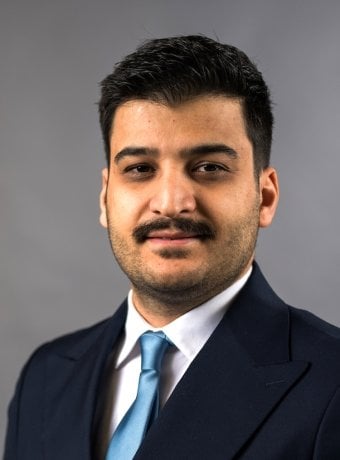
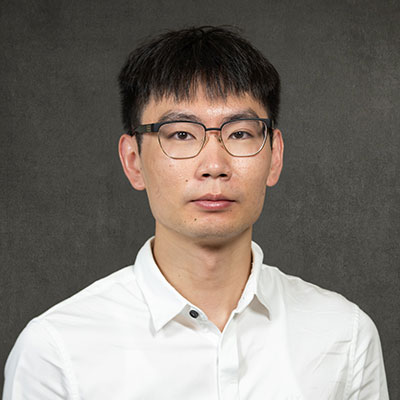
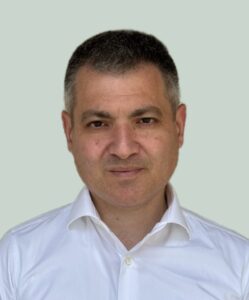
Andrea Appolloni is an Associate Professor at the Department of Management and Law, University of Rome Tor Vergata. His academic career focuses on Management with emphasis on Sustainable Supply Chain Management , Digital Transformation , and Circular Economy . His research explores the intersection of technological innovation and sustainability, particularly through topics like AI in Logistics , Green Procurement , and Policy Optimization . Publications span both theoretical frameworks and empirical studies in China, Italy, and Malaysia, with a strong focus on environmental impact and organizational performance. Recent work includes digital twin applications for human-AI collaboration, blockchain integration in sustainable supply chains, and analyzing barriers to circular economy adoption. His 15 most recent articles (2025-2022) demonstrate a trend toward combining Artificial Intelligence , Operations Management , and Environmental Governance .
Peter Haas is a Professor at the Manning College of Information and Computer Sciences at the University of Massachusetts Amherst, with an adjunct role in Industrial Engineering. Previously, he spent 30 years as a Principal Research Staff Member at IBM Research and held a consulting professorship in Management Science and Engineering at Stanford University. His research focuses on applying probability and statistics to data management, simulation of complex systems, and machine learning scalability. Education : PhD, Operations Research, Stanford University, 1986 MS, Statistics, Stanford University, 1984 MS, Environmental Engineering, Stanford University, 1979 SB, Engineering and Applied Physics, Harvard University, 1978 Research Interests : Haas’s work spans stochastic systems, probabilistic databases (e.g., MCDB and SimSQL), sampling techniques, and simulation optimization. He pioneered methods for managing uncertain data and scalable machine learning, including compressed linear algebra for declarative systems. His recent focus includes in-database decision support and hybrid simulation metamodeling with neural networks. Key Contributions : He developed the Online Aggregation framework (SIGMOD 1997), which earned a Test-of-Time Award in 2007. His work on matrix factorization and distributed stochastic gradient descent (DSGD) revolutionized large-scale machine learning. He also advanced techniques for estimating distinct-values and correlation discovery in databases. Awards : A six-time recipient of IBM’s Pat Goldberg Memorial Award, he is an ACM and INFORMS Fellow. His honors include the VLDB Best Paper Award (2016), EDBT Best Paper (2018), and recognition in Communications of the ACM. Advising & Grants : He advises four current PhD students and has graduated Matteo Brucato. His IBM career included over 30 patents, including foundational work for DB2’s sampling capabilities and IBM Watson analytics. He leads the DREAM Lab, focusing on data systems for exploration and analytics. Labs/Teams : Directs the Data systems Research for Exploration, Analytics, and Modeling (DREAM) Lab, advancing projects like Splash (health system simulation) and SuDocu (document summarization by example).
Piet Desmet is a full professor at KU Leuven's Faculty of Arts, serving as vice rector of KU Leuven, Kulak Kortrijk Campus, and academic director of the Office of the Academic Director, Bruges Campus. He leads multiple research divisions including itec and its Language and Technology subdivision, and is a member of Leuven.AI - KU Leuven Institute for Artificial Intelligence. As general coordinator of itec and academic director of the imec smart education research program, he oversees significant research initiatives spanning multiple campuses. Desmet's research focuses on the intersection of language learning and technology, with particular expertise in Second Language Acquisition and Technology, Computer-assisted Language Learning (including AI-based chatbots), Learning Analytics, and Language Technology and Corpus Linguistics. His work explores intelligent feedback systems, linguistic complexity prediction, adaptive testing, and natural language processing applications for educational contexts. His research spans theoretical linguistic frameworks to practical educational implementations, with a strong emphasis on empirical validation of technological interventions in language learning. Analysis of Desmet's recent publications reveals a strong trajectory toward integrating artificial intelligence with language education, particularly through conversational AI and learning analytics. His work increasingly focuses on chatbot-assisted language learning, adaptive assessment systems powered by large language models, and the application of computational linguistics to educational problems. The publications demonstrate a consistent methodological approach combining theoretical linguistics with empirical educational research, often employing eye-tracking, ERP studies, and learning analytics to evaluate effectiveness. Desmet actively supervises numerous PhD students and leads multiple major research projects including Smart Education at Schools (2025-2026), Enhancing EFL Learners' Speaking Ability through Chatbot-Assisted Dynamic Assessment Powered by LLMs (2024-2028), and the Flanders Ed Tech Hub (2022-2025). His research portfolio demonstrates significant funding success across multiple national and international initiatives focused on educational technology and language learning. As head of itec (an imec research team at KU Leuven), Desmet leads a substantial research ecosystem focused on smart education technologies. The itec team collaborates extensively with Leuven.AI and the KU Leuven Educational Research Institute (LIVO), creating a multidisciplinary environment that bridges computational linguistics, educational psychology, and artificial intelligence. Recent initiatives include the 'AI in Education' online training course and the network for Edtech and Learntech in Flanders.
Shawki M. Areibi is a Professor and Area Head of Engineering Systems and Computing in the School of Engineering at the University of Guelph. His research focuses on VLSI Physical Design Automation, Reconfigurable Computing Systems, and Hardware/Software Co-design for Embedded Systems. He leads efforts in developing advanced algorithms for CAD tools, FPGA design, and machine learning applications. His work addresses challenges in VLSI layout optimization, parallel processing, and embedded systems design. Affiliations: AI Affiliated Faculty, Area Heads, Computer Engineering, Engineering Systems and Computing Research. Research Interests: VLSI Circuit Layout, Reconfigurable Computing, Machine Learning, and FPGA-based Accelerators. His research integrates meta-heuristics like Genetic Algorithms and Tabu Search to solve complex optimization problems. He has contributed to hardware acceleration frameworks for machine learning algorithms and embedded systems, with applications in domains like signal processing and data mining. His recent work includes congestion-estimation models for modern FPGAs and analytic placement tools for ultra-scale architectures. Publications span VLSI design, reconfigurable computing, and machine learning, emphasizing algorithmic innovation and hardware-software co-design. His students have explored topics ranging from FPGA placement to domain adaptation in remote sensing. Grants and Advising: Advises graduate and undergraduate students on projects involving FPGA acceleration, machine learning, and embedded systems. His labs focus on developing next-generation CAD tools and hardware accelerators.
Dr. Aida Haghighi is an Assistant Professor at the School of Occupational and Public Health, Toronto Metropolitan University. She holds a PhD from Polytechnique Montréal, with prior industrial experience at the National Gas Company. Her research focuses on occupational health and safety (OHS) management systems, Industry 4.0 integration, and risk mitigation strategies. She teaches courses like OHS 718: Systems Management and OHS 811: OHSE Management Systems. Education: BSc, MSc, PhD in Industrial Engineering from Iran and Canada. Professional Engineer (PEng) designation. Research highlights include developing assessment tools to prevent machine safeguard bypassing and analyzing Industry 4.0's impact on worker safety. Research Interests: Industrial safety systems, OHS risk management, integrated management systems, and continual improvement. Current projects explore emerging technologies in OHS frameworks and gender disparities in workplace health. Awards include the Best Doctoral Thesis (2020, Polytechnique Montréal) and NSERC-funded research abroad. She advises MSc students in Occupational and Public Health starting 2025-2026. Teaching and Grants: Active in curriculum development for OHS education. Collaborates on projects funded by industry partnerships and governmental grants focusing on safety innovation.
Dr. Abdolmajid Erfani is an Assistant Professor in the Department of Civil, Environmental, and Geospatial Engineering at Michigan Technological University. He holds a PhD in Civil Engineering from the University of Maryland, College Park (2023), an MSc in Construction Engineering and Management from the University of Tehran (2019), and a BSc in Civil Engineering from the same university (2017). His research focuses on construction economics, smart construction technologies, data-driven infrastructure management, workforce development, and AI applications in project delivery. Dr. Erfani leads studies on workforce equity in transportation and construction industries, leveraging big data and natural language processing. He has published over 30 peer-reviewed papers and received prestigious ASCE awards including the 2024 Arthur M. Wellington Prize and Thomas Fitch Rowland Prize. He serves on the editorial board of the ASCE Journal of Management in Engineering. His recent grants include a National Cooperative Highway Research Program project (PI, 2024–2027) on price adjustment clauses for construction risk sharing and a Minnesota DOT-funded initiative (PI, 2025–2027) on leveraging transportation investments for economic equity. He also co-leads a Federal Railway Administration project (Co-PI, 2025–2028) aimed at promoting railroading careers. Research interests span equity analysis, AI modeling, and predictive analytics for infrastructure resilience. He integrates LinkedIn data and machine learning to study gender disparities in career progression, achieving groundbreaking insights in leadership dynamics within construction sectors.
Lillian Lee is a Professor of Computer Science at Cornell University, affiliated with the College of Computing and Information Science. Her research bridges natural language processing (NLP) and social interaction, focusing on how computational methods can analyze and facilitate socially embedded processes. She co-developed the course “Natural Language Processing and Social Interaction” and leads the Cornell NLP Group. Her work spans sentiment analysis, computational social science, and multimodal interaction, with notable contributions to understanding language features in persuasion, online debate dynamics, and humor comprehension. Key research interests include analyzing digital traces of social interaction, evaluating AI systems through human-centered criteria, and exploring the interplay between language structure and societal influence. Recent projects examine pivotal moments in mental health counseling, cross-cultural historical narratives on Wikipedia, and the role of wording in message propagation. Awards: ACM Fellow, ACL Distinguished Service Award (2021), Test of Time Award, Fellow of the Association for Computational Linguistics Labs/Teams: Member of the Cornell Natural Language Processing Group Advising: Mentored numerous students whose work has driven impactful projects in NLP and computational social science
Qian Li is a Lecturer in Computing at the School of Electrical Engineering, Computing and Mathematical Sciences (EECMS) at Curtin University, Australia. She holds a Ph.D. from the Chinese Academy of Sciences and M.Sc. degrees from Shandong University and the University of Luxembourg. Her research focuses on causal machine learning, topological data analysis, and optimal transport, with applications in computer vision, data science, and recommendation systems. She has published over 50 articles in top-tier venues like IEEE Transactions and ACM conferences. Education Ph.D., Chinese Academy of Science (CAS) MSc (Research), Shandong University MSc (Research), University of Luxembourg Research Interests Dr. Li explores causal reasoning for machine learning, leveraging mathematical tools like Riemannian geometry and optimal transport to address challenges in robustness and interpretability. Her work spans causal inference, counterfactual fairness, and explainable AI, with applications in healthcare, energy, and commerce. Recent projects include causal-based recommendation systems and topological data analysis techniques. Key Achievements Secured a $120k grant from China's National Natural Science Foundation (2020-2024). Lead researcher on AI-driven solar energy storage projects with UNSW and Providence Asset Group. Recipient of prestigious scholarships including Chinese National Graduate Scholarship (2016, top 1%). Grants & Students Current Ph.D. students include Xiangmeng Wang and Tri Dung Duong. She has supervised graduates like Yangyang Shu (Adelaide University Research Associate) and Jun Yin (UTS). Labs & Teams Leads research in causal AI and topological data analysis, collaborating with institutions like UTS and the University of Melbourne.
Dr. Chao Fan is an Assistant Professor in Civil Engineering and Environmental Engineering and Earth Sciences at Clemson University, affiliated with the Glenn Department of Civil Engineering. His research focuses on climate change adaptation, socio-environmental systems dynamics, and urban resilience, leveraging AI and data science. He holds a Ph.D. from Texas A&M University (2020), an M.S. from UC Davis (2017), and a B.S. from China University of Mining and Technology (2016). Dr. Fan's work integrates interdisciplinary approaches to address challenges in disaster management, smart cities, and environmental justice. Key interests include social sensing for infrastructure disruptions, equity in urban mobility networks, and leveraging digital twins for resilience planning. His recent publications explore topics like wildfire impacts, PM2.5 exposure inequity, and carbon market mechanisms for infrastructure adaptation. Professional memberships include ASCE, ACM SIGKDD, AGU, and AAAS. His lab (fanchaolab.com) develops innovative solutions for climate adaptation and equitable urban systems, emphasizing fairness in AI-driven models and network analysis.
Paolo Trunfio is a Professor of Computer Engineering at the University of Calabria, Italy, and co-founder of DtoK Lab S.r.l., an academic spin-off focused on data analysis and distributed systems. He holds a Ph.D. and is affiliated with the DIMES Department, specializing in big data, cloud computing, and high-performance computing (HPC). His research emphasizes scalable data analysis frameworks, edge-cloud continuum solutions, and machine learning applications for social media and disaster monitoring. Trunfio serves as an Associate Editor for ACM Computing Surveys and Journal of Big Data , and is on the editorial boards of several journals including Future Generation Computer Systems . He has authored four influential books, including Programming Big Data Applications (2024) and Data Analysis in the Cloud (2015). His work spans distributed systems, IoT-based smart objects, and exascale computing. Notable projects include the EU-funded eFlows4HPC and ASPIDE initiatives, which focus on HPC workflows and exascale programming models. Trunfio’s publications (over 200 papers) address topics like social media analytics, energy-efficient P2P networks, and parallel data mining. He leads research in urgent computing for disaster response, edge-cloud integration for urban mobility, and AI-driven data analysis. His contributions to cloud frameworks (e.g., JS4Cloud, ParSoDA) and HPC libraries (e.g., DCEx) highlight his expertise in bridging theory and practice in distributed computing ecosystems.
Kevin W. Hamlen is the Louis A. Beecherl, Jr. Distinguished Professor in the Department of Computer Science at the University of Texas at Dallas. He serves as Executive Director of UT Dallas' Cyber Security Research and Education Institute. His research focuses on language-based security , binary software hardening , cyberdeception , and formal program verification . He has received multiple grants from agencies like AFOSR, NSF, DARPA, and industry partners including Lockheed Martin and Intel. PhD and MS from Cornell University BS from Carnegie Mellon University His research explores automated approaches to software security through techniques like binary disassembly , control-flow integrity , and honey-patching . He has pioneered methods for malware defense and cloud/web/mobile security . Recent work examines adaptive cyberdeception and GPU-based security frameworks . His publications span binary code manipulation , malware mitigation , and blockchain security . Key awards include the NSF IUCRC Technology Breakthrough Award and two CSAW Best Paper 2nd Prizes . He advises numerous PhD students, many of whom now work at Google, IBM, and Microsoft. His book Autonomous Cyber Deception (Springer, 2019) with Ehab Al-Shaer and Cliff Wang provides comprehensive coverage of adaptive cyberdeception strategies.
Girija Chetty is a Full Professor in Computing and Information Technology at the University of Canberra's School of Information Technology and Systems. She holds a PhD in Information Sciences and Engineering and has over 35 years of experience in academia and research leadership roles, including Head of Software Engineering and Program Director of ITS courses. Her research focuses on multimodal systems, medical image computing, AI, and data science. She leads a dynamic research group comprising PhD students, postdocs, and international collaborators. Education: PhD in Information Sciences (Australia, 2007), MSc and BSc in Electrical Engineering/Computer Science (India). She has held visiting roles at Deakin University and CSIRO. Research interests span computer vision, pattern recognition, and medical diagnostics, with 200+ publications in top journals/conferences. Her work addresses global challenges via AI-driven solutions in healthcare (e.g., pain assessment systems, malaria diagnostics) and sustainability (SDG impact frameworks). Projects include AI for remote ultrasound imaging and smart farming systems. She actively collaborates with industry and global research institutions. Grants/Projects: 12 funded initiatives including AI for extreme environment healthcare, malaria pathogen detection, and big data-driven population health. Awards: Senior IEEE/Australian Computer Society membership, editorial roles in IEEE/Elsevier journals. Labs/Teams: Leads a multidisciplinary research group focused on medical AI and multimodal systems.
Dr. Milos Hauskrecht is a Professor of Computer Science at the University of Pittsburgh's School of Computing and Information. He holds a PhD from MIT (1997) and an M.Sc. from Slovak Technical University (1988). His research focuses on AI, machine learning, and data mining, with applications in medicine and finance. He leads projects in real-time clinical monitoring, anomaly detection, and time-series analysis of EHR data. He has advised numerous PhD and MS students, including notable alumni now at Amazon, DeepMind, and Microsoft. Research interests include reasoning under uncertainty, optimization, and AI-driven medical decision support. Current grants include NIH funding for AI in renal therapy and clinical monitoring. He has published widely in top venues like ICML, NeurIPS, and journals such as Artificial Intelligence in Medicine. His work on conditional outlier detection earned the Homer Warner Award (AMIA 2010). He teaches machine learning and advises on interdisciplinary AI projects.
Professor Gregoris Mentzas is a faculty member at the National Technical University of Athens, School of Electrical and Computer Engineering, where he directs the Division of Industrial Electric Devices and Decision Systems. His research focuses on AI-enabled decision systems, knowledge management, and semantic technologies applied to digital enterprises and e-government. With over 350 publications, he ranks among the top 2% most cited scientists globally. Research Interests: Artificial intelligence for decision augmentation, big data analytics in personalized health and smart mobility, semantic web technologies, and industrial internet of things. Current projects investigate trustworthy AI frameworks and hybrid intelligence systems for Industry 5.0. Teaching: Leads courses in Digital Enterprise Management, Strategic Information Systems, and Project Management at undergraduate and postgraduate levels, incorporating industry case studies and experiential learning approaches. Awards & Leadership: Top 2% Highly Cited Scientist (PLOS Biology 2021) 5 Best Paper Awards in international conferences Director of Information Management Unit (1997-present) Board Member of Institute of Communication and Computer Systems (2006-2009) Projects & Funding: Secured over €18 million in research grants through 60+ European projects with industry partners including SAP, IBM, and Siemens. Research outcomes led to three technology spin-offs.
Seth Polsley is an Assistant Professor in the Jeffrey S. Raikes School of Computer Science and Management at the University of Nebraska-Lincoln. His academic home resides in the School of Computing, where he bridges intelligent systems design with human-computer interaction to enhance educational and universal computing experiences. BS in Computer Engineering (2014) - University of Kansas MS (2017) & PhD (2023) in Computer Engineering - Texas A&M University His research explores: Intelligent tutoring systems Brain-computer interfaces Accessible educational technologies Machine learning for child development assessment Sketch recognition in STEM learning Recent publications demonstrate expertise in tactile learning interfaces, sketch-based developmental assessment, and equitable AI systems. Key disciplines span Human-Computer Interaction, Machine Learning, and Educational Technology. Scientific recognition includes: James Blackiston Memorial Graduate Fellowship Sigma Xi Research Award With professional experience at Lexmark International and MIT Lincoln Lab, Polsley combines practical engineering with educational innovation. His work on sketch-based tools and wearable systems addresses both technical and societal challenges in computing.