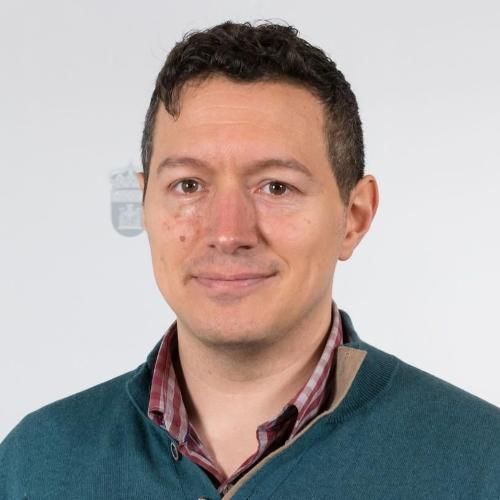
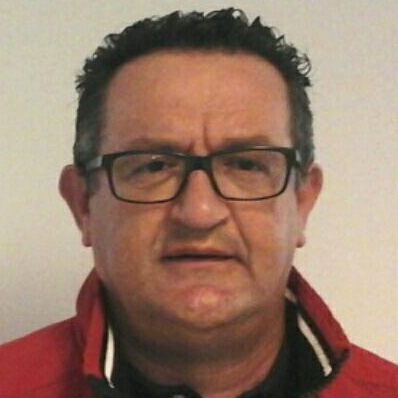
JESUS ENRIQUE SIERRA GARCIA serves as a Full Professor at the University of Burgos, holding appointments in the Higher Polytechnic School and Department of Digitalization while actively contributing to the ARCO Research Group in Control, Automation, Robotics and Optimization. His academic foundation includes a 2019 PhD from Universidad Complutense de Madrid, where his thesis on soft computing applications for unmanned aerial vehicle control was supervised by Dr. Matilde Santos Peñas. This work established his research trajectory in intelligent control systems. Professor Sierra's expertise spans critical engineering domains: Control Systems and Automation Robotics and UAV Technology Soft Computing Methodologies Systems Engineering Optimization Digital Systems Integration His research consistently bridges theoretical control frameworks with practical aerial vehicle applications. Historical departmental affiliations demonstrate versatility across Electromechanical, Civil, and Computer Engineering disciplines at University of Burgos. As a PhD program faculty member for 'Ingeniería y Tecnologías Industrial, Informática y Civil,' he contributes to graduate education though specific supervisory details remain unreported in available sources. His ongoing work through the ARCO Research Group continues advancing control automation methodologies.
Catalan Institute of Nanoscience and Nanotechnology (ICN2)Spain
Stephan Roche is an ICREA Research Professor and Group Leader at the Institut Català de Nanociència i Nanotecnologia (ICN2), specializing in Theoretical and Computational Nanoscience. His research bridges fundamental physics with potential applications in next-generation electronics and quantum technologies. Primary Affiliation: Institut Català de Nanociència i Nanotecnologia (ICN2) Research Position: ICREA Research Professor Research Group: Theoretical and Computational Nanoscience Professor Roche's research focuses on quantum transport phenomena in nanoscale systems, particularly two-dimensional materials and van der Waals heterostructures. His work combines advanced computational techniques including first-principles calculations, quantum transport simulations, and analysis of topological properties. Key research areas include spintronics, graphene-based systems, topological materials, and quantum effects in disordered systems. His recent work has made significant contributions to understanding spin-orbit torques, quantum transport in twisted bilayer graphene, and topological phases in disordered systems. Analysis of his recent publications (2020-2025) reveals a strong focus on emerging phenomena in 2D materials, with particular emphasis on spin transport mechanisms, topological properties, and quantum effects. His work often combines theoretical modeling with practical implications for next-generation electronic and spintronic devices. The interdisciplinary nature of his research spans condensed matter physics, materials science, and quantum information. Key Research Themes: Quantum transport, Spintronics, Topological materials, 2D materials, Computational nanoscience Methodologies: First-principles calculations, Quantum transport simulations, Machine learning for materials Professor Roche maintains extensive international collaborations, with co-authors from institutions across Europe, Asia, and North America. His research group provides opportunities for students and postdocs interested in computational approaches to nanoscale physics and materials science. The group's work has significant implications for the development of next-generation electronic devices, quantum technologies, and advanced materials.
Professor Pablo Sanz Bayón is an Adjunct Professor at the Faculty of Law of Comillas Pontifical University, where he teaches in the Department of Economic and Social Law. He serves as Co-Director of the Garrigues-ICADE Chair of Corporate Law and has 15 years of teaching experience at the university. His academic background includes a Law degree from Comillas Pontifical University (graduating with honors), a Master's degree in Business Law (receiving the Extraordinary Award), and a PhD in Law with the highest distinction and international recognition. His doctoral dissertation received the honorary award for the best thesis defended at the Faculty of Law during the 2015-2016 academic year. Professor Sanz Bayón's research focuses on corporate law and the regulation of digital technologies applied to the financial sector. His work spans multiple areas including hostile takeovers and minority shareholder protection, cryptocurrency regulation, smart contracts, and the automation of financial services. He approaches these topics from both legal and economic perspectives, providing comprehensive analyses of emerging regulatory challenges that balance innovation with consumer protection. His research has been supported by multiple grants, including projects funded by the Ministry of Economy and Competitiveness. Professor Sanz Bayón has conducted research stays at prestigious institutions including the University of Cambridge, Max Planck Institute in Hamburg, China University of Political and Legal Sciences, and the Universities of Sydney and Melbourne. Extraordinary Award for Master's degree in Business Law Honorary award for best doctoral thesis at Faculty of Law (2015-2016) Highest distinction and international recognition for PhD Professor Sanz Bayón has established a robust international presence, having taught at universities worldwide including Kozminski (Poland), UIBE (China), Paris Nanterre (France), Externado (Colombia), Alberto Hurtado (Chile), and Tokyo-Chuo (Japan). He regularly participates in international conferences organized by UNCITRAL, KLRI, and leading universities, contributing to global discussions on financial regulation and digital technologies in law.
Maria-Cristina Marinescu serves as a Lecturer in the Department of Mathematics and Data Analytics at IQS School of Management. With a strong foundation in computational methods and data analysis, she contributes significantly to both teaching and research within the institution. Her academic profile demonstrates consistent scholarly activity with 44 documented scientific production items spanning over two decades. Dr. Marinescu's research interests center on Machine Learning, Data Analytics, and Artificial Intelligence, with notable applications in epidemic modeling, wireless sensor networks, and programming models. Her work bridges theoretical computer science with practical applications addressing real-world challenges in public health, digital well-being, and medical diagnostics. The fingerprint analysis of her work shows strong emphasis on Machine Learning (100%), Learning Systems (100%), and Transportation Models (100%), with substantial contributions to Programming Models (84%) and Wireless Sensor Networks (77%). Her recent publications reveal a trend toward interdisciplinary research that combines computational methods with societal challenges. She has made significant contributions to epidemic modeling during the COVID-19 pandemic, developing methods for accurate incidence rate estimation in Spain and analyzing information gains from multiple epidemic model outputs. Additionally, her work extends to medical applications including research on ocular ischemia and glaucoma, as well as innovative approaches to automated metadata annotation using machine learning techniques. Dr. Marinescu actively leads and participates in multiple research projects including Uncovering patterns of unconscious reactions to fake content (as Principal Investigator), MobilePressure (focused on reducing children's smartphone exposure), and ADAMIQS: Applied Data Analytics and Modelling IQS . These projects demonstrate her commitment to addressing contemporary issues through data-driven approaches while mentoring students and collaborating with interdisciplinary research teams.
Antonio Cembellín Sánchez serves as a Professor in the Department of Computer Science and Automation at the University of Salamanca, specializing in Systems Engineering and Automation with a focus on industrial process control applications. His research portfolio centers on: Real-time process supervision methodologies Intelligent predictive control systems Distributed control architectures Urban infrastructure automation Environmental monitoring networks Industrial system optimization He directs research within the PROCESS SUPERVISION AND CONTROL group, developing advanced techniques for complex system management. His doctoral work pioneered applications for urban drainage networks, supervised by Dr. Pastora Isabel Vega Cruz and Dr. Mario Francisco Sutil. Professional engagement includes: PhD supervision in Computer Engineering Collaborative projects in Systems Engineering Departmental research leadership His laboratory work concentrates on translating theoretical control models into operational solutions for municipal infrastructure systems.
Mario Francisco Sutil is an Associate Professor in the Department of Computer Science and Automation at the School of Computer Engineering, Universidad de Salamanca. His research is conducted within two groups: BISITE (Bioinformatics, Intelligent Computer Systems, and Educational Technology) Process Supervision and Control His primary research spans Systems Engineering and Automation with deep specialization in Control Systems, Process Control, and Predictive Control methodologies. Additional expertise extends to Bioinformatics, Intelligent Systems development, and Educational Technology applications. He earned his PhD from Universidad de Salamanca in 2011 with a thesis titled Diseño simultáneo de procesos y sistemas de control predictivo mediante índices de controlabilidad basados en normas (Simultaneous Design of Processes and Predictive Control Systems Using Norm-Based Controllability Indices), supervised by Dr. Pastora Isabel Vega Cruz. He can be contacted at mfs@usal.es .
Dr. Alfonso González Briones is an Associate Professor in the Department of Computer Science and Automation at the University of Salamanca, where he conducts cutting-edge research in intelligent systems and their applications. He is a prominent member of the BISITE Research Group and has also worked with the GRASIA Research Group at Complutense University of Madrid as a 'Juan De La Cierva' postdoc. His academic journey at the University of Salamanca includes a Bachelor of Technical Engineering in Computer Engineering (2012), a Bachelor's Degree in Computer Engineering (2013), a Master's Degree in Intelligent Systems (2014), and a PhD in Computer Engineering (2018). His research focuses on Ubiquitous Computing and Ambient Intelligence for developing smarter, more energy-efficient cities that improve social welfare and promote sustainable development. His work spans Multiple Agent Systems (MAS), energy optimization, smart cities infrastructure, Industry 4.0 applications, and machine learning techniques for various domains including social networks, transportation, and agricultural systems. Dr. González Briones has published extensively with over 30 journal articles and 60 conference proceedings publications, demonstrating consistent productivity across multiple domains of computer science and artificial intelligence. His research trends show a clear progression from foundational work in multi-agent systems toward increasingly sophisticated applications in smart cities, energy management, and Industry 4.0 contexts, with a growing emphasis on practical implementations that address real-world challenges. 2nd place in 1st SENSORS+CIRTI Award for best national thesis in Smart Cities (CAEPIA 2018) Juan de la Cierva State Program Grant in ICT - Information and Communication Technologies (2018) Member of scientific committees for Advances in Distributed Computing and Artificial Intelligence Journal (ADCAIJ) and British Journal of Applied Science and Technology (BJAST) Reviewer for prestigious journals including Supercomputing Journal, Journal of King Saud University, Energies, Sensors, Electronics, and Applied Sciences As an active researcher, Dr. González Briones has participated in 10 international research projects and served on technical committees for prestigious international conferences including AIPES, HAIS, FODERTICS, PAAMS, and KDIR. His work bridges academic research with practical industry applications, particularly in energy optimization systems, IoT, and Machine Learning solutions for real-world problems. He has also collaborated with private research centers including Virtual Power Solutions in Portugal and AIR Institute, where he worked as Project Manager in Industry 4.0 and IoT projects. His research infrastructure includes work with the BISITE Research Group, where he develops and implements multi-agent architectures for optimizing energy consumption and other complex systems. His laboratory work spans smart home energy management, intelligent transportation systems, semantic analysis for Industry 4.0, and social network analysis applications.
Vidal Moreno Rodilla is a Professor at the University of Salamanca affiliated with the Department of Systems Engineering and Automation and the University Institute of Educational Sciences. He serves as director of the Master's Degree in Computer Engineering and leads the Recognized Research Group "Robotics and Society". He holds a degree in Physics (Electronics and Automation) and a PhD in Science, both from the University of Salamanca. His research focuses on Artificial Intelligence, Robotics, and Automation with applications in Intelligent Systems and Robot Navigation. Work emphasizes practical implementations across industrial sectors while examining societal impacts of robotic technologies. Professor Moreno Rodilla has supervised over 15 doctoral and master's theses in Robotics and AI. He has directed numerous national and regional research projects funded by public entities and led more than 40 industrial innovation projects with private companies in meat processing, nuclear, medical, security, and environmental sectors. He directs the Recognized Research Group "Robotics and Society" which investigates real-world applications of robotic systems and their societal integration.
María Belén Pérez Lancho is a Full Professor in the Department of Computer Science and Automation at the University of Salamanca, Spain. With over 25 years of academic experience since completing her PhD in 1995, she maintains active affiliations with multiple research groups including BISITE (Bioinformatics, Intelligent Computing Systems and Educational Technology), CaUSAL (Academic Culture, Heritage and Social Memory), and Process Supervision and Control. Dr. Pérez Lancho earned her doctoral degree from the University of Salamanca with her thesis "Integrated process control system: a practical approach" supervised by Dr. Eladio Sanz García. Her academic foundation in systems engineering and automation has evolved into diverse research applications across multiple domains. Her research program demonstrates remarkable breadth while maintaining technical coherence. She has pioneered context-aware multiagent systems for home care environments, developing architectures like HoCa and HoCCAC that monitor patients and optimize task scheduling. In environmental science, she created hybrid intelligent systems for forest fire prediction using Case-Based Reasoning with topology-preserving algorithms. More recently, she has addressed cybersecurity challenges in educational technology through two-factor authentication systems. Her work consistently bridges theoretical computer science with practical implementations in real-world settings. Analysis of her publication trajectory reveals a consistent focus on adaptive intelligent systems that respond to environmental changes. Her earliest work established foundations in systems engineering, which evolved into sophisticated multi-agent applications across healthcare, environmental monitoring, and security domains. The most recent publications continue this trajectory while addressing contemporary challenges in educational technology security. Dr. Pérez Lancho maintains extensive collaborative relationships, particularly with Juan M. Corchado at the University of Salamanca, as evidenced by numerous co-authored publications. Her research has been implemented in actual home care environments and environmental monitoring systems, demonstrating the practical impact of her work. Her research infrastructure includes: BISITE group focusing on intelligent computing systems and educational technology CaUSAL group examining academic culture and heritage Process Supervision and Control group applying her foundational work to industrial contexts These affiliations support her interdisciplinary approach to solving complex problems through computational methods.