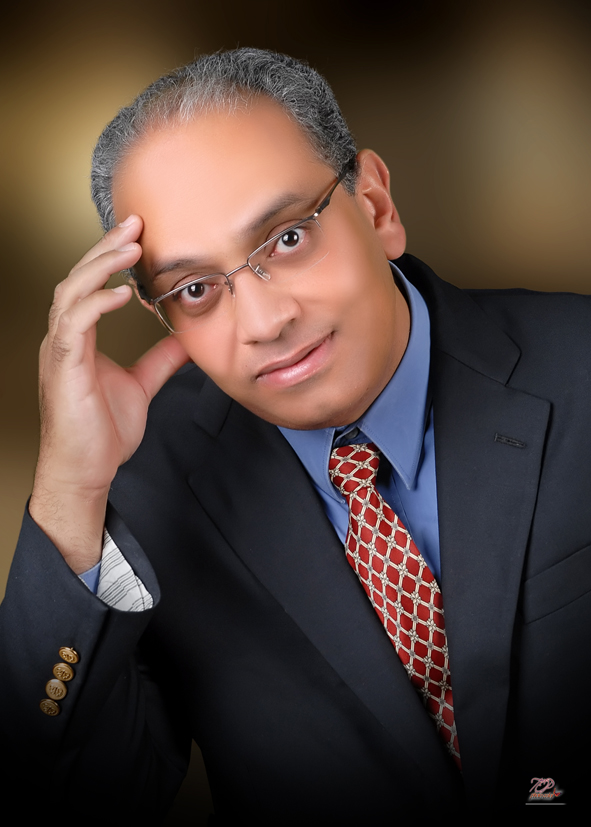
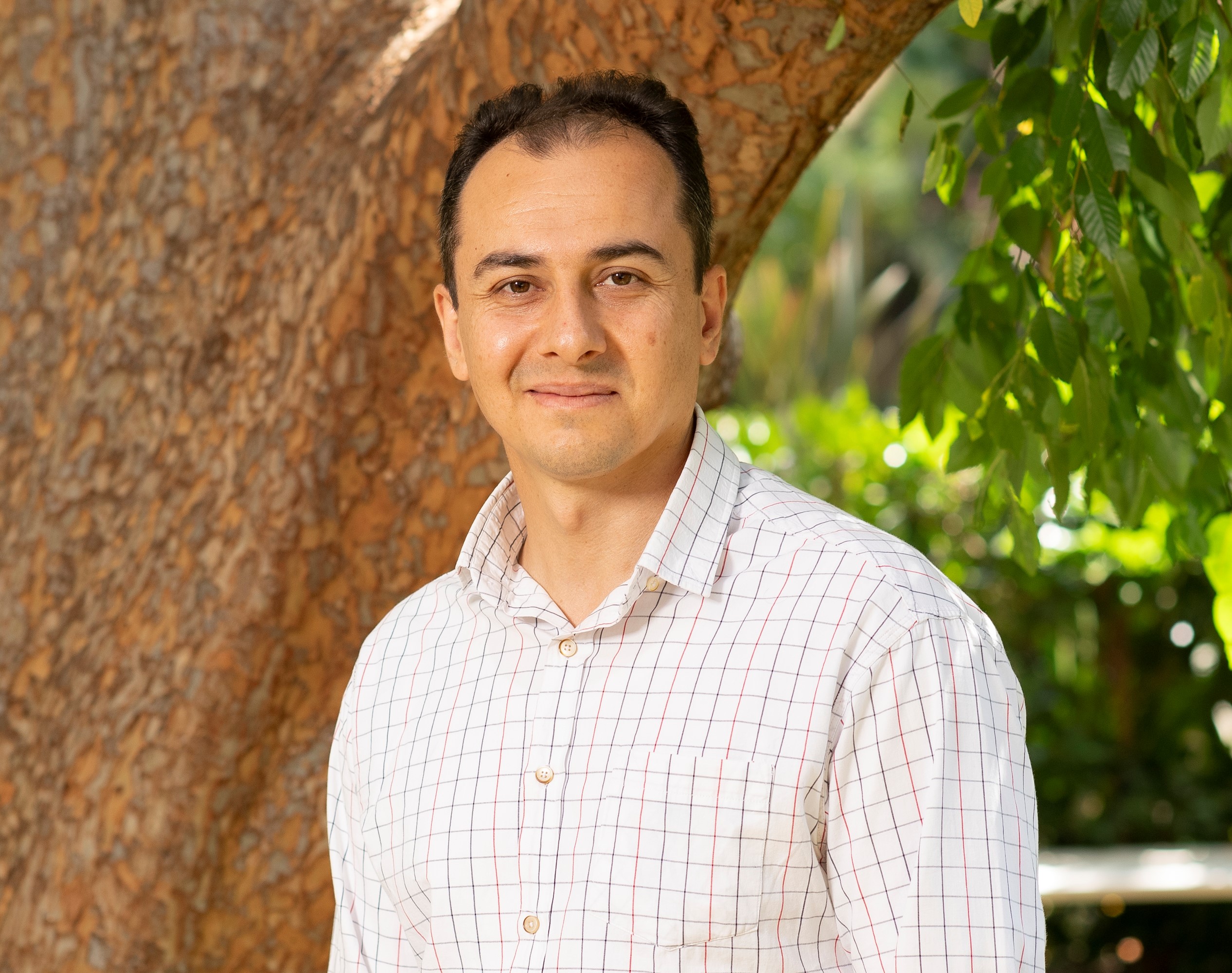
Dr. Abdhul Khadhir Seyed Hydroos is a Postdoctoral Research Fellow at the School of Civil & Environmental Engineering, Queensland University of Technology, specializing in traffic and transportation engineering. His research focuses on traffic control systems, traffic flow theory, intelligent transportation systems (ITS), and optimization of traffic signal designs. He holds a PhD in Transportation Engineering from Queensland University of Technology, along with additional degrees from Indian Institute of Technology, Madras. His academic career emphasizes developing practical solutions for urban transportation challenges, particularly in heterogeneous traffic environments. He has contributed to advancements in traffic state estimation, signal control strategies, and theoretical delay modeling. His work bridges academic research with real-world applications, engaging stakeholders across public and private sectors. Key contributions include studies on midblock/intersection traffic prediction, bi-level origin-destination matrix adjustment, and utilization of WiFi data for signal state identification. He actively disseminates findings through peer-reviewed journals and collaborations with industry partners.
Dr. Guilherme Froes Silva is a Lecturer in the School of Electrical Engineering & Robotics at Queensland University of Technology (QUT) and an Associate Investigator at the QUT Centre for Robotics. He holds a PhD from QUT (2023), an MPhil from PUCRS (Brazil, 2017), and a degree in Control and Automation Engineering from PUCRS (2015). His research focuses on scalability and stability of networked autonomous systems, including vehicle platoons and microgrids, as well as quantitative risk analysis for aviation systems. He has collaborated with industry partners like Boeing Defence Australia, resulting in a patent application, and his work is internationally recognized by regulatory authorities and uncrewed aircraft operators. Education: PhD, Queensland University of Technology (2023) MPhil, PUCRS, Brazil (2017) Bachelor's in Control and Automation Engineering, PUCRS, Brazil (2015) His research interests span control systems, networked systems, autonomous systems, risk analysis, aviation safety, and energy systems. He has led industry collaborations resulting in commercial applications and is actively involved in supervising research students. His contributions to scalable networked systems and safety-critical applications position him as a key figure in intelligent transportation systems and robotics. He currently teaches courses such as EGH445 Modern Control and ENN541 Research Methods for Engineers. His publications, including work on microgrid stability and vehicle platooning, reflect his expertise in system stability and control.
Ben Zala is a Senior Lecturer in Politics & International Relations at Monash University, Australia. He focuses on global security, nuclear weapons management, and great power politics. Previously, he held positions at ANU, Harvard (as a Stanton Nuclear Security Fellow), the University of Leicester, and Chatham House. His research explores the Third Nuclear Age, non-proliferation, and geopolitical dynamics. Zala earned his PhD in International Relations from the University of Birmingham (2013) and a Bachelor's from La Trobe University (2006). He co-authored The Global Third Nuclear Age (2025) and contributed to Oxford's forthcoming Power in International Society . As an Honorary Fellow at Leicester, he collaborates on the ERC-funded Towards a Third Nuclear Age project. Education: PhD in International Relations, University of Birmingham (2013) Bachelor of International Relations (Hons), La Trobe University (2006) Awards & Fellowships: Stanton Nuclear Security Junior Faculty Fellow, Harvard University (2018–2019) ERC-funded Honorary Fellowship, University of Leicester (2020–2025) Research Focus: Zala's work combines theoretical analysis with empirical case studies, examining nuclear policy, technological innovation, and geopolitical shifts. His recent publications address AI's impact on deterrence, nuclear entanglement in Northeast Asia, and existentialist critiques of nuclear strategy.
Sally Zhang is a Casual Research Assistant at the Melbourne Sexual Health Centre, affiliated with the School of Translational Medicine at Monash University. Her academic rank is Researcher, and she holds a Master of Public Health from the University of Sydney and a Doctorate by Research from Monash University. Her research focuses on HIV/AIDS, sexually transmitted infections (STIs), and health economics, with a particular emphasis on developing AI-driven interventions for sexual health diagnostics and public health policy. Her work contributes to UN Sustainable Development Goals related to good health and well-being. She has collaborated on projects addressing HIV self-testing, syphilis utility values, and improving access to pre-exposure prophylaxis (PrEP) for migrant populations. Her interdisciplinary approach integrates epidemiology, artificial intelligence, and cost-effectiveness analysis to inform healthcare strategies. Led or co-authored research outputs include studies on STI diagnostics, behavioral health interventions, and global health equity. She actively engages in translational research to bridge clinical practices and public health policies, with a focus on marginalized populations.
Dr. Steven Grainger is Director of Learning & Teaching in the School of Mechanical Engineering and Program Coordinator for Mechatronic Engineering at the University of Adelaide. With industry experience prior to academia, he joined the university in 2007 following a 10-year lecturing position at Glasgow Caledonian University. His international academic engagements include visiting lectureships in Oman, Russia, Germany, and Australia. His research focuses on: Nanopositioning systems and piezoelectric actuator modeling Autonomous robotics with emphasis on underwater vehicles Bio-inspired systems and constructive neural networks Multi-robot coordination strategies Publication analysis reveals strong emphasis on mechatronic systems (45%), bio-inspired algorithms (30%), and mechanical fault diagnosis (25%). Recent works demonstrate increasing focus on biologically-inspired robotics and multi-agent systems. Research collaborations span nine institutions across Australia, UK, and Sweden including the Australian Maritime College and Lund University. As Program Coordinator, he oversees mechatronics curriculum development and supervises postgraduate research. Laboratory activities integrate computational modeling with hardware implementation for autonomous platforms.
Xin Yuan (a.k.a. Vernon) is a Senior Research Associate at the School of Electrical and Mechanical Engineering, Faculty of Sciences, Engineering and Technology at the University of Adelaide. His research focuses on Artificial General Intelligence (AGI), cognitive decision-making, robotics, autonomous systems, network security, and cyber-physical systems, with practical applications in industries like meat processing and intelligent transport systems. He has secured over $535k in Tier-3 funding from organizations such as Meat & Livestock Australia and collaborates with South Australian industry partners and zoos to develop engineering solutions for animal welfare and enrichment. Dr. Yuan teaches courses in programming, digital electronics, and autonomous systems, impacting over 3,000 engineering students. His work includes developing advanced robotic systems for red meat processors and autonomous vehicles. Recent research trends in his publications emphasize knowledge tracing algorithms, control systems for neural networks, and graph-based machine learning. He actively engages in student-industry partnerships and leads innovative projects like autonomous micro-air vehicles and animal behavior monitoring systems. Grants & Funding: Over $535k in Tier-3 funding for industry projects. Collaborations: South Australian Zoos, Meat & Livestock Australia, Australian Meat Processor Corporation. Projects: Shadow Robot systems, energy-efficient UAV-UGV tracking, sealion protection systems. His research portfolio bridges theoretical advancements in AGI with real-world applications, emphasizing interdisciplinary innovation in engineering and AI.
Aya Hussein is a Lecturer in Artificial Intelligence and Machine Learning at the University of Canberra, specializing in AI and Robotics research within swarm systems and human-autonomy interaction. Her work bridges theoretical AI with practical applications in complex environments requiring human-swarm teaming. Her educational background includes: PhD from UNSW Canberra (Australian Defence Force Academy), awarded 20 January 2021 Dr. Hussein's research centers on human-swarm interaction dynamics, focusing on machine teaching methodologies, autonomy level calibration, and decision-making frameworks for heterogeneous swarms. She pioneers approaches for context-aware control in adversarial scenarios and develops metaverse-based training environments for swarm systems, with significant contributions to swarm interpretability through neural translation techniques and SHAP analysis. Analysis of her 15 most recent publications (2022-2025) reveals dominant themes in swarm intelligence (87%), human-computer interaction (73%), and reinforcement learning (60%). Key trajectories include imitation learning for swarm observation (2023-2025), metaverse integration for multi-level autonomy (2023-2025), and security applications like adversarial patrolling (2024). Her work consistently addresses real-world challenges in search-rescue operations, misinformation resilience, and collective perception systems. Dr. Hussein serves as Co-Investigator on the active ARC-funded project 'Political Misinformation and Media Literacy: Australian Election 2025' (2025), examining misinformation dynamics in electoral contexts. She chairs IEEE Women in Engineering (ACT Section) and organizes the IT & Systems Student Research Conference, demonstrating strong commitment to community engagement and academic service through 12 documented activities including editorial work and peer review. Her research is conducted through the University of Canberra's AI and Robotics group, with significant external collaborations including UNSW Canberra and international institutions. Current projects integrate digital twin technology with swarm metaverse environments to develop next-generation human-swarm teaming frameworks for complex operational scenarios.
Professor Hussein Abbass is a distinguished academic at the University of New South Wales (UNSW) Canberra, holding a professorship in the School of Engineering and Information Technology. As an IEEE Fellow and Founding Editor-in-Chief of IEEE Transactions on Artificial Intelligence, he has established himself as a leading figure in the fields of artificial intelligence, swarm systems, and trusted autonomy. His research spans theoretical foundations and practical applications, with significant contributions to swarm intelligence, human-swarm teaming, and quantum-enabled swarm systems. Professor Abbass's educational background is not explicitly detailed in the provided text, but his extensive publication record and leadership roles suggest a strong academic foundation. His research interests encompass Artificial Intelligence, Autonomous Systems, Swarm Intelligence, Swarm Robotics, Human-Swarm Teaming, Quantum-Enabled Swarm Systems, Brain Computer Interface, Human-Machine Symbiosis, Trusted Autonomous Systems, Machine Trust, Biometrics, and the social implications of autonomous systems. His recent publications demonstrate a clear trend toward advancing swarm systems, with particular focus on human-swarm teaming, machine teaching, and trustworthy AI. The research spans multiple disciplines including computer science, robotics, neuroscience, and social sciences, reflecting the interdisciplinary nature of his work. His publications in top journals and conferences indicate significant impact in the AI community. Among his notable achievements is being named an IEEE Fellow, a prestigious recognition for his contributions to the field. His editorial leadership as Founding Editor-in-Chief of IEEE Transactions on Artificial Intelligence further demonstrates his standing in the academic community. Professor Abbass actively supervises research students and collaborates with numerous colleagues at UNSW Canberra, including Dr. Sreenatha Anavatti, Prof. Michael Barlow, Prof. Matthew Garratt, A/Prof. Chris Lokan, Dr. Robert McKay, Prof. Kathryn Kasmarik, Prof. Ruhul Sarker, Dr. Hemant Singh, Dr. Saber ElSayed, Dr. Essam Debie, Dr. Jiangjun Tang, Dr. Heba El-Fiqi, and Dr. Aya Hussein. His work has attracted significant research funding for projects related to swarm systems and trusted autonomy. His research group focuses on developing advanced swarm systems with applications in defense, aerospace, and transport sectors. The team investigates human-swarm interaction, machine education, and AI assurance, addressing both technical challenges and societal implications of autonomous systems.
Associate Professor Alexis Estelle Whitton is a prominent researcher at The Black Dog Institute, University of New South Wales, specializing in mood disorders, neuroimaging in psychiatry, and digital mental health interventions. Her work bridges clinical practice with cutting-edge technology to develop more effective treatments for depression and bipolar disorder. Dr. Whitton's research focuses on understanding reward processing mechanisms in mood disorders, utilizing neuroimaging techniques like fMRI and EEG to identify biomarkers for treatment response. She has pioneered work in digital phenotyping, developing smartphone applications and web-based tools to monitor mental health symptoms in real-world settings. Her expertise spans clinical depression, bipolar disorder, antidepressants, nicotine effects on reward learning, and computational approaches to understanding motivational impairments. Her recent publications demonstrate a strong emphasis on precision medicine approaches to mental healthcare, with significant work on AI-driven adaptive trial platforms like CONDUCTOR and digital interventions for subthreshold depression. She has contributed extensively to understanding how digital biomarkers, particularly typing behavior patterns, can serve as indicators of psychomotor symptoms in depression. Her research program shows a clear trajectory toward personalized mental healthcare through integration of digital phenotyping, clinical data, and genetic information. As a supervisor, Dr. Whitton mentors students in mental health research with a focus on diagnosis and treatment of mood disorders and affective neuroscience. Her work has resulted in substantial scholarly output with 91 journal articles, 6 book chapters, and 18 preprints as indicated in her profile.
Professor Brett Molesworth is a Professor of Human Factors and Aviation Safety at the School of Aviation, University of New South Wales . A qualified pilot with a Commercial Pilot Licence and advanced aerobatics rating, he focuses on aircrew and cabin crew behavior in normal and abnormal situations. His research develops tools to measure pilots' risk propensity, including an implicit association test for risky flying behavior, and applies techniques to enhance risk management skills. Key research areas include Aircraft noise effects on communication and cognitive performance Noise-cancelling headphone efficacy Cross-industry safety applications (road, medicine) Young driver speed management interventions Runway incursion prevention Pilot mental health during crises Recent publications span Drone Systems , Safety Science , and Transportation Research Part F , addressing topics like integrated airspace operations, noise-induced cognitive fatigue, and communication errors. His work has earned multiple Human Factors and Ergonomics Society awards and competitive ARC grants for driver safety and noise research. Scientific awards include Human Factors and Ergonomics Society Training Technical Group Best Student Paper Award (2018, 2015) Alan Welford Award for Best Journal Paper (2014) Grants funded projects on Young driver speed management (2022, 2018) Runway incursion prevention (2022) Aviation headset noise reduction (2018) Learned helplessness in noisy environments (2018)
Dr. Mohsen Eskandari is a Research Fellow at the University of New South Wales (UNSW) in the School of Electrical Engineering and Telecommunications, Faculty of Engineering. He joined UNSW as a Postdoctoral Research Associate in March 2020 and became a Research Fellow with the AUSMURI Neuro-Autonomy project in early 2021. He is also the founder of MAI OptiTek, offering consultancy and AI services for intelligent grids and networks. Dr. Eskandari received his B.Sc. and M.Sc. degrees in electrical engineering from Islamic Azad University, Saveh, Iran, in 2004 and 2013, respectively, and his Ph.D. in electrical engineering from the University of Technology Sydney (UTS), Australia, in 2021. His research focuses on power systems and renewable energy, with particular emphasis on: Stabilizing autonomous networked microgrids for future resilient grids Intelligent autonomy for autonomous vehicles and systems Impedance emulation and shaping for inverter-interfaced energy resources Revisiting and quantifying inverter-dominated grids' inertia and impedance strength indexes Intelligent control, management and protection techniques for inverter-based energy resources and microgrids Wireless communication aided accurate localization for autonomous intelligent vehicles and UAVs Dr. Eskandari has received numerous awards for his research excellence, including the Higher Degree Research Excellence Award from UTS Faculty of Engineering and Information Technology in both 2018 and 2019. Higher Degree Research Excellence Award at UTS Faculty of Engineering and Information Technology (2018, 2019) UTS International Research Scholarship (2016) UTS President's Scholarship (2016) UTS FEIT Higher Degree by Research Publication Award (2017) UTS FEIT HDR Research Collaboration Experience Scholarship (2018) UTS FEIT Higher Degree Research Directors Commendation (2018) UTS FEIT Higher Degree Research Excellence Award (2019) He has secured research funding including a grant from the National Natural Science Foundation of China ($130,000, 2018) and a FEIT HDR Research Collaboration Experience Grant from UTS ($4,000, 2018). Dr. Eskandari is actively seeking PhD candidates to supervise in areas including power systems, renewable energy, AI-assisted control, optimization and automation, autonomous vehicles and systems, and robotics. With over ten years of industry experience, Dr. Eskandari provides technical sub-consultancy services for consultant companies toward digitalization and intelligent grids, particularly in design and stability analysis, parameter tuning, and connection testing of inverter-based energy resources.
Associate Professor Saber Mohamed Elsayed Elsayed is affiliated with the School of Engineering and Information Technology (SEIT) at the University of New South Wales (UNSW) Canberra, Australia. He holds a PhD in Computer Science from UNSW Canberra (2012). His research focuses on computational intelligence, swarm guidance, and optimization, with applications in defense, logistics, engineering, and business. He serves as an Associate Editor of the IEEE Transactions on Evolutionary Computation and is a Senior IEEE member. Education: PhD in Computer Science, UNSW Canberra, 2012 Research Interests: Dr. Elsayed’s expertise spans evolutionary computation, swarm control, planning and scheduling, optimization, neural networks, and decision support systems. His work addresses challenges in autonomous systems, sensor placement, and multi-agent coordination, leveraging computational intelligence techniques. Awards: Winner of IEEE CEC/WCCI competitions (2022, 2020, 2016, 2014, 2011) Best student paper award (2021) UNSW Publication Fellowship and scholarships Grants & Mentorship: He leads or co-leads multiple grants, including ARC DP-funded research on electric vehicle logistics (2025-2027) and DSTG-funded projects on sensor placement and swarm control. He mentors numerous PhD and Master’s students, focusing on optimization, scheduling, and swarm intelligence. Current advisees include Ahmed Gad (PhD) and Setyo Tri Windras Mara (PhD). Teaching: Teaches courses such as Data Structures and Representation (ZEIT2103) and Introduction to Programming (ZEIT1102).
Hoa Nguyen is an Associate Professor in the Arndt-Corden Department of Economics and Higher Degree Research Director at the Crawford School of Public Policy, Australian National University. She holds a B.Econ (NEU, Hanoi), Master of International Development Economics, Master of Computing (Machine Learning), and PhD in Economics (ANU). Her research focuses on applied economics, particularly economic policies related to health, food security, biological security, natural resource management, climate change, inequality, and poverty. She integrates machine learning and artificial intelligence with economics to address policy challenges. Her work emphasizes cost-benefit analysis, operational efficiency, and impact evaluation of government policies. Teaching includes courses like IDEC8015 (Mathematical Methods in Applied Economics) and IDEC8017 (Econometric Techniques). Recent projects include 'Estimating income underreporting in Australia and Asia' (2021–2025) and 'Economics and politics of rice policy in Vietnam' (2015–2016). Her research has been published in leading journals such as Political Analysis , Ecological Economics , and World Development . Her work bridges academic research and policy impact, with a focus on transitional economies and biosecurity. Collaborations span institutions globally, addressing issues like foot-and-mouth disease control and rice productivity challenges in Vietnam.
Negin Hesam Shariati is a mid-early career researcher at the NeuroRecovery Research Hub within the School of Psychology at the University of New South Wales (UNSW) and Neuroscience Research Australia. She holds a PhD in Medical Sciences (UNSW, 2018) and a Master's in Biomedical Engineering (Amirkabir University of Technology, 2012). Her research focuses on neurofeedback interventions for neuropathic pain following spinal cord injury, leveraging brain-computer interface technologies to enhance pain management. Dr. Shariati’s work integrates neurosciences and biomedical engineering, with an emphasis on developing novel therapies for chronic pain and neurological disorders. She has secured significant grants, including a two-year postdoctoral fellowship from the Craig H. Neilsen Foundation (USA) and funding from the Medical Research Future Fund (MRFF), NHMRC, and NSW Health. Her research portfolio includes studies on emotion regulation, stress-related brain alterations, and the interplay between chronic pain and mental health conditions like posttraumatic stress. Her awards include the Craig H. Neilsen Foundation Postdoctoral Fellowship (2020), Postgraduate Research Student Award (UNSW, 2017), and international postgraduate scholarships. Dr. Shariati’s contributions span peer-reviewed articles, clinical trials, and innovative neurotechnology applications. She leads interdisciplinary teams at UNSW and collaborates with industry partners to advance translational research in neural pain modulation and telehealth interventions. Education: BSc (Biomedical Engineering, 2009) MSc (Biomedical Engineering, 2012) PhD (Medical Sciences, 2018) Grants and Funding: MRFF Research Grant (2025–2030) NHMRC Ideas Grant (2021–2026) Craig H. Neilsen Foundation Fellowship (2021–2022) Labs and Affiliations: NeuroRecovery Research Hub Neuroscience Research Australia (NeuRA)
Natalia Jevglevskaja is a Research Fellow at the Faculty of Law and Justice, University of New South Wales (UNSW Sydney), and an Associate Fellow of the Higher Education Academy, UK. Her work focuses on the intersection of international law, technology governance, and emerging military systems, particularly in the context of financial data regulation and weapons review obligations. She contributed to the Australian Research Council Laureate Project 'The Financial Data Revolution,' analyzing regulatory frameworks for innovation in finance. Education: LL.B. (2011) from Heidelberg University, LL.M. in Public International Law (2013) from Utrecht University, and Ph.D. (2018) from the University of Melbourne. Research interests include international law applications to cybersecurity, autonomous weapon systems, and ethical design of military technology. Her publications emphasize data governance, consumer rights, and arms control. Recent work explores Australia’s Consumer Data Right (CDR) and its global implications. Professional history includes roles at UNSW’s Australian Defence Force Academy (Canberra) and the Max Planck Institute for Comparative Public Law and International Law. She has advised on contract and labor law in Germany/Malta.